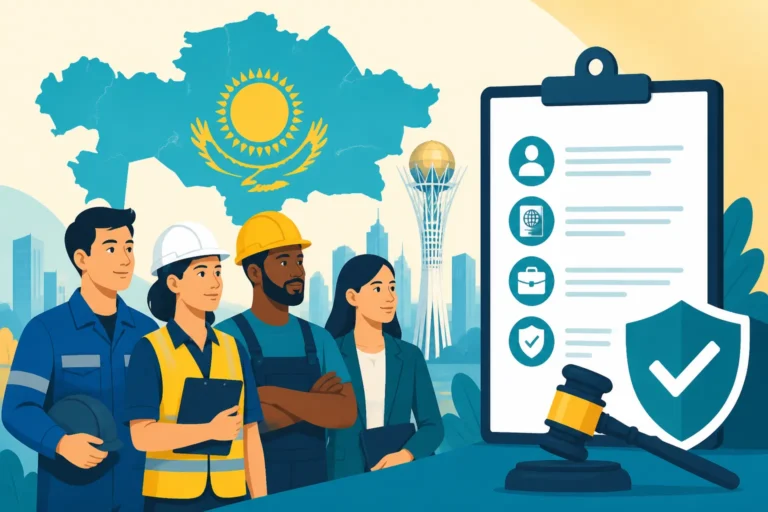
Can I Work Remotely from Kazakhstan for a Foreign Company?
Ah, the dream of working remotely from a new, exciting location like Kazakhstan! It sounds idyllic, doesn't it? Picture yourself sipping chai in an Almaty cafe, laptop open, while your company is thousands of miles away. But let me tell you, as a seasoned expat who's been here a while, the reality is often a maze of paperwork, tax rules, and legal ambiguities. This guide is here to cut through that confusion, giving you the real-world, no-nonsense advice you need to navigate working remotely for a foreign company while living here in Kazakhstan.
The Legal Landscape of Remote Work in Kazakhstan for Foreigners
Many newcomers arrive in Kazakhstan thinking that if their employer isn't in Kazakhstan, then Kazakhstan's rules don't apply to their work. Oh, if only it were that simple! The truth is, once you establish a physical presence in the country, even if you’re just sitting in your apartment sending emails, you're generally subject to local laws regarding residency and, crucially, work. This isn't just a quirk of Kazakhstan; it's a common international standard, and ignoring it can lead to some serious headaches down the line.
Understanding Your Residence Status and Work Rights
The first hurdle to clear is your visa and residence status. Kazakhstan has a pretty straightforward system, but it's often misunderstood by remote workers. If you're here on a tourist visa or simply enjoying visa-free entry (which many nationalities get for 30 days, sometimes longer), you are generally not permitted to work, even if that work is for a company based outside Kazakhstan. The intention of a tourist visa is, well, tourism. Conducting economic activity, even remote, usually falls outside that scope. This means those quick "digital nomad" trips where you just rock up and start working are technically risky unless your home country has specific agreements or Kazakhstan offers a specific visa for this.
So, what are your options then? Well, simply showing up with a laptop won't cut it long-term. You'll need a legal basis to reside and work. This could be a temporary residence permit issued for specific purposes, such as joining a family member who has a work permit, or even a work permit of your own if your foreign employer has a local entity or is willing to sponsor you (which is rare for purely remote roles). The key takeaway here is that your permission to be in Kazakhstan doesn't automatically grant you permission to work, regardless of where your employer is based. It’s a common pitfall, and one you absolutely want to avoid. If you're unsure about the general requirements, it's worth checking to understand if you truly need a specific work permit for your situation, as the answer isn't always obvious. You might wonder, "Do I Need a Work Permit to Work in Kazakhstan?". For most long-term remote work scenarios, the answer tends to lean towards needing a proper residence status that permits some form of economic activity, even if it's self-employment.
The Neo Nomad Visa and Other Pathways
Kazakhstan, like many forward-thinking nations, has recognized the rise of the digital nomad. Back in 2023, there was a lot of buzz about the "Neo Nomad" visa initiative. This was a fantastic development, aiming to attract skilled professionals who could contribute to the local economy while working for foreign entities. The Neo Nomad visa was designed to offer a clearer, more legitimate pathway for people like you to live and work remotely in Kazakhstan.
While the details and full implementation have had their twists and turns, the general idea is to provide a specific residence permit for digital nomads and IT specialists. To qualify, you’d typically need to prove a stable income from outside Kazakhstan, have a valid contract with a foreign company, and meet certain professional criteria. It’s an exciting prospect, as it removes much of the ambiguity surrounding remote work. However, the exact application process and specific requirements for the Neo Nomad visa are still evolving. Keep a close eye on official government announcements and migration service updates, as this is your most direct route. If this visa becomes fully operational and widely accessible, it could be a game-changer for many expats looking to set up their remote base here. It's truly worth diving into the specifics of "How Do I Apply for the Neo Nomad Visa in Kazakhstan?" when planning your move.
Beyond the Neo Nomad, other less direct avenues might exist. For instance, if you have a spouse who has a legitimate work permit or an investment visa, you might be able to obtain a dependent's residence permit, which sometimes allows for work rights. However, these are often contingent on the primary visa holder's status and come with their own set of rules. For the vast majority of independent remote workers, the Neo Nomad visa, or alternatively, registering as a local Individual Entrepreneur (IP), remains the most direct and transparent path.
Navigating Your Tax Obligations When Working Remotely
Alright, let's talk about the elephant in the room for any expat working remotely: taxes. This is where things can get truly complicated, and it’s an area where cutting corners can lead to significant problems. Many remote workers assume that because their employer is abroad, their tax obligations only lie with their home country. While that might be true for short visits, once you establish residence in Kazakhstan, the taxman here will certainly be interested in your earnings. Trust me, you don't want to find yourself in a situation where you owe back taxes and penalties because you misunderstood the rules.
Becoming a Tax Resident in Kazakhstan
The golden rule for tax residency in Kazakhstan, much like many other countries, revolves around the "183-day rule." Simply put, if you spend 183 or more calendar days within any consecutive 12-month period in Kazakhstan, you are generally considered a tax resident of Kazakhstan. It's not about where your passport is from or where your employer is located; it's about where you physically are for the majority of the year. This 183-day count doesn't reset at the beginning of a new calendar year, which is a common misconception. It's a rolling period, so you need to keep accurate records of your entry and exit dates.
Once you become a tax resident, Kazakhstan considers your worldwide income for tax purposes. This means that salary you receive from your foreign employer, even if it’s paid into an offshore account, is technically subject to Kazakhstani income tax. This is a critical point that many remote workers overlook. It's not enough to just live here; you have to declare your income and pay your dues like any other resident. Understanding this distinction is vital to avoid future tax liabilities. It's a complex area, and one that often leads to the question, "Am I a Tax Resident of Kazakhstan If I Work Remotely?" The answer, more often than not, will be yes if you meet the 183-day threshold.
Individual Income Tax IIT and Other Contributions
So, you're a tax resident. Now what? Kazakhstan has a flat 10% individual income tax (IIT) rate for residents, which is quite attractive compared to many Western countries. However, as a remote worker for a foreign company, your employer won't be deducting this automatically for you. This means you’re responsible for self-declaring your income and making these payments to the State Revenue Committee (SRC) yourself. This process typically involves registering your Individual Identification Number (IIN) with the tax authorities and then filing an annual income declaration. It sounds intimidating, but it's a structured process once you get the hang of it, often done through the eGov or Taxpayer Cabinet portals.
Beyond the 10% IIT, there are also mandatory social contributions to consider, primarily for the Compulsory Social Health Insurance (OSMS) and pension funds. For employees of Kazakhstani companies, these are usually deducted by the employer. However, for remote workers whose foreign companies don't have a local presence, the situation can be different. If you are formally registered as an Individual Entrepreneur (IP) in Kazakhstan, you will be liable for these contributions. If you're simply on a residence permit that allows remote work without formal IP registration, the situation regarding OSMS and pension contributions can be a bit of a grey area and depends on the specific type of permit. It's crucial to clarify this with a local tax expert to ensure full compliance. For those just starting out, thinking about "How Much Income Tax Will I Pay in Kazakhstan in 2026?" can be daunting, but the flat rate is generally straightforward once you're set up.
Here's a simplified look at the tax side of things:
| Category | Local Employment (Kazakhstani Company) | Remote Work (Foreign Company, Kazakhstani Tax Resident) |
|---|---|---|
| Individual Income Tax (IIT) | 10% (Employer deducts) | 10% (You self-declare and pay) |
| Social Contributions (OSMS) | Mandatory (Employer deducts) | Mandatory if registered as IP; otherwise, generally optional or paid for limited services depending on residence status. You may pay as a self-payer for full OSMS coverage. |
| Pension Contributions | Mandatory (Employer deducts) | Mandatory if registered as IP. |
| Filing Responsibility | Employer | You (annual declaration) |
Navigating this can be tricky, especially with international nuances. This is precisely why services like Taxes for Expats exist. They specialize in helping expats with their tax obligations across borders and can provide invaluable advice on how to correctly declare your foreign income in Kazakhstan and ensure you’re not caught out.
Double Taxation Agreements DTAs
One of the biggest concerns for remote workers is being taxed twice on the same income – once in their home country and once in their country of residence. This is where Double Taxation Agreements (DTAs) come into play. Kazakhstan has a robust network of DTAs with many countries around the world. These agreements are designed to prevent exactly this scenario, outlining which country has the primary right to tax certain types of income and providing mechanisms for relief (like tax credits or exemptions) in the other country.
If your home country has a DTA with Kazakhstan, you’ll need to understand its specific provisions. For example, it might state that if you're a tax resident of Kazakhstan, your employment income (even from a foreign employer) is primarily taxable only in Kazakhstan, and your home country will grant relief for the tax paid here. However, applying these agreements correctly requires careful attention to detail and often a certificate of tax residency from Kazakhstan. This proves to your home country's tax authorities that you are indeed a tax resident here. It’s not something you want to guess at.
Understanding these agreements is key to peace of mind. Without proper navigation, you could end up paying more tax than necessary or, worse, running into legal issues in either country. For complicated cross-border scenarios, especially if you have significant assets or investments in your home country, seeking expert advice is paramount. Again, this is where specialized services like Taxes for Expats can be incredibly helpful, ensuring you correctly apply the DTA provisions and fulfill your obligations without unnecessary double payments. It's always best to be proactive and understand "How Do I Avoid Double Taxation Between My Country and Kazakhstan?" early on.
Practicalities and Cultural Considerations for the Remote Expat
Beyond the legal and tax hurdles, actually living and working remotely in Kazakhstan comes with its own set of practical considerations and cultural adaptations. It's not just about compliance; it's about building a sustainable, enjoyable life here. Kazakhstan offers a vibrant lifestyle, especially in cities like Almaty and Astana, but it requires a bit of savvy to navigate effectively.
Setting Up Your Remote Office and Connectivity
For any remote worker, reliable internet is non-negotiable. The good news is that major cities in Kazakhstan, particularly Almaty and Astana, boast excellent and affordable internet infrastructure. Fiber optic connections are widely available, offering impressive speeds that will easily handle video calls, large file transfers, and streaming. When you move into an apartment, you'll find providers like Beeline, Kazakhtelecom (Kaztelecom), and Kcell offer various plans, often bundled with TV services. Installation is usually quick, though you might need a local friend or an expat-friendly agent to help with the setup process if your Russian or Kazakh isn't up to scratch.
Mobile data is also widely available and very affordable. You can pick up a local SIM card (Beeline, Kcell, Tele2, Altel are the main players) with generous data packages for just a few thousand Tenge a month. This provides a great backup or primary connection if you're often on the go. Additionally, co-working spaces are becoming increasingly popular in Almaty and Astana, offering dedicated workspaces, stable internet, and networking opportunities with other remote professionals. These can be a fantastic way to separate work from home life and meet like-minded individuals. Knowing "What Is the Best Internet Provider in Kazakhstan?" will be one of your first priorities upon arrival.
Banking and Managing International Payments
Receiving your salary from a foreign company while living in Kazakhstan requires a local bank account. Thankfully, opening one as a foreigner is relatively straightforward, provided you have your Individual Identification Number (IIN) and a valid residence permit. The most popular banks for locals and increasingly for expats are Kaspi Bank and Halyk Bank. Kaspi, in particular, has an incredibly user-friendly app and ecosystem, making everything from paying utilities to transferring money seamless. Halyk is the largest bank and also offers good services, often with English-speaking staff at their larger branches.
You'll need to discuss with your bank how they handle incoming international wire transfers. While most can receive SWIFT payments, be aware of potential intermediary bank fees and exchange rates. It's also worth asking about options for holding foreign currency accounts if your salary is paid in USD, EUR, or another major currency, to avoid multiple conversions and potential losses. The good news is that both Kaspi and Halyk generally make it easy to convert foreign currency to Kazakhstani Tenge (KZT) within their apps at competitive rates. Getting your finances sorted is paramount, so understanding "How to Open a Bank Account at a Kazakhstani Bank as a Foreigner" will save you a lot of time.
Language and Integration
While English is definitely gaining traction, especially among the younger generation and in international business circles in Almaty and Astana, Russian and Kazakh are the primary languages of daily life. For basic transactions, navigating public transport, or dealing with local authorities, a grasp of conversational Russian is incredibly helpful, if not essential. Kazakh is the state language and increasingly used, especially outside the major cities. Don't underestimate the power of knowing a few basic phrases; it shows respect and can open doors.
You'll find that many official documents are in Kazakh and Russian, and while English translations might be available, they're not always guaranteed. This is where leaning on local friends or professional translation services becomes invaluable. But for personal integration, making the effort to learn some basic vocabulary goes a long way. Platforms like iTalki are fantastic for finding online tutors to practice Russian or Kazakh from the comfort of your home, and even before you arrive. It’s a small investment that pays huge dividends in making your life smoother and richer. Although not directly related to language learning, knowing "How Do I Find an English-Speaking Doctor in Kazakhstan?" highlights the practical challenges of language barriers in essential services.
Maintaining Your Well-being and Social Life
Working remotely can be isolating anywhere, and in a new country, that feeling can be amplified. Building a strong support network is crucial. Fortunately, Kazakhstan, particularly Almaty and Astana, has growing expat communities. Online groups (Facebook, Telegram) are excellent resources for connecting with other foreigners, asking questions, and finding social events. Attending meetups, joining sports clubs, or volunteering are great ways to meet people, both local and international.
Don't let the remote nature of your work stop you from exploring and immersing yourself in the local culture. Kazakhstan has incredible natural beauty, rich history, and a vibrant arts scene. Take advantage of your flexible schedule to explore the mountains near Almaty, visit historical sites, or simply enjoy a stroll in a local park. Being proactive about your social life and well-being will make your remote work experience in Kazakhstan truly rewarding. Considering "What Are the Best Cities to Live in Kazakhstan?" often involves looking at how easy it is to integrate and find community, which is particularly important for remote workers.
Registering as an Individual Entrepreneur IP for Contract Work
Sometimes, a foreign company might prefer to engage you as an independent contractor rather than an employee, particularly if they don't have a local entity. In Kazakhstan, this usually means registering yourself as an Individual Entrepreneur (IP), or Individualny Predprinimatel. This isn't just a workaround; it's a legitimate and often advantageous way to formalize your remote work status and comply with Kazakhstani law. It puts you in charge of your own tax and social contributions, often under simplified regimes.
The Benefits and Requirements of IP Status
Registering as an IP offers several key benefits for remote workers engaged in contract work. Firstly, it provides a clear legal basis for your economic activity in Kazakhstan, which can be essential for maintaining your residence permit. Secondly, IPs in Kazakhstan can often opt for simplified tax regimes, which means less paperwork and potentially lower tax rates than the standard 10% IIT. For example, there's a regime that allows for a 3% tax on gross income for certain activities, which is incredibly competitive. This is particularly attractive for service-based work like consulting, IT, or creative services.
To register as an IP, you'll need your IIN and a valid address in Kazakhstan. The process is handled through the eGov portal or the Taxpayer Cabinet, and while it requires careful attention to detail, it's manageable. You'll need to choose your business activity (or activities) from a standardized list, declare your chosen tax regime, and then start fulfilling your quarterly or annual reporting obligations. It gives you a legitimate business presence and simplifies your tax obligations, making your remote work life far more compliant and stress-free. If you're pondering this route, diving into "How Do I Register as an Individual Entrepreneur (IP) in Kazakhstan?" is a crucial first step.
Administrative Steps for Freelancers and Contractors
Once you've decided to register as an IP, the administrative journey begins. The first step, if you haven't already, is obtaining your Individual Identification Number (IIN). This is your unique taxpayer ID and is essential for almost any official transaction in Kazakhstan. With your IIN in hand, you’ll then access the eGov portal. This portal is your gateway to most government services, including IP registration. While the portal is primarily in Kazakh and Russian, there are usually guides or services that can assist foreigners.
The registration process involves selecting your business activity codes (OKED codes), choosing a simplified tax regime (if applicable to your activity and projected income), and providing your personal details. After successful registration, you'll be able to generate electronic declarations for your income and pay your taxes and social contributions. While it might seem like a lot of steps, the government has made significant efforts to digitize and streamline these processes. Regular and timely filing is key to staying compliant. Remember, the beauty of being an IP is the flexibility, but with that comes the responsibility of managing your own administrative tasks. For ongoing guidance, "How Do I Register My Freelance Income for Tax in Kazakhstan?" offers invaluable insights.
Disclaimer
The information provided in this article is for general guidance only and does not constitute legal, financial, or tax advice. Laws and regulations in Kazakhstan are subject to change. It is highly recommended to consult with local legal and tax professionals for advice tailored to your specific situation before making any decisions related to working remotely, residence, or taxation in Kazakhstan.