What Is the Best Multi-Currency Account in Kazakhstan?
As an expat in Kazakhstan, one of the first big headaches you’ll encounter, right after trying to figure out the local bureaucracy, is managing your money across different currencies. You’re juggling your home country's currency, the Kazakhstani Tenge (KZT), and often a third, like USD or EUR, for international transactions or saving. This guide is here to shed light on what a multi-currency account is, why it's a lifesaver, and what your best options are for navigating the financial landscape in Kazakhstan.
Why Multi-Currency Accounts Are Essential for Expats in Kazakhstan
Living abroad, especially in a dynamic country like Kazakhstan, means you’re constantly dealing with money coming in and out from different parts of the world. Whether it's your salary from an international employer, payments to family back home, or simply managing savings in a more stable currency, traditional banking often falls short, leaving you frustrated and, more importantly, out of pocket.
The Hidden Costs of Traditional Banking
When you rely solely on a standard bank account for international transactions, you often run into a wall of fees and unfavourable exchange rates. Imagine getting your salary in USD, but needing to pay rent and groceries in Tenge. Every single time you convert that money through a traditional bank, they’re taking a cut. These aren't always transparent fees either; often, they're baked into a less-than-ideal exchange rate that's far from the mid-market rate you see on Google. Over time, these small percentages really add up, eroding your hard-earned cash. It's a common expat lament, feeling like you're constantly fighting against hidden charges just to access your own money.
For instance, many local Kazakhstani banks are excellent for daily Tenge transactions, but their foreign exchange services can be less competitive for frequent conversions. You might find yourself with a foreign currency account at a local bank, only to discover that converting from USD to KZT within the same bank still incurs significant spreads and fees, making your budget feel like it’s constantly shrinking.
Managing Multiple Currencies with Ease
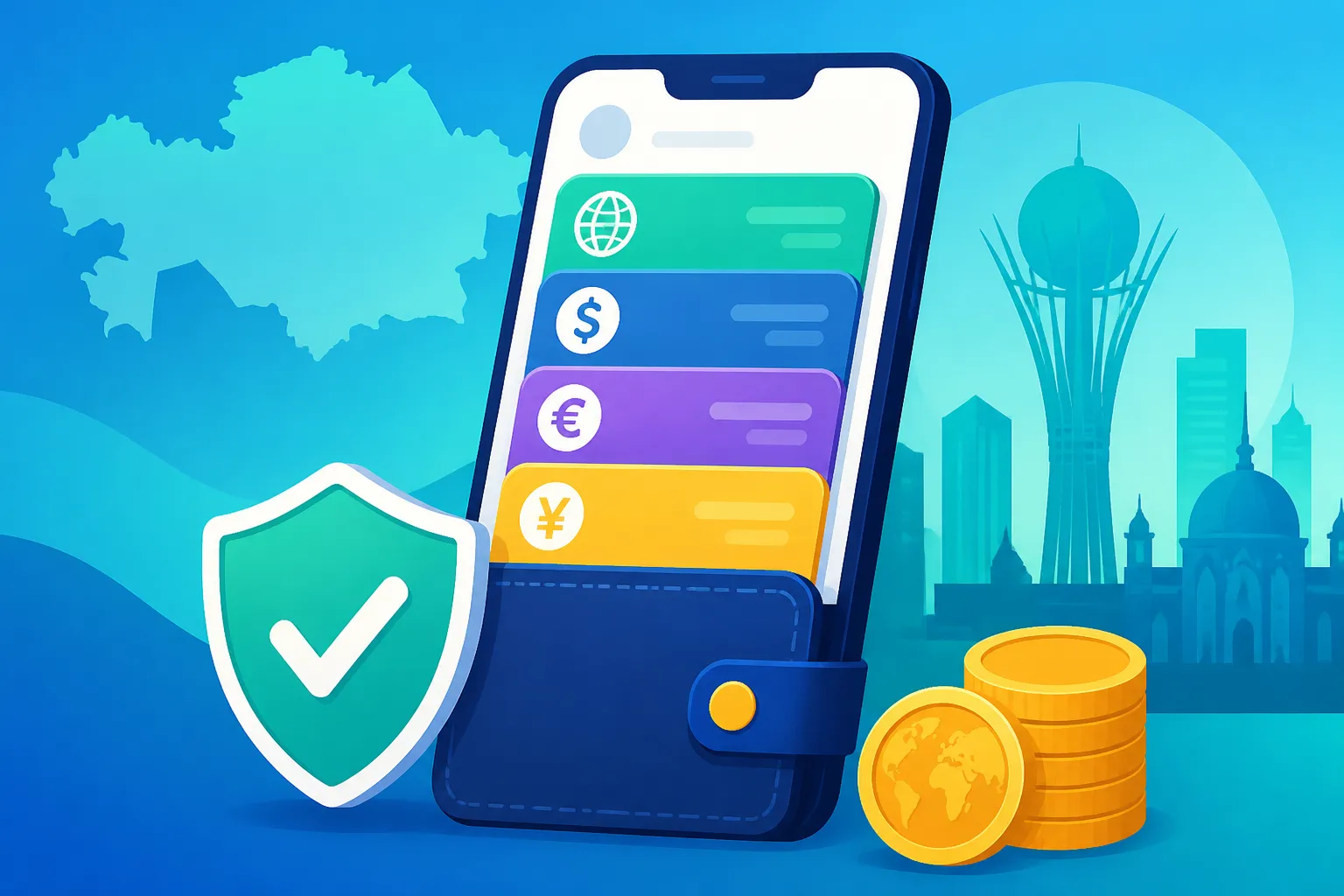
The beauty of a multi-currency account is that it’s designed precisely for this lifestyle. Instead of constantly converting money and losing out, it allows you to hold, send, and receive funds in various currencies without forcing an immediate conversion. This means you can keep your savings in USD or EUR, receive payments in those currencies, and only convert what you need, when you need it, and at a rate you’re happy with.
Think about it: an expat might have income in USD, monthly expenses in KZT, and occasionally send money to family in euros. Without a multi-currency account, this would involve three separate bank accounts or constant, costly conversions. With one, it becomes a streamlined process. You effectively have local bank details for several countries, enabling people to pay you as if you had a local account in their country, which often means faster transfers and lower fees. This flexibility is not just convenient; it's financially savvy.
Avoiding Volatility and Exchange Rate Risks
Living in Kazakhstan, you're aware that currency exchange rates can fluctuate. A multi-currency account gives you a degree of control over this volatility. If you believe the Tenge might weaken against your home currency, or against a more stable currency like the USD, you can choose to hold a larger portion of your funds in those more stable currencies. Conversely, if the Tenge is strong, you can convert funds to take advantage of favorable rates. This strategic management is nearly impossible with standard single-currency accounts.
For those planning big purchases, like a new car or even a down payment on property, having funds readily available in a desired currency, without the immediate pressure of exchange rate movements, offers immense peace of mind. It allows you to lock in rates when they are advantageous rather than being at the mercy of the market every time you need to make a transaction.
Key Features to Look For in a Multi-Currency Account
When you're trying to pick the right multi-currency account while living in Kazakhstan, it’s not just about finding any option. It’s about finding the right option that truly fits the expat lifestyle here. Many people get burned by choosing unwisely.
Supported Currencies and Local Bank Details
First and foremost, you need an account that supports the currencies you actually use. For most expats in Kazakhstan, this means not just KZT, but also USD, EUR, and perhaps GBP, AUD, or CAD, depending on your home country or where your income originates. A truly useful multi-currency account will also provide you with local bank details for some of these major currencies. For example, having a US routing and account number, a European IBAN, or a UK sort code allows you to receive payments directly in those currencies, often much faster and cheaper than traditional international wire transfers.
This feature is particularly valuable for freelancers or those working remotely for foreign companies. Your clients can pay you as if you were located in their country, avoiding costly international bank transfer fees on both ends. This dramatically simplifies receiving payments and can make a big difference to your bottom line.
Low Fees and Transparent Exchange Rates
This is where many traditional banks fall short. Look for a multi-currency account that boasts low, transparent fees for conversions and international transfers. The gold standard here is the mid-market exchange rate – the real rate you see when you Google a currency pair. Many providers will offer this rate, only charging a small, explicit percentage or flat fee on top. Always be wary of accounts that obscure their exchange rates or advertise "no fees" but give you a terrible rate.
It's also crucial to check fees for sending and receiving money, especially smaller amounts, and any monthly maintenance fees. Some accounts might be great for holding currency but expensive for daily transactions. As an expat, you’re often dealing with smaller, frequent transactions, so these micro-fees can quickly become macro-expenses. Make sure to read the fine print and compare the total cost, not just the headline figures.
Ease of Use and Integration with Local Systems
A fantastic multi-currency account abroad is only truly useful if it integrates seamlessly with your life in Kazakhstan. This means an intuitive mobile app and online platform, easy ways to top up your account, and simple methods to transfer funds to your local Kazakhstani bank account (like Kaspi Bank or Halyk Bank) when you need Tenge.
Think about the everyday practicalities. Can you easily link it to online payment systems? Is it straightforward to make international payments for services or subscriptions? While direct integration with local payment systems like Kaspi Pay might not be common for foreign multi-currency accounts, the ease of transferring funds from your multi-currency account to your local Kazakhstani bank account is paramount. A smooth, fast transfer process can save you a lot of stress, especially when deadlines for rent or utility payments loom. You can find more practical advice on how to use Kaspi and local payment systems in Kazakhstan.
Security and Regulatory Compliance
Finally, never compromise on security. Ensure the multi-currency account provider is regulated by relevant financial authorities in their primary operational countries. This gives you peace of mind that your money is protected and that the company adheres to strict financial conduct rules. Look for features like two-factor authentication, fraud protection, and clear privacy policies.
While these providers might not be regulated by the National Bank of Kazakhstan directly, their international regulations are key. Understanding where your money is held and under which legal framework it operates is essential for any expat managing finances across borders. This also ties into important considerations for your financial reporting, which is where services like Taxes for Expats can become invaluable to ensure you're compliant with both Kazakhstani and your home country's tax obligations.
Top Multi-Currency Account Options for Kazakhstan Expats
When you're trying to figure out the best way to handle your money across borders here in Kazakhstan, you'll quickly realise that traditional banks often don't cut it. They're usually too slow, too expensive, or just not built for the expat reality. Thankfully, there are modern solutions that cater specifically to our needs.
Digital Platforms: Wise (formerly TransferWise)
For many expats, Wise stands out as the quintessential multi-currency account solution. It was practically built with the international lifestyle in mind. What makes it a standout?
Firstly, the Wise Multi-Currency Account allows you to hold money in over 50 currencies, and it gives you local bank details for 10 different currencies, including USD, EUR, GBP, AUD, and NZD. This means your employer, clients, or family can pay you directly in their local currency without incurring hefty international transfer fees. For example, if you're working for a US company, they can pay you directly into your Wise USD account using a US routing number, just like a local bank.
Secondly, Wise is renowned for its transparency and low fees. They consistently offer the real mid-market exchange rate, adding only a small, upfront conversion fee that is clearly displayed before you make any transaction. This is a stark contrast to many banks that bake their profit into a less favorable exchange rate. This transparency is a massive relief when you're managing a budget and want to know exactly how much you're spending on transfers.
Transferring money from your Wise account to your local Kazakhstani bank account, such as Kaspi or Halyk, is generally straightforward and relatively quick, often taking just a few hours or one business day. This makes it incredibly convenient for converting funds into Tenge for your daily expenses. You can also get a Wise debit card, which is invaluable for spending in different currencies at the mid-market rate, avoiding foreign transaction fees when you're traveling or shopping online.
Wise has genuinely revolutionized how many of us expats manage our finances. While it doesn't offer a KZT balance for holding Tenge directly, the ability to receive major foreign currencies cheaply and then convert and send to your local Kazakhstani bank account at excellent rates makes it an indispensable tool. For those wondering about the process of moving money, it ties in nicely with understanding how to transfer money into and out of Kazakhstan as an expat.
Local Kazakhstani Bank Options
While local banks like Kaspi Bank and Halyk Bank are fantastic for your day-to-day Tenge transactions and are pillars of the Kazakhstani financial system, their multi-currency offerings for expats are generally more limited compared to digital-first platforms like Wise.
Halyk Bank, being one of the largest and oldest banks in Kazakhstan, does offer multi-currency accounts, typically allowing you to hold balances in KZT, USD, EUR, and sometimes RUB. They have a wide network of ATMs and branches, which is certainly a convenience. However, the exchange rates for converting between these currencies within the bank, or for international transfers to other countries, can be less competitive than those offered by Wise. Fees can also be a bit opaque or higher for frequent international transactions.
Kaspi Bank, known for its innovative Kaspi.kz app and services, is an absolute must-have for local life in Kazakhstan. It offers fantastic features for Tenge payments, online shopping, and peer-to-peer transfers within Kazakhstan. While Kaspi does allow you to hold foreign currency (mainly USD or EUR), primarily through its Kaspi Gold card, the primary benefit is usually for receiving international transfers via SWIFT. Converting these foreign currencies to Tenge through Kaspi is generally efficient, but again, the rates might not always be as favorable as dedicated multi-currency platforms for large or frequent conversions.
The main advantage of using a local bank for foreign currency is having everything under one roof within Kazakhstan, which can simplify some administrative tasks, especially if you also have loans or other services with them. However, for maximum flexibility, best exchange rates, and lower fees for diverse international transactions, a digital platform often complements a local bank account perfectly.
For expats, the ideal setup often involves a combination: a local bank account like Kaspi or Halyk for all your KZT needs and local payments, and a multi-currency account like Wise for managing your foreign currency income, international transfers, and strategic savings. This hybrid approach gives you the best of both worlds.
Comparison Table: Multi-Currency Account Options for Expats in Kazakhstan
Here's a quick comparison to help you weigh your options:
| Feature | Wise (Digital Platform) | Local Kazakhstani Banks (e.g., Halyk, Kaspi) |
|---|---|---|
| Primary Use Case | International transfers, foreign income, multi-currency holding, travel spending | Daily KZT transactions, local payments, utilities, physical branches |
| Supported Currencies | 50+ currencies for holding; local details for 10+ (USD, EUR, GBP, etc.) | KZT, USD, EUR, (sometimes RUB) for holding |
| Exchange Rates | Real mid-market rate with small, transparent fee | Bank's own rate, often with wider spread and less transparency |
| International Transfer Fees | Low, transparent fees | Can be higher, especially for SWIFT transfers |
| Local Bank Details | Yes, for major currencies (USD, EUR, GBP) | No, only KZT bank details for Kazakhstan |
| Debit Card | Yes, multi-currency debit card available | Yes, usually KZT-denominated (some foreign currency cards available) |
| Ease of Setup | Fully online, generally quick and straightforward | Requires physical visit to bank, more paperwork (e.g., IIN, residence permit) |
| KZT Holding Balance | No direct KZT balance for holding | Yes, primary currency |
| Mobile App Experience | Excellent, modern, intuitive | Good for local services, can be less intuitive for international features |
| Regulatory Body | FCA (UK), FinCEN (US), etc. (international regulations) | National Bank of Kazakhstan (local regulations) |
This table clearly shows that while local banks are indispensable for life in Kazakhstan, a dedicated multi-currency platform like Wise fills critical gaps for expats dealing with multiple international currencies.
Navigating Tax Implications and Future Banking Needs
Once you've got your multi-currency accounts sorted, you might breathe a sigh of relief, but hold on – there's another crucial layer to consider: taxes. Money flows, especially international money flows, always catch the eye of tax authorities, both in Kazakhstan and potentially in your home country.
Understanding Tax Residency and Income
Living in Kazakhstan means you're almost certainly going to become a tax resident here, particularly if you spend more than 183 days in the country within any 12-month period. As a tax resident, your worldwide income could be subject to Kazakhstani tax, though double taxation treaties often prevent you from paying tax twice on the same income. This is a complex area, and it's essential to understand your obligations regarding your multi-currency account income.
For example, if you receive your salary into a Wise USD account and then transfer it to your Kazakhstani bank, that income still needs to be reported for tax purposes in Kazakhstan. The flat 10% individual income tax in Kazakhstan is pretty straightforward, but declaring foreign-sourced income or capital gains from currency exchanges can add complexity. You might also have reporting requirements in your home country, depending on their tax laws regarding foreign bank accounts and income. This is where services like Taxes for Expats become incredibly useful, helping you navigate the intricacies of international tax compliance to ensure you're not caught out. They can help clarify how your specific income streams, including those managed through a multi-currency account, are viewed under Kazakhstani law and any applicable double taxation agreements.
When you're dealing with currency conversions within your multi-currency account, any significant gains from those conversions could, in theory, be considered capital gains depending on your tax residency and the specific circumstances. It’s always best to consult with a tax professional who understands both Kazakhstani tax law and the tax laws of your home country to avoid any unpleasant surprises.
Long-Term Financial Planning
Beyond immediate tax considerations, a multi-currency account plays a significant role in your long-term financial planning as an expat. It provides flexibility for saving, investing, and even planning for eventual repatriation or onward moves to other countries. If you're planning to stay in Kazakhstan for the long haul, you might start thinking about investments or buying property. Having easy access to funds in stable foreign currencies can make these processes smoother.
For instance, if you're considering buying property in Kazakhstan, you'll need to understand the nuances of the property transfer process and taxes in Kazakhstan. Holding funds in a stable currency like USD or EUR in your multi-currency account before a purchase can help protect you against Tenge fluctuations during the transaction period. Similarly, for those eyeing the Neo Nomad (Digital Nomad) Visa in Kazakhstan, having a robust multi-currency solution for your remote income is not just convenient but practically a prerequisite.
Thinking about the future, you might wonder about the viability of keeping your foreign bank accounts after moving to Kazakhstan. A multi-currency account can bridge the gap, allowing you to manage foreign funds efficiently without needing numerous traditional bank accounts in different countries. It acts as a central hub for your international financial life.
Ultimately, while the immediate benefits of low fees and easy currency management are clear, a good multi-currency account is also a foundational tool for broader financial health and peace of mind as an expat in Kazakhstan. It gives you the control and flexibility needed to navigate not just the current economic climate, but also your future financial goals, wherever they may take you.
Disclaimer
Please note that this guide provides general information for expats and tourists in Kazakhstan and should not be considered financial or legal advice. Regulations and offerings from banks and financial service providers can change. It is always recommended to consult with a qualified financial advisor and tax professional for personalized advice regarding your specific situation and to verify the most current terms and conditions of any financial product or service.