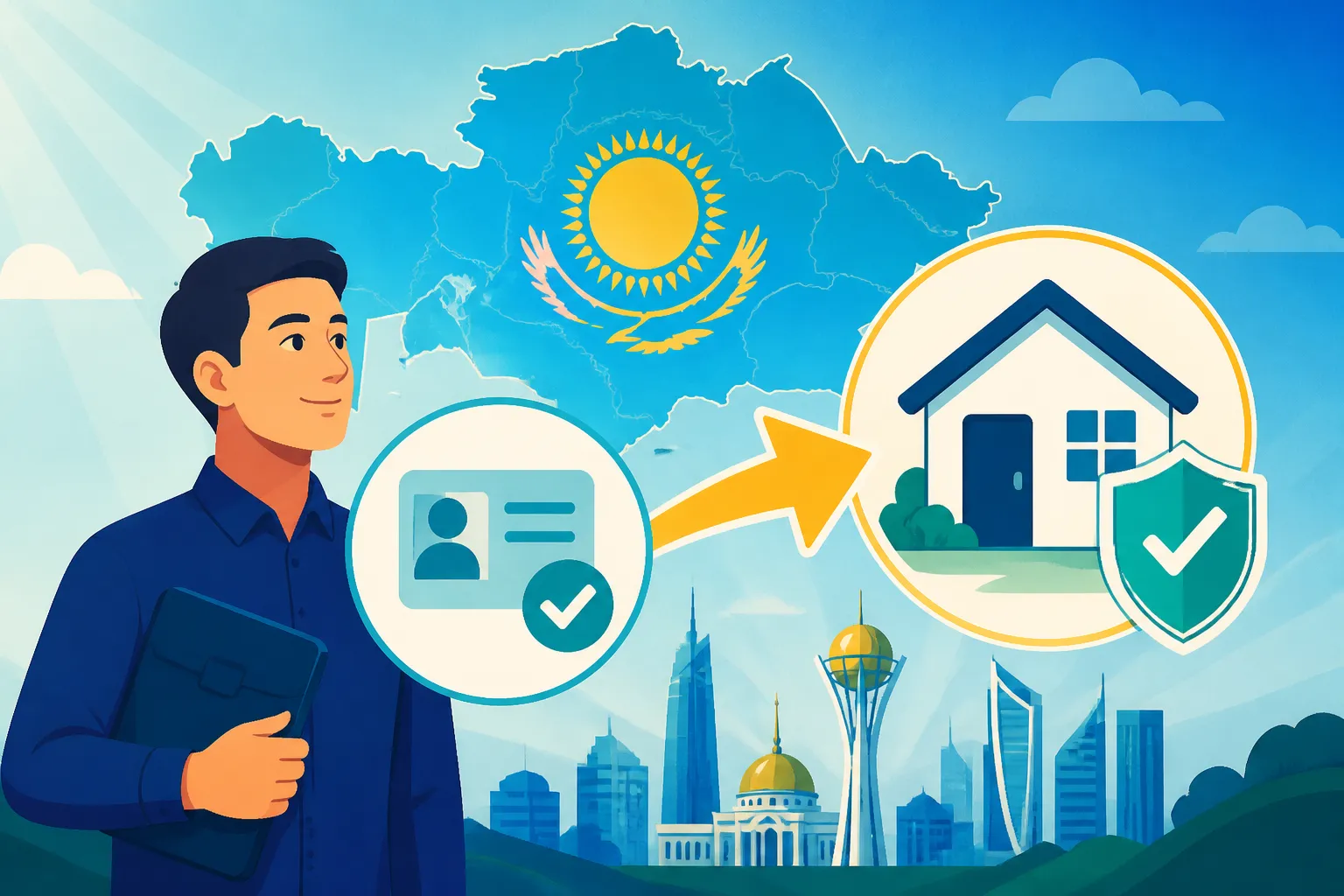
Can a Work Permit Lead to Permanent Residence in Kazakhstan?
So, you’ve landed a job, navigated the initial hurdles, and now have your shiny new work permit in Kazakhstan. Congratulations! That’s no small feat, believe me. But as time goes on, a common question starts to bubble up for many of us expats: "Is this just a temporary stay, or can this work permit actually be my ticket to putting down roots and gaining permanent residence here?" It's a question that brings a mix of hope and confusion, as the administrative processes here can feel like navigating a steppe in a blizzard without a compass. This guide is here to cut through the fog and give you a realistic, comprehensive answer to whether your work permit can pave the way for a permanent future in this fascinating country.
Understanding the Stepping Stones: Work Permits vs. Permanent Residence
Let’s start by clarifying what we’re actually talking about. Many expats, myself included, often conflate a long-term visa or work permit with something more permanent. It’s an easy mistake to make, especially when you’re dealing with a new country’s immigration system, which can sometimes feel like it was designed by a committee determined to make everything as opaque as possible.
What Exactly is a Work Permit in Kazakhstan?
Think of a work permit in Kazakhstan not as an open-ended invitation, but more like a very specific, time-limited contract. It’s permission for a foreign national to engage in specific labor activities within the country, usually tied directly to an employer who has sponsored you. Without an employer, generally speaking, you can’t get one. Your employer jumps through quite a few hoops to get this for you, proving to the authorities that they couldn't find a suitable local candidate for your role. This is a crucial distinction.
A work permit has a defined duration, often one year, and needs to be renewed. Each renewal requires your employer to re-apply, often justifying why they still need you and why they can’t find a Kazakhstani citizen to fill your shoes. This means that your continued stay in Kazakhstan is fundamentally linked to your employment. Lose the job, and you risk losing your right to stay, often with a grace period to either find new employment or leave the country. It’s inherently temporary and transactional. It facilitates your employment, and that's largely where its purpose ends. For a deeper dive into what it entails, you can check out The Complete Guide to Working in Kazakhstan as a Foreigner (2027) and how a work permit works.
The Goal: Permanent Residence in Kazakhstan
Now, permanent residence (PR) is an entirely different beast altogether. This is the big kahuna, the long-term commitment. When you obtain permanent residence in Kazakhstan, you are essentially granted the right to live, work, and even study in the country for an indefinite period, without the need for an employer sponsor. It's a much more robust and stable status. You get a special residence permit card, known as a vid na zhitelstvo, which means "residence view" – quite poetic, really.
With PR, you have much greater freedom. You’re not beholden to a single employer, meaning you can switch jobs, start your own business (perhaps you've been considering registering as an individual entrepreneur (IP) in Kazakhstan), or even pursue self-employment without needing a new work permit. You also gain access to more social benefits, though still not all the same rights as a full citizen. Importantly, the process for maintaining PR is less demanding than continually renewing a work permit; it mostly involves ensuring you don't spend too much time outside the country. It signals a governmental acknowledgement that you are truly integrating and contributing to Kazakhstani society on a long-term basis. The stability and peace of mind that come with PR are immeasurable for anyone looking to build a life here. If you're looking for an extensive overview, The Complete Guide to Permanent Residence in Kazakhstan (2026) is an excellent resource.
The Path Less Traveled: Can a Work Permit Directly Lead to PR?
This is the million-dollar question, isn't it? The one that keeps many of us expats wondering about our future here. You’ve been working, paying taxes, contributing to the economy – surely that counts for something, right?
The Official Stance and Reality
Here’s the plain, unvarnished truth, based on my years here and what I've observed and experienced, often through the struggles of friends: a work permit in Kazakhstan, on its own, does not directly lead to permanent residence. There is no automatic, straightforward pipeline where x number of years on a work permit suddenly grants you PR status. The Kazakhstani immigration system simply isn’t structured that way. It's a hard pill to swallow for many, as in some other countries, a long period of legal employment is indeed a direct route.
Instead, a work permit is a temporary legal basis for you to be in Kazakhstan. To qualify for permanent residence, you generally need to meet specific criteria that are distinct from merely having a work permit. These criteria usually revolve around family ties (e.g., marriage to a Kazakhstani citizen), significant investment, or being a highly skilled professional in a critical field. While having lived and worked legally in Kazakhstan shows your commitment, it rarely serves as the sole, explicit ground for a PR application. This means you will need to find another independent basis for your application, rather than just relying on the duration of your work history. Many expats have found this distinction frustrating, feeling like they're starting over despite years of contributions.
Leveraging Your Time with a Work Permit for Future PR
While a work permit doesn't automatically grant you PR, the time you spend in Kazakhstan on one is far from wasted. Think of it as a period for strategic preparation. It allows you to build a life here, gain local understanding, and position yourself for other PR pathways. For instance, being present in the country is a prerequisite for many of the alternative routes we'll discuss.
During your time on a work permit, you have the invaluable opportunity to integrate. Learning the local language, particularly Kazakh, can be a massive advantage. While Russian is widely spoken, showing a genuine effort to learn Kazakh demonstrates a deeper commitment to the country and its culture, which can subtly but positively influence immigration officials. Platforms like iTalki can be incredibly helpful for finding local tutors and practicing the language, making the process more accessible. You're also building a financial history here, maintaining bank accounts, and perhaps even understanding how to register with the State Revenue Committee in Kazakhstan. All these elements contribute to a stronger overall profile when you eventually apply for PR on other grounds. It's about laying the groundwork, making connections, and proving your genuine intent to stay long-term. And let's not forget the crucial aspect of financial compliance; understanding your obligations, especially regarding taxes for expats, is paramount for any long-term stay. Ensure all your contributions, like mandatory health insurance contributions, are up-to-date, as these records contribute to your legal standing.
Alternative Pathways to Permanent Residence in Kazakhstan for Expats
So, if your work permit isn't the golden ticket, what are the actual routes to getting permanent residence in Kazakhstan? The good news is, there are several, but each comes with its own set of requirements and challenges.
Marriage to a Kazakhstani Citizen
One of the most common pathways, not just in Kazakhstan but globally, is through marriage. If you tie the knot with a Kazakhstani citizen, you become eligible to apply for permanent residence. However, it's not an instant process. The authorities want to ensure the marriage is genuine and not just a means to gain residency. You'll typically need to be married for a certain period, usually a few years, and demonstrate that you have a shared household and real familial ties.
The process involves submitting your marriage certificate, proof of your spouse's Kazakhstani citizenship, shared address registration, and often interviews to assess the legitimacy of the relationship. This pathway requires patience and a significant personal commitment, but it’s a well-trodden route. Just remember, the purpose is family reunification, not just an easy path to PR. The government is vigilant against sham marriages, so be prepared to provide ample evidence of your genuine relationship and commitment to your spouse and life in Kazakhstan. You would still need to meet general requirements for permanent residence as well.
Investment and Business Activities
For those with significant capital, investment can be a direct route to permanent residence. Kazakhstan actively seeks foreign investment and offers incentives for those willing to contribute substantially to its economy. This typically involves investing a considerable sum into specific sectors of the Kazakhstani economy or establishing a business that creates jobs and brings tangible benefits to the country.
The exact investment threshold and qualifying criteria can change, so it’s essential to get up-to-date information directly from the migration service or a specialized legal consultant. It’s not just about parking money; it's often about active involvement in an enterprise. For instance, registering a substantial company (TOO) as a foreigner in Kazakhstan could be a starting point. This pathway is rigorous, requires extensive documentation of your financial sources, and usually involves a thorough vetting process to ensure the legality of funds and the viability of the investment project. It's certainly not for everyone, but for business-minded expats, it presents a clear, albeit demanding, path.
Skilled Professionals in Demand
Kazakhstan, like many developing economies, has specific needs for highly qualified specialists in certain fields. If your profession falls into one of these "in-demand" categories, and you possess exceptional skills, experience, or qualifications, you might be able to apply for PR based on this status. The government periodically publishes lists of such professions, often focusing on areas like IT, engineering, medicine, and scientific research.
This route typically requires a robust portfolio of your professional achievements, educational qualifications, and often recommendations from relevant Kazakhstani institutions or employers. You'll need to demonstrate not only that you are highly skilled but also that your expertise is genuinely needed and will contribute significantly to Kazakhstan’s development. It’s not simply about having a good job; it’s about having a job that the country has specifically identified as critical. This often involves a process of validating professional credentials in Kazakhstan and proving your unique value. The application will undergo a stringent evaluation by various government bodies to confirm your eligibility.
Ethnic Kazakh Repatriation (Oralman Status)
While not applicable to most expats, it's important to mention the "Oralman" program. This pathway is specifically designed for ethnic Kazakhs who reside outside the Republic of Kazakhstan and wish to return and resettle in their historical homeland. Individuals who obtain Oralman status are generally fast-tracked for permanent residence and later, citizenship.
This is a cultural and historical program, intended to reunite the Kazakh diaspora with the modern state. If you have Kazakh ancestry and can prove it, this is a very direct route to permanent residence. However, for the majority of non-ethnic Kazakh expats, this avenue simply won't be available. It highlights a unique aspect of Kazakhstani immigration policy, prioritizing its diaspora.
Essential Considerations and Documentation for PR Application
No matter which pathway you pursue, applying for permanent residence in Kazakhstan is a bureaucratic marathon, not a sprint. It demands meticulous preparation, patience, and a thick skin for potential delays and requests for additional paperwork.
The Dreaded Document Checklist and Bureaucracy
Get ready for paperwork, and then some more paperwork. The list of documents required for a PR application is extensive and can feel overwhelming. You'll need your passport, multiple passport-sized photos, a certificate of no criminal record from both your home country and Kazakhstan (if you’ve lived here for a significant period), medical certificates proving you don't have certain communicable diseases, and robust proof of your financial solvency. This means demonstrating you have sufficient funds to support yourself and your dependents without becoming a burden on the state, often requiring a substantial deposit in a local bank account.
Crucially, many of your foreign documents will need to be apostilled (a form of international certification) in your home country and then officially translated into Kazakh or Russian, with the translations notarized in Kazakhstan. Missing a single stamp or having an incorrect translation can send your application back to square one, leading to frustrating delays. Many expats have tales of multiple trips to various government offices, each asking for slightly different versions of the same document. It’s a test of endurance, but remember that diligence in this stage can save you immense headaches later. Obtaining your Individual Identification Number (IIN) is one of the foundational steps you would have already taken, but it's vital for all official procedures.
Financial Stability and Integration Requirements
Beyond just having enough money in your bank account, the Kazakhstani authorities want to see evidence of your genuine integration and long-term commitment. This includes demonstrating that you have a stable source of income – perhaps through your current employment, even if your work permit itself isn't the direct path to PR. Showing a history of tax compliance is also critical. Make sure all your tax obligations have been met, as issues here can severely impact your application. Consulting with a service like Taxes for Expats can be invaluable to ensure your financial house is in order before you even consider applying. They can help you navigate the nuances of the local tax system and ensure you have all the necessary documentation to prove your financial standing.
Another aspect that might be implicitly or explicitly considered is your social integration. Have you made an effort to learn the local languages (Kazakh or Russian)? As mentioned before, tools like iTalki can assist immensely here. Do you understand and respect local customs and laws? Are you participating in society beyond just your workplace? While not always a checkbox requirement, these softer aspects contribute to the overall impression of a serious, committed applicant. The idea is that you're not just passing through, but you're genuinely becoming a part of the fabric of Kazakhstan.
| Feature | Work Permit | Permanent Residence |
|---|---|---|
| Purpose | Allows foreign nationals to work for a specific employer. | Allows indefinite living, working, and studying in Kazakhstan. |
| Duration | Typically 1 year, renewable (employer-dependent). | Indefinite (requires periodic re-validation, e.g., every 10 years). |
| Sponsorship | Employer-sponsored and tied to specific job. | Not employer-dependent; grants general right to reside and work. |
| Path to PR | Does not directly lead to PR. | Is the PR status itself. |
| Freedom to Work | Limited to the specific job/employer stated on the permit. | Can work for any employer, be self-employed, or start a business. |
| Social Benefits | Limited access, often tied to employer benefits. | Broader access to social services, though not full citizen rights. |
| Cost | Employer typically covers costs. | Applicant covers significant government fees, legal, and translation costs. |
| Complexity | Managed largely by employer, but still bureaucratic. | Highly complex, extensive documentation, requires direct applicant engagement. |
Disclaimer
Please remember that immigration laws and policies in Kazakhstan are subject to change. While every effort has been made to provide accurate and up-to-date information, this guide serves as general advice only. It is always recommended to consult with the official migration service of Kazakhstan or a qualified immigration lawyer for personalized advice regarding your specific situation and the latest requirements.