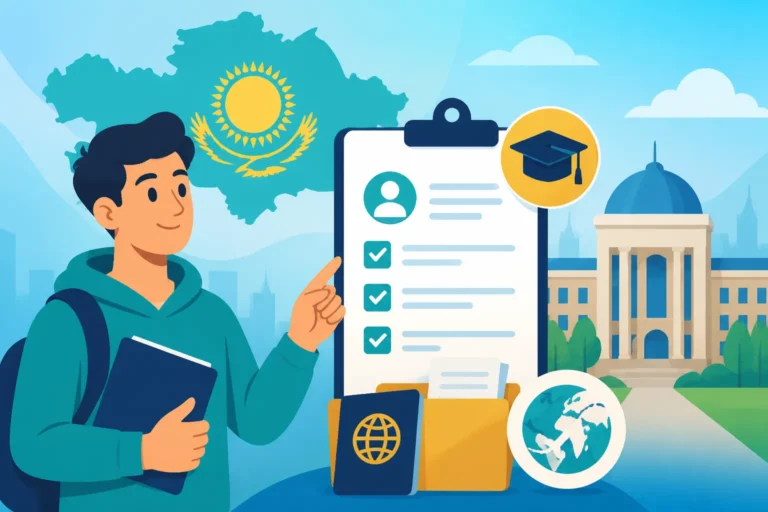
Can I Transfer to a University in Kazakhstan from Abroad?
It's a common story, isn't it? You start a degree program in your home country or another international location, full of enthusiasm, only to realize partway through that life has other plans. Perhaps a fantastic job opportunity for your partner has emerged in Almaty, or your family has decided to relocate to Astana, leaving you wondering if you can continue your education without starting from scratch. The thought of transferring credits from one academic system to another, especially across different countries, can feel like navigating a dense fog with no map. But don't despair! While it certainly comes with its share of bureaucratic quirks and detailed paperwork, transferring your university studies to Kazakhstan from abroad is absolutely possible. This guide will help you understand the process, manage your expectations, and arm you with the knowledge you need to make this transition as smooth as possible.
The Possibility of Transferring Your University Studies to Kazakhstan
Let's cut right to it: yes, you can transfer your university studies to Kazakhstan from abroad. However, it's not always as simple as picking up your transcript and walking into a new registrar's office. Kazakhstan's higher education system, while increasingly globalized and aligned with international standards like the Bologna Process, still has its unique administrative procedures. The key is understanding what a Kazakhstani university looks for and being prepared for a thorough evaluation of your prior learning.
Understanding Credit Transfer Policies
The bedrock of any successful transfer lies in how your previous university's credits and coursework are assessed by a Kazakhstani institution. Universities here will meticulously review your academic record to determine which courses align with their curriculum. They're looking for equivalency in terms of content, credit hours, and academic rigor. This isn't just a tick-box exercise; it's a deep dive into what you've actually learned.
For instance, if you've completed two years of a Bachelor of Science in Computer Science in Germany, a Kazakhstani university will want to see detailed descriptions of every single module you took. Was your Calculus I the same depth as theirs? Did your Introduction to Programming cover similar languages and concepts? You'll need to provide comprehensive syllabi and course descriptions, often translated into Kazakh or Russian and officially notarized. Imagine Maria, who started her business degree in Portugal, now trying to get her credits recognized at a university in Almaty. She's found that the university requires an almost forensic level of detail for each course, even down to the number of lecture hours and required readings. It's a stack of translated documents she never anticipated compiling, but it's crucial for their academic committee to make an informed decision. The more detail you can provide about your completed courses, the better your chances of maximizing credit transfer.
Eligibility Criteria for International Transfer Students
Beyond just the credits themselves, Kazakhstani universities have specific criteria for who they will accept as a transfer student. Generally, you'll need to demonstrate good academic standing from your previous institution. This usually means a minimum Grade Point Average (GPA), though the exact threshold can vary significantly between universities and even between faculties within the same institution. If you were struggling academically elsewhere, it might be an uphill battle to transfer.
Another critical factor is language proficiency. If you're hoping to enroll in a program taught in Kazakh or Russian, you'll need to prove your proficiency in that language, often through a standardized test or by demonstrating prior education in that language. However, many universities, especially those with an international focus like Nazarbayev University or some programs at Al-Farabi Kazakh National University, offer degrees entirely in English. For these programs, you'll typically need to provide evidence of English language proficiency, such as an IELTS or TOEFL score. Finally, be mindful of the academic calendar; Kazakhstani universities generally operate on a two-semester system (autumn and spring), which might differ from your previous institution's schedule, potentially affecting your entry point. For a broader look at starting your academic journey here, you might find our guide on how to apply to a Kazakhstani university as an international student helpful.
The Application Process: Navigating the Bureaucracy
The application process for transferring to a university in Kazakhstan is undeniably a bureaucratic journey. It requires patience, meticulous attention to detail, and a willingness to gather a significant amount of paperwork. Don't underestimate this part; it's where many well-intentioned transfer attempts can falter if you're not prepared.
Required Documents and Authentication
This is where the real expat challenge often begins. You'll need more than just your pretty diploma. Get ready to compile a dossier that includes:
- Official Academic Transcripts: These must be directly from your previous university, sealed and preferably sent directly to the Kazakhstani institution.
- Detailed Course Descriptions/Syllabi: As mentioned, these are vital. Each course you wish to transfer must have a comprehensive description, outlining learning outcomes, topics covered, assessment methods, and credit hours.
- Diplomas and Certificates: Authenticated copies of any degrees or certificates you've already obtained.
- Passport Copy: A clear copy of your valid passport, with sufficient validity remaining.
- Individual Identification Number (IIN): This is absolutely crucial for any official transaction in Kazakhstan, including university applications, banking, and even setting up utilities. If you don't have one yet, getting your IIN (Individual Identification Number) in Kazakhstan should be one of your very first steps.
- Medical Certificate: A recent health certificate from an approved clinic, often required for visa and residence permit applications.
- Language Proficiency Certificate: Your IELTS/TOEFL scores for English-taught programs, or relevant certificates for Kazakh/Russian.
- Application Form: The specific form provided by your chosen university.
- Statement of Purpose/Motivation Letter: An essay explaining your reasons for transferring, your academic goals, and why you wish to study in Kazakhstan.
But wait, there's more! Almost all foreign documents will need to be translated into Kazakh or Russian by a certified translator and then notarized. On top of that, many documents, especially academic ones, will require an apostille or consular legalization from your home country's foreign affairs ministry. This process, known as "nostrification" (recognition of foreign educational documents), is a formal procedure handled by the Ministry of Education and Science of Kazakhstan or designated bodies. It's a separate step to get your foreign university degree recognised in Kazakhstan, and it can take time, so factor that into your planning.
To give you a clearer picture, here's a table outlining the key documents:
| Document Type | Required Action | Important Notes |
|---|---|---|
| Academic Transcripts | Official, sealed copies from previous institution. | Must show all courses, grades, credits, and GPA. Crucial for initial assessment. |
| Detailed Course Descriptions (Syllabi) | Comprehensive outlines for all courses to be transferred. | Absolutely vital for credit evaluation. Include learning objectives, content, hours, and bibliography. The more detail, the better. |
| Diplomas/Certificates | Authenticated (apostilled/legalized) copies. | For any completed degrees, high school diplomas, or vocational certificates. |
| Passport Copy | Clear copy of valid passport. | Ensure ample validity for the duration of your intended studies. |
| Individual Identification Number (IIN) | Obtained in Kazakhstan. | Essential for all formal registrations, including university enrollment, banking, and residence permits. Apply for this early! |
| Medical Certificate | Recent certificate from an approved medical facility. | Standard requirement for all international students and visa applicants. |
| Language Proficiency Test Results | IELTS/TOEFL (for English programs) or equivalent. | Or official certificates of Kazakh/Russian proficiency. Check specific university requirements. |
| University Application Form | Completed accurately and thoroughly. | Each university will have its own form, often available online. |
| Statement of Purpose / Motivation Letter | Personal essay outlining academic goals and reasons for transfer. | A chance to explain your journey and commitment. |
Choosing a University and Program
Not all Kazakhstani universities, or even all programs within a university, will readily accept transfer students from abroad. Specialized fields, highly competitive programs, or those with very rigid curricula might have stricter rules or limited capacity for transfers. Your best bet is to do your homework. Start by researching universities known for your field of study. Institutions like Al-Farabi Kazakh National University in Almaty, L.N. Gumilyov Eurasian National University in Astana, or Nazarbayev University (often an easier transfer due to its international curriculum and English-language instruction) are good starting points.
Once you have a shortlist, don't just rely on general information. You need to contact the international student office or the specific faculty department directly. Ask very specific questions:
- Do you accept international transfer students for the [Your Program] program?
- What is your credit transfer policy for [My Country/University]?
- What are the specific document requirements for transfer applicants?
- What is the deadline for transfer applications?
Be persistent and prepared for a bit of back and forth. Email is good for initial contact, but sometimes a phone call (with a Russian/Kazakh speaker if necessary) can cut through the noise. This direct communication will give you the most accurate and up-to-date information, saving you headaches down the line. To get an idea of the landscape, you might want to read our guide on what are the best universities in Kazakhstan?
Challenges, Expectations, and Making the Most of Your Transfer
Even with all your documents in order and a university accepting you, the transfer journey isn't without its bumps. It's crucial to manage your expectations and be ready to adapt, both academically and culturally.
Potential Hurdles and Discrepancies
One of the biggest hurdles is the potential for credit loss. Even with the best documentation, it's rare for all your previous credits to transfer perfectly. Curricula differ, credit hour systems might not align exactly, or a course you took might be deemed not rigorous enough by Kazakhstani standards. Be prepared that you might lose some credits and, consequently, need to extend your study period by a semester or even a year to complete the degree requirements. This can be frustrating, but it's a common reality for international transfers.
For example, your "Introduction to Economics" might have been a 3-credit course, but the equivalent here is a 4-credit course with additional content. The university might grant you partial credit or ask you to take an additional module. Furthermore, administrative processes, even at international-friendly universities, can still have language barriers. While the program itself might be in English, the forms, the staff in the registrar's office, or even some local professors might primarily speak Kazakh or Russian. Speaking of navigating complex systems, while the university transfer process is distinct from financial matters, it's a good reminder that specialized support can be invaluable. Many expats find great relief using services like Taxes for Expats to manage their financial obligations here, which speaks volumes about the value of expert guidance when facing local administrative hurdles.
Cultural and Academic Adjustment
Beyond the paperwork, adjusting to a new academic environment and culture is a significant part of the transfer experience. Teaching styles might be more traditional, with less emphasis on class participation and more on rote learning or formal lectures. Exam formats might also differ from what you're used to. It's not uncommon for Kazakhstani universities to have oral exams or very comprehensive written exams covering a vast amount of material. Student-professor interactions might be more formal, with a greater emphasis on respect for authority.
Social integration is another aspect. Making new friends in a foreign land can be challenging, but universities often have student clubs, international student organizations, and events designed to help newcomers. Embrace these opportunities! Even if your studies are in English, having some grasp of Kazakh or Russian will profoundly enrich your daily life, make administrative interactions smoother, and help you connect with people. Platforms like iTalki offer fantastic opportunities to learn from native speakers, even before you arrive. While this isn't strictly about academic transfer, understanding how to adapt to the Kazakhstani workplace culture can offer insights into the broader professional and social etiquette you'll encounter in an academic setting as well. Give yourself time and grace to adjust – it's a marathon, not a sprint.
Financial Implications and Support
Transferring universities isn't just an academic decision; it's a financial one. Understanding the costs involved and potential avenues for support is vital for planning your move and studies.
Tuition Fees and Living Costs
While generally more affordable than many Western countries, studying in Kazakhstan still incurs costs. Tuition fees for international students can vary widely depending on the university, program, and whether it's taught in Kazakh/Russian or English. English-taught programs, especially at more prestigious institutions, often come with higher price tags. You'll be paying for the remaining years of your degree, factoring in any lost credits that might extend your study duration. For a detailed look at what to expect, our article on how much is tuition for international students in Kazakhstan? can provide some specific figures.
Beyond tuition, you need to budget for living costs. This includes rent (which varies significantly between cities like Almaty and smaller towns), food, transportation, health insurance, textbooks, and personal expenses. While Kazakhstan's cost of living is often highlighted as being low, especially compared to Europe or North America, it still requires careful budgeting. You might find our comprehensive guide on how much is the cost of living in Kazakhstan for expats? extremely useful for planning your finances. Don't forget unexpected costs that often crop up when relocating and setting up a new life.
Scholarships and Financial Aid
Finding scholarships or financial aid specifically for international transfer students can be more challenging than for first-time international applicants. Many scholarships are geared towards those starting a full degree program from the beginning. However, it's not impossible.
Your best approach is to research scholarships offered directly by the universities you're interested in. Some institutions might have limited grants or tuition waivers for academically strong transfer students, particularly in fields where they are trying to attract international talent. Additionally, explore any scholarships offered by the Kazakhstani government for international students, though these often have strict eligibility criteria and might prioritize full-degree applicants. Finally, check if your home country's government or any international organizations offer scholarships for studying abroad in countries like Kazakhstan. The application windows for these can be very early, so proactive research is key. For more general advice on funding your studies, our guide on how to apply for a scholarship to study in Kazakhstan? offers a good starting point, though remember to filter for transfer-specific opportunities.
Navigating a university transfer to Kazakhstan requires dedication, thorough preparation, and a healthy dose of flexibility. But with careful planning, it's a rewarding path that can open up new academic and life experiences in this fascinating country.
Disclaimer
Please remember that while this guide provides comprehensive information, university policies and immigration regulations in Kazakhstan can change. It is always advisable to consult the official websites of the specific universities you are interested in and the Ministry of Education and Science of Kazakhstan, or seek advice from a qualified immigration consultant, for the most current and accurate information relevant to your personal situation.