How Do I Set Up Internet in My Kazakhstan Home?
Alright, so you’ve just landed, found a place, and now the next big hurdle looms: getting internet set up in your new Kazakhstani home. Believe me, I've been there, staring blankly at forms in Cyrillic, trying to decipher the difference between providers, and wondering if I'd ever stream my favorite shows again. This guide is going to walk you through the ins and outs of securing a stable internet connection, covering everything from choosing a provider to the actual installation, making your transition just a little bit smoother.
Understanding Kazakhstan’s Internet Landscape
First things first, let's get a lay of the land. Kazakhstan has made impressive strides in internet connectivity over the years, especially in its major cities like Almaty and Astana. You'll find a mix of technologies, primarily fibre optic, ADSL, and robust mobile broadband options. While the speeds can be surprisingly good, especially for the price, the administrative process can sometimes feel like a trip back in time, requiring patience and a good sense of humor.
Dominant Players and Coverage Areas
When it comes to fixed-line internet, Kazakhtelecom is generally the big fish in the pond. They’re the national telecommunications provider, so they own most of the infrastructure. This often means if you want a reliable fibre optic connection directly to your apartment, they'll likely be your primary option. They’ve got the widest coverage for fixed lines, reaching even some of the more remote areas where fibre might not be available, in which case you might be looking at ADSL.
For mobile internet, and increasingly home internet bundles, you’ll hear names like Beeline, Altel, and Tele2. These companies are fierce competitors, offering various packages that can often combine mobile data, calls, and even home internet or TV services. This bundling can be quite attractive, especially if you’re looking to streamline your bills. Understanding these players is step one in navigating your options.
Speed, Reliability, and Expectations
In urban centers like Almaty and Astana, you can expect decent speeds, often comparable to what you might find in many Western countries, sometimes even exceeding them for a fraction of the price. Fibre optic plans typically offer speeds from 100 Mbps up to 500 Mbps, or even 1 Gbps in some premium packages. Mobile broadband speeds will, of course, depend on your location and network congestion, but 4G LTE coverage is generally excellent in cities and along major highways.
Reliability is usually quite good, though occasional outages can happen, often due to construction work or planned maintenance. These are usually resolved fairly quickly, but it’s always good to have a backup plan, even if it’s just your mobile data. Don't go into this expecting flawless, uninterrupted service 24/7, but also don't expect dial-up. It's a solid, functional system for most expats.
Choosing Your Internet Provider and Plan
Now that you know who’s who, it's time to pick your poison. This part can feel a bit overwhelming with all the options, but breaking it down makes it much more manageable.
Factors to Consider Before Committing
Before you sign on the dotted line, think about your specific needs. Are you a hardcore gamer or a remote worker who needs lightning-fast, ultra-stable internet? Or are you a casual browser who just needs to check emails and watch a few YouTube videos?
- Your Location: This is paramount. Not all technologies are available everywhere. Fibre optic is best, but if you're in an older building or a slightly less developed area, ADSL might be your only fixed-line choice. Always check what's actually available at your specific address. Kazakhtelecom's website usually has a checker, or you can visit an office.
- Speed Requirements: Be realistic. A 100 Mbps fibre plan is more than enough for most households. If you’re streaming 4K on multiple devices and constantly uploading large files, then maybe consider 300 Mbps or higher.
- Budget: Internet here is generally affordable compared to many Western nations. Compare the monthly costs, but also look out for any setup fees or equipment rental charges.
- Contract Length: Most fixed-line providers will require a contract, typically 12 or 24 months. If you’re only here for a short stint, consider mobile broadband or even using an eSIM from a provider like Airalo for your initial days.
- Bundles: As I mentioned, companies like Beeline offer bundles. If you're looking for a new mobile phone plan, it might be worth checking if they offer a package that saves you money. Check out our guide on how to set up a mobile phone plan in Kazakhstan for more details.
Deep Dive into Popular Providers
Let’s look at your main options more closely.
-
Kazakhtelecom:
- Pros: Widest fibre optic network, generally very stable, competitive pricing for standalone internet, often the only fibre option for many apartment buildings. They have a decent customer service network, even if it's not always English-speaking.
- Cons: The application process can be bureaucratic, requiring an in-person visit to one of their service centers (known as Kazakhtelecom Customer Service Centers or Sarapshy Centers). Their website can be tricky to navigate without Russian or Kazakh language skills. You might also find their routers to be basic, potentially requiring you to buy your own if you need advanced features.
- What to Expect: When applying, you'll need your passport, your IIN (Individual Identification Number), and proof of your temporary residence registration. This last one is crucial, as you can't get fixed-line internet without a registered address. Make sure to read our guide on how to register my address after moving to Kazakhstan.
-
Beeline, Altel, Tele2:
- Pros: Excellent for mobile data, flexible plans, strong 4G LTE coverage, easy to get a SIM card and start immediately. They often offer convenient home internet solutions that use mobile network technology (e.g., 4G routers) if fixed-line isn't an option or if you need something quick. They also frequently have good bundle deals.
- Cons: While good, mobile home internet might not be as stable or fast as fibre optic, especially during peak usage times or in areas with weaker signal. Data caps might apply to some "home internet" plans, unlike unlimited fibre.
- What to Expect: For mobile services, you just need your passport and IIN to buy a SIM card. For home internet solutions, you might need your temporary registration.
Here's a quick comparison of the main providers you'll encounter for home internet:
| Feature | Kazakhtelecom (Fixed Line) | Beeline (Mobile + Home) | Altel / Tele2 (Mobile + Home) |
|---|---|---|---|
| Technology | Fibre optic (primary), ADSL (secondary) | 4G/5G mobile network, Fibre (in specific bundled locations) | 4G/5G mobile network, Fibre (in specific bundled locations) |
| Typical Speeds | 100 Mbps – 1 Gbps (Fibre); up to 24 Mbps (ADSL) | Up to 100 Mbps+ (4G/5G); varies by location and network load | Up to 100 Mbps+ (4G/5G); varies by location and network load |
| Reliability | Very High (Fibre) | Good (can vary with network load/coverage) | Good (can vary with network load/coverage) |
| Cost (Monthly) | ~3,500 – 8,000 KZT for internet only | ~5,000 – 10,000 KZT (often bundled with mobile/TV) | ~4,500 – 9,000 KZT (often bundled with mobile/TV) |
| Contract | Usually 12-24 months | Often flexible month-to-month, bundles may have longer terms | Often flexible month-to-month, bundles may have longer terms |
| Installation | Professional installation required, usually 1-5 days wait | Self-setup for 4G routers; professional for fibre bundles | Self-setup for 4G routers; professional for fibre bundles |
| Documents Req. | Passport, IIN, Temporary Residence Registration | Passport, IIN (for SIM); Temporary Residence for some home plans | Passport, IIN (for SIM); Temporary Residence for some home plans |
| Customer Svc. | Mainly Russian/Kazakh; some large centers may have English staff | More likely to find English support in major city branches | Similar to Beeline, more likely in major city branches |
The Installation Process: What to Expect
You've chosen your provider, now comes the "fun" part: getting it all installed. This is where your expat patience will truly be tested.
Application and Scheduling
For fixed-line internet (Kazakhtelecom), you’ll almost certainly need to visit one of their customer service centers in person. Bring all your documents: your passport, your IIN, and your temporary registration. Even if you speak some Russian or Kazakh, bringing a local friend or colleague can be a lifesaver for navigating the paperwork and clarifying the details of your plan. They'll help you fill out the application and schedule an installation date. Be prepared for a wait, sometimes a few days, sometimes over a week, depending on technician availability.
For mobile-based home internet, if you're getting a simple 4G router, it’s usually much quicker. You buy the router, get a SIM card for it, and you can often set it up yourself within minutes. If it’s a bundled fibre package from Beeline or similar, it will follow a process similar to Kazakhtelecom with a scheduled technician visit.
The Big Day: Technician Visit and Language Barriers
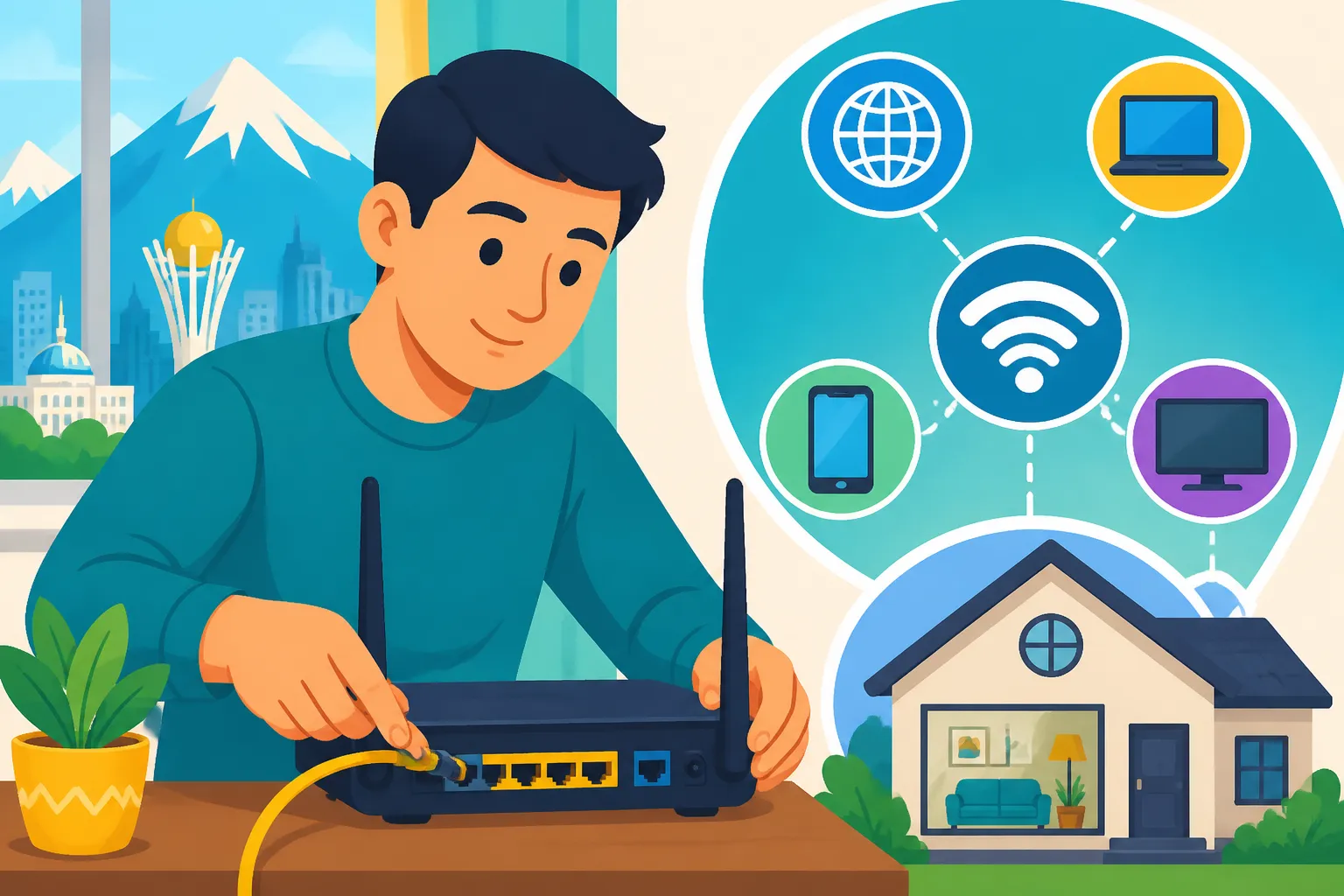
When the technicians arrive, be ready. They might call you beforehand (in Russian/Kazakh, of course!), so having a translator app or a local contact on standby is incredibly helpful. The installation itself is generally straightforward: they’ll run a cable, set up the router, and confirm the signal.
Here are a few tips based on my own experiences:
- Be Present: Ensure you or someone you trust is home during the scheduled window. They often don't wait long.
- Language Prep: Have Google Translate ready. Basic phrases like "Is it working?" (Rabotayet?), "Faster" (Bystreye), "No signal" (Net signala) can go a long way.
- Test Immediately: Once they're done, test the internet speed and connectivity on your devices before they leave. Don't be shy; make sure it's actually working.
- Equipment: The standard router they provide might be quite basic. If you have specific needs (e.g., mesh Wi-Fi for a large apartment, more Ethernet ports), you might want to purchase your own router beforehand and ask them to connect it.
It's a process, but once it's done, it's usually done well. After the setup, the technician will usually provide a document confirming the installation. Keep this safe, as it might be needed for any future troubleshooting or if you ever decide to cancel the service.
Activation, First Use, and Bill Payments
Once the installation is complete, your internet should be active almost immediately. You'll typically be given a username and password for your Wi-Fi network. Change these to something secure as soon as possible.
Paying your internet bill in Kazakhstan is usually a breeze, thankfully. The dominant payment app, Kaspi.kz, is your best friend here. You can easily link your bank account (read our guide on how to open a bank account at a Kazakhstani bank as a foreigner) and pay all your utility bills, including internet, electricity, and water, with a few taps. Most providers will also allow payments through their own apps or at post offices, but Kaspi.kz is by far the most convenient. Learn more about how to use Kaspi and local payment systems in Kazakhstan.
Alternatives for Short-Term or Mobile Internet Needs
Sometimes, a fixed-line connection isn't practical, especially if you're on a short trip, a digital nomad, or just need something while you wait for your main installation. Kazakhstan offers several excellent mobile internet alternatives.
Relying on Mobile Data
For many expats, especially those who work remotely or travel frequently within the country, mobile data from a local SIM card is sufficient, or even preferred. Kazakhstan boasts excellent 4G LTE coverage in urban areas and surprisingly good connectivity along major transport routes.
- Getting a Local SIM: This is probably one of the first things you'll do after arriving. Head to any mobile provider’s branch (Beeline, Altel, Tele2) with your passport and IIN. You can choose from various prepaid or post-paid plans. Many offer generous data packages for a very reasonable price. For those first few days or weeks, a prepaid SIM with plenty of data is invaluable.
- Hotspotting: Your smartphone can easily become a portable Wi-Fi hotspot for your laptop, tablet, or other devices. While it might drain your phone battery faster, it's a fantastic temporary solution or even a primary one if your data allowance is large enough. If you’re a digital nomad or just looking into working remotely from Kazakhstan, this can be a viable strategy.
Portable Wi-Fi Routers
If you need something more robust than your phone’s hotspot but still portable, consider a portable Wi-Fi router (often called a Mi-Fi device). These small gadgets take a SIM card and create a Wi-Fi network, allowing multiple devices to connect. They're great for:
- Temporary Accommodation: Perfect for apartments where fixed internet isn't an option or during the waiting period for installation.
- Frequent Travel: If you often move between cities for work or leisure, a portable router ensures you always have internet access.
- Backup: A great plan B if your main home internet goes down.
You can purchase these devices directly from mobile providers or electronics stores. Look for models that support Kazakhstan's 4G/5G bands for the best compatibility.
eSIMs for Immediate Connectivity
For truly immediate internet access right after you step off the plane, or for short visits, an eSIM from a global provider like Airalo can be a game-changer. You can purchase and activate a data plan before you even arrive, and connect to a local network instantly. This saves you the hassle of finding a local SIM card store, navigating language barriers, and getting your IIN sorted out on day one. It’s a bit more expensive than a local SIM for long-term use, but for those crucial first few days, it's worth every penny. Think of it as your digital safety net!
Conclusion: Patience and Preparation are Key
Setting up internet in your Kazakhstan home might require a bit of legwork and a healthy dose of patience, especially with fixed-line services. But with the right documents (passport, IIN, temporary registration), a little language prep, and an understanding of the local providers, you'll be connected in no time. Whether you opt for the stable speeds of Kazakhtelecom fibre, the flexible mobile solutions from Beeline, Altel, or Tele2, or a temporary eSIM from Airalo, Kazakhstan offers solid internet options for every expat. Just remember, a friendly smile and a calm demeanor go a long way when navigating local bureaucracy.
Disclaimer
Please note that while this guide provides comprehensive information based on current practices and general expat experiences in Kazakhstan, telecommunications policies, service offerings, and pricing can change. It is always advisable to verify the latest information directly with the service providers or relevant government agencies. This content is for informational purposes only and does not constitute professional advice.