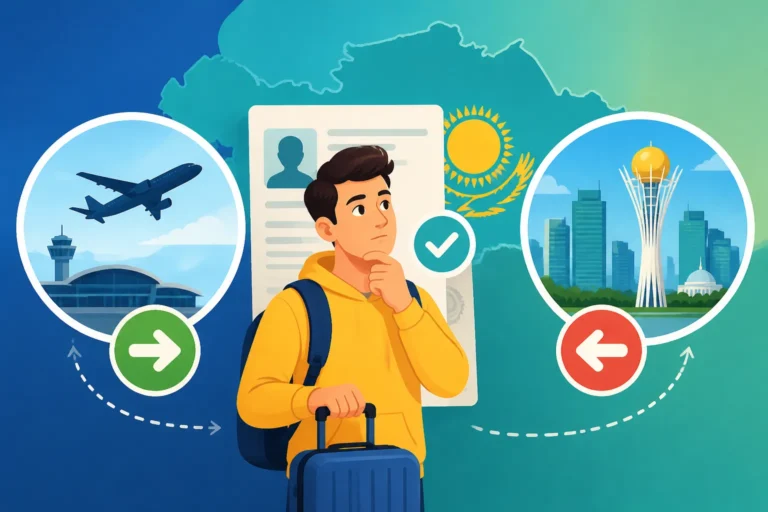
How Long Can I Stay in Kazakhstan Without a Visa?
Oh, the joy and slight panic of that first arrival in Kazakhstan! You step off the plane, breathe a sigh of relief that you didn't need a visa just to get here, but then a little voice starts asking, "Okay, so how long is this golden ticket good for?" It's a question that plagues many newcomers, turning that initial freedom into a ticking clock. This guide is here to untangle the complexities of Kazakhstan's visa-free regime, help you understand exactly how long you can legally enjoy this incredible country without extra paperwork, and what to do when that time starts to run out.
Understanding Kazakhstan's Visa-Free Regime
When you first arrive in Kazakhstan, the visa-free entry is often a wonderful surprise, offering a taste of the country without the initial administrative headaches. However, it's crucial to understand that this isn't an open-ended invitation. The duration of your visa-free stay is strictly defined and depends on your nationality, as well as the specific bilateral agreements Kazakhstan has with your home country. It’s not just a casual suggestion; these are hard limits set by the Migration Service, and misunderstanding them can lead to some truly unpleasant situations.
Who Benefits from Visa-Free Entry?
Kazakhstan has been quite progressive in expanding its visa-free list, aiming to boost tourism and attract business. For citizens of many countries, particularly those from the European Union, the United States, Canada, Australia, New Zealand, Japan, South Korea, and several others, you can typically enter Kazakhstan without needing to apply for a visa beforehand. This list is always subject to change, so before you even book your flights, it’s absolutely paramount to double-check the latest official information from the Kazakhstani Ministry of Foreign Affairs or your local embassy. Imagine arriving at Almaty International Airport (ALA) only to find out your country's rules have changed – not a fun way to start your adventure!
The intention behind these visa-free agreements is usually to facilitate tourism, short business trips, or visiting family. It's not designed as a backdoor entry for long-term residency or employment. Many expats, myself included, have initially arrived on a visa-free stay to "scope out" the country before committing to a bigger move. It’s a fantastic way to experience daily life in cities like Almaty or Astana, explore the stunning natural beauty, and even start your apartment hunt, perhaps with the help of a reputable moving company like Sirelo if you plan to stay. But remember, this initial period is merely a taste, not the main course.
The Standard 30-Day Rule
For many of the countries on the visa-free list, the standard duration for a single entry is 30 calendar days. This means from the moment your passport is stamped upon arrival, you have exactly 30 days to enjoy your stay. But here's the kicker, and it’s where many foreigners get caught out: for a large number of these nationalities, this 30-day period often comes with an overarching rule that states you cannot spend more than 90 days within any 180-day period in Kazakhstan. This isn't always explicitly stated by border control, and it's something you must track yourself.
Let's break that down with a common scenario: you arrive on January 1st. You can stay until January 30th. If you leave on January 30th, you’ve used 30 days. You then cannot return and use another 30 days immediately. You need to count back 180 days from your intended re-entry date and ensure your total accumulated days in Kazakhstan within that 180-day window don't exceed 90 days. It's not a simple "leave for a day, come back for another 30" situation, which is a common misconception often leading to overstays. This rule is designed to prevent continuous short-term stays from becoming de facto long-term residency without proper visa channels.
The consequences of miscalculating this 180-day window can be just as severe as overstaying a single 30-day period. It's highly advisable to keep a meticulous record of your entry and exit dates. Many expats use simple spreadsheets or calendar apps to mark these dates, and I'd strongly recommend you do the same. This isn't a country where you want to gamble with immigration rules.
Exceptions and Shorter Stays
While 30 days within 180 is the most common arrangement, there are a few exceptions. Some countries might have different bilateral agreements. For instance, some countries might only permit a 15-day visa-free stay, or they might have different rules regarding the 180-day period. Additionally, certain transit passengers might be granted a very short visa-free window, typically 72 hours, if they meet specific criteria like flying with particular airlines and having a confirmed onward ticket.
It's absolutely essential to check the specific rules that apply to your nationality. Don't rely on what your friend from a different country tells you, or a general forum post from five years ago. Immigration laws are dynamic and can change without much public fanfare, so always verify through official sources. The last thing you want is to be held up at passport control because you assumed your country had the same rules as another.
Here's a simplified overview of common visa-free durations for informational purposes. Remember, specific agreements and the 90/180-day rule always apply.
| Nationality Group (Examples) | Typical Visa-Free Duration | Additional Rule (Common) | Notes |
|---|---|---|---|
| EU, USA, Canada, Australia | 30 calendar days | Max 90 days within 180-day period | For tourism, business, visiting family |
| CIS countries (e.g., Russia) | 30 or 90 calendar days | Varies by agreement | Often more lenient, but still regulated |
| Some Gulf States | 30 calendar days | Max 90 days within 180-day period | Same as Western countries |
| Transit Passengers | Up to 72 hours | Confirmed onward travel required | Specific airline agreements may apply |
Disclaimer: This table is for general informational purposes only and is subject to change. Always verify the latest regulations with official sources.
What Happens When Your Visa-Free Stay is Ending?
That nervous flutter in your stomach when your 30 days are nearly up is something every expat has experienced. You’ve had a great time, perhaps fallen in love with the place, but the clock is ticking, and you need a plan. Ignoring it is not an option; the Kazakhstani authorities are very serious about their immigration laws, and the consequences for non-compliance are genuinely disruptive.
Extending Your Stay: Is It Possible?
Unlike some other countries, extending a visa-free stay in Kazakhstan isn't generally straightforward or commonly granted. The visa-free regime is intended for short, temporary visits, not as a flexible pathway to longer residency. In very rare and exceptional circumstances, such as a documented medical emergency that prevents travel, or other unforeseen force majeure events, the Migration Service might consider an extension. However, this is not something to rely on, nor is it a loophole. You'll need substantial documentation and a compelling reason, and even then, there's no guarantee.
The common notion of just "popping over the border" for a day or two and re-entering to get another 30 days (a so-called "visa run") is also problematic due to that 90 days within 180-day period rule I mentioned earlier. Even if your nationality doesn't have that specific 90/180 rule, continuous re-entries without a clear, non-abusive purpose can raise red flags with immigration officials. They are well aware of "visa run" tactics and might deny re-entry if they suspect you're attempting to circumvent proper long-term visa procedures. It’s far better to explore legitimate visa options than to play fast and loose with your immigration status.
If your intention is truly to stay longer, whether for work, study, or family, you need to apply for the appropriate long-term visa before your initial visa-free period expires, and often, you'll need to do this from outside Kazakhstan. This is why it’s so critical to understand the rules from the outset. Don't wait until the last week to figure out your next steps.
Consequences of Overstaying
Let me be clear: overstaying your visa-free period in Kazakhstan is not just a minor inconvenience; it can lead to serious legal and financial repercussions. The authorities take this very seriously, and ignorance of the law is not an excuse.
Here’s what you can expect if you overstay:
- Fines: You will be issued a hefty fine. The amount can vary depending on how long you’ve overstayed. Even a few days can incur a significant penalty.
- Deportation: This is a very real possibility. If caught overstaying, especially for a prolonged period, you could be detained and deported.
- Entry Bans: Beyond immediate fines and deportation, you could face an entry ban to Kazakhstan for several years. This means you won’t be able to return to the country for a period, which can be devastating if you have family, work, or property here. Imagine trying to sort out your affairs from abroad because you made a mistake on your stay duration!
- Record in Migration Service Database: An overstay will be recorded in the Migration Service's system, potentially impacting your future visa applications for Kazakhstan and possibly other countries as well.
Accounts exist of expats who, through genuine oversight or bad advice, ended up overstaying. The stress, the fines, and the uncertainty of not knowing if they'd be allowed back into the country were immense. It's simply not worth the risk. Make sure you understand the difference between a visa and a residence permit in Kazakhstan, and plan accordingly.
Planning Your Exit and Re-Entry
If your plan was always a short trip, then ensuring a timely exit is your main goal. However, if you've decided to move here, or want to explore longer options, planning your exit and potential re-entry becomes a strategic exercise.
For those who wish to return for a longer stay, you'll likely need to leave Kazakhstan and apply for a specific visa from your home country or a third country. This could be a work visa, a student visa, or even the newly introduced How to Apply for the Neo Nomad Digital Nomad Visa in Kazakhstan. The process often requires documents, interviews, and processing time, so factor this into your travel plans.
When you're packing up to leave, especially if it's a temporary departure, consider checking out international moving services like Sirelo that can help manage your belongings if you’re planning a more permanent return. For ongoing health needs, remember that comprehensive international health insurance, perhaps from providers like Cigna Global, is always a wise investment, no matter how long or short your stay.
Planning for Longer Stays: Beyond Visa-Free Travel
So, you’ve spent your visa-free 30 days, and Kazakhstan has completely charmed you. You want to stay longer, maybe even make it your home. This is where the real administrative journey begins, and it moves beyond the simple stamp in your passport.
Exploring Other Visa Options
If your initial visa-free stay sparked a desire for a more extended period in Kazakhstan, you'll need to delve into the various long-term visa and residence permit options. These are categorized based on your purpose for staying:
- Work Visas and Permits: If you've secured employment with a Kazakhstani company, your employer will typically assist you in obtaining a work permit and a corresponding work visa. This is often the most common route for many expats. You can learn more about How Do I Get a Work Permit for Kazakhstan.
- Student Visas: For those pursuing education, a student visa and residence permit will be necessary. This requires acceptance into a recognized educational institution.
- Family Reunification Visas: If your spouse or immediate family member is a Kazakhstani citizen or holds a long-term residence permit, you might be eligible for a family reunification visa.
- Digital Nomad (Neo Nomad) Visa: Kazakhstan has recently introduced the Neo Nomad visa, targeting remote workers and freelancers. This is an exciting new pathway for those who can work independently. It's a complex application, but definitely worth exploring if you fit the criteria.
- Investment Visas: For individuals willing to make significant investments in the Kazakhstani economy, there are specific visa categories that can lead to residence.
Each of these options has its own set of requirements, application procedures, and processing times. It’s crucial to start this research well in advance of your visa-free period expiring. The goal is to transition smoothly from a short-term visitor to a legally recognized long-term resident. This process often involves gathering many documents, getting them translated and apostilled, and navigating the eGov portal.
The Importance of Official Registration
Regardless of your visa status or how long you plan to stay, there's another absolutely critical step for all foreigners entering Kazakhstan: registration with the Migration Service. This is often misunderstood or overlooked by first-time visitors, leading to unnecessary trouble.
Here's the deal: if your passport stamp upon entry has two stamps (one circular entry stamp and one rectangular "notification" stamp), it means your registration has been handled at the border. You're good to go for the duration of your visa-free stay. However, if you only have the circular entry stamp, you are legally required to register your presence with the Migration Service within three working days of your arrival.
Failing to do this within the three-day window can lead to fines and potential issues upon your departure, even if you haven't overstayed your initial visa-free period. This registration is generally done online through the eGov portal with the help of your landlord or the hotel you're staying at. It solidifies your presence in the country and ensures the authorities know where you are. Remember to also get your How Do I Get an IIN in Kazakhstan, as this is crucial for almost any administrative task, from banking to formal registration. This process is distinct from how long you can stay visa-free, but it's equally important for a lawful and stress-free visit. For more information, you might find "How Do I Register My Address After Moving to Kazakhstan" helpful.
Navigating these early stages can feel like a maze, but with careful planning and a clear understanding of the rules, your time in Kazakhstan can be incredibly rewarding.
Disclaimer
The information provided in this article is intended for general guidance and informational purposes only, and does not constitute legal or professional advice. Immigration laws and regulations in Kazakhstan are subject to frequent change. While we strive to keep the information up-to-date and accurate, we cannot guarantee its completeness or correctness at any given time. It is essential to consult with official government sources, such as the Ministry of Foreign Affairs of Kazakhstan, the Migration Service, or a qualified immigration lawyer, for the most current and specific advice pertaining to your individual circumstances. Reliance on any information in this article is solely at your own risk.