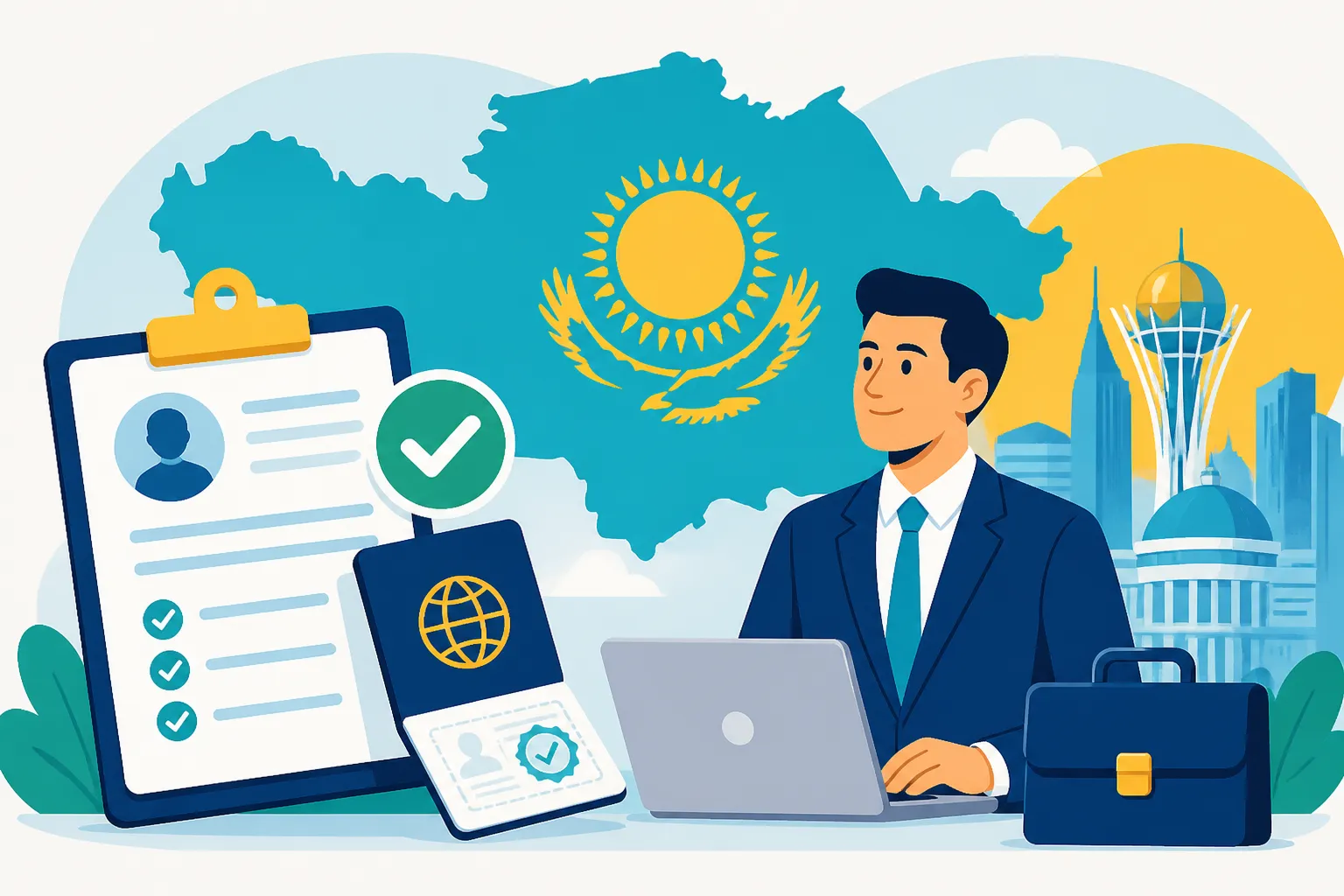
How to Apply for a Work Visa and Work Permit in Kazakhstan
Navigating the labyrinth of immigration paperwork in a foreign country can feel like trying to solve a Rubik's Cube blindfolded, and Kazakhstan is no exception, especially when it comes to securing your right to work. Many expats arrive here full of enthusiasm, only to be met with a complex system of work permits and visas that can easily overwhelm. This guide will meticulously break down the entire process for obtaining a work visa and work permit in Kazakhstan, offering practical advice and realistic expectations to help you seamlessly transition into your new professional life.
Decoding the Essentials: Work Permit Versus Work Visa
Before you even begin to gather documents, it’s crucial to understand the fundamental difference between a work permit and a work visa in Kazakhstan. Many foreigners confuse these terms, and honestly, the nuances can be pretty subtle until you’re deep in the application trenches. Getting this distinction right from the start will save you a lot of headaches and potential missteps down the line.
What Exactly is a Work Permit Permission to Work
Think of a work permit, officially known as a "Permission for Employment of Foreign Workforce," as your golden ticket to legally perform labor activities in Kazakhstan. It’s essentially the Kazakhstani government's authorization for you, as a foreign national, to take up a specific job with a specific employer within the country. This permit is tied directly to your employer and the position you’re hired for. It’s not something you can get on your own before securing a job offer; your prospective employer must initiate this process on your behalf.
The Ministry of Labor and Social Protection issues these permits, and they come with strict quotas and requirements. Your employer essentially has to prove that there isn't a qualified Kazakhstani national available for the role before they can hire you, a foreigner. This can be a significant hurdle, as companies must often justify the foreign hire by demonstrating unique skills, experience, or an inability to find local talent. This permit specifies your role, the company you'll work for, and its validity period. Without it, even if you have a visa, you cannot legally work.
What Exactly is a Work Visa Entry and Stay
Now, the work visa is a different beast entirely. While the work permit gives you permission to work, the work visa is what allows you to enter and reside in Kazakhstan for the purpose of working. It’s the sticker in your passport (or the electronic confirmation) that grants you legal entry and dictates the length of your stay. A work permit without a work visa won't get you past immigration, and a work visa without a work permit means you can be in the country but you still can't legally earn a living.
There are different categories of work visas, often designated by letters and numbers, such as the C3 category for employment. These visas are usually applied for at a Kazakhstani embassy or consulate in your home country or country of residence, after your employer has successfully obtained your work permit. It’s a bit of a chicken-and-egg situation sometimes, but the permit usually comes first. The visa's validity period will typically align with your work permit, allowing you to stay for the duration of your employment contract. For a broader view on staying legally, you might want to read our article on The Complete Guide to Kazakhstan Visas and Immigration for Expats (2027).
The Crucial Interplay Between Them
So, to put it simply: the work permit is your permission to work, and the work visa is your permission to be in Kazakhstan to use that work permit. You absolutely need both. Your employer will usually kick off the work permit application in Kazakhstan. Once that's approved, you'll then use that approval to apply for your work visa at a Kazakhstani consulate abroad. After you arrive in Kazakhstan with your work visa, your employer will then assist you in registering your presence with the Migration Service and securing your temporary residence permit. This can all feel like a lot to coordinate, but remember, your employer should be your primary guide through this process, as they are legally responsible for you as a foreign employee.
Eligibility Criteria Who Can Apply
Not just anyone can walk into Kazakhstan and start working, as much as we might wish it were that simple! The government has specific criteria for both the employer and the foreign applicant, designed to protect the local labor market and ensure that foreign specialists genuinely fill a skill gap. Understanding these criteria is essential to gauge your chances and prepare thoroughly.
Employer Sponsorship Requirements
The onus for much of the initial application process falls squarely on your prospective employer. They aren't just hiring you; they're essentially sponsoring your right to work in the country, and that comes with significant responsibilities and paperwork. First and foremost, the employer must be a legally registered entity in Kazakhstan. They need to demonstrate a legitimate need for foreign labor, often by proving that they couldn't find a suitable local candidate through rigorous recruitment efforts. This typically involves advertising the position locally for a certain period and documenting the results.
Furthermore, employers must adhere to specific quotas for foreign workers, which can vary by industry and region. If a company already has a high percentage of foreign employees, it might be more challenging for them to hire another. They also have financial obligations, like paying state duties for the work permit and ensuring your salary meets certain thresholds. Beyond the initial permit, they are also responsible for assisting you with your visa, registration with migration authorities upon arrival, and sometimes even providing accommodation. It's a significant commitment for them, so they're usually quite thorough in their own internal vetting process.
Applicant Qualifications and Documentation
As for you, the applicant, your qualifications need to align perfectly with the job description and Kazakhstan's labor needs. Generally, you’ll need to possess specialized skills, higher education, or extensive work experience that is considered scarce within the local market. Degrees, certifications, and professional references are usually mandatory. All your official documents, such as diplomas, marriage certificates (if applicable for dependents), and birth certificates, will likely need to be apostilled or legalized in your home country before you even think about moving. This process of authentication can be time-consuming and often requires planning months in advance. You can delve deeper into this by reading about Understanding Document and Translation Requirements for Kazakhstan Immigration.
Your passport must also be valid for at least six months beyond your intended stay. Medical certificates proving you are free from certain infectious diseases (like HIV, tuberculosis) are also a common requirement, and you may need to undergo a medical examination at a designated clinic upon arrival or before your visa application. Finally, a clear criminal record check from your home country is almost always needed. The migration authorities are quite strict about the authenticity and completeness of these documents, so double-check everything!
Quotas and Priority Sectors
Kazakhstan, like many countries, uses a quota system to regulate the influx of foreign labor. This means there's a cap on the number of foreign specialists allowed into the country each year, often broken down by industry, region, and even profession. The government prioritizes certain sectors deemed crucial for economic development, such as oil and gas, mining, IT, and specialized engineering or management roles. If your skills fall within these high-priority sectors, your chances of obtaining a work permit are generally higher.
Conversely, if you're looking for a role in an oversaturated market or one where local talent is readily available, it can be significantly more difficult. These quotas are set annually and can change, reflecting the country's economic priorities. Your employer should be well-versed in these quotas and able to advise whether your position fits within the current allowance. Sometimes, even if you are perfectly qualified, a company might simply have hit their quota, making your application impossible until the next cycle. This is a frustrating reality, but it’s part of the landscape.
The Application Process Your Step-by-Step Guide
Alright, let’s talk brass tacks. The application process for a work permit and visa in Kazakhstan is a multi-stage marathon, not a sprint. It involves a lot of coordination, patience, and meticulous attention to detail. Don’t expect it to be a quick turnaround; give yourself and your employer ample time, often several months, to get everything in order.
Employer's Role Initial Steps and Documentation
Your journey officially begins with your employer. They are the ones who initiate the work permit application with the Ministry of Labor and Social Protection or their regional departments (e.g., Akimat's labor department). Here's what they generally need to do:
- Justify the Need: As mentioned, they must prove that no Kazakhstani national can fill the position. This involves advertising the vacancy locally, sometimes for several weeks, and documenting the lack of suitable local candidates.
- Gather Company Documents: This includes their company registration certificates, tax registration, details about their local workforce, and often a signed employment contract draft for you.
- Submit the Application for Work Permit: They will file an application through the e-government portal (eGov.kz) or directly with the relevant labor authority. This application will include details about the position, your qualifications, and the justification for hiring a foreign specialist.
- Pay State Fees: There are state duties associated with obtaining a work permit, which the employer is responsible for paying. The cost can vary depending on the type of permit and the duration.
Once the work permit is approved, the employer will receive an official document confirming the permission to employ you. This is the crucial document you'll need for your visa application.
Your Role Gathering Personal Documents
While your employer handles the heavy lifting on their end, you'll be busy gathering your own arsenal of personal documents. Procrastinating here is a cardinal sin; some of these documents can take weeks or even months to obtain.
- Passport: Ensure it's valid for at least six months beyond your intended stay. Make copies of all relevant pages.
- Apostilled/Legalized Educational Documents: Your degree certificates, transcripts, and any professional qualifications must be officially recognized. This means getting them apostilled in your home country (if your country is a signatory to the Hague Apostille Convention) or legalized through the Kazakhstani embassy/consulate. This can be a headache, so start early!
- Medical Certificates: You'll likely need certificates proving you're free from HIV, tuberculosis, and other specific diseases. It's often best to get these from recognized clinics and translate them into Russian or Kazakh.
- Police Clearance Certificate: A certificate of no criminal record from your home country, and any country you've resided in for a significant period. Again, this usually needs to be apostilled or legalized.
- Curriculum Vitae (CV): A detailed CV outlining your education, work experience, and skills.
- Photos: Recent passport-sized photos (usually 3.5×4.5 cm).
- Invitation Letter/Visa Support: Once your work permit is approved, your employer will arrange for an invitation letter, also known as visa support, through the Ministry of Foreign Affairs (MFA) in Kazakhstan. This electronic invitation is what allows you to apply for the actual work visa at a Kazakhstani embassy or consulate abroad.
It's a good idea to create a checklist and scan all these documents, keeping digital copies organized. Also, consider using a reputable moving service like Sirelo if you're bringing a lot of personal belongings, as they often have experience with international moves and document handling.
Submitting the Application and The Waiting Game
With the work permit in hand (your employer's copy) and your visa support letter, you can now apply for your work visa (C3 category) at the nearest Kazakhstani embassy or consulate.
- Complete Visa Application Form: This is usually available online or at the consulate. Fill it out accurately and completely.
- Submit Documents: You'll submit your passport, photos, the visa application form, the invitation letter (visa support), copies of your employer’s work permit, and potentially other supporting documents as requested by the specific consulate.
- Pay Consular Fees: There will be fees associated with processing your visa application.
- Interview (Potentially): Some consulates may require an interview.
- The Wait: This is where patience is truly a virtue. Visa processing times can vary widely, from a few days to several weeks, depending on the consulate and the complexity of your case. Try not to book non-refundable travel until your visa is firmly in your passport.
Once your visa is issued, you can finally travel to Kazakhstan. Upon arrival, your employer will then need to assist you in registering your presence with the migration police within 3 working days. This is a crucial step to avoid fines and ensure your legal stay. For more information on this, check out How to Get a Work Visa and Residence Permit in Kazakhstan (2027) and How to Register Your Arrival with the Migration Service in Kazakhstan.
Common Challenges and How to Overcome Them
If you’ve lived abroad before, you know that bureaucracy often comes with its own set of hurdles, and Kazakhstan is no different. It’s not always a smooth ride, and anticipating potential challenges can help you navigate them with a little less stress.
The Bureaucracy and Language Barrier
Let’s be honest, government offices anywhere can be daunting, but add a language barrier into the mix, and it can feel almost impossible. Most official documents and interactions in Kazakhstan will be in Russian or Kazakh. While many younger professionals in major cities like Almaty and Astana speak English, you can't rely on it in every government department or for every official. This is where your employer or a trusted local representative becomes invaluable.
How to Overcome:
- Lean on Your Employer: Your employer is your best asset here. They have local staff who understand the system and speak the language. Make sure they are actively assisting you.
- Professional Translation: Invest in professional translation services for any documents not originally in Russian or Kazakh. Don’t rely on Google Translate for official papers. Many consulates and migration offices will only accept certified translations.
- Learn Basic Phrases: Even a few basic phrases in Russian or Kazakh can go a long way in showing respect and often makes interactions smoother.
- Hire an Agent (Carefully): If your employer doesn't offer comprehensive support, you might consider a reputable immigration consultant. However, be extremely cautious and only use those recommended by trusted sources, as there are many unscrupulous "agents" out there.
Document Verification and Legalization Headaches
The requirement for apostilled or legalized documents is probably one of the biggest pain points for expats coming to Kazakhstan. It's a meticulous, multi-step process that verifies the authenticity of your documents for use abroad. For example, if your degree is from the UK, you might need to get it certified by a UK notary, then apostilled by the Foreign, Commonwealth & Development Office (FCDO), and then possibly legalized by the Kazakhstani embassy in London. Each country has its own procedures.
How to Overcome:
- Start Early: Seriously, do not wait. This process can take weeks or even months. Contact your country's foreign affairs office and the Kazakhstani embassy in your home country well in advance to understand the exact steps.
- Compile a Checklist: Create a detailed list of every document needed and the specific legalization steps for each.
- Keep Originals Safe: Always carry certified true copies for applications and keep your original, apostilled documents in a secure place.
- Factor in Costs: Legalization and translation services aren't free. Budget accordingly.
Processing Delays and Rejections
Despite doing everything right, you might still face unexpected delays or, in the worst-case scenario, a rejection. The reasons can be varied: a sudden change in government policy, a backlog in applications, a minor error in paperwork, or even an issue with your employer's quota. This can be incredibly frustrating, especially if you've already made travel arrangements or resigned from a previous job.
How to Overcome:
- Patience is Key: This is easier said than done, but manage your expectations. Assume things will take longer than initially quoted.
- Regular Follow-ups (through employer): Your employer should be regularly checking the status of the work permit application. For the visa, you can usually track it through the consulate.
- Contingency Plans: If possible, avoid burning bridges with your current employer too quickly. Have backup plans for accommodation and travel in case of significant delays.
- Seek Clarification: If there’s a rejection or a request for additional documents, understand the exact reason. Sometimes it's a simple fix. Your employer's legal team or an immigration lawyer can be crucial here.
- Understand the law: Familiarize yourself with Understanding Kazakhstani Residence Permits: Work, Study and Investment (2027) to better understand the legal framework.
Maintaining Your Status and Renewals
Getting your work permit and visa is a huge achievement, but the journey doesn't end there. Staying compliant with Kazakhstani immigration and labor laws is paramount to avoiding fines, deportation, and future immigration troubles. This means understanding your rights, responsibilities, and the procedures for renewing your status.
Compliance with Labour Laws and Migration Rules
As an expat working in Kazakhstan, you are subject to the country's labour laws and migration rules, just like a local citizen. Your employer has a significant role in ensuring your compliance, but you also bear personal responsibility. This includes respecting the terms of your work permit (i.e., working only for the specified employer in the specified position), adhering to your work visa's validity period, and ensuring your residential registration is up-to-date. Changing jobs without proper authorization or overstaying your visa are serious offenses that can lead to severe penalties.
Your employer is typically responsible for your initial registration with the migration police upon arrival. This registration usually lasts for the duration of your visa and residence permit. However, if you move residences, your registration needs to be updated. It’s a detail that often gets overlooked, but it’s critical. Always keep copies of your work permit, visa, and registration documents with you, or at least easily accessible. Familiarize yourself with Understanding Kazakhstani Labour Law and Worker Rights (2027) to understand your rights and obligations.
The Renewal Process When and How
Work permits and visas are not indefinite; they have a validity period, typically tied to your employment contract, often for one year, renewable annually. The renewal process usually mirrors the initial application, though it can sometimes be a bit smoother since you're already in the system.
When to Start: Don't wait until the last minute! Your employer should initiate the work permit renewal process several months before its expiration date. This allows ample time for potential delays. The same goes for your visa and residence permit renewal.
How it Works:
- Employer Renewals: Your employer will once again apply to the Ministry of Labor for a renewal of your work permit. They will need to provide updated company documents, a renewed employment contract, and often a justification for continuing your employment (e.g., successful project completion, ongoing need for your skills).
- Your Document Updates: You might need to provide updated medical certificates, a new criminal record check if required, and ensure your passport has sufficient validity.
- Visa/Residence Permit Renewal: Once the work permit is renewed, your employer will typically assist you in renewing your temporary residence permit (if applicable) and extending your work visa with the migration service within Kazakhstan. This process involves submitting your renewed work permit, passport, and other relevant documents.
It's common for employers to manage these renewals as part of their HR functions, but stay informed and proactive yourself. A missed deadline can lead to complications, including the need to temporarily leave the country.
Changing Employers or Job Roles
This is a critical point: your work permit is tied to a specific employer and often a specific job role. If you decide to change jobs within Kazakhstan, or if your role significantly changes (e.g., a promotion to a completely different department with new responsibilities), you generally cannot simply transfer your existing work permit.
What Happens:
- New Work Permit: Your new employer will have to apply for a brand-new work permit for you, from scratch, going through the entire justification process.
- Cancellation of Old Permit: Your old employer is obligated to cancel your existing work permit when your employment with them ends.
- New Visa/Residence Permit: Once the new work permit is approved, you’ll typically need to get a new temporary residence permit associated with your new employer. In some cases, depending on your visa type and duration, you might even need to exit and re-enter the country with a new work visa.
This makes changing jobs a much more complex endeavor than in many other countries. It’s not a seamless transition, and you should always discuss this thoroughly with both your current and prospective employers, as well as seek expert advice, before making any moves. The penalties for working without a valid permit and visa for your current employer are severe for both you and the company.
Bringing Your Family Along Dependent Visas and Support
One of the biggest concerns for many expats is ensuring their loved ones can join them in their new adventure. Kazakhstan does have provisions for family reunification, but like everything else, it requires careful planning and paperwork.
Dependent Visas and Residence Permits
Once you have your work permit and visa sorted, and you've arrived and registered in Kazakhstan, you can typically apply for dependent visas for your spouse and minor children. These are usually C2 category visas for family reunification. The process requires you, as the main applicant (the "sponsor"), to provide proof of your financial capability to support your family members in Kazakhstan, without them needing to work.
Your family members will apply for their visas at a Kazakhstani embassy or consulate in their country of residence, just like you did for your work visa. They will need an invitation letter (visa support) arranged by your employer, confirming that you are employed in Kazakhstan and that your family will be joining you. Upon arrival, they too will need to be registered with the migration service, and subsequently, apply for their own temporary residence permits tied to your work permit. You can find comprehensive details on this in How to Include Family in Your Kazakhstan Residence Application.
Required Documents for Family Members
The documentation for dependents mirrors many of your own requirements, but with a family spin:
- Passports: Valid for at least six months beyond their intended stay.
- Visa Application Forms: Completed for each family member.
- Photos: Recent passport-sized photos.
- Proof of Relationship:
- Marriage Certificate: For your spouse. This will likely need to be apostilled/legalized in your country of marriage.
- Birth Certificates: For each child. These also typically require apostille/legalization.
- Your Work Permit & Residence Permit Copies: To prove your legal status in Kazakhstan.
- Proof of Funds: Bank statements or a letter from your employer confirming your salary, demonstrating you can financially support your family.
- Medical Certificates: Similar to yours, often including HIV test results, for each family member.
Again, the emphasis is on certified translations and proper legalization of all documents. It’s a good idea to gather all these documents while you are still in your home country, especially the apostilles, to avoid delays once you’re settled in Kazakhstan.
Navigating Schooling and Healthcare for Dependents
Having your family with you is wonderful, but it also means considering their needs for education and healthcare.
Healthcare: Your OSMS (Compulsory Social Health Insurance) coverage through your employer usually doesn't automatically extend to dependents unless specific arrangements are made or they are also employed. This often means you'll need to secure private health insurance for your spouse and children. Companies like Cigna Global offer excellent international health insurance plans that provide comprehensive coverage, which can be a real lifeline when navigating a foreign health system. It's crucial to research and arrange this before they arrive, as having good medical coverage for your family provides immense peace of mind. For more details on healthcare, refer to The Complete Guide to Healthcare in Kazakhstan for Expats (2027).
Schooling: For children, Kazakhstan offers public schools (instruction primarily in Kazakh and Russian), private local schools, and international schools. The choice often depends on your budget, your children's age, and your long-term plans. International schools in Almaty and Astana, like Haileybury Almaty or QSI International School of Astana, follow international curricula (e.g., British, American, IB) and teach in English, but they come with significant tuition fees. Public schools are an option for those planning a longer stay and willing to immerse their children in the local language and culture. Researching schools well in advance and securing places is essential, as international schools often have waiting lists.
Remember, bringing your family means adding layers of complexity to the immigration process, but with diligence and foresight, it's entirely achievable.
| Step | Responsible Party | Key Documents Required (Example) | Estimated Timeline (Cumulative) | Cost Considerations (Example) |
|---|---|---|---|---|
| 1. Employer Applies for Work Permit | Employer | Company Reg. Docs, Local Job Ad Proof, Draft Employment Contract, Justification Letter | 1-2 months | State duties (KZT 50,000-250,000+) |
| 2. Obtain Visa Support (Invitation) | Employer (through MFA) | Approved Work Permit, Passport Copy (you) | 2-3 weeks (after permit) | Varies |
| 3. You Apply for Work Visa (C3) | Foreigner | Passport, Visa App Form, Photos, Invitation, Apostilled Degree, Police Check, Medicals | 1-4 weeks (after invitation) | Consular fees (USD 80-150+) |
| 4. Travel to Kazakhstan & Register | Foreigner & Employer | Passport with Visa, Migration Card (on entry), Proof of Address | 3 working days (upon arrival) | Fines if late (KZT 10,000+) |
| 5. Apply for Temporary Residence Permit | Foreigner & Employer | Passport, Work Permit, Visa, Registration, Photos | 1-2 weeks (after arrival) | State duties (KZT 5,000+) |
| 6. Family Dependent Visas & Registration | Foreigner (Sponsor) & Family | Passports, Proof of Relationship (Apostilled), Your Work/Res. Permit, Proof of Funds | 1-2 months (after your status settled) | Consular fees, registration fees |
Note: Timelines are estimates and can vary significantly based on individual circumstances, administrative efficiency, and current government policies.
Disclaimer
The information provided in this guide is intended for general informational purposes only and does not constitute legal, financial, or immigration advice. While every effort has been made to ensure accuracy and timeliness, laws and procedures in Kazakhstan are subject to change without notice. Always consult with a qualified immigration lawyer, your employer's HR or legal department, or the official Kazakhstani government sources (e.g., Ministry of Foreign Affairs, Ministry of Labor and Social Protection, Migration Service) for the most current and specific guidance regarding your individual situation. Relying solely on the information herein is at your own risk.