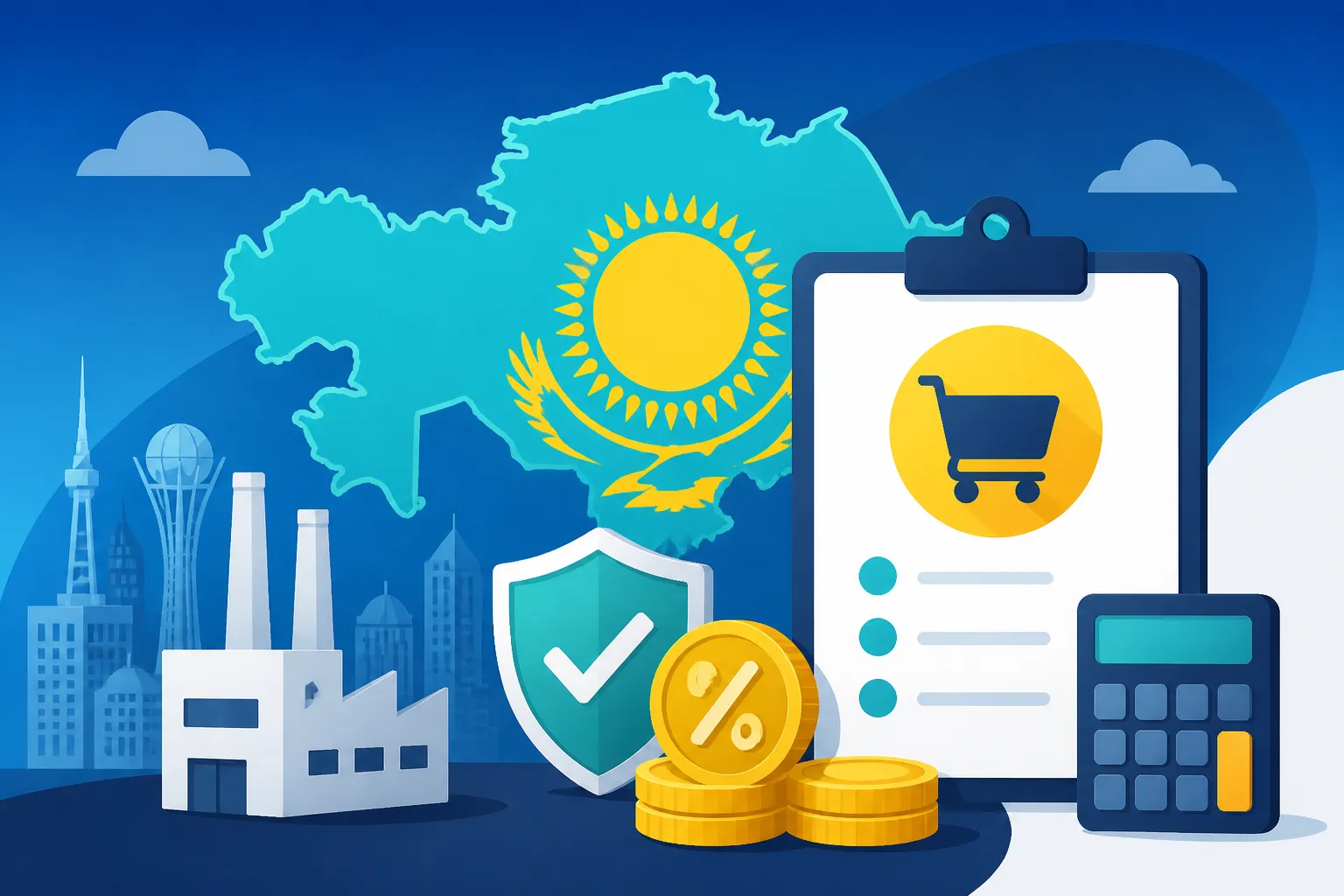
The Complete Guide to VAT in Kazakhstan for Businesses (2027)
Navigating the labyrinthine world of taxes in a new country can feel like trying to solve a Rubik's Cube blindfolded, and Value Added Tax (VAT) in Kazakhstan is no exception. For business owners, freelancers, and even those just dabbling in local commerce here, understanding VAT isn't just a recommendation – it's an absolute necessity. This comprehensive guide is designed to cut through the confusion, offering you an expat's perspective on how VAT works for businesses in Kazakhstan, from registration to reporting, and everything in between.
Understanding the Basics of VAT in Kazakhstan for Businesses
When I first started my business here, the acronyms alone were enough to make my head spin. It’s not just about paying a tax; it’s about understanding a system that affects every single transaction your business makes. Let's break down the fundamentals of VAT in Kazakhstan, so you can build a solid foundation.
What Exactly is Value Added Tax VAT in Kazakhstan?
In its simplest form, Value Added Tax (VAT), or НДС (NDS) as it's known in Russian and Kazakh, is a consumption tax levied on goods and services at each stage of the supply chain, from production to the point of sale. Think of it as a tax on the 'value added' by each business in the chain. However, only the final consumer truly bears the burden of the tax. Businesses act as collection agents for the government.
Here’s how it typically works: when your business sells a product or service, you charge VAT to your customer. This is your 'output VAT'. When your business buys goods or services from another VAT-registered business, you pay VAT to them. This is your 'input VAT'. At the end of a tax period, you calculate the difference between the output VAT you've collected and the input VAT you've paid. If your output VAT is higher, you pay the difference to the state. If your input VAT is higher (meaning you've paid more VAT than you've collected), you might be eligible for a refund, though claiming that is a whole other adventure we’ll get into later.
The idea is that businesses don't actually lose money on VAT; they merely pass it along. But the administrative burden of calculating, collecting, reporting, and remitting this tax correctly can be immense, especially if you're not fluent in the local language or accustomed to the local regulatory environment. It's a system designed to be self-policing, encouraging accurate record-keeping throughout the economy.
Who Needs to Register for VAT?
This is where many newcomers start to scratch their heads. It’s not automatic, and there are specific thresholds and conditions. In Kazakhstan, businesses are generally required to register for VAT if their turnover from taxable supplies exceeds a certain threshold within a calendar year. As of my last check, the threshold for mandatory VAT registration is 20,000-fold of the monthly calculation index (MCI). For 2026, assuming the MCI remains stable or increases, this is a significant amount, currently standing at around 69 million KZT (Kazakhstani Tenge).
Let’s put that into perspective. If your business, whether you're a registered Individual Entrepreneur (IP) or a Limited Liability Partnership (TOO), sells goods or services and crosses this sales threshold from January 1st to December 31st of any given year, you are obliged to register as a VAT payer. Failure to do so can result in hefty penalties. You have a certain timeframe, usually 10 working days after the end of the month in which you exceeded the threshold, to submit your application.
What about foreign companies? If you're a foreign company operating in Kazakhstan without a permanent establishment but providing electronic services (like software, online advertising, streaming) to Kazakhstani individuals, you might fall under the "tax on Google" law, which is a different beast entirely. However, if your foreign company has a permanent establishment (e.g., a physical office, a construction site lasting over a year, or an agent with authority to conclude contracts) here, then it operates much like a local entity and is subject to the same VAT registration rules and thresholds. It's crucial to understand your status here, as the implications for How Kazakhstan's Tax System Works: The Flat 10% Tax Explained (2027) extend far beyond just VAT.
The Current Standard VAT Rate in Kazakhstan
The good news, if there is any when discussing taxes, is that Kazakhstan has a relatively straightforward standard VAT rate. As of 2026, the standard VAT rate in Kazakhstan remains at 12%. This rate applies to most taxable goods and services supplied within the territory of Kazakhstan, as well as to imports.
Now, while 12% is the standard, it's not the only rate. There are instances of zero-rated supplies and VAT-exempt supplies.
- Zero-rated (0%) supplies: These are still considered taxable supplies, but the rate of tax applied is zero. The most common example here is the export of goods. If your business exports goods from Kazakhstan, you can charge 0% VAT on those exports, and crucially, you can still claim input VAT deductions on the expenses related to those exports. This means you could potentially receive a VAT refund from the state, which is a big incentive for export-oriented businesses. Services related to international transport are often zero-rated too.
- VAT-exempt supplies: These are supplies that are not subject to VAT at all. Examples often include certain financial services, medical services, educational services, and the sale of residential land and buildings. For these types of supplies, you neither charge output VAT nor can you claim input VAT deductions on associated expenses. This means that any input VAT you incur on purchases related to exempt supplies becomes a cost to your business.
Understanding this distinction is vital for your accounting and pricing strategies. Confusing zero-rated with exempt supplies is a common mistake that can lead to either missed refund opportunities or unexpected tax liabilities.
Navigating VAT Registration for Your Business in Kazakhstan
So, you’ve hit the threshold, or you’ve decided it’s strategically beneficial to register for VAT. Now what? The registration process itself can be a bit of a hurdle, especially if you're not familiar with the local digital government portals and bureaucratic procedures. But don't worry, many expats have trodden this path before.
Step-by-Step Guide to Becoming a VAT Payer
The journey to becoming a registered VAT payer primarily involves interacting with the State Revenue Committee (SRC) and utilizing Kazakhstan's digital government services.
- Check Your Eligibility: First, reconfirm that your turnover has indeed exceeded the threshold or that you meet the criteria for voluntary registration.
- Access the Taxpayer Cabinet: Most of this process happens online through the "Taxpayer Cabinet" (Кабинет налогоплательщика), which is accessible via the eGov portal. You'll need a digital signature (EDS – Electronic Digital Signature) for this. If you don't have one, getting an IIN (Individual Identification Number) and then an EDS is your absolute first step for any official interactions in Kazakhstan.
- Submit Application Form 070.00: You'll need to submit an application for VAT registration, officially known as Form 070.00, through the Taxpayer Cabinet. This form requires basic information about your business, including your IIN/BIN (Business Identification Number), address, contact details, and confirmation of your taxable turnover.
- Required Documents: While the application is largely digital, you might need to upload scanned copies of certain documents. This typically includes:
- Certificate of state registration of your legal entity or individual entrepreneur.
- Documents confirming the location of your business (e.g., rental agreement, property ownership).
- Your EDS key.
- For foreign entities, documentation proving your permanent establishment.
It's always a good idea to have these translated and notarized, just in case, though for digital submissions, high-quality scans are usually sufficient initially.
- Await Approval: Once submitted, the SRC has a statutory period (typically around 5 working days) to review your application. If everything is in order, you’ll receive an electronic notification confirming your VAT registration. You’ll then be officially listed in the Register of VAT Payers, which is publicly accessible.
This process might sound simple on paper, but expect potential glitches with the portals, cryptic error messages, and the need for precision in every detail. Having a local accountant, or at least a Kazakh-speaking assistant, can significantly ease this process. For general guidance on interacting with government services, you might find our guide on How to Register with the State Revenue Committee in Kazakhstan helpful.
Voluntary vs. Mandatory VAT Registration
While exceeding the threshold mandates VAT registration, some businesses choose to register voluntarily even before they hit that mark. Why would anyone do that? Well, there are strategic reasons.
Mandatory Registration:
- Requirement: As discussed, if your taxable turnover exceeds 20,000 MCI in a calendar year, it’s not an option; you must register.
- Consequences of Non-Compliance: Failure to register when mandatory can lead to fines, back-dated VAT payments (with penalties and interest), and a general headache that you definitely want to avoid. The SRC is pretty good at tracking turnover data, so they'll likely find out.
Voluntary Registration:
- Benefits:
- Input VAT Recovery: This is the primary driver. If your business primarily sells to other VAT-registered businesses and has significant purchases (and therefore input VAT), registering voluntarily allows you to claim that input VAT back. This can significantly reduce your operational costs. Imagine you're importing raw materials for production; you pay import VAT at the border. If you're not VAT registered, that’s a sunk cost. If you are, you can likely recover it.
- Professional Image: Being VAT-registered can sometimes signal a more established or serious business, particularly when dealing with larger corporate clients who prefer to transact with VAT payers for their own input VAT recovery.
- Export Opportunities: If you plan on exporting goods or services, voluntary registration allows you to apply the 0% VAT rate and reclaim input VAT, making your exports more competitive.
- Drawbacks:
- Administrative Burden: This is the big one. Even if you're not hitting the threshold, you're now obligated to collect, record, and report VAT, which means more paperwork, more complex accounting, and potentially higher costs for professional services.
- Pricing: You will need to add 12% VAT to your prices for most goods and services. If your customers are primarily individuals or non-VAT-registered businesses, this makes your offerings more expensive, potentially hurting your competitiveness.
- Compliance Risk: More regulations mean more opportunities for errors and potential penalties if you get it wrong.
Before making a decision about voluntary registration, sit down with a local accountant. They can help you weigh the pros and cons based on your specific business model and customer base.
Special Considerations for Foreign Companies and IP Holders
For foreign companies, the VAT landscape can be particularly tricky, blending international tax principles with Kazakhstani specifics.
- Permanent Establishment (PE): If your foreign company establishes a PE in Kazakhstan, it generally becomes subject to Kazakhstani tax laws, including VAT, as if it were a local entity. The definition of a PE can be complex – it's not just a physical office. It can include a construction site that lasts beyond a certain period, an agent with specific authorities, or even certain service provision scenarios. This is where double taxation agreements (DTAs) with your home country become crucial, but they generally deal with income tax, not VAT directly, though they influence PE status.
- VAT on Services from Non-Residents: Kazakhstan has rules for VAT on services purchased from non-residents, often referred to as "reverse charge" VAT. If your Kazakhstani business (even if not VAT-registered) purchases services from a foreign company that does not have a PE in Kazakhstan, and the place of supply of these services is deemed to be Kazakhstan, then your Kazakhstani business might be responsible for calculating and paying the VAT on behalf of the foreign company. This is essentially acting as a tax agent. This applies to various services, from consulting to marketing, and can be a significant hidden cost if not anticipated.
- Electronic Services Provided by Non-Residents: As mentioned earlier, if foreign companies provide electronic services to individuals in Kazakhstan (B2C), they may be required to register and pay VAT directly to the Kazakhstani budget under what's colloquially known as the "tax on Google" law. This is a relatively newer development aimed at leveling the playing field for local digital service providers. If you are a foreign IP holder operating locally, remember that your income and tax obligations will differ from a foreign company. Our guide on Understanding Income Tax and the Flat 10% Rate in Kazakhstan (2026) offers broader insights into income tax for IPs.
The complexities surrounding foreign companies and VAT necessitate expert advice. Don't try to go it alone; a specialized tax consultant or legal firm with experience in international taxation in Kazakhstan is invaluable here.
The Mechanics of Charging and Collecting VAT
Once you're VAT registered, the real work of implementing VAT into your daily business operations begins. This isn't just about adding 12% to your prices; it involves specific invoicing requirements and a clear understanding of what’s taxable.
Issuing Tax Invoices and Electronic Invoices
In Kazakhstan, the tax invoice (счет-фактура) is the primary document for VAT accounting. It legally validates the amount of VAT charged on a sale and is absolutely essential for your customers to claim input VAT deductions.
Kazakhstan has largely transitioned to an electronic invoicing system (Электронные счета-фактуры – ESF). This means that for most B2B transactions, you are required to issue electronic tax invoices through a dedicated information system, specifically the IS ESF (Information System for Electronic Invoices). This system is integrated with the SRC, providing transparency and streamlining the tax collection process.
Key aspects of ESF issuance:
- Mandatory Use: If you are a VAT payer, issuing ESFs for taxable supplies is generally mandatory. There are a few exceptions, such as sales to individuals or specific types of transactions, but for business-to-business (B2B) transactions, ESF is the rule.
- Content Requirements: An ESF must contain specific details, including:
- Your business details (BIN, name, address).
- Customer's business details (BIN, name, address).
- Invoice number and date.
- Description of goods/services, quantity, unit price.
- Taxable value (excluding VAT).
- VAT rate (12% or 0%).
- Total VAT amount.
- Total amount (including VAT).
- Digital signatures of both the issuer and receiver.
- Deadlines: ESFs must typically be issued within 15 calendar days after the date of turnover (i.e., when the goods are shipped or services rendered). Missing this deadline can lead to penalties.
- Correction and Cancellation: The ESF system also allows for the correction or cancellation of invoices, but this process also has its own rules and deadlines.
This system, while efficient, can be a steep learning curve for expats. Many accounting software solutions (like 1C, widely used in Kazakhstan) integrate with the ESF system, which can simplify the process.
Understanding VAT on Sales of Goods and Services
Determining when and how to charge VAT depends on the type of transaction and where the 'place of supply' is considered to be.
- Local Sales: For sales of goods and services supplied within the territory of Kazakhstan, the standard 12% VAT rate generally applies, unless the supply is specifically zero-rated or exempt. This is pretty straightforward. You sell something to a customer in Almaty, you add 12% VAT.
- International Transactions – Place of Supply Rules: This is where it gets complex. Kazakhstan has specific rules to determine the 'place of supply' for goods and services, which dictates whether Kazakhstani VAT applies.
- Goods: The place of supply for goods is generally where the goods are located at the time of shipment or transport begins. For imports, VAT is levied at the customs border. For exports, as mentioned, it’s typically zero-rated.
- Services: The place of supply for services is more nuanced. It depends on the type of service and the location of the service provider and recipient. For example, for certain services (like consulting, legal, accounting, marketing, IT services), if the recipient of the service is a Kazakhstani business or individual carrying out entrepreneurial activity, the place of supply is deemed to be Kazakhstan, regardless of where the service provider is located. This is where the reverse charge mechanism (for non-resident service providers) comes into play. If your Kazakhstani business is providing services to a foreign client, you'll need to determine if Kazakhstani VAT applies or if it's considered an export of services (which might be zero-rated under certain conditions).
Mistakes in determining the place of supply are common and can lead to incorrect VAT charging, resulting in either overpayment (and lost money) or underpayment (and penalties).
Exemptions and Zero-Rated Supplies
We touched upon this earlier, but it’s worth reiterating the practical implications of exemptions and zero-rating. Knowing these categories can significantly impact your pricing, cash flow, and overall tax strategy.
Key Exempt Categories (no VAT charged, no input VAT claimed):
- Financial Services: Certain banking operations, insurance services, and lending activities are often exempt.
- Medical Services: Most licensed medical services are VAT exempt.
- Educational Services: Public and accredited private educational services are typically exempt.
- Sale of Residential Property: The sale of residential land and buildings is generally exempt, but sale of commercial property is usually subject to VAT.
- Public Transport: Services by general public transport, excluding taxis.
- Specific Goods: Certain essential goods, like some pharmaceutical products or specific agricultural products, might be exempt.
Key Zero-Rated Categories (0% VAT charged, input VAT can be claimed):
- Export of Goods: This is the most significant. If you export goods outside Kazakhstan, you charge 0% VAT. You can still claim input VAT on purchases related to these exports. This distinction is vital for businesses involved in international trade.
- International Transportation Services: Services directly related to international carriage of passengers and goods.
- Certain Services for Exporters: Services like agency fees related to export contracts might also be zero-rated.
The critical takeaway here is that for zero-rated supplies, you actually benefit from the VAT system as you can potentially receive a refund for the input VAT you've paid. For exempt supplies, the input VAT becomes a non-recoverable cost to your business. This is why businesses dealing with a mix of taxable and exempt supplies (e.g., a multi-service clinic offering both cosmetic procedures – taxable – and essential medical treatments – exempt) must meticulously allocate their input VAT.
Input VAT, Deductions, and Reimbursements
This is where the VAT system can actually work in your favor, allowing you to reclaim some of the tax you've paid. However, it's also an area ripe for complications and strict documentation requirements.
What is Input VAT and How to Claim It
Input VAT is the VAT you pay on the goods and services your business purchases from other VAT-registered suppliers in Kazakhstan. The beauty of the VAT system is that you don’t ultimately bear this cost; you get to deduct it from the output VAT you’ve collected from your customers.
To claim input VAT deductions, several conditions generally must be met:
- VAT Registered: Both your business and your supplier must be VAT-registered.
- Taxable Supplies: The goods or services you purchased must be intended for use in your taxable operations. If you buy something to be used solely for an exempt supply, you cannot claim the input VAT. If it's used for both, you'll need to apportion the VAT.
- Proper Documentation: This is paramount. You must possess a correctly issued electronic tax invoice (ESF) from your supplier. This ESF serves as proof of the VAT paid. Without it, no claim. Other supporting documents like contracts, payment slips, and goods receipt notes also strengthen your claim.
- Timely Claim: Input VAT must generally be claimed in the period it was incurred. There are rules around claiming VAT from previous periods, but it's best practice to claim it promptly.
Imagine you're running a retail shop. You buy inventory from a wholesaler, and they issue you an ESF for 1,000,000 KZT plus 120,000 KZT VAT. You then sell that inventory to customers for 1,500,000 KZT plus 180,000 KZT VAT. Your output VAT is 180,000 KZT, and your input VAT is 120,000 KZT. At the end of the period, you pay the SRC 60,000 KZT (180,000 – 120,000). The 120,000 KZT you paid to your wholesaler isn’t a cost to your business; it's recovered.
Common Pitfalls and Challenges in Claiming Input VAT
This is where many businesses, especially expats, stumble. The rules are strict, and the SRC doesn't mess around when it comes to compliance.
- Incomplete or Incorrect ESFs: The most common issue. An ESF with missing details, incorrect BINs, wrong dates, or improper descriptions can be rejected by the SRC during an audit, meaning you lose your right to claim that input VAT. Always double-check ESFs received from suppliers.
- Lack of Supporting Documentation: While the ESF is key, having other documents like payment confirmations, contracts, and delivery notes can be crucial, especially if questions arise. Don't rely solely on the ESF.
- Non-Deductible Items: Not all VAT paid is deductible. For instance, VAT on certain entertainment expenses, personal use items, or goods/services not directly related to your taxable business activities might not be claimable. Understanding these exclusions is critical.
- Mixed Supplies: If your business provides both taxable and exempt supplies, you cannot claim 100% of your input VAT. You'll need to implement an 'apportionment' method to allocate input VAT between taxable and exempt activities. This is often based on the proportion of taxable turnover to total turnover. Getting this calculation wrong is a frequent audit trigger.
- Supplier Issues: If your supplier is not genuinely VAT-registered, or if there are issues with their VAT compliance (e.g., they didn’t remit the VAT they charged you), this can sometimes impact your ability to claim input VAT, even if you did everything correctly on your end. The SRC can be very strict about "due diligence" on your suppliers.
To mitigate these risks, implement robust internal controls, regularly review your ESFs, and consider using professional accounting services.
The Process for VAT Reimbursement
Sometimes, your input VAT might exceed your output VAT. This usually happens in specific scenarios:
- Export-Oriented Businesses: As exports are zero-rated, you collect 0% VAT but still pay 12% input VAT on your purchases. This often results in a net negative VAT position.
- Start-Up Phase: Businesses making significant capital investments (e.g., buying machinery, constructing premises) before generating substantial taxable sales might accumulate more input VAT than output VAT.
- Certain Investment Projects: Specific investment projects approved by the government may be eligible for VAT reimbursement.
When this occurs, you can apply for a VAT refund from the SRC. However, prepare for a rigorous process.
Steps for VAT Reimbursement:
- File Your VAT Return (Form 300.00): In your quarterly VAT return, you'll declare the amount of VAT refundable.
- Submit an Application: You’ll need to submit a separate application for a refund, often along with supporting documentation, proving your eligibility (e.g., export contracts, customs declarations).
- Tax Audit: Expect a desk audit or even an on-site audit by the SRC. They will meticulously verify your claims, scrutinize all invoices, contracts, and accounting records related to the claimed refund. This can be a lengthy process, sometimes taking months. They'll check the validity of your ESFs, the genuineness of your transactions, and the correctness of your calculations.
- Decision and Payment: If the audit is successful and your claim is validated, the SRC will approve the refund. The funds will then be transferred to your business bank account.
Challenges and Audit Risks: VAT refunds are a red flag for the tax authorities. They are heavily scrutinized to prevent fraud. Be prepared for:
- Long Wait Times: The process can be slow.
- Detailed Scrutiny: Every single document will be examined.
- Requests for Additional Information: You will likely receive multiple requests for clarification or further documentation.
- Partial Rejections: It's not uncommon for a portion of the claimed refund to be rejected due to minor discrepancies or interpretation differences.
Having all your ducks in a row – impeccable record-keeping, valid ESFs, clear contracts, and accurate accounting – is crucial for a successful VAT reimbursement claim. Our article on Filing Your Tax Return with the State Revenue Committee in Kazakhstan: The Complete Walkthrough (2027) offers insights into the general tax filing process.
VAT Reporting, Filing, and Payment Obligations
Once you're steeped in the day-to-day of VAT, the next big hurdle is making sure you report and pay it correctly and on time. The Kazakhstani tax authorities have clear rules and steep penalties for non-compliance.
Deadlines and Filing Procedures
VAT in Kazakhstan is primarily reported on a quarterly basis.
- Reporting Period: A tax period for VAT is a calendar quarter (January-March, April-June, July-September, October-December).
- Filing Deadline: The VAT return (Form 300.00) must be filed no later than the 15th day of the second month following the reporting quarter. For example, for the first quarter (January-March), the deadline is May 15th.
- Payment Deadline: Any VAT payable must be remitted to the state budget no later than the 25th day of the second month following the reporting quarter. So, for the first quarter, the payment deadline is May 25th.
It's easy to get these dates mixed up, especially if you're managing multiple tax obligations. Set reminders, use accounting software that flags these dates, or rely on your accountant.
Filing Procedures:
The VAT return is filed electronically through the "Taxpayer Cabinet" using your EDS. It’s an online form where you input all your output and input VAT figures, along with details on zero-rated and exempt supplies. The system performs basic checks, but it’s ultimately up to you or your accountant to ensure the data is accurate.
For expats, the eGov portal and Taxpayer Cabinet can be challenging due to language barriers and interface differences. Many foreign business owners choose to give power of attorney to a trusted local accountant to handle these submissions on their behalf.
Understanding the VAT Tax Return
The main VAT tax return form in Kazakhstan is Form 300.00. This form is extensive and requires a detailed breakdown of your VAT transactions.
Key Sections of Form 300.00:
- General Information: Basic details about your company and the reporting period.
- Output VAT:
- Total taxable turnover subject to 12% VAT.
- Turnover subject to 0% VAT (exports).
- Exempt turnover.
- Reverse charge VAT (for services received from non-residents).
- Input VAT:
- Total input VAT eligible for deduction.
- Input VAT related to taxable supplies.
- Input VAT related to zero-rated supplies.
- Adjustments to input VAT.
- Calculations:
- The form automatically calculates your net VAT liability or refundable amount.
- Adjustments (e.g., for bad debts, changes in prices).
- Annexes: Form 300.00 has several annexes (e.g., 300.01 for registered VAT payers, 300.02 for export data, 300.05 for services from non-residents) that require even more granular detail. These annexes are crucial for providing the SRC with a full picture of your transactions and for supporting any refund claims.
Common Errors:
- Mathematical Mistakes: Simple calculation errors are surprisingly common.
- Incorrect Classification: Misclassifying taxable, zero-rated, and exempt supplies can lead to incorrect VAT calculations.
- Mismatched ESF Data: The data you report in Form 300.00 should align with the ESFs you've issued and received. Discrepancies will be flagged.
- Failure to Apportion Input VAT: For businesses with mixed taxable and exempt supplies, incorrect apportionment is a frequent error.
Accuracy is absolutely paramount. It's better to spend extra time verifying every figure than to face penalties or audits down the line.
Penalties for Non-Compliance
The State Revenue Committee in Kazakhstan takes tax compliance seriously. Penalties for VAT-related infractions can range from monetary fines to administrative sanctions.
- Late Filing: If you file your VAT return (Form 300.00) after the deadline, you will generally incur a fine. The amount can vary depending on whether it's a first offense and the length of delay.
- Late Payment: Failing to pay your VAT liability by the due date will result in penalties and interest for each day the payment is overdue.
- Understated Tax: If an audit reveals that you have understated your VAT liability (e.g., by claiming too much input VAT or not reporting enough output VAT), you will be required to pay the additional tax, plus significant fines and interest. These fines can be a substantial percentage of the underpaid amount.
- Failure to Issue ESFs: Not issuing mandatory ESFs or issuing them incorrectly/late can also lead to administrative fines for your business.
- Failure to Register: If you exceed the VAT threshold and do not register as a VAT payer, you will be liable for all the VAT you should have collected, along with substantial penalties and interest, calculated from the date you should have registered.
It’s clear that proactive compliance is far more cost-effective than dealing with the aftermath of non-compliance. Always err on the side of caution, and when in doubt, consult a tax professional.
Specific Scenarios and Advanced VAT Topics
The general rules are one thing, but specific business models and cross-border operations introduce layers of complexity that require a deeper dive.
VAT on Imports and Exports
International trade is a significant part of Kazakhstan's economy, and understanding its VAT implications is critical for businesses involved in it.
- Import VAT: When goods are imported into Kazakhstan, VAT is generally payable at the customs border. This import VAT is usually calculated on the customs value of the goods, which includes the cost of the goods, insurance, and freight (CIF), plus any customs duties. For a VAT-registered business, this import VAT becomes input VAT and can generally be claimed as a deduction in your VAT return, provided the goods are used for taxable operations. For non-VAT-registered businesses, it's a direct cost. The process involves customs declarations and payment through the customs authorities.
- Export Zero-Rating: As covered, the export of goods from Kazakhstan is zero-rated (0% VAT). This means you charge no VAT to your foreign customer, but you can still recover the input VAT incurred on purchases related to those exports. To qualify for zero-rating, you must provide documentary evidence of the export, such as customs declarations, transportation documents, and contracts with foreign buyers. This is why the VAT reimbursement process is so often linked to export activities. If your business focuses on exports, this can be a significant cash flow benefit.
- Eurasian Economic Union (EAEU) Trade: For trade within the EAEU (Kazakhstan, Russia, Belarus, Kyrgyzstan, Armenia), the rules are slightly different. VAT on imports from EAEU countries is not paid at the border but is instead declared and paid by the importer in their VAT return to the SRC by the 20th day of the month following the import. The import VAT is also deductible, assuming the goods are for taxable activities. Exports to EAEU countries can also be zero-rated, again with specific documentation requirements. This is a common area of confusion, so pay close attention if you're trading with EAEU partners.
VAT for E-commerce and Digital Services
The digital economy presents unique challenges for VAT, especially with cross-border services. Kazakhstan has made efforts to adapt its VAT laws to this evolving landscape.
- "Tax on Google" Law (for B2C Digital Services by Non-Residents): Since 2022, foreign companies providing electronic services to individuals located in Kazakhstan (B2C) are subject to Kazakhstani VAT. This means companies like Netflix, Google, Apple, Amazon, and various online course providers must register with the SRC and pay 12% VAT on their services to Kazakhstani consumers. This is known as the "tax on Google" and aims to ensure foreign digital service providers contribute to the local tax base similar to domestic companies. This registration and payment process is simplified for non-resident companies.
- B2B Digital Services: For electronic services provided by a non-resident company to a Kazakhstani business (B2B), the "reverse charge" mechanism typically applies. The Kazakhstani business recipient is responsible for calculating and paying the VAT on behalf of the foreign provider.
- Local E-commerce Businesses: If you run an e-commerce business locally in Kazakhstan and are VAT-registered, you will charge 12% VAT on your sales to customers, just like a traditional brick-and-mortar store. The challenge often lies in correctly classifying your goods/services and ensuring proper invoicing through ESF for B2B sales.
The digital realm is dynamic, and VAT rules can evolve. Keeping abreast of these changes is essential, especially if your business model relies heavily on online transactions or digital services.
Changes to VAT Legislation and Staying Updated
Tax legislation is rarely static, and Kazakhstan is no exception. Changes can occur with new government initiatives, economic shifts, or updates to international standards.
- Sources of Information: The primary source for official information is the State Revenue Committee (SRC) website and the eGov portal. However, these are often in Kazakh or Russian, and navigating them can be daunting. Tax codes and specific regulatory acts are available, but interpreting them requires a professional.
- Professional Advisers: This is where professional tax consultants and accounting firms truly earn their keep. They monitor legislative changes and can advise you on how these changes impact your business. Look for firms that specialize in expat tax services or have a strong international client base. "Taxes for Expats" is a well-known entity that helps individuals and businesses navigate international tax complexities, and while they might not handle the nitty-gritty of Kazakhstani VAT filing directly, they often have partners or can provide high-level guidance on implications.
- Industry Associations and Chambers of Commerce: Local business associations or international chambers of commerce often provide updates and seminars on regulatory changes, which can be a valuable resource for expats.
Staying informed means proactive adaptation, preventing costly errors, and ensuring your business remains compliant with the ever-evolving tax landscape in Kazakhstan.
Practical Tips and Expert Advice for Expats
Navigating the local system can be challenging and sometimes frustrating for expats. But with the right approach and support, it's entirely manageable.
Choosing the Right Accounting Software and Professional Help
One of the best decisions you can make early on is investing in good accounting infrastructure and professional support.
- Accounting Software: While you might be tempted to stick to international software, consider widely used local solutions. 1C is arguably the most dominant accounting software in Kazakhstan and across many CIS countries. It’s highly integrated with local tax reporting requirements, including the ESF system. Learning it can be a steep curve, but it’s invaluable for local compliance. Other cloud-based accounting solutions are emerging, but always check their integration with the SRC and ESF system.
- Professional Accountants: Unless you have a strong accounting background, speak fluent Kazakh/Russian, and enjoy spending hours poring over tax codes, hire a local accountant. They are worth their weight in gold. Look for firms or individuals who:
- Have experience with foreign-owned businesses or expat clients.
- Are proficient in both Kazakh/Russian and English.
- Are up-to-date with the latest tax legislation.
- Can help you with everything from daily bookkeeping to quarterly VAT filings and potential tax audits.
- Can represent your business before the SRC.
- This is not an area to cut corners. A good accountant can save you far more in penalties and missed opportunities than their fees.
Managing Currency Fluctuations and International Transactions
For businesses dealing with international clients or suppliers, currency exchange rates and cross-border payments add another layer of complexity to VAT.
- Exchange Rate Fluctuations: If you're buying or selling in foreign currency but reporting in KZT, fluctuating exchange rates can impact your VAT calculations. The official exchange rate published by the National Bank of Kazakhstan on the date of the transaction is generally used for tax purposes. Keep precise records of these rates for each transaction.
- International Payment Providers: When dealing with cross-border payments, traditional banks can be slow and expensive. Services like Wise (formerly TransferWise) have become incredibly popular among expats and businesses for their competitive exchange rates and lower fees. They simplify sending and receiving money internationally, which can indirectly help with managing the KZT equivalent for VAT calculations. Just remember that the underlying transactions for goods or services still need to comply with Kazakhstani VAT rules. Always ensure your payment provider can issue clear transaction records for your accounting.
- Documentation for Foreign Transactions: For exports or imports, or services involving foreign entities, ensure all contracts and supporting documents clearly state the currency, exchange rates used, and explicitly define the responsibilities for any applicable taxes (including VAT) in both jurisdictions. This helps avoid disputes and facilitates smooth VAT treatment.
Common VAT Mistakes Expats Make and How to Avoid Them
Based on common patterns, we've seen a few recurring errors that expats often make. You can learn from these!
- Ignoring the Threshold: Many newcomers, especially freelancers or small business owners, simply don't realize there's a VAT registration threshold until it's too late. Always track your turnover and know when you're approaching the 20,000 MCI limit. Proactive registration is key.
- Poor Record-Keeping: Coming from countries with less stringent paper trails, some expats underestimate the need for meticulous record-keeping here. Every ESF, every contract, every payment confirmation is crucial. The SRC loves documentation.
- Language Barrier Misunderstandings: Tax codes and official communications are in Kazakh or Russian. Relying solely on Google Translate is a recipe for disaster. This is where a good bilingual accountant or assistant becomes indispensable.
- Mixing Business and Personal Expenses: It’s a common bad habit globally, but particularly risky with VAT. Don't claim input VAT on purchases that aren't strictly for your taxable business operations. It’s an easy audit flag.
- Not Understanding Place of Supply: Incorrectly determining where a service is supplied can lead to either not charging VAT when you should, or charging it when you shouldn't, both of which cause problems. This is especially true for digital services.
- Delayed ESF Issuance: Forgetting to issue ESFs within the 15-day window for B2B transactions. Set up automated reminders or integrate your accounting system to prompt you.
- Underestimating Audit Scrutiny: Especially for VAT refunds, don't assume the SRC will just rubber-stamp your claims. Prepare for intense scrutiny and have all your documents ready.
In essence, the best advice is to be proactive, get professional help, and maintain meticulous records. The Kazakhstani tax system, while complex at times, is manageable with the right approach. Don't let the administrative hurdles deter you from the incredible opportunities this vibrant country offers!
Disclaimer
The information provided in this guide is for general informational purposes only and does not constitute professional tax, legal, or accounting advice. While every effort has been made to ensure accuracy and relevance to 2026, tax laws and regulations in Kazakhstan can change. It is strongly recommended that you consult with a qualified local tax advisor or accountant to obtain advice tailored to your specific business circumstances. The author and publisher disclaim all liability for any loss or damage incurred as a result of relying on this information.