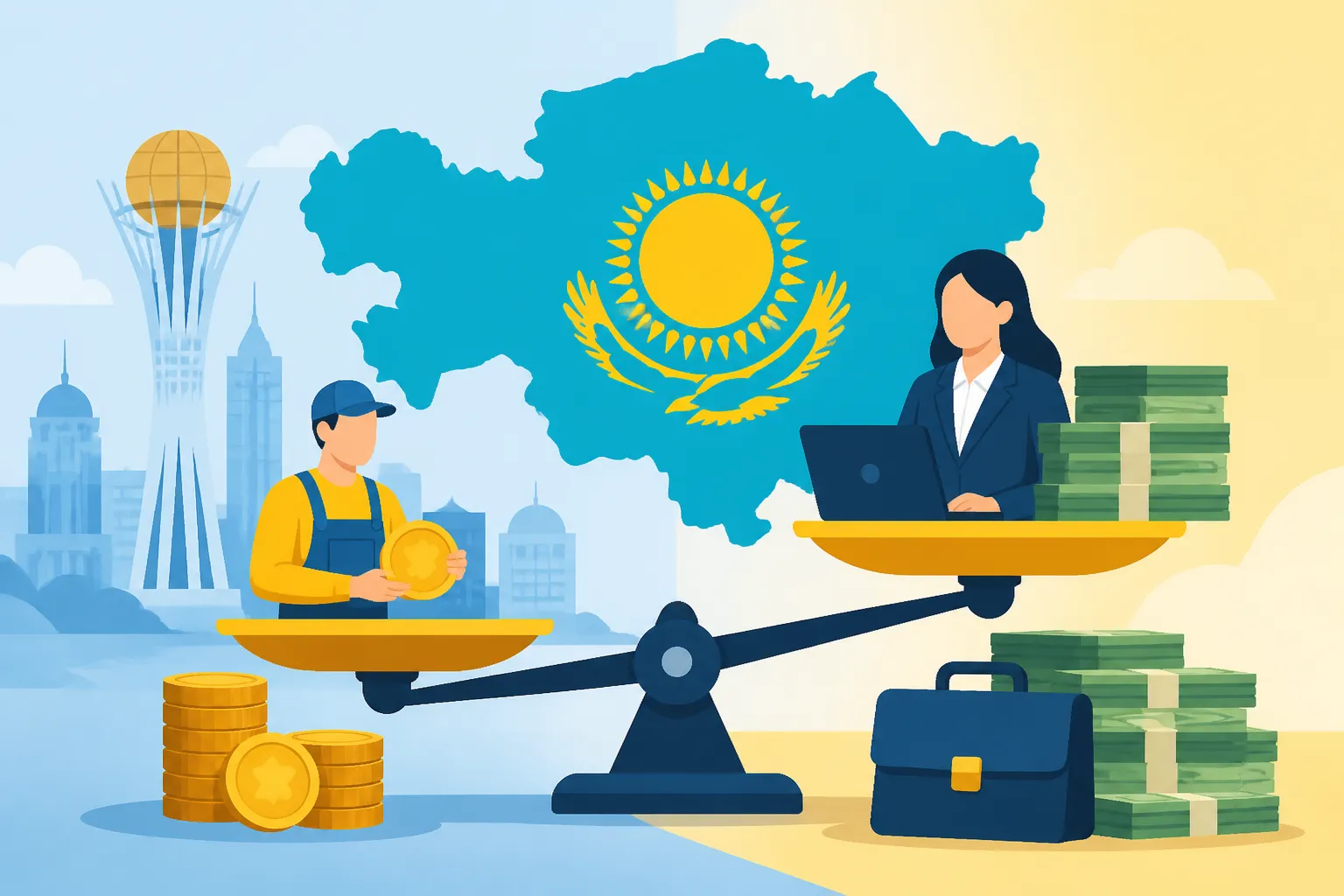
Understanding the Minimum Wage and Average Salary in Kazakhstan
One of the biggest head-scratchers for new expats looking to work in Kazakhstan is figuring out what a "good" salary actually looks like. It’s easy to get lost in translation when comparing local wages to what you’re used to back home, especially with the fluctuating exchange rates and vastly different living costs. This guide is here to untangle the complexities of Kazakhstan’s minimum wage and provide a realistic picture of average salaries, helping you set clear expectations and plan your finances effectively.
Understanding Kazakhstan's Minimum Wage and Its Impact
When you first land in Kazakhstan, you might hear whispers about the "minimum wage" and wonder if it truly applies to expats. While most foreigners coming here for professional roles won't be earning the absolute minimum, it's crucial to understand what it is and what it signifies for the broader economy and cost of living. It sets a baseline, after all, and understanding the foundation helps you appreciate the full structure.
What the Official Minimum Wage Entails
The minimum wage in Kazakhstan, officially known as the "Minimum Monthly Wage" (МЗП – Минимальная заработная плата), is a government-mandated baseline that employers must pay their employees. As of recent updates, specifically January 1, 2024, the minimum monthly wage in Kazakhstan stands at 85,000 tenge. This figure is set by the government annually and is usually announced well in advance. It's a critical social indicator, primarily aimed at protecting low-skilled workers and ensuring a basic standard of living. For many local Kazakh citizens, especially those in entry-level positions or rural areas, this is a very real number that directly impacts their household budgets.
It’s important to understand that this is a gross figure, meaning it's before deductions for taxes and social contributions. While 85,000 KZT might sound like a decent sum in some currencies, once you factor in the flat 10% individual income tax, social contributions, and other mandatory payments, the net amount will be lower. For most expats, especially those recruited internationally, your salary will be significantly higher than this, but it provides a useful reference point for the economic landscape you're stepping into. Don't be surprised if you see local jobs advertised near this figure; it's a reality for a significant portion of the workforce.
How Minimum Wage Affects Different Job Sectors
While the minimum wage directly impacts sectors employing a large number of entry-level and unskilled workers, its influence ripples across the entire job market. For instance, jobs in retail, hospitality (like waiters or cleaners), and certain administrative support roles often hover closer to this minimum, especially outside of the major economic hubs like Almaty and Astana. These are often positions filled by local residents or migrant workers from neighboring countries, and the pay reflects the general economic conditions and competition in those segments.
For expats, the relevance of this minimum wage might seem indirect, but it’s part of the fabric of the labor market. If you're managing a team of local staff, for example, understanding this benchmark is essential for fair compensation practices and complying with local labor laws. It also indirectly influences pricing for services and goods, as businesses need to factor in these basic labor costs. So, while your expat package likely won't be calculated based on this, the underlying economic principles it represents are still very much in play.
The Reality of Living on Minimum Wage
Let's be brutally honest: living comfortably on the minimum wage in Kazakhstan, especially in cities like Almaty or Astana, is incredibly challenging. While the cost of living in Kazakhstan is generally lower than in Western countries, 85,000 KZT gross (which is around 180-190 USD depending on the exchange rate) does not stretch far. Rent for even a small, modest apartment in a city can easily eat up a significant portion, if not all, of that income. Groceries, transport, and basic utilities would then push you into a deficit.
For local Kazakhs, living on this wage often means shared accommodation, extremely frugal spending, and sometimes supplementary informal income. It's a struggle many face, and it highlights the economic disparities within the country. As an expat, while your earning potential will be vastly different, understanding this reality fosters a deeper appreciation for the local context and the economic pressures faced by many. It underscores why securing a well-paying job, well above the minimum, is not just a luxury but a necessity for maintaining a comfortable expat lifestyle here.
Delving into Average Salaries Across Key Industries
Now, let's move on to what most expats are keen to understand: what kind of salaries can you actually expect? The "average salary" is a much more useful metric for foreigners, though even that number can be a bit misleading without context. Kazakhstan's economy is quite diverse, and compensation varies wildly depending on the industry, your experience, and where you're located.
High-Demand Sectors and Their Salary Ranges
Kazakhstan has several sectors that are consistently in high demand for skilled foreign professionals, and these are where you'll find the most attractive salary packages.
- Oil and Gas: This is probably the most obvious one. Kazakhstan is a major oil producer, and the oil and gas sector, particularly in regions like Atyrau and Aktau, offers some of the highest salaries for expats. Roles in engineering, project management, geology, and technical specialists can command salaries ranging from $5,000 to $15,000+ USD per month, often with additional benefits like housing, flights, and schooling allowances. Companies like Chevron, Tengizchevroil (TCO), and Eni are major players here, and they understand the need to offer competitive international packages to attract top talent.
- Mining: Similar to oil and gas, the mining sector (gold, copper, uranium) is another strong contender for high expat salaries. Locations might be more remote, but the compensation for roles in metallurgy, mine management, and specialized engineering is often on par with oil and gas, reflecting the challenging work environments and specialized skills required.
- Finance and Banking: Almaty is the financial hub of Central Asia, and foreign specialists in banking, investment, and financial analysis are well-compensated. Roles in international banks, investment funds, and large corporations can offer salaries from $3,000 to $8,000+ USD per month, depending on seniority and expertise. Here, understanding the local banking landscape and the regulatory environment is crucial, and international experience is highly valued.
- IT and Tech: While still developing, Kazakhstan's tech sector is growing rapidly, particularly in Almaty and Astana. There's a push for digitalization, and skilled IT professionals – software developers, data scientists, cybersecurity experts, and IT project managers – are in demand. Salaries can range from $2,000 to $6,000+ USD, especially if you have niche skills or experience with international companies. Many global companies are looking to expand their presence here, creating new opportunities.
- Education: International schools in Almaty and Astana are always looking for qualified foreign teachers. While the salaries might not reach the dizzying heights of oil and gas, they are very competitive within the education sector globally. Expect packages from $2,500 to $5,000+ USD per month, often including housing allowances, health insurance, and annual flights. These roles typically require teaching licenses and experience. If you are exploring how to find English teaching jobs in Kazakhstan, schools like Haileybury Almaty or Nazarbayev Intellectual Schools are key employers.
Expat-Dominated Industries and Compensation Expectations
Beyond the core high-demand sectors, several industries naturally attract a significant expat workforce, though with varying compensation levels.
- International Organisations and NGOs: Numerous international bodies, UN agencies, and non-governmental organizations operate in Kazakhstan. Salaries here are often governed by global pay scales, which can be quite attractive, especially for senior roles. These positions typically offer comprehensive benefits packages, including housing, health insurance, and sometimes diplomatic perks. However, competition can be fierce.
- Consulting and Professional Services: Big Four accounting firms (Deloitte, PwC, EY, KPMG) and international consulting companies have offices in Almaty and Astana. They frequently hire expats for specialized advisory roles in audit, tax, and management consulting. Salaries here are generally competitive, ranging from $3,000 to $7,000+ USD, depending on your level and specific expertise. A solid understanding of local regulations, especially with
Taxes for Expatsin mind, would give you a significant advantage. - Healthcare: With a developing private healthcare sector, there's a growing need for foreign medical specialists, particularly in private clinics and international hospitals. Doctors, specialists, and even some highly skilled nurses can find well-paying positions, though medical licensing and language requirements can be stringent. Salaries vary widely but can be in the $3,000 to $8,000+ USD range for experienced specialists. You can learn more about this in articles like The Complete Guide to Healthcare in Kazakhstan for Expats (2027).
- Sales and Marketing: For international companies with operations in Kazakhstan, expats are often sought for roles that require a deep understanding of global markets, brand strategy, or fluent English communication. Salaries for these positions can range from $2,000 to $5,000 USD, often with performance-based bonuses. Success in these roles often depends on your ability to bridge cultural gaps and adapt global strategies to the local market.
Regional Salary Variations Within Kazakhstan
It's a common misconception that salaries are uniform across Kazakhstan. Just like in any large country, where you work makes a huge difference to your paycheque.
- Almaty and Astana (Nur-Sultan): These two cities are the economic powerhouses and consistently offer the highest average salaries. Almaty, as the former capital and current financial/cultural hub, often has a slight edge in certain sectors like finance, media, and tech. Astana, as the administrative capital, attracts many roles in government, state-owned enterprises, and burgeoning IT/innovation sectors. The cost of living is also highest in these two cities, so higher salaries are somewhat offset by increased expenses.
- Oil-Rich Regions (Atyrau, Aktau, Mangystau Oblast): While not offering the diverse job market of the big two cities, these regions are home to major oil and gas operations. Expats working in these areas, often in remote "camp" environments or company-provided housing, can command extremely high salaries. The trade-off is often a more isolated lifestyle and less access to the amenities of Almaty or Astana. However, the savings potential here can be enormous due to significantly lower personal expenses.
- Other Major Cities (Shymkent, Karaganda, Aktobe): In other regional centers, salaries tend to be lower than in Almaty or Astana, reflecting the generally lower cost of living and different industry focuses. For instance, Shymkent is known for its agricultural and light industry, while Karaganda has a strong mining and industrial base. While expat roles might exist, they are less common and likely offer more localized compensation packages.
Knowing the local context is vital when considering job offers outside the main hubs.
The True Cost of Living Versus Salary Expectations
Understanding your gross salary is one thing, but knowing what you'll actually take home and how far it will stretch is another. The cost of living in Kazakhstan, particularly in its major cities, can be a pleasant surprise for many expats, but it's crucial to compare it realistically against your income. It's not just about the number on your payslip; it's about what that number buys.
Comparing Income to Essential Expenses
For expats, a good benchmark for a comfortable life in Almaty or Astana generally means a monthly salary of at least $2,000-$3,000 USD after tax. This allows for a decent apartment, groceries, transport, and some leisure. Salaries significantly higher than this ($4,000+ USD) allow for a much more luxurious lifestyle, savings, and travel.
Let's break down typical essential expenses:
- Rent: This will be your biggest outgoing. A modern, comfortable 1-bedroom apartment in a good area of Almaty or Astana can range from 250,000 KZT to 500,000 KZT (approximately $550 – $1100 USD) per month. For a 2-bedroom, expect 350,000 KZT to 700,000 KZT ($750 – $1500 USD). Prices vary greatly depending on location, furnishings, and building quality. You can get more details in The Complete Guide to Renting an Apartment in Kazakhstan (2027).
- Utilities: Electricity, water, heating, and internet for a 1-bedroom apartment might total 20,000-40,000 KZT ($45-$90 USD) in winter, less in summer. Internet is generally very affordable and fast.
- Groceries: A single person could spend 80,000-150,000 KZT ($180-$340 USD) on groceries per month, depending on diet and whether you shop at local markets or international supermarkets. Imported goods are often more expensive.
- Transport: Public transport (buses, metro in Almaty) is incredibly cheap, around 100-200 KZT ($0.22-$0.45 USD) per ride. Taxis (via apps like Yandex Go, InDrive) are also very affordable, with most city rides costing 800-2000 KZT ($1.80-$4.50 USD). If you own a car, petrol is still relatively cheap compared to Western prices.
- Dining Out/Entertainment: A meal at a mid-range restaurant could be 5,000-10,000 KZT ($11-$22 USD). A coffee is typically 1,000-2,000 KZT ($2.20-$4.50 USD). Movie tickets are around 2,000-3,000 KZT ($4.50-$6.70 USD).
As you can see, even with a mid-range expat salary, you can live quite comfortably. The trick is to budget wisely and understand that while some things are incredibly cheap, others (especially imported goods or luxury services) can be surprisingly expensive. For a deeper dive, check out The Complete Guide to Cost of Living in Kazakhstan for Expats (2026).
Budgeting for Lifestyle Choices as an Expat
Your lifestyle choices as an expat in Kazakhstan will significantly dictate how much of your salary you retain. If your priority is saving money, you'll find plenty of ways to economize. Eating local cuisine is far cheaper than frequenting international restaurants. Utilizing public transport and ride-hailing apps will save you money compared to owning a car. Shopping at local bazaars for fresh produce is more economical than relying solely on large supermarkets stocking imported goods.
However, if you're looking for a more Westernized lifestyle – frequenting international cafes, ordering imported groceries, joining a high-end gym, or traveling frequently – your expenses will naturally rise. Many expats opt for a blend, enjoying the affordability of local life while occasionally indulging in familiar comforts. For example, some might choose to live in a slightly less central, but still comfortable, apartment to save on rent, freeing up funds for weekend trips to the mountains or a nicer meal out once a week. It’s all about finding that balance that works for your personal finances and comfort levels.
Impact of Housing and Utilities on Disposable Income
Housing costs, including rent and utilities, are by far the most influential factor on an expat's disposable income in Kazakhstan. A high-quality, centrally located apartment in Almaty or Astana can easily consume 30-50% of a mid-range expat salary. If your employment package includes a housing allowance, this can drastically improve your financial situation, as it effectively frees up a significant portion of your salary. This is a common perk for roles in the oil & gas and international education sectors.
Without a housing allowance, you'll need to carefully weigh location, size, and amenities against your budget. Living further out from the city center can reduce rent considerably, but then you might spend more on transport or commuting time. Utilities are generally quite affordable, especially compared to Western Europe or North America, but heating costs in winter can still be noticeable due to the harsh climate. Always clarify what's included in your rental agreement – sometimes utilities are covered, sometimes they are separate. Negotiating a good rental agreement can literally save you thousands of dollars a year, directly impacting how much you can save or spend on other aspects of your expat life.
Factors Influencing Your Salary as a Foreigner
Securing a competitive salary in Kazakhstan isn't just about finding a job in a high-paying industry; it's also about leveraging your unique skills, experience, and understanding the local employment landscape. As a foreigner, you bring a distinct value proposition, and knowing how to articulate that is key to salary negotiation.
Education, Experience, and Language Proficiency
Your educational background and years of relevant experience are paramount. A Master's degree or specialized certifications, especially from internationally recognized institutions, will typically place you in a higher salary bracket. Companies recruiting internationally are looking for expertise that may not be readily available in the local talent pool. The more niche and in-demand your skills are, the stronger your negotiating position. For example, a senior petroleum engineer with 15+ years of experience in complex drilling operations will command a significantly higher salary than a recent graduate, regardless of their nationality.
Language proficiency is another massive differentiator. While many international companies operate in English, knowing Russian and/or Kazakh can significantly boost your value. Russian is the lingua franca for business and daily life, and proficiency can open doors to a wider range of roles and allow for deeper integration with local colleagues and clients. Kazakh is the state language, and while less critical for most expat roles, showing an effort to learn it is always appreciated and can be an asset in certain public-facing positions. Services like iTalki can be invaluable for picking up conversational Russian or Kazakh before or after you arrive, making your transition smoother and potentially enhancing your career prospects.
Negotiating Your Salary and Benefits Package
Never, ever accept the first offer. Salary negotiation is expected, and as a foreigner, you often have more leverage, especially if you possess specialized skills. Before you even start applying, do your homework on salary benchmarks for similar roles in Kazakhstan and compare them to your home country's expectations. This will give you a realistic range to aim for. You can often start by asking, "How much is the average salary in Kazakhstan in 2026?" for your specific role.
Your total compensation package goes beyond just the base salary. Consider the following when negotiating:
- Housing Allowance: As discussed, this is huge. If it's not offered, can you negotiate for one, or for a higher base salary to cover it?
- Flight Allowances: Annual return flights to your home country for you and your family are common for expat packages.
- Health Insurance: Comprehensive international health insurance is a must. Check what's covered under Health Insurance in Kazakhstan: OSMS, Private and International Options Explained.
- Relocation Package: Covers shipping costs, temporary accommodation upon arrival, and support with visa processes.
- Schooling Allowance: If you have children, this can be a deal-breaker, as international school fees are substantial.
- Pension and Social Contributions: Understand what your employer contributes and what you're responsible for.
- Company Car/Transport: Often provided for roles requiring significant travel.
It's about the entire package, not just the monthly figure. Be prepared to articulate your value and demonstrate why your international experience and skills are worth the investment. Read up on How to Negotiate Salary and Benefits for a Job in Kazakhstan to refine your approach.
Understanding Taxation and Social Contributions
Before you celebrate that generous gross salary, remember that the Kazakhstani taxman will want his slice. Kazakhstan has a very attractive flat 10% individual income tax rate, which is often a pleasant surprise for expats coming from countries with progressive tax systems. However, there are also mandatory social contributions you need to be aware of.
- Individual Income Tax (IIT): As a tax resident (generally spending 183 days or more in a 12-month period in Kazakhstan), your worldwide income is subject to a flat 10% IIT. If you are not a tax resident, specific rules apply to Kazakhstan-sourced income. This low rate is a major draw for many professionals considering a move. Learn more in Understanding Income Tax and the Flat 10% Rate in Kazakhstan (2026).
- Mandatory Pension Contributions (OPV): Employees contribute 10% of their monthly income to the Unified Accumulative Pension Fund (UAPF). Employers do not contribute to your individual pension fund, but they do make other social contributions.
- Mandatory Social Health Insurance (OSMS): Employees contribute 2% of their monthly income (up to a certain cap) to the Social Health Insurance Fund. Employers also make contributions on behalf of their employees. This is crucial for accessing healthcare services in Kazakhstan. For details on how this works, see How Kazakhstan's Health System Works: OSMS and Private Care Explained (2026).
These deductions mean your net take-home pay will be less than your gross salary. It’s essential to factor these into your salary expectations and budgeting. Companies like Taxes for Expats specialize in helping foreigners navigate these complexities, ensuring you comply with both Kazakhstani and your home country's tax obligations, especially if a double taxation agreement is in place. Knowing your total tax burden is a critical part of understanding your true earning potential here.
Navigating Salary Expectations and Job Search Strategies
Finding a job that meets your salary expectations in Kazakhstan requires a strategic approach. It's not just about what you want to earn, but also how you position yourself and where you look for opportunities. The job market here has its own nuances, and understanding them will give you a significant edge.
Researching Realistic Salary Benchmarks
Before you even send out your first CV, invest time in thorough research. Look beyond generic "average salary in Kazakhstan" figures, as these can be heavily skewed by the oil and gas sector or low-wage local jobs.
- Industry-Specific Research: Focus on your specific industry and role. Websites like LinkedIn, local job boards (e.g., HeadHunter.kz), and expat forums can provide anecdotal evidence or salary ranges for advertised positions.
- Networking: This is probably the most effective way to get realistic salary benchmarks. Talk to other expats already working in your field in Kazakhstan. They can offer invaluable insights into what's considered competitive and what benefits are typically included. Reach out on LinkedIn or through expat groups on social media.
- Recruitment Agencies: Engage with international and local recruitment agencies specializing in expat placements. They often have the most up-to-date salary data because they work directly with employers. They can also advise you on how your qualifications translate into the Kazakhstani market. Agencies like Hays or local ones specializing in specific sectors are good starting points.
- Cost of Living Calculators: Use online cost of living calculators for Almaty or Astana to gauge how different salary levels would translate into your desired lifestyle. Compare these against your potential net income.
Remember, a "good" salary is relative. What might be a modest income in a Western capital could provide a very comfortable lifestyle here. Your research should aim to bridge that gap.
Effective Job Search Platforms and Networking
While you might be used to certain global job platforms, the local landscape has its own preferred channels for recruitment.
- LinkedIn: Absolutely essential. Many international companies and larger local firms post vacancies here. It's also critical for networking and connecting with recruiters. Make sure your profile is optimized and highlights your international experience and specific skills.
- Local Job Boards: HeadHunter.kz (hh.kz) is the dominant job portal in Kazakhstan. While many listings are in Russian, you'll find English-language jobs, especially with international companies. Other local sites might exist but are less prominent for expat roles.
- Company Websites: If you have specific companies in mind (e.g., major oil companies, international schools, or banks), check their careers pages directly. Many multinational corporations manage their global recruitment independently.
- Recruitment Agencies: As mentioned, agencies are a powerful tool. They have direct access to employers and can often fast-track your application. For a broader overview of strategies, consider reading The Expat Guide to Finding a Job in Kazakhstan (2027).
- Networking Events: Once you're in Kazakhstan, attending professional events, chambers of commerce meetings, and expat meet-ups can lead to unexpected opportunities. Many jobs are filled through personal recommendations.
Don't underestimate the power of simply being present and making connections. A casual conversation at an expat gathering could open a door that a thousand online applications couldn't.
Preparing for Interviews and Salary Discussions
When you land an interview, it's not just about showcasing your skills; it's also about demonstrating your understanding of the local context and your commitment to working in Kazakhstan.
- Cultural Sensitivity: Research Kazakhstani business etiquette. Punctuality, respect for hierarchy, and a professional demeanor are highly valued.
- Show Adaptability: Highlight your experience working in diverse environments or your ability to quickly adapt to new cultures. Employers want to know you can thrive here, not just perform your job.
- Articulate Your Value: Clearly explain how your unique foreign experience and skills will benefit the company, especially if they are looking to expand internationally or bring in global best practices. This is where your specific background as an expat comes into play.
- Salary Discussion Strategy: When the conversation turns to salary, be prepared. Have your research ready. It’s often best to let the employer make the first offer, as this gives you a baseline. If you must give a range, make it broad and ensure the lower end is still acceptable to you. Always discuss the total compensation package, not just the base salary. Ask clarifying questions about benefits, especially housing, flights, and insurance. The goal is to reach a mutually beneficial agreement that makes your move to Kazakhstan financially viable and personally rewarding. For more on preparing for your professional journey, you may want to review How to Adapt Your CV for the Kazakhstani Job Market.
Navigating the Job Market and Ensuring Financial Stability in Kazakhstan
Understanding the nuances of minimum wage, average salaries, and the overall economic landscape is crucial for any expat considering a move to Kazakhstan. While the minimum wage is primarily a local benchmark, the range of average salaries across high-demand sectors like oil & gas, finance, and tech presents significant opportunities for foreign professionals. Factors such as your education, experience, and language skills, coupled with strategic negotiation, will heavily influence your earning potential.
Remember, a "good" salary is one that not only covers your essential expenses but also allows for your desired lifestyle, savings, and the ability to enjoy all that Kazakhstan has to offer. By thoroughly researching salary benchmarks, leveraging effective job search strategies, and carefully considering your entire compensation package, you can secure a financially stable and rewarding career here. The journey of understanding the local market can seem complex at first, but with the right information, you'll be well-equipped to make informed decisions and thrive in your expat life in Kazakhstan.
Disclaimer
Please remember that all information provided in this guide is for general informational purposes only and is subject to change. Economic conditions, government regulations, and market trends in Kazakhstan can evolve rapidly. While we strive for accuracy, it is always advisable to consult with relevant professional advisors, such as tax consultants, legal experts, or recruitment specialists, for advice tailored to your individual circumstances before making any financial or career decisions.