How Do I Set Up Auto-Pay for My Utility Bills in Kazakhstan?
Oh, the joy of utility bills in a new country, right? It’s one of those mundane tasks that suddenly becomes a Herculean effort when you’re navigating a new language, a different system, and the ever-present question of "Is this actually how it works, or am I missing something crucial?" If you've found yourself staring blankly at a paper bill, wondering how on earth you're supposed to get it paid automatically each month without a minor panic attack, then this comprehensive guide is for you. We're diving deep into the world of utility bill auto-payments in Kazakhstan, from understanding your bills to mastering the digital platforms that make life so much easier.
The Initial Hurdle: Understanding Utilities in Kazakhstan
When you first arrive, everything feels new and exciting, but then the bills start rolling in, and suddenly you're facing a whole new layer of bureaucracy. I remember my first winter here, the heating bill looked like a cryptic message written in ancient runes. It's not just about the money; it's about the sheer mental load of figuring out what each line item means and how to deal with it. This section will help demystify the system before we even get to the "auto-pay" part.
Deciphering Your Kazakhstani Utility Bills
So, you’ve settled into your apartment, maybe you’ve even figured out How Do I Set Up Electricity After Moving to Kazakhstan? and How Do I Set Up Water and Heating in Kazakhstan?, but then the paper arrives. Unlike some countries where you get one consolidated bill, here in Kazakhstan, you'll often receive separate bills from different service providers. This means individual statements for electricity, water (cold and hot), heating (especially crucial during those long, brutal winters), gas (if your building uses it), garbage collection, and even building maintenance fees (known as KSK or OSIP contributions).
Each bill will typically have your personal account number (лицевой счет – litsevoy schet), the service period, your previous and current meter readings (if applicable), the tariff, and the total amount due. The key is to look for that litsevoy schet because that's your unique identifier for payments. Without it, you're essentially shouting into the void. Sometimes, these bills might even have a QR code, which is a blessing, but don't always count on it. For many expats, the initial hurdle is simply understanding what each bill is for and where that crucial account number is hidden among the Cyrillic text. Don't be afraid to ask a local friend or a trusted real estate agent for help translating the first few, just to get your bearings.
The Local Payment Landscape: Why Cash Is Still King, But Times Are Changing
Kazakhstan is a country of fascinating contrasts, and its payment culture is a prime example. While modern digital payment systems like Kaspi.kz are incredibly advanced and widely used, there's still a strong underlying reliance on cash and physical payment points for many services, especially in smaller towns or for older generations. This can be a bit jarring if you're coming from a country where everything is paid by direct debit. For the longest time, the go-to method for utility bills was marching down to the nearest bank, post office, or one of the ubiquitous payment terminals (more on those later) with your stack of paper bills and a wad of cash.
The good news is that for most expats in major cities like Almaty or Astana, the digital revolution has made significant inroads, particularly through mobile banking applications. However, it's crucial to understand that not all services or providers might be fully integrated into every digital system. Sometimes, even within the same apartment building, one neighbor might pay their heating online while another still needs to use a terminal because of their specific service provider or account type. It pays to be prepared for both scenarios, especially when you're just starting out. Always double-check if your specific provider is available on the online platforms you plan to use. Knowing How to Pay Your Utility Bills in Kazakhstan comprehensively can save you a lot of grief.
Navigating the Digital Shift: Setting Up Auto-Pay
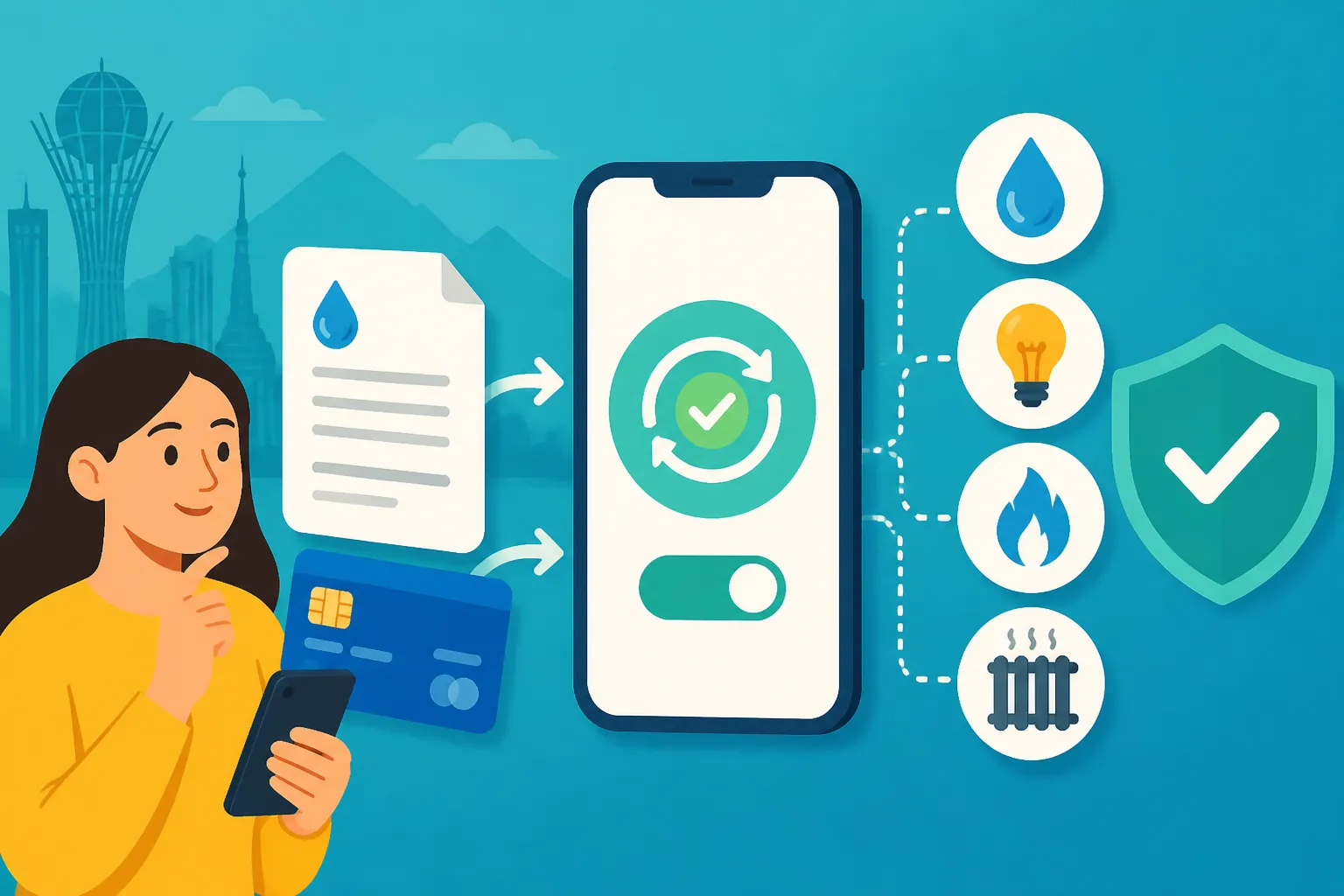
Alright, let's get to the good stuff – making those pesky bills disappear from your to-do list automatically. While a truly universal "direct debit" system for all utilities isn't as prevalent as in some Western countries, Kazakhstan has fantastic alternatives, primarily through its highly sophisticated mobile banking apps. This is where your smartphone becomes your best friend.
Online Banking Apps: Your Primary Tool
If you're living in Kazakhstan, chances are you already have, or seriously need to get, an account with one of the major banks. For expats, the two giants that reign supreme are Kaspi.kz and Halyk Bank. Both offer robust mobile applications that are absolutely essential for managing your finances, and critically, for setting up recurring utility payments.
Let's focus on Kaspi.kz first, as it's practically a way of life here. Their app is incredibly intuitive, often cited as one of the best banking apps globally.
Setting up Auto-Payment on Kaspi.kz:
- Get Your IIN and Open an Account: First things first, you need your Individual Identification Number (IIN) and a bank account. Check out How to Open a Bank Account at a Kazakhstani Bank as a Foreigner for the full lowdown.
- Download the Kaspi.kz App: Available on iOS and Android. Register your account, which usually involves your IIN and phone number.
- Navigate to "Payments" (Платежи): This is the heart of utility payments. You'll see a vast array of categories.
- Find Your Service Provider: This is the trickiest part initially. You might need to search by city (e.g., "Алматы" or "Астана") and then by service type (e.g., "Электроэнергия" for electricity, "Вода" for water, "Отопление" for heating). Or, if your paper bill has a QR code, the Kaspi.kz app has a scanner that often autofills the details! If not, you'll need to manually input your unique litsevoy schet (account number).
- Enter Your Details: Input your account number and the system should pull up your current balance.
- Make a One-Time Payment First: It's always a good idea to make one manual payment successfully to ensure your account number is correct and linked.
- Activate Auto-Payment (Автоплатеж): Once you've successfully paid a bill, you'll often see an option to "Set up Auto-payment" (Настроить автоплатеж). Tap this.
- Configure Settings: You can usually choose:
- Payment Frequency: Monthly.
- Payment Date: This is crucial. Pick a date a few days before the official due date to avoid any late fees.
- Maximum Amount: You can set a limit so that if a bill suddenly spikes unexpectedly, the auto-payment won't process without your review.
- Payment Source: Choose which of your Kaspi cards (debit or credit) the payment should come from.
- Confirm and Monitor: The app will send you notifications before the payment is processed and once it's completed.
Halyk Bank offers a very similar service through its Halyk Homebank app. The process is largely identical: navigate to payments, find your service provider, enter your litsevoy schet, and then look for the auto-payment setup option.
The sheer convenience of these apps cannot be overstated. Imagine, instead of fretting about your What Is the Average Utility Bill for an Apartment in Kazakhstan? or your internet bill, it just happens. Having a reliable internet connection is key for this, so ensure you have good mobile data, perhaps even with an Airalo eSIM for backup, especially when you're initially setting things up or traveling.
Direct Debits and Standing Orders: A Closer Look
While "direct debit" in the Western sense (where the utility company directly pulls money from your account) isn't universally applied across all utility providers in Kazakhstan, the auto-payment feature within Kaspi.kz and Halyk Bank apps essentially functions as a standing order. You, the account holder, authorize your bank to make a recurring payment to a specific litsevoy schet on a set date. The bank acts on your instruction, not directly on the utility company's demand.
This distinction is subtle but important. It means you retain more control. If you move apartments, you simply cancel the auto-payment for your old litsevoy schet and set up a new one for your new address. There's usually no need to contact the utility company directly to stop a direct debit, as it's managed through your banking app. This flexibility is actually quite reassuring for expats who might move more frequently.
However, you do need to ensure there are sufficient funds in your chosen account on the payment date. If the auto-payment fails due to insufficient funds, you'll get a notification, and you'll need to manually make the payment to avoid penalties.
Pros of Auto-Pay via Banking Apps:
- Convenience: Set it and forget it. No more missed deadlines.
- Notifications: Get alerts before and after payments.
- Consolidation: Pay all your different utility bills from one place.
- Control: Easily manage, modify, or cancel payments through your app.
Cons to be Aware Of:
- Requires Internet Access: Crucial for managing and monitoring.
- Initial Setup Can Be Tricky: Finding the right provider and inputting the litsevoy schet correctly takes careful attention.
- Funds Availability: You must ensure your account is topped up.
- Not All Providers: Very rarely, a smaller, hyper-local service might not be on the system, though this is increasingly uncommon in major cities.
Beyond Auto-Pay: Other Convenient Payment Methods
Even with the wonders of auto-pay, there will be times when you need an alternative. Maybe you're troubleshooting an auto-payment issue, or perhaps you're dealing with a service provider that isn't fully integrated. It's always good to have a backup plan, especially in Kazakhstan, where adaptability is key to a smooth expat life.
Payment Terminals (Kassas and Qiwi): When Digital Fails
Before the rise of ubiquitous banking apps, payment terminals (often referred to as kassas or qiwi terminals, after one of the dominant brands) were the go-to for almost everything in Kazakhstan. These freestanding kiosks, found in grocery stores, shopping malls, metro stations, and even standalone on street corners, allow you to pay a vast array of services, including utilities, mobile top-ups, internet, and fines.
How to Use a Payment Terminal:
- Locate a Terminal: They are everywhere. Look for bright screens, often with logos like Qiwi, Kassa 24, or CyberPlat.
- Select Your Service: Navigate through the menu, which usually has categories for "Коммунальные услуги" (Communal Services) or "Платежи" (Payments). You might need to search by name or choose from a list of providers for your city.
- Enter Your Litsevoy Schet: This is the critical piece of information. Double and triple-check it.
- Enter Amount: The terminal might pull up your outstanding balance, or you might need to enter the amount manually.
- Insert Cash: Feed your tenge banknotes into the slot. The terminal accepts various denominations.
- Get Your Receipt: Crucially, always take the receipt. This is your proof of payment. Keep it safe, especially for a few months, as an expat moving here might need to provide such documentation if any discrepancies arise.
Using terminals can be a lifesaver if your internet is down, or if you prefer to pay in cash. The main downside is that it's a manual process, meaning you have to remember to do it each month, and you need to physically have the cash. But for one-off payments or when all else fails, they are incredibly reliable.
In-Person Payments: The Old-School Reliability
Sometimes, going straight to the source is the best option. Many utility providers still have physical offices or counters where you can pay your bills directly. This is less common for electricity or general heating now, as the banking apps usually cover these, but it can be relevant for smaller, local service providers, or if you have a complex query or dispute about a bill that requires face-to-face interaction.
You can also often pay at bank branches or post offices. This is essentially the human-assisted version of a payment terminal. You hand over your bill and cash, and a teller processes it. While it's slower and requires waiting in lines, it offers an extra layer of reassurance, especially if you're not fully confident with the digital systems yet. For instance, sometimes when setting up internet, you might need to visit a provider's office to sort out your contract and first payment. This is why knowing How to Choose a Mobile and Internet Provider in Kazakhstan also involves knowing their physical presence.
Markdown Table: Utility Payment Methods Comparison
| Payment Method | Best For | Pros | Cons |
|---|---|---|---|
| Kaspi.kz/Halyk Apps | Regular, recurring bills; high convenience | Auto-pay, notifications, consolidate bills, easy management | Requires smartphone/internet, initial setup can be tricky for newcomers |
| Payment Terminals | Cash payments, one-off bills, backup option | Widely available, quick for simple payments, accepts cash | Manual process each month, no auto-pay, need physical cash, language barrier |
| In-Person (Bank/Post) | Complex queries, cash-preferred, backup | Human assistance, reliable for disputes, good for first-timers | Time-consuming (queues), limited hours, no auto-pay |
Troubleshooting and Best Practices for Expats
Living abroad always throws curveballs, and utility payments are no exception. A bit of foresight and knowing how to troubleshoot common issues can save you a lot of stress. Remember, even with the best services like Sirelo helping you move, the day-to-day realities of living in Kazakhstan still require your attention.
Common Issues and How to Solve Them
- Incorrect Litsevoy Schet (Account Number): This is probably the most common mistake. If your auto-payment isn't going through, or an online payment isn't reflected on your bill, double-check that you've entered the exact account number. Even one digit off can send your payment to someone else's account (which is a headache to fix). Always keep a copy of your first physical bill with the correct account number visible.
- Insufficient Funds: Your auto-payment will fail if your linked card doesn't have enough money. The banking app will usually notify you. Simply top up your card and make the payment manually, or wait for the next auto-payment attempt if the system allows.
- Provider Not Found: For newer buildings or very niche services, your provider might not be listed in every app. In this case, payment terminals are usually a reliable alternative. If not, contact your landlord or KSK (building management) for guidance on where and how to pay.
- Payment Not Reflecting: Sometimes, there's a delay between your payment and the utility company's system updating. This is usually nothing to worry about unless it persists for more than a few days. If it does, first check your banking app for a successful transaction confirmation. If you have a receipt (especially from a terminal), keep it ready. Then, contact the utility provider or your building management (KSK) with your payment details.
- Language Barrier: This is an overarching challenge. If you're struggling with the app or talking to a service representative, ask a Kazakhstani friend for help, or use translation apps. Many people, especially younger generations in big cities, speak some English, but it's not guaranteed.
Remember that Understanding Mandatory Health Insurance Contributions in Kazakhstan and other regular payments also follows similar principles – having your IIN and using the right digital platforms is key.
Keeping Track of Your Payments and Records
Even with auto-pay, it's a good habit to periodically check your utility accounts and bank statements. Kazakhstani banking apps like Kaspi.kz are fantastic for this, providing detailed transaction histories.
- Review Monthly: Take five minutes each month to glance at your payment confirmations and compare them to your actual usage, if meter readings are involved.
- Save Digital Receipts: Most banking apps generate digital receipts. If you use terminals, always keep the physical receipt. Take a photo of it if you're worried about losing the paper.
- Organize Your Records: Create a digital folder for your utility bills and payments. This is particularly useful if you need to reconcile any discrepancies or provide proof of payment when moving out.
- Understand Billing Cycles: Familiarize yourself with when your bills are typically generated and when payments are due. This helps you anticipate costs and ensure your auto-pay is set up correctly. For example, knowing How Much Does Electricity Cost per Month in Kazakhstan? can help you budget.
Being proactive and organized will save you countless headaches. While the system here might seem a bit different at first glance, the digital tools available are incredibly powerful and, once mastered, make managing your utility bills remarkably straightforward.
Disclaimer
The information provided in this guide is intended for general informational purposes only and does not constitute professional advice. While we strive to keep the information up-to-date and accurate, utility payment systems and regulations in Kazakhstan can change. Always verify current procedures with official sources, your specific utility providers, or local financial institutions. Relying on any information in this guide is solely at your own risk.