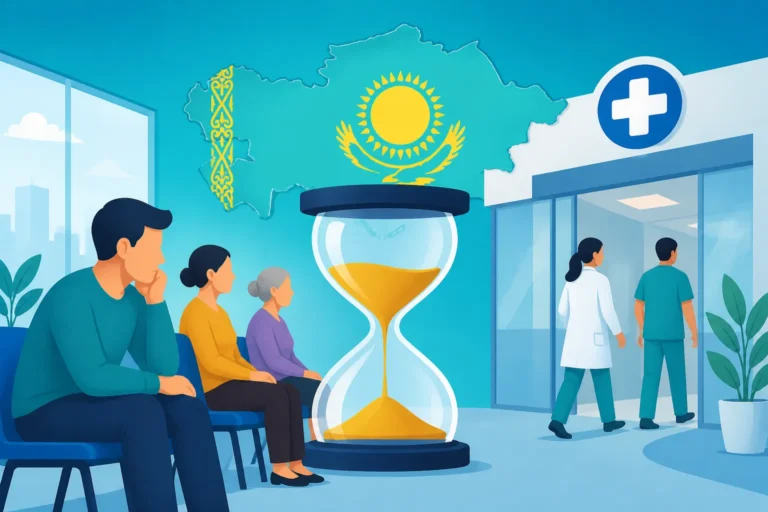
What Documents Do I Need to See a Doctor in Kazakhstan?
Oh, the joy of navigating a new healthcare system! If you're an expat in Kazakhstan, you've likely already experienced that familiar mix of confusion and mild panic when you realize you need to see a doctor. It's not like popping into your local clinic back home, is it? The seemingly simple act of a doctor's visit can quickly turn into a bureaucratic maze if you don't have your paperwork in order. This guide is here to untangle that knot for you, breaking down exactly what documents you'll need to present, whether it's for a routine check-up, a specialist consultation, or even an emergency, and hopefully save you a few headaches (and maybe some actual medical bills) along the way.
Getting Started: The Absolute Essentials for Any Doctor's Visit
No matter where you're from or what type of medical care you're seeking, there are a few foundational documents that are universally required in Kazakhstan. Think of these as your golden tickets to accessing the healthcare system. Without these, you might find yourself in a very difficult spot, even in a private clinic.
Your Individual Identification Number IIN
Let's start with the big one: your Individual Identification Number, or IIN (ИНН in Cyrillic). This isn't just a number; it's your key to pretty much all administrative functions in Kazakhstan, including healthcare. It's akin to a national ID number or social security number in other countries, and you'll need it for everything from opening a bank account to registering with a polyklinika. Without an IIN, you simply cannot be properly registered in the national health system, which means no OSMS coverage and potential issues with private providers who need to record your information.
If you don't have one yet, drop everything and prioritize getting it. Seriously. It's usually the first thing you need to sort out after arriving. You can learn more about the process in our guide on How to Get an IIN (Individual Identification Number) in Kazakhstan. This number will be printed on your residence permit or a separate document from the Public Service Center (ЦОН/TSON), so make sure you have it readily accessible. It's often requested even before your name is asked.
Valid Passport and Residence Permit or Visa
This might seem obvious, but always, always carry your valid passport, along with your Kazakhstani residence permit (if you have one) or your visa. These documents prove your identity and your legal right to be in the country. Doctors and clinic administrators need to verify who you are, especially for official records and to confirm your eligibility for certain services. Your residence permit, specifically, will often have your IIN printed on it, making it a dual-purpose document.
For those on shorter stays or certain visa types, your visa will be crucial. For example, if you're covered by a comprehensive travel insurance like SafetyWing (which many digital nomads and short-term expats use), having your passport and visa to prove your legal stay will be essential for any claim processes. Always keep digital copies on your phone, but be prepared to present the physical documents. It’s not uncommon for clinics, especially public ones, to require seeing the original documents.
Migration Card or Temporary Registration
Upon entering Kazakhstan, you received a small, white migration card. This little slip of paper is more important than it looks! It records your entry date and, for many, is the basis of your initial legal stay. If you’re staying for more than a few days, you'll also need to register your address with the migration service. This temporary registration, or "propiska," is vital.
When you go to a doctor, particularly in a public polyklinika, they will often ask for proof of your registration. This is how they ensure you are a legitimate resident within their service area and have the right to access the local public healthcare. If you're a new arrival and haven't registered your address yet, you might face some hurdles. It’s an administrative step that can feel a bit tedious but is absolutely non-negotiable for seamless healthcare access. Our guide on How to Register Your Arrival with the Migration Service in Kazakhstan provides a detailed walkthrough.
OSMS vs. Private Clinics: Different Documentation Needs
The type of healthcare facility you choose – whether it's a public polyklinika under the Compulsory Social Health Insurance (OSMS) system or a private clinic – will significantly impact the specific documents you need to present. It’s not a one-size-fits-all situation here.
Navigating the OSMS System: What to Bring
If you're registered with the state-run OSMS (Obligatory Social Health Insurance) system, which is mandatory for most employed expats and residents, you'll need to prove your active participation. This is where many expats hit their first snag, as the system relies heavily on digital records and regular contributions.
Proof of OSMS Registration and Contributions
The most critical document for OSMS is proof that you are actively enrolled and making your monthly contributions. This usually means accessing the eGov portal or the Social Health Insurance Fund (ФСМС) website. While they usually check your status digitally using your IIN, it's always wise to have a printout or a screenshot showing your current OSMS status. This might include:
- A printout from eGov.kz or the FSMES personal cabinet: This shows your active OSMS status and payment history.
- Your employer's confirmation letter: If your employer manages your OSMS contributions, a letter from them stating your active employment and OSMS payments can be helpful, especially for new hires.
- Payment receipts: While not always required, having recent payment receipts (which you can usually get from your bank or payment apps like Kaspi) can serve as backup proof of your contributions.
Remember, if your OSMS contributions aren't up to date, you might find yourself only eligible for emergency care in public facilities, or you might be asked to pay out-of-pocket for non-emergency services. For a deep dive into the system, check out our article on How to Register for Compulsory Social Health Insurance (OSMS) in Kazakhstan, and don't miss Understanding Mandatory Health Insurance Contributions in Kazakhstan to ensure you're always covered.
Poliklinika Registration Confirmation
Once you're enrolled in OSMS, you also need to be officially "attached" or registered to a specific polyklinika (public clinic) in your area. This is your primary healthcare provider, and all your general practitioner visits and referrals will typically go through them.
When you first visit your assigned polyklinika, they'll need proof of this attachment. Again, this is often checked digitally, but having a printout of your registration confirmation from eGov.kz can save time and frustration at the reception desk. If you’re unsure about this process, our guide on How to Choose and Register with a Clinic (Poliklinika) in Kazakhstan will walk you through it. They’ll also need your IIN, passport, and temporary registration to confirm your details and add you to their local patient database.
Opting for Private Clinics: What You’ll Need
Private clinics offer a different experience, often with less bureaucracy and potentially English-speaking staff, but they come with their own set of requirements, mainly related to payment and insurance.
Passport and IIN Are Still King
Even in a private clinic, your IIN and passport remain essential. They need to correctly identify you for their patient records and often for internal reporting to the state. Don't assume that because you're paying, they won't ask for identification; they absolutely will. These documents are usually scanned and kept on file for your patient profile.
Private Health Insurance Policy Documents
If you have private health insurance, this is where it shines. Whether it's a local Kazakhstani private plan or an international one, you'll need to provide your policy details. This includes:
- Your insurance card: Many private insurance providers issue a physical or digital card with your policy number and contact details.
- Policy document/certificate: This details your coverage, limits, and any exclusions. It's wise to have this on hand, especially for your first visit or if you’re claiming a more complex procedure.
- Pre-authorization (if required): For some treatments or specialist visits, your insurance company might require pre-authorization. Always check your policy or call your insurer before your appointment to understand if this is necessary.
Even if you’re covered by a travel insurance policy that extends to medical care, such as SafetyWing, you should have your policy number and emergency contact information readily available. These companies are generally set up to assist expats and digital nomads globally, but they need proper identification to verify your coverage. You can find more comprehensive information on your options in Understanding Private Health Insurance Plans in Kazakhstan and determine if you truly need it with Do I Need Private Health Insurance in Kazakhstan?.
Means of Payment
This might seem obvious, but for private clinics, you need to be ready to pay. Many clinics accept cash, local bank cards (like Kaspi Gold), and international credit/debit cards. It’s always a good idea to confirm their accepted payment methods when you book your appointment. While many clinics are modern, relying solely on a specific international card might occasionally lead to issues.
What to Bring for Specific Situations
Beyond the general requirements, certain situations or types of visits might necessitate additional documents or information. Being prepared for these specific scenarios can save you a lot of hassle and potential delays.
Follow-Up Appointments and Specialist Referrals
If you're returning for a follow-up or have been referred to a specialist, there are a couple of extra things that can make your visit smoother.
Previous Medical Records or Test Results
For follow-up appointments, bringing any previous test results, diagnoses, or notes from your last visit can be incredibly helpful. Even if it's within the same clinic system, having your own copies ensures continuity, especially if you see a different doctor or if there's a hiccup in their internal records.
When seeing a specialist, a referral letter from your general practitioner (GP) is often mandatory, particularly within the OSMS system. This letter (направление – napravleniye) outlines why you need to see the specialist and provides a brief medical history. Without it, the specialist might not see you, or you might have to pay out-of-pocket, even if you have OSMS coverage. Always clarify the referral process; our article on How Specialist and Hospital Referrals Work in Kazakhstan can provide more context.
Medication List
If you are on any current medications, bring a list of them, ideally with their generic names, dosages, and how often you take them. If possible, bring the packaging itself. This is crucial for doctors to understand your medical history and avoid any adverse drug interactions. It’s also incredibly useful if you need a refill, as our guide to Prescription Medications and Pharmacies in Kazakhstan: The Complete Guide details.
Medical Care for Children
Seeing a doctor for your child in Kazakhstan also has its unique requirements, largely focused on proving parenthood and vaccination status.
Child’s Birth Certificate and Your Passport
When taking your child to a doctor, you’ll need your passport (as the parent or legal guardian) and the child’s birth certificate. This establishes your relationship to the child and is necessary for their medical records. If the names on the birth certificate and your passport don't immediately make the relationship clear (e.g., different surnames), you might need additional documents proving guardianship.
Child’s IIN and OSMS Status
Just like adults, children also need their own IIN to be registered in the healthcare system, especially for OSMS coverage. You’ll need to prove their OSMS status, much like your own, often via eGov.kz. Our article on How to Add Dependents to Your Health Coverage in Kazakhstan can explain the process of getting your child covered.
Vaccination Records
For children, bringing their vaccination records ( прививочный паспорт – privivochnyy pasport) is highly recommended. This is vital for pediatricians to monitor their health, adhere to local vaccination schedules, and provide appropriate care. Many schools and kindergartens will also require these records, so it's a good habit to keep them updated and accessible. Understanding Childhood Vaccination Schedules in Kazakhstan is a great way to stay informed.
Dental and Mental Health Services
While generally similar to general medical visits, dental and mental health services might have slightly nuanced requirements.
Dental Clinics
For dental care, both public and private, your IIN and passport will be required. If you have private health insurance that includes dental coverage, bring your policy details. Many general medical policies, however, treat dental as a separate elective, so double-check your coverage. It's often an out-of-pocket expense, so be prepared for that. You can get an idea of the costs by reading Understanding Dental Care Costs in Kazakhstan.
Mental Health Services
Accessing mental health services, especially in English, can be a particular concern for expats. Your IIN and passport are still the primary identification documents. For private therapy or counseling, your private insurance may cover it, so have your policy handy. For public services, a referral from a GP (often with a sensitive diagnosis code) might be needed. Our guide on How to Access Mental Health Services in Kazakhstan as an Expat provides more specific advice. Confidentiality is typically maintained, but identification is still a standard procedure.
Handling Emergencies and Unexpected Visits
What happens if you have a medical emergency and don't have all your ducks in a row with documents? It's a valid and terrifying concern for any expat.
Immediate Emergency Care
In a genuine life-threatening emergency, Kazakhstani hospitals are obligated to provide immediate, life-saving care regardless of your documentation or insurance status. Dial 103 for an ambulance, or 112 for all emergencies. They won't turn you away at the door if you're in critical condition.
However, once you are stabilized, or if the situation is less critical but still urgent (e.g., a broken bone but not life-threatening), you will be asked for your documents. This is when your passport, IIN, and any proof of insurance (OSMS or private) become vital. If you can, have someone bring these to the hospital for you. For non-residents or those without valid insurance, be prepared for out-of-pocket billing for subsequent care. Understanding Emergency Medical Care in Kazakhstan: What Every Expat Needs to Know is crucial.
What if You’re Unregistered or Uninsured?
If you find yourself needing a doctor before you've managed to register for OSMS, or if you don't have private insurance, don't panic. You can still access care.
- Private Clinics: Your best bet for non-emergency situations. They will treat you as a private patient, requiring your passport and IIN for identification, and full payment for services. You can walk into many private clinics without a referral, making them accessible if you're newly arrived or temporarily not covered by OSMS.
- Paying Out-of-Pocket: For more routine ailments, even some public polyklinikas might offer paid services if you are not attached or lack OSMS coverage. The costs are generally quite reasonable compared to Western countries. Be ready with cash or a local bank card.
While you will not be denied emergency care, having proper documentation like your IIN, passport, and proof of registration (or at least your migration card) is paramount for anything beyond that, including follow-up care, prescriptions, and being correctly billed. Think of your documents as your advocate in a system that can be quite rigid with its procedures. Always err on the side of bringing more than you think you'll need!
Summary of Documents by Scenario
To make things a bit clearer, here's a quick reference table for the essential documents you'll need:
| Scenario | Essential Documents | Additional / Recommended Documents |
|---|---|---|
| General Visit (OSMS) | IIN, Valid Passport, Residence Permit/Visa, Temporary Registration, OSMS Proof | Previous medical records, Medication list, Poliklinika registration confirmation |
| General Visit (Private) | IIN, Valid Passport, Residence Permit/Visa | Private Health Insurance Card/Policy (e.g., SafetyWing), Means of payment, Previous medical records, Medication list |
| Child's Visit | Child's IIN, Parent's Passport, Child's Birth Certificate, Child's OSMS Proof | Child's Vaccination records, Any previous medical history |
| Specialist Visit | IIN, Valid Passport, Residence Permit/Visa, OSMS Proof (if applicable) | Referral letter from GP, Previous medical records/test results, Medication list, Private Insurance Policy |
| Emergency | Passport, IIN (if available). Your life is the priority. | Have someone bring your Residence Permit/Visa, OSMS proof, Private Insurance, Payment method |
Disclaimer
The information provided in this guide is intended for general informational purposes only and does not constitute medical, legal, or professional advice. While we strive to ensure the information is accurate and up-to-date, healthcare regulations and requirements in Kazakhstan can change. It is always recommended to verify specific requirements with the relevant authorities, your employer, or the medical institution you plan to visit. Relying solely on this information is at your own risk.