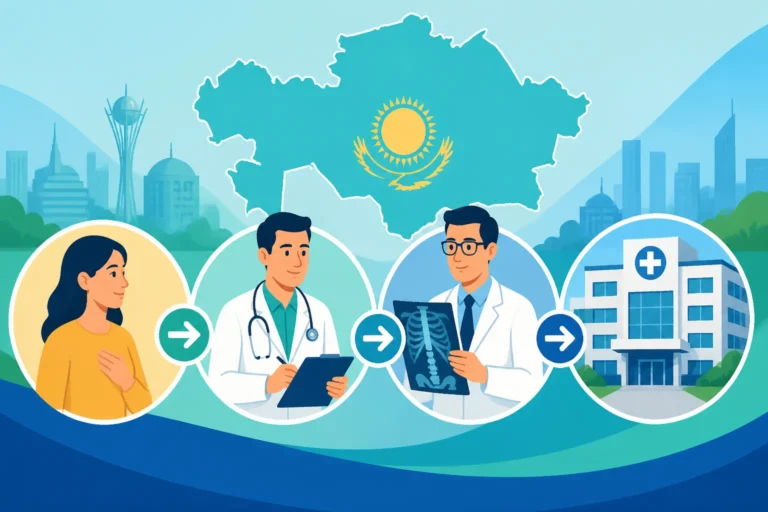
How Do I Get a Referral to a Specialist in Kazakhstan?
Ah, the healthcare maze in a new country! I know that feeling all too well. You've settled into life in Kazakhstan, maybe even mastered a few key phrases, but then a persistent ache or a concerning symptom pops up, and suddenly you're faced with a whole new layer of bureaucracy: "How on earth do I see a specialist here?" It's not always as straightforward as just picking up the phone and booking an appointment like back home. This guide is here to walk you through the nitty-gritty of getting a referral to a specialist in Kazakhstan, whether you're navigating the public system or opting for private care.
Understanding the Gateway: Your Poliklinika and General Practitioner (GP)
Let's be real, the Kazakhstani healthcare system, particularly the public side, operates quite differently from many Western models. You can't just waltz into a cardiology department because you read something concerning online. There's a gatekeeper, and understanding this role is your first step to unlocking specialist care.
The Initial Hurdle: Getting Registered
Before you can even think about seeing a specialist in the public system, you absolutely must be registered with a local polyclinic (поликлиника, or poliklinika) and have a general practitioner (GP) assigned to you. Think of your polyclinic as your community health center. Without this foundational step, you're pretty much stuck, as the entire public referral system hinges on it.
To get registered, you’ll typically need your passport, your visa or residence permit, and crucially, your Individual Identification Number (IIN) – Kazakhstan’s equivalent of a tax ID or social security number. You’ll also need to be enrolled in the Compulsory Social Health Insurance (OSMS) system. If you're employed, your employer usually handles the OSMS contributions for you, but you still need to ensure your registration with a polyclinic is complete. If you’re self-employed or not formally employed, you’ll need to manage your OSMS contributions yourself. Trying to get care without these in place is like trying to drive a car without gas; it's just not going to happen efficiently, if at all.
I remember when I first arrived, a friend of mine had a nasty cough that just wouldn't go away. She assumed she could just pop into any clinic. Big mistake! Without her IIN and OSMS registration, she was quoted exorbitant prices for a basic consultation at a private clinic, and the public polyclinic politely but firmly told her they couldn't help until she was officially registered. It can be a frustrating initial hurdle, but it’s absolutely non-negotiable for public healthcare access. For a deeper dive, check out our guide on How to Register for Compulsory Social Health Insurance (OSMS) in Kazakhstan.
Why Your GP is the Gatekeeper
Once you’re registered with a polyclinic, your assigned GP (often referred to as a family doctor or участковый врач – uchastkovy vrach, district doctor) becomes your primary point of contact for almost all health concerns. They are, in essence, the gatekeeper to specialist care within the public system. This means that if you have an issue that you believe requires a cardiologist, dermatologist, or any other specialist, your first port of call must be your GP.
This system is designed to streamline resource allocation, ensuring that basic health issues are handled at the primary care level and specialists are only involved when truly necessary. While this can sometimes feel like an extra step, especially if you’re confident you need specialist intervention, it’s how the system is structured. Your GP will assess your condition, perform initial examinations, and sometimes even order basic diagnostic tests before deciding whether a referral is appropriate. They're looking to see if your issue can be managed by them, or if it genuinely warrants a more specialized opinion. It's a system you need to understand and respect to navigate effectively. If you're still figuring out this initial step, our post on How to Choose and Register with a Clinic (Poliklinika) in Kazakhstan can offer more practical advice.
The Referral Process in the Public Healthcare System (OSMS)
So, you've registered with your polyclinic and you know your GP is the key. Now, let's talk about the actual process of getting that golden ticket to a specialist.
Consulting Your GP and Explaining Your Needs
Your journey to a specialist begins with a scheduled appointment with your GP. Make sure you book this well in advance, as same-day appointments can be challenging to secure, especially in larger cities like Almaty or Astana. When you attend your consultation, be prepared to clearly articulate your symptoms, their duration, and any concerns you have.
This is where the language barrier can become a significant hurdle. Many GPs in the public polyclinics may not speak fluent English. Many expats struggle to explain complex symptoms through Google Translate, often leading to misunderstandings. If you have a local friend who can accompany you and translate, that's ideal. Otherwise, consider hiring a professional medical translator for more serious issues. Don't be shy about bringing notes detailing your symptoms and questions – sometimes, written communication can bridge the gap better than verbal attempts.
Your GP will take your medical history, perform a basic physical examination, and might order some preliminary tests like blood work, urine analysis, or an electrocardiogram (ECG) if they deem it relevant. They might even try a course of treatment first to see if your condition improves. For instance, if you complain of joint pain, they might prescribe anti-inflammatory medication and ask you to return in a week or two. Only if these initial steps don't resolve the issue, or if the symptoms strongly suggest a specialist's intervention, will they consider a referral.
Receiving Your "Direction" to a Specialist
If your GP agrees that you need to see a specialist, they will issue you a "direction" (направление, or napravlenie). This is the official referral document. It's not just a casual note; it's a formal paper that indicates which specialist you need to see (e.g., cardiologist, endocrinologist, gastroenterologist) and often outlines the reason for the referral based on your GP’s assessment. The direction will also specify which public hospital or clinic within their network you should attend. You generally don't get to choose which specific specialist or facility you go to within the OSMS system; it's assigned based on availability and the polyclinic's affiliations.
Once you have your napravlenie in hand, you'll need to proceed to the designated specialist clinic or hospital to schedule your appointment. This might involve another trip to another location. Make sure you bring all your documents – passport, IIN, OSMS confirmation, and the referral itself – to the specialist's office.
Wait times for specialists in the public system can vary significantly. For common specialities or urgent cases, you might get an appointment relatively quickly, but for less urgent or highly sought-after specialists, you could be looking at several weeks or even months. It’s part of the trade-off for the generally lower cost of public healthcare. Understanding how OSMS and your local clinic work is essential, and we have more insights in Understanding the Role of OSMS and Your Local Clinic in Kazakhstan.
Here's a quick reference table for what you'll typically need:
| Document/Item | Purpose | Where to Get It / Notes |
|---|---|---|
| Passport | Official identification | Your valid passport |
| Visa/Residence Permit | Proof of legal stay | Ensure it's current and valid |
| IIN (Individual Identification Number) | Essential for all official transactions, including healthcare | Issued by Public Service Centers (ЦОН/TsON) |
| OSMS Confirmation | Proof of Compulsory Social Health Insurance contributions | Your employer should provide this, or you manage it if self-employed/unemployed |
| "Direction" (Направление) | Official referral from your GP to a specialist | Issued by your registered polyclinic GP |
| Medical Records/Test Results | Any previous relevant medical history or diagnostic reports | Bring copies to your GP and specialist appointments |
| Translator/Translation App | Overcome language barriers for effective communication | Highly recommended for non-Russian/Kazakh speakers |
Bypassing the Referral: Private Healthcare Options
Now, if the thought of navigating multiple appointments, potential language barriers, and waiting lists in the public system makes your head spin, there is a very viable alternative: private healthcare. This is often the preferred route for many expats precisely because it offers a more direct and often quicker path to specialist care.
Direct Access to Specialists in Private Clinics
One of the biggest advantages of the private healthcare sector in Kazakhstan is the ability to bypass the GP gatekeeper entirely. You typically do not need a referral from a general practitioner to see a specialist in a private clinic. You can simply call, book an appointment, and walk in. This offers a level of convenience and speed that the public system often cannot match.
Major cities like Almaty and Astana boast several excellent private medical centers that cater specifically to the expat community. Clinics like SOS International Clinic, Interteach, and Mediker are well-known among foreigners for offering a higher standard of service, often with English-speaking staff and doctors who are familiar with international medical standards. These clinics often have a wide range of specialists under one roof, making it easier to get comprehensive care. They also frequently have their own diagnostic facilities, meaning you can often get blood tests, X-rays, or MRI scans done on-site, saving you time and hassle.
Of course, this direct access comes at a cost. Private consultations, diagnostic tests, and treatments are significantly more expensive than those covered by OSMS in the public system. This is where good private health insurance becomes absolutely invaluable. Providers like SafetyWing offer comprehensive international health insurance that can cover the costs of these private specialist visits and treatments, giving you peace of mind and access to the care you need without the financial burden. It’s a game-changer for many expats who want the flexibility and speed of private care. For a full comparison, dive into Public vs Private Healthcare in Kazakhstan: What Expats Need to Know.
What to Expect from a Private Specialist Appointment
Booking an appointment with a private specialist is usually a much smoother process. Many clinics offer online booking portals, or you can call their reception, where you're more likely to find English-speaking staff. The consultation itself will generally feel more familiar if you're coming from a Western healthcare background. Specialists in private clinics tend to have more time for each patient, allowing for a more thorough discussion of your symptoms, medical history, and concerns.
They'll perform any necessary examinations and, if required, directly order diagnostic tests. As mentioned, many private clinics have in-house laboratories and imaging departments, which means you can often get your tests done immediately after your consultation, and results might be available much quicker. This integration significantly speeds up the diagnostic process and subsequent treatment planning.
Follow-up care is also often more coordinated within private clinics. Your specialist might directly book your next appointment, or their administrative staff will help you arrange it. When it comes to billing, if you have private health insurance, the clinic may be able to direct-bill your insurer, or they will provide you with the necessary documentation to claim reimbursement. This is where having a reliable plan, such as one from SafetyWing, makes a world of difference, simplifying what could otherwise be a confusing financial process. If you’re considering your options for private coverage, our guide Understanding Private Health Insurance Plans in Kazakhstan is a great place to start.
Navigating Challenges and Important Considerations
Even with the option of private care, moving through a new country's healthcare system will always present unique challenges. Being prepared for these can make a world of difference.
Language Barriers and Communication
This is, hands down, one of the biggest frustrations for expats in Kazakhstan. While private clinics in major cities often have English-speaking doctors or translators, it's not a guarantee, especially outside of the main expat hubs or during off-hours. In the public system, you should assume most staff will only speak Kazakh or Russian.
My advice:
- Write it down: Before your appointment, jot down your symptoms, their duration, severity, and any specific questions you have. This written record can be translated more accurately than trying to explain everything verbally on the spot.
- Translation Apps: Google Translate or similar apps can be lifesavers for simple interactions, but be cautious with complex medical terminology.
- Bring a Human: If possible, bring a local friend who speaks both languages. Their presence can make the experience far less stressful and ensure clear communication. For finding an English-speaking medical professional, see How to Find an English-Speaking Doctor in Kazakhstan.
Remember, miscommunication in a medical setting can have serious consequences, so prioritize clear and accurate information exchange.
Insurance Coverage and Costs
The choice between the public (OSMS) and private healthcare systems largely boils down to your insurance coverage and financial comfort.
- OSMS: If you're covered by OSMS, many of your specialist consultations and treatments in the public system will be covered, often with minimal or no out-of-pocket expenses beyond your monthly contributions. However, as we've discussed, it requires navigating the referral system, and you might face longer wait times or less choice in providers. There can also be certain services or medications that aren't fully covered, leading to unexpected costs.
- Private Insurance: Having private health insurance significantly expands your options. It allows you to access private clinics and specialists directly, usually with shorter wait times and in an environment more tailored to international patients. Companies like SafetyWing are excellent for expats, offering plans that cover a wide range of services in private facilities. It’s important to understand your specific policy details, including deductibles, co-payments, and any exclusions. While private care is more expensive up front, your private insurance will likely cover a substantial portion, if not all, of those costs, especially for necessary specialist care. For a complete understanding of costs, refer to The Cost of Healthcare in Kazakhstan: A Complete Breakdown for Foreigners (2026) and for insurance specifics, check out Health Insurance in Kazakhstan: OSMS, Private and International Options Explained.
Always clarify with the private clinic about their billing procedures and whether they can direct-bill your insurance or if you'll need to pay upfront and claim reimbursement. Understanding Out-of-Pocket Healthcare Costs and Co-Payments in Kazakhstan is crucial.
When to Consider International Travel for Specialist Care
While Kazakhstan has made significant strides in healthcare, for extremely rare conditions, highly specialized treatments, or if you simply want a second opinion from a doctor in your home country or a more globally renowned medical hub, international travel for medical care might be a consideration. This is particularly true if you have a complex condition or feel more comfortable with a doctor who shares your cultural background and language without any translation needed.
If this is a possibility you might consider, ensure your private health insurance policy includes provisions for medical evacuation or coverage for treatment abroad. Many international private health insurance providers, including SafetyWing, offer these critical benefits, which can provide immense peace of mind in serious situations. Always read the fine print of your policy to understand what's covered should you need to seek medical treatment outside of Kazakhstan. While it's not the primary route for most expat medical needs, it's an important option to be aware of for severe or unique circumstances, or for things like routine check-ups in another country.
Final Tips for a Smoother Experience
Navigating healthcare anywhere new can be tricky, but a little preparation and persistence go a long way.
Be Prepared and Persistent
My golden rule for expat life? Assume nothing and prepare for everything. This certainly applies to healthcare. Keep all your medical records, test results, and any referral documents meticulously organized. A physical folder and a digital backup are your best friends. Don't rely solely on the clinics to keep perfect records, as systems can sometimes be disjointed.
Be persistent but polite. If you feel your concerns aren't being adequately addressed, or if you're struggling with communication, don't give up. Seek clarification, ask for a different doctor if possible (especially in private clinics), or bring someone who can advocate on your behalf. Follow up actively on appointments, test results, and anything that requires action. This isn't the place for a "no news is good news" mentality; sometimes, no news means you need to chase it up!
Build a Network and Seek Advice
One of the most valuable resources for expats in Kazakhstan is other expats. Join local expat social media groups, attend meet-ups, and engage with your community. Ask for recommendations for specific doctors, polyclinics, or private clinics. Personal experiences and word-of-mouth recommendations can provide invaluable insights that you won't find in official guides. Someone else's positive (or negative) experience can help you make an informed decision and avoid common pitfalls. This informal network can also be a lifeline when you need practical advice or even just emotional support during a stressful health situation. From navigating emergencies to understanding the general healthcare landscape, remember you don't have to go through it alone. Our overall guide on Navigating the Kazakhstani Healthcare System: An Expat's Roadmap (2027) also offers a wealth of general advice.
Disclaimer
Please remember that this guide provides general information based on common expat experiences and current understanding of the Kazakhstani healthcare system. It is not a substitute for professional medical or legal advice. Always consult with qualified healthcare professionals for medical concerns and relevant authorities or legal experts for specific immigration or administrative questions. Policies, procedures, and regulations can change, so it's always wise to verify information with official sources.