Health Insurance in Kazakhstan: OSMS, Private and International Options Explained
Oh, the joy of navigating healthcare in a new country, right? It's often one of the biggest headaches when you first arrive, especially here in Kazakhstan, where the system can feel like a maze with many different doors. Getting your head around what health insurance you need, or even what's available, can be utterly overwhelming. This comprehensive guide is here to untangle the complexities of health insurance in Kazakhstan, breaking down your options from the mandatory state system, OSMS, to local private plans and even international coverage, helping you make informed choices for your peace of mind.
Understanding the Kazakhstani Healthcare Landscape for Expats
When you first land in Kazakhstan, whether it's the bustling energy of Almaty or the futuristic vibe of Astana, one of the fundamental questions is always, "What about my health?" It’s a completely valid concern, and honestly, the system here isn't always intuitive for those of us coming from abroad. You might be used to a particular style of healthcare delivery or insurance, and Kazakhstan’s approach, while efficient in many ways, has its own quirks and requirements. The good news is there are options, but understanding them is key to ensuring you're covered when you need it most.
Why Health Insurance is Non-Negotiable in Kazakhstan
Let's be blunt: thinking you can just wing it without proper health insurance in Kazakhstan is a gamble you really don't want to take. While the cost of healthcare in Kazakhstan can be surprisingly affordable compared to Western countries, unexpected medical emergencies can still hit your wallet hard. More importantly, accessing timely and appropriate care often hinges on having the right coverage. Without it, you might find yourself facing significant out-of-pocket expenses, or worse, delays in treatment because you haven't navigated the bureaucratic hurdles correctly. I've seen too many expats get caught off guard by a sudden illness or accident, only to discover their lack of planning puts them in a truly difficult spot. It's not just about money; it's about getting the care you deserve without added stress.
The Mandate: Compulsory Social Health Insurance (OSMS)
First things first, let's talk about the big one: OSMS. This stands for Obazatelnoe Sotsialnoe Meditsinskoe Strahovanie, which translates to Compulsory Social Health Insurance. It's the backbone of the healthcare system here for residents, including most employed expats. This isn't really an option you choose to opt into; if you're working legally in Kazakhstan, your employer is generally obligated to register you and make contributions on your behalf. For self-employed individuals, including freelancers or Individual Entrepreneurs (IPs), the responsibility falls on you to register and contribute. Understanding Mandatory Health Insurance Contributions in Kazakhstan is crucial because non-compliance can lead to issues when trying to access medical services. While it's designed to provide a baseline of care, many expats find its coverage to be basic, leading them to explore supplementary options.
Diving Deep into OSMS: The State-Mandated Coverage
Okay, so OSMS is compulsory for most residents. But what exactly does it cover? And what does it mean for you as an expat? This is where many of us scratch our heads, because the information isn't always crystal clear, especially when you're trying to read it through a translation app. Think of OSMS as your foundational safety net. It's designed to ensure broad access to primary and specialized medical care, diagnostics, and certain medications within the public healthcare system.
Who is Required to Participate in OSMS?
The short answer is: most people living and working legally in Kazakhstan. If you're employed by a Kazakhstani company, your employer will handle your registration and contributions, just like they do for Kazakhstani citizens. This includes foreign employees working under local contracts. For those of us who are self-employed, running our own business, or working as an Individual Entrepreneur (IP), the onus is on us. You’ll need to understand How to Register for Compulsory Social Health Insurance (OSMS) in Kazakhstan and make your own monthly payments. There are also specific rules about how your residence status affects OSMS enrolment in Kazakhstan. Tourists or those on short-term business visas typically don't fall under OSMS, but it’s always wise to double-check your specific visa category. The system is designed to pool resources, so everyone who's able contributes, and everyone receives care.
What Services Are Covered by OSMS?
This is where the rubber meets the road. OSMS covers a broad range of services within the public healthcare network. This typically includes:
- Primary Healthcare: Think general practitioner (GP) visits at your assigned local clinic, or poliklinika. This is your first point of contact for most health issues.
- Specialist Consultations: If your GP refers you to a specialist – a cardiologist, dermatologist, or endocrinologist, for example – these consultations are generally covered. However, wait times can sometimes be a factor, especially for popular specialists.
- Diagnostic Tests: Basic lab tests (blood, urine), X-rays, and some ultrasounds as deemed necessary by your doctor are usually included.
- Hospitalization: If you require inpatient care at a public hospital, including standard ward stays, surgeries, and necessary medical procedures, OSMS provides coverage.
- Emergency Care: While emergency services are generally available to everyone regardless of insurance status in critical situations, OSMS covers the subsequent treatment and hospitalization costs.
- Certain Medications: Prescribed medications that are on the national formulary for specific conditions might be covered, either fully or partially. However, this varies, and many people still pay out-of-pocket for a significant portion of their prescriptions.
- Maternity and Childcare: Basic maternity and prenatal care in Kazakhstan, as well as childhood vaccinations, are also covered.
It’s a comprehensive list, but remember, "covered" often means within the public system, which might involve longer wait times, less luxurious facilities, and sometimes a language barrier. For many expats, the desire for more immediate access, specific doctors, or comfortable private clinics leads them to consider additional private insurance options. It's a pragmatic choice, not a criticism of the OSMS itself, but rather an acknowledgement of personal preferences and the realities of a different healthcare infrastructure.
Exploring Private Health Insurance: Local Options for Expats
So, you're covered by OSMS, but you're finding yourself craving a bit more control, quicker appointments, or English-speaking medical professionals. This is where local private health insurance plans in Kazakhstan come into play. These plans are essentially designed to supplement or even stand in for OSMS, giving you access to the private healthcare sector, which often offers a very different experience.
Benefits of Local Private Health Insurance
Choosing a local private plan brings a whole host of advantages that can significantly enhance your healthcare experience in Kazakhstan. For starters, you often get:
- Access to Private Clinics and Hospitals: This is a big one. Private facilities in cities like Almaty and Astana often boast modern equipment, shorter wait times, and a higher standard of comfort. They are generally more accustomed to dealing with international patients.
- English-Speaking Doctors and Staff: While not universal, many private clinics employ English-speaking doctors, or at least have staff who can translate. This eliminates a huge source of stress when you're feeling unwell and need to clearly articulate your symptoms. Knowing How to Find an English-Speaking Doctor in Kazakhstan is invaluable.
- Choice of Doctors: With private insurance, you often have the flexibility to choose your own specialist, rather than being limited to whoever is assigned to you through the public polyclinic system.
- Direct Billing: Many private plans offer direct billing with affiliated clinics, meaning you don't have to pay upfront and then claim reimbursement, which is a huge convenience.
- Enhanced Coverage: Depending on the plan, you might get better coverage for specific treatments, dental care, or optical services that OSMS may only cover minimally or not at all.
- Faster Appointments: Long wait times are a common complaint in public systems worldwide. Private insurance often allows for much quicker scheduling of appointments, even for specialists.
Consider it an upgrade to your peace of mind. While OSMS provides the basics, a local private plan lets you tap into a more expat-friendly and often more efficient parallel system. This is why understanding the difference between public and private hospitals in Kazakhstan is so important.
What to Look For in a Local Private Plan
When you’re sifting through various private health insurance plans, it’s not just about the monthly premium. You need to scrutinize the details to make sure it genuinely meets your needs. Here are some key things to consider:
- Network of Clinics and Hospitals: Does the plan partner with the private clinics you'd actually want to visit? Look for reputable names like the International SOS Clinic (often referred to simply as SOS) or private wings of major hospitals in Almaty and Astana. A wider network means more choice and convenience.
- Coverage Limits and Exclusions: Every policy has its limits. Understand the maximum payouts for different treatments, annual limits, and any specific exclusions (e.g., pre-existing conditions, specific types of therapies, or procedures). Don't just assume everything is covered.
- Deductibles and Co-payments: How much do you have to pay out-of-pocket before the insurance kicks in (deductible)? Are there co-payments for each visit or procedure? These can add up, so factor them into your budget. Understanding Out-of-Pocket Healthcare Costs and Co-Payments in Kazakhstan is essential.
- Maternity and Dental Coverage: If you're planning a family or value good dental health, check these specific coverages carefully. They are often optional add-ons or have strict waiting periods.
- Reputation of the Insurer: Research the local insurance company. Look for reviews from other expats, ask colleagues, or check expat forums. Reliability in processing claims and customer service is paramount.
- Customer Service and Language Support: Can you communicate with the insurer easily? Do they have English-speaking representatives? This becomes critical during a stressful medical situation.
Many local insurers offer competitive plans tailored for corporate clients and individuals. It’s worth sitting down with a local insurance broker who understands the expat market to help you compare.
International Health Insurance: Global Coverage for the Global Citizen
For many expats, especially those with an international lifestyle, frequent travel, or a desire for the absolute broadest choice in medical care, international health insurance is often the preferred route. This isn't just about covering you in Kazakhstan; it's about providing a safety net wherever your global adventures take you.
Advantages of International Health Insurance
The appeal of international health insurance, for many of us, lies in its global reach and often more comprehensive benefits. Here’s why it’s a strong contender:
- Global Coverage: This is the most significant advantage. Whether you're in Almaty, London, or Bangkok, your policy covers you. This is invaluable if you travel frequently for work or leisure, or if you prefer to return to your home country for certain treatments. Providers like SafetyWing are specifically designed for digital nomads and global travelers, offering coverage that moves with you across borders.
- Evacuation and Repatriation: A critical component of many international plans is emergency medical evacuation. If you face a severe medical condition that can't be adequately treated in Kazakhstan, the policy can cover the costs of transporting you to a facility in a neighboring country or even back to your home country. This can literally be a life-saver and certainly a bank-saver.
- Higher Coverage Limits: International plans often boast significantly higher annual and lifetime coverage limits compared to local policies, providing greater financial protection for very serious or chronic conditions.
- Access to a Global Network of Providers: You're not just limited to Kazakhstani doctors. These plans often have a network of top hospitals and clinics worldwide, giving you the flexibility to choose where you receive treatment.
- English-Speaking Support: International insurers are typically set up to cater to a global clientele, meaning their customer service, policy documents, and claims processes are usually in English and often available 24/7.
- Continuity of Care: If you move from Kazakhstan to another country, an international policy can often move with you, ensuring seamless coverage without the hassle of applying for a new policy and potentially new waiting periods.
- Second Medical Opinion: Many international plans include access to a second medical opinion service, allowing you to consult with leading specialists worldwide for complex diagnoses.
For many, the peace of mind that comes with knowing you're covered no matter where you are is worth the investment. It’s particularly beneficial for those who are truly global citizens, moving between assignments or locations.
Key Considerations When Choosing International Coverage
While the benefits are clear, choosing the right international health insurance requires careful thought. It's often more expensive than a local private plan, so you want to ensure it’s a good fit.
- Geographical Scope of Coverage: Does the policy cover "worldwide excluding USA," "worldwide," or "worldwide including USA"? The inclusion of the USA typically makes policies significantly more expensive. Make sure it covers Kazakhstan and any other countries you regularly visit or might want treatment in.
- Deductibles and Coinsurance: Just like local plans, international policies will have these. A higher deductible often means a lower premium, but be prepared to pay that amount upfront if you make a claim.
- Inpatient vs. Outpatient Coverage: Many basic international plans prioritize inpatient hospital care. Ensure you also have robust outpatient coverage if you want consultations, diagnostic tests, and regular doctor visits covered outside of a hospital stay.
- Pre-existing Conditions: This is a critical point. Most international policies will have clauses regarding pre-existing conditions. Some might exclude them entirely, others might offer coverage after a waiting period, or for an additional premium. Be completely transparent during the application process.
- Maternity and Dental Options: Again, these are often add-ons. If these are important to you, check the specifics, including waiting periods and sub-limits.
- Emergency vs. Comprehensive Plans: Some international plans are purely for emergencies and catastrophic events, while others offer comprehensive coverage for routine care. Align this with your needs and other local coverage you might have. SafetyWing, for instance, focuses on travel medical insurance which is great for emergencies and travel-related health issues but might not cover routine check-ups in the same way a full-blown expat health insurance plan would.
- Claims Process: How easy is it to submit a claim? Do they offer direct billing with clinics in Kazakhstan? Is their online portal user-friendly?
A thorough comparison, possibly with the help of an international insurance broker, is highly recommended to ensure you get a policy that aligns with your lifestyle and budget. Understanding Private Health Insurance Plans in Kazakhstan, whether local or international, is a big step towards a secure expat life.
Comparing Your Options: OSMS, Local Private, and International Health Insurance
Okay, let's pull all this together. You've got three main avenues for health insurance in Kazakhstan as an expat, and each has its own pros, cons, and ideal scenarios. It's not about one being definitively "better" than the others, but about which one best fits your personal situation, health needs, and financial comfort.
The OSMS Baseline: Pros and Cons
Pros:
- Mandatory & Automatic for Employees: If you're employed, your company handles most of the legwork. You're covered by default.
- Cost-Effective: Contributions are usually a small percentage of your salary, making it an affordable baseline.
- Covers Essentials: Provides basic primary care, specialist referrals, hospitalization, and emergency services within the public system.
- Universal Access: Ensures that essential healthcare is accessible to all legal residents, reducing the burden of catastrophic costs.
Cons:
- Limited Choice: You're generally assigned to a specific polyclinic and limited to doctors within the public system.
- Language Barrier: Many public facilities may have limited English-speaking staff, making communication difficult.
- Wait Times: Appointments, especially for specialists, can involve significant waiting periods.
- Facilities & Comfort: Public hospitals and clinics may not always meet Western standards of comfort or aesthetics.
- Partial Medication Coverage: Not all medications are fully covered, leading to out-of-pocket expenses for many prescriptions.
- No Evacuation: Does not include medical evacuation or repatriation services.
Best for: Expats primarily seeking basic, mandatory coverage for essential health needs, who are comfortable navigating the local public system, or whose employers only provide OSMS without additional private coverage.
Local Private Insurance: Bridging the Gap
Pros:
- Access to Private Healthcare: Opens doors to modern private clinics and hospitals with better facilities.
- Reduced Wait Times: Generally much quicker appointments and shorter waits for specialists.
- English-Speaking Options: Increased likelihood of finding English-speaking doctors and support staff.
- Choice of Providers: More flexibility to choose your own doctors and specialists.
- Direct Billing: Often simplifies payment by billing the insurer directly.
- Enhanced Benefits: Can offer better coverage for dental, optical, and specific therapies than OSMS.
Cons:
- Cost: Significantly more expensive than OSMS contributions, though less than international plans.
- Geographical Limitation: Primarily covers you within Kazakhstan. If you travel frequently, you'll need additional travel insurance.
- Network Dependent: Coverage is limited to the insurer's network of affiliated clinics and hospitals.
- Policy Specifics: Coverage limits, deductibles, and exclusions vary greatly between plans.
Best for: Expats living long-term in Kazakhstan who want a higher standard of care, faster access, and greater comfort within the country, and who may not travel extensively or have separate travel insurance.
International Health Insurance: The Global Safety Net
Pros:
- Worldwide Coverage: Provides comprehensive coverage wherever you are, ideal for frequent travelers or those who plan to move again.
- Medical Evacuation & Repatriation: Crucial for emergencies requiring transport to better facilities outside Kazakhstan.
- High Limits: Often comes with very high annual and lifetime limits, offering robust financial protection.
- Global Provider Networks: Access to a network of top hospitals and specialists globally.
- English-Speaking Support 24/7: Easy communication and support, often in your native language.
- Continuity of Coverage: Can often be maintained as you move between countries.
Cons:
- Highest Cost: Generally the most expensive option.
- Deductibles Can Be High: To manage premiums, some plans have higher deductibles.
- May Not Direct-Bill Locally: In some local clinics, you might have to pay upfront and claim reimbursement, though many offer direct billing.
- Complexity: Policies can be quite detailed, requiring careful reading of terms and conditions, especially regarding pre-existing conditions. SafetyWing, for example, is great for emergencies, but you'd need to confirm if it covers routine check-ups in the way a traditional comprehensive international plan would, if that's what you're looking for.
Best for: Digital nomads, frequent international travelers, expats on global assignments, those who want the flexibility to seek treatment anywhere in the world, or individuals with specific health concerns who may require specialized care not readily available in Kazakhstan.
Here’s a quick overview to help visualize the differences:
| Feature | OSMS (Compulsory Social Health Insurance) | Local Private Health Insurance | International Health Insurance |
|---|---|---|---|
| Geographical Scope | Kazakhstan only, public system | Kazakhstan only, private system | Worldwide (variable terms) |
| Cost | Low (mandatory contributions) | Medium | High |
| Access to Care | Public clinics/hospitals, assigned GP | Private clinics/hospitals, choice of doctor | Global network of providers |
| Wait Times | Can be long | Short to medium | Short to medium (private) |
| English Language Support | Limited | Often available | High |
| Evacuation/Repatriation | No | No | Yes (usually included) |
| Maternity/Dental | Basic/Limited | Optional add-on, better coverage | Optional add-on, comprehensive |
| Ideal For | Basic needs, budget-conscious | Enhanced local care, comfort | Global travel, comprehensive needs |
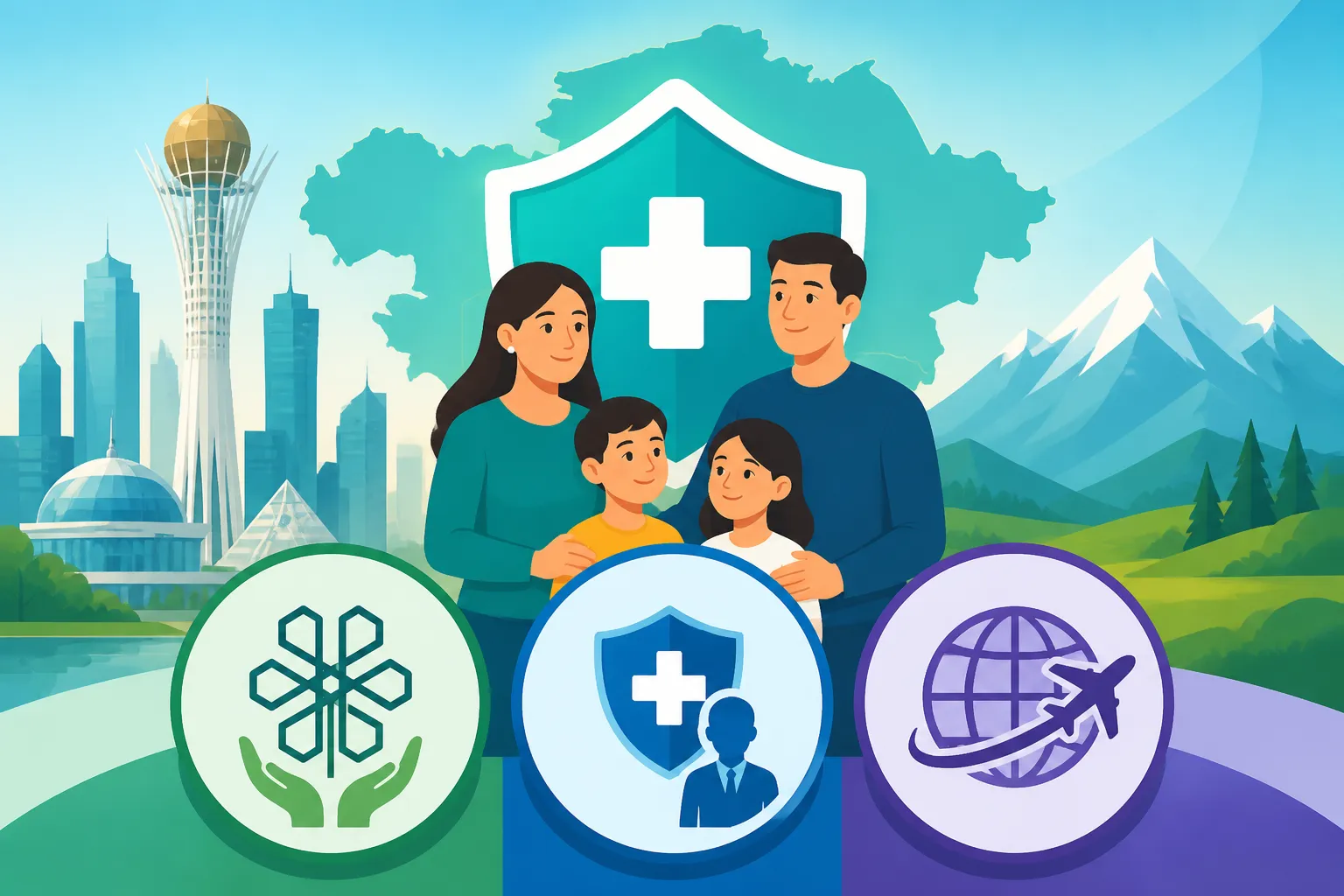
Ultimately, many expats in Kazakhstan choose a hybrid approach: they fulfill their OSMS obligations (if employed) and also invest in a local private or international plan for added peace of mind and access to preferred facilities. This way, you get the best of both worlds, ensuring you're compliant with local laws while also prioritizing your health and comfort.
How to Get Your Health Insurance in Order
Alright, so you’ve got a handle on the different types of insurance available. Now, let’s talk practical steps. Getting set up can feel like navigating a bureaucratic labyrinth, but with a clear roadmap, it’s entirely manageable. Each type of insurance has its own process, so let's break it down.
Registering for OSMS and Making Contributions
If you're an employed expat in Kazakhstan, the good news is that your employer will typically handle most of the heavy lifting for your OSMS registration and contributions. It’s part of the standard employment package here. However, it's still good practice to confirm with your HR department that everything is in order and to understand the process.
- IIN is Key: First and foremost, you need an Individual Identification Number (IIN). This is your unique national ID number and is absolutely essential for almost all official transactions in Kazakhstan, including healthcare. If you haven't got one, that's your starting point.
- Employer-Driven Registration: For employed individuals, your employer will register you with the Social Health Insurance Fund (Fund) and begin making monthly contributions on your behalf. These contributions are usually a percentage of your salary. You can generally check your status through the eGov portal or the Taxpayer Cabinet.
- Self-Employed and IPs: If you're self-employed, an Individual Entrepreneur (IP), or a freelancer, the responsibility to register and pay contributions falls squarely on you. You'll need to register as an IP, then register with the Fund yourself. Payments are usually made monthly, often through your bank or the eGov portal. The amount is typically a fixed percentage of a minimum wage, but it's best to confirm the current rates with the State Revenue Committee. Understanding How Your Residence Status Affects OSMS Enrolment in Kazakhstan is crucial here.
- Confirm Your Status: Once registered and contributions start, you'll gain access to OSMS services. You can often verify your insurance status through the mobile apps provided by major banks like Kaspi.kz or Halyk Bank, or via the eGov portal. This confirmation is vital when you visit a clinic, as you won't be able to access OSMS services without active status.
The process of How to Register for OSMS in Kazakhstan can seem daunting, but it's a well-trodden path. Just ensure you have all your documents (passport, visa/residence permit, IIN) in order.
Purchasing Local Private Health Insurance
Buying a local private plan is a more direct process, giving you more agency in your choices.
- Assess Your Needs: Before you even start looking, figure out what you truly need. Do you need dental? Maternity? Do you prioritize English-speaking doctors above all else? What's your budget?
- Research Providers: Look into reputable local insurance companies. Ask for recommendations from other expats or your HR department. In Kazakhstan, major players like Halyk-Life, Eurasia Insurance, and Centras Insurance often have private health offerings.
- Get Quotes: Contact several insurers and ask for detailed quotes. Don't just look at the premium; scrutinize the coverage, limits, deductibles, network of clinics, and exclusions.
- Consider a Broker: For a less overwhelming experience, consider using a local insurance broker. They can help you compare multiple plans, explain the fine print, and even assist with the application process.
- Application and Medical Underwriting: You'll fill out an application form, which often includes a medical questionnaire. Depending on your age and medical history, you might be required to undergo a medical examination. Be honest and thorough; misrepresenting your health history can lead to denied claims later.
- Policy Issuance and Payment: Once approved, you'll receive your policy documents. Pay your premium (usually annually or semi-annually), and you're covered! Keep your policy card handy.
Remember, the goal is to find a plan that makes sense for your lifestyle while living in Kazakhstan.
Securing International Health Insurance
For international coverage, the steps are similar but often handled through global platforms.
- Define Your Global Needs: How often do you travel? Do you anticipate seeking treatment outside Kazakhstan? What level of global coverage do you need?
- Research International Insurers: Look for companies renowned for their expat health insurance. Popular choices include Cigna Global, Aetna International, Bupa Global, and for digital nomads, SafetyWing.
- Compare Plans: Use online comparison tools or work with an international insurance broker specializing in expat coverage. Pay close attention to the geographical scope, emergency evacuation limits, and specific benefits. For example, if you're a frequent traveler, a plan like SafetyWing offers robust travel medical insurance, which can be fantastic for sudden illnesses or accidents while you're on the move, but it's important to understand its specific focus versus a more traditional long-term expat health plan.
- Application and Medical Disclosure: Complete the application, which will involve a detailed medical questionnaire. Again, transparency about your health history is vital. Some plans may require a medical report from your doctor.
- Policy Confirmation and ID: Once your application is accepted and payment is processed, you'll receive your policy documents, usually electronically. You'll get an insurance ID card and details on how to access their global network and claims process.
For any of these options, ensure you read the "small print" carefully. No one wants an unpleasant surprise when they're already feeling under the weather. Getting your insurance sorted early means one less thing to worry about in your new life here.
Navigating the Healthcare System with Your Insurance
So you’ve got your health insurance sorted, congratulations! But having the card in your wallet is only half the battle. Knowing how to actually use your insurance effectively within Kazakhstan’s healthcare system is where your expat savvy really shines. The reality on the ground can sometimes differ from the policy wording, so being prepared is key.
Using OSMS: Your Local Poliklinika
When you're covered by OSMS, your primary point of contact for routine care will be your assigned local polyclinic (poliklinika). This is how the public system is structured, acting as your gateway to other services.
- Register with a Poliklinika: Once your OSMS contributions are active, you need to choose and register with a clinic (Poliklinika) in Kazakhstan. This is usually done based on your registered address (propiska). You’ll visit the registration desk, provide your IIN, passport, and residence permit, and they will link you to a general practitioner (GP) or family doctor.
- First Point of Contact: For any non-emergency health issue – a cold, a persistent cough, a routine check-up – your GP at the polyclinic is your first stop. You’ll need to make an appointment, which can often be done by phone or sometimes via the eGov portal or your polyklinika's own system.
- Referrals to Specialists: If your GP determines you need to see a specialist (e.g., a neurologist, endocrinologist), they will provide you with a referral. This referral is essential for accessing specialist care through OSMS. Understanding How Specialist and Hospital Referrals Work in Kazakhstan is crucial. You then take this referral to book an appointment with the specialist, again likely within the public system.
- Hospitalization: If your condition requires inpatient care, your GP or specialist will refer you to a public hospital. All necessary procedures and stays are covered under OSMS.
- Emergency Care: For genuine emergencies, you can call 103 for an ambulance. While emergency care will be provided regardless of your insurance status, having OSMS ensures the subsequent treatment and hospitalization costs are covered. Knowing Emergency Medical Care in Kazakhstan: What Every Expat Needs to Know is vital.
The key to using OSMS is understanding that it operates within a structured, often bureaucratic, public system. Patience and a willingness to navigate local processes are good assets to have.
Accessing Private Care with Local or International Plans
This is where things typically get a lot smoother for expats, especially if you've chosen a reputable private insurer.
- Choosing a Clinic: With private insurance, you have the freedom to choose from a wider range of private clinics and hospitals. In Almaty, popular choices include the International SOS Clinic (often a first port of call for many expats due to its English-speaking staff and international standards), Sunkar Medical Center, or various private wings within larger hospitals. In Astana, facilities like the National Research Center for Maternal and Child Health or private clinics within the city center are often favored.
- Making Appointments: You can usually call the private clinic directly to book an appointment. Many private clinics have English-speaking receptionists or a dedicated international patient department. State upfront that you have private insurance.
- Direct Billing vs. Reimbursement:
- Direct Billing: Many private clinics in Kazakhstan have direct billing agreements with local private insurance companies and some international ones. This means the clinic sends the bill directly to your insurer, and you only pay any deductible or co-payment. Always confirm this before your appointment to avoid surprises.
- Reimbursement: If direct billing isn't available, you'll pay for the services upfront. Make sure to get a detailed invoice, including diagnosis, services rendered, and itemized costs. You then submit this to your insurance company for reimbursement. Keep copies of everything! If you have an international plan like SafetyWing, you'll typically follow their online claims process for reimbursement after paying upfront.
- Specialist Access: Unlike OSMS, private insurance often allows you to see a specialist directly without a GP referral, though some policies might encourage it. Again, check your specific policy.
- Emergency: For private emergency services, you can often call the specific private clinic you use for advice, or if it's life-threatening, still call 103. If you're covered by private insurance, clarify with the emergency service or hospital if they can direct-bill or if you'll need to claim reimbursement.
- Medications: Most private plans will cover prescribed medications to some extent, often requiring you to pay upfront and then claim reimbursement. Understanding the Pharmacy System and Buying Medicines in Kazakhstan is key here, as many expat-preferred pharmacies can provide detailed receipts for claims.
When using private insurance, don't be shy about asking questions about coverage, billing, and what to expect. A bit of proactive communication can save you a lot of hassle down the line.
Adding Dependents to Your Health Coverage
If you're an expat with a family, ensuring everyone is covered is probably at the top of your priority list. The process for adding dependents—spouses and children—will vary depending on whether you’re relying solely on OSMS, or if you're also using local private or international plans. It's a crucial step, and often requires a bit of paperwork, so let's get into the specifics.
Adding Family to OSMS
This can be a slightly more nuanced process, particularly for non-working spouses.
- For Employed Spouses: If your spouse is also employed legally in Kazakhstan, they will generally be covered by OSMS through their own employer, just like you. Their employer will handle their registration and contributions.
- For Non-Working Spouses: This is where it gets a bit trickier. Non-working spouses (and children) are typically classified as "independently contributing individuals" if they are not employed and thus not contributing through an employer. They can voluntarily register with the Social Health Insurance Fund and make their own contributions. You'll need their IIN, passport, and proof of residence to complete this. The contributions are usually a fixed monthly amount, but this figure can change, so always verify the current rates. The goal is to ensure they also have active OSMS status to access public healthcare services.
- For Children: Children are generally covered by OSMS if at least one parent is making contributions. Newborns need to be registered with an IIN, and then added to a parent’s OSMS coverage. Understanding Childhood Vaccination Schedules in Kazakhstan is also important here, as these vaccinations are covered under OSMS. You'll need to visit your local polyclinic with the child's birth certificate (and a notarized translation if applicable), IIN, and your own identity documents and proof of OSMS coverage.
It's vital to ensure every family member has their own IIN and is actively registered in the OSMS system to avoid issues when seeking medical care. Neglecting this could mean that only the contributing parent is covered, leaving other family members financially vulnerable.
Including Dependents in Private and International Plans
Adding dependents to private and international health insurance plans is usually a more straightforward process, as these plans are designed with families in mind.
- During Initial Application: The easiest way is to include your spouse and children when you first apply for the policy. Most application forms have sections for adding family members, requiring their basic personal details (name, date of birth, passport/ID number, IIN).
- Adding Later: If your family joins you in Kazakhstan after your policy is active, or you have a new baby, you can typically add them to your existing policy. You'll need to contact your insurer directly.
- Newborns: For a new baby, you'll need their birth certificate (and translation), IIN, and often a short medical questionnaire to confirm their health status. Most policies will have a specific window (e.g., 30 days from birth) during which a newborn can be added without extensive medical underwriting.
- Spouses/Older Children: For spouses or older children joining you, they will likely need to complete a medical questionnaire, and potentially undergo medical underwriting, especially if there's a gap in their prior coverage.
- Policy Terms: Always check your policy's terms regarding dependents. Some plans have age limits for children (e.g., up to 18 or 23 if they're full-time students). Be clear on any specific requirements, waiting periods, or additional premiums for adding family members.
- Dedicated Family Plans: Many private and international insurers offer specific family plans, which can sometimes be more cost-effective than adding each individual separately. These often come with shared annual limits or family-specific benefits.
No matter which type of insurance you have, proactively adding your dependents is critical. You don't want to find yourself in a situation where a family member needs urgent medical attention only to discover they aren't covered. Make it a priority when you arrive or when any changes occur in your family situation. Understanding How to Add Dependents to Your Health Coverage in Kazakhstan is a fundamental step for any expat family.
Specific Scenarios and Expat Concerns
Living as an expat in Kazakhstan, you'll invariably encounter unique situations and concerns that might not be covered in a standard insurance brochure. It's about preparing for the real-life nuances.
What Happens If You Get Sick Before OSMS Registration?
This is a common worry, especially for newcomers still wading through the initial visa and registration processes. You've just arrived, still sorting out your IIN and employment contract, and BAM! You catch the infamous "expat flu" or twist your ankle exploring the city.
- Public Emergency Care: For genuine life-threatening emergencies, public emergency services (call 103) will provide care regardless of your OSMS status. However, once stable, you will be responsible for all medical bills.
- Paying Out-of-Pocket: For non-emergency illnesses or injuries, you will likely need to visit a private clinic and pay for services out-of-pocket. This is where even a basic travel insurance policy (like those offered by SafetyWing during your initial travel phase) can be a lifesaver. These plans are specifically designed to cover unexpected medical events before you're settled into a long-term system.
- Retroactive Payments: In some cases, once your OSMS registration is complete, you might be expected to make retroactive contributions for the period you were resident but not covered. It's best to sort out your OSMS as quickly as possible.
The lesson here is simple: try to have some form of medical coverage from day one, even if it's a short-term travel medical plan, to bridge the gap until your long-term insurance (OSMS, private, or international) is active. What Happens If I Get Sick Before I Register for OSMS in Kazakhstan? The answer is usually out-of-pocket payments.
Using Insurance for Specialist Care
Accessing specialist care can sometimes feel like a quest, especially through the public system.
- OSMS Route: As mentioned, with OSMS, you'll typically need a referral from your assigned GP at your polyclinic. This referral then allows you to book an appointment with a specialist within the public network. Waiting times can be a factor.
- Private Route: With local private or international health insurance, you usually have more direct access. You can often book an appointment with a private specialist directly, bypassing the GP referral, though some policies might prefer a referral for certain complex cases. This direct access is a major draw for expats who want quick, efficient care.
- Finding Specialists: Many private clinics advertise their specialists, often with bios and language proficiencies. For example, if you need a dermatologist in Almaty, you can often find one through the SOS Clinic or other reputable private centers. How Do I Get a Referral to a Specialist in Kazakhstan? Primarily through your GP if relying on OSMS, or more directly via private insurance.
Prescription Medications and Pharmacies
Getting your prescriptions filled is another practical aspect of healthcare.
- OSMS Coverage: Some medications are covered by OSMS, particularly for chronic conditions or after hospitalization, but often not all. You'll typically pay for most routine prescriptions out-of-pocket.
- Private/International Coverage: Many private and international plans offer outpatient prescription benefits. You'll usually pay upfront at the pharmacy and then submit a claim for reimbursement.
- Pharmacies: Kazakhstan has a well-developed network of pharmacies (apteka). Major cities like Almaty and Astana have numerous pharmacies, many open 24/7. You can often find generic and brand-name medications. Do be aware that some medications that are over-the-counter in your home country might require a prescription here, and vice versa. Always carry your prescription from a local doctor. Are Prescription Medications Expensive in Kazakhstan? Generally no, but depending on the specific drug, they can add up, making insurance coverage helpful.
Dental and Optical Care
These are often areas where expats find OSMS coverage to be minimal or non-existent, making private insurance highly desirable.
- OSMS for Dental/Optical: Basic emergency dental care might be covered under OSMS, but routine check-ups, cleanings, and more complex procedures (fillings, crowns, orthodontics) are typically not, or are very limited. The same applies to optical care; basic eye exams might be available, but glasses or contact lenses are out-of-pocket.
- Private/International Coverage: Many local private and international plans offer optional dental and optical add-ons. These riders can cover a significant portion of routine dental work (cleanings, fillings) and optical needs (eye exams, prescription eyewear). Be sure to check the specific limits and any waiting periods for these benefits. How Much Does Dental Treatment Cost in Kazakhstan? While generally cheaper than in the West, having private insurance for dental work can still lead to significant savings.
In all these scenarios, having a clear understanding of your insurance policy and its benefits, combined with a willingness to engage with the local system, will make your healthcare journey in Kazakhstan much smoother.
Disclaimer
The information provided in this guide is intended for general informational purposes only and does not constitute professional medical, legal, or financial advice. While we strive to keep the content accurate and up-to-date, healthcare laws, regulations, and insurance policies in Kazakhstan are subject to change. Expats are strongly advised to consult with relevant Kazakhstani authorities, insurance providers, and legal professionals to obtain the most current and personalized information pertaining to their specific circumstances. Reliance on any information in this guide is solely at your own risk.