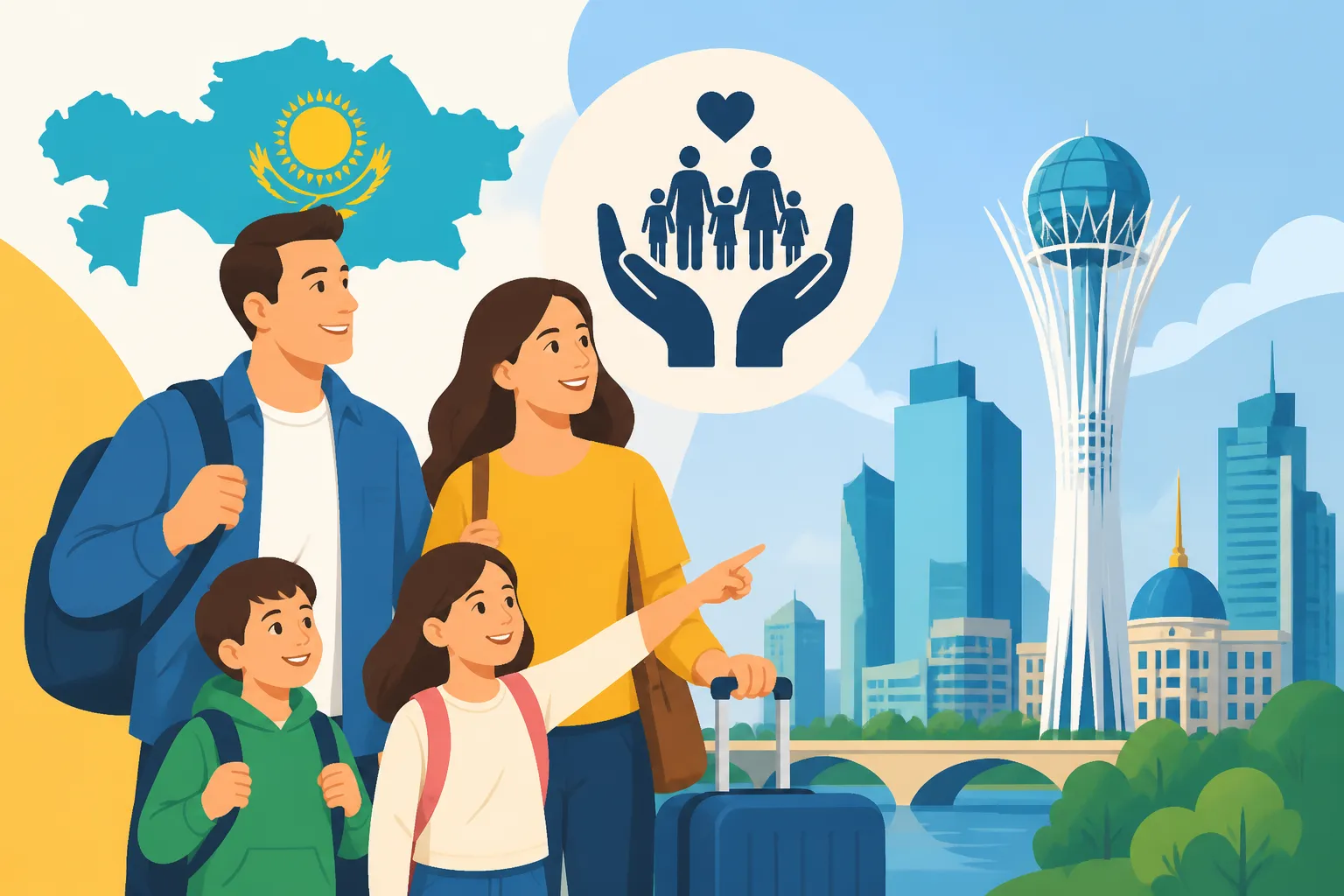
Can I Bring My Family When I Move to Kazakhstan for Work?
Moving to a new country for work is a huge step, but bringing your loved ones along adds a whole new layer of complexity. The sheer volume of paperwork, the confusing bureaucratic steps, and the constant worry about your family's well-being can be overwhelming. This guide is here to walk you through the often-baffling process of bringing your family to Kazakhstan when you've secured a job, offering practical advice and empathetic insights from someone who's been there.
The Initial Hurdles of Family Relocation for Work
When that job offer in Kazakhstan lands in your inbox, the excitement is palpable, right? But then the questions start: "Can my spouse come with me?", "What about the kids?", "Will they have a proper life there?" These aren't just logistical questions; they're deeply personal ones that impact your entire family's future. The good news is, Kazakhstan does have mechanisms for family reunification, but understanding them from the get-go is crucial. It's not always straightforward, but with a bit of patience and persistence, you can definitely make it work.
Understanding the Basics: Visa and Residence Permits for Dependents
For most expats working in Kazakhstan, your primary concern will be getting your own work permit and subsequently, a temporary residence permit. This is the foundation upon which your family's ability to join you rests. Without your valid work permit and residence, sponsoring your family becomes almost impossible. Think of it as a domino effect – your status comes first, then theirs.
Once you have your ducks in a row, your dependents will need to apply for their own temporary residence permits based on family reunification. This isn't a separate, simpler visa; it's a specific type of residence permit linked directly to your status as a foreign worker. It's essential to understand that this process is handled by the Migration Service (often referred to locally as the "migration police" or "migration office"). While the general idea is clear, the specifics can feel like navigating a maze. Each family member, regardless of age, will need their own application. You can learn more about the overall process in The Complete Guide to Kazakhstan Visas and Immigration for Expats (2027).
Who Qualifies as a "Dependent" in Kazakhstan?
This is a critical point that can sometimes catch expats off guard. The definition of "dependent" for immigration purposes isn't always as broad as you might assume from your home country's perspective. In Kazakhstan, the primary categories for family reunification typically include:
- Spouse: Your legally married husband or wife. Proof of marriage (marriage certificate) is an absolute must, often requiring apostille and notarized translation.
- Minor Children: Children under the age of 18. Birth certificates, also requiring similar legalization and translation, are vital.
- Disabled Adult Children: If you have adult children with disabilities who are dependent on you, special documentation proving their disability and your dependency status will be required.
- Dependent Parents: This category is often the trickiest and usually has stricter requirements, such as proving their complete financial dependency on you and often requiring them to be of retirement age or have specific health conditions preventing them from working. It's not a given and often involves more rigorous scrutiny.
Other relatives, like siblings, aunts, uncles, or adult, able-bodied children, are generally not considered direct dependents for the purpose of family reunification residence permits under most work visa scenarios. If you're hoping to bring them, they would likely need to explore their own separate immigration avenues, which can be significantly more complex. You'll want to dive deeper into Understanding Family Reunification Residence in Kazakhstan to grasp the nuances.
Navigating the Application Process for Family Members
So, you've got your work permit sorted, and you know who you want to bring. Now comes the real test of patience: the application process itself. It's not just about filling out a form; it's about meticulous document preparation, understanding local bureaucratic expectations, and often, a lot of waiting. Don't underestimate the need for accuracy and completeness here; a single missing stamp or an incorrect translation can send you back to square one.
Essential Documents and Where to Submit Them
The stack of papers you'll need can feel like a small tree, but each piece serves a purpose. Here’s a typical rundown, though always double-check with the latest requirements from the Migration Service or a reliable immigration consultant, as rules can change:
-
Your Documents (the Sponsor):
- Valid Passport (with at least six months' validity beyond the intended stay)
- Your Kazakhstan Work Permit and Temporary Residence Permit
- Employment Contract from your Kazakhstani employer
- A Letter of Sponsorship/Guarantee from you, stating your intent and ability to financially support your dependents.
- Proof of sufficient funds (bank statements) to support your family.
- Your Individual Identification Number (IIN).
- Proof of registration at your address in Kazakhstan.
-
Dependent's Documents:
- Valid Passport (original and notarized copy).
- Copy of birth certificates for children, marriage certificate for spouse. These usually require an apostille from your home country and then notarized translation into Kazakh or Russian once in Kazakhstan. Understanding Document and Translation Requirements for Kazakhstan Immigration offers more insights.
- Medical Certificates: Proof of no serious infectious diseases, often including HIV status. These typically need to be obtained from a designated medical facility in Kazakhstan or at least translated and recognized there.
- Police Clearance Certificate: From their home country, proving no criminal record. This also often needs an apostille and notarized translation.
- Recent Passport Photos (usually 3.5×4.5 cm, white background).
- Application form for the temporary residence permit (often available at the Migration Service or via the eGov portal).
All documents originating from outside Kazakhstan, particularly official government documents like birth and marriage certificates, will need to be apostilled (or legalized by the Kazakhstani embassy if your country isn't part of the Hague Apostille Convention) in your home country before you arrive. Once in Kazakhstan, these apostilled documents will then need a notarized translation into Kazakh or Russian. This two-step legalization process is incredibly important and often a bottleneck for new arrivals.
Submitting these documents usually happens at the local Migration Service office. In bigger cities like Almaty or Astana, there might be dedicated centers, but often it’s a specific department within the main police building. Expect queues, and it's always best to go with a Kazakh-speaking friend or a professional translator if your language skills aren't strong. For assistance with your primary work permit, consider the advice in How to Get a Work Visa and Residence Permit in Kazakhstan (2027).
The Timeline and Potential Roadblocks
The processing time for family reunification residence permits can vary wildly, depending on the region, the completeness of your application, and simply the current workload of the Migration Service. Generally, you should anticipate anywhere from 1 to 3 months for the approval process. It's rarely a quick turnaround, so planning is essential.
Common roadblocks include:
- Incomplete Documentation: The number one reason for delays. Double-check everything, then have someone else double-check it.
- Incorrect Translations or Apostilles: If the legalization isn't done correctly in your home country, or the translations aren't precisely as required by Kazakhstani law, you'll face rejections.
- Bureaucratic Delays: Sometimes, things just move slowly. It's part of the expat experience here. Try to remain patient and polite.
- Changes in Regulations: While not frequent, immigration rules can be updated. Staying informed is key.
During this waiting period, your family might be able to enter Kazakhstan on a standard tourist visa, depending on their nationality and Kazakhstan's visa-free agreements. However, they cannot reside or work permanently on a tourist visa. It’s crucial that their tourist visa does not expire while their residence permit application is being processed, as this can lead to severe issues. Always check the maximum stay duration for your nationality.
Here's a quick overview of key documents for your family:
| Document Type | Required for Spouse | Required for Minor Children | Notes |
|---|---|---|---|
| Valid Passport | Yes | Yes | Minimum 6 months validity. |
| Marriage Certificate | Yes | No | Apostilled/Legalized from home country, then notarized translation in Kazakhstan. |
| Birth Certificate | No | Yes | Apostilled/Legalized from home country, then notarized translation in Kazakhstan. |
| Medical Certificates | Yes | Yes | Obtained in Kazakhstan or recognized by local authorities, including HIV test. |
| Police Clearance Certificate | Yes | (For older children if required) | From home country, apostilled/legalized, then notarized translation. Children under a certain age (often 14 or 16) may be exempt. |
| Passport Photos | Yes | Yes | Specific size (3.5×4.5 cm) and white background. |
| Sponsorship Letter | Yes | Yes | From the working expat (you), confirming financial support and responsibility. |
| Proof of Funds | Yes | Yes | Bank statements from the sponsor. |
| Registration (Temporary) | Yes | Yes | Upon arrival, all foreigners (including family) must be registered with the migration police at their place of residence. You can find more details in How to Register Your Arrival with the Migration Service in Kazakhstan. |
Life Beyond Paperwork: Integrating Your Family in Kazakhstan
Once the residence permits are in hand, a huge weight lifts, but the real work of settling in begins. Kazakhstan, particularly cities like Almaty and Astana, offers a vibrant and often welcoming environment for expat families, but it’s still a different culture, with its own rhythms and systems. Thinking about things like school, healthcare, and daily expenses early on will make the transition much smoother.
Healthcare and Education for Your Loved Ones
Ensuring your family's well-being means getting them integrated into the local systems for health and education.
Healthcare: Your dependents will also need to be covered by healthcare. If your employer provides compulsory social health insurance (OSMS) for you, they might also cover your family. However, this isn't always the case, or the OSMS coverage might not meet your expectations for comprehensive care, especially compared to Western standards. Many expat families opt for private health insurance to supplement OSMS or as their primary form of coverage. This often provides access to private clinics with English-speaking doctors and shorter wait times. It's really worth exploring The Complete Guide to Healthcare in Kazakhstan for Expats (2027) to understand all your options, including private and international plans.
Education: This is often a primary concern for expat parents. Kazakhstan has a public school system, but language (Kazakh and Russian are the primary languages of instruction) can be a significant barrier. For many expat families, international schools are the preferred choice, offering curricula like the International Baccalaureate (IB) or British/American systems. Cities like Almaty and Astana have several reputable international schools, such as Haileybury Almaty, Marlborough House Almaty, or Nur-Orda in Astana, but spaces can be competitive and tuition fees are substantial.
Alternatively, some families opt for local private schools that might offer a more diverse language environment or smaller class sizes. It’s a good idea to research and apply to schools well in advance, even before you move, if possible. Don't forget to look into Schools and Education in Kazakhstan: A Complete Guide for Expat Families for a deeper dive. For younger children, kindergartens and preschools also exist, both local and international, offering various levels of language immersion.
Financial Considerations and Day-to-Day Living
Bringing a family means your cost of living will naturally increase. While Kazakhstan is generally considered affordable compared to many Western countries, managing your finances wisely is crucial.
Budgeting: Rent for a family-sized apartment, school fees, private healthcare, and increased grocery bills will be your biggest expenditures. Transportation is relatively cheap, and local produce is affordable, but imported goods can be pricey. It's a good idea to build a realistic budget based on your family's needs. You can gain insights from The Complete Guide to Cost of Living in Kazakhstan for Expats (2026).
Taxes: Don't forget about your tax obligations, especially with family. Understanding Income Tax and the Flat 10% Rate in Kazakhstan (2026) is vital. If your spouse isn't working, they won't have their own income tax implications, but their presence will impact your overall financial planning. Companies like Taxes for Expats can be invaluable for navigating the complexities of international tax planning, ensuring you're compliant in both Kazakhstan and your home country, especially if you have investments or income streams abroad.
Integration & Language: Settling in isn't just about paperwork; it's about feeling at home. Encourage your family to embrace the local culture. Learning some basic Kazakh or Russian phrases can significantly enhance their experience. Even simple greetings or phrases for shopping can make a huge difference. Resources like iTalki can be fantastic for online language lessons, allowing your family members to learn at their own pace and connect with native speakers from the comfort of your home. Kazakhstan offers many cultural experiences, from exploring bustling bazaars to hiking in the stunning Tien Shan mountains around Almaty. Connecting with other expat families through social groups on Facebook or local expat meetups can also provide a crucial support network for both parents and children.
Maintaining Your Family's Residence Status
Getting the initial residence permits is a huge achievement, but it's not a one-and-done deal. You need to understand how to maintain their legal status in Kazakhstan, which primarily revolves around renewals and keeping track of your own status.
Renewals, Changes, and What to Watch Out For
Renewal Process: Temporary residence permits for family members are typically tied to the duration of your work permit and employment contract. This means they will likely need to be renewed when your own permits expire. The renewal process is similar to the initial application, requiring updated documents, proof of continued employment, and sometimes new medical certificates. It’s absolutely critical to start the renewal process well in advance—at least 1-2 months before expiration—to avoid any lapse in legal status. A lapse can lead to fines, deportation, or difficulties in future applications. For a detailed breakdown of this, refer to How to Renew Your Residence Permit in Kazakhstan.
Changes in Circumstances: Life happens, and circumstances change. If your employment status changes (e.g., you switch employers, get a new contract, or your contract is terminated), this will directly impact your family's residence status. You must inform the Migration Service of any significant changes to your or your family's situation. Failure to do so can lead to serious legal complications.
- Switching Jobs: If you change employers, your new employer will need to sponsor a new work permit for you. Once that's approved, your family's residence permits will need to be updated to reflect your new employment details.
- Leaving Kazakhstan: If you decide to leave Kazakhstan permanently, you must ensure your family's residence permits are properly canceled to avoid future immigration issues. This is part of a broader exit process, so make sure to consider The Complete Guide to Moving to Kazakhstan: Your First 90 Days (2027) from an exit perspective too.
Staying Compliant: Always ensure your family members are properly registered at your place of residence with the Migration Service. This initial registration upon arrival and any subsequent changes of address are legal requirements. Overlooking this detail can cause problems, especially during renewals or if you need to travel.
Bringing your family to Kazakhstan for work is a big undertaking, but it’s entirely doable with careful planning and a good understanding of the local rules. The paperwork can be daunting, and the bureaucracy might test your patience, but the reward of having your loved ones with you makes all the effort worthwhile. Embrace the journey, seek help when you need it, and prepare for a rich, fulfilling experience in the heart of Central Asia.
Disclaimer
Please note that immigration laws and regulations in Kazakhstan are subject to change. While this guide provides comprehensive and up-to-date information as of 2026, it is advisable to always verify specific requirements with the official government sources, such as the Ministry of Internal Affairs or the Migration Service of Kazakhstan, or consult with a qualified immigration lawyer before making any decisions. This content is for informational purposes only and does not constitute legal advice.