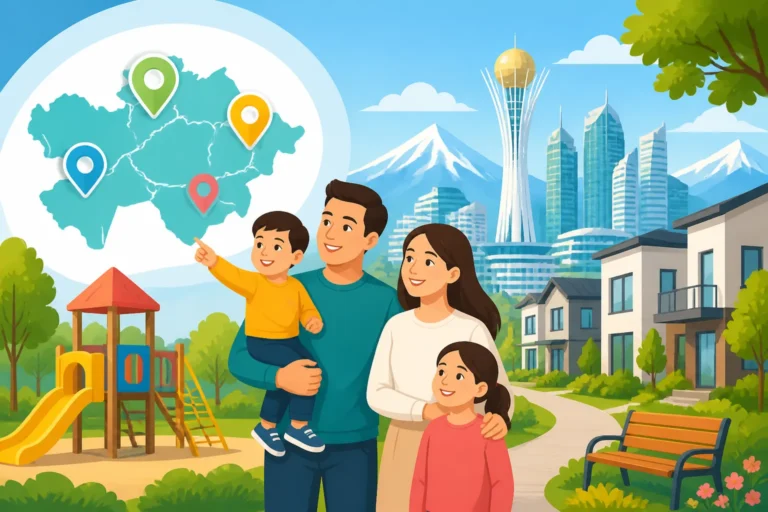
The Complete Guide to Moving to Kazakhstan: Your First 90 Days (2027)
Moving to a new country like Kazakhstan can feel like being dropped into a whirlwind of unfamiliar systems, languages, and bureaucratic hurdles. Believe me, I’ve been there – standing in a government office, papers in hand, wondering if I'd ever figure out how anything worked. But don't you fret! This guide is designed to be your lifeline, breaking down those critical first 90 days into manageable steps, helping you navigate the essentials of setting up your life in Kazakhstan with confidence and minimal stress.
Pre-Arrival Essentials: Laying the Groundwork (Before Day 1)
Before your boots even hit Kazakhstani soil, there's a good chunk of preparation that can save you countless headaches. Think of it as the strategic reconnaissance mission before the big move. Getting these ducks in a row now means a much smoother transition later.
Visa and Immigration: Getting it Right from the Start
This is, hands down, the absolute most critical step. Your visa and immigration status dictate everything else that follows. Don't, I repeat, do not wing this. Kazakhstan has specific rules, and while they've made some positive changes over the years, mistakes here can lead to serious complications. You need to identify the correct visa for your purpose – whether it's for work, study, family reunification, or even the relatively new Neo Nomad digital nomad visa. Your employer or university should typically guide you through the work or study visa process, but always double-check everything. Ensure you have all the necessary invitation letters, approvals, and stamped documents before you even think about booking that flight. Many people mistakenly think a tourist visa is enough to "scope things out" and then change their status, but that's rarely the case for long-term stays. A proper work visa, for instance, is your gateway to a residence permit later on. For a comprehensive overview, I highly recommend checking out The Complete Guide to Kazakhstan Visas and Immigration for Expats (2027).
Initial Accommodation: Where Will You Land?
You might not have your dream apartment lined up the moment you arrive, and that's perfectly normal. But you absolutely need a plan for those first few weeks. Relying solely on a short-term Airbnb can be fine, but be aware of the registration requirements (more on that later). Many expats opt for a serviced apartment or a reputable hotel for the first month or so. This gives you a base from which to explore neighborhoods, attend appointments, and get a feel for the city without the pressure of an immediate long-term lease. Trying to secure a long-term rental from abroad is incredibly challenging, not least because landlords often prefer to meet prospective tenants in person. Plus, photos online rarely do justice to reality. You'll want to see the place, check the heating (crucial in winter!), and gauge the neighborhood vibe before committing. Keep in mind that a good two or three weeks in temporary lodging is often a realistic timeframe before finding something more permanent. To get an idea of the costs, you might want to read How Much Does It Cost to Rent an Apartment in Almaty in 2026?.
Essential Documents to Prepare
This is where your inner archivist needs to shine. Gather all your important documents. Think passport, birth certificate, marriage certificate (if applicable), university diplomas, professional qualifications, driving license, and any medical records or vaccination certificates. Now, here's the crucial part: many of these will need to be translated into Kazakh or Russian and then apostilled or legalised by the Kazakhstani embassy or consulate in your home country before you leave. Don't skip this step – trying to get documents apostilled from abroad or doing it locally in Kazakhstan can be a nightmare, adding weeks or even months to administrative processes. Make multiple photocopies of everything, both physical and digital. Scan them all and store them securely in a cloud service. You'll be asked for copies of your passport, visa, and IIN (which we'll discuss shortly) more times than you can count in those first few months. Having them handy, both printed and on your phone, will save you a world of frustration.
First Few Weeks in Kazakhstan: Settling In (Days 1-30)
Alright, you've landed! The airport buzz, the new sights, the scent of… well, a new country! It's exciting, but don't let that initial thrill distract you from some immediate and vital administrative tasks. These need to be tackled quickly to ensure your legal stay and smooth integration.
Arrival Registration: The First Administrative Hurdle
For citizens of many countries, even those with visa-free entry or a valid visa, there's a requirement to register your arrival with the migration police within a certain number of days – often three or five working days. This is super important and often overlooked, leading to fines or issues down the line. If you're staying in a hotel, they should handle this automatically. Always double-check with the reception. If you're renting privately, your landlord is typically responsible for registering you through the eGov portal or at a local migration police department. If your landlord isn't proactive or doesn't speak English, this can be an immediate stressor. Don't be afraid to gently nudge them or seek help from an expat friend or your employer's HR department. This initial registration is crucial for tracking your legal presence in the country.
Getting Your IIN (Individual Identification Number): Your Kazakhstani ID
The Individual Identification Number, or IIN (pronounced "ee-een"), is your lifeblood in Kazakhstan. Seriously, without it, you're pretty much stuck in limbo. It's like a national ID number, tax ID, and social security number rolled into one. You'll need it for everything: opening a bank account, getting a SIM card, registering for utilities, paying taxes, and even applying for a residence permit.
The process usually involves visiting a "CSC" (Citizen Service Centre, or ЦОН in Russian – TSON), which are modern government service centers found in every major city. It's often busy, but thankfully, they've become much more efficient. You'll need your passport and typically a notarized translation of your passport (some TSONs can do this on-site, but it's safer to have it ready). Sometimes, they also ask for a migration card, which you receive upon entry. You'll fill out a form, wait for your turn, and after processing, you'll receive a paper certificate with your IIN. Keep this safe, make copies, and scan it! The number is typically issued on the spot or within a few days. Getting this done early is paramount. It can be a bit of a bureaucratic maze, but trust me, it’s worth the effort. For a more detailed guide, see How to Get an IIN (Individual Identification Number) in Kazakhstan.
Setting Up Your Communication: Stay Connected
As soon as you can after landing, and definitely after getting your IIN, get a local SIM card. This isn't just about calling home; it's about navigating daily life. Ride-hailing apps, online banking, eGov services – almost everything requires a local phone number. Kazakhstan has several major mobile operators: Kcell, Beeline, and Tele2/Altel. They all offer competitive data plans. You'll need your passport and usually your IIN to register the SIM card in your name.
If you want to hit the ground running with immediate connectivity, consider an eSIM service like Airalo. You can buy a data plan before you even leave home and activate it upon arrival, giving you internet access to order a Yandex Go taxi, look up directions, or contact your temporary accommodation without scrambling for a physical SIM card. Once you have your IIN, you can then get a local physical SIM for longer-term use, but Airalo is a fantastic bridge.
Once you have a place, setting up home internet is the next step. Most apartments will have fiber optic internet readily available. Providers like Beeline, Kazakhtelecom (Alma-TV), or Tele2/Altel offer packages that often bundle TV. You'll need your IIN and rental contract. It usually takes a few days for installation, so arrange this as soon as you have your long-term address. For more insights, check out How Do I Set Up Internet in My Kazakhstan Home?.
Financial Foundations: Money Matters (Days 15-45)
With your identification sorted and a phone in hand, it's time to tackle the crucial realm of personal finance. Getting your money matters in order early will significantly reduce stress and make daily transactions much smoother.
Opening a Bank Account: Navigating the Banks
This used to be a significant pain point for expats, often requiring an employment contract and sometimes even a residence permit. However, with your IIN in hand, opening a bank account has become much more accessible. The two most popular banks for daily life in Kazakhstan are Kaspi.kz and Halyk Bank. Kaspi.kz, in particular, is a game-changer. It's not just a bank; it's an entire ecosystem that integrates banking, payments, shopping, and even car financing. Almost everyone uses Kaspi Gold, their debit card, and the Kaspi app for everything from paying utility bills to sending money to friends.
To open an account, you'll generally need your passport, your IIN, and your migration card (proof of legal entry). Some banks might also ask for a local phone number, which you've already sorted. Be prepared for a bit of a wait at the bank, especially in popular branches. Once you have your Kaspi Gold card, you’ll wonder how you ever lived without it. It’s truly ubiquitous. You'll want to dive into The Expat Guide to Opening a Bank Account in Kazakhstan for a deeper look at the options.
Understanding the Local Currency (Tenge)
Kazakhstan's currency is the Tenge (KZT). While major cities like Almaty and Astana are increasingly cashless, especially with Kaspi.kz’s QR code payment system, it's always wise to carry some cash, particularly for smaller vendors, taxis (if you're not using an app), or in more rural areas. ATMs are widely available in cities, and most accept international cards for withdrawals, though fees may apply.
Exchange rates can fluctuate, so keep an eye on them. You can easily exchange foreign currency at banks or official exchange points (obmenniki), which are common throughout the cities. The Kaspi app also makes it incredibly easy to manage foreign currency accounts, allowing you to convert Tenge to USD or EUR directly within the app at competitive rates. Getting familiar with the Tenge denominations and basic pricing for common goods will help you budget more effectively and avoid feeling overwhelmed by transactions.
Initial Budgeting and Cost of Living
One of the pleasant surprises for many expats in Kazakhstan is the relatively low cost of living compared to Western countries. However, that doesn't mean you shouldn't budget carefully. Your initial expenses will include temporary accommodation, setting up your phone and internet, possibly buying some household essentials, and, of course, daily food and transport.
While the overall cost is lower, certain imported goods, particularly Western brands, can be surprisingly expensive. Eating out is generally affordable, especially at local cafes (stoloviye or ashanas), but international restaurants can add up. Taxis are very cheap if you use apps like Yandex Go. Housing will likely be your biggest expense, but even in major cities like Almaty, you can find good value. Factor in your initial bureaucratic costs – notarizations, translations, and any visa processing fees you might incur if not covered by an employer. Having a buffer in your bank account for unexpected costs is always a wise move during this settling-in period. For a detailed financial breakdown, consult The Complete Guide to Cost of Living in Kazakhstan for Expats (2026).
Finding Your Permanent Home (Days 30-60)
With the initial paperwork squared away and your finances under control, you can now focus on the big one: finding your long-term sanctuary. This process can be exhilarating, frustrating, and everything in between, but with a clear strategy, you’ll find your perfect Kazakhstani home.
The Rental Market: What to Expect
Kazakhstan's rental market, particularly in Almaty and Astana, moves quickly. Online portals like Krisha.kz are your best friend here; they are by far the most dominant platform for apartment and house hunting. You'll find thousands of listings, often with detailed photos and descriptions. Real estate agents (rieltory) are also common, and while they can be helpful for bridging language barriers and streamlining viewings, be aware that you'll typically pay them a commission, usually equivalent to one month's rent.
When viewing apartments, pay close attention to the heating system – central heating is standard, but check for drafts, especially if you’re moving in autumn or winter. Most apartments come fully furnished, though the style can vary wildly. Unfurnished options exist but are less common. Once you find a place, be prepared to sign a rental contract (dogovor arendy) and pay a security deposit, typically one month's rent, in addition to the first month's rent. Make sure the contract clearly states the terms of the deposit return and any conditions for early termination. Don't rush this part; a clear, well-understood contract is vital. Dive into The Complete Guide to Renting an Apartment in Kazakhstan (2027) for a deep dive.
Setting Up Utilities and Home Services
Once your rental contract is signed, the next hurdle is getting the utilities in your name, or at least understanding how they work. In Kazakhstan, central heating and water are typically managed by municipal providers, while electricity might be with a different company. Landlords usually handle the initial transfer or provide you with the account details.
The fantastic news is that paying for all these utilities is usually incredibly easy, thanks to Kaspi.kz. Through the Kaspi app, you can link your utility accounts by inputting your personal account number ( лицевой счет) for each service. Then, with a few taps, you can view your balance and pay your bills directly. This simplifies what could otherwise be a confusing process of dealing with multiple companies and payment terminals. Gas is less common for heating in apartments, mostly found in private houses. Understanding these systems from your landlord is crucial. You'll thank yourself for reviewing The Expat Guide to Setting Up Utilities (Electricity, Water, Heating) in Kazakhstan ahead of time.
Neighbourhoods and Cities: Where to Call Home
Your choice of city and neighborhood will profoundly impact your expat experience. Almaty, nestled against the Tien Shan mountains, offers a more European feel, with green spaces, cafes, and a vibrant cultural scene. It's often favored by expats for its relaxed atmosphere and proximity to nature. Astana, the capital, is a futuristic city known for its bold architecture and government institutions. It's more structured and has a harsher climate, but offers excellent infrastructure and career opportunities, particularly in government or international organizations. Shymkent, in the south, has a more traditional Central Asian vibe and a lower cost of living, though fewer expat amenities.
Within each city, neighborhoods vary significantly. In Almaty, areas like Bostandyk and Medeu are popular with expats due to their modern housing, amenities, and proximity to international schools. In Astana, the Left Bank is where much of the expat community resides, offering new apartment complexes and easy access to business centers. Researching these areas, considering your commute, and visiting them in person will help you decide. Take a look at The Best Places to Live in Kazakhstan for Expats: A Complete Guide (2027) for detailed insights.
Health, Transport & Daily Life (Days 45-75)
By this point, you've got a roof over your head and a general sense of financial stability. Now, it's time to focus on the practicalities of daily living and ensuring your well-being in your new home.
Navigating the Healthcare System
Healthcare in Kazakhstan is a mix of public and private options. As a resident, you'll likely become part of the OSMS (Compulsory Social Health Insurance) system. If you're employed by a local company, your employer will typically register you and make contributions on your behalf. OSMS provides access to public polyclinics (general practitioner clinics) and public hospitals. The quality can vary, and language barriers are common.
Many expats, particularly those working for international companies, opt for private health insurance or rely on their international policies to access private clinics. Major cities like Almaty and Astana have several high-quality private clinics with English-speaking staff and modern facilities, such as Mediker or Interteach. While these are excellent, they come at a cost if you don't have private insurance. For emergencies, the number is 103 (ambulance), or 112 for all emergencies. It's vital to understand how your specific health coverage works and where to go for different medical needs. This can be complex, so be sure to read The Complete Guide to Healthcare in Kazakhstan for Expats (2027) to get all the details.
Getting Around: Transport Options
Kazakhstan's cities offer a variety of transport options. In Almaty, the metro is clean, efficient, and affordable, though its network is still limited. Buses and trolleybuses cover extensive routes in both Almaty and Astana. However, for most expats, ride-hailing apps are king. Yandex Go and InDriver are incredibly popular and provide a cheap, convenient, and safe way to get around. You simply input your destination, see the price upfront, and pay by card (often linked through Kaspi.kz) or cash.
If you plan to drive, be aware that your foreign driving license may only be valid for a certain period (often up to one year) before you need to obtain a Kazakhstani license. The driving style can be assertive, and road conditions vary. Registering a car as a foreigner involves specific procedures, so research this thoroughly before purchasing a vehicle. Familiarize yourself with local traffic laws. For all you need to know about driving, refer to Driving in Kazakhstan: Licences, Registration and Rules for Expats (2027).
Grocery Shopping and Dining Out
Kazakhstan offers a diverse culinary scene and a variety of grocery shopping experiences. For everyday essentials and a wide selection of international goods, large supermarkets like Magnum, Small, and Galmart are your go-to. They’re well-stocked and modern. For fresh produce, spices, and a more authentic experience, don't miss the local bazaars, such as Almaty's Green Bazaar or Astana's Artem Market. These are vibrant hubs where you can haggle (a little) and find seasonal fruits and vegetables.
Dining out is a pleasure here. You can savor traditional Kazakh cuisine like beshbarmak (boiled meat with pasta), plov (rice pilaf), and manty (dumplings), often at very reasonable prices in local ashanas. Almaty and Astana also boast a fantastic array of international restaurants, from Italian and Japanese to Indian and Georgian, catering to all tastes and budgets. Food delivery apps like Glovo and Wolt are widely used and convenient if you fancy a night in.
Embracing Life and Staying Legal (Days 60-90)
As you near the end of your first 90 days, you're past the initial shock and settling into a routine. This is the time to solidify your legal status and start building your community, ensuring a sustainable and enjoyable life in Kazakhstan.
Understanding Your Residence Permit and Legal Obligations
By now, you should have applied for or received your temporary residence permit (ВНЖ – vid na zhitelstvo). This document is crucial as it grants you the right to reside in Kazakhstan for a specified period, typically tied to your work, study, or family status. It's different from your initial visa and will be your primary proof of legal residency. Always carry a copy of your residence permit with you.
Remember, if you change your address, you are legally obliged to notify the migration police through the eGov portal or your local CSC within a certain timeframe. Failing to do so can result in fines. Your employer or university will usually assist with the initial application and renewal process, but it’s ultimately your responsibility to ensure your documents are valid and up-to-date. Understanding these obligations is key to a hassle-free stay. For more information, check out Understanding Kazakhstani Residence Permits: Work, Study and Investment (2027).
Shipping Your Belongings: The Long Haul
If you've spent the first 90 days living out of suitcases, you might now be contemplating bringing over larger items or your entire household. This is where international moving services come into play. Shipping personal effects to Kazakhstan can be done via air freight (faster, more expensive) or sea/road freight (slower, more affordable).
The process involves customs declarations, potential duties on certain items, and careful packing. It's highly recommended to use a reputable international moving company that has experience with Kazakhstan, as they can guide you through the complex customs procedures. Platforms like Sirelo can help you find and compare quotes from various international movers specializing in relocations to Central Asia, ensuring you get a good deal and professional service. Be prepared for the process to take several weeks, so plan accordingly. Getting a clear understanding of the costs involved can be found in How Much Does It Cost to Ship Belongings to Kazakhstan?.
Social Integration and Language
The first 90 days are a whirlwind, and you might have focused purely on logistics. Now it’s time to breathe and start building your social circle. Kazakhstan has active expat communities in Almaty and Astana, often found through Facebook groups (e.g., "Almaty Expats," "Astana Expats"). These groups are invaluable for advice, making friends, finding activities, and even selling/buying second-hand items.
While Russian is widely spoken, especially in the big cities, and is often the primary language in business and administration, making an effort to learn basic Kazakh phrases will go a long way. Locals appreciate the effort, and it opens doors to deeper cultural understanding. Even a simple "Salem!" (Hello) or "Rakhmet!" (Thank you) can make a difference. Consider taking a few beginner language classes; it's a great way to meet people and immerse yourself further. Don't be shy – Kazakh hospitality is legendary, and people are generally welcoming and curious about foreigners.
First 90 Days Checklist
To help you keep track, here's a quick checklist for your first three months in Kazakhstan:
| Task | Priority | Target Completion (Days After Arrival) | Key Documents Needed | Notes |
|---|---|---|---|---|
| Pre-Arrival | ||||
| Secure correct visa | High | Before departure | Invitation letters, approvals | Essential for legal entry and long-term stay. |
| Arrange initial accommodation | High | Before departure | Booking confirmations | Hotel, serviced apartment, or short-term rental for 2-4 weeks. |
| Prepare & apostille essential documents | High | Before departure | Passport, birth/marriage certificates, diplomas | Multiple copies (digital & physical). Translations often needed. |
| Days 1-30 | ||||
| Register arrival with migration police | High | Within 3-5 working days | Passport, migration card, temporary address | Usually handled by hotel/landlord. Crucial to confirm. |
| Obtain IIN (Individual Identification Number) | High | Within 7-14 days | Passport, notarized passport translation, migration card | Vital for all administrative tasks. Visit a CSC (TSON). |
| Get local SIM card | High | Within 7-14 days | Passport, IIN | Essential for communication and app usage (Yandex Go, Kaspi.kz). Airalo for immediate data on arrival. |
| Days 15-45 | ||||
| Open local bank account | High | Within 15-30 days | Passport, IIN, migration card | Kaspi.kz is highly recommended for daily transactions. |
| Understand currency & basic budgeting | Medium | Ongoing | N/A | Familiarize yourself with Tenge denominations, exchange rates, and typical costs. |
| Days 30-60 | ||||
| Find & secure long-term rental | High | Within 30-60 days | Passport, IIN, rental contract | Use Krisha.kz or a reputable agent. Clarify deposit & utility responsibilities. |
| Set up home internet & utilities | High | Within 45-60 days | Passport, IIN, rental contract, utility account numbers | Often paid via Kaspi.kz. |
| Days 45-75 | ||||
| Understand healthcare options | High | Within 60 days | OSMS registration, private insurance details | Register for OSMS (if applicable) or understand your private plan. Identify local clinics. |
| Research transport options | Medium | Ongoing | Driving license (if applicable) | Yandex Go/InDriver for taxis. Public transport in cities. |
| Days 60-90 | ||||
| Apply for/receive residence permit (if applicable) | High | As advised by employer/university | Varies by permit type | Crucial for long-term legal stay. Monitor validity. |
| Plan for shipping personal belongings | Medium | Ongoing | Customs forms, inventory lists | Consider Sirelo for comparing international movers. |
| Engage with expat community & language learning | Medium | Ongoing | N/A | Join Facebook groups, try basic Kazakh/Russian phrases. |
Disclaimer
The information provided in this guide is for general informational purposes only and is subject to change. While every effort has been made to ensure accuracy, administrative procedures, visa requirements, and regulations in Kazakhstan can be updated by government authorities without prior notice. It is essential to consult official government sources, legal professionals, or the relevant Kazakhstani embassy or consulate for the most current and specific advice pertaining to your individual circumstances. We do not accept responsibility for any loss or inconvenience arising from reliance on the information in this guide.