Do I Need a Car to Get Around in Kazakhstan?
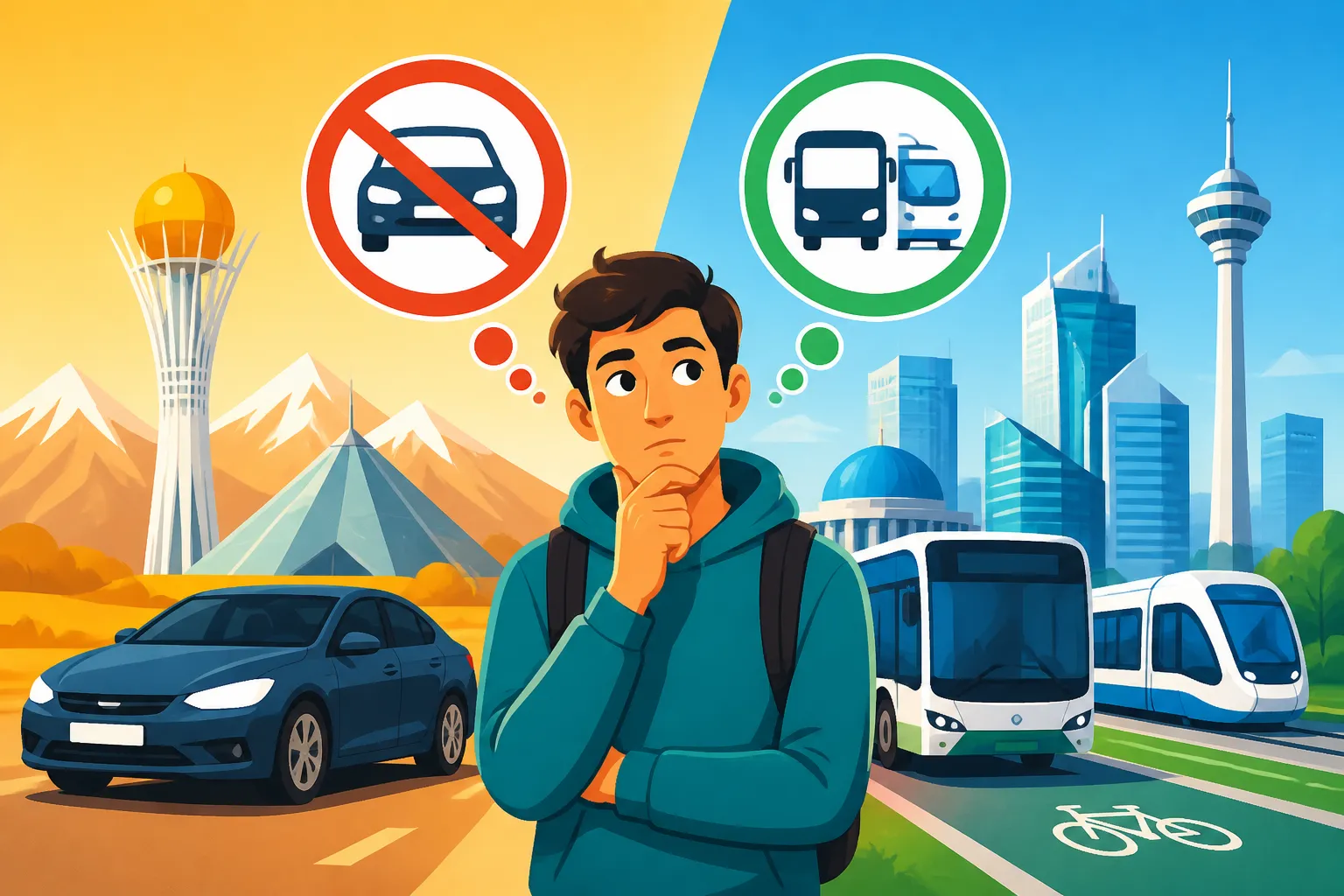
Ah, the eternal question for every expat touching down in Kazakhstan: "Do I really need a car here?" Believe me, I've been there. You look at the sprawling cities, the vast distances, and the slightly… spirited driving style, and your head starts spinning. This guide isn't just going to give you a yes or no; we're going to dive deep into the everyday realities of getting around this incredible country, helping you figure out if a set of wheels is a necessity or an expensive luxury for your expat life.
The Reality of Driving in Kazakhstan: Is It For You?
Let's be brutally honest: driving in Kazakhstan is an experience. It’s not for the faint of heart, but for many, it offers unparalleled freedom. Weighing the pros and cons means looking at everything from road quality to the intricate dance of local traffic.
Navigating Kazakhstani Roads and Traffic
Kazakhstan's road infrastructure is a mixed bag, to say the least. In major cities like Almaty and Astana, you’ll find relatively modern roads, especially on main arteries. However, venture into older districts or smaller towns, and you'll quickly encounter potholes, uneven surfaces, and roads that might generously be described as "characterful." Winter, of course, brings its own set of challenges, with snow and ice making many roads treacherous.
Traffic in cities, particularly Almaty, can be a real headache. Peak hours are exactly what you'd expect: congested, slow, and full of drivers who often interpret traffic laws as mere suggestions. Lane discipline? It's often a fluid concept, and don't be surprised by sudden lane changes or drivers weaving through gaps you didn't even know existed. Horns are used liberally, not always aggressively, but certainly frequently. Parking can also be a nightmare in busy areas, often requiring payment or a keen eye for an elusive free spot. Outside the main cities, roads can be much quieter, but quality can decline sharply, turning long drives into endurance tests.
The Cost of Car Ownership
Owning a car here comes with a financial commitment. If you're considering buying a vehicle, you'll need to factor in the purchase price, whether new or used. New cars, imported from various countries, are widely available, but the used car market can be a maze. Prices vary wildly depending on the make, model, age, and condition.
Then there are the ongoing costs. First, you have the registration process, which, while manageable, involves some bureaucracy. You can get more specific details on how to handle that in our guide on how to register and license a car in Kazakhstan. Next, don't forget car insurance, which is mandatory. The premiums can differ significantly based on your vehicle type and your driving record. Fuel costs, while generally lower than in many Western countries, still add up, especially with the vast distances you might cover. Finally, maintenance is a significant factor. Finding reliable mechanics, especially if you drive an imported or less common car, might take some time and local advice. All these expenditures can quickly add up, making car ownership a substantial part of your monthly budget.
Licensing and Documentation Hurdles
This is often where the real administrative fun begins for expats. If you hold an international driving permit, it's generally valid for a certain period, but eventually, you'll need to consider getting a local Kazakhstani driver's license. The process for how to exchange or use a foreign driver's licence in Kazakhstan can be surprisingly complex, often involving certified translations of your existing license, medical checks, and sometimes even a driving test, depending on your home country's agreements with Kazakhstan.
The bureaucracy can be frustrating, involving visits to various government offices, potentially long wait times, and the need for patience. Getting all your documents in order, including your Individual Identification Number (IIN) and residence permit, is crucial. If you're moving here, consolidating your possessions is also a big step, and services like Sirelo can help manage the logistics of relocating your belongings, so you have one less thing to worry about. Don't underestimate the time and effort required for this, and always aim to start the process well in advance to avoid any legal hiccups on the road.
Public Transport: A Viable Alternative in Major Cities
For those residing in the bustling urban centers, opting out of car ownership is not just a dream – it's a very real and often highly practical option. Kazakhstan's major cities, especially Almaty and Astana, have invested considerably in their public transportation networks.
Almaty's Metro and Bus Network
Almaty boasts the country's only metro system, and it's surprisingly modern, clean, and efficient. While it doesn't cover the entire city, its single line runs through many key areas, connecting major residential hubs with business districts and tourist attractions. During rush hour, the metro is a blessing, gliding past gridlocked traffic above ground. The stations themselves are often beautifully designed, featuring Kazakh art and architecture, making the commute a bit more pleasant.
Complementing the metro is an extensive bus network. Almaty's buses cover virtually every corner of the city. They can be crowded during peak times, but they are frequent and generally reliable. Payment is primarily done via the ONAY card, a rechargeable public transport card that you can buy and top up at metro stations, kiosks, or via mobile apps. It’s incredibly convenient and makes hopping on and off a breeze. Relying on an app like 2GIS or Yandex Maps is essential for navigating the routes and real-time bus locations. You can dive deeper into how to effectively use the metro in Almaty in our dedicated article.
Astana's Bus and Light Rail Systems
Astana, the capital, has a robust and relatively modern bus network. The city's planned layout means that bus routes are often more straightforward than in Almaty, navigating wide avenues and clear boulevards. Like Almaty, Astana's buses are frequent, well-maintained, and crucial for daily commutes. The same ONAY card system is used here, ensuring a seamless experience across public transport.
While Astana has an ambitious light rail (LRT) project underway, it's been a long time coming. For now, the bus network remains the backbone of the city's public transport. Using a local mobile data plan, perhaps with an eSIM from a provider like Airalo, can be really handy for navigating these bus routes and checking schedules on the go, making your journeys much smoother.
Regional Differences and Challenges
Now, let's be realistic: the public transport situation outside Almaty and Astana is a different story entirely. In smaller cities like Shymkent or Aktobe, you'll find bus networks, but they might be less frequent, less extensive, and potentially older. Intercity travel by bus is possible but often takes significantly longer and might involve less comfortable conditions than you're used to.
For anyone living or planning to explore rural Kazakhstan, public transport becomes a very limited option. Villages are rarely well-connected by bus, and schedules can be erratic or non-existent. This is where the absence of a personal car truly becomes a challenge, as reaching national parks, remote natural beauty spots, or even neighboring towns can become a complicated logistical exercise involving shared taxis, hitchhiking (not always recommended for foreigners), or hiring private drivers. So, while you might thrive without a car in the big cities, if your expat dream involves significant regional exploration, you might reconsider.
Ride-Hailing and Taxis: Convenience at Your Fingertips
For many expats, the perfect compromise between car ownership and public transport is the ubiquitous ride-hailing app. It offers door-to-door convenience without the commitment of buying, insuring, and maintaining a vehicle.
The Dominance of Yandex Go
In Kazakhstan, one name reigns supreme in the ride-hailing world: Yandex Go. This app is an absolute game-changer. It's incredibly user-friendly, has an English interface, and works flawlessly across all major cities. You simply input your destination, choose your service level (Economy, Comfort, Business, etc.), and a car arrives, often within minutes. The pricing is incredibly competitive, making it an affordable option for daily commutes, evenings out, or even quick trips to the grocery store.
The beauty of Yandex Go is its sheer reliability. You see the driver's picture, car model, and license plate, and you can track their arrival in real-time. Payments can be linked to your local bank card, or you can pay cash. It's generally considered very safe and efficient, removing the language barrier often associated with traditional street taxis, as the destination is set directly in the app. This platform has truly revolutionized urban mobility for residents and visitors alike.
Other Options and Traditional Taxis
While Yandex Go is the undisputed king, you might occasionally encounter other ride-hailing apps like InDriver. InDriver operates on a bidding system where you propose a fare, and drivers accept or counter-offer. It can sometimes yield cheaper rides, but it might take longer to find a driver and requires a bit more negotiation.
Traditional street taxis still exist, especially outside the main city centers or near train stations. These are usually private cars whose drivers offer rides. While they can be a quick option in a pinch, they come with a few caveats. Fares are subject to negotiation, and as a foreigner, you might be quoted a higher price. Always agree on the fare before getting in, and try to have small notes in local currency, Tenge, ready. It’s generally a less transparent and potentially less safe option compared to app-based services, so use with caution.
Safety and Etiquette for Foreigners
When using any taxi service, especially traditional ones, a few safety tips are helpful. Always try to sit in the back. If using a ride-hailing app, double-check the license plate and car model against what's shown in the app before getting in. If something feels off, cancel the ride. Having a functional phone with local data, which you can easily get by choosing a mobile and internet provider in Kazakhstan, is essential for navigation and communication.
Regarding etiquette, a simple "Salem" (hello) and "Rakhmet" (thank you) in Kazakh go a long way. If you don't speak Russian or Kazakh, having your destination written down in Cyrillic or using the in-app navigation feature (which most drivers rely on anyway) can prevent misunderstandings. While Yandex Go drivers are usually professional, remember that driving styles can be different from what you're used to. Just breathe and enjoy the ride!
Specific Scenarios: When a Car Becomes Indispensable (or Not)
The need for a car often boils down to your personal circumstances and lifestyle. What might be essential for one expat family could be entirely unnecessary for a single person working downtown.
Family Life and Children
This is often the primary driver (pun intended!) for expats considering car ownership. If you have young children, the sheer convenience of a car for daily life is undeniable. Think about school runs – getting kids to and from school, especially if they attend one of the international schools often located on the city outskirts. Our guide on how to enrol your child in school in Kazakhstan can give you some insights into the different educational options. Car seats, strollers, school bags, and multiple stops for extracurricular activities or playdates become much easier with your own vehicle.
Public transport with toddlers or multiple children can be an adventure, but often a stressful one. Navigating crowded buses with a stroller, or trying to manage active kids on the metro, can quickly become exhausting. For families, especially those living in less central, more family-friendly neighbourhoods in Almaty, a car can transition from a luxury to a near-necessity, providing the flexibility and space required for daily family logistics. Doctor's appointments, especially if you need to access specialist medical care or during a quick trip to the emergency room, are also simpler with your own transport.
Exploring Beyond the City Limits
Kazakhstan is a country of breathtaking natural beauty, and much of it lies outside the reach of public transport. If your expat vision includes frequent escapes to the stunning mountains surrounding Almaty (like Big Almaty Lake or Shymbulak), exploring the surreal landscapes of Charyn Canyon, or embarking on multi-day treks to the Kolsai Lakes, then a car or consistent access to a private driver becomes almost essential.
While there are tour operators who arrange trips to these popular spots, having your own car allows for spontaneous adventures, detours, and the freedom to explore at your own pace. For truly remote areas, a 4×4 might even be necessary. Without a car, these natural wonders remain accessible, but they require more planning, reliance on group tours, or hiring expensive private transfers. If you're an avid explorer and nature lover, this factor alone might tip the scales towards getting a car.
Work Commutes and Professional Needs
Your professional life can also dictate your transportation needs. If your workplace is located in a central business district of Almaty or Astana, chances are it's well-served by public transport or ride-hailing. Many offices are just a short metro or bus ride away, or a quick Yandex Go trip.
However, if your job requires you to commute to industrial zones, business parks on the outskirts, or to different client sites across the city or even region, a car suddenly becomes incredibly practical. Corporate transport might be provided by some employers, which is a fantastic perk, but if not, relying on ride-hailing for multiple stops can become costly and time-consuming. Consider the specific demands of your role and your employer's policies on transport before making a decision. Some companies might even offer a car allowance or company vehicle, which simplifies the decision considerably.
Making Your Decision: Car vs. No Car
So, after all that, what’s the right answer for you? It really boils down to your personal priorities, financial situation, and how you envision your life here.
Pros and Cons of Car Ownership
Let's lay it out clearly. The decision to own a car in Kazakhstan is multifaceted, with distinct advantages and disadvantages.
| Factor | Owning a Car in Kazakhstan | Relying on Public Transport & Ride-Hailing |
|---|---|---|
| Cost | High initial purchase (How Do I Buy a Car in Kazakhstan?), fuel, insurance (How Much Is Car Insurance in Kazakhstan?), maintenance, parking, registration. | Low (per ride/ticket), no large upfront costs or recurring maintenance fees. |
| Convenience | High, door-to-door, complete flexibility, ample storage for shopping/gear, personal space, comfort. | Moderate to High in cities (dependable, wide coverage), Low in rural areas (limited access). Subject to routes/schedules. |
| Flexibility | Unlimited, spontaneous trips to any destination, including remote areas and national parks. | Limited by established routes, schedules, and the availability of ride-hailing drivers. |
| Safety | Personal control over your vehicle, but exposed to local driving habits and road conditions. Higher risk of accidents. | Generally safe, especially on public transport and established ride-hailing apps. Less control over driver behavior in taxis. |
| Bureaucracy | High (obtaining a Kazakhstani driver's licence, registration, regular vehicle inspections, paperwork). | Low, simple payment systems (ONAY card), minimal administrative hassle. |
| Exploration | Essential for reaching national parks, mountains, and remote natural beauty spots without tours. | Limited to accessible urban areas or requires reliance on private tours/car rentals for remote sites. |
| Family Use | Ideal for managing school runs, multiple errands, transporting children and all their gear. | Can be challenging with young children, strollers, multiple bags, especially during peak hours. |
| Stress | Dealing with aggressive drivers, navigating traffic, finding parking, maintaining the vehicle. | Dealing with crowds, occasional delays, adapting to new routes, potential language barriers with drivers. |
Lifestyle and Budget Considerations
Your daily routine is paramount. Do you live and work within Almaty or Astana's well-connected central areas? If so, relying on the metro, buses, and Yandex Go is not just feasible but often more time-efficient and less stressful than battling traffic. If your social life revolves around city hotspots, these options will serve you well. Our guide on the cost of living in Kazakhstan for expats details how these choices impact your budget.
However, if you're further out, have an irregular work schedule, or frequently visit places not on main public transport routes, a car might save you a lot of time and money in the long run. Also, consider your budget. While public transport is cheap, the cumulative cost of daily Yandex Go rides can add up, potentially surpassing the cost of car ownership over time, especially if you're a heavy user. Calculate which option makes more financial sense for your projected usage.
Planning for Mobility Without a Car
If you decide against buying a car, it's wise to have a strategy. First, embrace Yandex Go – it's your best friend here. Consider signing up for a local SIM card with a generous data plan from a provider like Airalo, which is crucial for navigation and booking rides. For longer excursions outside the city, car rental agencies are available in major cities, allowing you the freedom of a vehicle for specific trips without the year-round commitment. You can rent a car for a weekend to visit the mountains, or for a week if you're planning a road trip to other parts of Kazakhstan.
Another excellent strategy is to connect with other expats. Shared rides for weekend trips or school runs can be a fantastic way to access places without owning a car, and it's a great way to build community. Many expat groups on social media platforms actively coordinate such arrangements. With a bit of planning, you can absolutely thrive in Kazakhstan without the burden of car ownership, enjoying the convenience and cost savings that come with relying on the robust public transport and ride-hailing services.
Disclaimer
Please remember that while I strive to provide accurate and up-to-date information based on my personal experience and extensive knowledge of Kazakhstan, local regulations, prices, and procedures can change rapidly. Always cross-reference information with official government sources or trusted local professionals before making any significant decisions. This guide is for informational purposes only and does not constitute legal or financial advice.