How Do I Add My Newborn to My Residence in Kazakhstan?
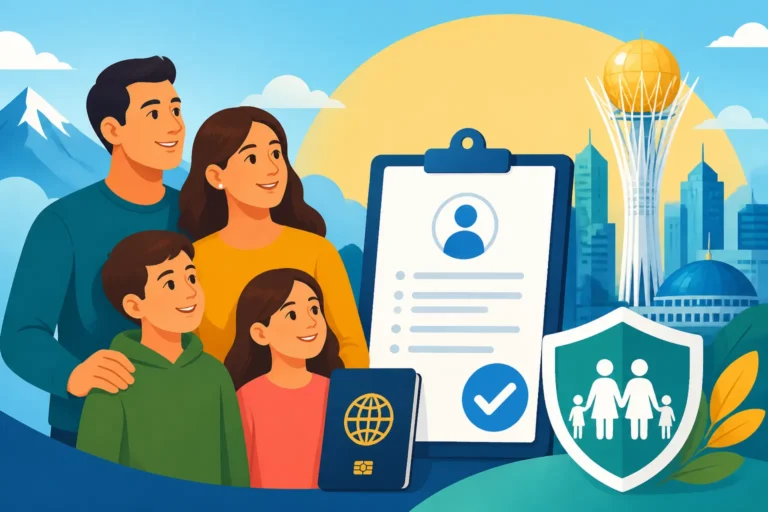
Oh, the sheer joy of welcoming a new little one into the world! It's a truly magical time. But if you're an expat living in Kazakhstan, that initial euphoria can quickly be accompanied by a familiar dread: paperwork. Because while your heart is overflowing, your mind is probably racing, wondering, "How on earth do I add this tiny human to my residence permit?" Trust me, you're not alone. Many expat parents have navigated this exact maze. This guide will walk you through every step of registering your newborn and securing their legal status here in Kazakhstan, helping you cut through the administrative fog.
The Initial Steps After Birth: Registering Your Little Kazakhstani Resident
Before you can even think about adding your precious bundle to your residence permit, there are a few foundational steps you absolutely must take. These are crucial, and frankly, they’re the first real tests of your patience with Kazakhstani bureaucracy. But don't worry, we'll get through this together.
Obtaining the Birth Certificate
This is your very first, most critical piece of documentation. Think of it as your baby's foundational stone in Kazakhstan. The process usually starts right after the birth, often with assistance from the hospital, but the formal registration happens at the Civil Registry Office, known locally as ZAGS (ЗАГС) or RAGS (РАГС) – you'll hear both terms used interchangeably, mostly depending on who you're talking to or which generation they're from!
After your baby arrives, the hospital will issue a medical certificate of birth. This isn't the official birth certificate, but it’s what you need to take to the ZAGS office. You’ll also need your passports, your current residence permits, and if you're married, your marriage certificate. If your marriage certificate is from outside Kazakhstan, make sure it’s apostilled or legalized and has a notarized Kazakhstani translation. This step cannot be emphasized enough – anything not in Kazakh or Russian, or not officially stamped, will be rejected. You'll go to the ZAGS office in the district where the birth occurred or where one of the parents is registered. Typically, the parents themselves, or one of them, must apply. Expect some waiting time, as these offices can be busy. The ZAGS specialists will review your documents, enter the details into their system, and then issue the official birth certificate. This document, often a small, laminated paper booklet, will be primarily in Kazakh, with Russian translation, and is proof of your child's birth and identity in Kazakhstan. Don't lose it!
The good news is that obtaining the birth certificate is usually a relatively quick process once you're at the ZAGS office, assuming all your documents are in order. However, compiling those documents and getting translations done beforehand can take a few days or even a week, so don't procrastinate. It’s best to get this done within a month of birth. Remember, many ZAGS employees might not speak English, so if your Russian or Kazakh is limited, bring a local friend or a professional translator. This will save you immense frustration and potential errors.
Getting Your Newborn's IIN Individual Identification Number
Just like you, your newborn needs an IIN (Individual Identification Number) to exist officially in Kazakhstan. This unique 12-digit code is absolutely essential for everything from healthcare registration to, yes, their residence permit. Without it, your baby is practically invisible to the Kazakhstani administrative system. It's similar to a Social Security Number or national ID number in other countries.
Once you have your baby's official Kazakhstani birth certificate, the next stop is a Public Service Centre (PSC), often called a Tson (ЦОН) or sometimes a Halyk Center. These are one-stop shops for various government services and are generally much more foreigner-friendly than other government offices. You’ll need the original birth certificate, your passports, and your own residence permits. You'll fill out a simple application form, and usually, the IIN can be issued on the spot or within a few working days. They will print it out on a small slip of paper, which you must keep safe.
Getting an IIN for your newborn is a fairly straightforward process, designed to be efficient. However, be prepared for queues, especially if you go during peak hours. Some PSCs have electronic queue systems where you take a ticket, while others might still operate on a first-come, first-served basis. Again, having a basic grasp of Russian or Kazakh, or bringing someone who does, will make this much smoother. This IIN will be tied to all your baby's future interactions with government services, so ensure all the details are correct on the printout before you leave the PSC. Think of it as their digital fingerprint in the country.
Navigating the Residence Permit Application for Your Baby
Now that your little one has their birth certificate and IIN, it's time for the main event: getting them officially added to your residence status in Kazakhstan. This is where the intricacies of expat life really show themselves, but understanding the legal framework and required documentation will make it manageable.
Understanding the Legal Basis for Dependent Residence
When you're an expat in Kazakhstan, your legal stay is usually tied to a specific purpose – work, study, investment, or family reunification. Children born to expats in Kazakhstan generally fall under the category of "dependent residence." This means their right to reside in Kazakhstan is derived from their parents' legal status. They don't automatically receive a residence permit simply by being born here; an application is required. The good news is that as long as one or both parents hold a valid residence permit (like a temporary residence permit for work or study), the child is typically eligible for a dependent residence permit.
This dependent permit will usually be linked to the validity period of the parents' permits. So, if your work permit and associated residence permit are valid for another three years, your child's dependent residence permit would likely be issued for the same duration. It's vital to remember that while Kazakhstan offers various types of residence, the process for a newborn is usually focused on "family reunification" or "dependent family member" status, ensuring the child can legally remain with their parents. The migration service understands that newborns are, well, dependent!
One common misconception is that birth in Kazakhstan automatically confers Kazakhstani citizenship. This is generally not the case unless at least one parent is a Kazakhstani citizen. Most expat children will take the nationality of their parents, or one of them, and then require a residence permit to legally stay in Kazakhstan. This distinction is crucial for future travel and citizenship planning. For families considering a long-term stay, knowing that your children can easily be included in your residence plans is a relief, but it does mean more paperwork.
Required Documents for the Baby's Residence Permit
Gathering all the necessary documents for your baby's residence permit can feel like preparing for a treasure hunt. Each piece is vital, and missing even one can send you back to square one. Patience is your best friend here!
Here’s a comprehensive list of what you’ll likely need:
- Your Baby's Birth Certificate: The original Kazakhstani birth certificate you obtained from ZAGS.
- Your Baby's IIN: The paper slip with their Individual Identification Number.
- Parents' Passports: Original passports of both parents, along with copies of all relevant pages (photo page, visa page, entry stamps, etc.).
- Parents' Residence Permits: Originals and copies of your current valid temporary residence permits (or permanent residence cards, if applicable).
- Marriage Certificate: The original marriage certificate of the parents. If it’s foreign, ensure it's apostilled/legalized and has a notarized Kazakhstani translation. If the parents are not married, additional documentation proving paternity (if applicable) or a single parent's declaration might be required.
- Proof of Address: Documents confirming your registered address in Kazakhstan (e.g., your rental agreement, which should also be notarized).
- Application Form: A completed application form for the residence permit, usually available at the Migration Service office or PSC.
- Passport-style Photos of the Baby: Usually 3×4 cm, white background, matte finish. It can be tricky to get a good photo of a newborn, but it's essential.
- Receipt of State Duty Payment: There will be a small state fee for processing the residence permit. You'll pay this at a bank and provide the receipt.
Every single document that isn't in Kazakh or Russian will need a notarized translation. This includes your passports (yes, even the main page!), your marriage certificate, and sometimes even your previous visa stamps. Do not skimp on this; using unofficial translations is a guaranteed way to get rejected. Ensure all copies are clear and legible. It's a good idea to have several copies of everything, just in case.
The Application Process: Where and How
With all your documents meticulously prepared, it’s time to face the music: submitting the application for your baby's residence permit. This process typically takes place at the local Migration Service office, often within the larger PSC centers, but sometimes it's a separate department. It's wise to double-check the exact location and operating hours for your specific city (Almaty, Astana, etc.) as these can vary slightly.
When you arrive at the Migration Service, you’ll likely need to take a ticket for the appropriate queue or ask for directions to the department handling family reunification or dependent permits. You'll present your comprehensive dossier of documents. The officer will meticulously review each paper, comparing originals to copies and checking for translations and notarizations. This can be a tense moment, as they might point out any perceived discrepancies or missing items. If everything is in order, they will accept your application, provide you with a stamped receipt, and inform you of the expected processing time. For a newborn, an interview is generally not required, unlike for adult applicants.
The processing time for a residence permit can vary, usually ranging from a couple of weeks to a month, sometimes longer during busy periods. During this time, you might be asked to provide additional information or corrected documents if something was amiss. Staying in regular contact, perhaps via phone or a follow-up visit, can be helpful, though sometimes it's best just to wait patiently for their call. Once approved, you'll be notified to come and collect your baby's temporary residence permit card. This card will be similar in appearance to your own, bearing your child's photo and details, confirming their legal status in Kazakhstan. And just like that, your littlest expat is officially a resident!
Practical Considerations and Common Hurdles
As with any administrative process for expats, there are always those little quirks and potential pitfalls that can make you want to pull your hair out. But forewarned is forearmed, right?
Translations and Notarizations: Don't Underestimate Them
I cannot stress this enough: accurate and officially notarized translations are your shield against bureaucratic headaches in Kazakhstan. Every single document that isn't originally in Kazakh or Russian, from your marriage certificate to pages in your passport, needs to be translated and then certified by a notary public. This isn't just a suggestion; it's a non-negotiable requirement. A casual translation by a friend, no matter how fluent, simply won't cut it.
You'll find numerous professional translation agencies in major cities like Almaty and Astana. Many of these agencies also offer notarization services or can guide you to a reliable notary. Expect to pay for this service, and factor it into your budget and timeline. The cost can add up, especially if you have many documents. Beyond translations, if your birth certificate or marriage certificate was issued in another country, you might also need an apostille from the issuing country's government. An apostille is an international certification that makes foreign documents valid for legal use in Kazakhstan. It’s a process usually done in your home country before you even arrive in Kazakhstan, or it can be done through your country’s embassy here, though that can be more complex and costly. Thinking ahead about these requirements, perhaps even before you move, can save you immense stress down the line, especially when planning for the arrival of new family members. Companies like Sirelo, who help expats move internationally, can sometimes offer advice on document preparation, although for specific residence permits, it's always best to consult local legal experts.
Dealing with Different Parent Nationalities or Residence Statuses
The world is a melting pot, and expat families are no exception. It's not uncommon for parents to hold different nationalities or even different types of residence permits in Kazakhstan. This can add layers of complexity to your baby’s residence application, but it's usually manageable with careful attention to detail.
For instance, if one parent is a Kazakhstani citizen and the other is an expat, the child would generally be considered a Kazakhstani citizen. In this scenario, they wouldn't need a residence permit from the migration service. Their status would be tied to their Kazakhstani citizenship, though they would still need a birth certificate and IIN. However, if both parents are foreign citizens, the child will typically acquire the nationality of one or both parents, depending on their home countries' laws (e.g., jus sanguinis – right of blood). In this case, the baby will need a dependent residence permit to legally reside in Kazakhstan. If only one parent has a valid residence permit while the other is, say, on a short-term visa or visa-free entry, the baby's dependent permit would usually be tied to the parent with the stable, long-term residence status. This is why understanding How to Include Family in Your Kazakhstan Residence Application is so important. You might need to provide additional explanations or proof of relationship and financial support. Be prepared for the Migration Service to request more information to ensure the child's well-being and legal status are clearly established.
Planning Ahead for Travel and Renewals
Once your newborn has their residence permit, you might think the paperwork saga is over. Not quite, but you're definitely past the hardest part! Now, it's about looking to the future – specifically, travel and renewals. Your baby's residence permit will have a validity period, typically mirroring yours. As that expiry date approaches, you'll need to initiate the renewal process. This is similar to renewing your own permit, usually requiring updated documents and photos. Keeping track of these dates is vital to avoid any lapses in legal status, which can lead to fines or complications. Regularly checking How to Renew Your Residence Permit in Kazakhstan should be on your annual checklist.
When it comes to international travel, your baby will need their own passport from their country of nationality, in addition to their Kazakhstani residence permit. When exiting or entering Kazakhstan, you'll present both documents. It’s also crucial to remember that while the residence permit allows them to live here, their passport is their international travel document. Planning for this means contacting your embassy in Kazakhstan shortly after birth to apply for their passport – another layer of paperwork, yes, but an essential one. Finally, don't forget about health insurance. While OSMS (Compulsory Social Health Insurance) might cover some basic services if you're employed, many expat parents opt for private international health insurance for their children, like those offered by Cigna Global, to ensure comprehensive coverage and access to private clinics, which can often be more convenient and English-speaking friendly. Understanding Health Insurance in Kazakhstan: OSMS, Private and International Options Explained is highly recommended for all expat families.
Here’s a quick overview of key documents you’ll need:
| Document Category | Specific Item | Issuing Authority / Purpose | Key Requirement |
|---|---|---|---|
| Birth & Identity | Kazakhstani Birth Certificate | ZAGS/RAGS office (Civil Registry) | Issued after birth, based on medical certificate. |
| Individual Identification Number (IIN) | Public Service Centre (PSC / Tson) | Essential for all government services, including residence. | |
| Baby's Passport (Foreign) | Your country's embassy/consulate in Kazakhstan | Required for international travel, obtained after birth. | |
| Parents' Documents | Parents' Passports | Your home country | Original and copies of main pages; notarized translations of key details. |
| Parents' Residence Permits | Migration Service, Kazakhstan | Original and copies; valid for the duration of the baby's dependent permit. | |
| Marriage Certificate | Issuing country / ZAGS | Original; if foreign, apostilled/legalized with notarized translation. | |
| Local Support & Logistics | Proof of Address | Landlord / Notary Public | Notarized rental agreement or property deed, confirming your place of residence. |
| Passport-style Photos | Professional photo studio | 3×4 cm, white background, matte finish for the baby. | |
| Financial & Legal | State Duty Payment Receipt | Bank in Kazakhstan | Proof of payment for the residence permit application fee. |
| Application Form | Migration Service / PSC | Duly completed and signed. |
Remember, gathering these documents can feel overwhelming, but breaking it down into smaller steps, as outlined here, makes it much more manageable. Don't forget that many official procedures in Kazakhstan will require you to register your arrival with the local Migration Service, something worth keeping in mind for your baby too once their residence permit is sorted. For a broader understanding, consulting resources like The Complete Guide to Kazakhstan Visas and Immigration for Expats (2027) can provide invaluable context for your entire family's journey.
Disclaimer
The information provided in this guide is intended for general informational purposes only and does not constitute legal, financial, or immigration advice. While we strive to keep the content up-to-date and accurate based on current regulations and expat experiences in Kazakhstan, laws and procedures can change without notice. Always consult with official government sources, legal professionals, or immigration consultants in Kazakhstan for advice tailored to your specific situation. Reliance on any information provided in this article is solely at your own risk.