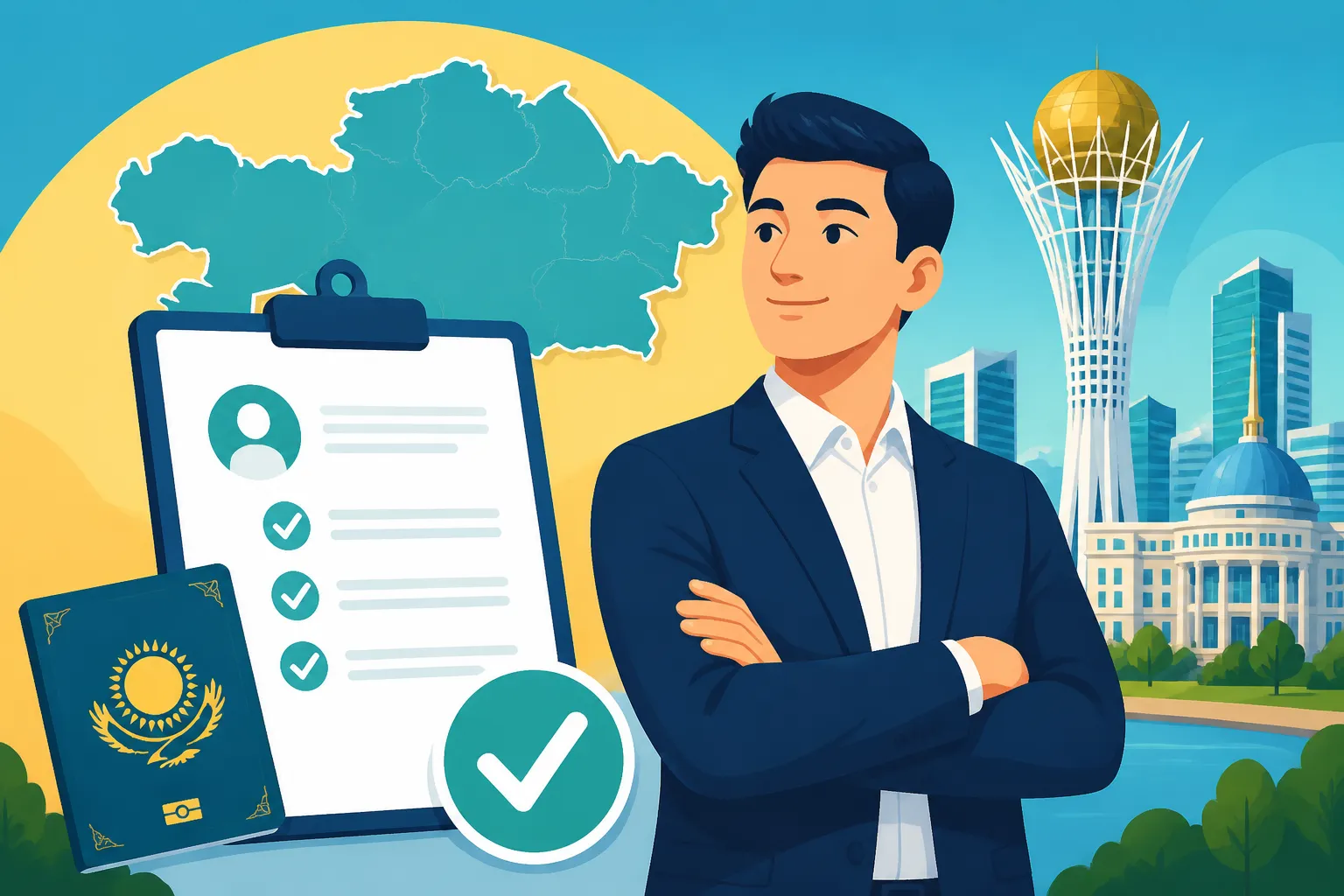
How Do I Apply for Residence as a Skilled Professional in Kazakhstan?
So, you’ve decided to make the leap and build a life as a skilled professional in Kazakhstan! That’s fantastic, but let’s be real, navigating the immigration system to secure your residence permit can feel like trying to solve a Rubik's Cube blindfolded. It’s not always straightforward, and the rules often seem to shift, leaving many expats frustrated. This guide is designed to cut through the confusion, offering a clear, empathetic roadmap on how to apply for residence as a skilled professional in Kazakhstan, making sure you understand each twist and turn.
Understanding the "Skilled Professional" Category for Residence
Kazakhstan is actively seeking talented individuals to contribute to its growing economy, particularly in sectors like IT, finance, engineering, and education. While the country has various pathways to residence, the "skilled professional" route is specifically designed for those who bring valuable expertise and a verifiable job offer. It’s not just about having a degree; it’s about proving your value to the Kazakhstani market.
What Exactly Constitutes a "Skilled Professional"?
When the Kazakhstani government talks about "skilled professionals," they're generally looking for individuals with higher education, significant work experience in their field, and often, expertise in a high-demand sector. This isn't a casual tourist visa; it's a commitment. Your qualifications need to align with specific jobs that are either difficult to fill with local talent or are crucial for national development. Think of it less as a general visa category and more as an invitation for specific talents.
The definition can be broad, but critically, it almost always ties back to a genuine offer of employment from a Kazakhstani company. Without that, proving your "skilled professional" status for a residence permit becomes significantly harder, as the primary mechanism for a residence permit often flows from securing a work permit first. Essentially, your skills need to be desired and formally requested by an employer here.
The Crucial Role of a Job Offer and Work Permit
For most skilled professionals, the path to a residence permit in Kazakhstan begins with securing a job offer. This is the cornerstone. Your prospective employer typically plays a pivotal role, as they will be the ones applying for your work permit. Without a valid work permit, your application for a residence permit as a skilled professional won't get off the ground. It’s a multi-step process: find a job, employer applies for work permit, you enter on a work visa (if required), and then you can apply for your residence permit.
This employer sponsorship is vital because it confirms to the authorities that your skills are genuinely needed and that you’re not just looking for a way to stay in the country without a purpose. The employer must justify why they need to hire a foreign specialist over a local one, and this can involve quotas and specific government approvals. Make sure your employer is well-versed in the local labor laws and has experience sponsoring foreign workers. If you’re looking to understand the broader context of how a work permit and employer sponsorship work in Kazakhstan, it’s worth diving deeper into those specifics.
The Step-by-Step Application Process
Alright, let's get down to the nitty-gritty. This process can feel like a bureaucratic labyrinth, but breaking it down into manageable steps makes it less daunting. Remember, patience is key, and having all your ducks in a row from the outset will save you a lot of headaches later on.
Step 1: Securing Your Employment and Work Permit
As we just discussed, the very first step is landing that job. Once you have a concrete offer from a Kazakhstani company, they will typically initiate the process of obtaining a work permit for you. This is their responsibility, not yours, though you will need to provide them with a stack of documents. This permit allows you to legally work in Kazakhstan. Without this, your residence permit application is essentially dead in the water.
Your employer will gather documents like your academic qualifications, resume, passport copy, and sometimes even medical certificates. They submit these to the Ministry of Labour and Social Protection or its regional departments. This stage can take anywhere from a few weeks to several months, depending on the complexity of the case, the demand for your profession, and the efficiency of the regional office. It's a critical waiting game, but one that your employer should be actively managing. Once approved, you’ll typically be issued a work visa to enter the country, if you're not already here under a visa-free regime.
Step 2: Obtaining Your Individual Identification Number (IIN)
The Individual Identification Number, or IIN, is your personal tax and identification number in Kazakhstan. Think of it as your social security number or national ID number back home. You absolutely cannot function legally in Kazakhstan without it, and it's a prerequisite for almost everything, including opening a bank account, registering for services, and crucially, applying for your residence permit. If you haven’t already, you’ll need to apply for your IIN immediately upon arrival, or even before, if possible.
You can get your IIN at a Public Service Centre (PSC), often called a "TsON" (pronounced "tson") in Kazakh or Russian. You'll need your passport and a copy of its main page, translated and notarized into Kazakh or Russian. The process is usually quick, often just a few days, but sometimes you can get it on the same day if the queues aren't too bad. Having this in hand makes all subsequent administrative tasks infinitely smoother, so prioritize it. Seriously, if you want to know more about it, there's a detailed guide on how to get an IIN (Individual Identification Number) in Kazakhstan.
Step 3: Applying for the Residence Permit
Once you have your work permit (or are in the process of getting it and have a confirmed job, depending on your visa type) and your IIN, you can finally apply for your residence permit. This is the big one. This permit, often referred to as a "вид на жительство" (vid na zhitelsvo), gives you the right to reside in Kazakhstan for a longer term, usually for the duration of your work contract, and can be renewed.
You'll submit your application to the Migration Service (part of the Ministry of Internal Affairs) at your local branch. This will typically be the department in the city or region where you intend to live and work. The application will require a comprehensive set of documents, which we'll delve into in the next section. It’s crucial to present a complete and accurate dossier. Any missing or incorrect paperwork can lead to frustrating delays or outright rejection. Remember, if you need assistance with managing your move and getting settled, companies like Sirelo can often connect you with services that help expats with such administrative hurdles, ensuring your documents are in order for the big shift.
Essential Documents and Common Hurdles
Gathering the required documents for a residence permit can be one of the most challenging parts of the process. It's not just about collecting them; it's about ensuring they're translated, notarized, and authenticated correctly. Expect to feel a bit like a paper shuffler, but meticulousness here pays off immensely.
The Paperwork You'll Absolutely Need
The list can be extensive, and it’s always best to check the most current requirements with the Migration Service directly or with your employer's legal team, as they can change. However, here's a general list of what you can expect to need:
- Application Form: Duly filled out.
- Passport: Original and notarized copy of all relevant pages, translated into Kazakh or Russian. Make sure your passport has sufficient validity.
- Work Permit: The official document issued by the Ministry of Labour.
- Individual Identification Number (IIN): Proof of your IIN.
- Medical Certificate: Confirming you are free from certain communicable diseases (e.g., HIV, tuberculosis). This needs to be obtained from a designated medical facility in Kazakhstan.
- Police Clearance Certificate: From your home country and any country you've resided in for a significant period (usually 6 months or more) within the last five years. This also needs to be apostilled or legalized and translated.
- Photo: Passport-sized photos (usually 3.5×4.5 cm).
- Marriage Certificate/Birth Certificates: If applying with dependents, these will also need to be translated and notarized.
- Proof of Funds: Sometimes requested, especially if your employer isn’t directly sponsoring all aspects or if you're demonstrating self-sufficiency.
- Proof of Accommodation: A rental agreement or a letter from your employer stating they provide housing. This will likely need to be registered with the migration police.
- Receipt of State Duty Payment: There will be a fee for the application.
It's a lot, I know. My advice? Start gathering these documents well in advance. Some, like the police clearance certificate from your home country, can take weeks or even months to obtain. For a more detailed look at what documents you need to see a doctor in Kazakhstan or other services, check out guides on the general requirements.
Overcoming Translation and Notarization Challenges
Here’s where many expats stumble. It's not enough to just have the documents; they need to be in the correct language and format. Most official documents must be translated into Kazakh or Russian and then notarized by a local notary public in Kazakhstan. Do not assume translations done outside of Kazakhstan will be accepted without local notarization. Often, even if translated abroad, they'll still need to be certified by a Kazakhstani notary.
The process of finding a reliable translator and notary can be an unexpected hurdle. Ask your employer for recommendations, or connect with other expats who have gone through the process. A single mistake in translation or notarization can send you back to square one, costing you precious time and potentially impacting the validity of your existing visa. It’s vital to be precise and double-check everything. For those dealing with a spouse or children, ensuring you know how to add dependents to your health coverage in Kazakhstan, for example, will involve similar meticulous document processing.
Maintaining Your Residence and Future Steps
Once you've secured your residence permit, the journey isn't over. There are ongoing responsibilities, renewals, and potential pathways to more permanent status or even citizenship. Staying compliant with Kazakhstani immigration laws is paramount.
Renewal Processes and Staying Compliant
Your residence permit will have an expiry date, usually tied to your work permit or employment contract duration. It's absolutely crucial to track this date and initiate the renewal process well in advance. Typically, you should begin the renewal application several months before your permit expires. Just like the initial application, renewals require updated documents, proof of continued employment, and sometimes, new medical checks or police clearances.
Failing to renew your permit on time can lead to serious consequences, including fines, deportation, or even a ban from re-entering Kazakhstan. Stay on top of any changes in immigration laws and work closely with your employer, as they will likely be involved in renewing your work permit, which directly influences your residence permit. Staying updated on how to renew your residence permit in Kazakhstan is an ongoing responsibility.
Pathways to Permanent Residence and Citizenship
For many skilled professionals, a temporary residence permit is just the first step. After a certain period of continuous residency (usually five years) and demonstrating ties to the country, you might become eligible to apply for permanent residence. Permanent residence offers greater stability and fewer restrictions, such as not being tied to a specific employer or needing a work permit.
The requirements for permanent residence are more stringent and involve proving your financial solvency, housing, and integration into Kazakhstani society. Following that, after a further period of continuous permanent residence, you might even consider applying for Kazakhstani citizenship by naturalisation. This typically requires fluency in Kazakh, knowledge of the country's history and laws, and renunciation of your previous citizenship, as Kazakhstan generally does not recognize dual citizenship. These are significant steps, and you'll want to ensure you understand how to maintain your permanent residence in Kazakhstan if you choose to pursue it.
Useful Resources and Brands for Expats
Navigating life as an expat in Kazakhstan means leaning on various resources, both governmental and private. Here are a couple of examples that often come up in expat discussions.
Health Coverage for the Expat Professional
While your employer will likely ensure you are registered for OSMS (Compulsory Social Health Insurance), many skilled professionals opt for additional private health insurance. OSMS provides a good baseline, but private plans can offer more comprehensive coverage, access to private clinics with English-speaking doctors, and sometimes even international evacuation services. Companies like Cigna Global offer various expat-specific health insurance plans that can provide peace of mind, especially when you're just settling in or if you travel frequently. Having robust health coverage is a critical consideration for any expat, and it's worth exploring the options beyond the mandatory system.
| Type of Healthcare Coverage | Description | Key Benefits for Expats |
|---|---|---|
| OSMS (Mandatory) | Compulsory social health insurance, generally covered by employer contributions. | Basic public healthcare, covers essential services. |
| Local Private Insurance | Purchased from Kazakhstani insurance providers. | Access to private clinics, shorter wait times, often covers more services than OSMS. |
| International Private Insurance | Plans designed for expats, often from global providers like Cigna Global. | Comprehensive global coverage, emergency evacuation, access to English-speaking networks, flexibility. |
Understanding how Kazakhstan's health system works: OSMS and private care explained (2026) is vital for every newcomer.
Moving and Settling In Support
The physical act of moving to a new country can be overwhelming. From packing your life into boxes to figuring out how to transport your beloved belongings, it’s a massive undertaking. Services that help with international moves can be incredibly valuable. Companies like Sirelo are comparison platforms that connect you with various international moving companies, allowing you to get quotes and find a service that fits your budget and needs. They can help with everything from packing to customs clearance, taking a huge burden off your shoulders during this stressful time. Once you arrive, familiarizing yourself with The Complete Guide to Moving to Kazakhstan: Your First 90 Days (2026) will provide further assistance in settling down.
Disclaimer
Please remember that immigration laws and procedures in Kazakhstan can change. The information provided in this guide is for general informational purposes only and does not constitute legal advice. It is highly recommended to consult with the official Migration Service of Kazakhstan, a qualified immigration lawyer, or your employer's legal department for the most up-to-date and specific advice regarding your individual circumstances.