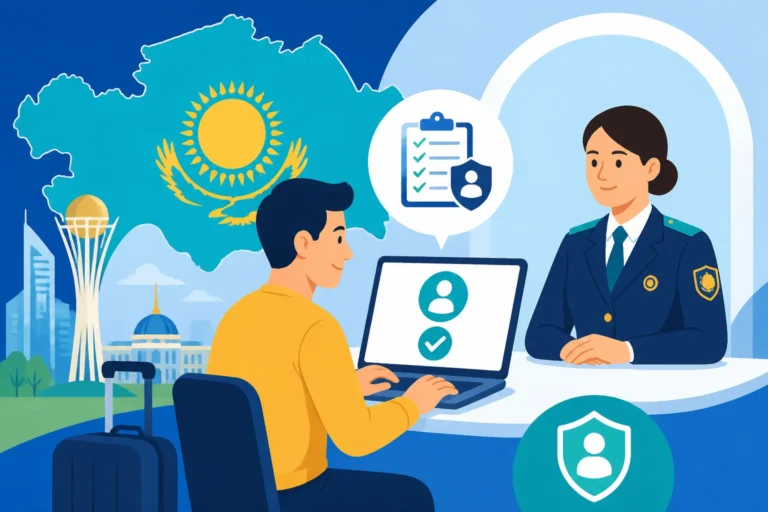
How Do I Sponsor My Spouse for Residence in Kazakhstan?
Oh, the joy and the headaches of bringing your loved one to join you in Kazakhstan! I know firsthand how exciting it is to finally settle down and how quickly that excitement can turn into a bureaucratic maze when you try to get your spouse their own residence permit. You've navigated your own visa and probably your work permit, and now you’re facing a whole new set of hurdles for someone else. This guide is here to help you understand the process of sponsoring your spouse for residence in Kazakhstan, breaking down the steps and offering some seasoned expat advice to keep your sanity intact.
Understanding the Residence Permit for Spouses in Kazakhstan
When you've found your footing in Kazakhstan, naturally, your thoughts turn to having your family with you. For many expats, this means sponsoring a spouse for a residence permit under what’s often informally referred to as "family reunification." It’s not just a piece of paper; it’s the legal key for your partner to build a life here alongside you, to work, to access services, and truly feel at home. But let’s be real, the path to getting that permit isn't always a straight line, and knowing what you're up against is half the battle.
Who is Eligible for Family Reunification?
First things first: who exactly qualifies for this family reunification status? Generally, if you, the sponsoring expat, hold a valid work permit, a long-term study visa, a permanent residence permit, or are an individual entrepreneur (IP) registered here, you are usually in a position to sponsor your legally married spouse. The crucial part here is "legally married." Kazakhstan’s migration authorities will only recognize marriages that are officially registered, typically with an international marriage certificate. If you had a customary marriage or one that isn't internationally recognized, you'll need to sort that out first.
Think of it this way: your legal status here dictates your ability to bring family. For example, if you're here on a short-term business visa that's constantly being renewed, it’s unlikely you'll be considered stable enough to sponsor a spouse for a long-term residence. The government wants to see that your stay is secure and extended. This also extends to children; if you're wondering how to add dependents to your health coverage in Kazakhstan, their legal residence status will be a prerequisite for that as well. Also, remember that your own status determines the longevity of your spouse's permit, so ensure your own documentation is always up to date and robust, particularly if you're on a sponsored work visa.
Key Requirements for Your Spouse's Application
Alright, let's talk documents. This is where the real fun, or frustration, begins. Your spouse will need a raft of paperwork, and every single piece needs to be in impeccable order. The core documents typically include:
- Your spouse's passport: Valid for at least six months beyond the intended stay.
- Marriage certificate: The original, along with a notarized translation into Kazakh or Russian. This is non-negotiable.
- Your (the sponsor's) passport and residence permit/work visa: To prove your legal status.
- Your IIN (Individual Identification Number): Absolutely essential for both you and your spouse. If your spouse doesn't have one yet, they'll need to get one. I've covered this extensively in a dedicated post, "How Do I Get an IIN (Individual Identification Number) in Kazakhstan?". Trust me, get this done early; it's the foundation for almost everything else.
- Medical certificate: Proving your spouse is free from certain infectious diseases like HIV, tuberculosis, etc. You’ll typically need to get this done at designated clinics in Kazakhstan, not from your home country.
- Police clearance certificate: From their home country, showing they have no criminal record. This too will need to be translated and notarized.
- Proof of financial solvency: This is a big one. You need to demonstrate that you can financially support your spouse without them becoming a burden on the state. This can be bank statements, employment contracts, or other verifiable income proof.
- Proof of accommodation: A rental agreement or property ownership documents, demonstrating you have a place for your spouse to live. The rental agreement needs to be officially registered, not just a handshake deal.
- Photos: Passport-sized, usually 3×4 cm.
The migration authorities are sticklers for detail. Any discrepancy, even a minor typo, can cause significant delays. This is particularly true for notarized translations. Ensure the translation agency is reputable and understands the intricacies of legal document translation for government use in Kazakhstan. Also, don't forget the need for some documents to be apostilled. If you're wondering "How to Get Your Documents Apostilled for Kazakhstan Immigration", that’s another article worth reading. It's a crucial step that many overlook, leading to frustrating setbacks.
The Step-by-Step Application Process for Sponsoring Your Spouse
Alright, let’s get down to the nuts and bolts of actually applying. It’s a process that demands patience and meticulous attention to detail. Having been through it myself, and seen countless friends navigate it, I can tell you that preparedness is your best friend.
Gathering Essential Documents and Translations
This is often the most time-consuming part, but if you do it right, it makes the rest of the journey smoother. You'll need documents from both you, the sponsor, and your spouse.
From You (the Sponsor):
- Copy of your passport (main page and visa/stamp pages).
- Copy of your valid Kazakhstani residence permit, work permit, or other long-term visa. If you're here on a work permit, ensure you understand "How to Apply for a Work Visa and Work Permit in Kazakhstan" as your status is the foundation for your spouse's.
- Copy of your IIN.
- Proof of financial solvency (bank statements, employment contract, salary certificates).
- Proof of accommodation (rental agreement, property ownership certificate, along with a statement from the owner if renting).
From Your Spouse:
- Original passport (must be valid for at least 6 months, though longer is better).
- Copy of your spouse's IIN (if they have one, if not, this needs to be applied for first).
- Original marriage certificate.
- Original police clearance certificate from their home country (and any country they've lived in for more than a year recently).
- Original medical certificate from a designated Kazakhstani clinic.
- Passport-sized photos (usually 3×4 cm, matte finish).
Every single document not originally in Kazakh or Russian must be translated and notarized. This isn't a task to scrimp on. Find a reputable translation agency in one of the major cities like Almaty or Astana. They understand the specific requirements for government submissions. And remember that whole apostille business? Some documents, especially the marriage certificate and police clearance from your home country, will need to be apostilled before you even get them translated here. This means getting them certified by the relevant authority in the country where they were issued. For more on this, check out "Understanding Document and Translation Requirements for Kazakhstan Immigration".
As you gather these, keep duplicates, both physical and digital. It's easy to lose track, and having backups can save you from a major headache. If you're moving a lot of belongings or need help with the overall logistics of your family joining you, considering international relocation services can simplify things. Companies like Sirelo offer resources that go beyond just shipping, providing guidance on moving to new countries, which can be invaluable when you're overwhelmed with paperwork.
Submitting the Application to Migration Service
Once your hefty stack of documents is ready, it's time to face the Migration Service. This is typically done at the local office where you reside. In larger cities like Almaty or Astana, these offices can be busy, so prepare for a wait.
Here's generally how it goes:
- Appointment or Walk-in: Some offices may require an appointment, while others operate on a walk-in basis. It's always best to check their current procedures online or by calling ahead.
- Submission: You (the sponsor) and your spouse will usually need to attend together. The officer will review all your documents. They will scrutinize everything. Be prepared for questions, and don't be surprised if they ask for additional clarifications or even more documents.
- Interview (Potentially): While not always a formal "interview" like some Western countries, the officer might ask questions about your relationship, how you met, your living situation, etc. This is to ensure the marriage is genuine and not simply for immigration purposes.
- Receipt and Tracking: If everything is accepted, you'll receive a receipt confirming your application has been submitted. This receipt will usually have a tracking number or a way to inquire about its status. Processing times can vary wildly – from a few weeks to several months. I recall one friend who waited nearly four months for his wife's permit, while another got theirs in six weeks. It's a bit of a lottery, unfortunately. For more general information on the process, you might find "Understanding the Cost and Timeline of the Kazakhstan Residence Process" helpful, though timelines for spouse sponsorship can have their own nuances.
Post-Approval Steps: Registration and Card Collection
Congratulations! You’ve received the joyous news that your spouse’s residence permit has been approved. But don't pop the champagne just yet – there are a few more crucial steps to finalize everything.
- Registration of Arrival: Once your spouse arrives in Kazakhstan (if they were awaiting approval outside the country) or immediately after receiving approval, you must register their address with the Migration Service. This is incredibly important. Failure to register within the specified timeframe (usually within 3 working days of arrival or permit issuance) can lead to fines and complications. It's an essential part of "How to Register Your Arrival with the Migration Service in Kazakhstan". You will typically do this at the local Migration Service office or sometimes through a local government service center (CSO).
- Collecting the Residence Permit Card: After approval and successful address registration, your spouse will be issued a physical residence permit card. This card is their official identification and proof of legal residence in Kazakhstan. It’s usually collected from the same Migration Service office where the application was submitted. This card is vital for everything from opening a bank account to accessing public services.
- Health Insurance: With a valid residence permit, your spouse will now be eligible for healthcare in Kazakhstan. This is a big relief! They will need to register for the Compulsory Social Health Insurance (OSMS), which is mandatory for most residents. While OSMS covers a broad range of services, many expats still opt for private health insurance for more comprehensive coverage, English-speaking doctors, or access to private clinics. International providers like Cigna Global are popular choices among expats for their global coverage and ability to tailor plans to specific needs. Considering health insurance in Kazakhstan: OSMS, private and international options explained, is a smart next step to ensure your spouse's wellbeing is fully covered.
Navigating Common Challenges and Best Practices
Living as an expat in Kazakhstan, you learn that things aren't always straightforward. The same applies to immigration processes. It's normal to hit a few bumps in the road, but a bit of foresight and persistence can make a world of difference.
Dealing with Bureaucracy and Document Issues
Oh, the bureaucracy! It’s a rite of passage for every expat here. You might find yourself being asked for a document you weren't initially told to bring, or an officer might interpret a rule slightly differently from another. It’s frustrating, absolutely. Many people almost tear their hair out over seemingly simple things.
Here’s my best advice:
- Be Patient and Polite: This is paramount. Losing your temper will get you nowhere. A friendly, respectful demeanor, even when you're internally screaming, is far more effective.
- Keep Copies of Everything: I cannot stress this enough. Every piece of paper you submit, every form you fill, every email or communication – keep a copy. If a document goes missing or there’s a dispute, your copy is your proof.
- Ask for Clarification (Politely): If you don’t understand something, ask. Don't assume. Sometimes there's a specific local nuance. If you get conflicting information, try to get it in writing if possible, or note down who told you what and when.
- Consider Professional Help: For complex cases, or if you simply can't face another trip to the Migration Service, consider hiring a local legal consultant or immigration specialist. They navigate these waters daily and can often foresee issues before they arise. While there’s a cost involved, the peace of mind and time saved can be priceless. They can also assist with your own permit, such as "How to Get a Residence Permit for Work in Kazakhstan".
Maintaining Your Spouse's Residence Permit
Getting the permit is one thing; keeping it valid and compliant is another. The duration of your spouse's residence permit will typically be tied to yours. If you have a work permit that needs annual renewal, your spouse's permit will also likely need to be renewed around the same time.
- Renewals: Stay on top of renewal dates. "How to Renew Your Residence Permit in Kazakhstan" details this process. It's typically advised to start the renewal process several months before expiry to avoid any gaps in legal status. The requirements for renewal will be similar to the initial application but might be slightly less demanding on certain documents like police clearance (though still be prepared).
- Address Changes: If you move to a new apartment or house, you must inform the Migration Service and re-register your spouse's address. Again, failure to do so can lead to fines.
- Employment for Spouses: A residence permit granted under family reunification does not automatically grant the right to work. This is a common misconception and a very important point. If your spouse wishes to work, they will typically need to obtain their own work permit, or their employer will need to sponsor one. This can be another layer of bureaucracy, so it's essential to understand "Can My Spouse Work on a Family Residence in Kazakhstan?" before they start looking for jobs.
- Travel: Your spouse's residence permit allows them to travel in and out of Kazakhstan freely within its validity period. However, they should always carry their passport and residence permit card when traveling, even domestically, as identification.
The goal here, for both of you, is to ensure a smooth, legal, and comfortable life in Kazakhstan. While the steps can seem daunting, breaking them down and tackling them systematically will get you there. Just remember that many expats have walked this path before you, and you're not alone in these challenges.
| Document Type | From Sponsor (You) | From Spouse | Notes |
|---|---|---|---|
| Identity/Status | Passport, Residence Permit/Work Visa | Passport | Passports must be valid minimum 6 months |
| Identification Number | IIN | IIN (apply if not already held) | Essential for all formal procedures |
| Marital Proof | Original Marriage Certificate | Must be apostilled (if from abroad) & notarized translation | |
| Criminal Record | Police Clearance from Home Country | Must be apostilled (if from abroad) & notarized translation | |
| Health | Medical Certificate (local clinic) | HIV, TB, other infectious diseases | |
| Financial Solvency | Bank statements, Employment Contract | Demonstrate ability to support spouse | |
| Accommodation | Rental agreement / Property Deed | Registered with Migration Service | |
| Photos | Passport-sized photos (3×4 cm) | Matte finish, specific background color often required | |
| Application Form/Fee | (As per Migration Service) | (As per Migration Service) | Application forms are usually available at the Migration Service |
Disclaimer
Please remember that immigration laws and regulations in Kazakhstan can change. The information provided in this guide is based on general knowledge and expat experiences at the time of writing. While we strive to keep it accurate and up-to-date, it should not be taken as legal advice. Always consult with the official Migration Service of Kazakhstan or a qualified immigration lawyer or consultant for the most current and personalized guidance regarding your specific situation.