How to Apply for a Residence Permit from Inside Kazakhstan
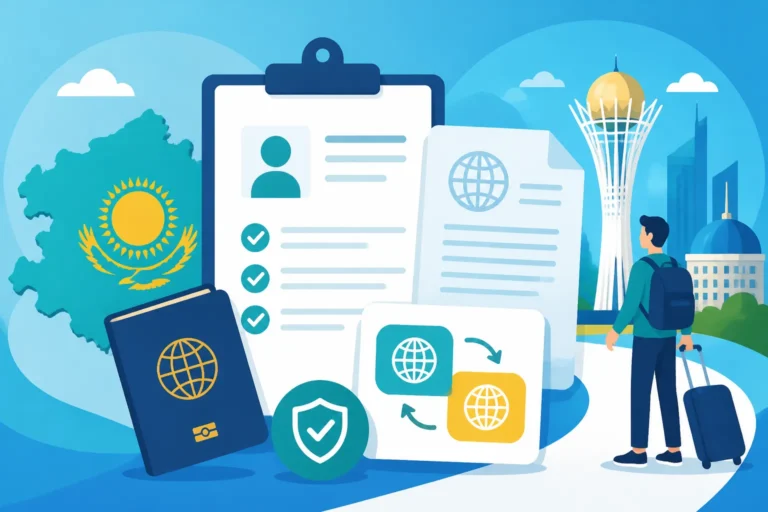
So, you’ve landed in Kazakhstan, maybe on a visa-free entry, a short-term business visa, or perhaps even a student visa, and now you’ve realized you want to stay longer. The thought of extending your stay or formalizing your long-term presence often brings with it a wave of administrative dread, and for good reason! Applying for a residence permit from inside Kazakhstan can feel like navigating a labyrinth, but trust me, it’s absolutely doable. This guide will walk you through every twist and turn, providing real-world insights and practical advice to help you secure your Kazakhstani residence permit without losing your mind.
Understanding the Fundamentals of In-Country Residence Permit Applications
Alright, let's get down to brass tacks. You're here, you like it, and you want to make it official. Applying for a residence permit while already on Kazakhstani soil has its own set of rules and nuances that are crucial to grasp from the get-go. It’s not simply a matter of walking into an office and asking nicely; there's a specific legal framework you need to fit into.
Why Apply from Within Kazakhstan?
Many expats initially arrive in Kazakhstan on a short-term visa or even visa-free, especially if they are from countries with such agreements. The idea of going through a lengthy visa application process from your home country might have seemed daunting, or perhaps the opportunity to stay just solidified once you were already here. Maybe you landed a job after arriving on a business trip, or fell in love with the country and found a way to become self-employed. Whatever your specific journey, applying for a residence permit internally is often a logical next step to legitimize your long-term stay. It allows you to transition seamlessly from a temporary status to a more stable one, avoiding the hassle of having to leave the country, apply from an embassy abroad, and then re-enter. This can save you a significant amount of travel time and expense, not to mention the stress of constantly checking your temporary visa expiry date! It also means you're already familiar with the local environment, which can make the administrative process feel slightly less alien.
Who is Eligible to Apply from Inside?
This is where it gets a little more complex, as eligibility isn't a one-size-fits-all situation. Generally, you can't just arrive on a tourist visa and decide to apply for permanent residency. The Kazakhstani legal system requires a valid, long-term reason for your stay that can justify a residence permit. The most common grounds for applying from within include:
- Employment: If you've secured a job with a Kazakhstani employer who is willing to sponsor you for a work permit and subsequent residence permit. This is the most straightforward path for many professionals. Your employer will be key in this process. You'll want to understand how a work permit and employer sponsorship work in Kazakhstan.
- Study: If you've been accepted into a Kazakhstani educational institution and are enrolled in a long-term program. You would typically arrive on a student visa and then apply for a residence permit to cover the duration of your studies.
- Family Reunification: If you are the spouse, child, or even parent of a Kazakhstani citizen or a foreign national who already holds a valid residence permit in Kazakhstan. This pathway often requires proving the legitimacy of your family ties.
- Investment: If you're making a significant investment in the Kazakhstani economy. This path has specific financial thresholds and criteria you must meet.
- Individual Entrepreneurship (IP): If you've legally registered as an Individual Entrepreneur and can demonstrate a sustainable income and contribution to the economy. This is a popular option for freelancers or small business owners. Understanding Health Coverage for the Self-Employed in Kazakhstan is also crucial here.
It's critical to note that your current visa status plays a huge role. If you're on a visa-free entry or a short-term tourist visa, your options for an in-country residence permit application are severely limited, if not non-existent, unless you transition to a work visa or student visa first, which usually requires leaving and re-entering, or having an employer process a work permit for you while you're still here (which is a complex and often impossible undertaking). Always consult with the local Migration Service or a legal expert to confirm your specific eligibility before embarking on this journey.
Key Differences from Applying Abroad
While the end goal is the same—a residence permit—the process of applying from inside Kazakhstan differs in several ways from applying at a Kazakhstani embassy or consulate in your home country.
Firstly, when you apply from within, you're primarily dealing directly with the local Migration Service (known as "Migration Politsiya") offices and potentially the eGov portal, rather than an embassy. This means fewer layers of bureaucracy but also a more direct interaction with the local administrative system, which can be challenging due to language barriers and differing expectations. The documentation requirements might be slightly more tailored to local verification methods. For instance, rather than submitting an apostilled police clearance from your home country, you might be required to obtain a police clearance within Kazakhstan for the period you’ve already been residing here.
Secondly, the "sponsor" role often shifts. When applying from abroad, an employer or educational institution might send an invitation letter to the embassy. When applying internally, that same entity will directly interact with the Migration Service on your behalf to initiate the process, particularly for work or study permits. The local sponsor (employer, university, or even a family member) plays a much more active, hands-on role in facilitating your application by providing supporting documents and interacting with authorities.
Lastly, and perhaps most crucially, is the question of legal presence. When applying from within, you must ensure your current stay in Kazakhstan is legal and valid throughout the entire application process. Overstaying your visa, even by a day, can immediately disqualify you and lead to fines, deportation, and future entry bans. This is why it's paramount to start the residence permit application well in advance of your current visa's expiry. If you're pondering how to move to Kazakhstan legally from abroad, understanding these distinctions upfront is vital.
The Essential Pre-Application Checklist and Document Gathering
Before you even think about stepping foot into a Migration Service office, you need to have your ducks in a row. The Kazakhstani administrative system, like many around the world, is big on documentation. Being prepared is half the battle won, and trust me, you don't want to be caught scrambling for a missing paper when you're already in the queue.
Mandatory Documents for Every Applicant
Regardless of your specific reason for applying, there's a core set of documents you’ll absolutely need. Think of these as your basic entry tickets to the residence permit world. These often include:
- Valid Passport: This is non-negotiable. It must have sufficient validity remaining (usually at least 6 months beyond your intended residence permit expiry).
- Visa (if applicable): If you entered on a specific long-term visa (e.g., work, student), you'll need a copy.
- Migration Card/Registration: When you enter Kazakhstan, you usually receive a migration card or are registered by your host. This proves your legal entry and initial registration. You should definitely know how to register your arrival with the Migration Service in Kazakhstan.
- Individual Identification Number (IIN): This 12-digit number is your lifeblood in Kazakhstan – it's used for everything from banking to taxes. If you don't have one, get it immediately. More on this crucial step below.
- Application Form: Usually provided by the Migration Service or available on the eGov portal. Fill it out accurately and completely.
- Photos: Passport-sized photos meeting specific requirements (usually 3.5×4.5 cm, white background, no glasses, etc.). Always bring more than you think you need.
- Medical Certificate: A general health certificate confirming you don't have specific infectious diseases (like HIV, tuberculosis). You'll typically get this from a designated medical facility in Kazakhstan.
- Police Clearance Certificate: A document from your home country (and potentially from Kazakhstan for the period you've been here) stating you have no criminal record.
- Proof of Financial Solvency: Documents demonstrating you have sufficient funds to support yourself and any dependents without becoming a burden on the state. This could be bank statements, an employment contract with salary details, or a sponsorship letter.
- Proof of Accommodation: A rental agreement or property ownership documents showing where you reside in Kazakhstan. This is often tied to your temporary registration (propiska).
Beyond these universals, be prepared for additional, specific documents depending on your application category. For a work permit, you’ll need your employment contract, the employer's registration documents, and evidence of their need for a foreign specialist. For students, an acceptance letter from your university and proof of tuition payment. For family reunification, marriage certificates, birth certificates, and proof of your sponsor’s residence status. Make sure all names on documents match exactly. Even a single letter difference can cause delays.
Translating, Notarizing, and Apostilling Your Paperwork
This is a step that often catches newcomers off guard and can become a significant source of frustration and expense. Many of your official documents from your home country – birth certificates, marriage certificates, university diplomas, police clearances – will need to be:
- Translated into Kazakh or Russian: Most official processes in Kazakhstan operate in these languages. You cannot simply provide documents in English or another language. The translation must be done by a certified translator in Kazakhstan. Don't try to save money by doing it yourself; it won't be accepted.
- Notarized: After translation, the authenticity of the translator's signature is often notarized by a local Kazakhstani notary public. This confirms that the translation was indeed performed by an officially recognized translator.
- Apostilled (or Legalized): This is for documents issued outside Kazakhstan. An apostille is a certification that legitimizes documents for international use under the Hague Apostille Convention. If your home country is a signatory, you'll need to get an apostille on your original documents before you leave your home country. If your country is not a signatory, you might need a more complex "consular legalization" process, which involves getting your documents certified by your country's Ministry of Foreign Affairs and then by the Kazakhstani embassy/consulate in your home country. Trying to apostille documents after you've arrived in Kazakhstan is a nightmare, often requiring you to send documents back home.
Always double-check the specific requirements for each document with the Migration Service or a trusted legal consultant. Getting this wrong can lead to costly delays and having to redo everything.
Securing Your Individual Identification Number (IIN) and Local Registration
These two items are absolutely foundational for almost any long-term administrative process in Kazakhstan, including your residence permit. You can't really function as a resident without them.
The Individual Identification Number (IIN) is Kazakhstan's equivalent of a national ID number or tax ID. It's unique to you and is used for everything: opening a bank account, paying taxes, registering a SIM card, applying for health insurance, and yes, applying for a residence permit. If you don't already have an IIN, this should be one of your very first tasks upon arrival. The process usually involves visiting a Public Service Center (PSC, or "TsON" in Russian – Центр обслуживания населения) with your passport, a copy of your migration card, and a completed application form. It's usually a quick process, often issued on the spot or within a few business days. Make sure you understand the IIN and why you need one in Kazakhstan, it’s truly indispensable.
Your local registration (propiska) is also vital. This is your official address registration, confirming where you legally reside in Kazakhstan. When you first arrive, your host (hotel, landlord, employer) is responsible for registering your arrival with the Migration Service. For a residence permit application, you'll need a stable, long-term address. Your rental agreement or a letter from your landlord (if living with friends/family) will typically be used for this. The propiska itself is usually obtained at a PSC, and it links your IIN to your place of residence. Without a valid propiska, your residence permit application will hit a brick wall.
| Document Type | Required for All? | Where to Obtain | Notes |
|---|---|---|---|
| Valid Passport | Yes | Your Home Country | Must have sufficient validity. |
| Migration Card/Reg. | Yes | Border Control / Host in Kazakhstan | Proof of legal entry & initial registration. |
| Individual ID Number (IIN) | Yes | Public Service Center (TsON) in Kazakhstan | Crucial for all legal/financial activities. |
| Application Form | Yes | Migration Service / eGov Portal | Fill out accurately. |
| Passport Photos | Yes | Photo studio in Kazakhstan | Specific size/background requirements (3.5×4.5 cm). |
| Medical Certificate | Yes | Designated clinics in Kazakhstan | Confirms no infectious diseases. |
| Police Clearance (Home Country) | Yes | Your Home Country / Consulate | Apostilled/legalized. |
| Police Clearance (Kazakhstan) | Often | Public Service Center (TsON) in Kazakhstan | For the period of your stay. |
| Proof of Financial Solvency | Yes | Your Bank / Employer | Bank statements, employment contract, sponsorship letter. |
| Proof of Accommodation | Yes | Landlord / Property Owner | Rental agreement, property deed, propiska. |
| Translated/Notarized Docs | Yes (for foreign docs) | Certified translator in Kazakhstan | Originals often need apostille from home country. |
| Work Contract / Letter | (Work-based only) | Your Employer | Key for work-related permits. |
| University Acceptance | (Study-based only) | Your University | Essential for student permits. |
| Marriage/Birth Cert. | (Family-based only) | Your Home Country / Registry | Apostilled/legalized if from abroad. |
This table provides a concise overview, but remember, details matter! Always verify the exact, up-to-the-minute requirements with official sources.
Navigating the Residence Permit Application Process
Once your documents are in order, the real fun begins: submitting your application. This phase requires patience, attention to detail, and a good understanding of where and how to interact with the Kazakhstani administrative system.
Submitting Your Application: Where and How
The primary point of contact for submitting your residence permit application from inside Kazakhstan is typically the local Migration Service office, which falls under the Ministry of Internal Affairs. These offices are located in every city and district. You'll need to visit the office corresponding to your registered address (propiska).
The "how" often involves a combination of in-person submission and potentially using the eGov portal (Electronic Government Portal). While the eGov portal is a fantastic resource for many government services, for residence permits, especially the initial application, a physical visit to the Migration Service is usually mandatory.
Here’s a general sequence:
- Gather all documents: Ensure every single piece of paper, translation, and copy is ready and in order. Create a checklist and tick things off.
- Visit the Migration Service: Arrive early! Government offices can have long queues, especially on busy days. Bring a Kazakh- or Russian-speaking friend if your language skills aren't strong; this is one of those times where miscommunication can be detrimental.
- Take a queue number: Look for the electronic queue system, grab a number, and wait for your turn.
- Submit your application package: When called, present your complete set of documents to the officer. They will review them for completeness and accuracy. This is where missing documents, incorrect translations, or expired validity will become an issue.
- Pay the State Fee: If your documents are accepted, you'll usually be given a payment slip for the state fee (госпошлина). This can typically be paid at a bank or through the eGov payment services. Keep the receipt!
- Receive confirmation: You should receive a receipt or a stamp on your application acknowledging its submission and providing a tracking number or a date by which you can expect a response. This is your proof of application, so guard it carefully.
Remember, the officer might ask clarifying questions, so be prepared to explain your situation. It's a formal process, so maintain professionalism and patience.
The Role of the Migration Service and eGov Portal
The Migration Service (Миграционная полиция) is your main point of contact. These are the folks who review your application, verify your documents, and ultimately decide on the approval or rejection of your residence permit. They are also responsible for issuing the physical residence permit card. Their role is to ensure that foreign nationals residing in Kazakhstan do so legally and adhere to all immigration laws. This often means strict adherence to bureaucratic procedures.
The eGov portal (eGov.kz) is Kazakhstan's digital gateway for government services. While you might not initiate a residence permit application entirely through eGov, it's an invaluable tool for several aspects of the process:
- Information Gathering: You can often find official lists of required documents, application forms, and procedural guidelines on eGov.
- Paying State Fees: Many government fees, including those for residence permits, can be conveniently paid through the eGov portal's payment gateway. This often avoids bank queues.
- Checking Status: In some cases, you might be able to check the status of your application online using a tracking number provided by the Migration Service.
- Other Related Services: eGov is also where you manage your IIN, register your address (propiska), and access other vital services once you become a resident. Understanding the eGov and Taxpayer Cabinet portals in Kazakhstan is essential for anyone planning a long-term stay.
While eGov aims to simplify processes, for complex immigration matters like residence permits, it often acts as a supporting tool rather than a standalone solution for the initial application. Always confirm with the Migration Service if a specific step can be done online.
Potential Interviews and Additional Information Requests
Don't assume that submitting your documents is the end of your interaction with the Migration Service until approval. In some cases, particularly for family reunification or more complex work permit applications, you might be called for an interview. This is usually to clarify information, verify details, or assess your intentions for staying in Kazakhstan.
During an interview, be prepared to:
- Answer questions about your background: Your education, work history, family ties, and reasons for choosing Kazakhstan.
- Provide more details about your sponsor: If you have an employer or family member sponsoring you, questions might focus on their relationship with you and their ability to support you.
- Clarify discrepancies: If there are any ambiguities or perceived inconsistencies in your submitted documents, the interview is their opportunity to get answers directly from you.
It's crucial to be honest, consistent with your application, and confident in your answers. If you're not fluent in Kazakh or Russian, consider bringing a certified translator with you to the interview, even if they didn't explicitly request one.
Additionally, the Migration Service might issue requests for additional information or documents. This could happen if a document was unclear, expired, or if they simply need more evidence to support your claim. Respond to these requests promptly and completely. Delays in providing requested information can lead to your application being put on hold or even rejected. This is often an iterative process, so patience is truly a virtue here.
What to Expect Post-Submission: Waiting Game and Approval
You’ve submitted your weighty packet of documents, paid your fees, and walked out of the Migration Service office with a sigh of relief – or maybe a lingering sense of anxiety. Now begins the infamous waiting game, a period that can test even the most zen expat's patience.
Typical Processing Times and Communication
This is one of those areas where official timelines can sometimes differ from real-world experience. Officially, the processing time for a residence permit can vary depending on the type of permit and the volume of applications at the time. Generally, you might be looking at anywhere from 1 to 3 months, though some cases can be faster or, regrettably, much slower. It's always a good idea to inquire about the estimated timeframe when you submit your application.
During this waiting period, direct communication from the Migration Service is often minimal. Don't expect regular updates unless there's a problem or they require additional information. This lack of communication can be one of the most frustrating aspects of the process for expats accustomed to more transparent systems. You might be able to check your application status on the eGov portal if a tracking number was provided, but often, the most reliable method for updates is a direct (and potentially repeated) visit to the Migration Service office or contact through your employer's or sponsor's legal representative.
It’s crucial to ensure your current visa status remains valid throughout this processing period. If your current visa is set to expire before you expect a decision on your residence permit, you must inquire about the possibility of a temporary extension of your stay while your application is under review. Falling out of legal status, even while an application is pending, can create serious problems.
Receiving Your Residence Permit Card
If your application is successful, congratulations! The Migration Service will notify you, usually by phone, SMS (to a local number, naturally), or through your sponsor, that your residence permit is ready for collection.
When you go to collect your residence permit, you'll typically need:
- Your passport: To verify your identity.
- The receipt/proof of application: The document you received when you first submitted your application.
- The original payment receipt for the state fee: Just in case they need to cross-reference.
The residence permit itself is a small, plastic card, similar to a national ID card, often referred to as a "вид на жительство" (vid na zhitel'stvo) or "ықтиярхат" (yqtyiarhat). It will contain your photo, personal details, IIN, and the validity period of your permit. This card is your official proof of legal residence in Kazakhstan, and you should carry it with you or at least have a copy readily available. You'll need it for everything from travel within the country to interacting with banks and other services.
Make sure to carefully check all the details on the card immediately upon receipt. Any errors in your name, date of birth, or IIN need to be reported and corrected by the Migration Service right away.
What to Do If Your Application is Denied
While we all hope for smooth sailing, it's important to be prepared for the possibility that your application might be denied. A rejection can be incredibly disappointing, but it's not always the end of the road.
Common reasons for denial include:
- Incomplete documentation: Missing crucial papers or failing to provide proper translations/apostilles.
- Ineligibility: Not meeting the specific criteria for the chosen residence permit category.
- False information: Any deliberate misrepresentation in your application.
- Criminal record: A disqualifying criminal history, either from your home country or in Kazakhstan.
- Overstaying a previous visa: Any history of violating immigration laws.
- Lack of financial solvency: Inability to prove you can support yourself.
If your application is denied, the Migration Service is usually required to provide a written explanation for the decision. This is crucial, as it will tell you why you were rejected.
Your options typically include:
- Appeal the decision: If you believe the denial was based on a misunderstanding, incorrect information, or an administrative error, you may have the right to appeal the decision within a specific timeframe (often 10-15 working days) to a higher authority within the Migration Service or even through the courts. This usually requires strong legal argumentation and potentially new evidence.
- Reapply with corrections: If the denial was due to easily rectifiable issues (e.g., a missing document, an expired certificate), you might be able to correct the deficiencies and submit a fresh application. However, be mindful of your current legal status in Kazakhstan, as this might necessitate leaving the country and reapplying from abroad if your existing visa has expired or cannot be extended.
- Explore alternative pathways: Perhaps the category you applied under wasn't the right fit. You might need to explore other options for gaining residence.
It's highly advisable to seek legal counsel from an immigration lawyer in Kazakhstan immediately if your application is denied. They can review the rejection letter, advise you on the best course of action, and represent you in any appeal process.
Common Hurdles and Practical Tips for Expats
Applying for a residence permit in any new country is rarely a walk in the park, and Kazakhstan is no exception. Our research shows there are definitely some recurring challenges. But forewarned is forearmed, right?
Language Barriers and The Importance of Local Assistance
Let's be blunt: unless you're fluent in Kazakh or Russian, the language barrier will be one of your biggest hurdles. While some officials in major cities like Almaty or Astana might have a basic grasp of English, you cannot rely on it for official procedures. Forms, instructions, and direct communication at the Migration Service will almost certainly be in the local languages. This isn't out of malice, it's just how the system operates.
This is where local assistance becomes invaluable.
- Kazakh- or Russian-speaking friend/colleague: If you have a trusted local friend or colleague willing to accompany you, this can make a world of difference. They can help translate conversations, fill out forms, and navigate the nuances of bureaucracy. Just be sure they understand the gravity of the situation and are reliable.
- Professional Translator: For interviews or complex consultations, hiring a certified translator is a wise investment. They can ensure accurate communication and prevent misunderstandings that could jeopardize your application.
- Immigration Consultants/Lawyers: For comprehensive support, especially if your case is complex, engaging a local immigration consultant or lawyer is often the best route. They specialize in these processes, understand the latest regulations, and can act as your official representative, handling much of the legwork. They might also be able to advise you on the cost and timeline of the Kazakhstan residence process.
Don't underestimate the power of a clear understanding. Even a seemingly small miscommunication can lead to delays or rejections.
Avoiding Common Administrative Mistakes
Many applications run into trouble not because the applicant is ineligible, but because of avoidable administrative blunders. Based on common expat experiences, here are some critical points to watch out for:
- Incomplete Application Forms: Double-check every single field. Don't leave anything blank unless explicitly instructed. If a section isn't applicable, write "N/A."
- Expired Documents: This sounds obvious, but you'd be surprised. Ensure your passport, current visa, medical certificates, and police clearances are all valid for the required period. Some documents have a short validity once issued (e.g., 3 months for some medical checks).
- Inaccurate Information: Make sure all your documents, from your passport to your IIN to your rental agreement, have consistent spelling of your name and accurate dates. A single typo can lead to significant headaches.
- Improper Translations/Notarizations: As discussed, this is a major one. Ensure your translations are done by certified local translators and are properly notarized. Originals needing apostilles should have been done in your home country.
- Missing Copies: Always bring original documents AND multiple copies of everything. Some offices will make copies for you, but it’s safer and faster to come prepared.
- Incorrect State Fee Payment: Pay the exact amount, keep the receipt, and ensure the payment is correctly attributed to your application.
- Ignoring Deadlines: Be acutely aware of your current visa expiry date and any deadlines for submitting additional documents. Time is not on your side if you're close to overstaying.
- Poor Photo Quality: Ensure your passport photos meet the exact specifications (size, background, facial expression).
- Lack of Proof of Funds: Vague bank statements or insufficient funds can lead to questions about your ability to support yourself.
Pro-tip: Create a master checklist for your specific application type and tick off each item as you prepare it. Get a local eye (friend or consultant) to review your completed packet before submission.
Financial Considerations and Staying Covered
Securing a residence permit isn't just about paperwork; it also involves financial outlays and ensuring you're covered for potential emergencies.
- State Fees: There will be a government fee for processing your residence permit application. This fee is non-refundable, even if your application is denied.
- Translation and Notarization Costs: This can add up quickly, especially if you have many documents or need urgent service. Budget a few thousand to tens of thousands of Tenge for this.
- Medical Check Costs: The required health examinations will have associated fees, which vary by clinic.
- Legal/Consultant Fees: If you opt for professional assistance, these fees will be the most significant. However, for many, the peace of mind and efficiency gained are well worth the investment.
- Proof of Funds: Remember you need to show you can support yourself. If your job hasn't started yet or your income isn't stable, ensure you have sufficient savings to demonstrate solvency.
Beyond the application itself, consider your ongoing financial health and healthcare. While Kazakhstan has a system of compulsory social health insurance (OSMS) which many residents contribute to, you might find that private health insurance offers broader coverage or access to English-speaking doctors and international clinics, which can be a huge comfort as an expat. Companies like Cigna Global offer comprehensive international health insurance plans that are specifically designed for expats, providing peace of mind whether you're dealing with routine check-ups or unexpected emergencies. It's definitely something to look into as part of your long-term plan. Understanding Health Insurance in Kazakhstan: OSMS, Private and International Options Explained is key to making an informed decision.
Life After Approval: Maintaining Your Residence Status
Congratulations! You've navigated the administrative labyrinth and finally hold that coveted residence permit card in your hand. But getting the permit is not the finish line; it's the start of a new chapter. There are ongoing responsibilities and considerations you need to be aware of to maintain your legal status and thrive as a long-term expat in Kazakhstan.
Understanding Your Rights and Responsibilities
With a residence permit comes a set of rights and, equally important, responsibilities. It’s not just a fancy ID card; it signifies your legal commitment to residing in Kazakhstan.
Your Rights:
- Legal Residence: You can legally reside in Kazakhstan for the duration of your permit's validity.
- Work & Study: Depending on your permit type, you generally have the right to work or study without needing additional visas (though a work permit might still be required for employment, depending on the residence permit type).
- Access to Services: You can access public services, open bank accounts, register vehicles, and essentially live a normal life as a resident. You'll contribute to social and pension funds. Understanding Mandatory Health Insurance Contributions in Kazakhstan is vital here.
- Travel: You can travel in and out of Kazakhstan freely, provided your residence permit is valid.
- Bring Dependents: In many cases, a residence permit allows you to sponsor family members for their own dependent residence permits.
Your Responsibilities:
- Adherence to Laws: You must abide by all Kazakhstani laws and regulations.
- Address Registration: You are still required to register your address (propiska) and report any changes of address to the Migration Service promptly.
- Carry ID: Always carry your residence permit or a copy of it.
- Inform of Changes: Notify the Migration Service of any significant changes in your personal details, marital status, or employment within a specified timeframe.
- Financial Solvency: Continue to demonstrate your ability to financially support yourself and your dependents.
- Tax Obligations: Understand your tax obligations as a resident. Understanding Income Tax and the Flat 10% Rate in Kazakhstan is crucial.
Essentially, your residence permit signifies that you are now a long-term guest with certain privileges, but also a duty to respect the host country's rules.
Renewing Your Residence Permit
Residence permits are typically issued for a specific duration, often linked to your work contract, study period, or the validity of your passport. They are generally not indefinite, meaning you will need to renew them before they expire.
The renewal process is similar to the initial application but usually less burdensome. You’ll need to:
- Start Early: Do not wait until the last minute. Begin the renewal process several months before your permit expires (e.g., 2-3 months in advance).
- Gather Updated Documents: You'll need updated versions of documents like your passport, medical certificate, police clearance (if required), proof of accommodation, and proof of ongoing financial solvency or employment.
- Submit to Migration Service: Follow a similar submission process to your initial application.
- Pay Fees: Another state fee will be required.
The key here is continuity. Ensure there are no gaps in your legal residence status. Any expired period can complicate renewal and potentially lead to fines or even a requirement to leave the country. If you're thinking ahead about potential moves, whether within Kazakhstan or out of the country, companies like Sirelo specialize in international relocation services and can help with planning and logistics, making future transitions smoother.
Exploring Pathways to Permanent Residence
For many expats, a temporary residence permit is a stepping stone towards more permanent residency. Kazakhstan offers pathways to Permanent Residence, which grants greater rights and stability, eventually leading to the possibility of citizenship.
To qualify for permanent residence, you typically need to have:
- Lived in Kazakhstan for a continuous period: This usually means a minimum of 5 years on a valid temporary residence permit.
- Demonstrated financial solvency: You must prove you have sufficient funds (or a stable income) to support yourself and your family.
- No criminal record: Both in Kazakhstan and in your home country.
- Proof of accommodation: A stable address.
- No serious health issues: A comprehensive medical check will be required again.
- Basic knowledge of Kazakh language (sometimes required or preferred): While not always a strict requirement for permanent residence, it can sometimes be a factor in your application, especially if you pursue citizenship later.
The application for permanent residence is more rigorous than for a temporary permit and involves a deeper background check. It often entails an interview and more extensive documentation. However, achieving permanent residence offers immense benefits, including simplified access to employment (often without needing a separate work permit), greater travel freedom, and a stronger sense of belonging. If you're considering the long haul, understanding how to apply for Permanent Residence in Kazakhstan is a crucial next step in your expat journey.
Disclaimer
The information provided in this guide is for general informational purposes only and does not constitute legal advice. Immigration laws and regulations in Kazakhstan can change frequently and may vary depending on individual circumstances. While every effort has been made to ensure the accuracy and completeness of the information, it is essential to consult with the official Migration Service of Kazakhstan, a qualified immigration lawyer, or a legal professional for personalized advice regarding your specific situation before taking any action. The author and publisher disclaim any liability for any errors or omissions in this information or for any actions taken or not taken in reliance on it.