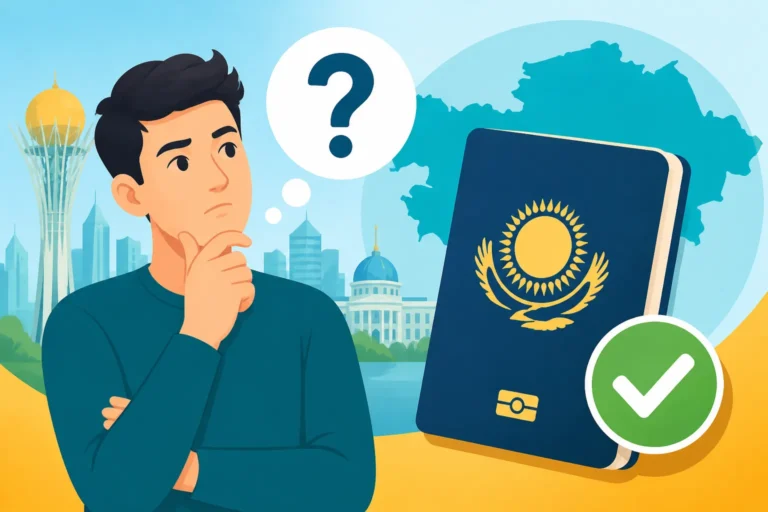
Can I Apply for Residence from Inside Kazakhstan?
Moving to Kazakhstan can feel like navigating a labyrinth, especially when you’re already on the ground, perhaps initially on a short-term visa, and suddenly realise you want to make it your longer-term home. The common question I hear from fellow expats is: "Can I apply for a residence permit from inside Kazakhstan?" This guide will clear up that confusion, walk you through the often-bureaucratic process, and give you the realistic, nitty-gritty details you need to successfully transition your status without having to pack your bags and leave the country.
The Short Answer: Yes, But It's Complicated (Welcome to Kazakhstan!)
So, can you apply for a residence permit while already living in Kazakhstan? Absolutely, yes, you can. However, like most administrative processes here, it’s rarely a simple, one-size-fits-all situation. The ability to apply from inside Kazakhstan largely hinges on your current visa status, your purpose for wanting residence, and whether you've already completed some fundamental first steps that are crucial for any foreigner living here. It's not like in some countries where you can just walk into an office and declare your new intentions. Kazakhstan has a specific, albeit sometimes convoluted, set of rules.
Initial Entry and Visa Status: Setting the Stage
Your journey begins the moment you step off the plane. The visa you arrived on, or your visa-free entry status, dictates a lot about your initial options. Many expats first enter Kazakhstan on a visa-free stay, which typically allows 30 days of continuous presence for citizens of certain countries. Others might arrive on a single-entry business or tourist visa. The crucial thing to understand is that none of these short-term statuses are designed for a seamless, in-country transition to a long-term residence permit without some strategic planning or, in many cases, a fundamental change in circumstances, such as securing employment or enrolling in a university.
For instance, if you entered on a 30-day visa-free stamp, you can't simply decide on day 29 that you want a work permit and expect to process it without issues. Your current legal status must align with the type of residence permit you're seeking. If you've secured a job offer from a Kazakhstani company, they will typically handle the work permit application, which is a prerequisite for your work-based residence permit. This usually means you’ll submit documents to the migration service through your employer, often while you are already in the country under your initial, shorter-term status. The key is to initiate the work permit process as soon as possible, ideally before your initial legal stay expires. If you need more information on this, our guide on How to Get a Work Visa and Residence Permit in Kazakhstan covers this in detail.
The Critical First Steps: IIN and Temporary Registration
Before you even think about applying for any form of residence permit from within Kazakhstan, there are two non-negotiable prerequisites that every foreigner, regardless of their long-term intentions, must complete. These are the Individual Identification Number (IIN) and temporary registration of your address. Skipping these steps is like trying to build a house without a foundation – it’ll come crashing down, and you’ll face headaches, fines, or worse, deportation.
- The Individual Identification Number (IIN): Think of your IIN as your Kazakhstani social security number or tax ID. You literally cannot do anything official without it – open a bank account, register a SIM card, receive salary, or, you guessed it, apply for any long-term residence. Getting your IIN is usually one of the very first things you do upon arrival. It involves a visit to a Public Service Centre (PSC), known as a "TSON" (pronounced 'tson'), with your passport and sometimes a translation. It's a fairly straightforward process, but can take a few days. You can find a comprehensive walkthrough in our post on How to Get an IIN (Individual Identification Number) in Kazakhstan.
- Temporary Registration of Your Address: This is another fundamental requirement. Within a few days (usually 3-5 business days) of your arrival in Kazakhstan, you must register your temporary address with the Migration Service. If you’re staying in a hotel, they often handle this automatically. If you’re renting an apartment, your landlord is legally obliged to register you. This is done via the eGov portal or through a local TSON, often requiring the landlord’s IIN and electronic signature. Failing to register your address is a common trap for new expats and can lead to significant fines or problems when you try to extend your stay or apply for residence. Trust me, you don't want to get caught without this. Our detailed guide, How to Register Your Arrival with the Migration Service in Kazakhstan, will help you navigate this.
These two steps are your absolute bedrock. Without a valid IIN and proof of current, legal temporary registration, any attempt to apply for a residence permit from inside Kazakhstan will be rejected immediately.
Navigating the In-Country Application Process
Once you have your IIN and your address is properly registered, you can start looking at the specific type of residence permit you need. The most common reasons for expats to seek residence in Kazakhstan are for work, study, family reunification, or increasingly, as a digital nomad. Each path has its own set of requirements and processes.
Understanding Your Residence Permit Options from Within
The type of residence permit you can apply for from inside Kazakhstan largely depends on your specific circumstances. Let's look at the most common ones:
- Work-Based Residence Permit: If you have a job offer from a Kazakhstani company, they will typically apply for a work permit on your behalf. Once the work permit is approved (which can take several weeks), you then use this to apply for your temporary residence permit (ВНЖ or vid na zhitelstvo). This is the most common route for expats. Your employer will usually guide you through this process, as they are often the ones sponsoring your stay. This involves collecting a lot of documents, translations, and fees.
- Study-Based Residence Permit: If you've been accepted into a Kazakhstani university, you can apply for a student visa and subsequently a residence permit. Your university's international office will be your primary point of contact and assistance here. They usually have a clear process for their international students.
- Family Reunification Residence Permit: If your spouse or immediate family member (e.g., parent, child) is a Kazakhstani citizen or already holds a permanent residence permit, you may apply for a family reunification permit. This involves proving your relationship with official documents, which often means marriage certificates or birth certificates, usually apostilled or legalised from your home country. Our article on How to Sponsor Your Spouse and Children for Residence in Kazakhstan explains this in detail.
- Neo Nomad (Digital Nomad) Visa: Kazakhstan recently introduced a "Neo Nomad" visa, which is essentially a type of residence permit for digital nomads. This is an exciting new pathway for freelancers and remote workers. While the initial application might require some preliminary steps from outside the country, subsequent renewals or transitions can often be handled internally, provided you meet the specific income and professional criteria. It's a game-changer for many, but still relatively new.
- Permanent Residence Permit (ПМЖ or postoyannoye mesto zhitelstva): This is a much more significant step and usually requires a longer period of legal residence in Kazakhstan (typically five years) under a temporary residence permit. Applying for permanent residence directly from a short-term visa is generally not possible unless you have very specific grounds, like being of Kazakh ethnicity (Oralman status) or being a highly sought-after professional or investor. For more information, read our guide on How to Apply for Permanent Residence in Kazakhstan.
Gathering Your Arsenal of Documents
This is where the real fun begins – the document gathering. No matter what type of residence permit you're applying for, the Kazakhstani authorities love documents. And they love them translated and notarized, or even apostilled. This isn't just a suggestion; it's a strict requirement.
Here's a general list of documents you'll likely need, though it varies based on your specific situation:
- Passport: Original and copies of all relevant pages, including your entry stamps and any current visa.
- IIN certificate: The official paper you received when you got your IIN.
- Temporary Registration confirmation: Proof that your address is registered.
- Application Form: Usually available at the Migration Service or via eGov.
- Photographs: Standard passport-sized photos, usually 3×4 cm.
- Medical Certificate: A health check confirming you don't have certain infectious diseases (HIV, TB, etc.). You'll get this from a designated medical facility in Kazakhstan.
- Narcological and Psychiatric Certificates: Proof you're not a drug addict or suffering from severe mental illness. Also obtained locally.
- Criminal Record Check: From your home country, and sometimes from Kazakhstan if you've been here for a significant period. This usually needs to be apostilled/legalised.
- Proof of Financial Solvency: Bank statements or employer letters proving you can support yourself.
- Proof of Accommodation: Rental contract, property ownership documents, or a letter from your host.
- Marriage Certificate/Birth Certificates: (For family reunification). These often need to be apostilled.
- Educational Diplomas/Work Contracts: (For study/work permits). Again, often requiring notarized translations and possibly apostille.
- State Fee Payment Receipt: You'll need to pay a fee, usually through a bank or directly at the TSON.
It's a long list, I know. It's also why many expats find this process frustrating. A lot of these documents, especially those from your home country, will need certified translations into Kazakh or Russian. Don't try to skimp on this; use official translation services. Our guide on Understanding Document and Translation Requirements for Kazakhstan Immigration can give you more specific details.
Engaging with the Migration Service and eGov
The actual application submission typically happens in one of two ways, or a combination of both:
- Through the Public Service Centre (TSON) / Migration Service: Many applications still require an in-person visit to a TSON or a regional Migration Service office. This is where you hand over your meticulously prepared stack of documents. Be prepared for queues, especially in larger cities like Almaty or Astana. It's also where you might encounter officials who speak little English, so bringing a Kazakh or Russian-speaking friend or a professional assistant can be invaluable.
- Via eGov Portal: Kazakhstan's eGov portal is a fantastic initiative aimed at digitising government services. For some services, you can initiate or even complete applications online. To use eGov effectively, you'll need your IIN and an Electronic Digital Signature (EDS), which can also be obtained at a TSON. While eGov streamlines some processes, many residence permit applications still require an in-person follow-up or submission of physical documents. The system is evolving, so it's always best to check the latest requirements. Our post, Filing Your Tax Return with the State Revenue Committee in Kazakhstan: The Complete Walkthrough (2027), touches on the eGov portal's use for other government interactions, which gives you a flavour of how it works.
Table: Common Residence Permit Types and Application Hubs
| Residence Permit Type | Primary Application Hub (Initial) | Key Requirement (Beyond IIN/Registration) | Typical Processing Time (Approx.) |
|---|---|---|---|
| Work Permit & Residence | Employer (via Migration Service/eGov) | Job Offer & Employer Sponsorship | 4-8 weeks (for permit), then 2-4 weeks (for residence) |
| Student Residence | University International Office | Admission Letter from University | 2-4 weeks |
| Family Reunification | Migration Service / TSON | Proof of relationship with sponsor | 4-8 weeks |
| Neo Nomad Visa | Via eGov Portal (with follow-up) | Stable Income from remote work (>2,500 USD/month) | 3-6 weeks |
| Permanent Residence | Migration Service / TSON | 5+ years of legal temporary residence | 6-12 months |
Note: Processing times are estimates and can vary significantly based on individual circumstances, completeness of documents, and workload of the Migration Service.
Common Hurdles and Expat Survival Tips
I won't sugarcoat it; navigating the Kazakhstani immigration system from within the country can be a test of patience. But armed with the right expectations and strategies, you can definitely make it through.
The Waiting Game and Managing Expectations
One of the biggest frustrations for expats here is the unpredictable timeline. The official processing times are often just a guideline. I've seen applications sail through in a few weeks, and others get stuck in bureaucratic limbo for months. The best approach is to prepare meticulously, submit everything correctly the first time, and then… wait. Follow up politely, but don't expect instant answers. This is where having a reliable local contact, whether it's your employer's HR, a university representative, or a trusted local friend, can make a huge difference. They can often inquire on your behalf and interpret nuances that might be lost in translation. For a general overview of expectations, our article on Understanding the Cost and Timeline of the Kazakhstan Residence Process might offer some reassurance.
Language Barriers and The Importance of Local Help
Unless you're fluent in Kazakh or Russian, the language barrier will be a significant hurdle. Most government officials, especially in TSONs or smaller Migration Service offices, will not speak English. This isn't out of malice, it's just a reality. That's why having someone who can translate for you, either a friend, colleague, or a professional immigration consultant, is absolutely essential. Don't rely on Google Translate for critical conversations; misunderstandings can have serious consequences for your application. If you’re planning your move, consider resources like Sirelo, which can help with the larger logistics of an international relocation, often providing resources or advice on local assistance. For a truly smooth relocation experience, thinking ahead about how you'll manage these communications is key.
Staying Compliant While You Wait
This is perhaps the most critical advice I can give you: do not let your current legal status expire while your residence permit application is pending. While in some countries, an "application pending" status might grant you an automatic extension, that's generally not the case in Kazakhstan. If your visa-free period or current visa is about to expire, and your residence permit hasn't been issued yet, you must explore options to extend your current stay or, in some cases, leave the country and re-enter. Overstaying your visa, even by a day, can lead to severe penalties, including fines, detention, and a ban from re-entering Kazakhstan for several years. This is serious business. Always keep a close eye on the expiry date of your current legal stay.
Consider obtaining private health insurance, like from Cigna Global, early on. Even if you're eventually covered by the local OSMS system (Compulsory Social Health Insurance) once you have your residence permit and employment, having international coverage during the interim period—when your legal status might be in flux and you're not yet fully integrated into the local system—is incredibly smart. It ensures you have access to quality medical care without worrying about the cost, especially if you get sick before you're fully covered. You can learn more about local options in How to Buy Private Health Insurance as a Newcomer in Kazakhstan.
Navigating the Kazakhstani immigration system can be daunting, but it's entirely doable with patience, meticulous preparation, and a willingness to understand the local bureaucratic quirks. Good luck, and welcome to Kazakhstan!
Disclaimer
The information provided in this guide is intended for general informational purposes only and does not constitute legal advice. While we strive to provide accurate and up-to-date information, immigration laws and procedures in Kazakhstan can change rapidly. Always consult with official government sources, the Migration Service of Kazakhstan, or a qualified immigration lawyer for advice tailored to your specific situation. Reliance on any information in this guide is solely at your own risk.