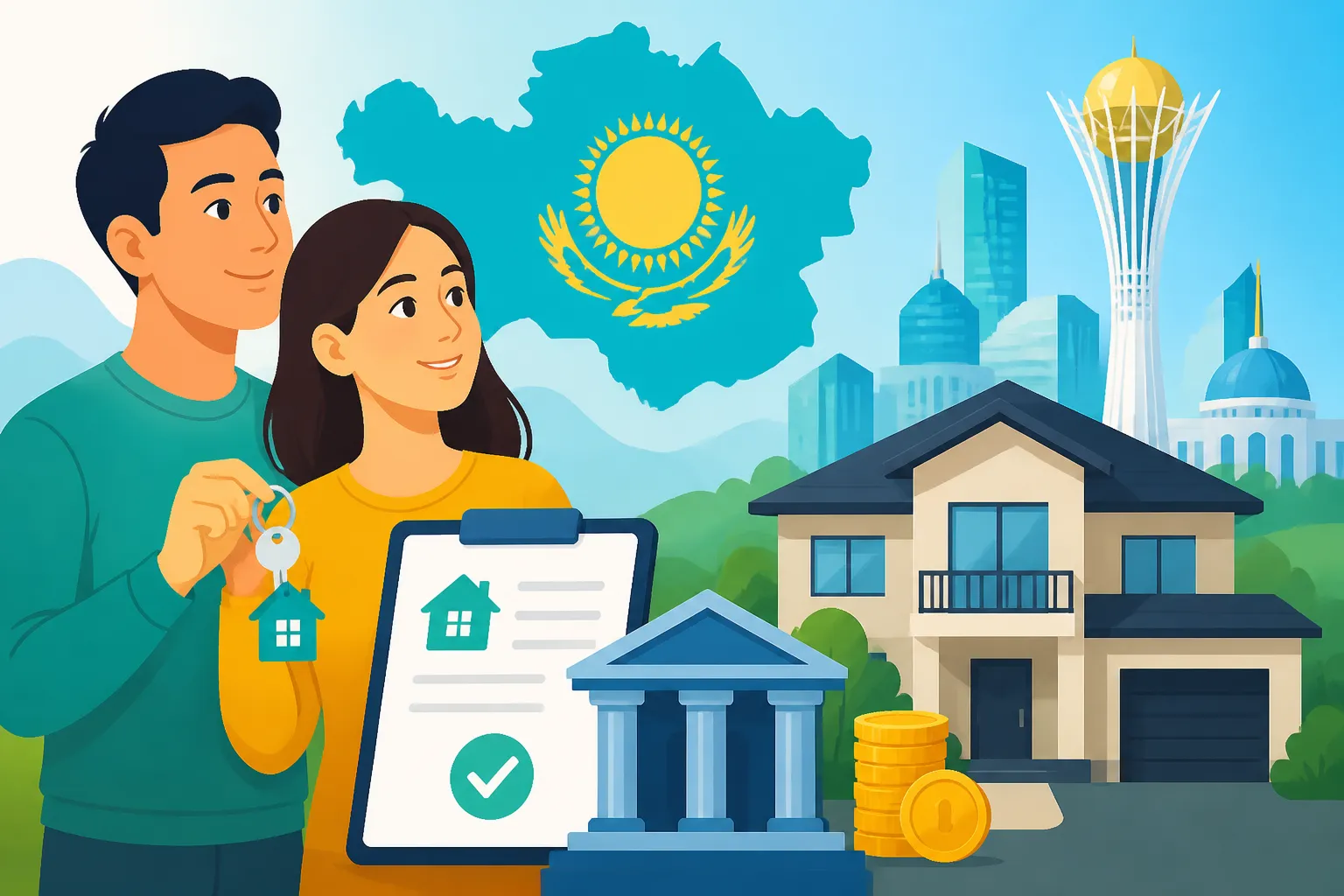
How to Get a Mortgage to Buy Property in Kazakhstan
Trying to secure a mortgage as a foreigner in Kazakhstan can feel like navigating a labyrinth blindfolded, with conflicting advice and seemingly insurmountable paperwork. It's a journey filled with unique challenges that often leave expats feeling overwhelmed and frustrated. This comprehensive guide is designed to cut through the confusion, offering a realistic, step-by-step roadmap to understanding and ultimately obtaining a mortgage to buy property in Kazakhstan.
Understanding the Kazakhstani Mortgage Landscape for Foreigners
When you first start thinking about buying property here, especially with a mortgage, it's easy to get lost in translation and local regulations. Many expats arrive with assumptions based on their home countries, only to find that Kazakhstan operates on its own unique rhythm, particularly when it comes to banking and property finance. It's not impossible, but it certainly requires a deep dive into the specifics.
The Reality of Foreigner Mortgage Access
Let's be blunt: securing a mortgage as a foreigner in Kazakhstan is not as straightforward as it might be for a local citizen, nor is it as easy as in some other expat-friendly countries. While the law doesn't explicitly forbid foreigners from obtaining mortgages, the practical realities of the banking system often present significant hurdles. Most Kazakhstani banks are naturally more comfortable lending to citizens who have an established financial history within the country, a consistent income from a local employer, and a deeper understanding of the local legal framework. This isn't to discourage you, but to set realistic expectations from the outset. You'll often find that the enthusiasm you might have for a property is quickly tempered by the cautious approach of local lenders.
The key here is that while the door isn't slammed shut, it's certainly not wide open. Many banks will assess foreign applicants on a case-by-case basis, often requiring a higher down payment or a shorter repayment term compared to what a Kazakhstani citizen might receive. This is largely due to perceived higher risk associated with foreign residency status, potential difficulties in debt collection if an expat leaves the country, and the general lack of a long-standing local credit history. Don't be surprised if your first few inquiries are met with polite but firm rejections, or requests for documents you never imagined you'd need. It’s part of the process and a frustration many of us have faced.
Initial Hurdles and Expectations
The first hurdle you'll likely face is simply getting a bank to seriously consider your application. You'll quickly learn that "no" often means "not in this exact situation" or "come back with more paperwork." A major factor influencing a bank's willingness to lend is your residency status and the stability of your income. Are you on a temporary work permit or do you hold a permanent residence permit? Are you employed by an international company with a long-term contract, or are you self-employed with less predictable income? These details matter immensely.
Another expectation to manage is the speed of the process. Things in Kazakhstan, especially bureaucratic or financial procedures, rarely move at lightning speed. What might take weeks in your home country could easily stretch into months here. Patience, perseverance, and a good local contact (like a reliable real estate agent or a lawyer) will be your most valuable assets. Be prepared for multiple visits to the bank, repeated requests for the same documents, and the occasional need for official translations and notarizations. Keeping your phone connected with a reliable local eSIM, perhaps from a provider like Airalo, will be crucial for all the calls and messages you'll be exchanging with banks and agents.
Types of Lenders and Their Approach to Expats
When it comes to banks, Kazakhstan has a few major players that dominate the financial landscape. Historically, Halyk Bank and Kaspi Bank have been the most prominent, alongside others like Jusan Bank and ForteBank. Each has its own internal policies and appetite for foreign mortgage applicants. You might find that one bank is more open to the idea than another, depending on their current lending strategies and risk assessment models.
Halyk Bank, being one of the largest and oldest, might have more established protocols for dealing with foreign clients, but they also tend to be quite conservative. Kaspi Bank, known for its innovative digital services, might offer more streamlined processes for general banking, but their mortgage products for non-citizens might be limited or require very strong local ties. It's essential to research each bank individually and, if possible, speak directly with their mortgage specialists. Don't just rely on information from their websites, as these often cater primarily to Kazakhstani citizens. Remember, the key is finding a bank that is willing to engage, and then understanding their specific conditions. For a broader perspective, you might want to look into The Expat Guide to Opening a Bank Account in Kazakhstan and How to Choose the Best Bank for Expats in Kazakhstan to get a feel for the banking landscape here.
Eligibility Criteria and Documentation for Expats
Now that we've set the stage, let's get into the nitty-gritty of what you'll actually need to stand a chance of securing a mortgage. This is where the frustration often boils over, as the requirements can seem arbitrary or excessive, but each piece serves a purpose in the bank's risk assessment.
Residence Status and IIN Requirements
First and foremost, your legal status in Kazakhstan is paramount. Banks are highly unlikely to consider you for a mortgage if you are on a short-term tourist visa. Generally, you will need to hold at least a temporary residence permit (ВНЖ – Vid na Zhitelstvo) for an extended period, or ideally, a permanent residence permit. The longer and more stable your residency, the better your chances. This demonstrates your commitment to living and working in Kazakhstan, which significantly reduces the perceived risk for the lender. Without a solid foundation of residency, banks will simply not proceed.
Alongside your residence permit, an Individual Identification Number (IIN) is absolutely non-negotiable. This is your personal tax ID and is used for virtually all official transactions, including banking, employment, and property registration. If you haven't obtained one yet, make it your priority. It's one of those foundational documents that everything else hinges on. You can learn more about this crucial step in How to Get an IIN Individual Identification Number in Kazakhstan. Your IIN links you to the country's official systems, allowing banks to verify your identity and, crucially, your financial standing within Kazakhstan.
Income Verification and Employment Stability
This is another critical area where expats often face difficulties. Banks want to see a stable, verifiable income that is regularly paid into a Kazakhstani bank account. Ideally, they'll want to see a long-term employment contract with a reputable company operating in Kazakhstan, demonstrating your continued ability to make mortgage payments. If you're employed by a local branch of an international company, that's often seen as a plus.
Be prepared to provide:
- Official employment certificate: Stating your position, salary, and length of employment. This should be in Kazakh or Russian, with an official translation if needed.
- Bank statements: Typically for the last 6-12 months, showing consistent salary deposits into your Kazakhstani account.
- Tax declarations: While Kazakhstan has a flat 10% income tax, demonstrating that you've been a compliant taxpayer is important.
- Proof of other income or assets: If you have additional income streams or significant savings, these can strengthen your application, but they need to be well-documented and preferably held within Kazakhstan.
If you are self-employed or a freelancer, this path becomes even trickier. Banks prefer the certainty of a fixed salary from an employer. For self-employed individuals, you might need to show several years of consistent, high income, officially registered business activity in Kazakhstan, and robust tax filings. The bank's primary concern is repayment capacity, and for foreigners, they need an ironclad case.
Essential Documents for Your Application
The list of documents can be extensive and will vary slightly between banks, but here's a general compilation of what you should prepare:
- Passport: Original and notarized copy.
- Residence Permit: Original and notarized copy, demonstrating your legal right to reside in Kazakhstan.
- IIN certificate: Proof of your Individual Identification Number.
- Marriage Certificate (if applicable): Especially if applying jointly with a spouse.
- Proof of income: As detailed above (employment contract, salary certificates, bank statements, tax returns).
- Property valuation report: Once you've identified a property, the bank will require an independent valuation.
- Property title documents: These confirm the legal ownership and status of the property you intend to buy.
- Proof of down payment: Evidence that you have the funds for the initial payment, usually a bank statement.
- Credit history report: While local credit history might be limited, some banks may request a report from your home country, translated and apostilled.
It's a lot, I know. My advice is to gather everything you can think of, have it translated and notarized by a certified translator in Kazakhstan, and keep multiple copies. The bank will often ask for something you've already provided, so being meticulously organized will save you countless headaches and repeat trips. This level of detail is also crucial when you consider How to Complete the Property Purchase and Registration Process in Kazakhstan.
Navigating the Application Process: Step-by-Step
Once you have your ducks in a row concerning documents, the actual application process begins. This isn't just about handing over papers; it's a strategic dance with the bank, requiring communication, follow-up, and sometimes, a little bit of gentle persistence.
Finding the Right Bank and Loan Officer
This is perhaps the most crucial initial step for an expat. As mentioned earlier, not all banks treat foreign applicants equally. It's not enough to just walk into the nearest branch of a big bank. You need to actively seek out banks that have experience with foreign clients or, even better, have a dedicated international banking department. Sometimes, smaller, more agile banks might be more willing to work with unique cases, though this isn't always a guarantee.
Your best bet is to start with the banks where you already have an existing relationship, perhaps where you have your salary account or significant savings. They might be more inclined to trust you as an existing customer. When you approach a bank, ask specifically for a mortgage specialist or a loan officer who deals with non-citizens or complex applications. Try to establish a good rapport; this person will be your guide through the entire process. A knowledgeable and sympathetic loan officer can make all the difference, helping you navigate the internal requirements and advocate for your case. Don't be afraid to visit multiple banks and compare their initial willingness and potential terms, rather than settling for the first 'maybe' you get.
The Pre-Approval and Property Valuation Stages
Before a bank gives you a definitive 'yes,' they'll usually go through a pre-approval process. This involves a preliminary review of your financial situation – your income, employment stability, and initial documents – to determine if you meet their basic lending criteria and what loan amount you might qualify for. A pre-approval is a strong indication, but it's not a final offer. It gives you a budget to work with when looking at properties.
Once you have a pre-approval, and you've found a property you're interested in, the next crucial step is the property valuation. The bank will insist on their own independent appraisal of the property to ensure its market value aligns with the loan amount you're requesting. This valuation is vital because it determines the loan-to-value (LTV) ratio, which is the percentage of the property's value that the bank is willing to finance. If the valuation comes in lower than the agreed sale price, you'll either need to negotiate a lower price with the seller or cover the difference out of pocket. This is a standard part of buying property, and you can delve deeper into it by reading Understanding Property Valuation and Mortgages in Kazakhstan.
From Application Submission to Loan Disbursement
After pre-approval and a satisfactory property valuation, you'll officially submit your full mortgage application with all the required documentation. This is where your meticulous preparation from the earlier stages truly pays off. The bank's credit committee will then review everything in detail. This stage can involve further questions, requests for additional clarifications, or even interviews. Be patient, responsive, and provide information promptly.
If your application is approved, congratulations! The next steps involve signing a mountain of paperwork, including the mortgage agreement, the property purchase agreement, and any associated insurance policies. You'll then need to register the property ownership in your name, with the bank typically holding a lien on the property until the loan is fully repaid. Finally, the loan amount will be disbursed to the seller. This entire process, from initial inquiry to money changing hands, can take several weeks or even months. Having a clear understanding of the full scope of property ownership in Kazakhstan can be found in Understanding Property Ownership and the Market in Kazakhstan (2027).
Key Mortgage Products and Terms in Kazakhstan
Understanding the types of mortgage products available and their associated terms is crucial to making an informed decision. While options might be more limited for foreigners, knowing what to expect will help you negotiate and choose wisely.
Interest Rates, Loan-to-Value, and Repayment Periods
Kazakhstani mortgage interest rates, particularly for foreign applicants, can vary significantly. They are influenced by the National Bank's base rate, the bank's internal policies, and your perceived risk profile. Generally, don't expect the ultra-low rates you might see in some Western economies. Rates can be fixed for a certain period or variable. Fixed rates offer stability but might be slightly higher initially, while variable rates can fluctuate with the market. For foreigners, banks might offer slightly higher rates or require more stringent conditions to offset the perceived risk.
The Loan-to-Value (LTV) ratio is the percentage of the property's value that the bank is willing to finance. For Kazakhstani citizens, LTVs can go up to 80-90% for certain programs. For foreigners, however, expect to make a larger down payment. Banks might only offer LTVs of 50-70%, meaning you'll need to contribute 30-50% of the property's value upfront. This is a significant consideration, especially when looking at properties in cities like Almaty, where prices can be considerable. You might find more details on property costs in How Much Does It Cost to Buy an Apartment in Almaty?.
Repayment periods typically range from 5 to 20 years, though longer terms might be available for younger, more stable applicants. Banks prefer shorter terms for foreigners, again, to minimize their exposure. The shorter the term, the higher your monthly repayments will be, so it's a balancing act between affordability and the bank's requirements.
Associated Costs: Fees, Insurance, and Taxes
Beyond the principal and interest of your mortgage, there are several other costs you'll need to factor into your budget:
- Bank Fees: These can include application fees, loan origination fees, and other administrative charges. Always ask for a full breakdown of all bank-related fees upfront.
- Property Valuation Fee: You will usually be responsible for paying for the independent appraisal of the property.
- Notary Fees: For the official registration of the purchase agreement and other documents. These are typically a percentage of the property value.
- State Duty/Registration Fees: For registering the change of ownership and the mortgage lien with the public registry.
- Insurance: Banks will almost always require you to take out property insurance to protect their investment against damage (e.g., fire, natural disaster). They might also require life insurance or disability insurance for the borrower, especially for larger loan amounts, to ensure the loan can be repaid in unforeseen circumstances.
- Legal Fees: It's highly advisable to engage a local lawyer to review all contracts and ensure your interests are protected throughout the buying process.
Don't underestimate these additional costs; they can add up to a significant sum, sometimes 2-5% or more of the property's value, on top of your down payment. You can find more comprehensive details on the financial obligations of property ownership in Understanding Property Tax and Land Tax for Homeowners in Kazakhstan.
Government Programs and Subsidies
Kazakhstan has various government programs aimed at making housing more affordable for its citizens, such as "7-20-25" or "Baqytty Otbasy." These programs offer preferential interest rates and more generous LTVs. However, it's crucial to understand that most, if not all, of these government-backed programs are exclusively for Kazakhstani citizens.
As a foreigner, you will almost certainly not be eligible for these subsidized programs. Your mortgage options will be limited to the standard commercial products offered by banks. While this means you won't benefit from lower rates or easier terms, it's an important reality check to avoid disappointment. Don't waste time trying to apply for programs that are clearly not designed for expats. Focus your energy on finding a bank willing to work with your foreign status on their commercial terms.
Challenges and Considerations for Foreign Buyers
Even with all the right documents and a solid financial standing, being a foreign buyer in Kazakhstan comes with its own set of unique challenges. These aren't necessarily deal-breakers, but they are points you need to be acutely aware of and prepared for.
Language Barriers and Bureaucracy
This is perhaps the most significant challenge you'll face. While many younger Kazakhstani professionals, especially in major cities like Almaty and Astana, speak English, the deeper you get into administrative and banking processes, the more likely you are to encounter Russian or Kazakh as the primary languages. Legal documents, bank forms, and official communications will almost always be in one of the local languages. Relying on Google Translate or well-meaning but non-professional friends can lead to costly misunderstandings.
You will absolutely need professional, certified translation services for all your documents. Even more importantly, consider hiring an interpreter to accompany you to bank meetings and signing appointments. A good interpreter can not only translate but also help explain nuances of the local legal and financial jargon that might be missed otherwise. The bureaucracy itself is another beast. Expect multiple layers of approvals, requests for documents you thought you already submitted, and procedures that seem to defy logic. This is where patience, as I mentioned, becomes truly a virtue. For smoother transitions during this process, especially when needing to coordinate with various offices, maintaining good mobile connectivity is key. Services like Airalo can ensure you have reliable internet access to manage appointments and translations on the go.
Credit History and Financial Track Record
One of the biggest hurdles for expats is the lack of a local credit history. Banks in Kazakhstan, like anywhere else, rely heavily on a borrower's credit score and financial track record to assess risk. If you've only been in Kazakhstan for a few years, or if your income was previously deposited into an overseas account, you simply won't have a robust credit profile within the Kazakhstani system.
Some banks might accept a credit report from your home country, but this often requires official translation, apostille, and then interpretation by the Kazakhstani bank, which can be a slow and cumbersome process. Even then, it might not hold the same weight as a local credit history. The best way to build a local financial track record is to consistently use your Kazakhstani bank accounts, pay bills on time, and perhaps even secure a local credit card (if possible) and use it responsibly. This takes time, which is something many expats on shorter assignments might not have.
The Importance of Professional Advice
Given the complexities, trying to navigate the mortgage and property purchase process completely on your own as a foreigner is not recommended. Professional advice is not just helpful; it's practically essential.
- Legal Counsel: Hire a reputable local lawyer specializing in property law and foreign investment. They can review all contracts, ensure due diligence on the property, and protect your legal interests. They can also explain the intricacies of What Are the Rules for Foreigners Buying Property in Kazakhstan? to ensure you're fully compliant.
- Real Estate Agent: A good real estate agent, especially one with experience working with expats, can guide you through the property search, help negotiate prices, and sometimes even act as an intermediary with banks. However, remember their primary allegiance is often to the seller, so always verify information independently.
- Financial Advisor/Broker: While less common for expats seeking mortgages in Kazakhstan, some financial advisors might have connections with banks or understand which institutions are more expat-friendly.
Investing in good professional advice upfront can save you significant time, money, and potential legal headaches down the line. It's a cost that many seasoned expats would advise you not to skimp on. And once you've secured your property and are ready to move, considering reliable international movers is the next logical step. Companies like Sirelo can assist in finding reputable services to bring your belongings to your new home in Kazakhstan.
Conclusion
Obtaining a mortgage to buy property in Kazakhstan as an expat is a journey that demands patience, meticulous preparation, and an understanding of the local financial landscape. While the path may be fraught with bureaucratic hurdles and strict eligibility criteria, it's not an impossible feat. By focusing on establishing a strong local financial presence, gathering all necessary documentation, seeking out the right banking partners, and most importantly, leaning on professional legal and real estate advice, you can navigate this process successfully. Remember to manage your expectations, embrace the local pace, and celebrate each small victory along the way. Good luck, and welcome to the exciting world of property ownership in Kazakhstan!
Disclaimer
The information provided in this guide is for general informational purposes only and does not constitute financial, legal, or professional advice. While we strive to provide accurate and up-to-date information, regulations and policies in Kazakhstan can change rapidly. It is essential to consult with qualified legal, financial, and real estate professionals in Kazakhstan for advice tailored to your specific situation. Reliance on any information provided in this guide is solely at your own risk.