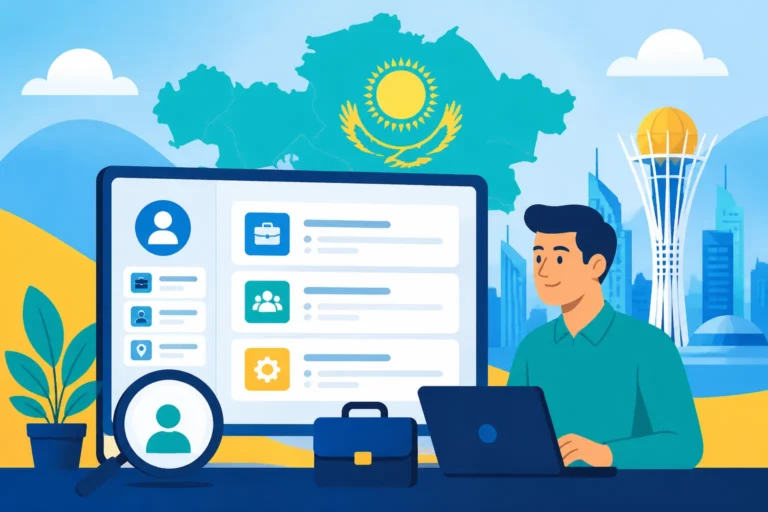
How to Get Your Foreign Qualification Recognised in Kazakhstan
Moving to a new country like Kazakhstan is an adventure, isn't it? You arrive full of optimism, ready to dive into your professional life, only to hit a wall when you realize that hard-earned degree or vocational certificate from back home might not be immediately recognized here. It’s a frustrating hurdle. Many expats grapple with this exact issue. This comprehensive guide is here to demystify the process of getting your foreign qualifications officially recognized in Kazakhstan, helping you avoid common pitfalls and smooth your path to a fulfilling career.
Why is Qualification Recognition So Crucial in Kazakhstan?
When you're fresh off the plane, or even if you've been here a little while, the idea of having your professional qualifications scrutinized again can feel daunting. You've already proven yourself, right? But in Kazakhstan, much like in many other countries, there are very practical and legal reasons why your foreign degree or professional certificate needs to go through a formal recognition process. It's not about doubting your abilities; it's about ensuring standards and fitting into the local framework.
Navigating the Job Market as a Foreign Professional
Imagine you've spotted your dream job on a local Kazakhstani job board, perfected your CV for the Kazakhstani Job Market, and even aced the interview. You're feeling confident. Then, the employer asks for proof that your qualifications are valid in Kazakhstan. If you haven't gone through the recognition process, this can be a huge roadblock. Many Kazakhstani companies, especially larger national firms or those operating in regulated industries, are legally obligated to hire individuals whose qualifications are officially recognized within the country's education system. Without this stamp of approval, your fantastic resume might just end up in the 'no' pile, regardless of your experience.
It’s not just about large corporations, either. Even if you're looking to register as an individual entrepreneur (IP) in Kazakhstan to offer professional services independently, having your educational background recognized can bolster your credibility and client trust. It shows you've taken the necessary steps to integrate into the local professional landscape. This formal recognition becomes a key differentiator, especially in a competitive market. Furthermore, for those looking at the broader picture of working in Kazakhstan as a foreigner, understanding this foundational step is paramount. It’s not a mere formality; it's a gatekeeper to many opportunities and a testament to your commitment to working within the country's system.
Legal Requirements and Professional Licences
Beyond simply finding a job, there are specific legal frameworks that mandate qualification recognition, particularly for regulated professions. Think about fields like medicine, law, engineering, or education. In Kazakhstan, you can't just walk into a hospital and start practicing as a doctor, or teach in a state school, or design a bridge without your credentials being formally evaluated and recognized by the relevant authorities. These professions often require specific professional licences issued by Kazakhstani regulatory bodies. And guess what the first step to obtaining those licences usually is? Yep, official recognition of your foreign degree or diploma.
The State Revenue Committee and other government bodies might also require proof of recognized qualifications for certain tax benefits or even for specific types of work permits and employer sponsorship in Kazakhstan. If your profession is regulated, you'll likely deal with not only the initial academic recognition but also a secondary process of professional accreditation. This two-tier system ensures that professionals not only have the foundational knowledge but also meet the practical and ethical standards set by Kazakhstani law. It's designed to protect the public and maintain quality standards, even if it adds a layer of bureaucracy to your personal journey. For instance, a foreign-trained medical doctor will need to get their medical degree recognized by the Ministry of Health or its designated body, and then potentially pass local licensing exams or complete supplementary training to be eligible to practice. This is a far cry from a simple translation of your diploma; it's a full assessment of equivalence.
Understanding the Kazakhstani Recognition Process
Okay, so we know why it's important. Now, let's talk about how it actually works. The system can seem a bit convoluted from the outside, but once you understand the key players and stages, it becomes much clearer. The main body responsible for this process is the Centre for the Bologna Process and Academic Mobility, often abbreviated as CBPA. They are your primary point of contact for getting your academic qualifications recognized.
The Role of the Centre for the Bologna Process and Academic Mobility CBPA
The Centre for the Bologna Process and Academic Mobility (CBPA), under the Ministry of Science and Higher Education of the Republic of Kazakhstan, is the central authority for recognizing foreign educational documents. Their mission is to facilitate academic mobility and ensure that qualifications obtained abroad are fairly assessed and integrated into Kazakhstan's education and professional systems. They operate under the principles of the Bologna Process, which aims to standardize higher education qualifications across Europe and beyond, making comparisons easier.
When you submit your documents to the CBPA, they essentially act as the gatekeepers. They are responsible for verifying the authenticity of your documents, determining the academic equivalence of your degree or diploma to Kazakhstani standards, and issuing a certificate of recognition. This certificate is the golden ticket you’ll present to potential employers, universities (if you plan further study), or professional licensing bodies. Without their stamp of approval, your foreign qualification often carries little weight in the official Kazakhstani landscape. It's worth noting that the CBPA often updates its procedures, so checking their official website for the latest requirements before starting your application is always a good idea. They are generally responsive, but patience is a virtue when dealing with any bureaucratic process, especially one involving cross-border academic verification.
Key Stages of Document Verification and Equivalence
The recognition process with the CBPA isn't just about handing over a few papers. It's a multi-stage process that involves rigorous verification and evaluation.
Firstly, there's the authenticity check. The CBPA needs to ensure that your diplomas and transcripts are legitimate and were issued by accredited educational institutions. This often involves direct communication with your awarding institution back home. This stage can sometimes cause delays, especially if your university is slow to respond or if there are language barriers in their communication.
Secondly, the CBPA performs an equivalence assessment. This is where they compare your educational program, curriculum, and the level of your qualification to the corresponding Kazakhstani educational standards. For example, if you have a Bachelor's degree from a university in Canada, they will assess if its scope, duration, and academic rigor are equivalent to a Kazakhstani Bachelor's degree. They look at things like credit hours, course content, and the overall structure of your study. This isn't always a one-to-one comparison; sometimes, a foreign Master's degree might be deemed equivalent to a Kazakhstani Bachelor's if there are significant differences in the educational systems.
Finally, upon successful completion of these stages, the CBPA issues the official Certificate of Recognition. This document will state the equivalent Kazakhstani qualification level and will be crucial for your future endeavors in Kazakhstan, whether it's applying for a job, continuing your studies, or seeking a professional licence. Keep in mind that for some specific professions, like medical practice, this academic recognition is just the first step, and further professional licensing might be required from the Ministry of Health or other specialized bodies. The entire process, from submission to receiving the certificate, can take anywhere from a few weeks to several months, depending on the complexity of your case and the responsiveness of your original institution.
Essential Documents You'll Need for Recognition
Alright, let's talk about the paperwork. This is often where expats feel the most dread, and honestly, it can be a bit of a bureaucratic maze. But being prepared with the right documents from the outset will save you a world of headaches and potential delays. Think of it as gathering your arsenal before a big battle – you want every piece in place.
Academic Transcripts and Diplomas
These are the absolute core of your application. You'll need your original diploma or certificate of higher education, showing the degree awarded and the institution that issued it. Don't just bring the pretty ceremonial one; make sure it's the official, legally recognized document. In addition to the diploma itself, you'll need the academic transcript (or academic record) which details all the courses you took, the grades you received, the credit hours, and the duration of your study. This transcript is vital because it allows the CBPA to understand the content and depth of your education.
Crucially, these documents must be apostilled or legalized. This is a step often overlooked by newcomers. An "apostille" is a certificate issued by a country that is party to the Hague Apostille Convention, authenticating the origin of a public document. If your home country is not part of this convention, you'll likely need to go through a "legalization" process, which involves authentication by your country's foreign affairs ministry and then by the Kazakhstani embassy or consulate in your home country. This can be a lengthy and costly process, so start it well in advance. Without proper apostille or legalization, the CBPA will not accept your documents, and you’ll be sent back to square one.
Personal Identification and Supporting Papers
Alongside your academic records, you'll need to provide documents that confirm your identity and legal status in Kazakhstan. This typically includes:
- Your Passport: A valid passport with sufficient validity is a must. You’ll need copies of all relevant pages, including your personal data page, visa page (if applicable), and entry stamps.
- Your IIN (Individual Identification Number): This is absolutely non-negotiable. The IIN is Kazakhstan's equivalent of a national identification number, and you'll need it for almost all official transactions, including this one. If you don't have one yet, make sure you apply for it as soon as you arrive, as it’s essential for things like opening a bank account and registering with the tax authorities.
- Your Residence Permit (if applicable): If you already have a temporary or permanent residence permit, include a copy. This shows your legal status in the country and can sometimes expedite processes slightly, though not always.
- Application Form: The CBPA will have a specific application form that you need to fill out completely and accurately. Pay close attention to detail here, as any errors can cause delays.
- Proof of Payment: There will be a state fee for the recognition service. You'll need to provide the official receipt or payment confirmation.
It's a good practice to always have both original documents and several sets of photocopies ready. Some institutions might require originals for verification, but many will be content with notarized copies. Always ask beforehand to be sure.
Official Translations and Notarization
This is another critical stage where mistakes can easily be made. All foreign documents that are not in Kazakh or Russian must be translated into one of these official languages. And it’s not just any translation. These translations must be done by a certified translator in Kazakhstan and then notarized by a Kazakhstani public notary. This step is crucial because it legally validates that the translation is accurate and true to the original document.
Some expats are tempted to cut corners here by using online translation services or friends who are fluent in the language. Big mistake! The CBPA will almost certainly reject such translations. You need to use official, registered translators and then get their work stamped and signed by a notary public. This guarantees the legal integrity of your translated documents. Sometimes, the notary might also require that the original document itself has been apostilled or legalized before they will notarize its translation, further emphasizing the importance of getting that apostille/legalization done early. Finding a reputable translation agency in major cities like Almaty or Astana is relatively straightforward, and they often offer notarization services as part of a package. Just be prepared for the cost, as official translations and notarization can add up, especially if you have numerous documents.
Step-by-Step Guide to Applying for Qualification Recognition
Now that you have your documents in order (hopefully apostilled and translated!), it's time to tackle the application itself. This process, while seemingly bureaucratic, is quite structured once you know the steps. Navigating the Kazakhstani healthcare system or understanding mandatory health insurance contributions might seem complex, but this process, when broken down, is manageable.
Initial Application and Fee Payment
Your journey officially begins with the initial application. The Centre for the Bologna Process and Academic Mobility (CBPA) typically has an online portal or a designated office where you can submit your application. It’s always best to check their official website for the most current information regarding submission methods, forms, and required documents, as these can sometimes change. You’ll need to fill out an application form with all your personal details, information about your educational institution, and the qualification you seek to recognize. Be meticulous here; any inconsistencies could lead to delays or requests for clarification.
Along with your application, you'll need to pay the state duty or service fee for the recognition process. The exact amount can vary, so consult the CBPA's official resources or contact them directly. This fee is non-refundable, so ensure all your documents are pristine before you commit. Payment is usually made through a bank transfer to a specific government account, and you'll need to attach the original payment receipt to your application. Make sure the receipt clearly shows your name or IIN, linking it directly to your application. This step is a prerequisite; without proof of payment, your application won’t even be considered. Think of it as buying your ticket for entry – you can't get in without it!
Document Submission and Verification
Once your application form is complete and the fee is paid, it’s time to submit your carefully prepared package of documents. This will include:
- The completed application form.
- Originals and notarized copies of your academic documents (diploma, transcript), apostilled or legalized.
- Originals and notarized copies of your passport and IIN.
- Proof of fee payment.
- Any other supporting documents requested by the CBPA.
You'll typically submit these documents in person at their office, or in some cases, via registered mail. When submitting in person, you might receive a receipt or a tracking number, which is invaluable for monitoring the status of your application. The CBPA will then begin the process of verifying the authenticity of your documents. As mentioned earlier, this often involves contacting your original educational institution directly. This is the stage where communication gaps or slow responses from your previous university can cause significant slowdowns. It's not uncommon for expats to gently nudge their home institutions to respond to verification requests from the CBPA. Keep copies of everything you submit, and maintain a log of dates and names if you communicate with the CBPA staff.
Awaiting the Expert Commission's Decision
After the CBPA has verified the authenticity of your documents and gathered all necessary information, your application will be forwarded to an expert commission for evaluation. This commission reviews your curriculum, the duration of your studies, the content of your courses, and the overall academic rigor, comparing it against Kazakhstani educational standards. They are looking to determine the academic equivalence of your foreign qualification.
This stage is primarily analytical and requires patience. There's usually little you can do during this period except wait. The timeline for a decision can vary significantly, from a few weeks to several months, depending on the complexity of your qualification, the backlog of applications, and the clarity of your submitted documents. Once the expert commission makes its decision, the CBPA will notify you. If successful, you will be issued an official Certificate of Recognition, stating the equivalent Kazakhstani qualification. This certificate is the tangible outcome of all your efforts and the document you will use to prove your qualification in Kazakhstan. If your qualification is not fully recognized, or if there are conditions attached, the notification will usually explain the reasons and provide guidance on potential next steps, which could include further examinations or supplementary courses.
Common Challenges and Pitfalls for Expats
Let's be real, no bureaucratic process is entirely smooth, especially when you're dealing with different legal systems, languages, and cultural norms. Expats in Kazakhstan often face a unique set of challenges when trying to get their qualifications recognized. Being aware of these common pitfalls can help you prepare and mitigate their impact.
Dealing with Document Discrepancies and Translation Issues
One of the most frequent headaches arises from subtle differences in document standards or errors in translation. For instance, what your home country considers an official academic transcript might not contain all the details that the CBPA typically expects, such as a detailed breakdown of credit hours per course or a clear description of the grading system. If the information is incomplete, the CBPA will request additional documents, leading to frustrating delays. Furthermore, any slight discrepancy between the original document and its translation, or even an unofficial-looking translation, can be a reason for rejection. There are reports of applications being bounced back because a single letter was mistranslated or a stamp wasn't clear enough.
Another common issue is when the format of your degree doesn't perfectly align with the Kazakhstani system. For example, some vocational qualifications from certain countries might not have a direct equivalent in Kazakhstan's higher education structure, leading to challenges in finding a suitable "match." To avoid this, triple-check every detail of your documents against the CBPA's requirements. If possible, consider getting a pre-assessment or consulting with a local legal expert who specializes in immigration and education matters before you submit, to catch any potential red flags early. Remember, the initial apostille and notarized translations are your foundation; any weakness there can crumble the entire application.
Navigating Bureaucracy and Communication Barriers
Ah, bureaucracy – the bane of every expat's existence! While the CBPA aims for efficiency, the process can still feel slow and opaque at times. The biggest challenge here often stems from communication. Not all staff members may be fluent in English, and while official forms and some online resources might be available in English, direct communication, especially regarding complex queries, often defaults to Kazakh or Russian. This can be incredibly frustrating when you're trying to clarify a specific requirement or get an update on your application.
Compounding this, the expectation of "active follow-up" might differ from what you're used to. While you'll get a tracking number, sometimes proactive calls or in-person visits (with a Russian/Kazakh-speaking friend or translator) can be necessary to move things along or get clearer answers. Be prepared for multiple visits or phone calls, and always maintain a polite but persistent approach. It’s also wise to keep a detailed record of every interaction, including dates, names of individuals you spoke with, and summaries of the conversations. This documentation can be incredibly useful if you need to escalate an issue or refer back to a previous discussion. Understanding the nuances of how to get a work permit and employer sponsorship in Kazakhstan or even Understanding the rules for foreign workers in Kazakhstan often involves similar bureaucratic hurdles.
What to Do If Your Qualification is Not Fully Recognised
It’s a tough pill to swallow, but sometimes, despite all your efforts, your qualification might not be fully recognized, or it might be recognized at a lower level than you expected. This doesn't necessarily mean your degree is worthless; it simply means it doesn't align perfectly with Kazakhstani standards. If this happens, don't despair immediately!
The CBPA's decision letter should outline the reasons for non-recognition or partial recognition. This is crucial information. It might suggest that you need to:
- Complete supplementary courses: You might be required to take additional courses at a Kazakhstani university to bridge the gap in your education.
- Pass specific examinations: For some professions, you might need to pass local qualifying exams.
- Gain practical experience: In some cases, a period of supervised professional practice might be recommended to achieve full equivalence.
You also have the right to appeal the decision. If you believe there has been an error in the evaluation, you can submit an appeal, usually within a specified timeframe, providing additional arguments or documentation. At this stage, it can be extremely beneficial to consult with a local education consultant or a lawyer who understands the nuances of Kazakhstani educational law and appeals processes. They can help you understand your options and formulate a strong appeal. It's a setback, yes, but often not a dead end.
Special Cases: Professional Licences and Regulated Professions
Beyond the general academic recognition, certain professions in Kazakhstan require an additional layer of approval: a professional licence. This is particularly true for fields where public safety, health, or well-being is at stake. Academic recognition is just the first step; getting licensed to practice is the next, often more complex, hurdle.
Healthcare Professionals: Doctors, Nurses, and Dentists
For healthcare professionals, the path is significantly more regulated. If you're a doctor, nurse, dentist, or other medical specialist trained abroad, your foreign qualification will need to be recognized by the Ministry of Health of the Republic of Kazakhstan, or its authorized bodies, in addition to the academic recognition by the CBPA. This is not a quick process, and it often involves several stages:
- Academic Recognition: First, your medical degree, diploma, or nursing certificate must go through the standard CBPA recognition process to determine its academic equivalence.
- Professional Assessment: Once academically recognized, your professional credentials will be assessed by the relevant medical boards or committees under the Ministry of Health. They will evaluate your curriculum, practical training, and specialization against Kazakhstani standards for medical practice.
- Examinations: It's highly probable you will be required to pass local qualifying examinations in Kazakh or Russian to demonstrate proficiency in medical knowledge and the Kazakhstani healthcare system. This could include theoretical and practical components.
- Internship/Residency: Depending on your country of origin and the assessment, you might need to complete an additional internship or residency period in a Kazakhstani medical institution to gain local experience and comply with practical training requirements.
- Licensing: Only after successfully completing all these steps can you apply for a professional licence to practice in Kazakhstan.
The specific requirements can vary based on your specialty and the country where you obtained your qualifications. It's an arduous journey, but a necessary one to ensure patient safety and quality of care. For medical professionals, networking with international medical communities in Almaty or Astana can provide invaluable advice and support through this intricate process. For a broader view, understanding how Kazakhstan's health system works: OSMS and private care explained or The Complete Guide to Healthcare in Kazakhstan for Expats (2026) might also be beneficial for those entering the medical field.
Engineers, Architects, and Legal Practitioners
These professions also fall under stringent regulatory frameworks in Kazakhstan.
- Engineers and Architects: If you're an engineer or architect, your degree needs academic recognition, followed by registration with relevant professional associations or committees, often under the Ministry of Industry and Infrastructural Development. You might need to demonstrate knowledge of Kazakhstani building codes, safety standards, and environmental regulations. For example, an engineer from the UK might find that while their academic qualification is recognized, they still need to pass local exams related to specific Kazakhstani construction norms (SNiPs) before being able to legally sign off on projects. Membership in local professional bodies is often a prerequisite for obtaining certain types of professional certificates or licences.
- Legal Practitioners: The legal profession is notoriously difficult for foreign qualification recognition in almost any country, and Kazakhstan is no exception. Due to the unique nature of each country's legal system, even if your law degree is academically recognized, you will almost certainly need to:
- Pass extensive examinations on Kazakhstani constitutional law, civil law, criminal law, and procedural law.
- Complete an internship or apprenticeship under a licensed Kazakhstani legal professional.
- Become a member of the Kazakhstani Bar Association or other relevant legal professional bodies.
Essentially, you'll need to requalify as a Kazakhstani lawyer. This is a significant undertaking that most foreign lawyers opt for only if they plan a very long-term career in Kazakhstan, often within international firms that deal with Kazakhstani law. It's a testament to the distinct legal frameworks that govern each nation.
Teaching Qualifications for Schools and Universities
For educators, the requirements can vary widely depending on the type of institution you wish to teach in.
- International Schools: These schools often operate under international curricula (e.g., IB, British, American) and may have more flexible requirements for foreign teachers, often accepting foreign teaching licenses and experience directly, provided your academic qualifications are apostilled/legalized. However, they will still typically require your primary degree to be recognized by the CBPA.
- State Schools and Universities: If you aim to teach in Kazakhstani public schools or state universities, the process becomes more complex. Your teaching qualification (e.g., Bachelor of Education, PGCE) will need academic recognition by the CBPA. Beyond that, you might be required to undertake additional pedagogical training to align with Kazakhstani teaching methodologies or curricula, and potentially pass examinations on the Kazakhstani education system and language proficiency (Kazakh or Russian).
For university positions, while academic recognition is key, your research background and publications often play an equally significant role. Understanding how to find English teaching jobs in Kazakhstan often gives a good indication of the varied requirements depending on the institution type. Many international schools prefer to recruit teachers with international experience and specific curriculum knowledge rather than solely relying on local licensing.
Leveraging Your Recognized Qualification in Kazakhstan
So, you've jumped through all the hoops, endured the paperwork, and finally hold that precious Certificate of Recognition from the CBPA. Congratulations! This is a significant achievement and opens up a new world of professional possibilities in Kazakhstan. But what's next? How do you actually put that recognized qualification to work for you?
Updating Your CV and Job Search Strategies
The first thing you absolutely must do is update your CV. This isn't just about adding a line; it's about strategically presenting your newly recognized status. Instead of simply listing your foreign degree, explicitly state that your qualification has been "officially recognized by the Centre for the Bologna Process and Academic Mobility (CBPA) as equivalent to a [Kazakhstani equivalent degree, e.g., Bachelor of Science in Economics]." This immediately clarifies your standing for potential employers and removes any ambiguity. When crafting your resume, it's essential to adapt your CV for the Kazakhstani job market, ensuring it aligns with local expectations and highlights your legal right to work here.
Your job search strategy also needs to evolve. While you might have initially focused on international companies or expat-friendly roles, with a recognized qualification, you can now confidently apply for positions in local Kazakhstani companies, state enterprises, or even public institutions that might previously have been out of reach. Don't be shy about mentioning your recognized status in cover letters and interviews. It demonstrates your commitment to working within the Kazakhstani system and highlights that you’ve invested time and effort into integrating professionally. Explore local job boards and professional networking sites, and attend industry events to connect with local professionals. This official recognition also strengthens your position when negotiating salary and benefits for a job in Kazakhstan, as it puts you on a more equal footing with local graduates.
Continuing Education and Professional Development
Getting your initial qualification recognized is a fantastic start, but the professional landscape is always evolving. Kazakhstan, too, emphasizes continuous learning and professional development. With your qualification recognized, you're now eligible to enroll in Kazakhstani higher education institutions for further studies, whether it's a Master's degree, a PhD, or specialized postgraduate diplomas. This can be an excellent way to deepen your understanding of the local industry, expand your professional network, and further cement your place in the Kazakhstani professional community. For those considering this, The Complete Guide to Studying at a Kazakhstani University (2027) offers a wealth of information.
Many professional bodies and industry associations in Kazakhstan also offer workshops, seminars, and certification programs. Participating in these not only keeps your skills sharp and up-to-date with local standards but also shows initiative and a desire for ongoing professional growth. This is particularly important if your field is rapidly changing or if you want to move into a specialized niche. For example, an engineer might pursue a certification in Kazakhstani project management standards, or a finance professional might take courses on local accounting regulations. This commitment to continuous professional development not only enhances your skillset but also reinforces your professional credibility and marketability within Kazakhstan.
Learning Kazakh to Boost Your Professional Integration
While English is widely used in international business circles and by many expats, especially in cities like Almaty and Astana, truly integrating into the professional and social fabric of Kazakhstan will require more. This is where language comes into play. Learning at least some Kazakh or Russian can significantly enhance your career prospects and daily life.
The Importance of Local Language for Career Growth
Let's be honest, while you might find an English-speaking job, the vast majority of professional interactions, especially outside of truly multinational corporations, happen in Kazakh or Russian. Being able to communicate effectively in the local languages opens up a multitude of doors. It allows you to:
- Network more effectively: Engaging with Kazakhstani colleagues, clients, and industry peers in their native language builds trust and rapport that purely English conversations might miss. You'll understand the nuances, cultural references, and informal discussions that are often vital for career advancement.
- Access a wider range of job opportunities: Many desirable roles, particularly in local companies, government, or education, explicitly require fluency in Kazakh or Russian. Your recognized qualification combined with strong local language skills makes you a much more competitive candidate.
- Understand workplace culture better: Language is deeply intertwined with culture. Speaking the local language helps you grasp the unspoken rules, hierarchies, and communication styles prevalent in Kazakhstani workplaces, leading to smoother interactions and fewer misunderstandings.
- Demonstrate commitment: Employers truly appreciate an expat who has made the effort to learn the local language. It shows respect for the country and a long-term commitment, often seen as a significant asset.
Even if your job is primarily in English, being able to handle everyday administrative tasks, interact with service providers, or simply chat with colleagues during a coffee break in Kazakh or Russian will make your life significantly easier and more enjoyable. It builds bridges, not walls.
Resources for Learning Kazakh
The good news is that there are plenty of resources available in Kazakhstan for learning Kazakh, or Russian if you prefer to focus on that.
- Language Schools: Cities like Almaty and Astana have numerous private language schools offering group and individual lessons. These schools often cater to expats and have structured curricula. Look for schools that offer flexible schedules and different proficiency levels.
- Private Tutors: For a more personalized approach, a private tutor can be highly effective. They can tailor lessons to your specific needs, whether it's business vocabulary, conversational skills, or grammar. Platforms like iTalki can connect you with experienced Kazakh or Russian tutors online, allowing you to learn at your own pace from the comfort of your home, often at very affordable rates. This flexibility is great for busy professionals.
- University Courses: Many Kazakhstani universities offer language courses for foreigners, which can provide a more academic and immersive experience.
- Online Resources and Apps: Duolingo, Memrise, and various YouTube channels offer free or low-cost resources for beginners. These can be great for building foundational vocabulary and grammar.
- Language Exchange Partners: Look for language exchange groups or individuals who want to learn English in exchange for helping you with Kazakh or Russian. This is a fantastic, informal way to practice conversational skills and make local friends.
Don't feel pressured to become fluent overnight. Even dedicating 30 minutes a day to learning a new language can make a huge difference over time. Start with basic phrases, focus on practical vocabulary relevant to your daily life and work, and gradually build from there. The effort will be immensely rewarding, both personally and professionally.
Disclaimer
The information provided in this guide is for general informational purposes only and does not constitute legal, financial, or professional advice. While we strive to keep the information accurate and up-to-date, regulations and procedures in Kazakhstan can change frequently. It is highly recommended to consult with the official government bodies, such as the Centre for the Bologna Process and Academic Mobility (CBPA), the Ministry of Science and Higher Education, or other relevant professional licensing authorities, for the most current and specific requirements pertaining to your individual circumstances. Always seek independent professional advice before making any decisions based on the information provided herein.