How to Register for the Simplified Tax Regime as a Freelancer in Kazakhstan
Navigating the labyrinthine world of taxes as a freelancer in a new country can feel like trying to solve a Rubik's Cube blindfolded. Many of us expats arrive in Kazakhstan eager to make our mark, only to be overwhelmed by the local administrative hurdles, especially when it comes to setting up a legal framework for our freelance income. This comprehensive guide is here to demystify the process, walking you through everything you need to know about registering for the simplified tax regime as a freelancer in Kazakhstan, ensuring you stay compliant and stress-free.
Understanding Kazakhstan's Simplified Tax Regime for Freelancers
When you first start freelancing in Kazakhstan, or indeed anywhere as an expat, the sheer thought of local tax regulations can send shivers down your spine. The good news is, Kazakhstan offers a simplified tax regime that is incredibly beneficial for many self-employed individuals and small businesses, including freelancers. It's designed to make things a little less daunting, which is a huge relief when you're already juggling client deadlines and trying to remember how to order a coffee in Kazakh.
What is the Simplified Tax Regime and Who is it For?
The Simplified Tax Regime (often referred to locally as the "simplified declaration" or "simplified system for small businesses") is, as the name suggests, a streamlined approach to taxation. Instead of having to deal with complex accounting for various taxes, this regime allows eligible taxpayers to pay a single, combined tax rate on their gross income. For individual entrepreneurs (IPs), which is what most freelancers will register as, this rate is notably low at just 3% on income, plus mandatory social contributions. It's truly a game-changer for those of us trying to keep our administrative load light.
This regime is primarily designed for small businesses and individual entrepreneurs who meet certain criteria, mainly related to their annual income and the number of employees. For the average expat freelancer, working independently or with a handful of sub-contractors, this usually means you'll fit right in. It's a fantastic option for web developers, graphic designers, consultants, writers, online tutors, and many other service-based professionals who aren't pushing massive revenue numbers but still need to operate legally and pay their dues. The idea is to foster small business growth and make compliance accessible, and in my experience, it genuinely does.
Key Differences: General vs. Simplified Tax Regimes
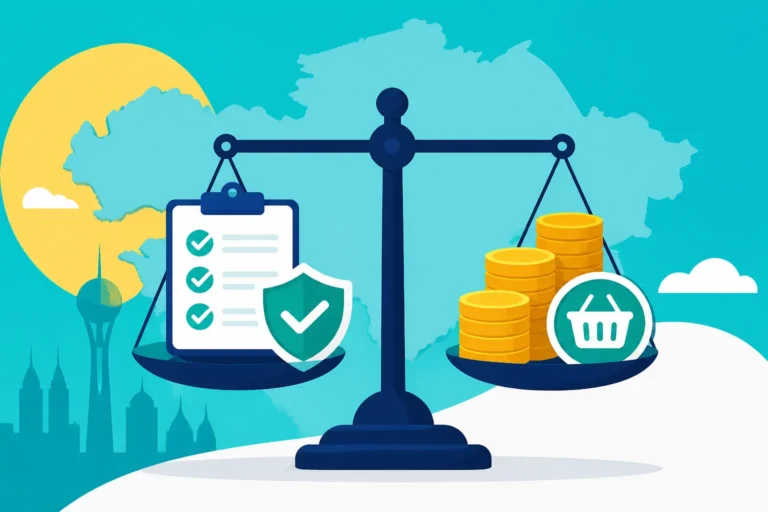
Before you jump headfirst into registration, it's worth understanding why the simplified regime is such a popular choice compared to the general tax regime. Think of it this way: the general regime is like driving a high-performance sports car – powerful, but requires a lot more skill and maintenance. The simplified regime is more like a reliable, efficient family sedan – it gets the job done without unnecessary fuss.
Under the general tax regime, individual entrepreneurs are typically subject to Individual Income Tax (IIT) at a flat rate of 10% on their net income (income minus allowable expenses). On top of this, there are separate calculations for social contributions, mandatory health insurance (OSMS), and sometimes even value-added tax (VAT) if your turnover exceeds a certain threshold. The accounting is more rigorous, requiring detailed record-keeping of all income and expenses to accurately determine taxable profit. For someone just starting out or working alone, this can be an administrative nightmare.
The simplified regime, however, sidesteps much of this complexity. You pay 3% of your gross income (meaning before expenses are deducted), and this 3% already includes IIT and social tax. This means fewer forms, less complicated calculations, and generally a much clearer picture of your tax liability. While you don't deduct expenses from your gross income for tax purposes under this regime, the significantly lower combined rate and reduced administrative burden often make it the superior choice for most freelancers. It's important to understand these differences when you're thinking about how much income tax you will pay in Kazakhstan.
Eligibility Criteria for Freelancers and Individual Entrepreneurs
So, how do you know if you qualify for this sweet deal? Kazakhstan's simplified tax regime has a few key eligibility requirements that you, as a freelancer, need to be aware of. First and foremost, you must be registered as an Individual Entrepreneur (IP), or Individualny Predprinimatel (ИП) in Russian. This is the legal structure that allows you to operate as a self-employed person in Kazakhstan. You can’t just freelance casually and expect to use the simplified regime without this registration.
Beyond the IP status, there are two primary thresholds:
- Annual Income Limit: Your gross annual income should not exceed a certain limit, which is typically around 24,038 Monthly Calculation Indicators (MCIs). The MCI is a government-set index that changes annually. For 2024, the MCI is 3,692 KZT, meaning the limit is roughly 88.7 million KZT (approx. $200,000 USD). This is a pretty generous ceiling for most freelancers, so it's unlikely you'll hit it unless you're running a significant operation.
- Employee Limit: You can't have more than 30 employees, including yourself. Again, for most freelancers, this won't be an issue as you're likely working solo or with a small team.
There are also certain types of activities that are excluded from the simplified regime, such as consulting services in accounting or auditing, gambling businesses, and oil and gas operations. However, for typical freelance services like IT, design, writing, or translation, you're usually in the clear. Your residence status also plays a crucial role; generally, if you are a tax resident of Kazakhstan, you are eligible. Understanding tax residency rules and the 183-day test in Kazakhstan is key here, as it determines your tax obligations.
Essential Steps Before Registration: Getting Your Affairs in Order
Before you even think about forms or portals, there are a couple of fundamental things you need to sort out. Trust me, trying to rush this part will only lead to headaches and multiple trips to various government offices, which is not anyone's idea of a good time in a new country!
Obtaining Your Individual Identification Number (IIN)
The absolute cornerstone of anything administrative in Kazakhstan, including tax registration, is your Individual Identification Number (IIN). This 12-digit number is like your personal social security or tax ID. You literally cannot do anything official without it – open a bank account, register for a mobile SIM, or even get into the eGov system. It's the first thing you need to sort out when you move here.
Getting your IIN is usually a straightforward process, but it can take a few days. You'll need your passport (and often a copy of it, notarized or apostilled depending on your nationality and the office's requirements), along with a simple application form. You can typically apply for your IIN at a Public Service Centre (PSC), known as a TsON (Центр Обслуживания Населения) in Russian. These centres are fantastic, offering many government services under one roof, often with electronic queuing systems. It is wise to go early in the morning to beat the queues. Once you have it, guard it like gold! It’s your golden ticket to almost everything here. You can find more detailed steps on how to get an IIN (Individual Identification Number) in Kazakhstan.
Understanding Tax Residency and Your Obligations
This is a critical point that many expats often overlook until it's too late. Being physically present in Kazakhstan is one thing, but establishing tax residency is another, and it carries significant implications for your tax obligations as a freelancer. In Kazakhstan, you are generally considered a tax resident if you spend 183 or more calendar days within any consecutive 12-month period in the country. This isn't necessarily a calendar year, so keep good track of your entry and exit dates.
Why does this matter? If you are a tax resident, your worldwide income is generally taxable in Kazakhstan. If you're a non-resident, only your income sourced from Kazakhstan is typically taxable here. As a freelancer, if your clients are international, this distinction is huge. It's vital to clearly understand your status. If you become a tax resident, then registering as an IP and opting for the simplified tax regime is not just a good idea, it's often a legal requirement for your freelance earnings. It also means you’ll need to understand how to file your annual tax return in Kazakhstan and declare all relevant income. For more complex situations, especially if you have income from multiple countries, it’s worth consulting a specialist like Taxes for Expats to ensure you’re not caught out by double taxation or missed obligations. Many countries have double taxation agreements with Kazakhstan, which can prevent you from paying tax twice on the same income, but understanding these can be tricky.
Preparing Your Documents for Registration
Okay, so you have your IIN, and you've got a handle on your tax residency. Now, let's get your paperwork ready. The Kazakhstani system, like many bureaucratic systems, loves its documents, and having everything in order before you start the registration process will save you a lot of grief.
Here’s a general checklist of what you’ll likely need:
- Your Passport: Original and a notarized copy. Ensure your visa (if applicable) and entry stamps are clear.
- IIN Certificate: The physical document or printout you received when you got your IIN.
- Proof of Residence: This is usually your temporary residence permit (if you have one) or your registered address. If you're renting, you might need a copy of your rental agreement and a statement from your landlord confirming your address registration. The migration service usually registers your address, which is crucial.
- Application Form for IP Registration: This can usually be filled out electronically through eGov, but sometimes a physical form is needed.
- Application Form for Simplified Tax Regime: Also often done through eGov.
Make sure all documents not originally in Kazakh or Russian are officially translated and notarized. While eGov has streamlined much of the process, it's always wise to have hard copies of everything, just in case. Always check the most current requirements on the eGov portal or with the State Revenue Committee (SRC) directly, as these can occasionally change.
The Step-by-Step Registration Process with the State Revenue Committee
Alright, sleeves rolled up, documents in hand, it's time to actually get registered. This is where the eGov portal really comes into its own, providing a digital gateway to interact with government services. If you haven't already, getting familiar with the eGov and Taxpayer Cabinet portals in Kazakhstan is going to be incredibly useful for you.
Registering as an Individual Entrepreneur (IP) – The Foundation
First things first, you need to officially register yourself as an Individual Entrepreneur (IP). This is the legal entity under which you, as a freelancer, will operate. Think of it as telling the government, "Hey, I'm open for business as a sole trader!"
The primary way to register as an IP is through the eGov portal (egov.kz). You’ll need to log in using your Electronic Digital Signature (EDS), which you should have obtained when you got your IIN (or shortly after). The portal provides a service to register an IP. You'll fill in your personal details, your IIN, and specify your intended business activity using a standardized classification system (OKED codes). For most freelancers, these codes will relate to IT services, advertising, consulting, or education. It sounds complicated, but the eGov portal often has prompts and guides.
Once you submit your application, the registration process is usually quite fast, sometimes even within one business day. You'll receive a notification on eGov confirming your IP registration. This is a crucial step, as you cannot apply for the simplified tax regime without first being registered as an IP. For a deeper dive into this, you can check out how to register as an Individual Entrepreneur (IP) in Kazakhstan.
Applying for the Simplified Tax Regime
With your IP status secured, the next logical step is to select your tax regime. Since we're aiming for simplicity, you'll be applying for the simplified tax regime. This is also done through the eGov portal or the "Taxpayer's Cabinet" (cabinet.salyk.kz), which is specifically for tax-related services.
When you register your IP, or soon after, you will need to submit a notification to the State Revenue Committee choosing your tax regime. This is typically done through a form within the eGov system. You select the simplified regime for small businesses. It's usually part of the initial IP registration process, or a follow-up action within ten working days of your IP registration. You need to be very clear about choosing this regime, otherwise, you might automatically be put onto the general tax regime, which means more complex tax calculations and potentially higher taxes. The system generally guides you through it, asking you to specify your chosen regime. The key is to actively select "simplified tax regime based on simplified declaration."
Important Deadlines and Notifications
Deadlines are not something you want to mess with in any country's tax system, and Kazakhstan is no exception. While registering your IP and selecting the simplified regime, there are a few important timings to keep in mind.
- IP Registration: As mentioned, this is often processed quickly through eGov.
- Tax Regime Selection: If you don't select the simplified regime during your initial IP registration, you generally have 10 working days from the date of your IP registration to submit a notification to the tax authorities choosing the simplified regime. Missing this window might mean you default to the general regime, which is not ideal.
It’s also important to understand the reporting periods. Under the simplified regime, you file a "simplified declaration" (Form 910.00) quarterly. Each quarter has specific deadlines for submission and payment. For example, for Q1 (Jan-Mar), the deadline for filing and payment is typically mid-May. For Q2 (Apr-Jun), it's mid-August, and so on. Mark these dates on your calendar! Proactively staying on top of these deadlines will save you from potential fines and unnecessary stress. The State Revenue Committee is strict about timely submissions, and you don't want to get on their bad side.
Managing Your Simplified Tax Regime: Reporting and Payments
So, you're officially an IP under the simplified tax regime. Congratulations! Now comes the ongoing responsibility: reporting your income and paying your taxes. Don't worry, it's far less complicated than the general regime, but it still requires attention.
Understanding Quarterly Reporting
As an IP on the simplified regime, your tax reporting is done quarterly, using a form called "Form 910.00 Simplified Declaration for Small Business Entities." This form is submitted through the Taxpayer's Cabinet portal (cabinet.salyk.kz). This means four times a year, you’ll be logging in and declaring your income for the preceding three months.
The beauty of Form 910.00 is its relative simplicity. You'll mostly be reporting your gross income for the quarter. The system then automatically calculates the 3% tax due on this income. You also input your mandatory social contributions for yourself and any employees if you have them. This includes pension contributions (ОПВ), social contributions (СО), and contributions to the compulsory social health insurance fund (ОСМС). Understanding mandatory social and pension contributions in Kazakhstan is essential, as these are deducted based on a nominal salary (usually the minimum wage) even if your actual income varies. The portal often pre-fills some data or provides hints, but it's crucial to understand each field. Once filled, you submit the declaration electronically.
Calculating and Paying Your Taxes
The tax rate under the simplified regime is a combined 3% of your gross quarterly income. This includes both Individual Income Tax and social tax. In addition to this 3%, you, as an individual entrepreneur, must pay mandatory pension contributions (ОПВ), social contributions (СО), and compulsory social health insurance (ОСМС) for yourself. These contributions are usually calculated based on the minimum wage (МЗП – Minimalnaya Zarabotnaya Plata) or MCI, rather than your actual fluctuating freelance income. For example, pension contributions might be 10% of 1 Minimum Wage, while social contributions might be 3.5% of 1 Minimum Wage.
Once your Form 910.00 is submitted and approved, the Taxpayer's Cabinet will show your calculated tax liabilities. You can then make these payments directly through the portal, often linking to your bank account or using a QR code for payment at a bank. Many expats find it convenient to use local banking apps like Kaspi.kz or Halyk Bank for these transactions. These platforms have become incredibly user-friendly for paying everything from taxes to utilities. If you're trying to figure out which banking option is best, take a look at how to choose the best bank for expats in Kazakhstan.
It's a two-part process: submit the declaration first, then make the payment. Both have separate deadlines, but they are usually close together. Always double-check that your payments are correctly attributed to your IIN and the correct tax codes to avoid any issues down the line.
Maintaining Records and Invoices
Even with a simplified tax regime, good record-keeping is vital. While you might not be deducting every single receipt like under the general regime, you still need to prove your income if ever asked. This means keeping clear records of all payments received from your clients.
Here’s what you should maintain:
- Invoices: Issue clear invoices for all your services, detailing the service provided, date, amount, and client details.
- Bank Statements: Keep records of your bank transactions, showing income received. It’s always best to have a separate bank account for your IP activities to keep personal and business finances distinct. This also makes quarterly reporting much easier.
- Contracts: Keep copies of any contracts or agreements with clients.
These records not only help you stay organized but also serve as proof in case the tax authorities ever have questions or decide to conduct an audit. While it's rare for small freelancers to be heavily audited, it's always better to be prepared. When clients are international, getting paid can also be a consideration. Services like Wise are incredibly helpful for managing international payments, ensuring you receive your freelance income efficiently and often with better exchange rates than traditional banks, making it easier to track income for your records.
Advantages and Potential Pitfalls for Expat Freelancers
The simplified tax regime is a powerful tool for expat freelancers in Kazakhstan, but like any system, it has its pros and cons. Understanding these can help you maximize its benefits and avoid common traps.
Benefits of the Simplified Regime for Expats
The advantages of the simplified tax regime for expat freelancers in Kazakhstan are quite compelling.
- Low Tax Rate: The 3% combined tax rate on gross income is incredibly attractive, especially compared to many other countries where freelancers face much higher tax burdens. This alone can significantly improve your take-home pay.
- Reduced Administrative Burden: The quarterly simplified declaration (Form 910.00) is far less complex than general regime accounting. It saves you time and reduces the need for constant professional accounting assistance, which is a big relief for those of us who dread tax season.
- Ease of Compliance: The eGov and Taxpayer's Cabinet portals, while initially a bit daunting due to language, are designed for electronic submission and payment, making compliance relatively straightforward once you get the hang of it. This digital approach often means fewer physical visits to government offices.
- Fosters Entrepreneurship: The regime clearly aims to support small businesses and individual entrepreneurs, creating a favourable environment for freelancers to operate legally without excessive hurdles. This is a huge positive when you're trying to build a new life and career in a foreign land.
Common Challenges and How to Overcome Them
Despite its benefits, the simplified regime isn't without its challenges, especially for expats.
- Language Barrier: The eGov and Taxpayer's Cabinet portals are primarily in Kazakh and Russian. While there are often English versions available for core navigation, specific forms, legal texts, and helpline support might default to local languages. This can be a significant hurdle.
- Overcoming this: Utilize browser translation tools, find expat forums for step-by-step guides, or consider hiring a local assistant (even part-time) or a tax professional for the initial setup. Patience and a good dictionary will be your best friends.
- eGov Complexities: The eGov portal, while powerful, can sometimes be quirky. Navigating it for the first time, especially understanding which service to choose and how to fill specific fields, can be confusing.
- Overcoming this: Look for online tutorials (sometimes even YouTube videos exist), use the help functions within the portal, or seek advice from other expats who have successfully registered. Don't be afraid to take it slow and double-check every step.
- Keeping Up with Changes: Tax laws and regulations, including MCI values and contribution rates, can change annually. Staying informed about these updates is crucial to maintain compliance.
- Overcoming this: Regularly check official government sources (State Revenue Committee website), subscribe to newsletters from expat service providers, or maintain contact with a local accountant. Websites and services like Taxes for Expats often provide updated information relevant to foreigners.
When to Consider Professional Tax Assistance
While the simplified regime is designed for ease, there are times when bringing in a professional can save you stress, time, and potentially money.
- Initial Setup: If the language barrier or eGov system feels too overwhelming during the initial IP registration and regime selection, a local accountant or legal firm specializing in expat services can guide you through the process or handle it on your behalf.
- Complex Income Situations: If you have income from multiple countries, complex deductions in your home country, or unique business expenses that might make the general regime surprisingly more beneficial (though rare for typical freelancers), a professional can perform a comprehensive analysis.
- High Income or Employee Growth: If your freelance business grows significantly, hitting or approaching the annual income threshold, or if you start hiring multiple employees, your tax situation will become more complex. An accountant can advise if it's time to transition to a different tax regime or if you need to register for VAT.
- Peace of Mind: Sometimes, the cost of an accountant is worth the peace of mind knowing that your taxes are being handled correctly and you're fully compliant with local laws. This is especially true for those who prefer to focus purely on their freelance work rather than administrative tasks.
Remember, even if you do everything yourself, it’s a good idea to know how to register with the State Revenue Committee in Kazakhstan and have a clear understanding of the tax rules that apply to you.
Practical Tips and Tools for Freelancers in Kazakhstan
Beyond the technicalities of registration and reporting, there are practical tools and habits that can make your life as a freelancer in Kazakhstan much smoother. After all, it's about making your expat experience as easy as possible.
Utilizing Online Banking and Payment Systems
Kazakhstan has a surprisingly advanced digital banking landscape, and embracing it will be a huge benefit for your freelance work.
- Kaspi.kz and Halyk Bank: These are the two giants of Kazakhstani banking. Kaspi.kz, in particular, is almost ubiquitous, offering an incredibly user-friendly app for everything from bank transfers to paying utility bills, mobile top-ups, and yes, even taxes. Halyk Bank is another strong contender, especially for those who prefer a more traditional banking experience with robust online features. Opening an account with one of these banks (after you get your IIN, of course!) will simplify your financial life immensely. Many expats use Kaspi.kz for everyday transactions due to its sheer convenience.
- International Money Transfers: When dealing with international clients, you'll need efficient ways to receive payments. While local banks handle SWIFT transfers, services like Wise (formerly TransferWise) offer excellent exchange rates and lower fees for international money transfers. This is particularly useful for freelancers with clients outside of Kazakhstan, ensuring more of your hard-earned money makes it into your local account. Understanding how to transfer money into and out of Kazakhstan as an expat is a topic worth exploring further.
Setting up a dedicated business account (even if it's just a separate card/account under your IP registration with Kaspi or Halyk) is a game-changer for tracking income and expenses for your quarterly declarations.
Essential Resources and Support
You're not alone in navigating this! There are resources available to help you.
- eGov Portal (egov.kz) and Taxpayer's Cabinet (cabinet.salyk.kz): These are your primary digital interfaces with the government and tax authorities. Familiarize yourself with them. They often have FAQs and help sections, though sometimes in local languages.
- State Revenue Committee (SRC) Branches: For in-person assistance, you can visit your local SRC office. Again, be prepared for potential language barriers, but many larger city branches may have staff who can assist in English, especially if you visit during off-peak hours.
- Expat Communities: Online groups (Facebook, Telegram) for expats in Almaty, Astana, and other major cities are invaluable. You'll find a wealth of shared experiences, tips, and sometimes even direct recommendations for English-speaking accountants or assistants. Don't underestimate the power of peer support!
- Professional Services: As mentioned earlier, firms specializing in expat tax and legal services can provide tailored advice and hands-on assistance. They can help you with your initial registration, ongoing compliance, and answer complex questions.
Staying Compliant and Up-to-Date
The key to long-term stress-free freelancing is proactive compliance.
- Regular Checks: Make it a habit to regularly check the official websites of the State Revenue Committee for any updates to tax legislation, MCI values, or deadlines.
- Calendar Reminders: Set up recurring reminders for your quarterly declaration deadlines and payment due dates. Don't rely solely on memory!
- Seek Advice: If you're ever unsure about a particular aspect of your tax obligations or if your business situation changes (e.g., you start earning significantly more, or diversify into excluded activities), don't hesitate to seek professional advice. It's always better to clarify things beforehand than to face penalties later.
The simplified tax regime in Kazakhstan is genuinely a great option for expat freelancers, offering a pathway to legal operation with minimal hassle. While the initial setup might require some patience and possibly a bit of translation help, the ongoing benefits of a low tax rate and streamlined reporting make it well worth the effort.
Disclaimer
The information provided in this guide is intended for general informational purposes only and does not constitute professional tax, legal, or financial advice. Tax laws and regulations in Kazakhstan are subject to change, and individual circumstances may vary. While we strive to provide accurate and up-to-date information, readers are strongly advised to consult with a qualified tax advisor or legal professional in Kazakhstan for advice tailored to their specific situation. This guide does not create a client-advisor relationship.