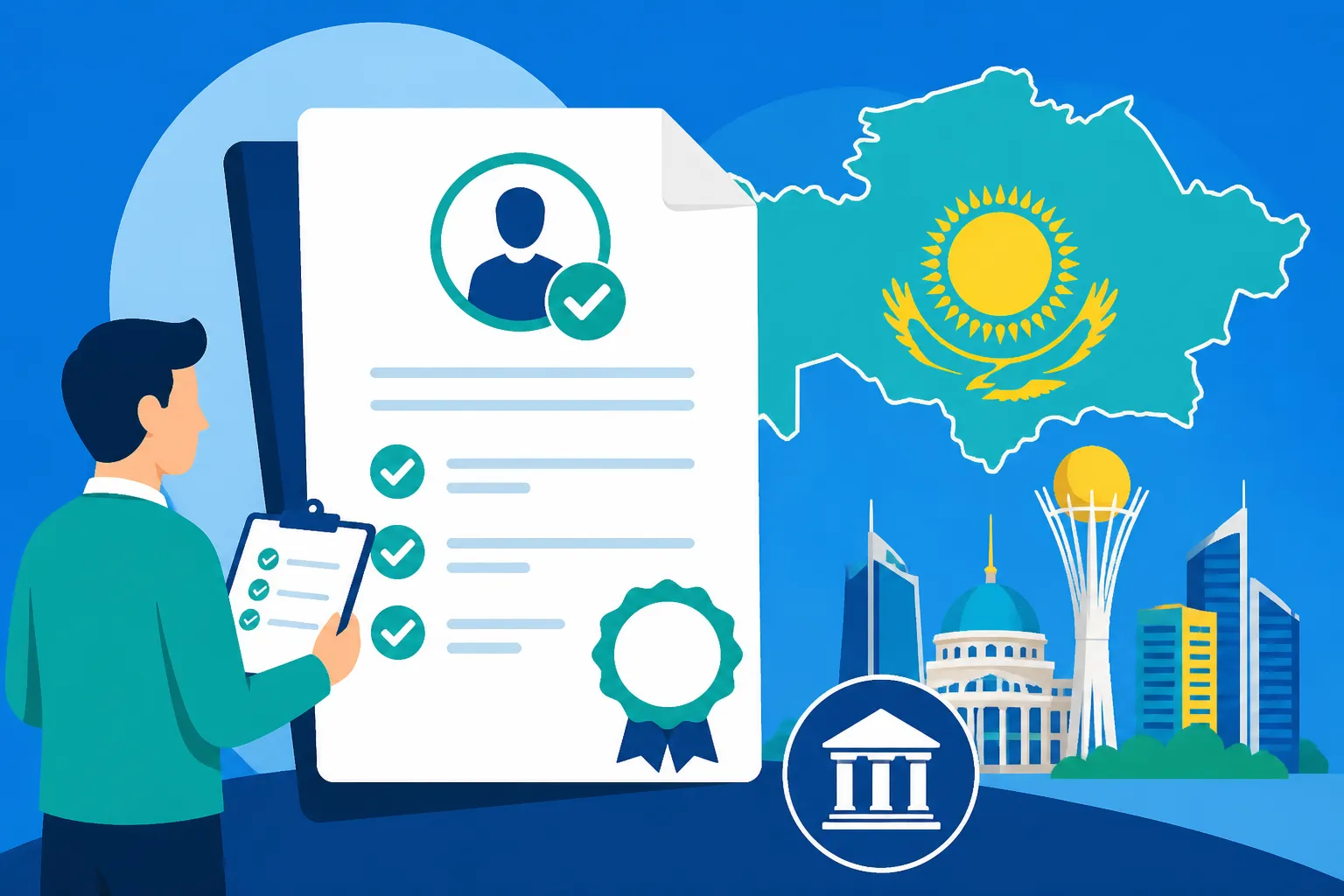
Understanding the Tax Residency Certificate Process in Kazakhstan
Moving to a new country like Kazakhstan brings a whirlwind of administrative tasks, and honestly, sometimes it feels like you're constantly proving your existence to one authority or another. One of the trickiest parts, especially when you're navigating finances and taxes across borders, is proving where you really live for tax purposes. This guide is here to walk you through the often-confusing process of understanding and obtaining a Tax Residency Certificate (TRC) in Kazakhstan, helping you avoid headaches and potential double taxation.
What Exactly is a Tax Residency Certificate and Why It Matters for Expats
When you first arrive, tax residency probably isn't top of mind. You're busy finding an apartment, getting your IIN, and figuring out where to buy decent coffee. But trust me, understanding your tax residency status from the get-go is like having a secret weapon against future financial headaches.
Demystifying Tax Residency Status in Kazakhstan
Let's break it down simply: your tax residency determines which country has the primary right to tax your worldwide income. It's not just about where you physically are for a few months; it's about establishing a substantial connection to a country. In Kazakhstan, the general rule of thumb for individuals, including us expats, is often referred to as the "183-day rule." If you spend 183 or more calendar days in Kazakhstan within any consecutive twelve-month period ending in the current tax period, you're generally considered a tax resident. This means the clock is always ticking!
However, it’s not just about the days. The tax authorities also look at what they call your "center of vital interests." This is a fancy way of asking: where do your strongest personal and economic ties lie? Do you have a permanent home here? Is your family with you? Is your main source of income derived from Kazakhstan? Even if you technically spend slightly less than 183 days but all your economic and personal life is undeniably here, they might still consider you a resident. This is where it can get a bit subjective, which is always fun when dealing with officialdom, right?
The Critical Role of a TRC in International Tax Affairs
So, why bother getting a piece of paper that says you're a tax resident? Imagine this scenario: you're working in Almaty, earning your salary in Tenge. Your home country, let's say the UK, might still consider you a tax resident based on their own rules (maybe you still own property there, or your family is there for part of the year). Without a Tax Residency Certificate from Kazakhstan, you could potentially be taxed on the same income in both countries. That's what we call double taxation, and it's nobody's idea of a good time.
A TRC is your official proof, issued by the State Revenue Committee (SRC) of Kazakhstan, that you are indeed a tax resident here. This document is crucial for invoking Understanding Double Taxation Agreements and Foreign Income in Kazakhstan that Kazakhstan has with many countries. These agreements are designed precisely to prevent you from being taxed twice. Presenting a TRC to your home country's tax authority often clarifies your status, allowing you to claim exemptions or credits based on the DTA. It's not just about preventing double taxation; it's about confirming where your primary tax obligations lie. For a deeper dive into how the system works here, you can explore guides like How Kazakhstan's Tax System Works: The Flat 10% Tax Explained (2027).
Do You Need a Tax Residency Certificate From Kazakhstan?
It’s easy to think, "If I'm paying taxes here, isn't that enough?" Unfortunately, no. The world of international taxation thrives on official documentation, and your pay slips or bank statements, while important, often aren't enough to satisfy foreign tax bodies.
Proving Your Tax Home to Avoid Double Taxation
Let's talk real-world situations. You might be working for a company based in Kazakhstan, receiving your salary directly into a local Kaspi Bank or Halyk Bank account. You diligently pay your flat 10% individual income tax here. But what if your previous country of residence still has you on their books as a tax resident? This is particularly common if you maintain ties like property ownership, investments, or even family members living there.
Your former country's tax authority might send you demands for tax declarations or even try to tax your Kazakhstani income. This is where your Kazakhstani TRC becomes your shield. By presenting it, along with a copy of the relevant Double Taxation Agreement, you can formally inform them that, under the terms of the DTA, Kazakhstan is your country of tax residency, and therefore, your income is primarily taxable here. This is especially vital if you're exploring How to File Taxes If You Have Both Foreign and Kazakhstani Income. It saves you from complex legal battles and ensures you're only paying your fair share, in the right place.
When Foreign Governments and Banks Require Proof
It's not just about avoiding double taxation with your old country's tax office. Increasingly, other entities also demand proof of tax residency. For instance, if you have bank accounts, investment portfolios, or even certain digital payment services in other countries, they often need to know your tax residency status to comply with international regulations like FATCA (Foreign Account Tax Compliance Act) or CRS (Common Reporting Standard). These are global efforts to combat tax evasion, and they mean financial institutions need to report account holders' tax information to their respective tax authorities.
If you list Kazakhstan as your tax residence for these foreign accounts, you can bet they'll eventually ask for a TRC to verify it. Failing to provide this could lead to your accounts being frozen, or worse, incorrect tax reporting to your old country. For expats managing their money internationally, perhaps using services like Wise to transfer funds or receive payments, having a clear tax residency status is non-negotiable. It's about maintaining compliance and ensuring smooth financial operations globally.
Eligibility: Are You Considered a Tax Resident of Kazakhstan?
Before you even think about applying for a TRC, you need to be sure you actually qualify. The criteria aren't overly complicated, but misunderstanding them can lead to a lot of wasted time and effort.
The 183-Day Rule and Its Nuances
The golden rule for individual tax residency in Kazakhstan is indeed the "183-day rule." This means if you have spent 183 or more calendar days in Kazakhstan within any consecutive twelve-month period that ends in the current tax period, you are generally deemed a tax resident.
Let's break down what "183 or more calendar days" truly means. It's not just about being physically present. Days of arrival and departure are typically counted as full days. Any continuous period, even if you pop out of the country for a quick holiday, contributes to this count. For example, if you arrived on January 1st, went on a two-week trip to Georgia in March, and came back, those two weeks might not break the continuity for counting purposes if your primary intention was to reside here. The 12-month period is also key – it's a rolling period, not necessarily a calendar year. So, if you arrived in July 2023, your 183 days might be calculated until July 2024, crossing two calendar tax periods. This flexible timeframe helps capture individuals who establish residency mid-year.
It's a straightforward calculation on the surface, but it demands meticulous record-keeping of your entry and exit stamps, or any other proof of presence like flight tickets or hotel stays if your passport isn't sufficient. You can learn more about this in resources like Tax Residency in Kazakhstan: A Definitive Guide for Expats (2027).
Beyond the Days: Other Factors Determining Tax Residency
While the 183-day rule is primary, the tax authorities do consider other factors if your situation isn't clear-cut, or if a Double Taxation Agreement (DTA) needs to be applied (which often has its own tie-breaker rules). These are generally referred to as the "center of vital interests" or "permanent home" criteria.
- Permanent Home: Do you have a permanent dwelling in Kazakhstan? This means a place available to you at all times, not just a temporary hotel room. It could be a rented apartment where you've signed a long-term lease, or property you own. The presence of a permanent home here, especially if you don't have one readily available in another country, strongly points towards Kazakhstani residency.
- Center of Vital Interests: This is a bit more nebulous but incredibly important. It asks where your personal and economic interests are concentrated.
- Personal Ties: Is your immediate family (spouse, children) living with you in Kazakhstan? Are your social circles, club memberships, and community activities predominantly here?
- Economic Ties: Is your primary employment contract with a Kazakhstani entity? Do you receive your main income here? Are your significant investments or businesses located within Kazakhstan? Even if you transfer money out using services like Wise, if the source and bulk of your income originates here, it strengthens your case.
If you, for example, spent 170 days in Kazakhstan, but your spouse and children are enrolled in schools in Almaty, you own an apartment, and your employment contract is with a major Kazakhstani corporation, it's highly likely you'd still be considered a tax resident based on your center of vital interests. The tax authorities look at the overall picture to determine your strongest connection.
The Step-by-Step Process to Obtain Your Kazakhstani TRC
Navigating official processes in a foreign country can be daunting, and getting your Tax Residency Certificate is no exception. But don't worry, I've been there, and with a bit of patience and preparation, you can get through it.
Essential Documents for Your Application
This is where the paper chase begins. The State Revenue Committee (SRC) needs solid proof to confirm your status. While the exact requirements can sometimes vary slightly by region or situation, here's a general list of what you'll need to gather:
- Application Form (Statement): This is a specific form provided by the SRC (form 018.00) requesting a TRC. You'll need to fill it out accurately in Kazakh or Russian.
- Passport Copy: A clear copy of your passport, including your personal details page and all relevant entry/exit stamps.
- Individual Identification Number (IIN): You absolutely need this for any official transaction in Kazakhstan. A copy of the document confirming your IIN is crucial. If you don't have one yet, stop everything and get this first. Here's a helpful guide: How to Get an IIN Individual Identification Number in Kazakhstan.
- Residence Permit ( вид на жительство – VNZh) or Visa Copy: Depending on your immigration status, provide a copy of your valid residence permit or the visa that allowed you to stay in Kazakhstan for the qualifying period.
- Employment Contract: If you're employed, a copy of your signed employment contract with a Kazakhstani entity. This helps prove your economic ties.
- Address Registration ( временная регистрация): Proof of your registered address in Kazakhstan. This is often a paper slip (form 2) or a printout from eGov.
- Bank Statements: Statements from your Kazakhstani bank accounts (e.g., Kaspi Gold, Halyk Bank) showing consistent financial activity, especially salary receipts, over the period for which you're claiming residency. This solidifies your economic presence.
- Proof of Presence: If your passport stamps aren't entirely clear or consistent, you might need additional proof like flight tickets, hotel receipts (if applicable for a short period), or even utility bills under your name.
- Translated and Notarized Documents: Any document not originally in Kazakh or Russian (like your passport or a foreign employment contract) will need to be professionally translated and notarized. Do not skip this step – improperly translated documents are a quick way to get your application rejected.
Before heading to the SRC, make sure you have both original documents and good quality copies of everything. It's always better to over-prepare than to be sent away for missing one small detail.
Navigating the eGov Portal and Taxpayer Cabinet
Kazakhstan has made significant strides in digitalization, and many administrative tasks can now be initiated or completed online. For your TRC, you'll likely be interacting with the eGov portal (egov.kz) and the Taxpayer Cabinet (cabinet.salyk.kz).
First, you need a valid Digital Signature (EDS). This is your electronic ID and signature for all government online services. If you don't have one, you'll need to apply for it, which usually involves a visit to a Public Service Centre (ЦОН – TsON). Once you have your EDS:
- Accessing the Taxpayer Cabinet: Log in to cabinet.salyk.kz using your EDS. This portal is specifically for tax-related matters.
- Finding the Service: Look for the service related to "получение справки о налоговом резидентстве" (obtaining a tax residency certificate). The exact wording might vary slightly, but it should be clearly identifiable.
- Filling Out the Application: The electronic application form (form 018.00) will appear. This is where you meticulously input all your personal details, your IIN, address, and specify the tax period (year) for which you require the certificate. Be incredibly careful with dates and spelling – any discrepancy can cause issues.
- Uploading Documents: You'll be prompted to upload digital copies of all the supporting documents you've gathered (passport, residence permit, employment contract, etc.). Ensure these are clear, legible scans, and that any translated documents are uploaded alongside their originals.
- Signing and Submitting: Once everything is filled out and uploaded, you will digitally sign the application using your EDS. This is the equivalent of a wet signature and legally binds your submission. After signing, hit that submit button and cross your fingers!
Navigating these portals can be a bit tricky, especially if you're not fluent in Kazakh or Russian. The interfaces are generally logical, but the terminology can be challenging. Many expats find it helpful to have a local friend or a professional assist them with this specific step, particularly the first time. The team at Taxes for Expats are often well-versed in these kinds of digital submissions and can offer guidance.
Submission, Review, and Collection Process
After you've hit submit, the waiting game begins. The State Revenue Committee will review your application and supporting documents.
- Processing Time: Officially, the processing time for a TRC can vary, but generally, expect it to take anywhere from 5 to 15 working days. Sometimes it's quicker, sometimes slower. It's always best to apply well in advance of when you might need it.
- Checking Status: You can usually track the status of your application through the Taxpayer Cabinet or eGov portal. You'll receive notifications (often via SMS or within the portal itself) when there are updates, such as "application accepted," "under review," or "certificate issued."
- Potential for Clarification: Don't be surprised if the SRC requests additional information or clarification during the review process. This is common. They might call you, send a message through the portal, or even send a formal letter. Respond promptly and provide whatever they ask for to avoid further delays.
- Receiving Your Certificate: Once approved, your Tax Residency Certificate will typically be issued electronically and will be available for download in your Taxpayer Cabinet. It will bear a digital signature and a unique number, making it official. You can then print this out if you need a physical copy to present to foreign institutions. Make sure to download and save a copy securely.
The entire process, from gathering documents to receiving the final certificate, can feel like a marathon. But remember, once you have that TRC in hand, you've got a powerful tool to manage your international tax situation effectively. For a broader view of tax obligations, check out Filing Your Tax Return with the State Revenue Committee in Kazakhstan: The Complete Walkthrough (2027).
Overcoming Common Hurdles in Your TRC Application
Let's be real: bureaucracy in any country can be a bit of a labyrinth, and Kazakhstan is no exception. As an expat, you’re likely to face a few specific hurdles when trying to get your TRC. But knowing what to expect can help you prepare and navigate them with grace (or at least less hair-pulling).
Language Barriers and The Importance of Accuracy
This is probably the biggest challenge for most expats. All official government forms, communications, and portal interfaces are primarily in Kazakh or Russian. Unless you're fluent in one of these languages, applying without assistance can feel like trying to solve a puzzle blindfolded.
- Accuracy is Paramount: Even a small mistake in your IIN, address, or dates can lead to delays or outright rejection. This is not the time for guesswork. If you're using Google Translate, be extra cautious as nuances can be lost.
- Professional Translation and Notarization: As mentioned earlier, any document not in Kazakh or Russian must be professionally translated and notarized. Don't try to do this yourself or use an unregistered translator. The SRC will check for official seals and proper certification. Find a reputable translation agency in Kazakhstan that specializes in official documents. They understand the specific requirements and formatting needed.
- Seeking Assistance: Don't be afraid to ask for help. Many local friends or colleagues are often willing to lend a hand with translations or navigating the eGov portal. Alternatively, consider professional services. While this guide is informational and not promotional, some expat service providers or tax advisors, like those connected to Taxes for Expats, specifically assist foreigners with these bureaucratic processes. They can often prevent common mistakes that lead to rejection.
Dealing with Bureaucracy, Delays, and Potential Rejections
Even with perfect documents and language assistance, you might encounter delays or requests for further information. It's part of the process, and managing your expectations is key.
- Patience and Persistence: Government agencies operate on their own timelines. If the promised processing time passes, don't panic. Gently follow up via the eGov portal, or if possible, visit your local State Revenue Committee office in person (though online follow-ups are generally preferred and more efficient). Keep a record of all your communications and submission numbers.
- Understanding the "Why": If your application is rejected or further information is requested, try to understand the exact reason. Don't just resubmit the same application. The SRC will usually provide a reason for rejection. This could be a missing document, an incorrectly filled field, or even a perceived discrepancy in your residency claim.
- Be Prepared for Interviews (Rare but Possible): In some complex cases, or if there are doubts about your residency, you might be called in for a short interview to clarify details. This is rare for a straightforward TRC application, but it's good to be aware it could happen. Bring all your original documents with you if you are called in.
- Documentation is Your Best Friend: Keep meticulous records of everything: every submitted document, every email or portal message, every receipt. This paper trail is invaluable if you need to dispute a decision or resubmit your application. For example, if you're using
Wiseto manage your finances, maintaining clear records of your transactions can help demonstrate your financial activity and ties to Kazakhstan. It helps to show a consistent pattern of life and financial integration here.
Navigating this can be frustrating, especially when you're used to more streamlined processes in your home country. But remember, many expats have successfully obtained their TRCs. A calm, methodical approach and a willingness to follow instructions carefully will see you through.
Maintaining and Understanding Your TRC's Validity
Obtaining your TRC isn't usually a one-and-done deal. Tax residency, like many things in an expat's life, can be dynamic. It's important to understand how long your certificate is valid and what to do if your circumstances change.
Annual Validity and Renewal Procedures
Generally, a Tax Residency Certificate issued by the State Revenue Committee in Kazakhstan is valid for a specific tax period, which typically aligns with the calendar year (January 1st to December 31st). This means if you obtained a TRC for 2023, it's only valid for that particular year. If you continue to reside in Kazakhstan and require proof of tax residency for subsequent years, you will need to reapply for a new TRC for each new tax period.
This annual reapplication might seem tedious, but it's standard practice in many tax jurisdictions. It ensures that your tax residency status is continually affirmed based on your presence and ties during the most recent period. The process for renewal is essentially the same as your initial application: you'll gather the necessary documents for the new tax year, complete the application form (form 018.00), and submit it through the eGov portal or Taxpayer Cabinet. Ensure that all your supporting documents, especially your residence permit and employment contract, are current and valid for the period you're applying for. This periodic affirmation ensures compliance with Understanding Income Tax and the Flat 10% Rate in Kazakhstan (2026) and other tax regulations.
What to Do if Your Residency Status Changes
Life as an expat is full of changes, and sometimes those changes impact your tax residency. What happens if you leave Kazakhstan permanently, or if your travel patterns mean you no longer meet the 183-day rule?
- Leaving Kazakhstan Permanently: If you decide to move away from Kazakhstan, it's crucial to understand the implications for your tax residency. Your tax residency status will cease from the moment you no longer meet the criteria (e.g., you permanently leave, or your center of vital interests shifts). While you won't need to "cancel" your TRC in the formal sense, it's good practice to ensure all your final tax obligations are met before you depart. This might involve filing a final tax return (if applicable) and settling any outstanding payments. Always check the guidelines from the State Revenue Committee regarding tax clearance when leaving the country. You can find more comprehensive information on your overall tax obligations in The Complete Guide to Taxes in Kazakhstan for Expats (2027).
- Changes in Circumstances: Perhaps you take on a remote role for a foreign company, or you start spending significant time in another country. If these changes mean you no longer meet the 183-day rule or your center of vital interests shifts away from Kazakhstan, you might cease to be a tax resident. In such cases, if you were to apply for a TRC, your application might be rejected. More importantly, you would need to understand the tax implications of becoming a non-resident in Kazakhstan and potentially a tax resident elsewhere. This often requires careful planning and potentially professional tax advice to ensure you remain compliant in all relevant jurisdictions.
Staying informed about your movements and financial ties is paramount. Proactively understanding your tax residency status, and how it can change, will help you navigate your expat journey with greater confidence and fewer unexpected tax bills.
Disclaimer
This article is for general informational purposes only and does not constitute professional advice. Laws, prices and regulations vary by location and change over time. Consult a qualified professional for guidance on your specific situation.