The Expat Guide to Public Transport in Kazakhstan
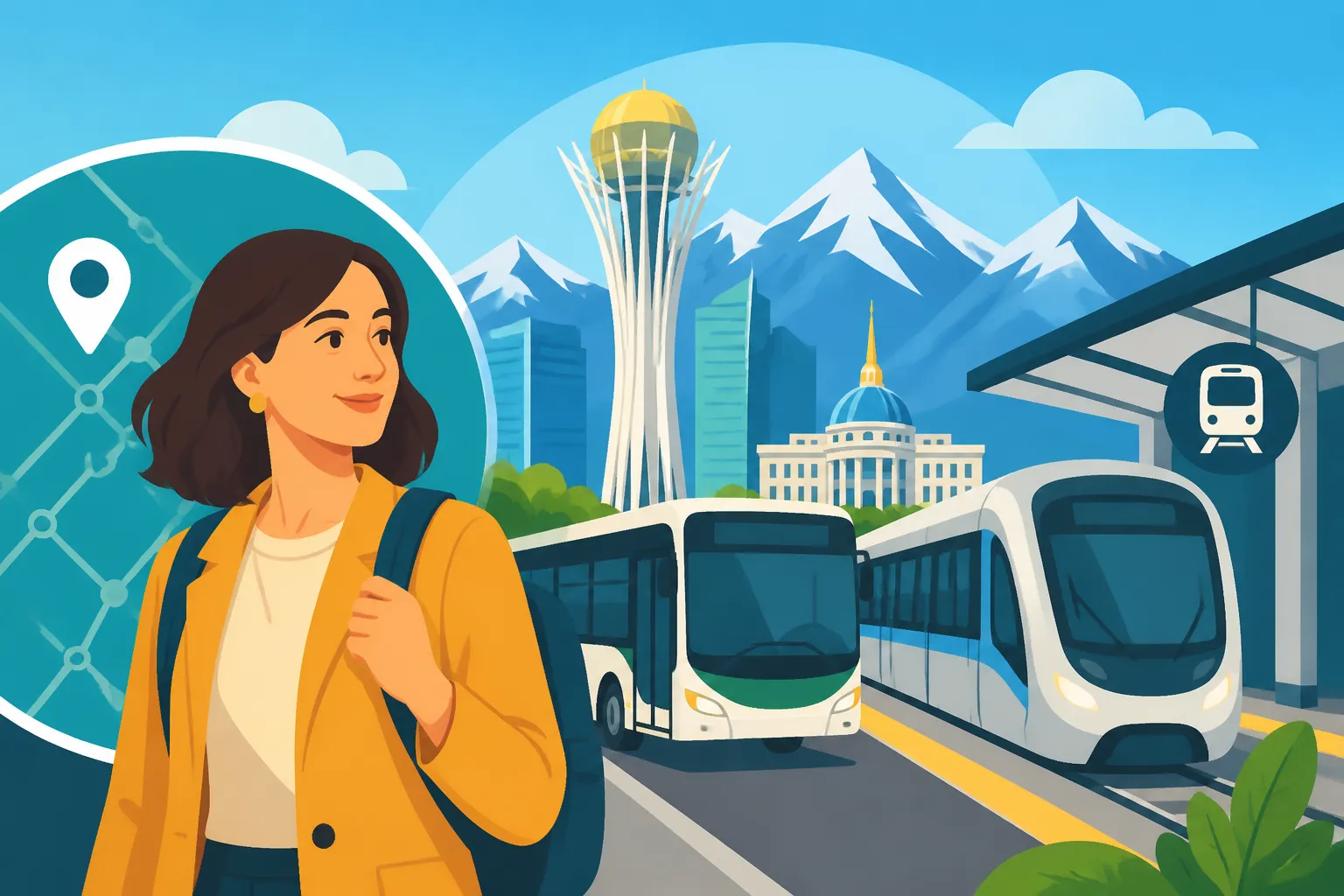
When you first arrive in a new country like Kazakhstan, just figuring out how to get from point A to point B can feel like an Olympic sport. Gone are your familiar routes and reliable apps; suddenly, every bus number and payment system feels like a cryptic puzzle. This guide aims to pull back the curtain on Kazakhstan's public transport system, offering fellow expats a realistic, empathetic, and comprehensive roadmap to navigating the cities and beyond with confidence.
Getting Your Bearings: An Overview of Public Transport in Kazakhstan
Kazakhstan is a vast country, and while its major cities like Almaty and Astana (now Nur-Sultan) have relatively modern transport infrastructure, the experience can vary quite a bit from one city to another, or even between different modes of transport. Don't worry, you'll get the hang of it, but prepare for a bit of a learning curve. It’s certainly not like back home, but it’s efficient once you crack the code.
The Backbone: Buses, Trolleybuses, and Minibuses (Marshrutkas)
Across Kazakhstan, buses are truly the workhorses of public transport. They crisscross cities, connecting residential areas with business centers, markets, and cultural sights. You'll find a mix of older models and newer, often more comfortable ones, particularly in Almaty and Nur-Sultan. Buses generally operate from early morning until late evening, though exact schedules can vary by route and city.
Trolleybuses, which run on overhead electric lines, are also common in cities like Almaty. They offer a quieter, often smoother ride than their diesel counterparts and are a good eco-friendly option. Their routes are usually fixed and cover key urban arteries.
Then there are marshrutkas, or minibuses. Ah, the marshrutka. These privately operated vans used to be ubiquitous, famous for their speedy, often erratic driving, and the ability to drop you off practically anywhere along their route. While they’ve been largely phased out in major cities in favor of larger, regulated buses to improve traffic flow and safety, you might still encounter them in smaller towns or for specific routes. They’re an experience, to say the least – think sardine can on wheels, but they get you there fast. Always confirm the fare before hopping in, as it can sometimes be a bit more than a standard bus.
Railing Through Cities: The Almaty Metro and Intercity Trains
For a modern, efficient, and often stunningly beautiful travel experience, nothing beats the Almaty Metro. It's a true gem and probably the easiest form of public transport for new expats to get to grips with. Launched in 2011, it's constantly expanding and connects some of the city's key areas, from residential districts to cultural hubs. Each station is uniquely designed, often adorned with traditional Kazakh motifs and intricate artwork, making your commute feel less like a chore and more like a trip through an underground art gallery. If you’re ever wondering How to Use the Metro and Public Transport in Almaty, rest assured it’s relatively straightforward.
Beyond urban transit, Kazakhstan boasts an extensive intercity rail network operated by Kazakhstan Temir Zholy (KTZ). Trains are a fantastic way to travel between cities, offering a comfortable and often scenic journey. You'll find different classes of service, from basic platskart (open-plan dormitory style) to more private kupe (four-berth compartments) and even luxury options. For long distances, trains are often preferred over buses due to comfort, safety, and the ability to stretch your legs. Plus, the rhythmic clack of the wheels on the tracks as the vast Kazakh steppes roll by can be quite meditative.
Taxis and Ride-Hailing: When Convenience is Key
Sometimes, you just need to get somewhere directly, without deciphering bus routes or metro maps. This is where taxis and ride-hailing services become your best friends. In Kazakhstan, these services are incredibly popular, widely available, and generally much more affordable than in many Western countries. While you can still flag down a traditional taxi (often just a private car whose driver fancies making a few extra Tenge), the rise of ride-hailing apps has made getting around far safer, more transparent, and more convenient. For late-night returns, or when you’re lugging groceries, they’re indispensable.
Deciphering City Transport: Almaty and Astana (Now Nur-Sultan)
The two major cities, Almaty and Nur-Sultan (formerly Astana), have the most developed and user-friendly public transport systems. However, they operate quite differently due to their distinct urban planning and geography. What works in one won't necessarily be the norm in the other, so it's good to be aware of the nuances.
Almaty: Mastering the Metro and Bus Network
Almaty, nestled at the foot of the magnificent Tian Shan mountains, has a more traditional, grid-like layout in its older central areas, but sprawls outwards into newer districts. This geography, combined with its notorious traffic, makes efficient public transport crucial. The city has made significant strides in modernizing its system, moving towards a more integrated and cashless approach.
The Almaty Metro is, without a doubt, the city’s pride and joy. It’s clean, punctual, and beautifully adorned, and it avoids the surface traffic altogether. Currently, it runs along a single line, making it fairly simple to navigate. You buy a reusable card (more on that later) and tap in and out. If your apartment search has you wondering How Much Does It Cost to Rent an Apartment in Almaty in 2026?, consider its proximity to a metro station; it can seriously impact your daily commute quality.
The bus network in Almaty is extensive. Buses cover practically every corner of the city, and many routes operate frequently. The challenge for new expats often lies in understanding the route numbers and directions, especially if your Kazakh or Russian isn't up to par. However, with the right apps (which we’ll get to!), you can easily track buses in real-time and figure out the best connections. When you're just starting to explore, buses are an excellent, budget-friendly way to see different parts of the city. Remember, sometimes it's better to embrace the slow ride and soak in the local life passing by your window.
Astana/Nur-Sultan: The Bus-Centric Approach and Future Plans
Nur-Sultan, Kazakhstan's futuristic capital, has a very different vibe and urban design than Almaty. It’s flat, sprawling, and characterized by wide avenues and monumental architecture. Its public transport system reflects this, with buses being the undisputed king. Unlike Almaty, Nur-Sultan does not have a metro system (though there have been plans for a light rail/LRT system for years).
The bus network in Nur-Sultan is highly developed and efficient. Buses are generally modern, clean, and well-maintained. Given the often harsh winter conditions, the buses are heated and a welcome refuge from the cold. Many routes are express or cover significant distances, essential given the city's vastness. Like Almaty, there's a strong push towards cashless payment, which makes things smoother once you have your card or app set up.
While the city lacks underground rail, the bus system is comprehensive enough that you can get almost anywhere. The wider roads also mean less severe traffic congestion compared to Almaty, making bus travel generally quicker. Keep an eye on local news for updates on the LRT project; if it ever comes to fruition, it could significantly change the public transport landscape. Until then, get comfortable with the bus schedules and routes. For a deeper dive into the specific transport networks, I recommend checking out guides like Understanding the Almaty Metro, Bus and Astana Transport Networks.
Shymkent and Other Major Cities: Local Specifics
Beyond the two main powerhouses, cities like Shymkent, Karaganda, and Aktau also have their own public transport systems, primarily relying on buses and sometimes marshrutkas. These systems tend to be less digitized than in Almaty or Nur-Sultan, meaning you might encounter more cash payments and less real-time tracking via apps.
In Shymkent, for example, the bus network is decent, covering the city's key areas. Fares are typically low, and the buses are a mix of older and newer models. Learning the local routes might require a bit more legwork – asking locals, looking at bus stop signage, or observing which buses go where. Don't be shy; most people are quite helpful, even with language barriers.
The key takeaway for these cities is to expect a slightly more "analog" experience. Cash might still be king for fares, and reliable real-time tracking apps might be less prevalent. However, the smaller scale often means routes are easier to grasp, and travel times are generally shorter. It’s all part of the adventure of living abroad and adapting!
Payment Systems and Fares: Navigating the Cashless Landscape
One of the first hurdles you’ll face as an expat trying to use public transport is figuring out how to pay. Kazakhstan has largely moved towards cashless systems, especially in Almaty and Nur-Sultan, which is great for convenience but can be confusing if you don't know the ropes.
Transport Cards: ONAY! and Astana Card Explained
In Almaty, the primary payment method for buses, trolleybuses, and the metro is the ONAY! transport card. It’s a blue, reusable card that you top up with money. You simply tap it when you get on (and off, for the metro). The fare is fixed, making it simple and straightforward. You can purchase ONAY! cards at metro stations, special kiosks, and often from bus drivers (though this is becoming less common). Topping up is easy: you can do it at metro stations, some bank terminals (like Kaspi Bank terminals, which are everywhere), or via the ONAY! mobile app. Getting an ONAY! card early on is highly recommended, as it saves you money compared to cash fares and streamlines your daily commute.
Nur-Sultan has a similar system with the Astana Card (or TransCard). It functions much like the ONAY! card, allowing for cashless payments on buses. You can buy and top up these cards at various locations, including specific kiosks, bus stations, and sometimes from bus drivers. Keeping your card topped up is key; trying to pay with cash can sometimes be a hassle, leading to delays and confused glances from locals. Knowing your How Much Is the Cost of Living in Kazakhstan for Expats? helps budget for these regular expenses.
Mobile Payments and Apps: Modern Solutions
Beyond physical transport cards, mobile payment solutions are increasingly common, particularly in Almaty. Many buses are equipped with QR code scanners. You can use your banking app (like the ubiquitous Kaspi.kz app) to scan a QR code displayed inside the bus and pay the fare directly from your bank account. This is incredibly convenient if you forgot your ONAY! card or ran out of balance. Just ensure you have a local bank account and the app set up.
Some cities also have dedicated public transport apps that allow you to link your card or wallet and pay digitally. These apps often integrate with real-time tracking, giving you a comprehensive tool for your journey. It's a lifesaver when you're caught without change or your ONAY! card. It might even be worth considering how your residence status affects things, as some payments might implicitly require an IIN, which you can learn about here: How Do I Get an IIN (Individual Identification Number) in Kazakhstan?.
Cash and Other Methods: When All Else Fails
While cashless payments are strongly encouraged, especially in Almaty and Nur-Sultan, cash is sometimes still accepted on buses, particularly if you don't have a transport card or mobile payment option. However, be prepared for a slightly higher fare than the card rate, and always try to have exact change. Drivers often don't carry much change, and holding up the line to haggle for kopecks won't win you any friends!
In smaller cities or on older marshrutka routes, cash might still be the default or only option. When in doubt, observe what the locals are doing, or politely ask "Skol'ko?" (How much?) before you settle into your seat. It's always a good idea to have small denominations of Tenge on hand for such occasions.
Here’s a quick overview of payment methods:
| City/Mode | Preferred Payment | Cash Option? | Notes |
|---|---|---|---|
| Almaty Buses/Metro | ONAY! Card, Kaspi QR | Yes (higher fare) | ONAY! card recommended for best price and convenience. |
| Nur-Sultan Buses | Astana Card, Kaspi QR | Yes (higher fare) | Astana Card is your best bet here. |
| Other City Buses | Cash, sometimes card | Usually yes | Fares can be lower, always have small bills. |
| Marshrutkas | Cash | Usually only cash | Confirm fare upfront. |
| Intercity Trains | Online, Ticket Office | At ticket office | Book in advance, especially for popular routes/times. |
| Ride-Hailing Apps | In-app card, Kaspi QR | Yes (cash to driver) | Cash option usually needs to be selected in-app before booking. |
Planning Your Journey: Apps and Resources for Expats
Navigating a new city's public transport system without proper tools can be incredibly frustrating. The good news is that Kazakhstan's tech-savvy population and modern infrastructure mean there are excellent apps and resources available to make your life much easier. Forget squinting at bus stop signs trying to decipher Cyrillic – your smartphone is your best friend here. This is also where having reliable internet data comes in handy, so if you haven't sorted out your local SIM yet, now's the time. For initial setup, you might even consider an eSIM from a provider like Airalo to ensure you have data from the moment you land. Getting your How Do I Set Up Internet and Mobile Service in Kazakhstan is paramount.
Essential Navigation Apps: Yandex Go and 2GIS
If you download just two apps for getting around Kazakhstan, make them Yandex Go and 2GIS. These are absolute lifesavers and almost universally used by locals and expats alike.
Yandex Go (formerly Yandex.Taxi) is much more than just a ride-hailing app in Kazakhstan; it’s a comprehensive transport solution. You can use it to book taxis, but crucially, it also has an excellent public transport feature. You can enter your destination, and it will show you various routes using buses, the metro, or a combination, complete with estimated travel times, transfer points, and even real-time bus locations. It’s incredibly accurate and user-friendly, even if the interface is primarily in Russian or Kazakh (though English options are usually available). I’ve used it countless times to figure out the fastest way to get across Almaty without speaking a word of the local language for directions.
2GIS is another powerful mapping and directory service, similar to Google Maps but often with superior detail for CIS countries. It provides incredibly detailed maps of cities, including building layouts, business listings, and, most importantly, extensive public transport routing. You can search for an address or business, and 2GIS will show you all relevant bus and metro routes, including real-time vehicle positions. It’s also fantastic for walking directions and discovering nearby amenities. The level of detail for bus stops and pedestrian paths is unmatched. Many expats swear by 2GIS for its reliability and accuracy in local contexts.
Real-Time Tracking and Schedules: Information at Your Fingertips
The days of standing at a bus stop wondering if your bus is ever going to show up are largely over in major Kazakhstani cities, thanks to real-time tracking. Both Yandex Go and 2GIS excel at this. Once you've selected a bus route, you can often see the exact location of the buses on the map, along with their estimated arrival times at your stop. This feature is particularly invaluable during bad weather or peak hours when slight delays are common.
Some cities, especially Almaty, also have dedicated apps from their municipal transport authorities that offer schedules and real-time tracking, but Yandex Go and 2GIS generally aggregate this information just as well, if not better, and offer a more unified user experience. When you're standing outside in -20°C in winter, knowing your bus is 2 minutes away versus 20 minutes away makes a huge difference to your comfort levels!
Understanding Routes and Stops: Reading Local Signs
Even with apps, it helps to understand the basics of local signage. Bus stops are generally marked clearly, often with a yellow or blue sign. In major cities, these signs might have route numbers listed, and sometimes even a QR code you can scan for more information. However, don't expect detailed route maps in English at every stop.
Buses themselves will prominently display their route number (usually on the front and side) and sometimes the main destination points in Cyrillic. It's crucial to learn the Cyrillic alphabet for common place names, or at least have your destination written down in Cyrillic on your phone to compare. Buses often have electronic displays inside announcing the next stop, which can be a huge help. When in doubt, asking a fellow passenger (even with gestures) "To [your destination]?" while pointing at the bus number can usually get you a nod or a shake of the head. Don't underestimate the power of universal body language and a friendly smile.
Intercity Travel: Trains, Buses, and Domestic Flights
Kazakhstan is the ninth-largest country in the world, so getting from one major city to another often involves a significant journey. Thankfully, there are several reliable options for intercity travel, each with its own benefits and drawbacks, depending on your budget, time constraints, and desired comfort level.
The National Railway System: KTZ and Booking Your Train Tickets
Kazakhstan Temir Zholy (KTZ) operates the national railway system, offering extensive connections between major cities and even into neighboring countries. Train travel is a popular choice for many locals and expats due to its comfort and reliability, especially for overnight journeys. You can travel from Almaty to Nur-Sultan, Shymkent, Karaganda, and many other destinations.
Booking tickets is usually straightforward. The most convenient way for expats is often through the official KTZ website (www.temirzholy.kz), which usually has an English version. You can select your departure and arrival stations, dates, and choose your class of travel. Common classes include:
- Platskart (Плацкарт): Open-plan carriages, typically with 54 berths. It’s the cheapest option, very social, but lacks privacy. Think budget hostel on wheels.
- Kupe (Купе): Four-berth private compartments. More expensive but offers privacy and security. You can often choose your specific berth (lower or upper) and gender-specific compartments.
- SV / Lyux (СВ / Люкс): Two-berth private compartments, often with more amenities. The most expensive and luxurious option.
Booking well in advance, especially for popular routes like Almaty-Nur-Sultan or during holidays, is highly advisable. You'll typically need your passport details to book, and make sure to print your e-ticket or have it readily available on your phone. The trains are generally clean, safe, and often have dining cars, making the journey an experience in itself.
Long-Distance Buses: An Economical Alternative
For shorter intercity routes or if you're on a tighter budget, long-distance buses are a viable option. Bus terminals in major cities, like Sayran in Almaty or Nur-Sultan's new bus stations, serve as hubs for routes connecting to nearby towns and regions. These buses are usually less comfortable than trains for very long distances, but they can be quicker for specific routes where the train takes a more circuitous path.
You can often buy tickets directly at the bus station on the day of travel, but for peace of mind, it’s best to buy in advance for popular times. Fares are significantly cheaper than trains or flights. The quality of buses can vary; some are modern coaches, while others might be older models. If you have a lot of luggage, confirm the luggage allowance when buying your ticket. This can be a more immersive way to see the country, but be prepared for longer travel times and fewer amenities than trains.
Domestic Flights: When Time is of the Essence
Given the vast distances, domestic flights are often the quickest way to travel between Kazakhstan's major cities. Airlines like Air Astana (the national carrier), FlyArystan (its budget subsidiary), and SCAT Airlines operate frequent flights connecting Almaty, Nur-Sultan, Shymkent, Aktau, Atyrau, and other regional centers.
While more expensive than trains or buses, domestic flights can save you many hours, turning an overnight train journey into a couple of hours in the air. This is especially useful for business trips or if you're on a tight vacation schedule. Booking online directly through the airline's website is the easiest way. Prices can fluctuate, so booking in advance often yields better deals, especially with budget carriers like FlyArystan.
Remember to factor in airport transfer times and security procedures, which can add significant time to your overall journey, even for domestic flights. Also, check luggage allowances carefully, particularly with budget airlines, to avoid unexpected fees.
Taxis and Ride-Hailing Services: Your Go-To for Door-to-Door
For sheer convenience and often surprisingly low cost, especially when splitting fares, taxis and ride-hailing services are indispensable in Kazakhstan. They offer door-to-door service, which is a godsend when you're tired, it's late, or you're just not in the mood to navigate public transport.
Popular Ride-Hailing Apps: Yandex Go, InDriver, and Bolt
The ride-hailing market in Kazakhstan is vibrant and competitive, which generally means good service and reasonable prices for you.
Yandex Go (which we already discussed for public transport routing) is by far the most dominant player. It’s reliable, has a vast network of drivers, and offers various service levels, from "Economy" to "Comfort" and even "Business." You simply enter your destination, see the fare upfront, and then confirm. Payment can be linked to your local bank card (Kaspi.kz is seamlessly integrated) or you can pay cash directly to the driver, though we recommend linking a card for transparency and ease. The app is usually available in English, making it very user-friendly.
InDriver is another popular option, particularly if you like to negotiate. With InDriver, you propose your desired fare for a route, and drivers can either accept your price, make a counter-offer, or decline. This peer-to-peer bidding system can sometimes result in lower fares than Yandex Go, especially during off-peak hours. However, it can also take longer to find a driver, and the quality of the car might be more variable. It’s an interesting concept and worth having as a backup.
Bolt is gaining traction in some cities, offering a similar service to Yandex Go. While perhaps not as widespread in Kazakhstan as in some other European countries, it provides another competitive option, which is always good for consumers.
Having these apps installed and linked to your local payment method is highly recommended for smooth travel.
Traditional Taxis and Pricing: What to Expect
While ride-hailing apps have largely taken over, you can still find traditional taxis. These are typically unofficial "gypsy cabs" – often just private individuals in their own cars looking to make a few extra Tenge. You might hail them on the street or find them waiting near train stations or busy markets.
If you choose this route, always, always negotiate the fare before you get in. There's no meter, and while many drivers are honest, some might try to overcharge foreigners. A good strategy is to use Yandex Go to get an estimated fare for your route, and then offer a similar price to the traditional taxi driver. If they refuse, you can always revert to the app. For safety and transparency, especially late at night, ride-hailing apps are generally preferred.
Safety Tips for Using Taxis and Ride-Hailing
Safety should always be a priority, especially when in a new country. Here are a few tips:
- Use Apps: Stick to ride-hailing apps like Yandex Go. They track your journey, provide driver details, and have in-app support.
- Confirm Car & Driver: Before getting into any car, verify that the car model, color, and license plate match what's shown in your app. Also, quickly check the driver’s name and photo.
- Share Your Trip: Most apps allow you to share your trip details with a trusted contact. Use this feature, especially if you're traveling alone or late at night.
- Stay Connected: Ensure your phone has battery and data. A local SIM card or an eSIM from Airalo means you won't be stranded without navigation or the ability to call for help.
- Trust Your Gut: If a car or driver feels off, cancel the ride and order another. It's better to be safe than sorry.
Challenges and Tips for Expats: What I Wish I Knew
Moving to a new country like Kazakhstan is full of exciting discoveries, but also its fair share of head-scratching moments, especially when it comes to everyday tasks like navigating public transport. Expats often face their share of comical mishaps and frustrating detours. Here's what I wish someone had told me from the start.
Language Barriers and Local Customs: Overcoming the Hurdles
Ah, the language barrier! It's probably the biggest initial hurdle for expats in Kazakhstan. While younger generations and those in the service industry in major cities might speak some English, it's not universally available, especially among bus drivers or older passengers. This can make asking for directions, clarifying a route, or understanding announcements quite a challenge.
My advice? Learn some basic Kazakh or Russian phrases related to transport. "Kak proekhat' do…?" (How do I get to…?) or "Skol'ko stoit?" (How much does it cost?) are invaluable. Have your destination written down in Cyrillic, or ready to show on your phone screen in an app. People are generally very kind and willing to help, even if it's through gestures and pointing. Don't be afraid to ask for help; a friendly smile goes a long way.
Another "custom" to be aware of: personal space. Public transport, especially buses during peak hours, can get very crowded. Be prepared for less personal space than you might be used to, and people might jostle a bit more. It's not usually rude; it's just how it is. Also, offering your seat to the elderly, pregnant women, or those with small children is a widely respected custom.
Peak Hours and Congestion: Planning Around the Rush
Like any bustling city, Almaty and Nur-Sultan experience significant peak hours. Mornings (roughly 7:30 AM to 9:30 AM) and evenings (5:00 PM to 7:00 PM) are when roads clog up and public transport becomes a sardine can. If you have the flexibility, try to plan your travel around these times. A ten-minute ride during off-peak can easily become a thirty-minute ordeal during rush hour.
Almaty, in particular, is notorious for its traffic jams, often exacerbated by the city's geographical layout. While the metro bypasses this entirely, buses on surface streets can get stuck. Nur-Sultan's wider roads generally handle traffic better, but even there, congestion can be an issue. If you absolutely must travel during peak hours, factor in extra time and patience. It's often when you’ll be most grateful for your music, a podcast, or just the chance to people-watch.
Staying Connected: The Importance of Local SIMs and Data
I cannot stress this enough: get a local SIM card with a decent data plan as soon as possible after arriving. While your initial setup might involve getting your The Expat Guide to Setting Up Utilities (Electricity, Water, Heating) in Kazakhstan sorted, a working phone is even more critical for daily navigation. Relying on spotty Wi-Fi or your home country's roaming charges will quickly become expensive and frustrating.
Apps like Yandex Go and 2GIS are absolutely essential for navigating public transport, and they require an active internet connection. You'll also want data for emergency calls, translating apps, or just keeping yourself entertained during longer journeys. Major providers like Beeline, Kcell, and Tele2 offer affordable plans. Do your research on How to Choose a Mobile and Internet Provider in Kazakhstan when you land. For those initial days, or if you prefer a global solution, an eSIM from a service like Airalo can bridge the gap, ensuring you have internet access from the moment you step off the plane. It's a small investment that will save you a lot of stress.
Driving vs. Public Transport: Weighing Your Options
One of the biggest questions new expats often grapple with is whether to drive in Kazakhstan or rely entirely on public transport. Both options have their merits and drawbacks, and the "best" choice often depends on your personal circumstances, where you live, and your daily routine.
The Pros and Cons of Personal Vehicles
Having your own car in Kazakhstan certainly offers unparalleled freedom and convenience. You can explore beyond the city limits, easily transport groceries or children, and simply go wherever you want, whenever you want, without being beholden to schedules. For families, especially those with young children, a car often feels like a necessity. If you're considering driving, you'll want to get acquainted with Driving in Kazakhstan: Licences, Registration and Rules for Expats (2027) and Can I Drive in Kazakhstan on a Foreign Licence?.
However, owning a car comes with its own set of challenges. Traffic in cities like Almaty can be horrendous, making commutes stressful. Parking can be difficult and expensive in central areas. You'll need to deal with vehicle registration, insurance, maintenance, and potentially steep fuel costs depending on global oil prices. The driving style in Kazakhstan can be aggressive and unpredictable for newcomers, requiring a high level of alertness. Road conditions outside major cities can also be poor, testing your vehicle and driving skills. Plus, if you don't speak Russian or Kazakh, dealing with mechanics or traffic police can be daunting.
When Public Transport is the Clear Winner
For many expats, especially those living in central Almaty or Nur-Sultan, public transport is often the most practical and stress-free option. It's significantly cheaper than owning and maintaining a car, allowing you to save money for other experiences. The metro in Almaty is immune to traffic jams, offering a fast and predictable commute. Buses in both major cities are comprehensive and cover most areas you'd want to go.
Public transport also means you don't have to worry about parking, navigating unfamiliar roads, or the stress of driving in a new country. You can use your commute time to read, catch up on emails, or simply observe local life. For single individuals or couples without children, especially if their workplace is easily accessible by public transport, relying on buses, metro, and ride-hailing is often the most sensible and economical choice.
A Hybrid Approach: Combining Both
For many, the sweet spot lies in a hybrid approach. You might rely on public transport for your daily commute to work, especially if your office is metro-accessible or along a direct bus route. Then, for weekend excursions, larger grocery runs, or visits to friends across town, you can use ride-hailing services. This offers the best of both worlds: the cost-effectiveness and reduced stress of public transport for routine travel, combined with the door-to-door convenience of a car when you truly need it, without the burden of ownership.
This approach significantly reduces your monthly expenses compared to owning a car, while still providing the flexibility for occasional longer trips. Many expats find this balance works perfectly, giving them the freedom to explore without the constant worry and expense of personal vehicle ownership.
Disclaimer
Please remember that while I strive to provide the most accurate and up-to-date information, rules and regulations regarding public transport, payment systems, and even city names can change in Kazakhstan. Always verify details with official sources or trusted local contacts before making any critical decisions. This guide is for informational purposes only and does not constitute official advice.