What Is the Best Way to Send Money to Kazakhstan?
Moving money across borders, especially to a place like Kazakhstan, can feel like navigating a bureaucratic labyrinth, leaving you frustrated with hidden fees and confusing processes. Whether you're sending support to family, settling bills, or moving your savings, figuring out the most efficient, cost-effective, and reliable way is paramount. This guide will meticulously break down the best options for sending money to Kazakhstan, helping you avoid common pitfalls and ensure your funds arrive safely and without unnecessary stress.
Understanding Your Options for Sending Money to Kazakhstan
When it comes to transferring money internationally, especially to a country like Kazakhstan, you're faced with a handful of choices, each with its own pros and cons. It's not just about getting the money there; it's about how much of it actually arrives, how quickly, and with what level of transparency. For us expats, understanding these nuances is crucial because a small percentage difference in fees or exchange rates can add up significantly over time.
Traditional Bank Transfers SWIFT
Ah, the good old bank wire, or SWIFT transfer. This is often the first thing people think of, probably because it's been around forever and feels "official." You walk into your bank in your home country, fill out a form, provide the recipient's bank details (including their IBAN, SWIFT/BIC code, and the bank's address in Kazakhstan), and off it goes. Or so you hope.
The reality with SWIFT transfers, particularly to countries like Kazakhstan, can be a bit more complicated and, frankly, expensive. First, they're typically not the fastest option. You might be quoted 3-5 business days, but transfers can take longer, especially if there are intermediary banks involved. Each of these intermediary banks can (and often does) levy its own fee, which means the amount you send might not be the exact amount your recipient gets. It's like a game of telephone for your money, with a little bit getting chipped away at each stop.
For instance, if you're sending money from a bank in the UK to, say, Halyk Bank in Almaty, your UK bank will charge you a fee, and then Halyk Bank might also have a receiving fee. On top of that, the exchange rate offered by traditional banks is rarely the mid-market rate (the one you see on Google). They usually apply a markup, which is another hidden cost. It's safe, yes, but often comes with a hefty price tag and a lack of transparency that can be incredibly frustrating for anyone trying to manage their finances efficiently. If you're looking to understand more about setting up your finances in the country, you might want to read our comprehensive guide on Banking in Kazakhstan: A Complete Guide for Foreigners (2027).
Online Money Transfer Services
This is where the game has really changed for expats. Online money transfer services have revolutionized how we send money across borders, offering speed, transparency, and generally lower costs compared to traditional banks. These services leverage technology to cut out the middlemen and often provide much better exchange rates.
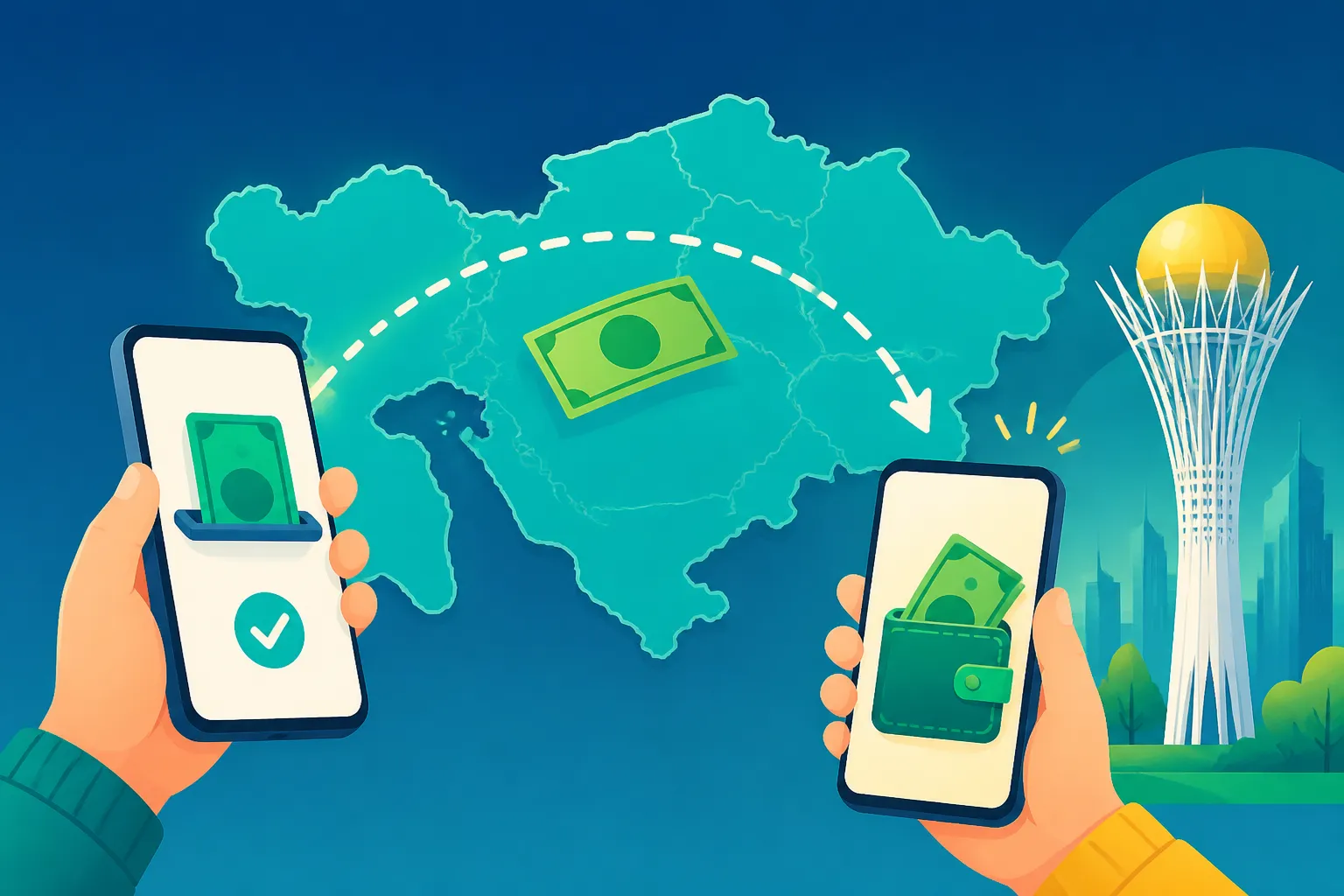
When you're trying to send money to Kazakhstan, platforms like Wise (formerly TransferWise) are often highlighted for a reason. They operate on a different model: instead of actually sending your money across borders using SWIFT, they match transfers. For example, if you're sending USD to KZT, and someone else is sending KZT to USD, they effectively swap the money within each country, facilitating the transfer locally. This significantly reduces costs and speeds up the process.
With services like Wise, you typically pay a small, upfront fee that's clearly displayed, and they use the real mid-market exchange rate. This means no hidden markups and no surprise deductions when the money arrives. For expats managing their finances, this transparency is a huge relief. The money usually arrives in the recipient's Kazakhstani bank account (like Kaspi Bank or ForteBank) within hours or at most a day or two. This is particularly helpful for regular remittances or urgent payments. We'll delve deeper into Wise and similar services in the next section.
Popular Online Money Transfer Services for Kazakhstan
Navigating the array of online money transfer services can be a bit overwhelming at first glance, but a few have truly stood out for their reliability and cost-effectiveness when sending money to Kazakhstan. These services are a breath of fresh air compared to the old ways.
Wise: A Game-Changer for Expats
Wise, formerly TransferWise, is probably the most frequently recommended service among expats for a very good reason. They are champions of transparency and fair pricing. When you initiate a transfer with Wise, you'll see the exact amount your recipient will receive, the exact exchange rate (which is usually the real mid-market rate), and the small, upfront fee. No nasty surprises.
How Wise Works in Practice:
Let's say you're in Canada and need to send 1,000 CAD to your parents in Almaty. You'd log into your Wise account (or create one, which is straightforward), input the amount, and select KZT as the receiving currency. Wise will immediately show you the fee and the exchange rate, and thus the final KZT amount your parents will get. You then pay Wise from your Canadian bank account via debit card, bank transfer, or sometimes even credit card (though credit card fees can be higher). Wise then uses its network to pay out the equivalent amount in KZT from its local Kazakhstani account directly into your parents' chosen bank account, whether it's at Kaspi Bank, Halyk Bank, or another local institution. The transfer often completes within a few hours, sometimes even minutes, if everything is in order.
One of the biggest advantages of Wise is its commitment to the mid-market exchange rate. This is the rate you see on Reuters or Google, without any hidden markups. Many traditional banks and even some other transfer services bake a profit into their exchange rate, which effectively means you're paying a hidden fee. With Wise, what you see is truly what you get. For those who frequently transfer money, these small savings on exchange rates can add up to a substantial amount over the year. It's a fantastic tool for managing your funds, and if you haven't opened a bank account yet in Kazakhstan, checking out our guide on The Expat Guide to Opening a Bank Account in Kazakhstan can be really helpful.
Other Reliable Online Transfer Services
While Wise is often a go-to, other services also offer competitive rates and varying features that might suit specific needs:
- Remitly: This service often focuses on providing fast and affordable options, particularly for cash pickup, though bank deposits are also available. They might offer promotional rates for new users or larger transfers. Remitly can be good if your recipient doesn't have a bank account or prefers to collect cash.
- Western Union and MoneyGram: These are global giants, known for their extensive networks for cash pickup. They are undeniably convenient if your recipient is in a remote area without easy access to a bank, or needs cash instantly. However, their exchange rates and fees are typically higher than Wise or Remitly, making them less ideal for larger or regular transfers. They're more for emergency situations where speed and accessibility outweigh cost.
- Xoom (a PayPal Service): Xoom offers bank deposits, cash pickup, and even bill payment options to certain countries. They can be quite fast, but like Western Union, their exchange rates might not always be as competitive as Wise.
When comparing these, always look beyond just the advertised fee. The exchange rate is a critical component of the total cost. A service with a zero-fee claim might be hiding a less favorable exchange rate. Always use their online calculators to see the exact amount the recipient will get.
Key Factors to Consider When Sending Money to Kazakhstan
Sending money to Kazakhstan isn't just about picking the first service you see. There are several crucial factors that can significantly impact the overall cost, speed, and convenience of your transfer. As someone who has sent many a tenge back home, I’ve learned these lessons the hard way, so let's break them down.
Exchange Rates and Fees
This is often the biggest determinant of how much money actually reaches your loved ones. You need to be a hawk when it comes to exchange rates.
- Mid-Market Rate: As mentioned earlier, the mid-market rate is the real exchange rate, the one banks use to trade with each other. Services like Wise pride themselves on using this rate, charging a separate, transparent fee. Always compare the rate offered by your chosen service to the mid-market rate (easily found on Google or Reuters). A significant difference means you're losing money on the conversion.
- Transfer Fees: These can be fixed or a percentage of the amount you're sending. Some services might waive fees for larger transfers, or offer lower fees for bank transfers compared to debit/credit card payments. Always look for clarity here. Hidden fees from intermediary banks in a traditional SWIFT transfer can be a real pain.
- Promotional Rates: Be aware that some services offer attractive promotional exchange rates or zero fees for your first transfer. While great for one-off situations, don't let these skew your long-term comparison if you plan to send money regularly.
For example, if you're sending money to pay for your child's education, even a half-percentage point difference in the exchange rate can save you a significant sum over a few transactions.
Transfer Speed
How quickly does the money need to arrive? This can vary wildly depending on the method.
- Instant/Same-Day: Some online services, especially for smaller amounts or transfers between specific corridors, can be almost instant. This is incredibly useful for urgent payments or surprises.
- 1-3 Business Days: Most reputable online services will complete bank transfers within this timeframe. This is usually sufficient for regular remittances or bill payments.
- 3-7 Business Days (or more): Traditional bank wire transfers (SWIFT) can take this long, and sometimes even longer if there are public holidays or weekends involved, or if the banks need to verify details.
If you're paying a utility bill that's due tomorrow, a traditional bank transfer is definitely not your friend. Conversely, if you're just moving savings between your own accounts, a few extra days might not matter as much.
Transfer Limits and Regulations
Every service will have its own daily, weekly, or monthly transfer limits. These limits are often in place for security and regulatory compliance.
- Maximum Send Amounts: Some services are better for smaller, frequent transfers, while others can handle larger sums more efficiently. If you're moving a substantial amount, check the maximum limits beforehand.
- Recipient Limits: Sometimes, the receiving bank in Kazakhstan might have limits on how much can be deposited into an individual's account within a certain period without additional scrutiny. It’s wise to check with the recipient's bank if you're sending a particularly large sum.
- Anti-Money Laundering (AML) Regulations: Both the sending and receiving countries have strict AML laws. For larger transfers, be prepared to provide documentation about the source of funds. This is standard procedure and ensures legitimate transactions. Don't be surprised if your bank or transfer service asks for more information – it's for everyone's protection. When considering larger transfers or your overall financial planning, remember that organizations like Taxes for Expats can provide advice on how these transfers might intersect with your tax obligations, both at home and in Kazakhstan. Maintaining a clear record of transfers is crucial for financial transparency, which can be particularly relevant when you're filing your annual tax return in Kazakhstan.
Security and Reliability
Your money's safety is non-negotiable.
- Licensing and Regulation: Ensure the service you choose is properly licensed and regulated in the countries it operates in. In the UK, for instance, they'd be regulated by the FCA. This provides a layer of protection for consumers.
- Encryption and Fraud Prevention: Look for services that use robust encryption and have strong fraud detection measures in place. This protects your personal and financial data.
- Customer Support: What happens if something goes wrong? Good customer support, easily accessible via phone, email, or live chat, can be a lifesaver. This is especially true when dealing with cross-border transactions where time zones and language barriers can be an issue.
It’s always a good idea to research reviews and trust scores for any service you consider, particularly from expat forums or reputable review sites.
Here's a quick comparison of common methods:
| Method | Exchange Rate | Fees (Typical) | Speed (Typical) | Convenience | Best For |
|---|---|---|---|---|---|
| Traditional Bank Wire (SWIFT) | Marked-up | High (fixed + intermediary) | 3-7+ Business Days | Low (in-branch visits) | Very large, infrequent transfers (with patience) |
| Online Transfer Service (e.g., Wise) | Mid-market | Low (transparent, fixed/%) | Hours to 2 Business Days | High (online/app) | Regular remittances, budget-conscious expats |
| Cash Pickup Service (e.g., Western Union) | Marked-up | Medium to High | Minutes to Hours | High (recipient access) | Urgent, emergency cash needs, unbanked recipients |
| P2P Digital Wallets (e.g., PayPal) | Variable (can be high) | Medium to High | Instant to 1-2 Days | High (app-based) | Small, informal transfers (if available) |
This table should give you a quick visual aid to compare your options.
Common Pitfalls and How to Avoid Them When Sending Money to Kazakhstan
Even with the best intentions and the right service, sending money internationally can still hit a snag or two. This guide sets out some common pitfalls when transferring funds to Kazakhstan and how you can sidestep them, ensuring your money transfer is as smooth as possible.
Incorrect Recipient Details
This is probably the most common and most frustrating mistake. Imagine sending a significant amount of money, only to find it's either bounced back or, worse, gone into the wrong account. It happens more often than you'd think, especially with international transfers where bank formats can differ.
- Double-Check Everything: When you enter the recipient's full name, bank name, account number, IBAN (International Bank Account Number), and SWIFT/BIC (Bank Identifier Code) for a Kazakhstani bank like Kaspi Bank or Halyk Bank, verify every single digit and letter. Ask your recipient to send you their details in writing, perhaps even a screenshot from their online banking, to avoid any transcription errors.
- Use the Right Format: Different countries have different bank account number formats. Ensure you're using the correct format for Kazakhstan. For instance, Kazakhstani IBANs are 20 characters long, starting with 'KZ'.
- Small Test Transfer: If it's your first time sending money to a particular recipient or bank, consider doing a small test transfer (e.g., $10 or $20). It’s a minimal loss if something goes wrong, but it verifies all the details are correct before you send a larger sum. Once that small amount arrives, you know you’re good to go for bigger transfers.
Understanding your recipient's bank details and how money is received locally is key. For more on the specifics of the Kazakhstani currency, our article on Understanding the Tenge (KZT) and Foreign Currency Accounts in Kazakhstan might be a good read.
Underestimating Hidden Fees and Exchange Rate Markups
As we touched on earlier, this is where many people get stung. The advertised fee might look low, but if the exchange rate is poor, you're losing money anyway.
- Always Compare the Final Payout: Never just look at the sending fee. Always compare the total amount the recipient will receive in KZT against what you’re sending in your local currency. Use the online calculator of various services.
- Beware of "Zero Fee" Claims: If a service claims "zero fees," be extra vigilant about the exchange rate they are offering. It’s highly probable they’ve built their profit margin into a less favorable rate.
- Check for Intermediary Bank Fees (SWIFT): If you're using a traditional bank wire, ask your bank if there will be any intermediary bank fees. Sometimes, they can’t give you an exact figure, but they can warn you if it's likely. This is a common complaint for expats dealing with international bank transfers.
Ignoring Regulatory Requirements and Tax Implications
Larger transfers, especially, can attract attention from financial regulators, both in your home country and in Kazakhstan. It’s not about being suspicious, it’s about compliance.
- Source of Funds: For significant amounts, both your bank and the transfer service might ask for proof of the source of funds (e.g., sale of property, salary slips, inheritance). This is standard procedure to combat money laundering. Have documentation ready.
- Tax Residency and Reporting: If you're sending money to yourself in Kazakhstan (e.g., transferring savings), or if your transfers are substantial enough to be considered income by the receiving end, there might be tax implications. This is particularly relevant if you're deemed a tax resident in Kazakhstan. Consulting with an expert, perhaps one recommended by Taxes for Expats, can help clarify your obligations. Understanding your tax situation is crucial, so our guide on How Much Income Tax Will I Pay in Kazakhstan in 2026? could also be very relevant here.
- Cash Limits: While not a "transfer" per se, if you plan to bring cash into Kazakhstan, be aware of the declaration limits. You can bring up to USD 10,000 (or equivalent) without declaration. Amounts exceeding this must be declared at customs.
Delays Due to Verification or Public Holidays
Sometimes, even with the right details, transfers can be held up.
- Verification Processes: For first-time users or very large transfers, online services might require additional identity verification, which can delay the initial transfer. Plan accordingly.
- Public Holidays and Weekends: Remember that public holidays in either the sending or receiving country (Kazakhstan has several) can delay transfers. Weekends also mean banks aren't processing transactions. If you need money to arrive by a specific date, always factor in extra buffer time.
- Time Zones: Be mindful of time zones. A "same-day" transfer initiated late in the day in your home country might only be processed the next business day in Kazakhstan.
By being meticulous with details, understanding fee structures, respecting regulatory frameworks, and planning for potential delays, you can ensure your money gets to Kazakhstan efficiently and without unnecessary headaches. It's all about being informed and a little bit prepared.
Setting Up Your Recipient in Kazakhstan to Receive Funds
Once you've chosen your preferred method for sending money to Kazakhstan, the final, crucial step is ensuring your recipient is ready on their end. This can often be a source of confusion for newcomers and even those who've been here a while. Getting the receiving side right is just as important as the sending side!
Bank Accounts in Kazakhstan: Kaspi, Halyk, and More
For most regular transfers, especially from online services like Wise, the money will land directly in a Kazakhstani bank account. Understanding the local banking landscape is key here.
- Kaspi Bank: This is arguably the most popular bank in Kazakhstan, practically a phenomenon. Kaspi.kz isn't just a bank; it's a super-app offering banking, payments, marketplace, and more. Most expats and locals use it extensively. Receiving money into a Kaspi account is usually straightforward and often very quick. If your recipient has a Kaspi Gold debit card, the funds will typically appear almost instantly once processed. Learning how to use this ubiquitous platform can save you a lot of hassle, and our guide on How to Use Kaspi and Local Payment Systems in Kazakhstan offers a deeper dive.
- Halyk Bank: As one of the oldest and largest banks, Halyk Bank is another very common choice. They have a vast network of branches and ATMs across the country. Receiving transfers here is also reliable.
- ForteBank, Jysan Bank (formerly Tsesnabank), Bank CenterCredit: These are other significant players in the Kazakhstani banking sector, all capable of receiving international transfers.
What your recipient needs to provide you:
To ensure a smooth transfer to any of these banks, your recipient will need to provide you with:
- Full Name: Exactly as it appears on their bank account.
- Bank Name: E.g., "Kaspi Bank" or "Halyk Bank."
- IBAN (International Bank Account Number): This is a unique identifier for their bank account. It starts with "KZ" followed by 18 digits.
- SWIFT/BIC Code: This identifies their bank internationally. For Kaspi Bank, it's typically "CASPKZ22" (though always verify the latest with the recipient). For Halyk Bank, it's "HZKOKZKX". These codes are essential for international transfers.
Making sure your recipient has an account and provides you with accurate details is the first step. If you're new to the country and haven't set up your own banking yet, our post on How to Set Up Online Banking with a Kazakhstani Bank can walk you through the process.
Cash Pickup Options
For recipients without a bank account or those needing immediate cash, services like Western Union and MoneyGram are viable, albeit often pricier, alternatives.
- How it works: You send money online or from an agent location in your home country. You'll receive a transaction control number (MTCN for Western Union, reference number for MoneyGram). Your recipient then goes to a participating agent location in Kazakhstan (found in post offices, certain banks, or dedicated kiosks), presents valid ID (usually a passport or Kazakhstani ID card), and provides the control number.
- ID Requirements: Emphasize to your recipient that they must bring a valid government-issued photo ID. The name on the transfer must exactly match the name on their ID. Any discrepancy can cause significant delays or even refusal of payout.
- Agent Locations: Ensure there's a convenient agent location near your recipient in Kazakhstan. While they have extensive networks, it’s always good to confirm.
Using Local Payment Systems
Kazakhstan has a robust ecosystem of local payment systems, largely driven by Kaspi.kz. While not direct international transfer mechanisms, they are the end point for many.
- Kaspi.kz App: As mentioned, Kaspi Gold is almost universal. Once money arrives in a Kaspi account from an international transfer, the recipient can instantly use it for online payments, in-store purchases via QR code, P2P transfers to other Kaspi users, or withdraw cash from Kaspi ATMs. This seamless integration makes it incredibly convenient for daily life.
- Digital Wallets: While not as prominent for international receiving as Kaspi, other local digital wallets exist. However, for transfers from abroad, direct bank deposit to a Kaspi or Halyk account is typically the most efficient route.
Ultimately, educating your recipient about what to expect, what details they need to provide, and how they will access the funds on their end will prevent a lot of potential headaches. Clear communication is your best friend in the world of international money transfers.
Disclaimer
Please remember that while I strive to provide the most accurate and up-to-date information, the world of finance and international transfers is constantly evolving. Regulations, fees, and exchange rates can change without notice. This guide is for informational purposes only and does not constitute financial or legal advice. Always verify current terms and conditions directly with the service providers or financial institutions before initiating any transfers. For specific tax implications, especially with large transfers or when changing tax residency, consulting with a qualified tax advisor is strongly recommended.