What Is the Best Way to Get Around Almaty Without a Car?
Ah, Almaty! The Apple City, nestled at the foot of the magnificent Tien Shan mountains. It's truly a stunning place, but let's be honest, navigating a new city, especially one as dynamic and sprawling as Almaty, can feel like a labyrinth, particularly when you’re committed to going car-free. Trust me, I’ve been there – standing on a street corner, map confused, wondering which marshrutka goes where. This guide is for all of us who want to conquer Almaty without the hassle of car ownership, parking woes, or deciphering traffic laws in a foreign language. We'll explore all your best options for getting around.
The Public Transport Maze: Buses, Trolleybuses, and That Glorious Metro
Let's face it, public transport is the backbone of any car-free existence in a big city, and Almaty is no exception. While it might seem chaotic at first glance, once you get the hang of it, you'll find it's surprisingly efficient and incredibly affordable. It’s definitely a cultural immersion, too – sometimes you’ll find yourself squished between babushkas laden with groceries and teenagers blasting pop music, and that’s just part of the charm!
Riding the Almaty Metro: A Breath of Fresh Air
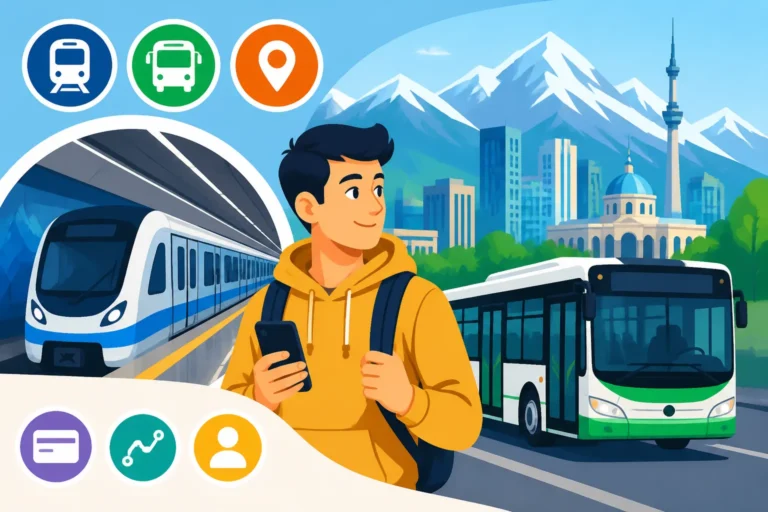
If there's one piece of public transport in Almaty that truly feels like a modern marvel, it's the metro. Stepping into an Almaty metro station is like entering a different world, far removed from the hustle and bustle above ground. The stations themselves are often works of art, adorned with beautiful murals, intricate mosaics, and polished marble, reflecting Kazakhstan's rich history and culture. They’re meticulously clean, well-lit, and the air conditioning is a blessing during those scorching Almaty summers.
The trains are modern, quiet, and wonderfully punctual. You’ll rarely experience delays, making it an incredibly reliable option for getting across the city quickly. For expats, the biggest advantage is its simplicity: a clear, easy-to-understand line system and announcements in both Kazakh and Russian (and sometimes English, especially at key tourist stops). This eliminates a lot of the language barrier anxiety that can come with other forms of public transport. It truly feels like a little slice of Western efficiency, right here in Central Asia. Many of us expats, myself included, often choose to live near a metro station for this very reason, as it significantly streamlines our daily commutes. If you’re considering your living options, looking for a place near a station is a smart move, and there are some great resources for finding apartments in this city like How Do I Find an Apartment Near the Metro in Almaty?.
However, the Almaty Metro, for all its glory, does have its limitations. Currently, it consists of a single line (the A1 line) that runs north-south, roughly following the main arteries of the city like Abay Avenue and Furmanov/Nazarbayev Street. While extensions are always being planned and occasionally materialise, it won't take you everywhere you need to go. If your destination is off the main metro route, you’ll inevitably need to transfer to a bus, trolleybus, or grab a taxi for the last leg of your journey. But for those core city commutes, especially from areas like Alatau or Raiymbek Batyr in the north down to Dostyk or Abay in the south, it's simply unbeatable. For a deeper dive into how to use this underground gem, check out How Do I Use the Metro in Almaty?.
Navigating Almaty's Extensive Bus and Trolleybus Network
Now, if the metro is Almaty’s shiny new backbone, the bus and trolleybus network is its sprawling, intricate circulatory system, reaching almost every nook and cranny of the city. This is where the real adventure of car-free living in Almaty truly begins! There are literally hundreds of routes, served by a mix of modern, comfortable buses (many of them electric these days, which is great for the city’s air quality) and the slightly older, but still reliable, trolleybuses. The sheer coverage is impressive; chances are, there’s a bus stop within a five-minute walk of wherever you are.
Payment is straightforward with the ONAY! card – a contactless smart card that you tap when you board. You can buy these cards at metro stations, some kiosks, or from drivers, and top them up at various payment terminals around the city, including Kaspi terminals. Fares are incredibly cheap, making it an extremely economical way to get around daily. What's not so straightforward is knowing which bus to take and where it's going. This is where modern technology becomes your best friend. Ditch those paper maps (if they even exist anymore!) and download 2GIS or Yandex Maps. These apps are absolutely indispensable. They provide real-time bus tracking, route planning, and even tell you when the next bus is expected. Seriously, don't leave home without them! You'll want a reliable mobile data connection for this, so make sure your phone is set up with a local SIM or an eSIM from providers like Airalo to stay connected.
The downsides? Well, Almaty traffic can be legendary, especially during peak hours. A short bus ride can quickly turn into a lengthy sightseeing tour if you hit the wrong time. Buses also get very crowded, particularly on popular routes, so be prepared to stand, potentially squished, and hold on tight! While drivers are generally good, some can be a bit… enthusiastic. Finding your stop can also be tricky if you're not familiar with the route or don’t understand the announcements. Keep an eye on your map app and be ready to push the 'stop' button or make your way to the exit well in advance. Despite these challenges, mastering the bus network is key to truly unlocking Almaty without a car, giving you access to everything from local markets to hidden cafes. If you want to dive deeper into how this works, take a look at Understanding the Almaty Metro, Bus and Astana Transport Networks.
Taxis and Ride-Sharing: Your Convenient (and Affordable) Lifeline
When public transport isn't cutting it – perhaps it's late at night, you're in a hurry, or simply loaded down with groceries – Almaty's robust taxi and ride-sharing scene comes to the rescue. This is where convenience truly meets affordability, a luxury many expats from higher-cost countries genuinely appreciate.
Harnessing the Power of Yandex.Go and InDriver
Let’s talk about the absolute kings of urban mobility in Almaty: Yandex.Go (often just called Yandex Taxi) and InDriver. These apps are everywhere, and honestly, they'll become your best friends. They’ve completely revolutionised getting around the city. Forget flagging down random cars and haggling over prices – these apps bring transparency and reliability right to your smartphone. With Yandex.Go, you simply input your destination, and the app gives you an upfront fare estimate based on different service levels (Economy, Comfort, Business, etc.). You can see the driver's details, track their progress, and even pay directly through the app if you've linked a card, which is super convenient, especially with services like Kaspi.kz integrated. For more on local payment methods, check out How to Use Kaspi and Local Payment Systems in Kazakhstan.
InDriver operates a little differently, offering a unique bidding system. You propose a fare, and nearby drivers can accept, counter-offer, or decline. This gives you a bit more control over the price, especially during non-peak hours, but it also means you might wait a little longer for a driver to accept your offer. Both apps are generally safe and drivers are usually professional, although language can sometimes be a barrier. A pro tip: always have your destination written in Cyrillic (or show it on your map app) to avoid misunderstandings. Yes, sometimes drivers will cancel if they deem the fare too low or the destination inconvenient, which can be frustrating, especially if you're in a rush or caught in bad weather. And during peak times or bad weather, expect surge pricing – those incredibly cheap fares can suddenly double or triple. But even with surge pricing, it's often still more affordable than what you'd pay for a taxi in many Western cities. It’s a definite quality-of-life upgrade for the car-free expat.
Traditional Taxis and the Art of Negotiation
While ride-sharing apps have largely taken over, you’ll still see plenty of traditional yellow taxis around, especially near hotels, train stations, and popular tourist spots. And then there are the 'unofficial' taxis – essentially anyone with a car willing to give you a ride for a fee. This latter option is less common now thanks to the apps, but it still happens. My advice? Unless you're comfortable with haggling in Russian or Kazakh, stick to the apps.
If you do decide to take a traditional taxi, always agree on the price before you get in. Don't assume they’re using a meter, because they almost certainly aren't. Having a rough idea of what an app-based ride would cost for the same journey is a good negotiation tool. While most drivers are honest, there's always the potential for a "foreigner price," so knowing your approximate fare range is crucial. For peace of mind, especially when arriving at the airport late at night, booking a pre-arranged airport transfer or using Yandex.Go is highly recommended. It saves you the stress of negotiation after a long flight and ensures you get to your accommodation without a hitch.
On Two Wheels or Two Feet: Alternative Ways to Explore Almaty
Sometimes, the best way to truly experience a city, and certainly the freshest way to get around, is under your own power. Almaty, with its wide boulevards and stunning mountain backdrop, offers some fantastic opportunities for walking, cycling, and even zipping around on electric scooters.
Scooters, Bikes, and the Urban Landscape
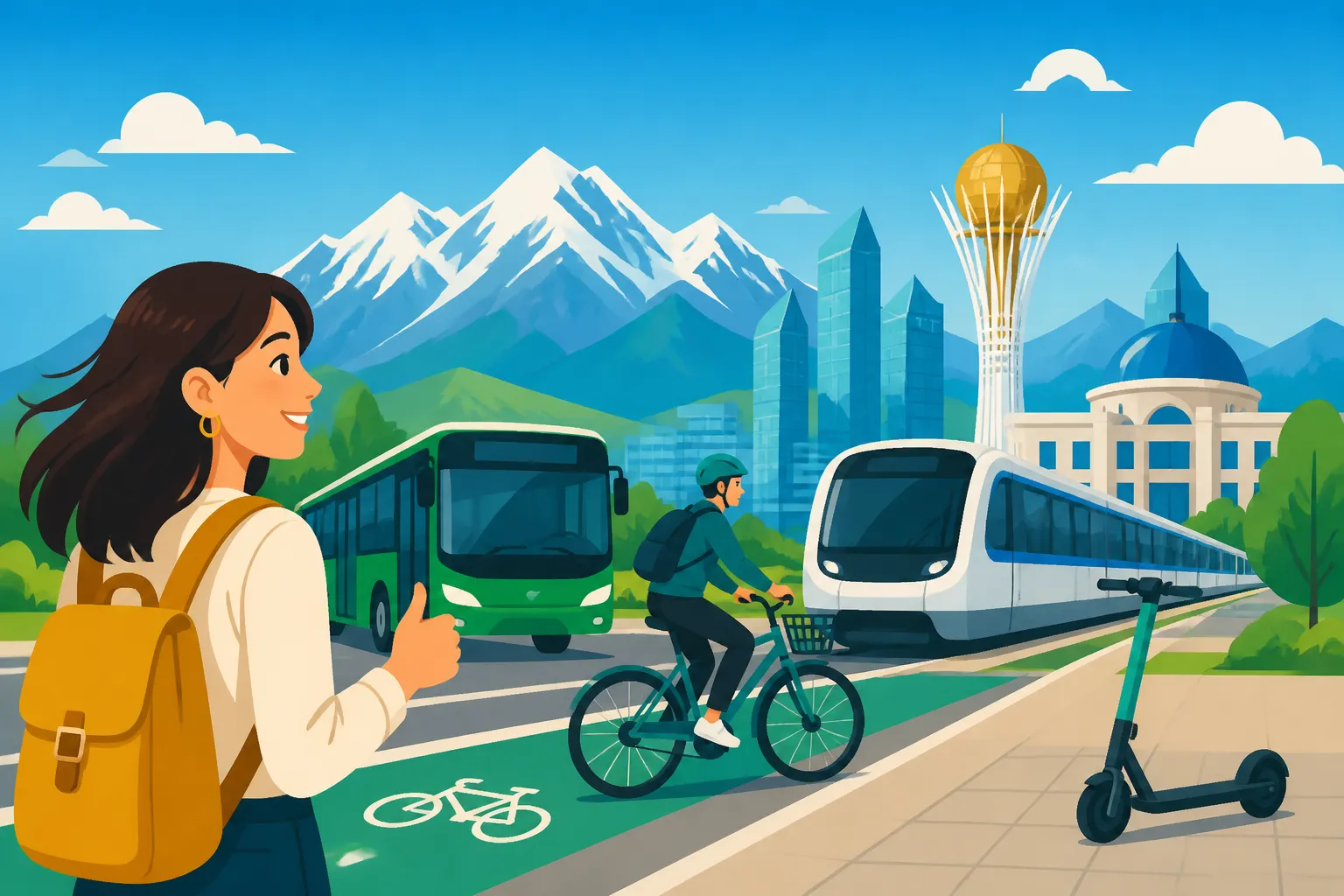
Over the past few years, Almaty has seen an explosion of electric scooter rental services. Companies like Jet and Whoosh have dotted the city with their brightly coloured scooters, available via user-friendly apps. They’re fantastic for short distances, especially when the weather is good, and offer a fun, quick way to navigate areas where public transport might be less direct. Imagine gliding along Abay Avenue with the mountains in view – it’s a pretty cool experience! Just open the app, find a scooter, scan the QR code, and you’re off. Payment is typically linked to a bank card.
While the city is gradually improving its cycling infrastructure, dedicated bike lanes are still a bit of a mixed bag. You'll find them in some newer districts and along certain popular routes, but generally, cyclists share the road with cars or navigate crowded sidewalks. Bike rental points also exist, particularly in parks or recreational areas, and some hotels or hostels might offer them. However, for serious daily commuting by bike, you need to be a confident rider and highly aware of your surroundings, as traffic can be unpredictable. Scooters and bikes are definitely best suited for leisure, short trips, or covering that "last mile" from a bus stop to your final destination. Always wear a helmet if possible, and be mindful of pedestrians if you’re riding on sidewalks – they don’t always appreciate a silent scooter whizzing past!
Walking: The Best Way to Soak in the City's Vibe
For me, there’s no better way to get to know a city than by walking its streets, and Almaty is surprisingly walkable in many areas. The city centre, particularly around the Arbat pedestrian street, Panfilov Park, and the "Golden Square" area (the historical administrative and cultural heart of Almaty), is a delight to explore on foot. Wide sidewalks, tree-lined avenues, and plenty of benches make for pleasant strolls. You can discover charming cafes, quirky boutiques, and beautiful Soviet-era architecture that you’d completely miss from a car or bus. The air in Almaty, especially after a rain shower or closer to the mountains, is incredibly fresh, making walking even more enjoyable.
The city's grid-like structure, with its main north-south and east-west avenues, also makes it relatively easy to navigate once you get your bearings. The majestic mountains to the south serve as an excellent natural compass, always reminding you of your orientation. Just remember that Almaty is built on a gentle slope, so some uphill walks can give you a decent workout! Always wear comfortable shoes, especially if you plan on covering a lot of ground. Walking is not just a mode of transport here; it's a way to truly absorb the atmosphere, interact with local life, and discover those hidden gems that make Almaty so special. Plus, it's completely free! For those settling in, choosing a neighbourhood with good walking access to amenities and green spaces can significantly enhance your car-free lifestyle. This can directly influence How Much Does It Cost to Rent an Apartment in Almaty in 2026? due to demand.
Essential Tips for the Car-Free Expat in Almaty
Living car-free in Almaty is entirely feasible and, dare I say, quite enjoyable once you get into the swing of things. But like any expat experience, a little preparation and insider knowledge can go a long way.
Staying Connected and Navigating with Apps
I cannot stress this enough: your smartphone with a good data plan is your ultimate navigation tool in Almaty. You simply won't survive the car-free life without it, especially when dealing with the bus network. As mentioned earlier, 2GIS and Yandex Maps are absolutely non-negotiable downloads. They offer detailed street maps, public transport routes with real-time tracking, estimated travel times, and even pedestrian directions. Trust me, these apps will save you countless headaches and missed turns.
To ensure you're always connected, invest in a local SIM card or, even better, an eSIM. Providers like Kcell, Beeline, and Tele2 offer competitive data packages. For those who prefer to stay connected upon arrival without swapping physical SIMs, an eSIM from a service like Airalo can be a lifesaver, providing instant data connectivity as soon as you land. This allows you to immediately access your navigation and ride-sharing apps, making your initial journey from the airport so much smoother. Having reliable data means you can quickly look up bus routes, call a Yandex.Go, or even translate a sign if you get stuck. For more detailed information on getting your phone set up, take a look at How Do I Set Up a Mobile Phone Plan in Kazakhstan?.
Budgeting Your Transport Costs
One of the most appealing aspects of going car-free in Almaty is the significant cost savings. Public transport fares are incredibly low. A single metro or bus ride typically costs less than 100-200 KZT (around $0.20-$0.40 USD). Even if you take several rides a day, your daily public transport expenses will likely be under $2. Taxis, while more expensive than buses, are still remarkably affordable compared to many global cities. A 15-20 minute Yandex.Go ride across a significant portion of the city might cost you anywhere from 1000-2500 KZT ($2.20-$5.50 USD), depending on traffic and demand.
Compare this to the cost of maintaining a car in Kazakhstan, including fuel, insurance, and parking, and the savings are substantial. Over a month, you're looking at spending maybe $50-$150 on transport, even if you regularly use taxis. This contributes significantly to why the overall Cost of Living in Kazakhstan for Expats is often more manageable than expected. By leaning on public transport and strategically using ride-sharing, you can free up a good chunk of your budget for other experiences, like exploring the stunning natural beauty around Almaty or indulging in the city's fantastic culinary scene.
Understanding Almaty's Layout and Key Areas
Almaty’s geography plays a crucial role in how you navigate the city. It’s laid out on a fairly consistent grid, with the majestic Tien Shan mountains always to your south. This makes orientation relatively easy – if you can see the mountains, you know which way is south! Most of the major north-south avenues (like Dostyk, Abay, Kunaev, Nauryzbay Batyr, Al-Farabi) run from the city centre towards the mountain foothills, while east-west avenues (like Tole Bi, Gogol, Shevchenko, Kurmangazy) crisscross the city.
The main expat-friendly areas and business districts are generally concentrated in the central and southern parts of the city. For example, neighbourhoods around the metro line, particularly south of Abay Avenue up towards Al-Farabi, offer a good balance of modern living, amenities, and relatively easy access to transport. These areas are often well-connected by both the metro and numerous bus routes. Knowing which part of the city you're in relation to the mountains and the major avenues will quickly become second nature and help you choose the most efficient transport method. It also helps in deciding between cities like Almaty, Astana, or Shymkent for longer stays, as each has its own transport nuances, as detailed in How Do I Choose Between Almaty, Astana and Shymkent to Live In?. Understanding the best neighbourhoods for expats, and their transport links, is crucial. You can find more information on this in What Are the Best Neighbourhoods for Expats in Kazakhstan?.
Here’s a quick comparison of your car-free transport options in Almaty:
Transport Method Average Cost (per trip) Convenience Speed (Average) Coverage Notes
Metro Low (200 KZT) Very high Medium (depends on transfers) Limited Clean, fast, but limited coverage. Best for commuting along its route.
Buses Very low (200 KZT) Medium Medium (traffic dependant) Wide coverage Pay with ONAY! card. Use apps for tracking.
Yandex.Go Low to Medium High Medium (traffic dependant) Wide Coverage Uses GPS. Best for convenience, price stability. Very low to Very High Low to high Slow (pedestrians) Everywhere Speed varies, but good for local travel.
Traditional Taxis N/A (negotiated) High (if agreed on price) Medium (traffic dependant) Wide Coverage Always negotiate fare beforehand. Less common now than ride-hailing apps.
Walking Free Medium Medium (with good shoes) Central Almaty Great for short trips, exploring.
Disclaimer
The information provided in this guide is for general informational purposes only and should not be considered as legal, financial, or medical advice. While every effort has been made to ensure accuracy and currency, local regulations, prices, and service availability can change rapidly in Kazakhstan. Expats should consult with relevant professionals for personalized advice and verify all information with official sources or local experts before making decisions based on this content. We are not responsible for any actions taken based on the information provided herein.