How Reliable Is Public Transport in Kazakhstan?
Alright, let's talk about getting around this amazing, yet sometimes utterly baffling, country. When you first arrive in Kazakhstan, you're likely juggling a million new things – How Do I Get an IIN Individual Identification Number in Kazakhstan?, setting up your home, and perhaps even navigating a new job. The last thing you want is to spend precious time figuring out if you can actually rely on public transport to get you to that important visa appointment or simply to the grocery store without a meltdown. This guide is here to give you the honest lowdown on how reliable public transport truly is, so you can confidently plan your commutes, whether it's a daily grind or an occasional adventure.
The Lay of the Land: Public Transport Options Across Kazakhstan
For us expats, understanding the local transport landscape is crucial. You'll quickly find that while the options are generally straightforward, their quality and coverage can differ dramatically from one city to another. It's not like back home where every city typically has a uniform system. Here, you adapt.
Buses and Trolleybuses: The Backbone of City Commutes
In most Kazakhstani cities, especially the larger ones like Almaty, Astana, Shymkent, and Karaganda, buses are the absolute workhorses of public transport. They cover extensive routes, connecting residential areas to business districts, markets, and cultural sites. In Almaty, you'll also find trolleybuses, which are electric buses that run on overhead lines – a bit older, often slower, but they get the job done.
The sheer number of bus routes can feel overwhelming at first. You'll see a constant stream of them, often painted in bright colors, particularly in Almaty where green buses are ubiquitous. They're generally modernizing, with many newer models offering air conditioning (a blessing in summer!) and digital displays showing the next stop. However, during peak hours, prepare for a sardine-can experience. Personal space is a luxury few can afford when everyone's trying to get to work or school. It’s part of the authentic experience, I suppose, but certainly not always comfortable.
The Almaty Metro: A Modern Oasis Underground
If you're lucky enough to be living in Almaty, the metro is truly a breath of fresh air. It’s a modern, clean, and surprisingly quiet system that stands in stark contrast to the bustling streets above. Currently, it has one line, but it’s slowly expanding, with new stations added periodically. The stations themselves are often beautifully designed, with marble, intricate artwork, and a real sense of grandeur.
The metro runs from roughly 6:20 AM to midnight, with trains arriving every 5-10 minutes depending on the time of day. It’s incredibly punctual and offers a fast, traffic-free way to travel between its stations, which stretch from the southwestern residential areas to the city center and beyond. For anyone needing to commute along its route, the Almaty Metro is hands down the most reliable option. The only drawback is its limited coverage; it won't take you everywhere, but where it does go, it excels. If you're pondering How to Use the Metro and Public Transport in Almaty, this is definitely the star of the show.
Taxis and Ride-Sharing: When Public Just Won't Cut It
While our focus here is on public transport, it’s worth a quick mention that ride-sharing apps like Yandex Go are incredibly popular and often surprisingly affordable in larger cities. When you're running late, carrying too many bags from the bazaar, or simply need to get somewhere not served by a direct bus route, these apps are lifesavers. They offer a level of convenience and door-to-door service that traditional public transport just can't match, especially when you’re still getting used to things. However, they're not always the budget-friendly solution for daily commutes, which is why understanding the public system is so important.
Digging Deeper into Reliability: What Expats Experience
"Reliability" means different things to different people. For some, it's about punctuality; for others, it's about reaching every corner of the city. As an expat, you’ll find Kazakhstan's public transport has its quirks and charms.
Punctuality and Frequency: Managing Expectations
Let's be realistic: if you're used to Swiss train precision, you might need to adjust your expectations. While the Almaty Metro is wonderfully punctual, buses and trolleybuses operate on a more "Kazakhstani time" schedule. In larger cities like Almaty and Astana, buses are frequent, especially on major routes and during daylight hours. You rarely wait more than 5-10 minutes for a bus on a busy street. However, specific schedules are often more of a guideline than a strict rule. Traffic, especially in Almaty, can be brutal, leading to delays that pile up.
Off-peak hours or less popular routes might see buses every 20-30 minutes, or even longer. Sundays and public holidays also mean reduced service, so always double-check. The key is to check real-time tracking apps (which we’ll get to) rather than relying solely on posted schedules. It is easy to wait at a bus stop convinced a bus is coming, only to find the app showing it stuck miles away in a traffic jam – or simply not running. It's all part of the adventure!
Route Coverage and Connectivity: Getting Where You Need to Go
One area where Kazakhstani public transport generally shines is its sheer coverage. In Almaty and Astana, the bus networks are extensive. You can get to most places within the city limits, from the sprawling residential micro-districts to the bustling downtown areas and even some attractions on the outskirts. This is a huge benefit when you're figuring out your new city and trying to keep your Cost of Living in Kazakhstan for Expats reasonable.
However, "connectivity" is a slightly different story. While you can get almost anywhere, it might involve transfers, sometimes multiple. And those transfers might not always be smooth or well-timed. For instance, if you live in an expat-heavy neighborhood like Dostyk or Al-Farabi in Almaty, you’ll find plenty of buses, but reaching a less central area might require a transfer or two. For specific destinations, especially if you're trying to visit a particular clinic or government office for something like How to Register for OSMS Health Insurance in Kazakhstan (2027), planning your route carefully with a mapping app is non-negotiable.
Safety and Comfort: Navigating the Ride
Generally speaking, public transport in Kazakhstan is safe. Serious incidents are rare, and while pickpocketing can occur in crowded places (like any major city worldwide), it's not a prevalent issue. Women generally feel safe using public transport, even alone, though late at night, taxis are always a more prudent option.
Comfort, however, is a mixed bag. Newer buses are quite comfortable, with decent seating and often good climate control. But you'll also encounter older models that are a bit more battered, especially in smaller cities. As mentioned, overcrowding during peak times is a given. You'll learn to perfect the art of holding your ground and protecting your bag! In winter, buses are usually heated, sometimes to an almost stifling degree, while in summer, the AC might be hit-or-miss depending on the bus's age and maintenance.
Payment Systems: Cash, Cards, and Apps
The payment system has come a long way and is largely cashless in the major cities, which is a huge convenience for expats.
- Almaty: The primary method is the Onay! card. You can buy these at metro stations, kiosks, or even from bus drivers (though sometimes with a slight markup or if they happen to have one handy). You load money onto it and tap it when you enter the bus or metro. A single ride is quite cheap, usually around 80-100 KZT (less than 25 US cents).
- Astana: Similar to Almaty, Astana uses a card system (Astana LRT card) which can be purchased and topped up at bus stops or specialized kiosks.
- Kaspi.kz: This is the undisputed king of digital payments in Kazakhstan. Most public transport, especially buses and marshrutkas, can be paid for using the Kaspi.kz mobile app. You simply scan a QR code inside the vehicle, confirm the payment, and you're good to go. This app is incredibly versatile for anything from paying utility bills to transferring money. Many expats find getting a Can Foreigners Open a Kaspi or Halyk Bank Account? is one of the first and most essential steps to living here.
- Cash: While less common in larger cities, especially on newer buses, some marshrutkas or older buses in smaller towns might still prefer cash. Always keep small denominations (100, 200, 500 KZT notes) handy, just in case.
Using a local SIM card with mobile data is absolutely essential for navigating public transport efficiently, especially with apps like Kaspi.kz and real-time trackers. Setting up How Do I Set Up a Mobile Phone Plan in Kazakhstan? early on is crucial. For those just arriving or traveling between cities, an eSIM from a provider like Airalo can be a lifesaver, ensuring you have data from the moment you land without hunting for a physical SIM. It lets you use navigation apps, pay for transport, and stay connected while you're still getting your bearings.
City-Specific Insights: Almaty vs. Astana and Beyond
The public transport experience can feel like night and day depending on where you are in Kazakhstan.
Almaty: The Metro Advantage and Bus Network Realities
Almaty, the former capital, truly offers the most comprehensive public transport system in the country. The metro, as I've raved about, is a clean, efficient, and pleasant way to travel, especially for those who live and work along its route. It's an experience in itself, with deep, ornate stations that transport you both physically and aesthetically.
However, the bus network is where the real daily grind happens. Almaty's buses are extensive, yes, but also subject to the city's notorious traffic jams. During rush hour, a 20-minute journey can easily stretch to an hour. The air pollution in winter can also make open windows undesirable, even if the bus is stuffy. Real-time tracking apps like 2GIS (available for free download and excellent for local navigation) are indispensable here. They show you exactly where your bus is, allowing you to estimate arrival times and decide if it's faster to walk, wait, or hail a Yandex Go. For a deeper dive into the specifics, check out our guide on The Expat Guide to Public Transport in Kazakhstan.
Astana: Modern Infrastructure, Expanding Reach
Astana, the gleaming capital, offers a different flavor of public transport. Being a newer, purpose-built city, its roads are wider, and its infrastructure is generally more modern. The bus system here is also extensive, featuring more modern buses and often less intense traffic than Almaty, leading to slightly better punctuality.
Astana has invested in Bus Rapid Transit (BRT) lanes and an evolving system of dedicated routes, aiming for efficiency. While there's no metro here (an LRT project has been in the works for years, perhaps even decades, with varying degrees of progress and skepticism), the bus network is well-organized. You'll find it fairly easy to navigate, and again, using 2GIS or similar apps will be your best friend. The payment systems are similar to Almaty, with a transit card and Kaspi.kz being the most common. Overall, many expats find Astana's public transport slightly less chaotic and perhaps a touch more predictable than Almaty’s, given the city's design.
Regional Cities: A More Basic Approach
Step outside Almaty and Astana into cities like Shymkent, Aktau, or Atyrau, and you'll find a public transport experience that's often more basic. Buses are still the primary mode, but they might be older, less frequent, and less comprehensively tracked by digital apps. Marshrutkas, which are shared minibuses, play a more significant role in some of these cities. They follow set routes but might pick up and drop off passengers more flexibly.
In these regional centers, it’s not uncommon for expats to rely more on taxis or private cars, especially if they have specific commute needs or prefer more comfort. The cost of living in these cities can be lower, and sometimes the convenience of a taxi outweighs the minor savings of public transport, particularly if your time is valuable. When considering The Best Places to Live in Kazakhstan for Expats, transport options should definitely be on your list of considerations.
Practical Tips and What to Expect as an Expat
So, what's the verdict on reliability, and how can you make the most of it?
Navigating with Apps and Digital Tools
This is where you gain control over the "reliability" factor. Forget paper maps or static timetables – they're largely useless.
- 2GIS: This is the app you need. It's available for Android and iOS, works offline once maps are downloaded, and provides real-time tracking for buses, detailed routes, estimated travel times, and even options for walking or driving. It's incredibly accurate for public transport. I can't stress this enough: get 2GIS.
- Google Maps: Good for overall navigation and finding places, but its real-time public transport data in Kazakhstan isn't as robust as 2GIS.
- Kaspi.kz: As mentioned, essential for payments.
Having a reliable mobile internet connection is non-negotiable for using these apps. When you first arrive, an eSIM from Airalo is a fantastic way to ensure you're connected from the get-go, allowing you to use 2GIS and Kaspi.kz immediately. It prevents that initial panic of being disconnected in a new city. Once you’re settled, you can then consider local providers for a How Do I Set Up a Mobile Phone Plan in Kazakhstan?.
The Pros and Cons of Relying on Public Transport
Let's lay it out:
| Aspect | Pros | Cons |
|---|---|---|
| Cost | Extremely affordable, especially buses and metro. | None, if sticking to public transport. |
| Coverage | Extensive networks in major cities, reaching most areas. | Limited metro coverage; regional cities may have less frequent or modern service. |
| Efficiency | Metro is fast and traffic-free. | Buses can be very slow due to traffic, especially in Almaty peak hours. |
| Comfort | Newer vehicles are modern; metro is clean and spacious. | Overcrowding during peak times; older buses can be less comfortable. |
| Safety | Generally safe, minimal crime risk. | Pickpocketing possible in crowded buses; less convenient late at night. |
| Convenience | Cashless payments are easy; navigation apps provide real-time info. | Requires understanding routes and transfers; less door-to-door than taxis. |
| Environmental | Lower carbon footprint than driving. | Air quality can be poor during winter in some cities, making bus travel less pleasant. |
For many expats, especially those looking to immerse themselves and save money, public transport is a perfectly viable and reliable option, particularly in Almaty and Astana. It’s part of the fabric of daily life here.
Considering Alternatives: When to Opt for Your Own Wheels
While public transport is often reliable enough for daily needs, there are times when it simply doesn't cut it. If your commute involves multiple transfers, or if you live in a less connected area, the time savings of a personal car might be worth the investment. For families, especially with young children, or those with significant mobility needs, a car offers unparalleled convenience.
Keep in mind that driving in Kazakhstan comes with its own set of challenges, from understanding local traffic rules to navigating the often-aggressive driving culture. Our guide on Driving in Kazakhstan: Licences, Registration and Rules for Expats (2027) will give you a full overview if you're leaning this way. When you first arrive and are considering bringing many personal items, it's worth looking into relocation services like Sirelo. They can help you with the logistics of moving your belongings, freeing you from the headache of lugging everything on public transport as you settle into your new home. Whether you're moving a few boxes or an entire household, knowing reliable movers can make that initial transition much smoother.
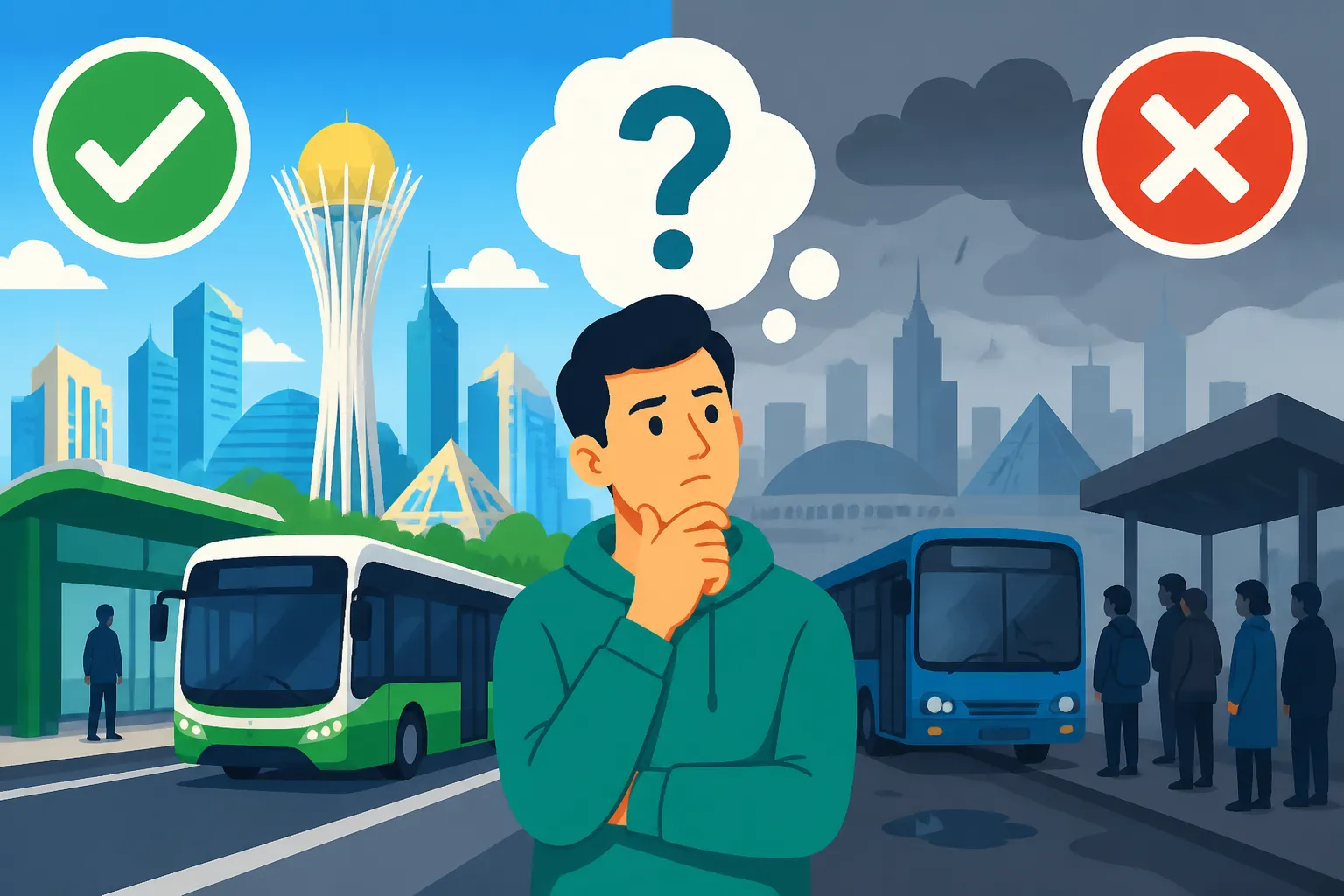
Ultimately, public transport in Kazakhstan, especially in the major cities, is reliable enough for most expats, provided you manage your expectations, embrace the digital tools available, and stay a bit flexible. You might occasionally sigh at a delayed bus, but you'll almost always get where you need to go.
Disclaimer
Please remember that information about public transport routes, schedules, and payment systems can change. While every effort has been made to provide accurate and up-to-date information, it's always wise to check local resources and apps for the very latest details when planning your journey. This guide offers general advice and personal experiences as an expat in Kazakhstan.