How to Get Your Documents Apostilled for Kazakhstan Immigration
Oh, the joy of moving abroad! You’ve packed your bags, maybe even started learning a few Kazakh phrases, but then comes the inevitable administrative hurdle that makes you want to pull your hair out: document authentication. It’s a rite of passage for every expat, and for Kazakhstan, it often means encountering the mystical "apostille." If you’re feeling overwhelmed by official stamps, seals, and confusing bureaucratic jargon, you’re in the right place. This guide will meticulously walk you through exactly how to get your crucial documents apostilled for Kazakhstan immigration, saving you untold headaches and potential delays.
Understanding the Apostille for Kazakhstan: Why It Matters So Much
Let's be real, the last thing you want after planning an international move is to have your perfectly legitimate documents from back home rejected because they lack a specific stamp. This is precisely why understanding the apostille is so critical when dealing with Kazakhstani immigration authorities. It's not just a formality; it's a fundamental step that ensures your foreign documents hold legal weight here.
What Exactly is an Apostille and Why Do I Need It?
Imagine you have a birth certificate issued in, say, the United States. To the officials in Kazakhstan, it's just a piece of paper in a foreign language with seals they don't recognize. How do they know it's not a fake? How can they trust that it was issued by a legitimate government body? That's where the apostille swoops in. An apostille is a certification issued by a designated authority in your home country (the country where the document originated) that verifies the authenticity of the signature, seal, and capacity of the official who issued or certified the public document. It's essentially an international stamp of approval.
Kazakhstan is a signatory to the Hague Apostille Convention of 1961. This means that for any public document issued in another Hague Convention member country, an apostille is the only certification required for that document to be legally recognized in Kazakhstan. Without it, your documents, no matter how genuine, might as well be scribbled on a napkin to the local migration service. This can lead to frustrating delays for your visa, residence permit, or even just getting an IIN (Individual Identification Number), which is practically impossible without properly authenticated documents.
Common Documents That Require Apostille for Kazakhstani Immigration
Pretty much any official document that you'll need to submit to Kazakhstani authorities during your immigration journey will require an apostille. Think of it this way: if it's a government-issued document or something that needs to be officially recognized, it probably needs an apostille. The range is surprisingly broad, and it’s always better to over-apostille than to find yourself in a bind later.
Some of the most frequently apostilled documents for expats moving to Kazakhstan include:
- Birth Certificates: Absolutely essential for family reunification, adding dependents, or proving identity.
- Marriage Certificates: If you're sponsoring a spouse for a residence permit or family reunification, this is non-negotiable.
- Divorce Decrees: Similarly crucial if you're proving single status or remarriage.
- Educational Diplomas and Transcripts: Required for work permits, student visas, and often for professional registration or getting your foreign qualification recognised in Kazakhstan.
- Police Clearance Certificates (PCC) / Criminal Record Checks: A mandatory document for most long-term visas and residence permits, proving you don't have a criminal history.
- Medical Certificates / Health Check Results: For certain visa types, you might need to prove you're free from specific communicable diseases, and these certificates will need apostille.
- Powers of Attorney (POA): If someone else is handling affairs for you in Kazakhstan or vice-versa, this legal document will certainly need authentication.
Imagine trying to apply for a work visa, only to be told your university degree isn't valid because it lacks an apostille. Or worse, trying to add your child to your residence permit without an apostilled birth certificate. These scenarios are common and entirely avoidable with proper preparation. This seemingly small detail can hold up your entire life in Kazakhstan, so take it seriously.
The General Apostille Process: A Step-by-Step Walkthrough
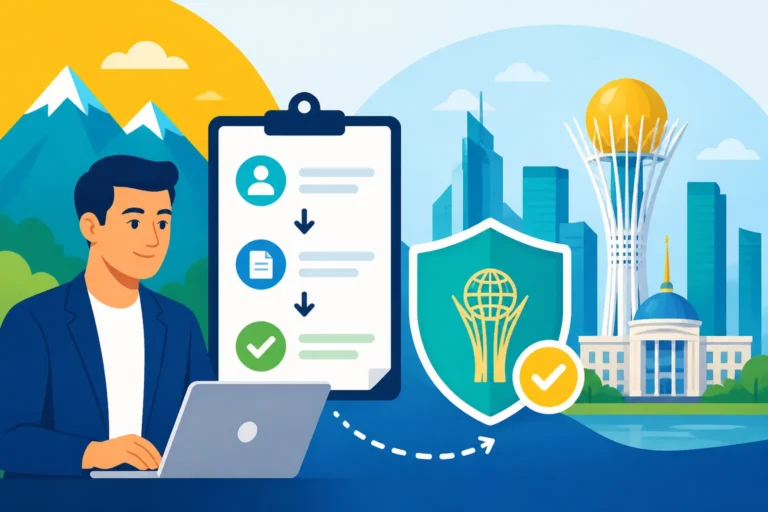
Getting an apostille isn't overly complicated, but it requires precision and a clear understanding of the steps involved. It's not a one-size-fits-all process, as the issuing authority often depends on the type of document and your country of origin. But generally, it follows a similar progression.
Step 1: Document Preparation and Notarization
Before your document can even sniff an apostille, it often needs to be properly prepared and, in many cases, notarized. This is where many people stumble. An apostille certifies the authenticity of a signature or seal on a public document. If your document isn't signed or sealed by a recognized public official, or if it's a private document, it first needs a notary public to witness a signature or certify a copy.
For example, a university diploma might first need to be verified by the university registrar's office, who might then issue a certified copy. That certified copy often needs to be taken to a local notary public who will then certify the signature of the university official. Similarly, if you're submitting a copy of your passport or a private affidavit, a notary public will verify your signature on a statement affirming the copy's authenticity or the affidavit's truthfulness. It's an extra layer of bureaucracy, yes, and an additional cost, but it's a necessary gatekeeper step. Many an expat has gotten their hopes up, only to find their document rejected at the apostille stage because it wasn't pre-notarized correctly. Always check with the apostille-issuing authority in your home country for their specific pre-requisites.
Step 2: Locating the Competent Authority in Your Home Country
This is a crucial point that bears repeating: the apostille must be obtained in the country where the document was originally issued. So, if your birth certificate is from the USA, you get the apostille from the USA, not from a Kazakhstani embassy. Each country designates specific authorities to issue apostilles.
For example:
- United States: Most apostilles are issued by the Secretary of State's office in the state where the document originated. If it's a federal document (like an FBI background check), it's the U.S. Department of State in Washington D.C.
- United Kingdom: The Foreign, Commonwealth & Development Office (FCDO) handles all apostilles.
- Australia: The Department of Foreign Affairs and Trade (DFAT) issues apostilles.
- Canada: Global Affairs Canada is the authority. (Note: Canada only joined the Hague Convention in early 2024, so this is a recent and welcome change for Canadians!)
It’s vital to correctly identify the right authority and department. A quick search for "apostille [your country] [document type]" will usually point you in the right direction. Don't assume one department handles everything, especially in federal systems like the US. Calling ahead or checking their website for detailed instructions is always a good idea, as procedures can vary even within the same country.
Step 3: Submission, Fees, and Waiting Times
Once your document is prepared and you've identified the correct authority, it's time for submission. Most apostille offices offer several methods:
- Mail: The most common method, especially if you're already overseas. You'll typically need to include the original document, a cover letter with instructions, a self-addressed stamped envelope for return (or a prepaid courier label), and payment.
- In-person: Some offices allow walk-in service, but often with long queues. Others require appointments. This is usually the fastest method if you're physically present in your home country.
- Courier Service: Many expats opt for this, both for submission and return, for added security and tracking. You'll often need to arrange and pay for both legs of the journey.
Fees vary but are usually modest, ranging from $5 to $50 USD per document, sometimes more for expedited services. Payment methods can differ, so check whether they accept credit cards, checks, or money orders.
Ah, waiting times. This is often the most frustrating part. While some offices can process documents in a few days in person, mail-in services can take weeks, or even months, depending on the volume and staffing levels. During peak immigration seasons, these times can stretch out considerably. This is a common pain point for expats, as you’re often working with tight deadlines for your visa or job start date. Planning way, way ahead is your best friend here. If time is truly of the essence, some agencies offer expedited services, but they come at a significant premium.
Specific Document Types and Their Apostille Nuances for Kazakhstan
While the general apostille process remains similar, certain types of documents come with their own peculiarities. Understanding these can prevent common blunders and save you from repeated trips to the notary or apostille office.
Educational Certificates and Diplomas
These documents are often the linchpin for securing a work permit or enrolling in a university in Kazakhstan. Whether it's your high school diploma, university degree, or specialized vocational qualification, the Kazakhstani authorities will want to see them properly authenticated.
The nuance with educational documents is that they usually need an extra layer of verification before the apostille stage. This often involves:
- University/Institution Verification: The document might first need to be certified by the registrar's office or an authorized official at the issuing educational institution. They attest that the diploma or transcript is genuine and that the person named indeed completed the program. Sometimes, they'll issue a new, certified copy directly for apostille purposes.
- Notarization: Once the university official has certified the document (or a copy), their signature often needs to be notarized by a local notary public. The notary isn't verifying the diploma itself, but rather the signature of the university official who certified it.
- Apostille: Finally, with the notary's seal and signature, the document is ready for the state or federal apostille authority.
Let's say you're applying for a Master's program at Satbayev University in Almaty. They will almost certainly require your Bachelor's degree certificate to be apostilled. If your degree is from, say, the University of Texas, you’d first work with the UT registrar's office to get an official, sealed copy, then take that to a Texas notary public to notarize the registrar's signature, and then send it to the Texas Secretary of State for the apostille. Missing any of these steps means a return to square one, costing you precious time. Remember, this is also a crucial step if you're looking to get your foreign qualification recognised in Kazakhstan.
Birth, Marriage, and Divorce Certificates
These are foundational documents, particularly when it comes to family immigration, adding dependents, or proving your marital status for official purposes in Kazakhstan. If you're looking to sponsor your family to join you, knowing how to include family in your Kazakhstan residence application starts with these documents.
For these vital records, you typically need an "original" or a "certified true copy" issued by the government entity responsible for vital statistics in your birth/marriage/divorce location. For instance, in the US, this would be a county clerk or state vital records office. In the UK, it would be the General Register Office or a local registrar.
Key considerations:
- Originals vs. Certified Copies: Always try to get a recent "certified true copy" directly from the issuing authority if you don't want to send your precious original. Photocopies (even if notarized) are usually not accepted for apostille unless the issuing authority themselves have certified the photocopy.
- Long-form Certificates: Especially for birth certificates, some countries issue "short-form" (abstract) and "long-form" (full record) versions. For international immigration, the long-form version is almost always preferred as it contains more detailed information.
- Matching Details: Ensure all names and dates on these certificates exactly match your passport and other official identification. Even minor discrepancies can cause major headaches with the Kazakhstani Migration Service.
Dealing with vital records can involve chasing down documents from years or even decades ago, so start this process early.
Police Clearance Certificates (PCC)
A Police Clearance Certificate (PCC), also known as a criminal record check or certificate of good conduct, is a cornerstone document for any long-term stay in Kazakhstan, whether for work, study, or residence. It confirms that you have no criminal history in the country (or countries) you have previously lived in.
The main challenge with PCCs is their limited validity period. Most PCCs are considered valid for only 3 to 6 months from the date of issue. This means you need to time its acquisition and apostille very carefully with your actual visa or residence permit application timeline.
Here’s why it's tricky:
- You apply for a PCC in your home country.
- You then send it for apostille.
- Then, it needs to be translated and notarized in Kazakhstan.
- Finally, you submit it with your immigration application.
If this entire chain takes too long, your PCC could expire before your immigration application is processed, forcing you to get a new one and repeat the entire apostille and translation process. This is a common frustration, especially if you've lived in multiple countries and need PCCs from each – coordinating all those timelines can feel like a full-time job. Be sure to factor this into your overall plan when considering the cost and timeline of the Kazakhstan residence process.
Common Pitfalls and Troubleshooting for Expats
Navigating the apostille process, especially from abroad, can feel like walking through a minefield. Many expats have tales of documents being rejected for seemingly minor reasons. Knowing the common pitfalls can help you avoid them.
The Language Barrier: Translations and Notarized Copies
One of the biggest misunderstandings about the apostille is that once you have it, your document is magically ready for use in Kazakhstan. Not quite! While the apostille makes your document internationally recognizable, it doesn't change the language of the document.
Almost without exception, any document you submit to Kazakhstani authorities will need to be translated into Kazakh or Russian. This translation must be done by a certified translator in Kazakhstan. After the translation, the translator's signature on the translation itself must then be notarized by a Kazakhstani notary public. This is an absolutely critical step that legitimizes the translation.
So, the order is:
- Original document (from your home country).
- Apostille (from your home country).
- Official translation into Kazakh or Russian (in Kazakhstan).
- Notarization of the translation (in Kazakhstan).
Only then is your document fully ready for submission to the Migration Service or any other official body. Sending documents back and forth for translation and notarization after apostille can add significant time and cost, so make sure you factor this into your budget and timeline. It's an important part of understanding document and translation requirements for Kazakhstan immigration.
Timing is Everything: Validity Periods and Planning Ahead
As briefly touched upon with Police Clearance Certificates, the clock starts ticking the moment some documents are issued. Medical certificates, bank statements (if needed), and PCCs almost always have a limited validity. This means you can't just gather all your documents years in advance.
The logistical dance of getting documents, sending them for apostille, getting them back, arranging translation in Kazakhstan, and finally submitting them requires meticulous planning. If you're working with an employer or university in Kazakhstan, try to get a clear timeline for when they need these documents. Then, work backward. Give yourself ample buffer time for each step, especially for postal services and unexpected delays from the apostille authority. Trying to rush these things often leads to mistakes, panic, and even more delays. Remember, securing your visa or residence permit is a marathon, not a sprint.
Using Agencies vs. DIY: Weighing Your Options
For many expats, the thought of coordinating all these steps, especially while already overseas or busy with pre-move logistics, is daunting. This is where specialized document legalization or apostille agencies come into play.
Pros of using an agency:
- Time-saving: They handle all the legwork, from checking requirements to interacting with government offices.
- Expertise: They know the precise steps, common pitfalls, and specific requirements for various document types and countries. This can prevent costly rejections.
- Expedited services: Many agencies have established relationships or procedures that can significantly speed up the process, which is invaluable if you're on a tight deadline.
- Reduced stress: Outsourcing this bureaucratic headache can free you up to focus on other aspects of your move. If you're working with a relocation company like those you might find through Sirelo, they'll often emphasize the importance of getting these documents sorted early.
Cons of using an agency:
- Cost: This convenience comes at a price, often significantly more than doing it yourself. Fees can range from hundreds to thousands of dollars, depending on the number of documents and the urgency.
When it makes sense to use an agency:
- Complex cases: If you have documents from multiple countries, or unusual document types.
- Tight deadlines: If you absolutely need your documents by a certain date and don't have the luxury of waiting.
- Geographical distance: If you are physically far from the apostille authority in your home country and coordinating by mail is too complex.
- Language barriers: If you're not comfortable navigating complex instructions in your home country's administrative language.
For a simple birth certificate, DIY might be fine. But for a full suite of work permit documents, an agency can be a lifesaver.
The Post-Apostille Steps for Kazakhstan
So, you've battled through the bureaucracy, paid the fees, and finally, that glorious apostille stamp is affixed to your document! Congratulations! But as we touched on earlier, the journey isn't quite over for Kazakhstan. There are still crucial steps to take to make your document legally usable here.
Official Translation and Notarization in Kazakhstan
This is perhaps the most critical post-apostille step. An apostille simply validates the origin of your document. It doesn't make it understandable to the Kazakhstani authorities if it's in a foreign language.
Here's what you absolutely must do:
- Find a Certified Translator: Once your document is apostilled, you must get it translated into either Kazakh or Russian. It is crucial that this translation is performed by a certified, professional translator within Kazakhstan. Local authorities will not accept translations done abroad or by uncertified individuals. You can often find reputable translators through recommendations from other expats, your employer, or by contacting local legal offices.
- Notarization of the Translation: After the translation is complete, the translator will sign it, attesting to its accuracy. This signed translation must then be taken to a Kazakhstani notary public. The notary's role here is to certify the translator's signature and qualifications, thereby officially legitimizing the translation itself. This step legally binds the translation to the original apostilled document.
This two-step process—translation by a local certified translator, followed by notarization of that translation by a local notary—is the golden standard for document acceptance in Kazakhstan. Without both, your apostilled document will likely be rejected. Always ask for several copies of the notarized translation, as different government agencies might require originals. This process is key to ensuring your documents meet the necessary standards for things like applying for a work permit, getting a student visa, or even applying for an IIN (Individual Identification Number).
Submission to Kazakhstani Authorities
With your document now apostilled, translated into Kazakh/Russian, and the translation duly notarized, it is finally ready for its intended purpose! This will typically involve submission to one or more of the following:
- Migration Service (Migration Police): For all visa, residence permit, and registration matters. This is where most of your apostilled documents will end up. If you're looking to register your arrival with the Migration Service in Kazakhstan, you'll need these documents ready.
- Universities or Educational Institutions: For enrolment, especially for foreign degree recognition.
- Employers: For work permit applications and employment contracts.
- Banks: For certain financial services or account openings, though typically an IIN and passport are sufficient for basic accounts.
- Other Government Agencies: Depending on your specific needs (e.g., healthcare registration, property purchase).
When submitting, always bring the original apostilled document with its attached notarized translation. While agencies sometimes make copies, many Kazakhstani government bodies will want to see the physical original document with its certifications. It's also a good practice to keep high-quality digital scans and a few physical photocopies for your own records. Always double-check with the specific institution or agency you are submitting to, as their requirements can sometimes have minor variations. For a broader overview, you can refer to the complete guide to Kazakhstan visas and immigration for expats (2026).
What Happens if Your Country Isn't Part of the Hague Convention?
While many countries are signatories to the Hague Apostille Convention, not every nation is. If your document originates from a country that is not a member of the Hague Convention, the apostille process isn't an option. Instead, you'll need to go through a more involved procedure called legalization or attestation.
Legalization through Consular/Embassy Channels
Legalization is a multi-step process that essentially achieves the same goal as an apostille (international recognition) but requires more direct involvement from the consular or diplomatic missions of both your home country and Kazakhstan.
Here’s the typical flow for legalization:
- Notarization in Home Country: Your document first needs to be notarized by a local notary public in the country of origin, similar to the apostille process.
- Certification by Home Country's Foreign Ministry: The notarized document then needs to be certified by the Ministry of Foreign Affairs (or equivalent body) in your home country. This body verifies the notary's signature and seal.
- Attestation by Kazakhstani Embassy/Consulate: This is the crucial extra step. After being certified by your home country's foreign ministry, the document must then be presented to the Kazakhstani Embassy or Consulate in your home country. This diplomatic mission will then "attest" or "legalize" the document, confirming its authenticity for use in Kazakhstan.
As you can see, this involves more layers of bureaucracy and more institutions, making it inherently more complex and time-consuming than the apostille route. Each step might involve separate fees and waiting periods.
Navigating the Non-Hague Process
Navigating the non-Hague legalization process demands even greater foresight and patience. Because it involves diplomatic missions, specific requirements and processing times can vary significantly between different Kazakhstani embassies around the world.
For example, if you obtained a document from a country that is not a Hague signatory, and then moved to a third country, you might find yourself in a bind. You’d need to send the document back to its country of origin for steps 1 and 2, and then possibly ship it to the Kazakhstani embassy that covers that originating country, which might not be where you currently reside. It’s a logistical puzzle that often necessitates the use of specialized agencies or significant personal effort.
Always, always consult with the specific Kazakhstani embassy or consulate responsible for the country where your document was issued. Their websites will typically have detailed instructions, forms, and fee schedules for consular legalization services. Be prepared for longer processing times and potentially higher costs compared to the apostille method. This is why when you're thinking about moving to Kazakhstan, or how to move to Kazakhstan legally from abroad, understanding your document's origin country's status with the Hague Convention is one of the first things you should check.
| Feature | Apostille | Legalization (Attestation) |
|---|---|---|
| Applicable Countries | Countries party to the Hague Apostille Convention | Countries NOT party to the Hague Apostille Convention |
| Purpose | Streamlined international recognition of public documents | International recognition of public documents |
| Process Steps | 1. Document preparation/notarization | 1. Document preparation/notarization |
| 2. Apostille by designated authority in home country | 2. Certification by home country's Foreign Ministry | |
| 3. Attestation by Kazakhstani Embassy/Consulate in home country | ||
| Cost | Generally lower (one main fee for apostille) | Generally higher (fees at multiple stages/agencies) |
| Timeframe | Typically faster (days to weeks) | Often slower (weeks to months) |
| Complexity | Simpler, fewer institutions involved | More complex, multiple governmental/diplomatic bodies involved |
Disclaimer
The information provided in this guide is for general informational purposes only and does not constitute legal advice. While we strive to provide accurate and up-to-date information, immigration laws and procedures in Kazakhstan and other countries are subject to change without notice. Always consult with the relevant government authorities, Kazakhstani embassies, or a qualified immigration lawyer for advice tailored to your specific situation. Reliance on any information in this guide is solely at your own risk.