Does Kazakhstan Allow Dual Citizenship?
One of the most common questions swirling around the expat community in Kazakhstan, often whispered over a cup of chai or a pint of pivo, is about dual citizenship. Many of us have come from countries where holding two or even three passports isn't an issue, and the thought of giving up one's original nationality can be a huge emotional and practical hurdle. This guide is here to untangle the confusion and lay out exactly what Kazakhstan's laws say about dual citizenship, what it means for you as a foreigner, and how to navigate the system without any nasty surprises.
The Straight Answer: Kazakhstan's Stance on Dual Citizenship
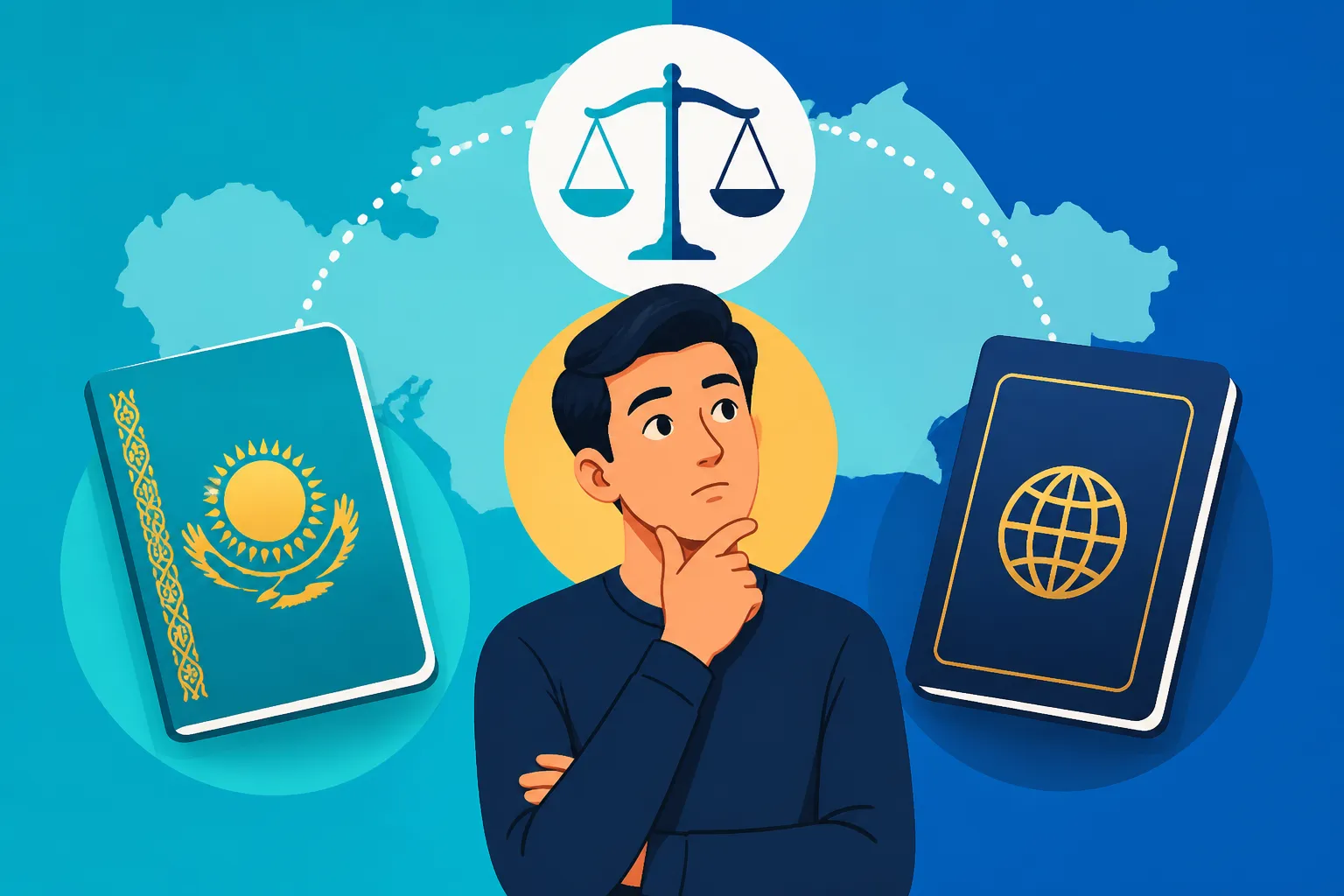
Let's get straight to it: Kazakhstan does not, as a general rule, recognize dual citizenship. This can be a tough pill to swallow for many expats, especially those who envision making Kazakhstan their long-term home and eventually seeking naturalization. The country operates on a principle of a single citizenship, meaning that if you become a citizen of Kazakhstan, you are expected to renounce any other citizenship you hold. Conversely, if you are a Kazakhstani citizen and acquire another country's citizenship, you are legally obligated to inform the authorities, and you will effectively lose your Kazakhstani citizenship.
The Legal Framework
Kazakhstan's stance on citizenship is firmly rooted in its constitution and relevant laws, primarily the Law of the Republic of Kazakhstan "On Citizenship of the Republic of Kazakhstan." This legislation unequivocally states that being a citizen of Kazakhstan means holding only one citizenship – that of Kazakhstan. The underlying principle is to ensure undivided loyalty and to simplify administrative processes. For the government, it removes ambiguities regarding an individual's rights, responsibilities, and protection, especially in international contexts.
When you delve into the actual text, Article 3 of the Law on Citizenship is quite explicit. It decrees that a person who is a citizen of the Republic of Kazakhstan cannot simultaneously be a citizen of another state. This isn't just a guideline; it's a fundamental legal principle that underpins all immigration and naturalization processes here. While some countries might have agreements or internal policies that allow for dual nationality, Kazakhstan is not one of them in most cases. This clear legal position aims to prevent situations where an individual might be subject to the laws and obligations of two different states, which can create complex legal and diplomatic predicaments.
The law also outlines specific conditions under which Kazakhstani citizenship can be lost. One of the primary conditions is the voluntary acquisition of citizenship of another state. This means if you, as a Kazakhstani citizen, decide to get a passport from another country, you are, by law, giving up your Kazakhstani citizenship. It's a non-negotiable aspect of their legal framework.
Implications for Foreigners Acquiring Kazakhstani Citizenship
For a foreigner who has lived in Kazakhstan for a significant period and decided to pursue Kazakhstani citizenship, the journey will inevitably lead to a critical crossroad: renouncing their current nationality. This isn't a mere formality; it's a mandatory step in the naturalization process. You will be required to provide official documentation proving that you have either initiated or completed the renunciation process of your former citizenship. Without this, your application for Kazakhstani citizenship simply won't proceed.
Think about it: after years of building a life here, perhaps starting a business, getting married to a local, or simply falling in love with the culture, deciding to become a Kazakhstani citizen means a complete administrative break from your previous national ties. The authorities aren't just looking for a verbal promise; they need concrete proof. This might involve formal letters from your home country's embassy or consulate confirming that you have submitted an application for renunciation, or even a certificate of loss of nationality. The exact requirements can vary depending on your country of origin, as some countries make renunciation simpler than others. Some nations might require you to be physically present, while others allow mail-in applications, but all will involve a bureaucratic process and potentially significant fees.
This requirement often presents a significant challenge. Some individuals might have deep emotional or familial ties to their home country that make renouncing citizenship difficult. Others might have property, financial assets, or pension rights tied to their original nationality that they fear losing or complicating. It's not just a passport; it's often a part of one's identity and practical future planning. It's crucial to thoroughly research the renunciation process for your specific country before committing to the Kazakhstani naturalization path. Sometimes, the process can be lengthy and fraught with its own set of administrative hurdles, adding another layer of complexity to an already significant life decision.
What Happens If You Secretly Hold Dual Citizenship?
This is where things can get incredibly serious, and it’s a scenario no expat wants to find themselves in. While the Kazakhstani government doesn't allow dual citizenship, some individuals, either through misunderstanding, oversight, or deliberate action, might find themselves holding both a Kazakhstani and a foreign passport. The consequences of this can be severe, far beyond just a slap on the wrist.
The Discovery and Its Consequences
The Kazakhstani authorities are pretty efficient, and they have various mechanisms to detect cases of undisclosed dual citizenship. This isn't a conspiracy theory; it's a matter of national policy and legal enforcement. How might they find out? It could be through something as simple as a routine border check when you enter or exit the country using different passports, or if information surfaces during an application for a new Kazakhstani passport or identity document. If you're married to a Kazakhstani citizen, or have children who are Kazakhstani citizens, interactions with local authorities for registration or official matters might also trigger cross-checks. Even applying for a How to Get a Work Visa and Residence Permit in Kazakhstan (2027) or renewing an existing Understanding Kazakhstani Residence Permits: Work, Study and Investment (2027) while holding undisclosed Kazakhstani citizenship could expose the situation.
Once discovered, the legal repercussions are not trivial. The primary consequence for a Kazakhstani citizen found to be secretly holding another citizenship is the automatic loss of their Kazakhstani nationality. This is mandated by law. In addition to losing citizenship, individuals can face administrative fines. These fines are not insignificant and are designed to deter such actions. In more severe cases, especially if there's an element of deception or misrepresentation, there could even be a risk of deportation. Imagine building your life here, only for it to be upended because of a citizenship technicality you either ignored or were unaware of. It's a stark reminder of the importance of understanding and adhering to the local laws.
For foreigners who became Kazakhstani citizens and failed to properly renounce their previous citizenship, the consequences are equally severe. Their Kazakhstani citizenship can be annulled, and they would revert to being a foreign national, possibly without valid residency status. This could then lead to a chain of problems, including issues with employment, banking, and general legal standing in the country. It’s a situation that stresses the importance of clarity and legality in all your immigration affairs from the very beginning of your journey, whether you're just looking into The Complete Guide to Kazakhstan Visas and Immigration for Expats (2027) or already hold a residence permit.
Reporting Dual Citizenship: The Obligation and Process
Kazakhstani law doesn't just forbid dual citizenship; it also places a clear obligation on its citizens to report the acquisition of foreign citizenship within a specific timeframe. If you are a Kazakhstani citizen and, for whatever reason, acquire citizenship of another country, you are legally required to inform the Migration Service (often through the local police departments) within 30 calendar days of acquiring that foreign citizenship. Failure to do so carries its own set of penalties, usually administrative fines. This swift reporting allows the authorities to officially record the loss of your Kazakhstani citizenship and update their records.
The process for reporting typically involves visiting your local migration police department. You'll need to bring your Kazakhstani passport, proof of your newly acquired foreign citizenship (like the foreign passport or naturalization certificate), and any other supporting documents they might request. They will guide you through the official procedure for documenting the loss of your Kazakhstani citizenship. It’s a pretty straightforward administrative process, but it’s absolutely essential to complete it within the stipulated timeframe to avoid further penalties.
This legal obligation highlights the government's proactive approach to enforcing the single citizenship principle. They don't just wait to discover violations; they expect their citizens to be transparent and compliant. If you find yourself in a situation where you've unintentionally acquired foreign citizenship, or if you're exploring the possibility, the best course of action is always to consult with the Migration Service or a legal expert specializing in Kazakhstani immigration law. Proactive disclosure, even if it leads to the loss of Kazakhstani citizenship, is far better than facing the more severe penalties associated with non-disclosure.
Practical Considerations for Expats with Multiple Nationalities (But Not Dual Kazakhstani)
Now, it's important to differentiate between dual Kazakhstani citizenship (which isn't allowed) and holding multiple foreign nationalities while residing in Kazakhstan as an expat. The latter is generally not an issue, as long as you are clearly recognized as a foreign citizen by Kazakhstan. Many expats come from countries that allow their citizens to hold multiple passports, and this doesn't automatically put them in conflict with Kazakhstani law, provided they are not simultaneously claiming Kazakhstani citizenship.
Navigating Travel and Residency with Two Passports (Non-Kazakhstani)
If you're an expat holding two or more foreign passports (e.g., British and Canadian), you can usually manage your travel and residency without significant issues in Kazakhstan. The key is consistency and careful documentation. When you first enter Kazakhstan, you'll present one of your foreign passports for entry stamps or to activate your visa. You should generally stick to using that same passport for all official purposes related to your residency here – think visa applications, residence permit applications, and registration with the migration police. This helps maintain a clear and consistent record with the Kazakhstani authorities. For instance, if you entered on your British passport, ensure your How to Register Your Arrival with the Migration Service in Kazakhstan and any subsequent visas or permits are linked to that British passport.
Using different passports for entry and exit can get tricky if not managed carefully. For example, if you have visa-free entry to Kazakhstan with one passport (say, for Understanding the 30-Day Visa-Free Entry to Kazakhstan from a specific country) but need a visa for longer stays, and your other passport doesn't grant visa-free access, you need to be very clear about which passport you are using for which purpose. The general advice is to use the same passport throughout your stay for all official interactions with Kazakhstani authorities to avoid any confusion or complications. When you apply for things like opening a bank account as a foreigner in Kazakhstan, or getting your Individual Identification Number (IIN), consistency is your best friend.
Where it becomes problematic is if you attempt to use different foreign passports to circumvent visa rules or overstay your permitted period. For example, trying to "reset" your visa-free period by exiting and re-entering using a different passport. While some countries might have loopholes, Kazakhstan's migration service is increasingly sophisticated and maintains digital records of your entries and exits. Any attempt to bypass immigration regulations, regardless of how many foreign passports you hold, will likely be flagged and could lead to fines, refusal of entry, or even a ban from the country.
Taxation and Other Obligations for Multi-National Expats
For expats with multiple foreign nationalities residing in Kazakhstan, your obligations, especially regarding taxation, are generally determined by your tax residency status, not by the number of passports you carry. Kazakhstan operates on a principle where tax residency is primarily based on physical presence – usually if you spend 183 days or more in the country within any consecutive 12-month period. If you meet this criterion, regardless of your multiple citizenships, you will be considered a tax resident and subject to Kazakhstani tax laws, including the flat 10% individual income tax. This is a crucial distinction to make: holding multiple citizenships does not automatically exempt you from tax obligations in Kazakhstan if you are a resident here.
As an expat living and working in Kazakhstan, you'll need an How to Get an IIN Individual Identification Number in Kazakhstan, which is essentially your tax ID and is critical for any official interaction, from banking to healthcare. Your tax obligations will be defined by your income source (Kazakhstani or foreign) and your tax residency status. Kazakhstan has How Kazakhstan's Tax System Works: The Flat 10% Tax Explained (2027), making it relatively straightforward, but foreign income and double taxation agreements can add layers of complexity. It's always a good idea to consult with a tax professional who understands both Kazakhstani and international tax laws if you have complex financial affairs across multiple countries.
Other obligations, such as mandatory social and pension contributions if you are employed locally, or adhering to local laws regarding The Complete Guide to Moving to Kazakhstan: Your First 90 Days (2027), remain the same regardless of how many foreign passports you hold. Your focus should be on complying with Kazakhstani law as a foreign resident, rather than worrying about your multiple foreign citizenships being an issue, unless you are actively trying to naturalize as a Kazakhstani citizen.
Here’s a quick overview to keep things clear:
| Status Category | Definition | Kazakhstan's Stance | Potential Issues |
|---|---|---|---|
| Single Kazakhstani Citizenship | Holds only Kazakhstani passport | Allowed, preferred | None |
| Foreigner with Single Citizenship | Holds one foreign passport | Allowed, common for expats | Ensure valid visa/residence |
| Foreigner with Multiple Citizenships (all foreign) | Holds two or more foreign passports, not Kazakhstani | Allowed, as long as no Kazakhstani citizenship is claimed/held | Manage travel documents carefully; maintain consistent records |
| Kazakhstani Citizen with Foreign Citizenship (Undisclosed) | Holds Kazakhstani + foreign passport (secretly) | NOT allowed, illegal | Fines, loss of citizenship, deportation, legal action |
| Kazakhstani Citizen Acquiring Foreign Citizenship | Kazakhstani citizen obtains foreign citizenship | NOT allowed, leads to automatic loss of Kazakhstani citizenship | Must notify authorities, process renunciation |
| Foreigner Acquiring Kazakhstani Citizenship | Foreigner obtains Kazakhstani citizenship | Allowed, but requires renunciation of prior citizenship | Ensure complete renunciation process is verified by authorities |
Common Misconceptions and Nuances
The topic of citizenship can be a minefield of misunderstandings, particularly when comparing laws between different countries. Kazakhstan's position, while clear legally, often gets muddled in expat discussions due to differing rules in other parts of the world. Let’s clear up some of those common misconceptions.
Children Born to Dual National Parents
This is one of the most frequent areas of confusion. What happens if a child is born in Kazakhstan or to parents who have different nationalities, one of whom might be Kazakhstani? Kazakhstan follows the principle of jus sanguinis, or "right of blood." This means that if at least one parent is a citizen of Kazakhstan, the child is automatically considered a citizen of Kazakhstan, regardless of their place of birth. For instance, if a Kazakhstani mother and a British father have a child, that child is automatically a Kazakhstani citizen from birth. The child may also have a claim to British citizenship through their father, depending on British law.
This situation does not mean Kazakhstan allows dual citizenship for adults. For the child, they might legally hold both citizenships at birth under the laws of two different countries. However, once the child reaches adulthood (18 years old), they will typically be required to make a choice. At this point, the individual will need to choose to affirm one citizenship and, if they choose Kazakhstani citizenship, they must renounce the other. The intention of the law is not to create a pathway for adult dual citizenship but to ensure that children of Kazakhstani citizens are recognized by their home country. This is a crucial distinction that many people miss, often mistakenly believing it implies a broader acceptance of dual nationality.
This nuance ensures that children are not left stateless and can claim the nationality of their Kazakhstani parent. However, the expectation is that they will eventually align with Kazakhstan's single citizenship policy when they are legally mature enough to make that decision. This process is complex and often requires careful navigation of both Kazakhstani and the other country's citizenship laws.
Distinguishing Between Multiple Citizenships and Dual Citizenship
Let's reiterate this because it's paramount: there's a world of difference between being an expat who holds multiple foreign citizenships and someone attempting to hold Kazakhstani citizenship concurrently with another. When we talk about "multiple citizenships" in the expat context here, we generally mean a non-Kazakhstani individual who happens to hold passports from, say, Germany and the United States. This is perfectly fine, as long as they are not claiming to be a Kazakhstani citizen. Their residency in Kazakhstan is based on their visa or How to Get Permanent Residence in Kazakhstan, which allows them to live, work, or study here as a foreign national. Their multiple foreign passports don't concern the Kazakhstani authorities as long as they comply with immigration rules as a foreigner.
"Dual citizenship," on the other hand, specifically refers to holding both Kazakhstani citizenship and the citizenship of another country simultaneously. This is the scenario that Kazakhstan's laws expressly forbid. The government wants its citizens to have an undivided allegiance. If you are a Kazakhstani citizen, that is your sole nationality in the eyes of the law. If you acquire another, your Kazakhstani citizenship is forfeit.
It’s about intention and legal status. An expat from the UK and Australia living in Almaty on a work visa is simply a foreign resident with multiple nationalities. They are governed by the rules for foreigners. A person who holds a Kazakhstani passport and also secretly obtains a Russian passport is in violation of Kazakhstani law, and when discovered, will face the consequences, including the loss of their Kazakhstani citizenship. Understanding this distinction is vital for anyone planning their life and future in Kazakhstan, whether they're just starting to look at The Complete Guide to Moving to Kazakhstan: Your First 90 Days (2027) or have been here for years.
Disclaimer
The information provided in this guide is for general informational purposes only and does not constitute legal advice. While we strive to ensure the information is accurate and up-to-date, immigration and citizenship laws can change rapidly. It is crucial to consult with a qualified legal professional specializing in Kazakhstani immigration law or the relevant government authorities for advice specific to your individual circumstances. We cannot be held responsible for any actions taken based on the information contained herein.