What Is Family Reunification Residence in Kazakhstan?
It’s a tale as old as time for us expats, isn’t it? You’ve finally found your footing in Kazakhstan, navigating the fascinating, sometimes bewildering, ins and outs of daily life, and now your heart aches for your loved ones to join you. The thought of bringing your family to live in this amazing country can feel like another monumental hurdle, but don't despair! This comprehensive guide is here to walk you through the often-complex process of obtaining a family reunification residence permit in Kazakhstan, ensuring your family can call this place home with you.
Understanding Family Reunification Residence in Kazakhstan
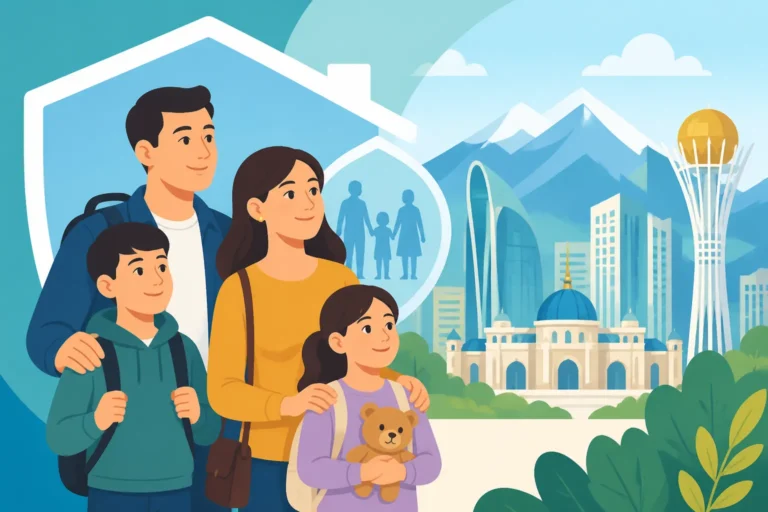
When you’ve established yourself in Kazakhstan, whether through work, business, or even as a permanent resident, the idea of having your family with you naturally comes next. Kazakhstan’s government understands this fundamental human need, and that’s where the concept of family reunification residence comes into play. It’s essentially a legal pathway designed for foreign nationals who already hold a valid residence permit or permanent residence status in Kazakhstan to sponsor their close family members to live here with them. It’s not a simple visa; it's a formal residence permit that grants your family members the right to live, study, and sometimes even work in Kazakhstan, all under your sponsorship.
The process is designed to ensure that those coming into the country have a stable support system and won't become a burden on the state. It allows for families to stay together, which, let’s be honest, makes the whole expat experience so much richer and more manageable. Without this mechanism, many of us would be faced with the agonizing choice of either a fragmented family life or leaving the country we've grown to love. It's a testament to the country's evolving immigration policies that such a pathway exists, making Kazakhstan a more welcoming place for long-term expat families.
Who is Eligible to Apply as a Sponsor?
Becoming a sponsor for family reunification isn't something just anyone can do the moment they step off the plane. There are specific requirements to ensure you can genuinely support your family. Typically, the primary foreign national, the "sponsor," must hold a long-term residence status in Kazakhstan. This usually means you possess either a work permit and a temporary residence permit (VNZh – вид на жительство), or, even better, a permanent residence permit. A standard tourist visa or even a short-term business visa won't cut it. The government wants to see that you have a stable, legitimate, and sustained presence in the country.
Your eligibility as a sponsor is scrutinized quite carefully. They will look at your financial standing, your housing situation, and your legal record within Kazakhstan. The authorities want assurance that you’re not just passing through, but are genuinely committed to living here long-term and capable of providing for your family. This is important to understand upfront, as it dictates how you should prepare your own documentation and financial proofs. If you're currently in Kazakhstan on a shorter-term visa, your first step needs to be securing your own long-term residence status, such as obtaining a How to Get a Work Visa and Residence Permit in Kazakhstan (2027) or aiming for The Complete Guide to Permanent Residence in Kazakhstan (2027).
Who Can Be Sponsored: Eligible Family Members
Kazakhstan's immigration law defines "close family members" for reunification purposes. This isn't an open invitation for your entire extended family tree, but it does cover the core unit that most expats want to bring over. The primary categories typically include:
- Spouses: Your legally married husband or wife. Proof of marriage is paramount here, and it needs to be recognized under Kazakhstani law, which often means apostilled and translated documents.
- Minor Children: Children under the age of 18, including biological and legally adopted children. Again, birth certificates and adoption papers are crucial.
- Dependent Parents: In some cases, parents who are financially dependent on the sponsor may also be eligible, especially if they are of retirement age or have documented health issues requiring care. This category often has stricter requirements and may depend on the sponsor's income and housing.
The key here is proving the relationship beyond a shadow of a doubt. The Kazakhstani migration service is very particular about official documentation. Cousins, aunts, uncles, adult siblings (unless there are specific dependency clauses) are usually not covered under the standard family reunification permit. It’s always best to check the most current regulations with the local migration service department, as rules can sometimes shift, but these three categories form the bedrock of family reunification.
Eligibility Criteria for Family Reunification Residence
Alright, let's get down to the nitty-gritty of what you and your family members need to demonstrate to even be considered for this permit. It’s a bit of a bureaucratic dance, but knowing the steps beforehand saves a lot of headaches later.
For the Sponsor in Kazakhstan
As the anchor, your stability and legal standing in Kazakhstan are paramount. The authorities need to be confident that you’re capable of supporting your family without them becoming reliant on the state.
Legal Residence Status
First and foremost, you, the sponsoring expat, must possess a valid, long-term residence permit in Kazakhstan. This means you’re not here on a short-term visitor visa. Whether it’s a temporary residence permit tied to your work contract, or a full-fledged permanent residence permit, you need to prove your own legal and stable status. This forms the foundation of your family's application. If your own permit is nearing its expiry, you should prioritize its renewal before even thinking about bringing your family, as their permit is directly dependent on yours. They won't grant your family a permit if your own status is shaky.
Financial Stability
This is where the rubber meets the road. You need to provide convincing evidence that you have sufficient financial means to support every single family member you wish to bring over. This isn't just about covering their basic needs; it's about proving they won't become a public charge. Typically, this involves:
- Bank Statements: Showing consistent income and sufficient savings in a Kazakhstani bank account. They'll want to see that you can cover rent, food, utilities, and other living expenses for everyone.
- Employment Contract: If you're working, a copy of your official employment contract in Kazakhstan, clearly stating your salary.
- Tax Records: Proof of income tax payments, demonstrating a legitimate and regular income.
- Proof of Funds: Sometimes, a letter from your bank confirming a certain balance in your account can be helpful.
The exact amount isn't always explicitly stated in a single fixed number, but it needs to be demonstrably above the minimum wage for each dependent. Think conservatively and aim to show a healthy surplus. This is a critical aspect, and inadequate financial proof is a common reason for delays or rejection.
Adequate Housing
You must also demonstrate that you have suitable accommodation for your family. This means enough living space for everyone joining you. If you’re renting, you’ll need a valid rental agreement (often requiring official registration with the local authorities) that specifies the number of rooms and the total living area. If you own property, you’ll need the relevant title deeds.
The key here is that the living conditions must meet the established norms for dwelling space per person in Kazakhstan. This isn't about luxury; it’s about ensuring basic comfort and privacy. A studio apartment might be fine for a single person, but it definitely won't pass muster for a family of three or four. Expect the migration service to check your registered address and potentially your rental contract details very carefully.
No Criminal Record
Just like for your own residence permit, you must have a clean criminal record. This usually requires a police clearance certificate from your home country, and possibly from any other country where you’ve resided for a significant period. This ensures that only law-abiding individuals are granted residence in Kazakhstan.
For the Dependents Joining You
Your family members also have their own set of requirements to meet.
Proof of Relationship
This is non-negotiable. You’ll need official, legalized documents proving the relationship between you and each family member you wish to sponsor.
- Marriage Certificate: For spouses. This needs to be the original, or a certified copy, often requiring an apostille from the issuing country and a certified translation into Kazakh or Russian.
- Birth Certificates: For children. Again, original or certified copies, apostilled, and translated.
- Adoption Papers: If applicable, for adopted children, with the same legalization requirements.
- Dependency Proof: For parents, documents proving their financial reliance on you, their age, and any relevant medical conditions.
This step can be tricky, especially if your documents are from countries not party to the Hague Apostille Convention, in which case they'll need consular legalization. It’s worth checking the specific requirements for your country of origin with the Kazakhstani embassy or consulate there. Make sure your documents are in pristine order; errors here are a common cause of setbacks. For a detailed rundown on this, you might find Understanding Document and Translation Requirements for Kazakhstan Immigration and How to Get Your Documents Apostilled for Kazakhstan Immigration incredibly useful.
Health Insurance
All family members applying for a residence permit will need valid health insurance coverage for their stay in Kazakhstan. This is a crucial requirement. You can opt for local insurance plans or international ones. Many expats choose comprehensive international health insurance providers like Cigna Global to ensure coverage both in Kazakhstan and when traveling. This gives you peace of mind that if anything goes wrong, your family is covered, and it also satisfies the legal requirement. For a family, understanding How Kazakhstan's Health System Works: OSMS and Private Care Explained (2027) is vital, especially when it comes to integrating with the local system once they arrive.
No Criminal Record
Just like the sponsor, all adult family members (usually over 14 or 16, depending on the specifics) will also need to provide police clearance certificates from their home countries. This is a standard security measure.
Valid Passports
Naturally, all family members must possess valid passports with sufficient remaining validity, typically at least six months beyond the expected duration of their stay. Expired passports or those nearing expiration will cause immediate problems.
The Application Process: Step-by-Step for Bringing Your Family
Navigating the application process for family reunification can feel like a labyrinth, but breaking it down into manageable steps makes it less daunting.
Gathering Documents: The Paperwork Mountain
This is often the most time-consuming part, but getting it right from the start saves immense frustration. You'll need to compile a dossier for each family member. Here’s a general checklist:
-
Sponsor's Documents:
- Copy of your passport (main pages and visa/residence stamp pages).
- Copy of your current Kazakhstani residence permit.
- Your Individual Identification Number (IIN). If you haven't got one yet, you'll need one, and Understanding the IIN and Why You Need One in Kazakhstan will guide you.
- Proof of financial solvency (bank statements, employment contract, tax records).
- Proof of adequate housing (rental contract, property deeds).
- Police clearance certificate (from home country and Kazakhstan if applicable).
- A formal application letter or form, clearly stating your request for family reunification and listing your dependents.
-
Dependent's Documents (for each family member):
- Original passport with copies.
- Birth certificate (for children), apostilled and translated.
- Marriage certificate (for spouse), apostilled and translated.
- Recent passport-sized photos.
- Police clearance certificate (for adults, from home country).
- Medical certificate confirming no infectious diseases (TB, HIV, etc.). This often needs to be done at a designated clinic in Kazakhstan or a recognized medical institution abroad.
- Proof of health insurance coverage.
Remember, all foreign documents must be apostilled (or consular legalized) in their country of origin and then officially translated into Kazakh or Russian by a certified translator in Kazakhstan. It’s not just a matter of translating them yourself; they need the official stamp of approval. Any discrepancies or missing stamps will send you back to square one, often with significant delays.
Applying from Abroad vs. Inside Kazakhstan
Generally, the most straightforward approach is for your family members to apply for their visas/permits from outside Kazakhstan, at a Kazakhstani embassy or consulate in their country of residence. This is often recommended because it allows them to enter Kazakhstan with the correct legal status from the get-go. The sponsor in Kazakhstan usually prepares their part of the documentation and sends it to the family members, who then submit the full package to the embassy.
While it's sometimes possible to initiate the process for certain types of residence permits from within Kazakhstan, it often involves a preliminary short-term visa and then a change of status, which can be more complicated and carry higher risks if the application is rejected. For family reunification, starting abroad typically minimizes complications.
Submission and the Waiting Game
Once all documents are meticulously prepared, translated, and legalized, the application is submitted. If your family is applying from abroad, they'll submit it to the Kazakhstani embassy or consulate. If, for some specific reason, you’re trying to do it from within Kazakhstan, you'd be dealing with the local Migration Service (often via a ЦОН – TsON, or Public Service Center).
Here’s a snapshot of the typical process and documents involved:
| Document Type | Sponsor's Requirement | Dependent's Requirement (Each) | Legalization Needed |
|---|---|---|---|
| Passport | Copy of main pages, visa/permit | Original + Copy of main pages | N/A |
| Residence Permit | Copy of valid VNZh/Permanent Resident Card | N/A (will be issued) | N/A |
| IIN (Individual Taxpayer ID) | Copy of IIN certificate | N/A (will get after arrival/approval) | N/A |
| Proof of Financial Means | Bank statements, employment contract, tax docs | N/A (dependent on sponsor) | N/A |
| Proof of Housing | Rental agreement / Property deed | N/A (dependent on sponsor) | N/A (if local documents) |
| Police Clearance | From home country & Kazakhstan | From home country (for adults) | Apostille + Translation |
| Relationship Proof | N/A (covered by dependent docs) | Marriage Cert. (spouse), Birth Cert. (children) | Apostille + Translation |
| Medical Certificate | N/A | Certificate of good health, no infectious diseases | Certified by clinic |
| Health Insurance | N/A | Valid policy covering Kazakhstan | N/A |
| Passport Photos | N/A | Recent, passport-sized photos | N/A |
| Application Forms | Sponsor's letter/form | Dependent's application form | N/A |
The processing times can vary wildly. While official timelines might suggest a few weeks, delays are not uncommon. It’s crucial to be patient and to factor in buffer time. During this waiting period, avoid making any non-refundable travel plans. Understanding the Cost and Timeline of the Kazakhstan Residence Process gives you a realistic overview of what to expect.
Post-Arrival Steps
Once your family’s residence permit is approved and they arrive in Kazakhstan, the work isn't quite over. There are a few essential post-arrival steps:
- IIN Acquisition: Each family member will need to obtain their own Individual Identification Number (IIN) shortly after arrival. This number is their personal tax ID and is required for virtually everything, from opening a bank account to registering with a clinic.
- Registration with Migration Service: All foreign nationals must register their arrival with the Migration Service within a few days of entering the country. Your host (which is you, the sponsor!) is responsible for this. You can do this at a local TsON or through the e-Gov portal. Missing this step can lead to fines. More details can be found in How to Register Your Arrival with the Migration Service in Kazakhstan.
- OSMS Enrollment: If your family plans to use the public healthcare system, they will need to enroll in the Compulsory Social Health Insurance System (OSMS). As the sponsor, you will likely be responsible for their contributions. This is a critical step for accessing medical care. Check out How to Register for OSMS Health Insurance in Kazakhstan (2027) for the specifics.
Rights and Responsibilities of Family Reunification Residents
Living in Kazakhstan with a family reunification residence permit comes with a set of rights and, crucially, responsibilities. Understanding these will help your family settle in smoothly and avoid any future legal issues.
What Your Family Can Do: Rights and Access
A family reunification residence permit grants your loved ones more than just the right to stay; it integrates them into the fabric of Kazakhstani society, albeit with you as their primary guarantor.
Access to Education
One of the biggest benefits for families is the right for children to access education. This means your kids can attend public schools, just like local Kazakhstani children, or enroll in private and international schools. While learning Kazakh or Russian will be a significant adjustment, the opportunity is there. Getting your children settled into school is a major step, and a good resource for this is How to Enrol Your Child in a School in Kazakhstan.
Healthcare Access
With their legal residence status and, most importantly, enrollment in OSMS (Compulsory Social Health Insurance System), your family members can access the public healthcare system in Kazakhstan. This includes visits to polyclinics, specialist referrals, and necessary hospital care. While many expats still opt for additional private insurance for greater flexibility, the OSMS provides a crucial safety net. Understanding the nuances of The Complete Guide to Healthcare in Kazakhstan for Expats (2027) is highly recommended.
Potential for Work (with Limitations)
This is a point of frequent confusion. While a family reunification permit primarily allows residence, it does not automatically grant the right to work for adult dependents. Your spouse, for example, will generally need to secure their own work permit, which is tied to an employer, or register as an Individual Entrepreneur (IP) if they plan to work. However, having a residence permit does make the process of getting a work permit or registering an IP significantly easier than starting from scratch. They won't need an entry visa for employment, as they are already a resident. This is a subtle but important distinction.
What Your Family Must Do: Responsibilities
Just like you, your family members have responsibilities to uphold their legal status.
Maintaining Legal Status
Their residence permit is valid for a specific period (usually tied to your own permit’s validity or up to a few years). It is your responsibility as the sponsor, and theirs as residents, to ensure timely renewals. Forgetting to renew their permit could lead to serious legal complications, including fines and even deportation. Mark your calendars and start the renewal process well in advance. For more on this, check out How to Renew Your Residence Permit in Kazakhstan.
Adherence to Kazakhstani Laws
This goes without saying, but it's vital. Your family members, like all residents, must abide by all Kazakhstani laws and regulations. Any legal transgressions can jeopardize their residence status and yours as the sponsor.
Health Insurance Contributions
As the sponsor, you are generally responsible for ensuring your family members' health insurance contributions (OSMS) are paid, or that they maintain private health insurance. Failing to do so can limit their access to medical services and potentially affect their residence status. More on this can be found in Understanding Mandatory Health Insurance Contributions in Kazakhstan.
Challenges and Practical Tips
Bringing your family to a new country is a huge undertaking, and it's not without its challenges.
Language Barrier and Cultural Adaptation
Kazakhstan is a diverse country, but Russian and Kazakh are the dominant languages. For family members, especially children, who don't speak either, the language barrier can be a significant hurdle, particularly in public schools and daily interactions. Encourage them to start learning some basic phrases before they arrive! Cultural adaptation also takes time; be patient, understanding, and help them find communities and activities where they can feel at home.
Finding Suitable Schools and Activities
If you have children, researching schools that fit their needs and your family’s educational philosophy is key. While international schools offer English-language curricula, they come with a hefty price tag. Public schools offer a more immersive experience but require language proficiency. Beyond school, finding extracurricular activities and social groups will be crucial for their well-being. Look for expat groups online or through your employer – they can be a lifeline.
The Physical Move
The logistics of moving an entire household can be overwhelming. From packing up your old life to shipping belongings across continents, it's a huge task. Consider professional relocation services like Sirelo, which can help coordinate the physical move, ensuring your family's treasured possessions arrive safely and smoothly in Kazakhstan. This frees you up to focus on the bureaucratic aspects and settling your family emotionally.
Remember, while the process can be demanding, the reward of having your family together in your new Kazakhstani home is immeasurable. Patience, meticulous organization, and a good dose of perseverance are your best allies!
Disclaimer
Please remember that immigration laws and procedures in Kazakhstan can change. The information provided in this guide is based on general understanding and current regulations as of the time of writing. It is always highly recommended to consult with the official Migration Service of Kazakhstan or a qualified immigration lawyer for the most accurate, up-to-date, and personalized advice regarding your specific family reunification residence application.