How Do I Register for OSMS in Kazakhstan?
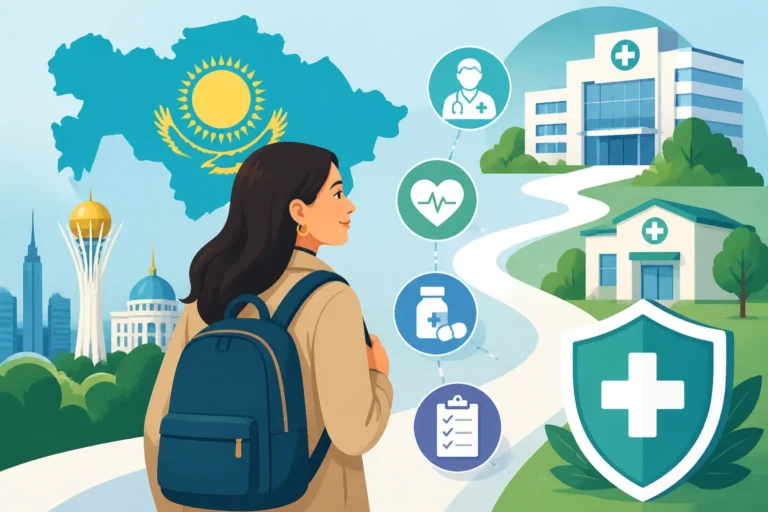
Navigating the healthcare system in a new country can feel like trying to solve a Rubik's Cube blindfolded, and Kazakhstan is no exception. Many expats arrive feeling overwhelmed, especially when it comes to understanding the compulsory social health insurance, known as OSMS. This comprehensive guide will cut through the confusion, offering a clear, step-by-step walkthrough on how to register for OSMS, so you can access essential medical services without unnecessary stress.
What is OSMS and Why Do You Need It?
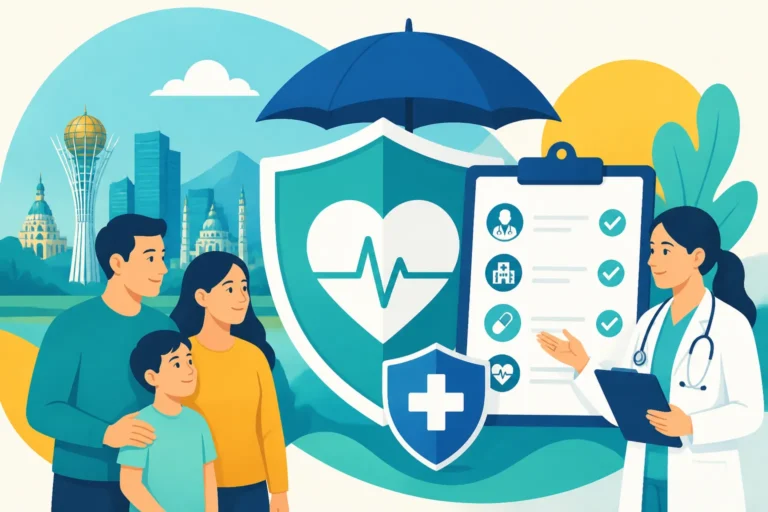
When you first hear "OSMS," it might just sound like another acronym to add to your expat dictionary, but trust me, it's crucial. OSMS, or Mindetti Äleumettik Äleumettik Saktandyru (Compulsory Social Health Insurance), is the foundation of Kazakhstan's healthcare system. It’s designed to ensure that everyone living and working here has access to a defined package of medical services, ranging from primary care at polyclinics to specialist consultations and hospital treatment. For expats, this isn't just a suggestion; it's a legal requirement if you're officially employed or residing long-term.
Decoding the Kazakhstani Healthcare System
Before OSMS was introduced, the healthcare landscape in Kazakhstan was a bit of a mixed bag. You had public hospitals that were often underfunded and private clinics that could be quite costly. OSMS aimed to bridge that gap, creating a more unified and accessible system. It operates on a contributions model, meaning a portion of your income (or a fixed payment if you're self-employed or not formally employed) goes towards the fund. In return, you gain access to a broad range of services. Think of it as your passport to the public health system, allowing you to register with a local polyclinika and get referrals. Without it, even basic consultations can mean out-of-pocket payments at private facilities, and trust me, those can add up quickly. If you want a deeper dive into the overall medical landscape, you can check out How Kazakhstan's Health System Works: OSMS and Private Care Explained (2027).
It’s important to understand that OSMS covers a wide range of services, but not everything. It typically includes emergency care, outpatient care from a general practitioner, specialist consultations (with a referral), diagnostic tests, and some inpatient hospital treatments. However, things like elective cosmetic procedures, certain dental treatments beyond emergencies, or private room upgrades in hospitals might not be included. That's where a good understanding of Understanding Out-of-Pocket Healthcare Costs and Co-Payments in Kazakhstan comes in handy, and why some expats also opt for supplementary private health insurance for added peace of mind, especially for services not fully covered or for quicker access to certain specialists.
Who is Obligated to Contribute?
This is where it gets a little nuanced for foreigners, and where many of us scratch our heads. Generally, if you are a foreign citizen residing permanently in Kazakhstan, or an expat on a work visa with an official employment contract, you are obligated to contribute to OSMS. Your employer will typically handle these contributions automatically from your salary, just like they do for Kazakhstani citizens. This makes things considerably easier for employed expats.
However, the situation changes for self-employed individuals, individual entrepreneurs (IPs), or those who are not formally employed but have a residence permit. In these cases, you are responsible for making your own monthly contributions. This can be a bit of a shock if you’re used to a system where healthcare is simply "there." If you're wondering, "Do Expats Have to Pay OSMS Contributions in Kazakhstan?", the answer is generally yes, depending on your residence and employment status.
Tourists or those on short-term visas are typically not eligible or required to contribute to OSMS. For these individuals, travel insurance (like that offered by SafetyWing, which many digital nomads and frequent travelers use) is absolutely essential. It provides a safety net for medical emergencies or unexpected health issues during your stay. Even for those covered by OSMS, having comprehensive private insurance on top can offer benefits like direct access to English-speaking doctors or a wider choice of private facilities, which can make a huge difference in your expat experience. Understanding How Your Residence Status Affects OSMS Enrolment in Kazakhstan is key to figuring out your obligations.
The Step-by-Step Process to Register for OSMS
Alright, let's get down to brass tacks. Registering for OSMS, especially if you're new to the Kazakhstani administrative maze, can feel like a daunting task. But don't worry, I've been there, and I'll walk you through it. The process primarily involves ensuring your Individual Identification Number (IIN) is correctly linked to the system and that your contributions are being made.
Gathering Your Essential Documents
Before you even think about forms or portals, you need your core documents in order. This is the bedrock of any official process in Kazakhstan.
- Individual Identification Number (IIN): This is your absolute number one priority. Think of it as your national ID number, tax ID, and social security number all rolled into one. You cannot function in Kazakhstan without an IIN. If you don't have one yet, stop everything and get it. Seriously. It's the key to everything from opening a bank account to getting your OSMS sorted. Here’s a detailed guide on How Do I Get an IIN (Individual Identification Number) in Kazakhstan?.
- Passport and Visa/Residence Permit: Your valid passport is a given. Make sure your visa category or residence permit clearly shows your legal right to reside in Kazakhstan for the long term. The migration service record (often just a stamp in your passport or a digital record) might also be required.
- Employment Contract (if applicable): If you're formally employed, your employment contract is vital. It proves your official employment status, which is what triggers your employer's responsibility to make OSMS contributions on your behalf.
- Bank Account Details: You’ll need a Kazakhstani bank account to manage payments, especially if you're self-employed. Most major banks like Kaspi or Halyk Bank are commonly used.
Keep copies of everything. Digital copies on your phone, physical copies in a folder – you name it. It's a lifesaver when you're asked for the same document five times at different windows.
Navigating the e-Gov Portal or Public Service Centre (PSC)
Once you have your IIN and documents, there are two primary routes to verify your OSMS status and make contributions if you're self-employed: the e-Gov portal (eGov.kz) or a Public Service Centre (PSC, or ЦОН – TsON in Russian).
Using the e-Gov Portal (eGov.kz):
The e-Gov portal is Kazakhstan's attempt to streamline public services, and it’s genuinely becoming more user-friendly, even if it still has its quirks.
- Register and Log In: If you haven't already, you'll need to register on eGov.kz. This often requires an Electronic Digital Signature (EDS) key, which is a whole other adventure, but indispensable for online official business. You can usually get your EDS at a PSC.
- Check Your OSMS Status: Once logged in, search for services related to "health insurance" or "OSMS status." There's a specific service that allows you to check your current OSMS contribution status. You'll enter your IIN, and the system will tell you if you're "active," "inactive," or have "no status." This is a crucial step for everyone, even if your employer handles your contributions. You need to verify that everything is indeed working as it should.
- Making Voluntary Contributions (for self-employed/unemployed with residence): If you're self-employed or have a residence permit but no formal employer (e.g., you’re a dependent spouse not working), you'll need to initiate voluntary payments. On eGov, you'll find a service for "voluntary social health insurance contributions." You'll select the appropriate category (e.g., self-employed, individual entrepreneur) and specify the period for which you want to pay.
- Payment Amount: The amount for self-employed individuals and IPs is a fixed percentage of the minimum wage set by the government, which changes annually. For instance, in 2026, it might be around 5% of the minimum wage, but always check the latest official figures. For non-working individuals with residence permits, it's a fixed minimum payment.
- Payment Frequency: You can typically pay monthly or for several months in advance. Many expats find it easier to pay a few months ahead to avoid forgetting.
Visiting a Public Service Centre (PSC / TsON):
For those who prefer face-to-face interaction, or if you're having trouble with the e-Gov portal (and believe me, it happens!), the PSCs are your best bet.
- Take a Ticket: Head to your nearest PSC. Take a numbered ticket for the "health insurance" or "social payments" section. Be prepared for a wait, especially during peak hours. Bring a good book or some podcasts!
- Present Documents: When your number is called, approach the operator. Explain that you need to check your OSMS status or register for voluntary contributions. Present your passport, IIN, and residence permit. If you're employed, they might also ask for your employment contract.
- Assistance with Status Check/Payment: The operator can check your status on their system and, if necessary, guide you through the process of making a payment. They can often print out payment slips or direct you to the payment terminals (often Kaspi terminals) available within the PSC itself. They can also issue you with an EDS if you still need one.
Once you’ve made your payments, it can take a few days for your status to update in the system. Be patient.
Making Your Contributions
Whether you're employed or self-paying, understanding the contributions is key. For employees, your employer deducts a percentage of your salary (currently around 2% of your monthly income, but capped) and pays it to the Social Health Insurance Fund (FMS) on your behalf. This is part of the overall payroll taxes, which are detailed in guides like Understanding Mandatory Health Insurance Contributions in Kazakhstan.
For self-employed individuals or those with residence permits not working, you'll make direct payments. These payments go to the State Revenue Committee (the tax office, essentially) but are earmarked for the FMS. You can pay via:
- Bank Transfer: Using your online banking (e.g., Kaspi.kz or Halyk Bank) or at a bank branch. You'll need the correct payment codes (BIC, KBE, etc.) which can be found on eGov or provided by a PSC operator.
- Payment Terminals: Many supermarkets, shopping malls, and PSCs have Kaspi terminals or similar. You can usually select "Social Health Insurance" and input your IIN and the amount.
It's absolutely essential to keep records of your payments. Screenshot your online banking transfers, keep physical receipts from terminals. If there's ever a dispute or a discrepancy in your OSMS status, these records are your proof.
| Payment Type | Who Pays | How to Pay (General) | Documents Needed (Personal) | Verification Method |
|---|---|---|---|---|
| Employed Expat | Employer (deducted from salary) | Employer's payroll system | IIN, Passport, Work Visa/Permit | eGov.kz or PSC |
| Self-Employed/IP | Individual | eGov.kz, Bank Transfer, Payment Terminals | IIN, Passport, Residence Permit | eGov.kz or PSC |
| Non-Working Resident | Individual (fixed minimum payment) | eGov.kz, Bank Transfer, Payment Terminals | IIN, Passport, Residence Permit (e.g. Dependent Visa) | eGov.kz or PSC |
Remember, OSMS is generally activated once your contributions are current. If you skip a month, your status might become "inactive," and you won't be able to access services until you pay the outstanding amounts.
Common Pitfalls and Troubleshooting for Expats
Even with all the instructions in the world, things can still go sideways. Kazakhstan's bureaucracy, while improving, still has a knack for throwing expats a curveball or two. Let’s talk about some common issues and how to tackle them.
Dealing with "No Status" and Back Payments
One of the most frequent frustrations I hear from fellow expats is the dreaded "no status" message when checking their OSMS. This means the system doesn't recognize you as an active contributor. It can happen for several reasons:
- New to the System: If you've just started contributing, it can take a few days, or even a couple of weeks, for your status to update. Don't panic immediately, but do keep checking.
- Missed Payments: If you're self-employed and accidentally skipped a month, your status will become inactive. You'll need to make back payments for all the missed months to reactivate your coverage. The system generally won't let you just pay for the current month and ignore the past.
- Employer Errors: Sometimes, even with an employer, mistakes happen. They might have used the wrong IIN, or there was a glitch in their payroll system. If your status is "inactive" and you're employed, the first step is always to speak with your HR or accounting department. They should be able to clarify and rectify the issue.
- Residence Permit Issues: Make sure your residence permit is valid and correctly registered. Any issues with your legal residency can impact your OSMS status.
How to Rectify Back Payments:
If you find you have "no status" due to missed contributions, you'll need to pay for all outstanding months. This can be done through eGov or at a PSC. When making payments, ensure you specify the correct months you're paying for. Once the payments are processed, it might take a little time for your status to change to "active." While sorting this out, it’s critical to understand What Happens If I Get Sick Before I Register for OSMS in Kazakhstan? – usually, you’ll have to pay for services out of pocket.
Always, always get proof of payment. If you pay at a terminal, take a photo of the confirmation screen and keep the physical receipt. If you pay online, screenshot the confirmation page and save the transaction details. If you have to visit a local polyclinic or doctor and your status shows "inactive" despite you knowing you've paid, showing proof of payment can sometimes help, though they might still direct you to clarify with the FMS first.
When OSMS Isn't Enough: Considering Private Insurance
While OSMS provides a solid base for healthcare, many expats, myself included, choose to supplement it with private health insurance. OSMS is designed to be a fundamental safety net, offering access to the standard public healthcare system. However, it doesn't always guarantee quick access to specialists, English-speaking doctors, or the comfort of private clinics.
Here's why private insurance can be a game-changer:
- Faster Access: Waiting times for specialist appointments can sometimes be long within the OSMS system, especially in popular fields. Private insurance often allows you to bypass these queues by going directly to private clinics.
- Choice of Doctors and Clinics: With private insurance, you usually have a wider selection of doctors and clinics, including many with English-speaking staff, which is invaluable when you're explaining complex medical issues.
- Enhanced Comfort: Private clinics and hospitals often offer more comfortable facilities, shorter wait times, and a more personalized experience, which can make a huge difference during a stressful medical event.
- Coverage for Exclusions: As mentioned earlier, OSMS doesn't cover everything. Private plans can fill these gaps, providing coverage for things like certain dental procedures, optical care, or more extensive rehabilitation.
- International Portability: Some international private health insurance providers, like SafetyWing, offer plans that cover you not just in Kazakhstan, but also when you travel to other countries or back home. This is incredibly useful for expats who often move around or return home for visits.
Think about your personal needs and priorities. If you prefer the comfort of knowing you can walk into a private clinic, see an English-speaking doctor, and have a broader range of treatments covered, then private health insurance is definitely something to explore. You might want to look into Understanding Private Health Insurance Plans in Kazakhstan and even how much they cost with this article: How Much Does Private Health Insurance Cost in Kazakhstan in 2026?. It's not about replacing OSMS, but rather complementing it to ensure you have the best possible healthcare experience while living in Kazakhstan. Many expats find a hybrid approach to be the most practical and reassuring, balancing the mandatory OSMS with the added benefits of a private plan. And once your OSMS is active, don't forget the next step: How to Choose and Register with a Clinic (Poliklinika) in Kazakhstan. This is essential for accessing primary care and referrals within the OSMS system.
Disclaimer
The information provided in this guide is for general informational purposes only and does not constitute legal, financial, or medical advice. While every effort has been made to ensure accuracy, regulations and procedures in Kazakhstan can change rapidly. Always consult with official sources, legal professionals, and relevant government agencies (such as the Social Health Insurance Fund and the State Revenue Committee) for the most current and specific information regarding your personal situation.