Can I Bring My Whole Family on a Residence Permit to Kazakhstan?
When you embark on the incredible adventure of moving to Kazakhstan, the biggest question on many expats' minds isn't just about their own visa, but about the entire family. It's an understandable worry – navigating a new country's immigration system solo is tough enough, let alone when you're trying to ensure your spouse, children, and maybe even your parents can join you. This guide is here to untangle the complexities and reassure you that, yes, bringing your whole family on a residence permit to Kazakhstan is absolutely possible, though it requires patience and meticulous planning.
Understanding Family Reunification in Kazakhstan for Expats
Let's be real, the thought of moving your entire life, not to mention your entire family, to a new country can feel like trying to herd cats across a minefield while blindfolded. Kazakhstan's immigration system, like any other, has its quirks and requires a specific approach. But don't let the initial bureaucracy intimidate you. The good news is that Kazakhstan does have established pathways for family reunification, acknowledging that expats rarely move alone.
The process hinges on the primary applicant – that's usually you, the one with the work permit or primary reason for residence. Once your status is solidified, it opens the door for your loved ones. It’s not an automatic "everyone comes" situation, but a structured one where each family member applies as a dependent, linked to your main permit. This means your primary residence permit is the bedrock upon which your family's permits will be built.
The Initial Hurdles and the Reality Check
When I first moved here, the sheer volume of paperwork and the seemingly endless requests for "just one more document" felt overwhelming. It's a common experience, and I won't sugarcoat it: the Kazakhstani administrative process can test your patience. You'll likely encounter multiple government agencies, potentially differing interpretations of rules depending on who you speak to, and a general sense that things move at their own unique pace.
The key to navigating these initial hurdles is preparedness and a healthy dose of flexibility. Expect that you might need to translate and notarize documents multiple times, and that what seems logical to you might not be the standard procedure here. Having a local contact, whether it's an HR representative from your company or a trusted relocation agency, can be an absolute lifesaver. Their understanding of the nuances can prevent costly delays and unnecessary stress, helping you through the initial phase of getting your own permit, which is essential before you can really start the process of getting your family's. If you're looking into how to get your own permit, check out our guide on How to Get a Work Visa and Residence Permit in Kazakhstan (2027).
Who Qualifies as a "Family Member" Under Kazakhstani Law
This is where it gets important to know the specifics. Kazakhstani law, like many countries, defines "family member" for immigration purposes quite precisely. Generally, this includes your immediate family, but the scope can vary depending on the type of residence permit the primary applicant holds.
Typically, your spouse (husband or wife) and minor children (under 18 years old) are the most straightforward dependents to include. Proof of marriage and birth certificates are, of course, critical here. For children, the process usually extends to those who are unmarried and financially dependent on you. In some cases, and with specific conditions, it might also be possible to include adult children who are financially dependent or studying, or even parents who are elderly and unable to support themselves. This usually requires a higher bar of proof of dependency and might not be applicable to all types of residence permits.
It's crucial to understand these distinctions early on. For example, if you're trying to get a residence permit based on employment, your employer's HR department should be able to clarify the exact scope of dependents they can sponsor. Each case can have unique elements, so always verify the specific requirements for your situation. Our article on Family and Dependent Residence in Kazakhstan: Bringing Your Loved Ones (2027) offers a deeper dive into these categories.
Navigating the Application Process for Dependent Residence Permits
Once your own residence permit is in hand, you can breathe a small sigh of relief. Now comes the parallel process for your family. This isn't just an add-on to your application; each family member will need their own application, often referred to as a "dependent residence permit" or "family reunification visa," depending on the specific legal framework under which you're applying.
The critical thing to remember here is the chain of dependency. Your family's right to reside in Kazakhstan is directly linked to your valid residence permit. If your permit expires or is revoked, theirs typically follow suit. This makes it imperative to keep your own immigration status up-to-date and in good standing at all times.
The Primary Applicant's Role and Requirements
As the primary applicant, your role is absolutely central. You are the anchor. Before your family can even think about their applications, you must already have a valid residence permit for Kazakhstan. This could be a work permit, a study permit, an investment permit, or even the new Neo Nomad visa, depending on your circumstances. The type of permit you hold will dictate the specific pathway your family members can take for their dependent permits.
Beyond just having a valid permit, you'll need to demonstrate sufficient financial means to support your entire family without them becoming a burden on the state. This means providing bank statements, employment contracts, and salary slips. You’ll also need to prove you have adequate housing in Kazakhstan – a rental agreement or property ownership documents that clearly show enough space for everyone. Remember, the migration services want to see that your family will be well-settled. This responsibility falls squarely on your shoulders. You are essentially vouching for your entire clan. Our guide on How to Sponsor Your Spouse and Children for Residence in Kazakhstan elaborates on these duties.
Essential Documents for Each Family Member
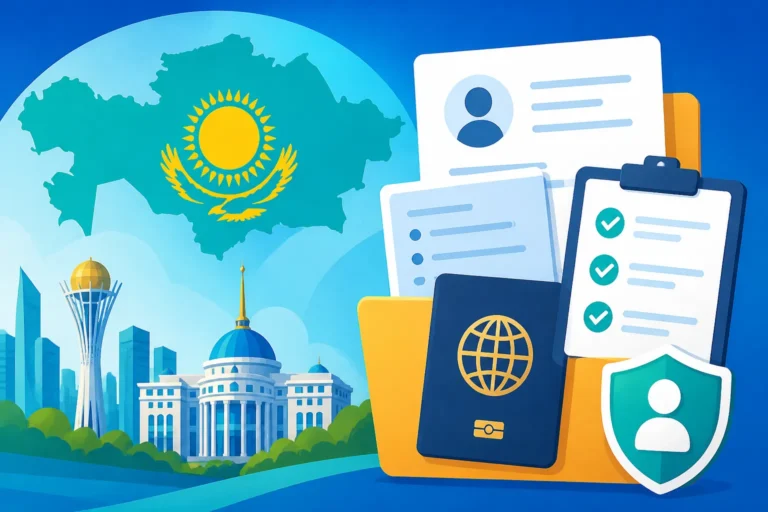
Gathering documents for each family member can feel like a full-time job. It’s not just about one copy of something; it’s about certified translations, notarizations, and often, apostilles. You’ll need to compile a comprehensive dossier for each person.
Typically, for each dependent, you'll need:
- Passport: Original and copies, with sufficient validity.
- Application Form: Filled out accurately and completely.
- Photos: Passport-sized, biometric.
- Birth Certificate: For children, proving parentage.
- Marriage Certificate: For spouses, proving your legal union.
- Medical Certificate: Confirming no serious communicable diseases.
- Police Clearance Certificate: From their home country (and any country they’ve lived in for extended periods), showing no criminal record.
- Proof of Financial Means: Although linked to the primary applicant, sometimes individual statements are requested.
- Proof of Accommodation: A copy of your lease or property deed.
- IIN (Individual Identification Number): Each family member will need an IIN, which is akin to a tax ID. This is a foundational step, so make sure to look into How Do I Get an IIN in Kazakhstan?.
Remember, all foreign documents must be officially translated into Kazakh and/or Russian and notarized. For many key documents like birth and marriage certificates, you’ll also need an apostille from the issuing country's relevant authority. This process can be time-consuming, so start early! Our article on Understanding Document and Translation Requirements for Kazakhstan Immigration is a must-read for this step.
The Step-by-Step Submission and Waiting Game
Once all your documents are meticulously prepared, translated, and certified, it's time for submission. The exact method can vary depending on where your family is applying from (e.g., a Kazakhstani embassy/consulate abroad or within Kazakhstan if they're already present on a different visa).
Often, if your family is applying from their home country, they will submit their applications to the nearest Kazakhstani diplomatic mission. If they are already in Kazakhstan on a temporary visa (e.g., a tourist visa, where applicable), you might be able to apply for their change of status directly with the migration service (Migration Police) in Kazakhstan. This is a complex step, and it is highly recommended to consult with local immigration lawyers or your company's relocation specialist to ensure compliance with the latest regulations. This process is usually managed through the Public Service Centers (ЦОН – TSON) or regional migration service offices.
After submission, it's a waiting game. Processing times can vary greatly, from a few weeks to several months, depending on the volume of applications, the specific office handling your case, and the completeness of your documentation. During this period, avoid making any travel plans that might coincide with required interviews or document requests. Patience, as they say, is a virtue, especially in immigration. For a broader overview of starting life here, you might find our guide, The Complete Guide to Moving to Kazakhstan: Your First 90 Days (2027), useful.
Here's a quick summary of the key documents for dependents:
| Document Type | For Spouse (Required) | For Children (Required) | Notes |
|---|---|---|---|
| Passport | Original & Copy | Original & Copy | Minimum 6 months validity. |
| Application Form | Yes | Yes | Filled out individually. |
| Passport Photos | Biometric, recent | Biometric, recent | Specific size/background requirements. |
| Marriage Certificate | Yes (original & translated/apostilled) | N/A | Proves legal relationship to primary applicant. |
| Birth Certificate | N/A | Yes (original & translated/apostilled) | Proves parentage to primary applicant. |
| Medical Certificate | Yes (local examination) | Yes (local examination) | Required for most long-term stays. |
| Police Clearance | Yes (from home country) | Yes (for those over 14/16, if applicable) | From country of origin and residence. |
| Proof of Financial Means | Linked to primary applicant | Linked to primary applicant | Primary applicant's financial stability is key. |
| Proof of Accommodation | Copy of primary applicant's lease/deed | Copy of primary applicant's lease/deed | Demonstrates suitable living arrangements. |
| IIN | Yes | Yes | Individual Identification Number. |
Life with a Family Residence Permit in Kazakhstan
Congratulations! Once your family has their residence permits, you've officially brought your whole crew to Kazakhstan. This is a significant milestone, but it's just the beginning of truly settling in. Life with a family residence permit means integrating into the local systems for everything from healthcare to education. Understanding what rights and access these permits grant is vital for planning your family's daily life.
The permit itself is proof of legal residency, allowing your family to live, travel in and out of the country, and access certain public services. It’s important to keep copies of these permits safe and always carry your official ID. While having the permit smooths many bureaucratic paths, it doesn't automatically grant all the same rights as a citizen or even the primary work permit holder, especially when it comes to employment.
Work and Study Rights for Dependents
This is a common area of confusion for many expat families. While a dependent residence permit allows your spouse and children to reside with you, it generally does not automatically grant your spouse the right to work. If your spouse wishes to seek employment in Kazakhstan, they will typically need to secure their own work permit and visa, just like any other foreign worker. This is a separate process that usually requires an employer to sponsor them. It's a significant consideration for families where both partners intend to work.
For children, the situation is different. A dependent residence permit does allow them to enroll in educational institutions in Kazakhstan, whether that's public schools, private schools, or international schools. For older children who might be considering higher education, their dependent status allows them to study at Kazakhstani universities. However, similar to adults, if they intend to work part-time while studying, they would likely need to explore specific student work permit regulations, which can be quite restrictive. Our article on Can My Spouse Work on a Family Residence in Kazakhstan? delves into this specific challenge.
Healthcare and Education for Your Family
Access to essential services like healthcare and education is a top priority for any expat family. With a valid residence permit, your family members become eligible for the Compulsory Social Health Insurance (OSMS) system, provided they also make the necessary contributions. This public health insurance covers a wide range of medical services, from doctor visits to hospital stays, similar to how it works for the primary expat.
However, many expats, including myself, opt for a combination of OSMS and private healthcare for their families, or even comprehensive international health insurance from providers like Cigna Global. This often provides access to English-speaking doctors, shorter wait times, and a wider choice of clinics, particularly in major cities like Almaty and Astana. For more detailed information on healthcare options, you'll find The Complete Guide to Healthcare in Kazakhstan for Expats (2027) invaluable.
When it comes to education, your children can enroll in local Kazakhstani public schools, which follow the national curriculum and are generally free. The main challenge here is often the language barrier, as instruction is predominantly in Kazakh or Russian. For expat children, international schools are a popular choice, offering curricula like the International Baccalaureate (IB) or British/American systems, with instruction in English. These schools, however, come with significant tuition fees. Our guide on Schools and Education in Kazakhstan: A Complete Guide for Expat Families will help you weigh your options.
Renewals, Changes, and Long-Term Considerations
Residence permits are not indefinite; they have an expiry date, typically tied to the primary applicant's permit. This means you'll need to be vigilant about renewal deadlines for your entire family. The renewal process usually requires similar documentation to the initial application, plus proof of continued financial stability and accommodation. It's best to start the renewal process several months before expiry to avoid any gaps in legal status. Our article on How to Renew Your Residence Permit in Kazakhstan provides all the necessary steps.
Life can throw curveballs, so it's important to understand how changes in circumstances might affect your family's permits. If the primary applicant changes employers, changes their visa status, or decides to leave Kazakhstan, this will invariably impact the dependents' permits. Always inform the migration services of any significant changes in your family's situation. For long-term plans, if you are considering permanent residency or even Kazakhstani citizenship, your family's period of legal residence on dependent permits will be a factor, setting them on a path toward their own long-term status.
Overcoming Common Challenges and Finding Support
Moving with a family is inherently more complex than moving as an individual. You're not just managing your own transition, but everyone else's too. It's totally normal to feel overwhelmed sometimes, and facing the bureaucratic hurdles of a new country together can either strengthen your family bond or create friction. The key is to anticipate common challenges and build a support system.
Remember that you're not the first expat family to navigate these waters. There's a thriving expat community in Kazakhstan, particularly in Almaty and Astana, ready to share advice and experiences. Connecting with these groups can provide invaluable practical tips and emotional support.
Language Barriers and Bureaucracy
Ah, the language barrier! It's the silent saboteur of many an expat's administrative journey. While English is becoming more common in business and international circles, especially among younger generations in big cities, day-to-day interactions with government officials, local clinics, or even deciphering public signs will often require Kazakh or Russian.
This can be a source of significant frustration when dealing with visa and migration services. Even with all your documents in order, a simple misunderstanding of a question or instruction can lead to delays. My advice? Don't hesitate to hire a professional translator or interpreter for important appointments. Many companies also provide HR support that includes translation services. Learning some basic Kazakh or Russian phrases can also go a long way in showing respect and often smooths interactions, even if you still need help for complex discussions. Embracing the challenge of learning a new language together as a family can even become a fun bonding experience.
Financial Planning and Practicalities
Bringing a whole family means multiplying your expenses, and careful financial planning is crucial. Beyond the direct costs of visa applications, translations, and apostilles, you need to factor in living expenses for everyone. This includes increased costs for housing, groceries, transportation, and, particularly, education if you opt for international schools. Don't forget the cost of comprehensive health insurance for your family if you're not relying solely on the public system; providers like Cigna Global offer plans tailored for expats.
Relocating an entire household also involves moving your belongings. Shipping costs can be substantial, so it's wise to get quotes from international moving companies like Sirelo early in the process. Consider what truly needs to come with you and what can be sourced locally or acquired upon arrival. Many expat families find that arriving with essential items and then purchasing larger furniture or appliances locally is often more cost-effective than shipping everything.
Beyond finances, consider the social and emotional practicalities. How will your family integrate? What activities are available for children? Exploring local parks, cultural centers, and expat social groups can help everyone find their footing. Remember, a successful move is about more than just paperwork; it’s about building a new life and community for your entire family.
Disclaimer
Please remember that immigration laws and procedures are subject to change without notice. While this guide is based on current information and best practices for expats in Kazakhstan, it should be used for informational purposes only. Always consult with the official government sources, a qualified immigration lawyer, or your company's relocation specialist for the most up-to-date and personalized advice regarding your specific family's situation.