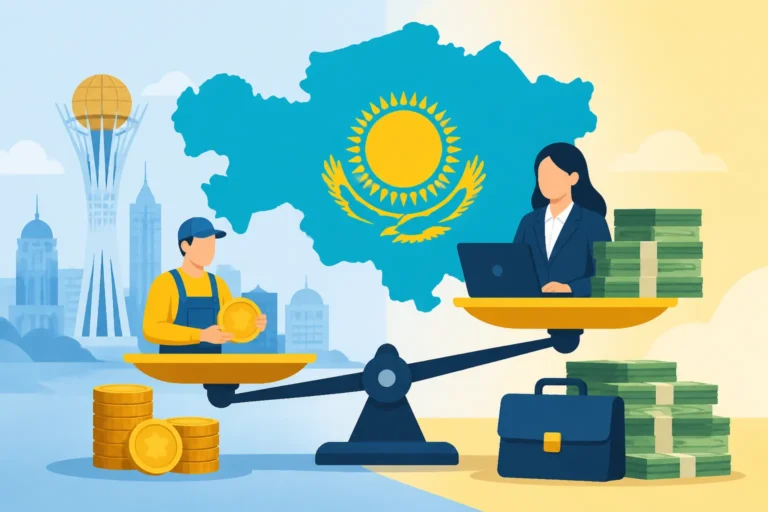
How Do I Register for Social Security in Kazakhstan?
Moving to a new country often means navigating a labyrinth of administrative tasks, and setting up your social security in Kazakhstan can feel like one of the trickiest. Don't worry, you're not alone in finding this confusing! This guide is here to demystify the process, walking you through everything you need to know about registering for social security in Kazakhstan, whether you're an employee or carving your own path as a freelancer.
Unpacking Kazakhstan's Social Security System: An Expat's Primer
When you first hear "social security," your mind might jump straight to retirement, and while that's a part of it, Kazakhstan's system is much more comprehensive. It's designed to provide a safety net for various life situations, ensuring residents have access to healthcare, support during unemployment, and, yes, a pension for their golden years. Understanding these different components is key to feeling secure in your new home.
The Pillars of Social Protection: What You're Contributing To
Kazakhstan's social security system, particularly for those officially employed or registered as individual entrepreneurs, is built on three main pillars: pension contributions, social contributions, and compulsory social health insurance (OSMS). It’s crucial to understand that these are distinct, each serving a different purpose, yet they're all interconnected as part of your overall social safety net here.
First up, we have pension contributions, which are directed towards the Unified Accumulative Pension Fund (UAPF). Think of this as your personal retirement savings account, mandatory for all employed individuals and individual entrepreneurs. Currently, 10% of your declared income is channelled here. It’s an accumulative system, meaning the money grows over time, and the aim is to provide you with a payout when you reach retirement age. While you might not plan to retire in Kazakhstan, these funds are still yours and have specific withdrawal conditions if you decide to permanently leave the country, which we'll touch on later.
Next are social contributions, managed by the State Social Insurance Fund (SSIF). These are designed to offer support during specific life events. This pillar covers benefits for temporary disability (like when you're sick and can't work), maternity and childcare, job loss (under certain conditions), and even for family members in the unfortunate event of a loss of a breadwinner. These contributions act as a crucial safety net, providing financial relief when you might need it most, ensuring you're not left completely without income during challenging periods.
Finally, and perhaps one of the most immediately impactful for expats, is the compulsory social health insurance (OSMS). This is your ticket to accessing public healthcare services across Kazakhstan. Without consistent OSMS contributions, your access to non-emergency medical care in public clinics and hospitals will be limited, and you might find yourself needing to pay out-of-pocket or rely solely on private health insurance. It’s a vital component that ensures you can visit a doctor, get referred to specialists, and receive necessary hospital treatments without facing astronomical bills. If you’re curious about how this specific part of the system works in more detail, you can dive into how to register for compulsory social health insurance (OSMS) in Kazakhstan.
Who Needs to Register and Who is Exempt?
The general rule of thumb is straightforward: if you are officially employed in Kazakhstan or are formally registered as self-employed, you are almost certainly required to participate in the social security system. This applies to most foreign workers who hold valid work permits and are residing here legally.
For the majority of expats, especially those working for a local Kazakhstani company or an international firm with a registered entity here, the process is quite hands-off. Your employer takes on the legal responsibility of registering you with the relevant authorities and making all the necessary contributions on your behalf. This is often a huge relief, as it means you don't have to navigate the administrative hurdles directly. However, it's still absolutely vital to understand what's being contributed, as these payments directly impact your access to benefits and your future pension.
Now, if you're an expat who's decided to venture into self-employment or freelancing, perhaps you've set up your own small business or are offering services as an Individual Entrepreneur (IP), then the responsibility shifts entirely to you. This is where it gets a bit more hands-on. You will be directly responsible for your own registration, calculating your contributions, and ensuring timely payments. This path offers more autonomy but also requires a more proactive approach to your social security obligations.
There are certain exemptions, of course. Tourists on short-term visas, for example, typically aren't required to make social security contributions as they are not considered residents for employment purposes. Additionally, some individuals covered by specific international agreements or certain categories of students might also be exempt. However, these situations are specific, and it's always best to verify your exact status with official sources or legal counsel. Never assume you're exempt without clear confirmation, as non-compliance can lead to penalties and issues down the line.
Employee Life: When Your Employer Handles Social Security for You
For many expats, the transition into the Kazakhstani social security system is relatively smooth because their employers manage the heavy lifting. It's a significant advantage, but understanding the process still empowers you to verify everything is being done correctly.
The Seamless Path: What Your Employer Does
One of the biggest reliefs for expats taking up salaried positions with a local company in Kazakhstan is that the social security registration and payment process is largely automated for you. Your employer essentially acts as your agent, handling all the necessary paperwork and financial transfers. They are legally obligated to deduct the required social security contributions directly from your gross salary each month before you receive your net pay. This makes your life considerably easier, as you don't have to worry about missing payments or navigating complex government portals yourself.
However, even though your employer handles the mechanics, there are a few crucial things you absolutely need to provide and understand. The absolute non-negotiable item from your side is your Individual Identification Number (IIN). This 12-digit unique number is your personal identifier for almost all administrative and financial interactions in Kazakhstan, including taxes and social security. Without an IIN, your employer cannot legally register you or make contributions on your behalf. You'll also need to provide your passport details and your signed employment contract, but the IIN is the bedrock. If you haven't got one yet, you'll want to read up on how to get an IIN (Individual Identification Number) in Kazakhstan as soon as possible.
It's a good habit to understand what those deductions on your payslip actually mean. Look out for line items that might be labelled "ОПВ" (Обязательные пенсионные взносы – mandatory pension contributions) and "СО" (Социальные отчисления – social contributions), as well as "ВОСМС" (Взносы на обязательное социальное медицинское страхование – OSMS contributions). These deductions directly correlate to the three pillars of social security we discussed earlier. Knowing these terms helps you understand how your gross salary translates into your net take-home pay, and importantly, confirms that your employer is fulfilling their obligations.
While it’s largely automated, you should still periodically verify that your contributions are indeed being made. You can easily do this by checking your personal account on the eGov.kz portal or directly through the Unified Accumulative Pension Fund (UAPF) website. These platforms allow you to see a history of your contributions, empowering you to ensure everything is compliant and that your future benefits are being secured.
Employer Responsibilities and Legal Compliance
It cannot be stressed enough that Kazakhstani employers have significant legal obligations when it comes to their foreign employees' social security. They are required to register every employee with the State Revenue Committee and ensure timely and accurate payment of all mandatory social, pension, and OSMS contributions. This isn't just a courtesy; it's a legal requirement designed to protect both the employee and the state's social welfare system.
The State Revenue Committee plays a central role here. Employers report all these contributions as part of their regular tax declarations. This means your social security payments are intrinsically linked to the overall tax system. Understanding your income tax and pension contributions for employees in Kazakhstan gives you a more holistic view of your financial obligations and entitlements. The employer's meticulous reporting ensures that your contributions are correctly allocated to your individual accounts at the UAPF, SSIF, and OSMS fund.
Failure to comply with these regulations carries significant consequences for employers. Penalties can range from fines for delayed or incorrect payments to more severe legal repercussions. More importantly for you, as the expat employee, non-compliance could negatively impact your access to healthcare, future pension entitlements, or social benefits if you ever need to claim them. Therefore, while your employer handles the process, being informed and occasionally verifying your contributions is a proactive step that protects your own interests.
Going Solo: Social Security for Individual Entrepreneurs and the Self-Employed
If you’re carving your own path in Kazakhstan, perhaps as a freelancer, a consultant, or running a small business, the responsibility for your social security shifts from an employer to you. This requires a more hands-on approach, but it's entirely manageable once you understand the steps.
Initial Setup: IIN, IP Registration, and Tax Regimes
The very first, foundational step for any expat planning to be self-employed or an Individual Entrepreneur (IP) in Kazakhstan is obtaining your Individual Identification Number (IIN), if you haven't already. As mentioned, this 12-digit code is your unique personal identifier for absolutely everything administrative in the country, including all your tax and social security dealings. Without an IIN, you simply cannot proceed with formal registration or contributions. So, if you're new here, make that your absolute priority.
Once your IIN is in hand, the next critical step is formally registering as an Individual Entrepreneur (IP). This is the legal designation for self-employed individuals and small business owners in Kazakhstan. Registering as an IP is a prerequisite for managing your own social security contributions and operating legally. The process can often be initiated and completed through the eGov portal, Kazakhstan's online government services platform. While it might seem daunting, it's a relatively straightforward process once you have all your documents in order. You can find a detailed guide on how to register as an Individual Entrepreneur (IP) in Kazakhstan to help you through this stage.
As an IP, you'll also need to choose a tax regime. This choice is significant because it dictates how you calculate your income tax and, by extension, how you determine your social security contributions. For many small businesses and freelancers, the Simplified Tax Regime is a very popular choice due to its lower tax rates and simpler reporting requirements. Understanding the simplified tax regime for small business in Kazakhstan will be essential. This regime often involves paying a fixed percentage of your revenue (e.g., 3%) which covers individual income tax and social contributions. Making an informed decision about your tax regime is crucial for planning your financial obligations, including your social security.
Calculating and Making Your Contributions Manually
Here's where the rubber meets the road for self-employed expats. As an Individual Entrepreneur, you are responsible for calculating and paying your own social, pension, and OSMS contributions each month. The calculations are typically tied to the minimum wage (МЗП – Minimal Zharplata) and the Monthly Calculation Index (МРП – Monthly Raschetnyi Pokazatel), both of which are set annually by the government.
Let's break it down using the 2024 figures as an example:
- The 2024 minimum wage (МЗП) is 85,000 KZT.
- The 2024 Monthly Calculation Index (МРП) is 3,692 KZT.
For an IP, your monthly contributions would generally be:
- Pension Contributions (ОПВ): 10% of 1x the minimum wage (МЗП). So, 10% of 85,000 KZT = 8,500 KZT.
- Social Contributions (СО): 3.5% of 1x the minimum wage (МЗП). So, 3.5% of 85,000 KZT = 2,975 KZT.
- OSMS Contributions (ВОСМС): 5% of 1.4x the Monthly Calculation Index (МРП). So, 5% of (1.4 * 3,692 KZT) = 5% of 5,168.8 KZT = 258.44 KZT (often rounded up).
These amounts are generally paid monthly. The good news is that paying them has become quite convenient. You can usually make these payments through major online banking apps like Kaspi.kz, via payment terminals found in many supermarkets and public places, or by visiting a bank branch. When making the payment, you'll need to specify the type of payment (pension, social, OSMS) and provide your IIN. It’s imperative to ensure you're entering the correct beneficiary codes for the State Revenue Committee.
Since you're managing this yourself, stress the importance of keeping meticulous records of all your payments. Save all receipts and transaction confirmations. Additionally, regularly check your contribution history via your personal eGov.kz account or the UAPF website. This proactive approach will help you spot any discrepancies early and ensure your records are up-to-date. If you find the tax aspects, especially the calculations and reporting, confusing, don't hesitate to seek guidance. Services like Taxes for Expats specialize in helping foreigners navigate complex tax and social security obligations in new countries, which can be invaluable for individual entrepreneurs.
A word of caution: if you start operating as an IP and don't begin your contributions immediately, you could accrue back payments. This can lead to unexpected financial burdens and complications down the line, potentially even impacting your ability to access public services or benefits. Consistency is absolutely key when managing your own social security.
The Payoff: What You Get from Your Contributions
So, after all that talk about contributions and registrations, what's in it for you? The benefits of participating in Kazakhstan's social security system are tangible and provide crucial support that can significantly improve your quality of life and sense of security as an expat.
Accessing Public Healthcare and Social Safety Nets
The most immediate and perhaps vital benefit of your consistent social security contributions, especially for OSMS, is your access to public healthcare services. Once you're registered and consistently contributing, you gain the right to visit local poliklinikas (clinics), consult with general practitioners, receive referrals to specialists, and access certain hospital treatments under the state-funded system. Without these contributions, your options for non-emergency medical care become much more limited, often forcing you into the more expensive private healthcare sector or restricting you to only emergency services. To truly understand the full scope of your healthcare access, it’s worth exploring how Kazakhstan's health system works: OSMS and private care explained (2026).
Beyond healthcare, your social contributions (those payments to the SSIF) provide a critical social safety net. This includes benefits for temporary disability, meaning if you fall ill and can't work, you'll receive a portion of your income. It also covers maternity benefits, which is a huge consideration for expats planning to start or expand their families in Kazakhstan, and support in certain cases of job loss. These benefits are designed to cushion the financial impact of life's unexpected challenges, offering a sense of stability when you might feel vulnerable in a new country.
One practical aspect to consider is the language barrier. While the benefits are robust, navigating public clinics and administrative offices, especially outside of major cities like Almaty or Astana, can sometimes be challenging if you don't speak Kazakh or Russian. Instructions might be in the local language, and not all staff will be fluent in English. Taking steps to learn some basic phrases can make a world of difference. Resources like iTalki, an online language learning platform, can be incredibly helpful for picking up essential communication skills, allowing you to better understand medical advice or administrative requirements and communicate your needs effectively.
Your Future in Kazakhstan: Pension and Long-Term Entitlements
While immediate access to healthcare and social support is fantastic, your pension contributions (those payments to the UAPF) are quietly building for your long-term future. These funds accumulate in your individual pension account over your working life in Kazakhstan. Even if you don't envision retiring here, these savings are yours. They form a personal pension fund that can potentially be transferred or withdrawn under specific conditions when you eventually leave the country. This means your contributions aren't just disappearing into a black hole; they're an investment in your financial future, regardless of where that future takes you. To gain a deeper understanding of this, you should check out understanding the pension system and contributions in Kazakhstan.
Regarding withdrawal conditions for expats, it's a common question. If you permanently emigrate from Kazakhstan, you may be eligible to withdraw your accumulated pension savings. However, this process requires specific documentation and adherence to established legal procedures, so it's not a simple walk-in-and-collect situation. It's crucial to consult with the UAPF or a legal expert closer to your departure date to understand the exact requirements and timelines.
Ultimately, having a comprehensive understanding of Kazakhstan's social security system, from the immediate benefits to the long-term pension entitlements, provides expats with a greater sense of security and peace of mind. It allows you to plan effectively, knowing that essential services and financial support are available, making your life in Kazakhstan more predictable and comfortable.
| Contribution Type | Paid by Employee (via employer) | Paid by Individual Entrepreneur (Self-Employed) | Primary Benefit |
|---|---|---|---|
| Pension (UAPF) | 10% of monthly gross salary | 10% of 1x minimum wage (МЗП) | Accumulative pension for retirement; potential withdrawal upon permanent departure from Kazakhstan. |
| Social (SSIF) | 3.2% of monthly salary (after pension deduction) | 3.5% of 1x minimum wage (МЗП) | Temporary disability, maternity, job loss benefits. |
| OSMS (Health) | 2% of monthly gross salary (capped) | 5% of 1.4x Monthly Calculation Index (МРП) | Access to public healthcare services, including consultations and hospital care. |
Note: The minimum wage (МЗП) and Monthly Calculation Index (МРП) are subject to annual review and change by the Kazakhstani government. The figures provided here are for illustrative purposes based on 2024 data and should always be verified against the latest official sources.
Disclaimer
The information provided in this guide is for general informational purposes only and does not constitute legal, financial, or medical advice. While we strive to keep the information accurate and up-to-date, regulations in Kazakhstan, particularly regarding social security and immigration, can change frequently. Expats are strongly advised to consult with relevant Kazakhstani government authorities, legal professionals, or qualified consultants for advice tailored to their individual circumstances before making any decisions.