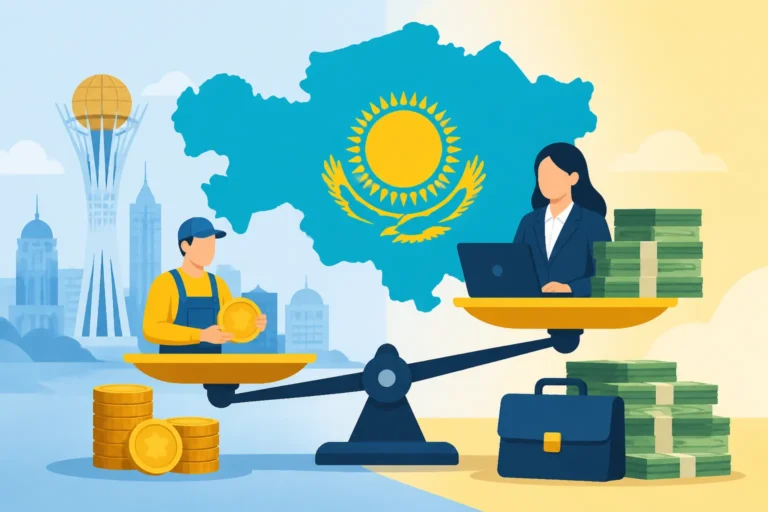
Can I Study and Work at the Same Time in Kazakhstan?
Landing in a new country like Kazakhstan to pursue your studies is an incredibly exciting adventure, filled with new experiences and challenges. But let's be honest, for many international students, the question of "how will I support myself?" or "can I earn some extra cash while I'm here?" looms large. Juggling textbooks and lectures with the desire to gain work experience or simply cover living expenses is a very real concern. This guide is here to walk you through the ins and outs of whether you can study and work simultaneously in Kazakhstan, helping you understand the legalities, practicalities, and opportunities available.
The Legal Framework: Understanding Your Visa and Residence Permit
One of the biggest misconceptions many international students arrive with is the idea that their student visa automatically grants them the right to work. Unfortunately, it's rarely that simple. Kazakhstan, like many countries, has specific rules governing who can work and under what conditions. Getting a clear understanding of your visa and residence permit is the absolute first step.
Student Visa and Work Permit Basics
When you apply for a student visa to Kazakhstan, its primary purpose is to allow you to study at an accredited educational institution. This visa is typically tied to your enrolment and doesn't inherently come with work authorization. This means that if you simply have a standard student visa, you're generally not permitted to engage in paid employment. Trying to work without the correct authorization can lead to serious issues, including fines, deportation, and even a ban from re-entering the country, which is the last thing anyone wants when they're trying to build a new life here.
The standard procedure for foreigners to work in Kazakhstan involves obtaining a work permit and a work-based residence permit, a process usually initiated and sponsored by an employer. This is a robust system designed to control foreign labour and ensure that local job markets aren't unfairly impacted. For most students, finding an employer willing to navigate this complex and often costly process for a part-time, temporary role is incredibly challenging. Employers typically prefer to sponsor full-time, skilled professionals for long-term positions, not students looking for flexible hours.
So, while the dream of earning some money on the side to explore Almaty's mountains or Astana's futuristic architecture is appealing, it's crucial to understand that your student visa alone won't get you there. It's a fundamental difference that can often be frustrating for those coming from countries with more lenient student work policies. For a deeper dive into the student visa process, you might find our guide on How to Get a Student Visa and Study in Kazakhstan: The Full Guide (2027) really helpful.
Exceptions and Special Cases
Now, before you throw your hands up in despair, it's important to know that there can be exceptions or specific scenarios where working as a student might be permissible. These aren't broad strokes but rather niche situations that require careful attention to the rules.
Some universities in Kazakhstan, particularly international ones like KIMEP University in Almaty, might have internal regulations or programs that allow their students to work on campus in very specific roles, such as teaching assistants, library staff, or administrative support. These positions are usually limited, highly competitive, and strictly controlled by the university itself to ensure compliance with local labour laws. If your university offers such opportunities, it's vital to confirm with their international student office or career services whether these roles are indeed legally compliant for foreign students and if they require any specific internal permits or registrations.
Another area where some flexibility might exist is through internships that are an integral part of your academic curriculum. If your degree program explicitly requires an internship for graduation, and this internship is unpaid or minimally compensated, it might fall under a different legal category than general employment. However, even in such cases, it's imperative that the university and the host company formally confirm the legal status and ensure all necessary paperwork is in order. You'll want to avoid any ambiguity that could classify your internship as unauthorized work. To understand more about these specific scenarios, checking out Understanding Internships and Student Work Rules in Kazakhstan could give you more clarity.
Navigating the Work Permit Process as a Student
Even with the complexities, the desire to work while studying is strong. If you're determined to explore official avenues, understanding the standard work permit system is crucial, even if it presents significant hurdles for students.
The Employer-Sponsored Work Permit Challenge
The primary route for foreigners to work in Kazakhstan is through an employer-sponsored work permit. This isn't a simple form you fill out; it's a comprehensive process involving the employer applying for a quota, proving that no Kazakhstani citizen can fill the role, and providing extensive documentation for both the company and the foreign worker. The process is lengthy, can be expensive for the employer, and often requires a significant commitment in terms of salary and social contributions.
For an employer to sponsor a student for a part-time job, they would essentially have to go through the same rigorous process as hiring a full-time expat specialist. This includes obtaining permission from local labour authorities, dealing with quotas, and potentially proving the unique skill set you, a student, bring that no local applicant possesses. It's simply not practical for most part-time, entry-level student jobs. Imagine a coffee shop or a tutoring centre trying to justify the expense and bureaucratic effort to hire a student when they could easily hire a local. It's a big ask. Our article on How a Work Permit and Employer Sponsorship Work in Kazakhstan goes into much more detail on this often bewildering process.
This reality can be a source of real frustration. You might have valuable skills, a strong work ethic, and a genuine need to earn money, but the system isn't really set up for the international student part-time worker. It's designed for experienced professionals filling specific skill gaps. This isn't to say it's impossible, but it highlights why many students end up looking for alternative, often less formal, ways to earn income, which brings us to the next point.
Part-time Work and Legal Avenues
While the traditional work permit route is challenging, some students do find ways to legally earn money, primarily through self-employment or very specific contract work. The key here is understanding the concept of an Individual Entrepreneur (IP), or Individualnyy Predprinimatel (ИП) in Kazakh.
If you plan to offer services on your own – like private tutoring, freelance graphic design, or online consulting – you might be able to register as an Individual Entrepreneur. This is essentially registering yourself as a sole proprietor. The process involves obtaining your IIN (Individual Identification Number), registering with the State Revenue Committee (the tax authority), and choosing a simplified tax regime, which can be quite favourable for small earnings. As an IP, you're working for yourself, rather than being employed by a company that needs to sponsor your work permit.
However, even with IP registration, you must ensure that your activities are not considered a violation of your student visa's primary purpose. It's a fine line, and typically, engaging in self-employment means you're operating a business, which isn't what a student visa is for. This is where advice from a local legal expert or your university's international office is absolutely crucial. They can clarify if IP registration is a viable and permissible option for someone on a student visa in Kazakhstan, as regulations can change. For those considering this path, exploring How to Register as an Individual Entrepreneur (IP) in Kazakhstan would be an essential read.
It's vital to stay compliant. Even if you're earning through self-employment, you are obligated to understand and pay your taxes. Kazakhstan has a relatively straightforward tax system with a flat 10% individual income tax rate. However, navigating the details, especially as a foreigner, can be tricky. Services like Taxes for Expats specialize in helping foreigners understand their tax obligations and file correctly, ensuring you don't inadvertently run afoul of the law. You'll definitely want to read up on Understanding Income Tax and the Flat 10% Rate in Kazakhstan (2026) to get a grasp of your financial duties.
Practical Realities and Opportunities for Student Employment
Let's talk about what students actually do when they want to earn money in Kazakhstan, given the tight legal constraints. Many fall into informal work or find niches that are more amenable to their student status.
Common Student Jobs and How to Find Them
Without a formal work permit, the landscape of available jobs for students is predominantly informal or semi-formal. The most common type of work for expat students, by far, is language tutoring. English, of course, is highly sought after, but skills in other languages like German, French, or even your native tongue (if it's in demand) can also open doors.
Here’s how many students find these opportunities:
- University Networks: Often, fellow students, faculty members, or administrative staff might know of families or individuals seeking language tutors. Word-of-mouth within the university community is powerful.
- Expat and Local Online Groups: Facebook groups for expats in Almaty or Astana are fantastic resources. People frequently post requests for tutors, nannies, or other casual services. Similarly, local online forums and Telegram channels are also active.
- Online Platforms: The digital age has made remote work more accessible. Platforms like iTalki (for language tutoring) or Upwork (for freelance skills like writing, graphic design, or web development) allow you to connect with clients globally. If you're providing services to clients outside Kazakhstan, the legal and tax implications might differ, potentially simplifying things if you're on a student visa, but it’s still best to consult with a tax expert about foreign income.
- International Schools: While often requiring formal qualifications, some international schools might have casual roles for native English speakers, perhaps as teaching assistants for after-school clubs or substitute teachers, depending on your qualifications and the school's specific needs. These roles usually require a formal work permit, however.
- Casual Event Work: For those with outgoing personalities, there might be opportunities for casual work at international events, conferences, or exhibitions, often through local event agencies. This could involve interpreting, hospitality, or promotional work. Again, the legality for student visa holders needs careful checking.
It's important to approach these opportunities with a realistic mindset. These jobs are often paid in cash, which brings us to the crucial topic of tax. For more general advice on job searching, you might want to look at The Expat Guide to Finding a Job in Kazakhstan (2027). For teaching specifically, How to Find English Teaching Jobs in Kazakhstan can offer more insights.
Financial Implications and Tax Obligations
Even if you're earning money through informal tutoring or online freelance gigs, you still have tax obligations. Ignoring these can lead to penalties down the line. Kazakhstan's tax system, as mentioned, has a flat 10% Individual Income Tax (IIT) for residents. If you become a tax resident (typically by spending 183 days or more in any 12-month period in Kazakhstan), you're liable for tax on your worldwide income.
For informal earnings, many students might not declare their income, which is technically illegal. If you do choose to register as an Individual Entrepreneur (IP), as discussed earlier, you'll be subject to a simplified tax regime, which can be quite advantageous. For example, some IPs pay a percentage of their revenue (e.g., 3% or 4%) rather than the 10% IIT, and often only need to file quarterly. This is a legitimate way to manage your income and stay compliant.
It's also worth noting that if you're earning money, even informally, and depositing significant amounts into a Kazakhstani bank account, it could raise questions from financial institutions or tax authorities. Banks have reporting obligations for unusual transactions. Understanding How Much Income Tax Will I Pay in Kazakhstan in 2026? is essential to avoid any surprises.
Here's a simplified look at potential work scenarios for students:
| Work Scenario | Legal Status on Student Visa (General) | Potential Legal Route (Requires Research) | Typical Pay Structure |
|---|---|---|---|
| University On-Campus Job | Often permitted via internal rules | University formal process | Hourly/Monthly |
| Internship (Curriculum Req.) | Potentially permitted (unpaid/stipend) | University/Company formal agreement | Unpaid/Stipend |
| Freelance Language Tutoring | Not directly permitted | Individual Entrepreneur (IP) registration | Cash/Bank Transfer |
| Online Freelance (Global Clients) | Not directly permitted | Individual Entrepreneur (IP) registration | Online Payment/Bank |
| Part-time Local Business Job | Not permitted (requires work permit) | Full Employer-Sponsored Work Permit | Monthly/Hourly |
| Casual Event Work | Not directly permitted | Unclear, often informal | Cash |
This table is a general guide. Specific regulations, particularly regarding IP registration for student visa holders, can vary and require up-to-date legal advice. This is where services like Taxes for Expats can be invaluable. They can help clarify your tax residency status and ensure you are correctly reporting any income, whether local or international, preventing potential legal pitfalls.
Balancing Academics, Work, and Life in Kazakhstan
Let's be real, moving to a new country to study is already a huge undertaking. Adding work on top of that can feel like trying to run a marathon and juggle flaming torches simultaneously. It takes incredible discipline and self-awareness to succeed.
The Challenge of Time Management
The most significant challenge for any student trying to work is time management. University courses in Kazakhstan can be demanding, especially if you're also navigating a new academic system and language. Lectures, assignments, group projects, and exam preparation all require significant dedication. Throw in a part-time job, and your free time for exploring Kazakhstan, socializing, or simply relaxing can quickly disappear.
- Academic Priority: Your studies must remain your priority. After all, that's what your student visa is for! If your grades suffer, or you struggle to meet academic requirements, you risk losing your student status, which would negate any work you're doing. Many expat students find they need to schedule their work around their most challenging courses or during university breaks.
- Cultural Immersion: Part of the expat experience is immersing yourself in the local culture. This includes learning Kazakh or Russian, understanding local customs, and exploring the country. If all your time is spent between classes and work, you'll miss out on this invaluable aspect of living abroad, which can lead to burnout and isolation.
- Burnout: It's a real risk. Long hours of study followed by work, especially in a new environment, can be exhausting. Be honest with yourself about your capacity. It’s better to earn less or not work at all than to jeopardize your health and academic success.
Consider carefully whether the financial benefit outweighs the potential academic and personal costs. Sometimes, relying on savings, scholarships, or family support, if available, is a more sustainable approach for your well-being and academic performance.
Support Systems and Resources
You're not alone in facing these challenges. Kazakhstan has a growing expat community, and universities are increasingly aware of the needs of international students.
- University International Offices: Your university's international student office is your first and best resource. They are there to support foreign students and should have the most accurate and up-to-date information regarding regulations for working on a student visa. They can also connect you with student counselling services if you're feeling overwhelmed.
- Career Services: Many universities have career services departments that can offer guidance on job searching, CV writing, and interview skills, even if direct job placement for international students is limited. They might also have information on internships or campus job opportunities.
- Expat Networks: Connect with other international students or expats in Kazakhstan through social media groups or local meetups. They can share their experiences, offer advice on finding informal work, or even help you navigate common challenges. They've likely been in your shoes!
- Language Exchange Partners: If you're looking for extra income through tutoring, language exchange apps or local university bulletin boards can be a good place to start. Sometimes, you can find paid opportunities by simply offering conversation practice. This can also help you practice your Kazakh or Russian, hitting two birds with one stone!
Remember, while the idea of studying and working at the same time in Kazakhstan is certainly appealing for many, the legal landscape makes it a complex endeavour. Prioritizing your studies, understanding the rules, and seeking legitimate avenues (if any exist for your specific situation) are key to a successful and compliant experience.
Disclaimer
The information provided in this guide is for general informational purposes only and does not constitute legal, financial, or tax advice. Regulations regarding visas, work permits, and employment for foreign students in Kazakhstan can change frequently. It is imperative to consult with the official authorities, your university's international student office, and/or a qualified legal or tax professional in Kazakhstan for personalized and up-to-date advice specific to your individual circumstances. The author and publisher are not responsible for any actions taken based on the information provided herein.