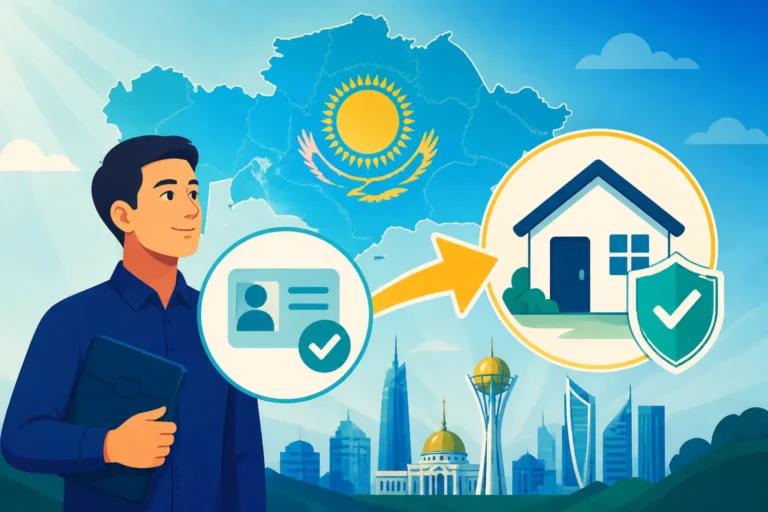
How to Become a Freelancer Legally in Kazakhstan
Alright, let's talk about taking the plunge into freelancing here in Kazakhstan. It’s an exciting prospect, isn't it? The freedom, the flexibility, the chance to be your own boss in this dynamic corner of the world. But let's be real, the idea of navigating the legalities, especially as a foreigner, can feel like trying to solve a Rubik's Cube blindfolded. Don't worry, I've been there, staring at those forms, wondering if I'm doing it right. This comprehensive guide will walk you through every step of becoming a legal freelancer in Kazakhstan, from getting your essential documents in order to understanding the tax man, making the whole process far less daunting.
Understanding the Freelance Landscape in Kazakhstan
When you first arrive in Kazakhstan, the idea of freelancing often conjures images of digital nomads working from cozy cafes in Almaty or sleek co-working spaces in Astana. And yes, that image isn't entirely wrong – the country is increasingly embracing remote work and digital entrepreneurship. However, like anywhere else, there's a crucial difference between simply doing freelance work and legally operating as a freelancer, especially if you plan to live and earn here long-term. Many expats, myself included, initially dipped our toes in without fully understanding the local regulations, and trust me, that's a path best avoided. Getting it right from the start saves a lot of headaches later on.
The Allure and the Reality for Expats
The allure of freelancing in Kazakhstan is strong. The cost of living is generally lower than in many Western countries, the internet infrastructure is robust in major cities, and there's a growing international community. This creates a fertile ground for anyone looking to offer their skills independently, whether you're a designer, a writer, a consultant, or a programmer. You might find yourself working for international clients while enjoying the local culture, or even tapping into the nascent local market for specialized services.
However, the reality often hits when you start looking into the bureaucratic side. The initial excitement can quickly turn into frustration when faced with government websites that are primarily in Kazakh or Russian, or when trying to decipher official terminology. You'll encounter processes that might seem overly complex compared to what you're used to, and the need to interact with various government bodies like the State Revenue Committee (SRC) can feel intimidating. It’s not impossible, not by a long shot, but it requires patience, a willingness to learn, and sometimes, a good translator or local helper.
Distinguishing Between Freelance and Traditional Employment
One of the first crucial distinctions you need to grasp is the difference between being a self-employed freelancer and being an employee of a company here. When you're a freelancer, you're essentially providing services to multiple clients, often on a project basis, and you're responsible for your own taxes, social contributions, and professional liabilities. You dictate your own hours (to a large extent) and typically have multiple income streams rather than a single salary.
Traditional employment, on the other hand, means you have a formal contract with one employer, who handles your income tax deductions, social security payments, and provides you with benefits like paid leave. This distinction is vital because the legal and tax obligations are entirely different. Trying to operate as an undeclared freelancer while living and working here can lead to significant legal and financial penalties, including fines and issues with your visa or residence permit status. It's not worth the risk, especially when there are clear pathways to operate legally.
Key Legal Status Options for Freelancers
For most individual expats looking to freelance legally in Kazakhstan, your primary and most practical option will be to register as an Individual Entrepreneur, or "Индивидуальный предприниматель" (IP), often simply referred to as an "IE" in English. This is the Kazakhstani equivalent of a sole proprietorship. It's designed for individuals who conduct business activities on their own behalf without forming a legal entity like a company.
While larger operations might consider registering a Limited Liability Partnership (TOO or LLP), for the vast majority of freelancers, the IP status is more straightforward, less costly to set up, and comes with a significantly simpler tax regime. It allows you to issue invoices, receive payments legally, and pay your taxes and contributions in a relatively streamlined manner. You’ll be responsible for your own legal compliance, but the procedures are designed to be manageable for small businesses and independent contractors. We'll delve deep into the IP registration process because it's genuinely your best bet as an expat freelancer here.
The Cornerstone: Getting Your Individual Identification Number (IIN)
Before you even think about registering your freelance business, there’s one absolutely foundational piece of documentation you must have: your Individual Identification Number, or IIN (Индивидуальный идентификационный номер). Trust me, without this little gem, you can’t do much of anything official in Kazakhstan, whether it's opening a bank account, getting a local SIM card, signing a rental agreement, or, crucially, registering as an entrepreneur. It’s your unique identifier for all interactions with government bodies and financial institutions.
Why Your IIN is Non-Negotiable
Think of your IIN as your Kazakhstani social security number and taxpayer identification rolled into one. It’s a 12-digit code that is uniquely assigned to you and stays with you permanently. Every official transaction, every tax payment, every interaction with the State Revenue Committee (SRC), and every payment you receive for your freelance work will be linked back to this number. Trying to operate without it is like trying to drive a car without an engine – it simply won't work.
Many expats initially underestimate its importance, thinking they can get by with their passport, but that's simply not the case for legal freelancing. You’ll need it to access online government services (eGov.kz), to open a bank account crucial for receiving payments, and to register your IP. My advice? Make getting your IIN one of your absolute first priorities upon arrival, right after sorting out your initial visa registration. You can learn all about it in detail in this guide: How to Get an IIN (Individual Identification Number) in Kazakhstan.
Step-by-Step IIN Application Process
Getting your IIN typically involves a visit to a Public Service Centre, known locally as a "ЦОН" (TSON). These centers are designed as one-stop shops for various government services, aiming to simplify bureaucracy.
Here’s a general rundown of what you’ll need and what to expect:
-
Required Documents:
- Valid Passport: Your original passport and a clear photocopy of the main biographical page.
- Translation of Passport: Some TSONs might require a notarized translation of your passport into Kazakh or Russian. It's always a good idea to have this ready, just in case.
- Visa/Migration Card/Temporary Residence Permit: Proof of your legal stay in Kazakhstan. This could be your migration card (issued upon entry for visa-free nationals), your visa stamp, or a temporary residence permit. Ensure it’s still valid.
- Application Form: You'll fill this out at the TSON. Don't worry, there are usually staff who can assist, or you can find templates online.
-
Visiting a TSON:
- Take a Ticket: Upon entering, look for a machine where you can take a numbered ticket for the "IIN application for foreign citizens" service. The signs might be in Kazakh or Russian, so don't be shy to ask a staff member or another visitor for help.
- Wait Your Turn: TSONs can be busy, especially during peak hours, so be prepared for a wait.
- Submit Documents: When your number is called, present your documents to the operator. They will verify everything and process your application. They might take your photo or scan your fingerprints.
- Receive Your IIN: In most cases, if all your documents are in order, your IIN will be issued on the spot or within a few business days. You'll receive a printed certificate with your number. Keep this document safe!
It sounds straightforward, and often it is, but it’s always wise to go prepared for minor hiccups, as requirements can sometimes vary slightly between TSONs or depend on the staff member you encounter.
Common Pitfalls and Troubleshooting
While the IIN process is generally one of the easier administrative tasks, expats often run into a few common issues:
- Language Barrier: This is perhaps the biggest hurdle. Very few TSON staff speak fluent English. Bring a friend who speaks Russian or Kazakh, or have key phrases translated on your phone. Alternatively, some TSONs in major cities like Almaty and Astana might have dedicated "international windows" or staff with some English proficiency.
- Document Discrepancies: Ensure your passport is valid for at least six months and all copies are clear. If your name has multiple parts or special characters, make sure the translation accurately reflects your official documents to avoid inconsistencies.
- Invalid Stay: If your visa or migration card has expired, you won't be able to apply for an IIN. Make sure your legal status is in order before you go.
- Wrong TSON: While most TSONs should handle IIN applications, it's sometimes better to confirm the specific TSON you plan to visit can process foreign citizen requests, especially in smaller towns. In Almaty, the main TSONs are generally well-equipped for foreigners.
If you hit a snag, don't panic. Take a deep breath, gather more information, and try again. Sometimes, going to a different TSON or visiting on a less busy day can make all the difference. Remember, persistence is key when dealing with bureaucracy here.
Registering as an Individual Entrepreneur (IP)
Once you have your precious IIN, the real fun begins: registering your freelance business as an Individual Entrepreneur (IP). This is the legal framework that will allow you to operate, invoice clients, and pay taxes without constantly looking over your shoulder. For many expats, the IP status is the most accessible and logical choice for freelancing due to its simplified procedures and tax benefits. It’s a game-changer because it formalizes your ability to earn a living in Kazakhstan on your own terms.
The Simplified Tax Regime: Your Best Friend as an IP
Here’s where it gets interesting and, dare I say, almost pleasant for freelancers: Kazakhstan offers a "Simplified Tax Regime" (Упрощенная декларация) for small businesses and individual entrepreneurs. This regime is often the holy grail for new IPs because it drastically simplifies tax calculation and reporting. Instead of dealing with complex deductions and multiple tax types, you generally pay a combined income and social tax at a very low flat rate on your gross income.
Currently, under this simplified regime, most IPs pay a mere 3% of their total revenue every quarter. Yes, you read that right – 3%! This is exceptionally low compared to many other countries and makes operating legally incredibly attractive. There are certain criteria to qualify, mainly revolving around annual turnover limits and not engaging in certain types of activities (like gambling or licensing). For the vast majority of freelance services, you’ll easily fall within these parameters. This low rate covers both individual income tax (IIT) and social tax, making it a powerful incentive to get registered. Understanding this regime is absolutely critical, and you can delve deeper into its specifics here: Understanding the Simplified Tax Regime for Small Business in Kazakhstan (2027).
Step-by-Step IP Registration via eGov.kz or SRC
The process of registering your IP can be done in a couple of ways: either online through the eGov.kz portal (if you have an Electronic Digital Signature, or EDS) or in person at the State Revenue Committee (SRC) office (Управление государственных доходов).
Option 1: Online via eGov.kz (Recommended if you have EDS)
- Obtain an EDS: Your Electronic Digital Signature (ЭЦП) is essential for online government interactions. You can get this at a TSON after you have your IIN. It’s a small USB stick or a file on your computer that acts as your digital identity.
- Log in to eGov.kz: Go to the eGov.kz portal, log in using your EDS.
- Find the Service: Search for "Registration of Individual Entrepreneurship" (Регистрация индивидуального предпринимательства).
- Fill out the Application:
- Select "Simplified Declaration": This is where you choose your preferred tax regime.
- Indicate OKED Codes: This stands for "Общий классификатор видов экономической деятельности" (General Classifier of Economic Activities). These are codes that categorize the type of business activities you will be performing. For freelancers, common codes include those for IT services, consulting, translation, design, etc. You can list multiple codes if your activities are diverse. Choose them carefully as they define what you are legally allowed to do.
- Provide Contact Information: Enter your address, phone number, and email.
- Confirm Data: Review all entered information for accuracy.
- Submit and Await Confirmation: Once submitted, the system will process your application. You should receive electronic confirmation of your IP registration within one business day. It’s surprisingly quick when done online!
Option 2: In-Person at the State Revenue Committee (SRC)
- Prepare Documents: You’ll need your original passport, IIN certificate, and photocopies of both.
- Visit Your Local SRC Office: Go to the SRC office that corresponds to your registered address. You can find their locations online.
- Consult an Operator: Explain that you want to register as an Individual Entrepreneur under the simplified tax regime.
- Fill out the Application: You will be given a paper application form to fill out. Again, you’ll need to specify your chosen tax regime (Simplified Declaration) and your OKED codes. This is where having a local friend or a professional translator is invaluable.
- Submit Documents: The operator will review your application and documents.
- Receive Confirmation: You will receive a document confirming your registration as an IP. This typically happens within one to three business days.
For more general guidance on interacting with tax authorities, check out How to Register with the State Revenue Committee in Kazakhstan.
Choosing Your Activities (OKED Codes) and Tax System
Selecting the correct OKED codes is more important than you might initially think. These codes legally define what services or goods your IP is authorized to provide. If you operate outside of your declared OKED codes, you could face penalties or issues with client contracts. For example, if you’re a freelance web developer, you’d look for codes related to IT services, software development, or data processing. If you’re a translator, there’s a specific code for translation services. Don't just pick one; think about the scope of your potential work. It’s possible to add or change OKED codes later, but it’s best to get it right from the start.
Regarding your tax system, the simplified declaration is generally the default and most beneficial for freelancers, but there are other options like the general established procedure (for higher turnover or specific activities) or special patent regimes (for very specific, small-scale individual labor). For most expats reading this, stick with the "Simplified Declaration." It’s designed to keep things simple for businesses like yours and is truly one of the perks of freelancing here.
Navigating the Tax and Contribution Labyrinth
Now that you're officially an Individual Entrepreneur, it's time to talk about what everyone loves to hate: taxes and mandatory contributions. While Kazakhstan's system for IPs under the simplified regime is incredibly straightforward, misunderstanding the payment cycles or missing deadlines can lead to unnecessary fines and stress. As an expat, this is one area where you absolutely cannot afford to make assumptions; you need to be proactive and understand your obligations.
Understanding the Simplified Tax Regime Mechanics
As we touched upon earlier, the simplified tax regime for IPs is a fantastic benefit. Instead of separate taxes for income, social contributions, and other levies, you pay a combined 3% of your gross income (all money received) every quarter. This 3% is then split: roughly half goes towards your Individual Income Tax (IIT) and the other half towards social tax (social deductions). This calculation is incredibly simple: if you earned 1,000,000 KZT in a quarter, your total tax bill would be 30,000 KZT.
Payments are made quarterly, meaning four times a year. Each quarter’s declaration and payment are due by the 15th day of the second month following the reporting quarter. For example:
- Q1 (Jan-Mar) Income: Due by May 15th
- Q2 (Apr-Jun) Income: Due by August 15th
- Q3 (Jul-Sep) Income: Due by November 15th
- Q4 (Oct-Dec) Income: Due by February 15th of the next year
These deadlines are strict, so marking them on your calendar is crucial. Even a small delay can result in penalties. For more insights into the broader tax landscape, especially for foreigners, you might find the information from services like Taxes for Expats useful if your financial situation is complex, or simply to get a comparative overview. While the 3% is simple, understanding where it fits into the larger picture of Understanding Income Tax and the Flat 10% Rate in Kazakhstan (2026) can provide valuable context.
Social and Pension Contributions for IPs
Beyond the 3% simplified tax, as an IP, you are also responsible for a couple of additional mandatory contributions:
- Mandatory Pension Contributions (Обязательные пенсионные взносы – ОПВ): This is a payment into your personal pension account. The amount is 10% of your declared income (which you choose, but cannot be less than the minimum wage, currently around 85,000 KZT per month in 2024, and not more than 50 times the minimum wage). For simplicity, many IPs declare the minimum wage as their income for OПВ purposes, meaning they pay 10% of that minimum monthly amount. This payment is typically made monthly.
- Mandatory Social Health Insurance Contributions (Обязательные социальные медицинские отчисления – ОСМС): This contribution goes towards the compulsory social health insurance system. The amount is 5% of your declared income (again, not less than 1.4 times the minimum wage, and not more than 10 times the minimum wage). Similar to OПВ, many IPs use the minimum allowable base for this calculation to minimize their monthly payments. This is also paid monthly.
It's important to understand that while these amounts are mandatory, the base you choose to calculate them from directly impacts your monthly payments. Most freelancers choose the minimum legal base for these contributions to keep their overhead low, especially when starting out. You can learn more about these broader obligations in Understanding Mandatory Social and Pension Contributions in Kazakhstan.
Staying Compliant: Deadlines and Penalties
Staying on top of your deadlines is paramount. For the simplified tax regime, remember the quarterly filing and payment dates. For pension and social health contributions, these are typically due monthly by the 25th day of the following month.
Penalties for Non-Compliance:
- Late Filing: Failing to submit your quarterly declaration on time can result in administrative fines.
- Late Payment: Missing tax or contribution payment deadlines will incur penalties, usually a percentage of the overdue amount for each day of delay.
- Operating without Registration: If the authorities discover you've been freelancing and earning income without registering as an IP, you could face significant fines, back taxes, and potentially even deportation depending on the severity and duration of the unregistered activity.
To avoid all of this, consider these tips:
- Set Reminders: Use your phone or calendar to set reminders a week before each deadline.
- Use the Taxpayer Cabinet (Кабинет Налогоплательщика): This online portal (tax.gov.kz) is where you'll file your declarations and check your tax ledger. It's an indispensable tool. You can log in with your EDS. Filing Your Tax Return with the State Revenue Committee in Kazakhstan: The Complete Walkthrough (2027) provides a good overview of how to use this.
- Keep Records: Maintain clear records of all your income and expenses. Even though the simplified regime is based on gross income, good record-keeping is a sound business practice.
- Consult a Professional: If you're unsure, especially about your first few filings or if your income structure is complex, it’s worth hiring a local accountant or a tax consultant. Even for a short period, their guidance can save you from costly mistakes.
By following these guidelines, you can navigate the tax system confidently and legally.
| Contribution Type | Rate | Payment Frequency | Due Date (Example for Q1) |
|---|---|---|---|
| Individual Entrepreneur Tax (Simplified) | 3% of Gross Revenue | Quarterly | May 15th |
| Mandatory Pension Contributions (ОПВ) | 10% of Declared Income | Monthly | 25th of next month |
| Mandatory Social Health Ins. (ОСМС) | 5% of Declared Income | Monthly | 25th of next month |
Note: "Declared Income" for OПВ and ОСМС must meet specific minimums and maximums set by law, generally tied to the minimum wage.
Practicalities of Freelancing Life: Beyond Registration
Getting your IP status and understanding taxes is a huge leap, but the practical aspects of day-to-day freelancing in Kazakhstan also require attention. From managing your money to finding clients, you’ll need to adapt to local customs and systems to truly thrive. This is where the real "expat life" challenges and triumphs often occur, as you integrate your professional work into your new surroundings.
Banking for Freelancers: Separating Personal and Business
Once you’re registered as an IP, opening a business bank account is not just good practice, it’s often a legal requirement for receiving business income. While you might initially use a personal account for smaller, informal payments, for true legitimate freelancing, you need to set up a dedicated account. This helps keep your finances clear for tax purposes and presents a professional image to clients.
Most expats find success with major Kazakhstani banks like Kaspi Bank or Halyk Bank. These banks are widely used, have extensive ATM networks, and offer user-friendly mobile banking apps. Kaspi, in particular, is ubiquitous and offers an incredibly convenient ecosystem for payments, transfers, and even marketplace shopping. When you open an account, specify that it's for your Individual Entrepreneur activities. You'll need your passport, IIN, and proof of IP registration. You can explore this further in How to Open a Bank Account at a Kazakhstani Bank as a Foreigner. Having a dedicated account not only streamlines your financial records but also helps in making your tax and contribution payments directly from your business funds. It’s a key step in truly operating as a legitimate business. Also, learning How to Use Kaspi and Local Payment Systems in Kazakhstan will be invaluable for everyday transactions.
Invoicing and Payments: Getting Paid Legally
Getting paid is, of course, the whole point of freelancing. As an IP, you'll need to issue invoices to your clients. While there's no single mandatory template, a professional invoice should include:
- Your IP details: Full name, IIN, registered address.
- Client details: Name, address, IIN/BIN (Business Identification Number) if they are a legal entity.
- Invoice number and date.
- Description of services rendered: Clearly itemized.
- Amount due: In KZT, clearly stating the total.
- Bank details: Your IP bank account number for payment.
- Signatures: Yours and the client's (if a physical invoice, or a digital signature if electronically signed).
For payments, local clients will typically transfer funds directly to your Kazakhstani bank account. For international clients, you might receive payments via international wire transfers (SWIFT) or through platforms like Payoneer or Wise. Remember that any income received, regardless of its origin, must be declared under your simplified tax regime. Be aware of bank fees for international transfers and currency conversion rates. It’s also wise to have a basic contract or agreement with your clients, especially for larger projects, to outline deliverables, timelines, and payment terms, even if it's just a simple service agreement.
Marketing Your Services and Building a Client Base
Finding clients is often the biggest challenge for any freelancer, and it's no different in Kazakhstan. As an expat, you might initially rely on your existing international network or platforms that connect freelancers globally. However, to truly succeed, consider tapping into the local market and expat community here.
- Online Platforms: Websites like Upwork, Fiverr, or specific industry job boards can connect you with clients worldwide.
- Local Networking: Join expat groups on social media (Facebook, Telegram). Attend local business events or meetups in Almaty or Astana. Word-of-mouth is powerful here.
- Specialized Skills: If you have niche skills, especially in IT, consulting, or education, you might find opportunities with local businesses or international companies operating in Kazakhstan. English language skills are often highly valued in these sectors.
- Language Skills: While many in business speak English, learning some Russian or Kazakh will open up a much wider client pool and make your daily life smoother. Platforms like iTalki can be incredibly helpful for finding affordable online tutors to improve your language skills, which in turn can significantly boost your freelance prospects in the local market.
- Professional Presence: A professional website, LinkedIn profile, or online portfolio is essential. Highlight your expertise and testimonials.
- Local Job Boards (for ideas): Even if you're freelancing, browsing local job boards mentioned in guides like The Expat Guide to Finding a Job in Kazakhstan (2027) can give you an idea of in-demand skills and potential local rates for your services.
Remember, building a client base takes time and effort. Be patient, persistent, and consistently deliver high-quality work.
Maintaining Your Legal Status and Future Growth
Once you've successfully registered your IP and started freelancing, the journey isn't over. Maintaining your legal status, understanding your annual obligations, and knowing when to potentially scale up your operation are crucial steps for long-term success here. Think of it as tending to a garden – regular care keeps it flourishing.
Annual Reporting and Renewal Obligations
While the simplified tax regime is indeed simple for quarterly filings, you also have annual obligations. Most notably, an IP under the simplified regime must submit an annual tax declaration (Form 910.00). This declaration summarizes all your quarterly income and taxes paid throughout the year. It’s usually due by February 15th of the year following the reporting year. For example, your 2024 annual declaration would be due by February 15th, 2025.
Additionally, while IP registration itself doesn't "expire" in the same way a visa does, you do need to ensure your registration details with the State Revenue Committee are always up-to-date. If you change your address, phone number, or decide to add new types of activities (OKED codes), you must inform the SRC. This usually involves submitting an updated application through eGov.kz or in person. Neglecting these updates can lead to administrative fines or difficulties in dealing with official bodies later on. Staying current is key to avoiding unnecessary complications.
Expanding Your Business: When to Consider a TOO (LLP)
The IP status is ideal for individual freelancers, but there might come a point where your business grows beyond its limitations. If your annual turnover starts consistently exceeding the threshold for the simplified tax regime (which can change, so always check the latest regulations), or if you plan to hire employees, bring in partners, or need to attract significant investment, then it might be time to consider upgrading to a Limited Liability Partnership (TOO or LLP).
Registering a TOO is a more complex process than an IP, involving more stringent accounting, higher administrative costs, and different tax obligations. However, it offers limited liability (protecting your personal assets from business debts) and a more formal structure that can be appealing to larger clients or investors. It’s a natural progression for successful entrepreneurs, but it's a decision that requires careful consideration and likely professional legal and accounting advice. For most freelancers, an IP will serve them well for a long time, so don't feel pressured to make the leap prematurely.
Visa and Residence Permit Considerations for Freelancers
This is a critical point for any expat freelancer. Your ability to operate legally as an IP is often tied directly to your legal right to reside and work in Kazakhstan. While some visa categories might allow you to be an IP, not all do. For example, a tourist visa definitely does not permit you to conduct business or be employed.
If you plan to live and freelance here long-term, you’ll generally need a work permit and a residence permit based on your employment (even self-employment as an IP) or potentially through a specific entrepreneurial visa category. Kazakhstan has recently introduced programs like the "Neo Nomad" visa, which is explicitly designed for digital nomads and freelancers, offering a pathway for legal residence specifically for remote workers. If you qualify for this, it’s a fantastic option! Be sure to research The Expat Guide to the Neo Nomad (Digital Nomad) Visa in Kazakhstan (2027) thoroughly if you think this applies to you.
Otherwise, you might need to register your IP and then apply for a work-based residence permit, often requiring specific criteria to be met and potentially employer sponsorship if you work for a local entity as your primary client. Always ensure your immigration status aligns with your IP activities. Consult with migration specialists if you are unsure about your specific situation, as visa and residency rules can be complex and are subject to change. Getting your legal stay in order is just as important as getting your business legally registered.
Disclaimer
The information provided in this guide is intended for general informational purposes only and does not constitute legal, financial, or tax advice. While we strive to keep the information accurate and up-to-date, laws and regulations in Kazakhstan are subject to change. It is highly recommended that you consult with a qualified local legal professional, tax advisor, or accountant for advice tailored to your specific situation before making any decisions related to your freelance activities or legal status in Kazakhstan.