Understanding Emergency Numbers (103 and 112) and Ambulance Care in Kazakhstan
Facing a medical emergency in a foreign country is one of the most terrifying experiences an expat can encounter. The suddenness, the language barrier, the unfamiliarity with local systems – it can all feel overwhelming, turning a simple health scare into a full-blown panic. This comprehensive guide is here to shed light on Kazakhstan's emergency numbers, ambulance services, and what you can truly expect when you need urgent medical care, helping you feel a bit more prepared for the unexpected.
The Lifelines: Understanding Kazakhstan's Emergency Numbers
When every second counts, knowing who to call is paramount. Kazakhstan operates with a dual system for emergency services, and understanding the nuances between them can make a critical difference in getting the right help quickly. It's not always as straightforward as you might hope, but with a little preparation, you can navigate it effectively.
103: Your Direct Line to Medical Help
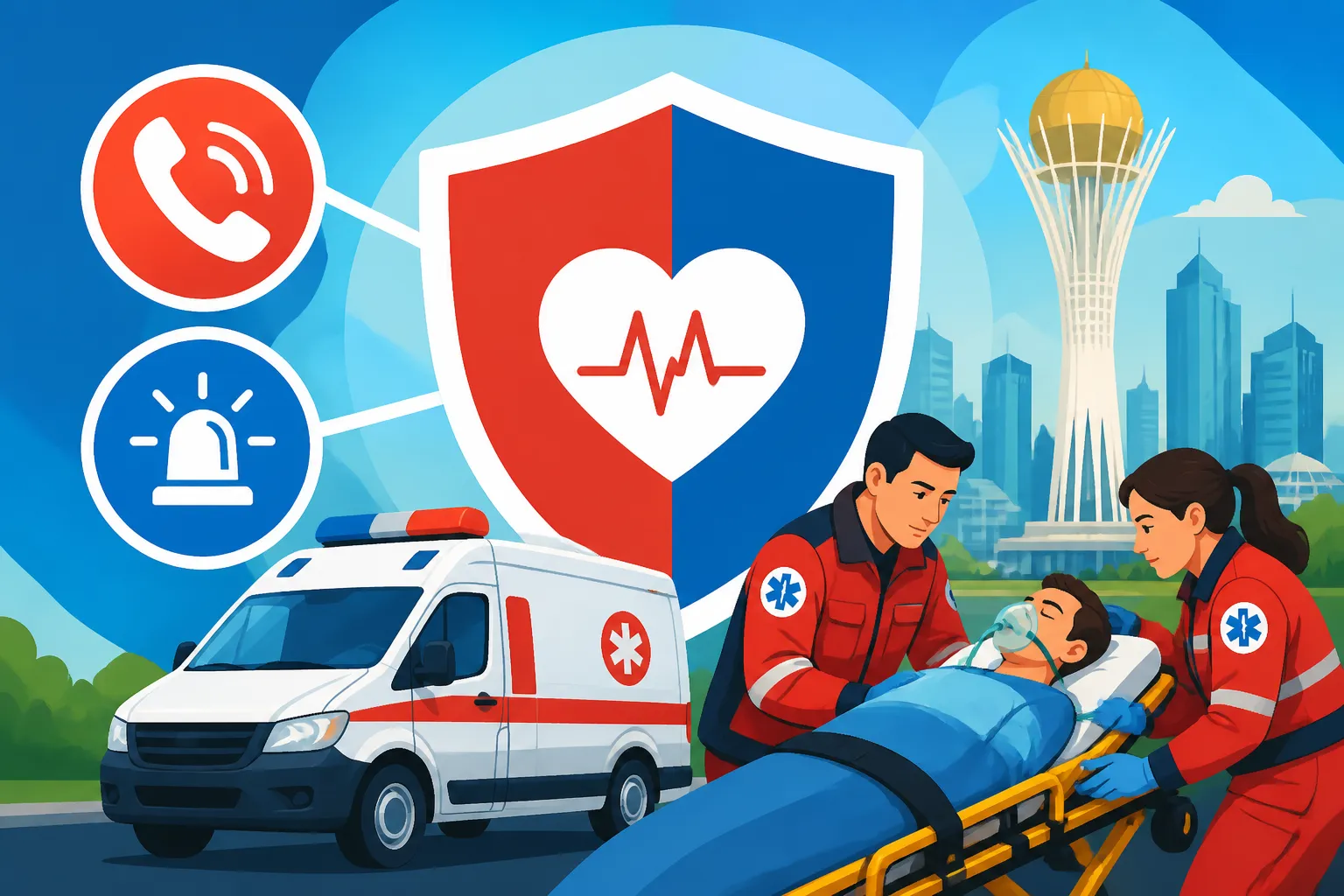
The number 103 is your dedicated lifeline for medical emergencies in Kazakhstan. Think of it as the direct portal to the ambulance service, akin to 911 in the US or 999 in the UK, but specifically for health crises. When you dial 103, you're connecting directly with the dispatcher for skoraya pomoshch, or "fast help," which is the public emergency medical service.
This number is intended for situations where immediate medical attention is required due to sudden illness or injury that poses a threat to life or limb. We’re talking about scenarios like a suspected heart attack, a stroke, severe bleeding, unconsciousness, serious falls, choking, or major accidents. It's not for a common cold or a sprained ankle that can wait for a clinic visit. For anything less critical, an ambulance might not be dispatched, or you might experience significant delays as they prioritize life-threatening calls. When you call, be prepared for a series of questions, which, while frustrating in a stressful situation, are designed to quickly assess the severity and dispatch the appropriate team. They’ll want to know the location, the nature of the emergency, and the patient's condition.
112: The Universal Emergency Service
While 103 is solely for medical help, 112 serves as Kazakhstan's universal emergency number, much like the pan-European 112 system. This is your go-to number if you're unsure which service you need, or if the emergency involves multiple agencies – for example, a car accident where there are injuries and potential fire hazards or police involvement. When you dial 112, you'll reach a central dispatch that can then route your call to the police (102), fire department (101), or the ambulance service (103) as needed.
Using 112 can sometimes add an extra layer of communication as your call might first go through a general operator before being transferred to the medical emergency dispatcher. While this might seem like an unnecessary delay, it's beneficial if you're dealing with a complex situation or if you're completely lost on who to call. The operator at 112 is trained to identify the core issue and connect you to the right department. However, if it's purely a medical emergency and you're confident in communicating the situation, calling 103 directly can potentially save a few precious moments. For a deeper dive into how the broader healthcare system is structured, check out our guide on How Kazakhstan's Health System Works: OSMS and Private Care Explained (2027).
What to Expect When Calling for an Ambulance in Kazakhstan
Making an emergency call in your native language is stressful enough. Doing it in a country where you might not be fluent in the local tongue adds a whole new layer of anxiety. Understanding the process can help you manage expectations and act more effectively.
Overcoming the Language Barrier
Let's be honest, this is often the biggest hurdle. While some emergency dispatchers in larger cities like Almaty or Astana might have a basic grasp of English, it's not a guarantee. You might get lucky, or you might find yourself struggling to convey vital information. This is where preparation truly pays off.
My personal advice? Always have a local friend, colleague, or even a landlord's number on speed dial who can act as an interpreter if you need to call. Alternatively, keep a small, laminated card with key phrases written in Kazakh and Russian, such as "Medical emergency," "My address is…", "Heart attack," "Can't breathe," "Unconscious," and so on. Translation apps can be a lifesaver, but in a high-stress situation, fumbling with a phone app isn't ideal. The most important thing is to speak clearly, slowly, and use simple language. Even if they don't understand every word, key medical terms and your exact address are critical.
Information You'll Need to Provide
Once you've managed to communicate, the dispatcher will need specific information to send help. This isn't just bureaucratic red tape; it's essential for the ambulance crew to find you quickly and be prepared for the situation.
You'll need to provide:
- Exact Address: This is crucial. Don't just give the street name. Include the building number (dom), apartment number (kvartira), floor, entrance code if any, and any easily identifiable landmarks. Saying "next to the big green building" can actually be helpful if the address is hard to find. Write it down in Kazakh or Russian beforehand and keep it handy.
- Patient's Condition: Describe what happened and the symptoms as clearly as possible. Is the person conscious? Breathing? Bleeding? What are their obvious injuries? Be concise but descriptive.
- Patient's Age and Gender: This helps the medical team gauge potential risks and appropriate treatment protocols.
- Your Contact Number: They might need to call you back for clarification or for the ambulance crew to get directions.
- IIN (Individual Identification Number): If the patient has a local IIN and is registered with OSMS (Compulsory Social Health Insurance), this information can be helpful for smoother processing upon arrival at the hospital. While not strictly required for emergency dispatch, it will be needed later. If you're wondering about your healthcare coverage, our guide on Health Insurance in Kazakhstan: OSMS, Private and International Options Explained can provide clarity.
The Arrival and Initial Assessment
When the ambulance arrives, don't be surprised if it doesn't look like the high-tech vehicles you might be used to from Western countries. Public ambulances in Kazakhstan, while functional, can vary in age and equipment, especially outside of major metropolitan areas. Typically, an ambulance crew will consist of a driver, a paramedic, and sometimes a doctor, depending on the severity of the call.
Upon arrival, the crew will perform an initial assessment. This involves checking vital signs, asking more detailed questions about the patient's medical history (if known), and providing immediate first aid. They might perform basic procedures like administering oxygen, stopping bleeding, or stabilizing a fracture. Their primary goal is to stabilize the patient for transport to the appropriate medical facility. The level of English spoken by the medical crew can also vary, so having those key phrases or a translator present remains invaluable during this critical phase.
Ambulance Tiers and Service Levels
Kazakhstan's emergency medical services aren't a one-size-fits-all deal. You've got the public system, which is what 103 connects you to, and then there are private options, primarily available in the larger cities. Knowing the difference can save you time, stress, and potentially, money.
Public Ambulances: The "Скорая помощь" (Skoraya Pomoshch)
The "Скорая помощь" (Skoraya Pomoshch) is the backbone of Kazakhstan's emergency response system. These are the ambulances dispatched when you call 103, and they are primarily designed to respond to life-threatening emergencies. The service is covered under the OSMS system for registered residents and citizens. This means that if you are contributing to OSMS, you generally won't face direct costs for the ambulance ride itself.
However, there are a few realities expats should be aware of. Public ambulances prioritize calls based on severity. If your condition is deemed less critical, you might experience longer wait times. Furthermore, the level of equipment and the training of the staff, while generally competent for emergency stabilization, might not always match the advanced paramedic services seen in some Western nations. Another key point is that public ambulances typically transport patients to the nearest public hospital or one that specializes in the specific condition, based on a profiling system. You usually won't have a choice of which hospital you go to, which can be unsettling if you have a preferred clinic or doctor. For more on managing costs within the system, read about The Cost of Healthcare in Kazakhstan: A Complete Breakdown for Foreigners (2026).
Private Ambulance Services
In major expat hubs like Almaty and Astana, you'll find private ambulance services that offer a different level of care. These are usually operated by private clinics or medical centers, such as Mediker or Interteach (which are well-known private healthcare providers). These services often boast faster response times, more modern equipment, and, crucially for many expats, English-speaking medical staff.
The benefits are clear: quicker arrival, clearer communication, and often the ability to choose your destination hospital or clinic (provided it's affiliated or they have an agreement). This can be a huge relief in a stressful situation. However, these services come at a cost. Private ambulances are generally not covered by OSMS, meaning you'll either pay out-of-pocket or rely on your private health insurance. This is where having comprehensive expat insurance like SafetyWing becomes incredibly valuable. A good private insurance plan will cover emergency ambulance transport, giving you access to these enhanced services without worrying about the immediate financial burden. When you're looking at private insurance, make sure to understand what plans cover emergency medical care, including ambulance fees. You can learn more about private options in Understanding Private Health Insurance Plans in Kazakhstan.
Navigating Hospital Transport and Admission
After the ambulance arrives and you've received initial care, the next step is transportation to a medical facility. This stage can often bring its own set of challenges, especially regarding where you'll end up and what the admission process entails.
Where Will the Ambulance Take You?
This is a common question, and the answer isn't always simple, especially for public ambulances. In Kazakhstan, the public ambulance system operates on a "profiling" or specialization basis. This means they don't necessarily take you to the absolute closest hospital, but rather to the hospital best equipped to handle your specific medical condition. For example, if you're suspected of having a stroke, they'll take you to a hospital with a neurology department equipped for stroke care, even if there's a general hospital closer by. While this system aims to ensure you get specialized treatment, it can be confusing if you were expecting to go to a specific, familiar hospital.
Private ambulance services, on the other hand, often offer more flexibility. If you've called a private ambulance affiliated with a particular private clinic or hospital, they will typically transport you there. This is a significant advantage if you have a preferred private doctor or facility where your medical records are kept. However, in extremely critical, life-threatening situations, even a private ambulance might prioritize taking you to the nearest public specialized facility if it offers the fastest and most appropriate immediate care. It's always best to discuss your preferences with the private ambulance crew if you are conscious and able.
The Admission Process Upon Arrival
Once you arrive at the hospital – public or private – the admission process begins. This often feels like a rush of administrative tasks when all you want is medical attention, and it can be particularly harrowing if you're in pain or distress.
You'll need to register, which involves providing your passport, your IIN, and details of your health insurance (OSMS card or private insurance information). If you are a resident, having your How to Register for OSMS Health Insurance in Kazakhstan (2027) documentation handy is essential. Expect an initial assessment in the emergency room (ER), where doctors will perform further diagnostics and determine the course of action. In public hospitals, be prepared for potentially longer waiting times, especially for non-critical conditions, and the possibility of a busy, crowded environment. Communication will again be key, so if you don't have a translator, try to use simple phrases and gestures.
For those with private health insurance or opting for a private clinic, the admission process can sometimes be smoother, with dedicated staff assisting with paperwork. However, even in private facilities, you'll need to present your insurance details and potentially make a deposit or co-payment, depending on your plan. It's a good idea to understand Understanding Hospital Admission and Billing in Kazakhstan beforehand to avoid surprises.
Essential Preparations for Expats
As the old adage goes, "An ounce of prevention is worth a pound of cure." This holds especially true for medical emergencies abroad. Being prepared isn't about inviting disaster; it's about minimizing chaos and ensuring you can get the help you need, even when you're at your most vulnerable.
Emergency Contact List and Important Documents
One of the simplest yet most effective preparations you can make is to create an accessible emergency contact list. This isn't just for your phone; it should be a physical card in your wallet, clearly written in both English and, crucially, Kazakh or Russian.
This card should include:
- Emergency Numbers: 103, 112.
- Your Full Address: Street name, building number, apartment, floor, and any unique identifiers. Write it clearly in the local script.
- Key Medical Information: Blood type, known allergies (especially to medications), chronic conditions (diabetes, heart conditions), and any medications you regularly take.
- Local Emergency Contacts: A trusted friend, colleague, or landlord who speaks Kazakh or Russian and can act as a liaison.
- Embassy/Consulate Number: Your country's diplomatic mission in Kazakhstan.
- Insurance Details: Policy number and emergency contact number for your health insurance provider.
Always carry your passport, IIN card (if you have one), and your OSMS card or private insurance details. Consider a medical alert bracelet or necklace if you have serious allergies or chronic conditions. These seemingly small details can be critical in situations where you might be unconscious or unable to communicate.
Health Insurance: Your Safety Net
Having robust health insurance isn't just a good idea; for expats in Kazakhstan, it's an absolute necessity. The public OSMS system provides a baseline of coverage for registered residents, but it might not cover all your preferences or provide the speed and language support many expats desire, especially in emergencies.
This is where private health insurance truly shines. A good private policy can cover emergency ambulance services (both public and private), emergency room visits, and potentially even medical evacuation to a facility in your home country or a neighboring country with advanced medical care if needed. Brands like SafetyWing offer flexible and comprehensive travel and expat insurance plans that are well-suited for covering emergencies, often including ambulance services and emergency treatment. Don't skimp on this. Research your options carefully and choose a plan that gives you peace of mind. For new arrivals, our guide on How to Buy Private Health Insurance as a Newcomer in Kazakhstan can help you get started.
Learning Key Phrases and Local Support
While you don't need to become fluent overnight, learning a few key medical phrases in Kazakh or Russian can significantly reduce stress during an emergency. Phrases like "I need an ambulance," "I'm in pain here," "Doctor," "Hospital," "Help me," and basic body parts can make a huge difference. There are many online resources and apps that can help you learn these.
Beyond language, building a local support network is invaluable. Having a reliable local friend, colleague, or even a community group who you can call upon in an emergency can make all the difference. They can help with communication, navigate logistical challenges, or simply offer moral support. Remember, you're not in this alone, and tapping into the local community can provide an essential safety net. Don't forget to review Navigating the Kazakhstani Healthcare System: An Expat's Roadmap (2027) for broader context on the local medical scene.
What to Do in Non-Emergency Situations
It’s easy to panic and think every sniffle needs an ambulance when you're in a foreign country, especially with a different medical system. But calling 103 or 112 for minor issues overburdens the system and means genuine emergencies might face longer wait times. Learning to differentiate between what constitutes an emergency and what can be handled through other channels is vital for both your sanity and the efficiency of local services.
When to Head to a Poliklinika or Private Clinic
For non-life-threatening health concerns, the ambulance is definitely not your first port of call. Kazakhstan, like many countries, has a robust system of primary care clinics. For everyday ailments such as a persistent cough, a fever that isn't dangerously high, minor cuts, stomach upset, or even a suspected sprain that isn't causing excruciating pain or deformity, you should aim for a Poliklinika (public polyclinic) or a private clinic.
If you are registered with OSMS, you'll have a designated polyclinic where your primary care doctor is located. This is your first stop for routine consultations, referrals to specialists, and managing chronic conditions. While the public polyclinika system can sometimes involve waiting times and language barriers, it's generally efficient for standard care. For those seeking faster service, English-speaking staff, or a wider range of facilities, private clinics in major cities are an excellent option. They offer appointments, often on the same day, and a higher level of comfort and convenience. Remember, our guide on How to Choose and Register with a Clinic (Poliklinika) in Kazakhstan can walk you through that process.
Telemedicine and Local Pharmacy Advice
Modern solutions like telemedicine are becoming increasingly available in Kazakhstan, especially through private healthcare providers. If your condition isn't severe enough for an in-person visit but you'd like a doctor's opinion, a telehealth consultation could be a convenient and effective first step. Many private clinics offer online consultations with English-speaking doctors, allowing you to get advice, discuss symptoms, and even receive electronic prescriptions without leaving your home. This is particularly useful for things like cold symptoms, minor skin rashes, or general health questions.
Furthermore, don't underestimate the role of local pharmacies. Pharmacists in Kazakhstan are highly knowledgeable and often the first point of contact for minor health issues. If you have a headache, a mild cold, or a minor stomach upset, visiting a pharmacy can provide immediate relief and advice. They can recommend over-the-counter medications and often speak enough English to understand your basic symptoms. Just be prepared to describe your issue clearly. Our guide, Prescription Medications and Pharmacies in Kazakhstan: The Complete Guide, offers valuable insights into navigating this system effectively. Sometimes, a quick chat with a pharmacist is all you need to resolve a minor health worry, saving you a trip to a clinic or, worse, an unnecessary ambulance call.
Here's a quick comparison of the emergency services:
| Feature | 103 (Public Ambulance) | 112 (Universal Emergency) | Private Ambulance (e.g., via SafetyWing) |
|---|---|---|---|
| Primary Use | Life-threatening medical emergencies only. | Any emergency (medical, fire, police). | Life-threatening/urgent medical situations. |
| Cost | Covered by OSMS for registered residents. | Free (dispatches appropriate service). | Out-of-pocket or covered by private insurance. |
| Response Time | Prioritized by severity, can be variable. | May have slight delay due to redirection. | Potentially faster, often guaranteed response. |
| Language Support | Primarily Kazakh/Russian; English not guaranteed. | Primarily Kazakh/Russian; English not guaranteed. | Often English-speaking staff. |
| Equipment & Staff | Competent, but can vary; paramedics, doctors. | Dispatches 103 for medical. | Often modern equipment, advanced paramedics/doctors. |
| Hospital Destination | Public hospital based on specialization. | Dispatches 103 for medical. | Often choice of private clinic/hospital (if affiliated). |
| Documents Needed | Passport, IIN, OSMS details. | Passport, IIN (for medical). | Passport, IIN, private insurance details. |
| Best For | Obvious medical emergencies (heart attack, trauma). | Multi-faceted emergencies, unsure what to call. | Urgent medical needs with preference for private care/language. |
Disclaimer
The information provided in this guide is for general informational purposes only and does not constitute medical, legal, or professional advice. While we strive to keep the information up-to-date and accurate, regulations and procedures in Kazakhstan can change without notice. Always consult with relevant professionals (e.g., medical practitioners, legal advisors, insurance providers, local authorities) for advice tailored to your specific situation. In a medical emergency, always dial the appropriate local emergency number immediately.