How to Handle a Medical Emergency While Travelling from Kazakhstan
You've just wrapped up a fantastic time exploring the mountains of Almaty or the futuristic architecture of Astana, and now you're off on another adventure, perhaps a quick hop to Thailand or a longer journey back home to see family. But what happens if, far from Kazakhstan, in a bustling airport or a quiet foreign village, a sudden medical emergency strikes? The thought alone can send shivers down your spine, but this guide is here to walk you through the essential steps and preparations to handle such a stressful situation, ensuring you're as ready as you can be.
Before You Even Leave Kazakhstan: Pre-Departure Prep
Look, I get it. Planning a trip is exciting, and the last thing you want to think about is something going wrong. But after years of living in Kazakhstan and seeing how things work here (and sometimes don't work!), I’ve learned that a little bit of foresight goes a long, long way. Especially when it comes to your health abroad. Trust me, you don't want to be caught off guard when you're thousands of kilometers from your adopted home or your actual home country.
The Absolute Must-Have: Travel Insurance
This isn't just a suggestion; it's practically non-negotiable. Your Compulsory Social Health Insurance (OSMS) here in Kazakhstan, or even most private health plans you might have purchased locally, simply won't cover you adequately, if at all, once you step outside the country's borders. It’s a common misconception, and a dangerous one at that, to think your local coverage will follow you.
When choosing travel insurance, don't just pick the cheapest option. Dig into the details. You need a policy that explicitly covers emergency medical treatment, and crucially, medical evacuation and repatriation. Imagine you’re hiking in the remote wilderness of Kyrgyzstan, just a stone's throw from Kazakhstan, and you break your leg badly. Emergency medical treatment means they'll fix you up in the local hospital. But medical evacuation means they'll fly you, with medical supervision, to a facility with better care, possibly even back to Kazakhstan or your home country, if medically necessary. Repatriation, on the other hand, covers the costs of returning your remains home in the absolute worst-case scenario. It’s a grim thought, but one you need to prepare for. Many digital nomads and long-term travelers swear by services like SafetyWing because it's designed with this lifestyle in mind, often offering flexible, comprehensive coverage that's well-suited for those who are constantly on the move and need reliable protection.
Think of a hypothetical: you're enjoying a well-deserved vacation in Bali, Indonesia, and suddenly you get a severe case of dengue fever, requiring hospitalization. Without robust travel insurance, you're looking at bills that could easily run into tens of thousands of dollars. With it, your insurer handles the logistics and the finances, allowing you to focus on getting better. It’s not just about the money; it’s about having a lifeline when you’re vulnerable and far from familiar surroundings.
Essential Medical Documents and Prescriptions
Before you pack that suitcase, create a dedicated medical folder – both physical and digital. This is your personal health manifesto. Include copies of all vital medical records: your medical history, any known allergies (especially drug allergies!), your blood type, vaccination records, and a list of all current medications, including dosage and frequency.
If you rely on prescription medications, get a letter from your doctor in Kazakhstan explaining your condition and why you need these drugs. This is particularly crucial if you're carrying controlled substances. Customs officials in some countries can be incredibly strict, and a doctor's note in English (and perhaps a local language if you're feeling extra prepared) can save you a world of trouble. Make sure the letter also uses the generic names of medications, as brand names vary globally. Also, ensure you pack enough medication to last your entire trip, plus a few extra days' buffer in case of delays. Keep medications in their original packaging, clearly labeled.
For expats who have navigated Navigating the Kazakhstani Healthcare System: An Expat's Roadmap (2027), you'll know that getting clear, concise medical records here can sometimes be an exercise in patience. Start this process well in advance of your trip. If you rely on a specific doctor, perhaps an How to Find an English-Speaking Doctor in Kazakhstan, ask them for this crucial travel documentation. Having both digital copies on your phone or in the cloud (password-protected, of course) and physical printouts ensures you’re never without this critical information, even if your phone dies or gets lost.
Knowing Your Destination's Healthcare System
While you can't become an expert overnight, a basic understanding of the healthcare system in your destination country is invaluable. Before you go, do a quick search: What's the local emergency number? Are there specific hospitals known for treating foreigners or having international departments? Are there any common health risks in the region you're visiting (e.g., malaria, specific viruses, food safety concerns)?
Understanding these nuances means you’re not starting from scratch if an emergency arises. For example, if you’re traveling to Western Europe, you might find a robust public healthcare system, but access might require local registration or significant out-of-pocket payments without appropriate insurance. In some developing nations, private clinics are often the only reliable option for expats and tourists, and they can be pricey. This preparatory knowledge allows you to make more informed decisions under pressure.
Table: Comparison of Health Coverage While Traveling
| Feature | Local Kazakhstani Health Insurance (OSMS/Private) | International Travel Insurance (e.g., SafetyWing) |
|---|---|---|
| Emergency Medical Treatment Abroad | Generally No Coverage (except specific agreements) | Yes, often comprehensive |
| Medical Evacuation | No | Yes, crucial for severe cases |
| Repatriation of Remains | No | Yes, for the worst-case scenario |
| Trip Interruption/Cancellation | No | Often included |
| Lost Luggage/Travel Delay | No | Often included |
| Pre-existing Conditions | Varies, often limited/excluded without add-on | Varies, often limited/excluded without add-on |
| Coverage for COVID-19 | Varies, generally no international coverage | Many policies now include this |
| Direct Billing to Hospital | Unlikely | Often available with pre-authorization |
| 24/7 Emergency Assistance | No | Yes, vital for coordination |
When an Emergency Strikes Abroad: Immediate Steps
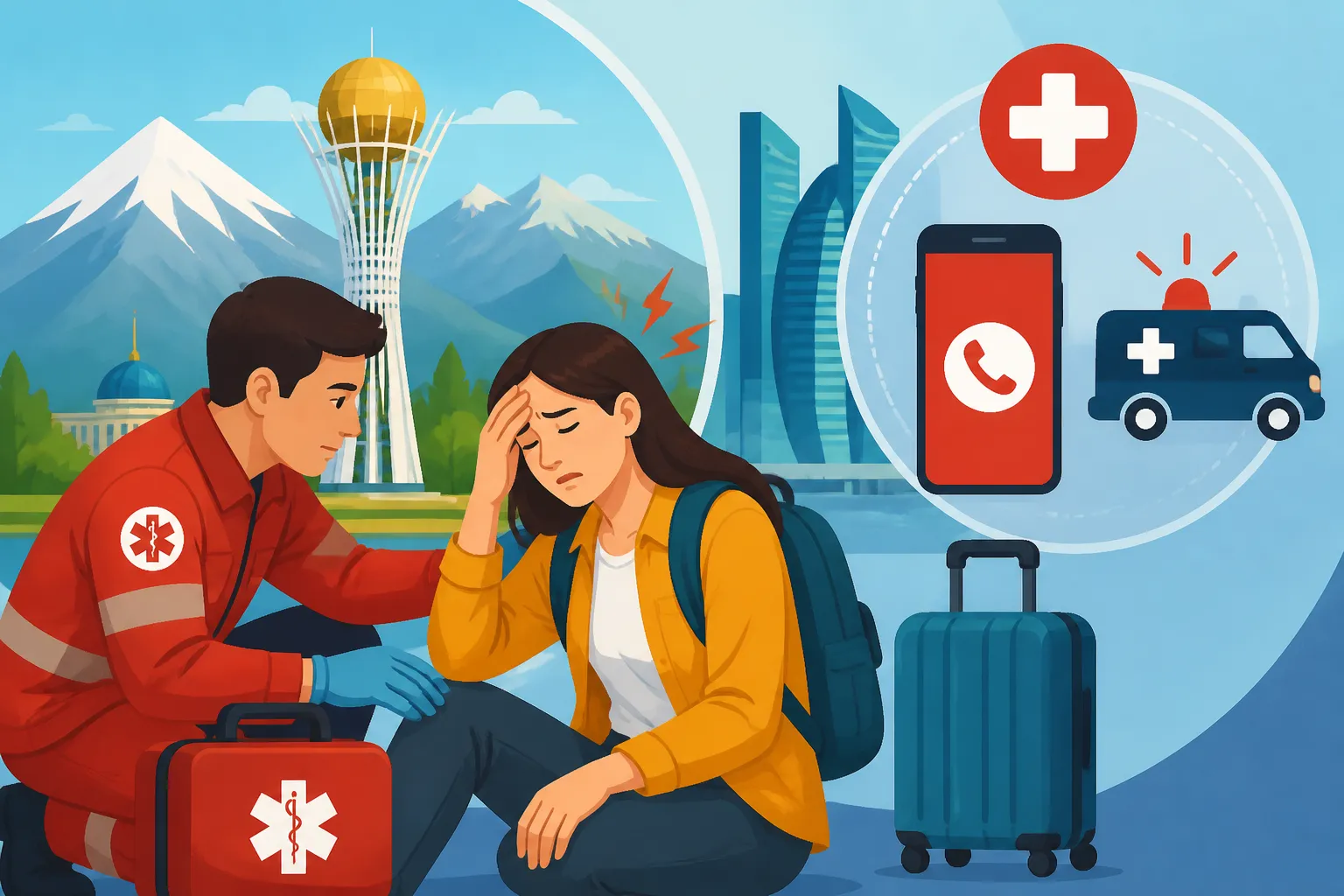
Okay, the worst has happened. You’re somewhere far from home, whether that’s Kazakhstan or your country of origin, and you or a travel companion needs urgent medical attention. Panic is a natural first reaction, but taking a deep breath and following a clear set of steps can make all the difference. This is where all that pre-planning really pays off.
Prioritizing Safety and Calling for Help
First and foremost, assess the immediate situation. Is the environment safe? If you're in an accident, ensure you're out of harm's way before anything else. Then, find the local emergency number. In many countries, it’s 911, 112, or 999, but this can vary wildly. Having it pre-saved in your phone or written down in your medical folder is critical. Dial it without hesitation for anything serious – chest pain, severe injury, unconsciousness. Don’t try to diagnose yourself or a friend; let the professionals do that.
Once you’ve made the call, try to communicate clearly. If there's a language barrier, speak slowly and use simple words. Point to injuries if possible. If you have a local guide or a hotel staff member, ask them to help translate. Remember those essential medical documents? Now is the time to pull them out. Show them to the paramedics or first responders so they have immediate access to your critical information like allergies or existing conditions. While Emergency Medical Care in Kazakhstan: What Every Expat Needs to Know covers what to do here at home, the principles of clear communication and immediate action are universal.
For less severe but still urgent issues, like a nasty stomach bug that isn't life-threatening but needs medical attention, you might be able to head directly to a local clinic or pharmacy, if you've researched them beforehand. However, when in doubt, call the emergency services. Better safe than sorry, especially when your health is on the line in unfamiliar territory.
Notifying Your Travel Insurance Provider
This step is absolutely critical and often overlooked in the chaos of an emergency. As soon as is feasible – ideally, immediately after you’ve called for local emergency services or are en route to a medical facility – you must contact your travel insurance provider. Don't wait until you're out of the hospital or back in Kazakhstan. They need to be in the loop from the very beginning.
Why? Because your insurance company isn't just there to pay the bills later. They are a vital resource in the moment. Many providers offer 24/7 assistance lines, often staffed by multilingual professionals. They can help you with:
- Direct Billing: They can often arrange direct billing with the hospital, saving you from having to pay huge sums out of pocket upfront.
- Referrals: They can recommend reputable hospitals or clinics in the area that meet certain international standards or have English-speaking staff.
- Translation Services: Some can even provide on-the-phone translation support to help you communicate with local medical staff.
- Evacuation Coordination: If your situation is dire and requires medical evacuation, they are the ones who will coordinate the complex logistics.
For expats who rely on Health Insurance in Kazakhstan: OSMS, Private and International Options Explained while in Kazakhstan, remember this coverage is often territorial. When traveling abroad, it's your travel insurance that becomes your primary safety net. Companies like SafetyWing pride themselves on their responsiveness and global network, which is precisely what you need when you're feeling vulnerable. Keep their emergency contact number saved in your phone and written down in your medical folder. Familiarize yourself with their claims process before you travel, so you know what documentation they'll require (medical reports, invoices, police reports for accidents, etc.). The smoother you can make this initial communication, the less stress you'll endure.
Navigating Medical Facilities and Treatment Overseas
Once the immediate crisis is handled and you’re in a medical facility, a new set of challenges often emerges. You’re likely in a foreign hospital or clinic, perhaps with different standards of care, language barriers, and unfamiliar procedures. This is where being prepared and assertive (in a polite way, of course!) really matters.
Choosing the Right Medical Facility
Depending on the nature of your emergency and your location, you might have options regarding where you receive care. If local emergency services transported you, you might not have had a choice. However, for less critical situations, or if you need follow-up care, you can be more selective. Your travel insurance provider is an excellent resource here. They often have networks of preferred providers that meet international standards.
Generally, private hospitals in many countries offer a higher standard of care, more modern equipment, and a greater likelihood of English-speaking staff compared to public facilities. They are also, predictably, more expensive. Your embassy or consulate in the country you are visiting can also provide lists of recommended doctors and hospitals. Remember, while your experiences with Understanding the Difference Between Public and Private Hospitals in Kazakhstan might give you some insight, every country's healthcare landscape is unique.
Always ask questions about proposed treatments, costs, and payment arrangements. Don't be afraid to request a second opinion if you feel uneasy or if it's a non-emergency situation where time allows. Clarity on these points can prevent misunderstandings and financial shocks down the line. Even if your insurance is handling direct billing, understanding what's being done and why is your right.
Communicating Your Medical Needs Effectively
A language barrier can be terrifying in a medical emergency. This is where your meticulously prepared medical documents truly shine. Hand them over to the medical staff. A concise, clear summary of your medical history, allergies, and current medications can provide doctors with vital information even if they don't speak your language fluently.
Beyond documentation, consider using technology. Google Translate or other translation apps can be incredibly helpful for basic communication, though they aren't foolproof for complex medical discussions. If your insurance provider offers translation services, leverage them. For serious discussions, a professional medical interpreter is ideal. Don't rely solely on gestures or assumptions. Ask for clarification if you don't understand something.
It's also crucial to remember that medical practices and patient expectations can differ culturally. What might be routine in Kazakhstan or your home country might be handled differently elsewhere. Try to remain calm and respectful, even when stressed. Be your own advocate, or if you're with a travel companion, empower them to advocate for you. Explain your symptoms thoroughly, ask about potential side effects of treatments, and understand what to expect during your recovery.
Financial Realities of Overseas Medical Emergencies
Let’s not sugarcoat it: medical emergencies abroad can be incredibly expensive. This is the part that often catches people completely off guard, turning a health crisis into a financial disaster. Having navigated the intricacies of banking here, from How to Open a Bank Account at a Kazakhstani Bank as a Foreigner to understanding How Much Income Tax Will I Pay in Kazakhstan in 2026?, you know the importance of financial preparedness. Overseas, it's magnified tenfold.
Understanding Costs and How Your Insurance Works
When you’re being treated in a foreign hospital, the bills can quickly stack up. An emergency room visit, diagnostics like X-rays or MRI scans (which you can learn about typical costs in Kazakhstan, e.g., How Much Does an MRI Scan Cost in Kazakhstan in 2026?), medication, and hospitalization can cost hundreds of thousands of dollars in some countries. This is why travel insurance is paramount. It’s not just a good idea; it’s a financial shield.
Most comprehensive travel insurance policies will cover a significant portion of these costs, but it’s vital to understand the specifics of your policy:
- Deductibles: This is the amount you have to pay out of pocket before your insurance coverage kicks in.
- Co-payments: A fixed amount you might pay for each medical service, even after your deductible is met.
- Coverage Limits: Policies have maximum limits for different types of care (e.g., $1,000,000 for medical treatment, $500,000 for evacuation). Ensure these limits are high enough for your destination.
- Exclusions: Be aware of what your policy doesn't cover, such as pre-existing conditions not declared, adventurous sports, or elective procedures.
Ideally, your insurance company will arrange for direct billing with the medical facility. This means the hospital sends the bill directly to your insurer, and you don't have to pay anything upfront (beyond possibly your deductible). However, if direct billing isn't possible, you might have to pay out of pocket and then seek reimbursement. This is where keeping meticulous records of all receipts, invoices, and medical reports becomes critical for your claim. SafetyWing, for example, is known for its relatively straightforward claims process, which can be a huge relief when you’re already dealing with a health crisis.
Accessing Funds and Emergency Support
If you do end up paying out of pocket, you need to have a plan for accessing funds. Relying solely on cash is risky, and your daily ATM withdrawal limits from your Kazakhstani bank might not cut it for a large hospital bill. Make sure you have:
- High-limit Credit Cards: Credit cards offer a safety net for large unexpected expenses. Ensure you know your credit limit and inform your bank in Kazakhstan (e.g., Halyk Bank or Kaspi Bank, popular among expats) about your travel plans so they don't flag large international transactions as fraudulent.
- Emergency Fund: It’s wise to have an emergency savings fund specifically for travel. This can be in a separate bank account or a reliable platform for How to Transfer Money Into and Out of Kazakhstan as an Expat.
- Contact Your Bank: If you hit your limits, immediately contact your bank. Many banks have emergency lines for travelers.
- Family/Friends Support: In dire circumstances, your family or trusted friends might need to wire you money. Discuss options like Western Union or other international transfer services.
While your country's embassy or consulate can provide lists of hospitals and help facilitate communication, they generally do not provide financial assistance, except in very limited, loan-based scenarios. They are not a bank or an insurance company. Therefore, having your own financial backup plan and robust travel insurance is your primary responsibility.
Repatriation and Follow-Up Care
The immediate medical crisis might be over, but the journey often isn't. The next crucial phase involves getting home safely and ensuring continuity of care. This is where the true value of comprehensive travel insurance, especially for those living far from their country of origin in places like Kazakhstan, really comes into play.
Medical Evacuation vs. Repatriation
These terms are often used interchangeably, but they have distinct meanings and implications, particularly for your insurance coverage.
- Medical Evacuation: This refers to moving you from a local medical facility to a facility in another location (perhaps a larger city, or even a neighboring country) that is better equipped to handle your specific medical needs. For example, if you’re injured in a remote region of Georgia, and the local hospital isn't capable of performing a complex surgery, your insurance might arrange for an air ambulance to fly you to a state-of-the-art hospital in Tbilisi or even Turkey. These are complex, medically supervised transports and can be astronomically expensive.
- Medical Repatriation: This is the process of transporting you back to your home country, or in our case, back to your residence in Kazakhstan, once your condition is stable enough for travel. This might also be medically supervised, but the goal is to get you home to continue recovery under your regular doctors or near your support network.
Your travel insurance should explicitly cover both. Without it, you could be facing bills that run into hundreds of thousands of dollars, making it virtually impossible for an individual to afford such a specialized transport. Your insurance provider will work with medical professionals to determine when such a transfer is medically necessary and safe, and then coordinate all the complex logistics, from securing specialized medical aircraft to arranging ground transport at both ends. This is a massive weight off your shoulders during a time of extreme vulnerability.
Post-Emergency Care Back Home or in Kazakhstan
Once you're back in Kazakhstan or your home country, the care doesn't stop. You'll need to transition your medical care from the overseas facility to your local doctors. This means providing them with all the medical reports, discharge summaries, and prescriptions from your treatment abroad. If you typically rely on your local poliklinika (public clinic) here in Kazakhstan, make sure you bring these documents to your family doctor to integrate into your ongoing health record. For those with private health insurance in Kazakhstan, coordinate with your chosen clinic.
You'll also likely be dealing with the final stages of your insurance claim. Ensure you submit all required documentation promptly and follow up with your travel insurance provider if there are any outstanding issues. This might include submitting original receipts for medications bought, follow-up appointments, or physiotherapy sessions, if covered. Keep copies of everything for your own records.
This period can be just as stressful, albeit in a different way, as the initial emergency. Having a clear plan for follow-up care and efficient insurance claims will help you focus on what truly matters: your recovery.
Special Considerations for Expats Traveling from Kazakhstan
Living as an expat in Kazakhstan brings its own unique set of circumstances, and these don't simply vanish when you travel abroad. There are specific considerations you'll need to keep in mind, especially regarding your healthcare and responsibilities here in your adopted home.
The Role of Your Kazakhstani Healthcare Provider
It’s easy to get complacent once you're settled into the local healthcare system, whether you've registered for How to Register for OSMS Health Insurance in Kazakhstan (2027) or opted for private care. However, it's crucial to understand that your OSMS health insurance, a mandatory social contribution here, is primarily designed for medical care within Kazakhstan. While it offers affordable healthcare domestically, it offers little to no coverage for medical emergencies that occur while you're traveling outside the country.
Even if you have a private health insurance plan purchased in Kazakhstan, many of these are also regionally focused. It’s highly unlikely they will cover you internationally for full-blown emergencies, evacuations, or repatriation. This is precisely why international travel insurance is an essential, separate purchase. Don't assume. Always check the terms and conditions of your local Kazakhstani policy, but expect that you will need external coverage for travel.
Before you travel, if you have any ongoing medical conditions or require specific documentation, make sure to get it from your regular doctor here in Kazakhstan. If you're registered with a specific poliklinika or private clinic, arrange to get a comprehensive summary of your health records. This can sometimes be a bureaucratic process, so plan ahead. You can find more comprehensive details on The Complete Guide to Healthcare in Kazakhstan for Expats (2027) which might shed light on how to obtain these documents.
Keeping Your Kazakhstan Affairs in Order
An unexpected medical emergency abroad can easily extend your travel plans. What if you end up hospitalized for weeks? What happens to your apartment, your job, or your other obligations back in Kazakhstan? This is where having your affairs in order before you leave becomes vital.
- Notify Employer: If you're employed, make sure your employer knows your travel plans and how to reach you (or an emergency contact). If your trip is extended due to illness, communicate with them as soon as possible. Understanding Sick Leave Entitlements Under Kazakhstani Labour Law might be helpful, but be aware that extended sick leave for an overseas emergency could have different implications.
- Rental Property: If you're renting an apartment, inform your landlord or a trusted friend about your travel. If you anticipate a long absence, ensure your rent can still be paid and your apartment checked on.
- Power of Attorney: For longer trips or if you have complex financial or legal matters in Kazakhstan, consider assigning a limited power of attorney to a trusted individual. This person could handle urgent matters on your behalf if you become incapacitated. This might sound extreme, but for expats living far from their family, it’s a pragmatic step.
- Emergency Contacts: Ensure multiple people know your itinerary, travel insurance details, and emergency contacts. This means not just someone at home, but also a trusted friend or colleague here in Kazakhstan.
Leaving Kazakhstan for a trip should be an exciting prospect, not one filled with dread about "what ifs." By taking these proactive steps, understanding your insurance, and preparing your documents, you empower yourself to handle whatever challenges come your way, allowing you to travel with a greater sense of security and peace of mind.
Disclaimer
The information provided in this guide is intended for general informational purposes only and does not constitute medical, legal, or financial advice. While we strive to provide accurate and up-to-date information, healthcare systems, insurance policies, and travel regulations can change rapidly. Always consult with qualified medical professionals, insurance providers, and legal experts for advice tailored to your specific situation. Travel insurance policies vary significantly, so it is crucial to read and understand your policy's terms and conditions before traveling.