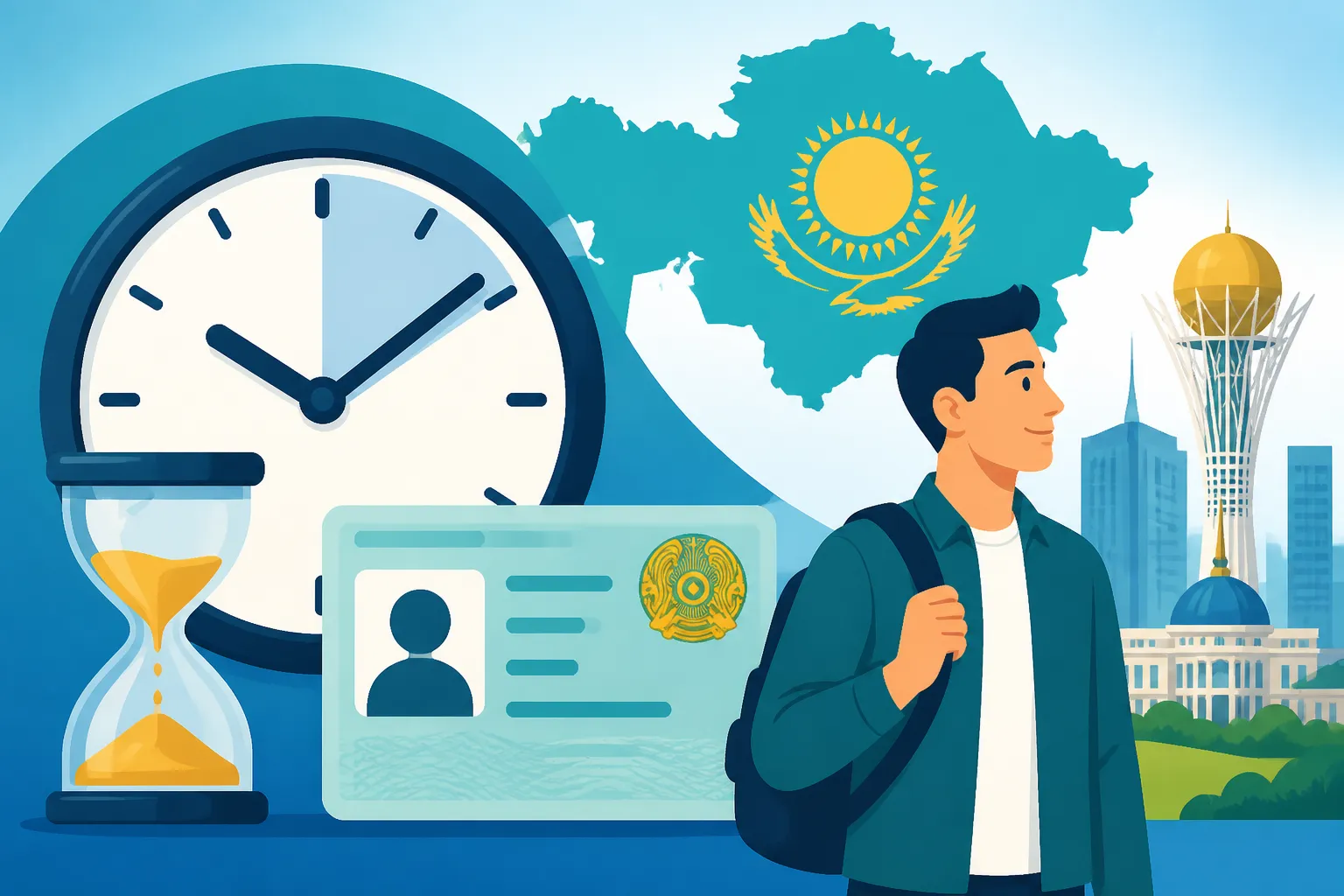
What Is the Processing Time for Residence in Kazakhstan?
The wait for essential documents in a new country can feel like an eternity, turning excitement into a gnawing anxiety. If you're wondering, "What is the processing time for residence in Kazakhstan?" you're not alone in that limbo. This guide is here to cut through the uncertainty, offering realistic insights into the timelines you can expect for various residence permits and how to navigate the bureaucratic waters.
Understanding the Factors That Influence Processing Times
Let me tell you, when it comes to immigration in Kazakhstan, there’s no single, one-size-fits-all answer for processing times. It’s like baking a complicated cake – many ingredients and steps have to align perfectly. The actual time it takes to get your hands on that coveted residence permit can vary wildly, depending on several key factors. Understanding these can help manage your expectations and, dare I say, your stress levels.
Type of Residence Permit
Firstly, the kind of residence permit you're applying for fundamentally dictates the processing timeline. Some are inherently more straightforward, while others involve multiple layers of checks and approvals, naturally stretching the waiting period. Think about it: a temporary work permit is often tied to an employer and a specific job, making it different from a long-term commitment like permanent residency.
For instance, a temporary residence permit linked to employment or study generally moves faster than, say, a family reunification permit, which often requires more detailed verification of relationships and financial support. And then you have the shining beacon of the Neo Nomad visa, which is designed to be relatively streamlined for digital nomads. Each category has its own set of requirements, governmental departments involved, and therefore, its own rhythm. Applying for permanent residence, on the other hand, is a whole different ballgame. It's a significant step, reflecting a deeper commitment to the country, and the vetting process is appropriately more extensive and, consequently, lengthier. You can delve deeper into the nuances of different types of permits by reading our guide on Understanding Kazakhstani Residence Permits: Work, Study and Investment (2027).
Completeness and Accuracy of Your Application
This cannot be stressed enough: a single, tiny error can send your application spiraling back to square one. This happens to countless expats. Imagine spending weeks gathering documents, getting them translated and notarized, only for your application to be rejected because a date was formatted incorrectly or a signature was missing. It's soul-crushing.
The Migration Service here, like any government body, operates strictly by the book. They have checklists, and if anything is out of place – a forgotten copy, an expired passport page, a translation not done by an officially accredited translator – they won't hesitate to return your entire package. This isn't just a minor delay; it's a full reset, meaning you lose all the time you've already waited. This includes common pitfalls like submitting photos that don't meet the precise specifications, or providing bank statements that aren't recent enough. Even the quality of apostille stamps can be scrutinized. It truly pays to be meticulous. To help avoid these headaches, make sure you're well-versed in Understanding Document and Translation Requirements for Kazakhstan Immigration.
Migration Service Workload and Bureaucracy
Ah, bureaucracy. It's a universal language for expats, isn't it? The sheer volume of applications the Migration Service processes can significantly impact waiting times. There are peak seasons, often at the start of academic years or fiscal quarters, when the queues lengthen and the processing speed inevitably slows down. Public holidays, national celebrations, and even unexpected administrative changes can introduce unforeseen delays.
I recall a friend who was waiting for his work permit renewal, and everything seemed on track. Then, there was a sudden reshuffle in the department, and his application got stuck in limbo for an extra month while new staff were trained and processes updated. It’s frustrating because it’s entirely out of your control. You can do everything right, submit a perfect application, and still be subject to the ebb and flow of governmental operations. This is why patience isn't just a virtue when living abroad; it's a survival skill. Sometimes, even the seemingly simple act of How to Register Your Arrival with the Migration Service in Kazakhstan can give you a glimpse into these workloads.
Typical Processing Times for Different Residence Permits
Navigating the bureaucratic maze for residence permits in Kazakhstan can be a test of patience. While official sources often cite optimistic timeframes, real-world experiences can, and often do, differ. Here’s a more grounded look at what you might genuinely expect for various types of residence permits. Remember, these are estimates, and unforeseen circumstances can always alter the timeline.
Work Residence Permits Temporary
For many expats, a work residence permit is the gateway to life in Kazakhstan. This process usually involves two main stages: first, securing a work permit, and then, using that work permit as a basis to apply for your actual residence permit. The work permit itself is typically processed by the Ministry of Labour and Social Protection, often initiated by your employer. This stage can take anywhere from 15 to 30 working days, depending on the complexity of the role, the employer's responsiveness, and whether they need to prove that a Kazakhstani national couldn't fill the position. Some highly skilled specialist permits might be faster, but for general categories, this is a good estimate.
Once the work permit is issued, your employer then applies for the temporary residence permit (officially known as a "temporary residence permit" or "permit for temporary residence" – RVP) on your behalf through the Migration Service. This second stage typically takes another 10 to 15 working days. However, this is assuming everything goes smoothly. Any queries from the Migration Service, such as needing clarification on your documents or employer details, can add an extra week or two. In total, from the moment your employer starts the work permit application to you holding your residence permit, you're realistically looking at 1.5 to 3 months. It's a sequential process, so any delay at stage one pushes back stage two. For a deeper dive into the specific steps, check out How to Get a Work Visa and Residence Permit in Kazakhstan (2027).
Student Residence Permits
If you're coming to Kazakhstan to study, your journey to a residence permit also has distinct phases. The first crucial step is obtaining an official invitation letter from your chosen Kazakhstani university. This can take 2 to 4 weeks for the university to process and for the Ministry of Foreign Affairs to approve. Once you have this invitation, you'll apply for a student visa at a Kazakhstani embassy or consulate in your home country (or country of residence). Visa processing times abroad generally range from 5 to 10 working days, though some embassies may take longer, especially if there's a heavy volume of applications.
Upon arrival in Kazakhstan with your student visa, the university will then assist you in applying for your student residence permit with the local Migration Service. This final step typically takes another 10 to 15 working days. So, from the initial university invitation to having your student residence permit in hand after arrival, the entire process can span anywhere from 1.5 to 2.5 months. Keep in mind that securing your spot at a university itself might have taken months already, so add that to your overall timeline planning. Our comprehensive guide How to Get a Student Visa and Study in Kazakhstan: The Full Guide (2027) has all the details you’ll need.
Family Reunification Residence Permits
Bringing your loved ones to Kazakhstan is a deeply personal process, and unfortunately, it can sometimes be one of the more administratively complex ones. Family reunification permits, whether for a spouse, children, or sometimes even parents, involve proving genuine family ties and often demonstrating sufficient financial means to support your dependents. The primary applicant (the expat already residing in Kazakhstan) usually initiates the process.
The processing time for these permits can be quite variable, typically ranging from 1 to 3 months. The wider range accounts for the scrutiny of marriage certificates, birth certificates, and sometimes even interviews to verify the authenticity of the relationship. For spouses and minor children, the process tends to be on the faster end of this spectrum, around 1 to 2 months. For other dependents, or in cases where documentation isn't perfectly clear, it can easily extend to 3 months or more. It's crucial that all documents, especially those proving kinship, are impeccable and properly legalized (apostilled or consular legalized). You can find more targeted advice on this in Family and Dependent Residence in Kazakhstan: Bringing Your Loved Ones (2027).
Neo Nomad Digital Nomad Visa and Residence
Kazakhstan's Neo Nomad visa is a relatively new and exciting initiative aimed at attracting digital nomads. Because it's designed to be modern and efficient, the processing times are generally more streamlined than traditional routes. This visa allows eligible remote workers to live and work in Kazakhstan for up to a year, with a possibility of extension.
The application for the Neo Nomad visa is typically done online or through designated channels. While the program is still evolving, initial reports and official guidelines suggest a processing time for the visa itself (which acts as your initial entry and temporary residence permit) can be as quick as 15 to 30 working days. This is a significant improvement compared to other permit types. However, remember this is a specific type of visa, and its requirements are tailored to self-employed individuals or those working remotely for foreign companies. It's a great option if you qualify, and you can learn more about it in The Expat Guide to the Neo Nomad (Digital Nomad) Visa in Kazakhstan (2027).
Permanent Residence
Applying for permanent residence (PR) in Kazakhstan is a major life step and, as such, comes with the longest processing times. This isn't a permit you can apply for right after you land; you typically need to have lived in Kazakhstan on other temporary permits for several years and meet specific criteria, often including demonstrating financial independence, knowing some Kazakh language (though this can vary), and having no criminal record.
Once you meet the eligibility criteria and submit your application for PR, the processing time is substantial. You can expect it to take anywhere from 4 to 6 months, and sometimes even longer in complex cases or during periods of high demand. This lengthy period is due to the extensive background checks, inter-agency consultations, and detailed verification of all your documents and your history in Kazakhstan. It’s a deep dive into your profile to ensure you meet all the stringent requirements for long-term settlement. Don't embark on this journey without first consulting our in-depth guide: The Complete Guide to Permanent Residence in Kazakhstan (2027). It's a marathon, not a sprint, and understanding the differences between temporary and permanent residence, as explored in Understanding the Difference Between Temporary and Permanent Residence in Kazakhstan, is key.
Here’s a quick summary table of typical processing times:
| Residence Permit Type | Initial Processing Time (approx.) | Additional Processing (if any) | Total Estimated Time (approx.) |
|---|---|---|---|
| Work Residence Permit | 15-30 working days (Work Permit) | 10-15 working days (RVP) | 1.5 – 3 Months |
| Student Residence Permit | 2-4 weeks (Invitation) | 5-10 working days (Visa) + 10-15 working days (RVP) | 1.5 – 2.5 Months |
| Family Reunification | N/A | 1-3 Months (RVP) | 1 – 3 Months |
| Neo Nomad Visa | N/A | 15-30 working days (Visa/RVP) | 0.5 – 1.5 Months |
| Permanent Residence | N/A | 4-6 Months | 4 – 6 Months+ |
Note: All times are estimates and can vary based on individual circumstances, completeness of application, and government workload.
Strategies to Potentially Speed Up or Manage the Wait
Let's be real: "speeding up" government bureaucracy is often wishful thinking. However, there are definitely strategies to avoid unnecessary delays and make the waiting period more manageable. It’s about being proactive and prepared, rather than reactive and stressed.
Meticulous Preparation and Professional Help
This is where you have the most control. The single biggest reason for delays isn't malicious intent from the Migration Service, but rather incomplete or incorrect applications. Every document, every form, every copy must be perfect. Imagine you’re building a puzzle, and one piece is missing or the wrong shape – the whole thing grinds to a halt.
Start early. Don't wait until the last minute to gather your paperwork. Make multiple copies of everything. Get official translations done by certified translators, and ensure they are notarized correctly. Even small things like making sure your passport photos meet the exact size and background specifications can save you a headache. If you're feeling overwhelmed, or if your case is particularly complex, consider seeking professional help. There are immigration consultants and legal firms in Almaty and Astana specializing in expat affairs. While this comes at a cost, their expertise can be invaluable in ensuring your application is flawless, potentially saving you months of delays. They know the subtle nuances of the system, what local officials look for, and how to present your case most effectively. For instance, sometimes simply knowing What Documents Do I Need to See a Doctor in Kazakhstan? is a challenge, let alone for a residence permit. Investing in this kind of support is often worth the peace of mind.
Regular Follow-Up Within Reason
Once your application is submitted, a delicate balance is required between being proactive and being annoying. Constant phone calls or unannounced visits to the Migration Service can actually backfire, marking you as a nuisance rather than a diligent applicant. However, polite and timely follow-ups are generally accepted.
If you submitted your application through your employer or university, they should be your primary point of contact for status updates. They often have established communication channels with the relevant departments. If you applied independently, check the official eGov portal if an online tracking system is available, or use the contact information provided when you submitted your application. A good rule of thumb is to wait until the typical processing time has passed, plus an additional week or two, before initiating contact. When you do follow up, be polite, have your application number ready, and ask for a general status update without demanding an immediate resolution. Remember, patience is key.
Planning Your Life Around Potential Delays
Living in limbo while waiting for a residence permit can be incredibly disruptive. This is why planning for potential delays is paramount. Don't book non-refundable international travel for months after your expected permit date, especially if leaving Kazakhstan would invalidate your application or prevent you from collecting the new document. It’s a common scenario: many expats find themselves unable to travel during critical processing periods.
Think about other administrative tasks that depend on your residence permit. Opening a full-service bank account, obtaining a local driving license, or even signing up for long-term contracts for services might be impossible without your valid permit. Factor these potential hold-ups into your broader relocation timeline. While you're waiting for that crucial permit, you might want to finalize your moving logistics. Tools like Sirelo can help you compare international moving companies, giving you one less thing to worry about if your residence permit takes a bit longer than expected.
Furthermore, ensure you maintain legal temporary status in Kazakhstan while your residence permit application is pending. This means keeping track of your visa-free entry period or current temporary registration. Overstaying your legal period, even while waiting for an application to be processed, can lead to fines, deportation, or future entry bans. And speaking of peace of mind, don't forget your health. Even if your OSMS isn't active yet, having reliable international health insurance like Cigna Global can be a lifesaver, especially during those unpredictable waiting periods. Getting an IIN (Individual Identification Number), for instance, is an early step that can ease many administrative hurdles. Understanding the full Cost and Timeline of the Kazakhstan Residence Process can also help you manage expectations.
By proactively managing your documentation, understanding the system, and making contingency plans, you can minimize the stress and impact of residence permit processing times in Kazakhstan. Remember, countless expats have gone through this process, and while it requires resilience, it is absolutely achievable.
Disclaimer
Please remember that immigration laws and processing times can change rapidly. While this guide provides the most accurate and up-to-date information available at the time of writing, it is always best to verify specific requirements and timelines directly with the official Migration Service of Kazakhstan or a qualified immigration lawyer. This information is for general guidance only and does not constitute legal advice.