How to Use the Metro and Public Transport in Almaty
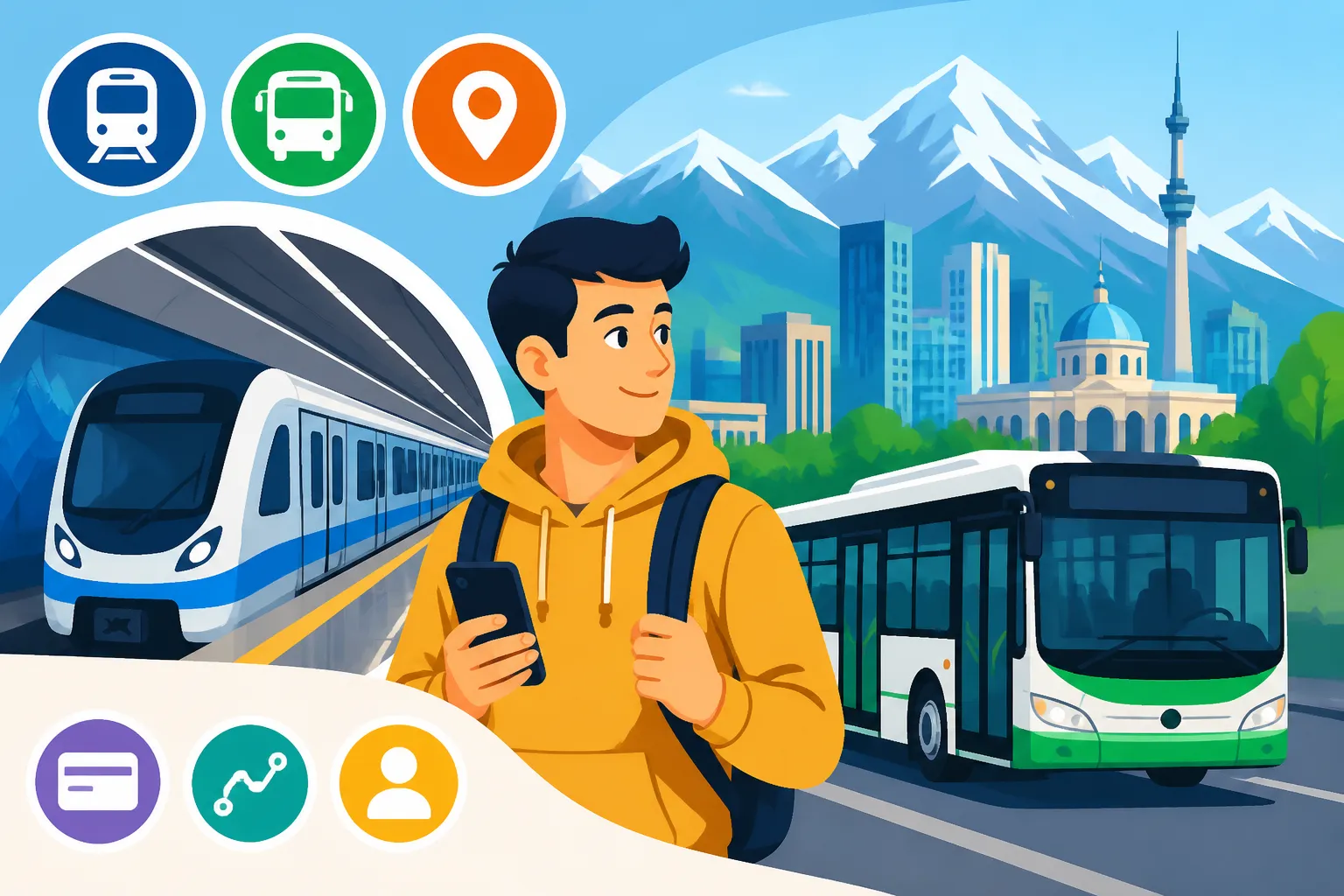
Navigating public transport in a new city, especially one as bustling and vibrant as Almaty, can feel like a mini-adventure in itself. You arrive, perhaps overwhelmed by the sheer scale of the mountains, the different script on signs, and suddenly you're faced with a bus system that looks like a tangled web and a metro that, while simple, still requires understanding. This guide is here to untangle that web, helping you confidently use the Almaty Metro and the extensive bus network, making your daily commute or exploration much smoother.
Navigating the Almaty Metro: A Breath of Fresh Air
Stepping into the Almaty Metro is often a pleasant surprise for many expats. After dealing with the city's sometimes chaotic traffic and the sheer volume of cars, the metro offers a serene, efficient, and wonderfully clean alternative. It’s a true point of pride for Almaty residents, and once you get the hang of it, you’ll find yourself relying on it more than you might expect.
Understanding the Metro Network and Hours
Almaty’s metro system, while not as extensive as those in global mega-cities, is remarkably modern and efficient. It currently consists of a single line, stretching from Raiymbek Batyr in the north to Bauyrzhan Momyshuly in the west, with eleven stations along the way. Each station is uniquely designed, showcasing different aspects of Kazakh culture, art, and history, making a journey on the metro feel like a mini-tour of architectural marvels. They are spotlessly clean, well-lit, and generally very safe.
The trains themselves are comfortable, air-conditioned in summer, and heated in winter, providing a welcome respite from the outside elements. They run frequently, usually every 5-10 minutes depending on the time of day, ensuring minimal waiting times. This reliability is a godsend when you have appointments to keep or simply want to avoid the notorious Almaty traffic jams. The metro is particularly useful for reaching key areas along its route, such as the Almaty-2 train station (Raiymbek Batyr), the bustling Zelyony Bazaar (Zhibek Zholy), the city center (Almaly, Abay), and areas further west like Dostyk Plaza shopping mall (Baikonur). For a more comprehensive overview of the city's transport infrastructure, you might find our general guide on The Expat Guide to Public Transport in Kazakhstan insightful, which covers broader aspects of getting around the country.
Metro operating hours typically run from around 6:20 AM until midnight. During peak hours, trains are more frequent, while late evenings might see slightly longer intervals. It’s always a good idea to keep these timings in mind, especially if you're planning a late night out, as you don't want to miss the last train and be left scrambling for a taxi. For instance, if you're at the Abay station, catching a late movie, make sure you know the last train departure towards your destination.
Buying Tickets and Paying Fares for the Metro
Getting your ticket for the Almaty Metro is straightforward, but it's where you'll first encounter the city's integrated transport payment system: ONAY!. While you can still purchase single-use tokens, getting an ONAY! card is highly recommended for anyone planning to use public transport regularly.
At every metro station, you'll find ticket counters where you can buy a single-use plastic token (жетон, zheton) for a flat fare. These tokens are green and resemble small coins; you simply drop them into the turnstile reader to enter. It’s a bit old-school but perfectly functional for a one-off journey. However, the true convenience comes with the ONAY! card. This bright blue card is a reloadable smart card that works across Almaty’s entire public transport network – metro, buses, and even some marshrutkas. You can purchase an ONAY! card at any metro station ticket office or at designated kiosks around the city for a small fee, and then load it with credit. The fare for an ONAY! card is currently 80 tenge per trip, which is much cheaper than paying with cash on buses.
Using your ONAY! card is simple: just tap it against the reader on the turnstile to enter the metro platform. The system deducts the fare automatically. Keeping your card topped up is easy; you can do it at metro stations, special ONAY! terminals, or through popular mobile banking apps like Kaspi.kz, which many expats quickly adopt for almost all their financial needs. You can learn more about managing your finances in Kazakhstan by reading about How to Use Kaspi and Local Payment Systems in Kazakhstan. While contactless bank card payments or phone payments are becoming more common in daily life, for the metro, the ONAY! card or a token remains the primary method for direct entry.
Metro Etiquette and Useful Tips
Like any public transport system, the Almaty Metro has its unwritten rules and helpful tips that can make your experience smoother and more pleasant. First off, be mindful on escalators: stand on the right, walk on the left. This isn't just a suggestion; it's a strongly observed rule, especially in busy stations like Almaly or Abay. When waiting on the platform, stand behind the yellow line, and let passengers exit the train before you attempt to board.
Inside the metro cars, seating is usually first-come, first-served, but it’s customary to offer your seat to the elderly, pregnant women, or those with small children. You’ll notice the metro is very clean, and people generally respect this, so avoid eating or leaving rubbish. Photography is generally allowed and encouraged in the beautifully designed stations, but it’s polite to be discreet and avoid disturbing others. You might even hear announcements in both Kazakh and Russian, and sometimes in English in the more tourist-frequented stations. This small detail can be a huge comfort when you're still getting to grips with the local languages.
Don't be afraid to ask for help if you're unsure about directions. While English might not be universally spoken, many younger people in Almaty do have some proficiency, and a friendly smile and pointing at a map can often get you the assistance you need. The staff at metro stations are also generally very helpful, even if there's a language barrier. Simply showing them the name of your destination station can often elicit a nod and a gesture in the right direction. This system is a vital part of Understanding the Almaty Metro, Bus and Astana Transport Networks and provides essential connections across the city.
Conquering the Almaty Bus Network: Your City Lifeline
While the metro offers speed and predictability, Almaty's extensive bus network is the true workhorse of public transport, reaching virtually every corner of the city. For many expats, understanding and utilizing the bus system is key to truly unlocking Almaty, allowing you to explore beyond the metro line and connect directly with residential areas, markets, and smaller attractions.
The Extensive Bus System: Routes and Coverage
If Almaty's metro is a single, elegant artery, its bus network is a dense, pulsating circulatory system. There are hundreds of bus routes crisscrossing the city, providing unparalleled coverage. Whether you need to get to a specific university, a remote neighborhood market, or simply want to take a scenic ride through the city, there's likely a bus route that will take you there. Buses are generally modern, often equipped with air conditioning and digital displays showing the next stops.
Unlike the metro, which offers a fixed, underground path, buses navigate the city's streets, allowing you to see Almaty from a different perspective. They are crucial for daily commutes, connecting residential zones to business districts, shopping centers, and educational institutions. This vast network truly is the backbone of daily movement for most Almaty residents. It's an essential part of understanding What Is the Best Way to Get Around Almaty Without a Car?.
While marshrutkas (minibuses) used to be a very common sight, offering a more flexible, if sometimes chaotic, form of transport, their numbers have significantly decreased in recent years as the city has invested heavily in modernizing and expanding its standard bus fleet. You might still encounter a few on certain routes, but for the most part, you'll be relying on the larger, more structured city buses. Embrace the buses, as they will literally take you places the metro can't, often directly to your doorstep or within a short walk.
Mastering ONAY! Cards and Payment Methods
Just like with the metro, the ONAY! card is your best friend when it comes to Almaty's buses. It’s not just a convenience; it’s practically a necessity. While technically you can pay with cash, it's highly discouraged and comes with a higher fare (currently 150 tenge compared to 80 tenge with ONAY!). If you pay cash, you’ll need exact change, which can be a hassle, and you give it directly to the driver, often disrupting their focus. It's far better to be prepared with your ONAY! card.
You can buy an ONAY! card at metro stations, special ONAY! kiosks, or even some small shops and post offices. Topping up is equally easy. Beyond the kiosks and metro stations, the most popular way to add funds is through the ubiquitous Kaspi.kz app, which has revolutionized digital payments in Kazakhstan. Open the app, select "Transport" (Транспорт), then "ONAY! Balance Top-up" (Пополнение баланса ONAY!), enter your card number, and the amount. It's instant and incredibly convenient. Many banks in Kazakhstan offer excellent mobile banking, and opening an account is relatively straightforward; for more details, check out our guide on How to Open a Bank Account at a Kazakhstani Bank as a Foreigner.
When boarding the bus, look for the blue ONAY! card readers, usually located near each door. Simply tap your card on the reader once you enter. There’s no need to tap out when you exit, as the system charges a flat fare per trip. Wait for the green light and a short beep, which confirms your payment. If you see a red light and a long beep, your card might be out of funds or unreadable. Always ensure you have enough balance before boarding to avoid awkward situations.
Utilizing Apps and Digital Tools for Buses
Navigating the bus network would be infinitely more challenging without the help of modern mobile applications. These apps are absolute game-changers for expats, eliminating much of the guesswork and anxiety associated with public transport.
The undisputed champion for public transport in Almaty is 2GIS (DoubleGIS). This app is a hybrid map, directory, and public transport tracker all rolled into one. It allows you to:
- Plan Routes: Enter your starting point and destination, and 2GIS will show you the fastest public transport options, including which buses to take, where to transfer, and estimated travel times.
- Track Buses in Real-Time: This is the magic feature. For most major routes, you can see buses moving along the map in real-time, along with their estimated arrival at your chosen stop. This means less waiting in the cold or heat, and more accurate planning.
- View Stops and Schedules: Each bus stop has a list of routes that serve it, and you can tap on a bus number to see its full route and schedule.
Another useful app is Yandex Maps (or Yandex Go, which integrates mapping and ride-hailing). While 2GIS is superior for public transport tracking, Yandex Maps can be a good backup and is excellent for general navigation and discovering points of interest. Having a reliable internet connection is crucial for using these apps effectively. Consider picking up a local SIM card as soon as you arrive, or using an eSIM service like Airalo for immediate connectivity. You can find more information on getting set up with mobile services in our guide on How to Set Up Internet and Mobile Service in Kazakhstan. Trust me, trying to figure out bus routes without 2GIS is like trying to find your way through a maze blindfolded!
Payment Systems for Public Transport: ONAY! and Beyond
Understanding the payment systems for Almaty's public transport is paramount to a stress-free experience. While it might seem complex at first glance, the city has largely standardized around the ONAY! card, with some convenient digital alternatives. Getting familiar with these will save you money and headaches.
The Ubiquitous ONAY! Card Explained
The ONAY! card (ОНАЙ!) is the cornerstone of Almaty’s public transport payment system. Introduced to modernize the fare collection and reduce reliance on cash, it's a contactless smart card that offers a significant discount on fares compared to cash payments. As of early 2024, a ride costs 80 tenge with an ONAY! card, while a cash payment is 150 tenge. The card itself has a small purchase fee, usually around 500 tenge.
There are different types of ONAY! cards, though most expats will use the standard blue card. Students and pensioners (with relevant local IDs) can obtain personalized cards offering further discounts, which might be relevant if you're enrolling in a local university or planning a long retirement in Almaty. You can purchase standard ONAY! cards at:
- Any metro station ticket office.
- Special ONAY! kiosks located at major bus stops and transport hubs.
- Certain post office branches and RTVM terminals.
Topping up your ONAY! card is just as important as buying it. You can do this at the same locations where you buy the card, but the most popular and convenient method by far is through the Kaspi.kz mobile app. Simply open Kaspi.kz, navigate to the "Payments" section, find "Transport" or "ONAY!", enter your 16-digit ONAY! card number, and specify the amount you wish to add. The funds are usually available instantly. This system makes it incredibly easy to manage your transport budget, something that is crucial for understanding How Much Does It Cost to Live in Almaty per Month?
Digital Payment Alternatives: Kaspi.kz and Bank Cards
Beyond the physical ONAY! card, Almaty's embrace of digital technology offers some excellent alternatives, primarily through the immensely popular Kaspi.kz. This super-app is practically indispensable for daily life in Kazakhstan, and public transport is no exception.
On most buses, in addition to the ONAY! card reader, you'll also find a QR code prominently displayed, often near the driver or by the doors. You can use the Kaspi.kz app to scan this QR code. Once scanned, the app will ask you to confirm the fare payment from your Kaspi Gold account. This is a fantastic option if you’ve forgotten your ONAY! card or if its balance is low. It charges the same discounted fare as the ONAY! card (80 tenge). The convenience of just scanning a code and paying directly from your phone cannot be overstated.
While direct contactless bank card payments are becoming more common in other parts of the world, on Almaty’s buses, the ONAY! card and the Kaspi.kz QR code are the primary electronic methods. Some newer buses might have readers that accept contactless bank cards, but it's not universal, and the ONAY! or Kaspi.kz methods are far more reliable and widely accepted. For expats, having Kaspi.kz installed and linked to a local bank account is almost a must, not just for transport but for everything from grocery shopping to paying utility bills.
The Cash Conundrum: When and How to Use It
As mentioned earlier, paying with cash on Almaty's public buses is possible, but it comes with a higher fare and is generally not recommended. The cash fare is 150 tenge, almost double the ONAY! card fare. If you absolutely have no other option, you should pay the driver directly when you board.
The key to using cash is to have exact change. Drivers often do not carry much change, and trying to pay with a large denomination note for a 150 tenge fare will likely result in a frustrated driver and possibly holding up the bus. It’s best to avoid this situation entirely. For those times when you're truly stuck, perhaps your ONAY! card is empty and your phone battery is dead, cash can be a lifeline. However, make it a last resort. The city actively promotes the ONAY! system precisely to move away from cash payments, making the transport system more efficient and accountable.
| Payment Method | Fare (KZT) | Convenience | Where to Use | Pros | Cons |
|---|---|---|---|---|---|
| ONAY! Card | 80 | High | Metro, Buses | Cheapest, widely accepted, easy top-up via Kaspi.kz | Requires purchase and topping up, easy to lose |
| Kaspi.kz QR | 80 | High | Buses | No physical card needed, instant payment from phone | Requires smartphone & Kaspi Gold account, relies on phone battery |
| Cash | 150 | Low | Buses | No card or app needed, last resort | Higher fare, requires exact change, inconvenient for driver |
Planning Your Journey and Staying Connected
Successfully navigating Almaty's public transport system goes beyond just knowing the routes and payment methods. It requires smart planning, leveraging digital tools, and a dash of local language savvy.
Essential Mobile Apps for Real-Time Navigation
I cannot stress enough the importance of having the right mobile apps installed on your phone. For Almaty, 2GIS (DoubleGIS) is your absolute lifesaver. This app provides detailed maps, comprehensive business listings, and, most crucially, real-time public transport information. You can input your current location and desired destination, and 2GIS will give you multiple options: metro lines, bus routes, walking directions, and even taxi estimates.
The real-time bus tracking feature is what sets 2GIS apart. Imagine standing at a bus stop, unsure when your bus will arrive. With 2GIS, you can see exactly where the bus is on its route, how many stops away it is, and its estimated arrival time. This is invaluable, especially during Almaty’s often unpredictable weather or when you’re on a tight schedule. It significantly improves the reliability of public transport in Kazakhstan for expats.
Another app to consider is Yandex Maps or Yandex Go. While 2GIS is usually preferred for public transport, Yandex Maps offers excellent general navigation, traffic information, and often integrates ride-hailing services. Having both can provide a comprehensive navigation toolkit. These apps are also useful for discovering local attractions or finding an apartment near the metro in Almaty. When you're trying to figure out if you can make it to a specific meeting or if it's worth waiting for the next bus, these apps remove all the guesswork.
Staying Connected: Mobile Data and Wi-Fi
To make the most of these invaluable navigation apps, you absolutely need a reliable internet connection. Relying on patchy public Wi-Fi is simply not practical for real-time tracking. Investing in local mobile data is one of the first and most important steps after arriving in Kazakhstan.
You have a couple of excellent options:
- Local SIM Card: Major providers like Beeline, Kcell, and Tele2 offer affordable data plans. You can easily purchase a SIM card at their official stores, usually found in shopping malls or city centers. You'll need your passport and potentially your IIN (Individual Identification Number) to register the SIM.
- eSIM (e.g., Airalo): For those who want immediate connectivity upon arrival without the hassle of finding a physical SIM card, an eSIM service like Airalo is a fantastic solution. You can download and activate an eSIM profile before you even land, ensuring you have data from the moment your plane touches down. This means you can immediately use 2GIS to navigate from the airport or call a ride-hailing service without any delay.
While some newer buses or metro stations might offer free Wi-Fi, it's generally not reliable or fast enough for consistent use, especially for live tracking. Treat it as a bonus, not a primary source of connectivity. Having your own mobile data ensures you can always access your maps, check bus times, and stay in touch. It’s an investment in your peace of mind and significantly enhances your ability to get around.
Language Tips and Asking for Help
The language barrier is often one of the biggest initial hurdles for expats, and it certainly applies to public transport. While many signs in Almaty, especially in the metro, are now bilingual (Kazakh and English), and some announcements are in English, the bus system is predominantly in Kazakh and Russian.
Here are a few tips:
- Learn Key Phrases: Even a few basic phrases in Kazakh or Russian can go a long way. For example:
- "Stop, please" (Остановка, пожалуйста – Ostanovka, pozhaluysta for Russian; Аялдама, өтінемін – Ayaldama, otinemin for Kazakh, though you usually just press the stop button).
- "Which bus goes to [destination]?" (Какой автобус идет до [destination]? – Kakoy avtobus idet do [destination]?)
- "Is this bus going to [destination]?" (Этот автобус идет до [destination]? – Etot avtobus idet do [destination]?)
- "Thank you" (Спасибо – Spasibo for Russian; Рахмет – Rakhmet for Kazakh).
- Use Translation Apps: Google Translate or Yandex Translate can be incredibly helpful for quick translations of signs or asking complex questions.
- Don't Be Afraid to Ask: Kazakhs are generally very hospitable and willing to help, even with a language barrier. If you're lost or unsure, politely approach a younger person (who might have some English skills) or even the bus driver. Showing them your destination on a map or your phone app can often communicate your need effectively.
Most people understand the challenges foreigners face, and a friendly, respectful approach will almost always yield positive results. Public transport offers a great opportunity to practice your language skills and engage with locals, making your journey an authentic part of your expat experience.
General Tips for Expats Using Almaty Public Transport
Once you’ve mastered the basics of the metro and bus, there are a few more insider tips that can make your Almaty public transport experience even more comfortable, efficient, and enjoyable. These little insights come from years of trial and error (and a few missed stops!) that every expat eventually learns.
Understanding Peak Hours and Crowds
Almaty, like any major city, experiences significant peak hours, and its public transport system certainly feels the squeeze. The busiest times are typically in the mornings, roughly from 7:30 AM to 9:30 AM, and again in the evenings, from 5:30 PM to 7:30 PM, when people are commuting to and from work and school. During these periods, buses can be absolutely packed, often standing-room only, and the metro platforms can get quite crowded.
If you’re not a fan of close quarters or have a bit more flexibility in your schedule, try to plan your journeys outside these peak times. Mid-morning (10 AM – 12 PM) and early afternoon (2 PM – 4 PM) are usually much more relaxed, offering more space and a more comfortable ride. If you absolutely must travel during peak hours, be prepared for a bit of a crush. Keep your belongings secure, especially in crowded spaces, and be patient. It’s all part of the authentic Almaty experience! For those days when you're moving heavier items or have many bags, contrasting the local public transport with international moving services, such as those offered by Sirelo, can put into perspective the daily ease versus larger logistical challenges.
Safety and Security on Public Transport
Generally, public transport in Almaty is very safe. The metro is particularly well-monitored with CCTV, and the stations are staffed. On buses, while there are fewer direct security personnel, the sheer number of people and the community atmosphere usually deter major issues. However, as with any city, it's wise to be vigilant and take basic precautions.
Pickpocketing can occur in crowded areas, especially during peak hours or in busy markets and stops. Always keep your valuables, such as your phone, wallet, and passport, in a secure internal pocket or a bag that's difficult to access. Avoid flaunting expensive electronics. If you ever feel unsafe or witness an incident, try to move to a more populated area, or notify the driver or a station attendant. The emergency number for police in Kazakhstan is 102, and for general emergencies, 112. Knowing these can be vital, especially if you face an emergency medical situation. For understanding Emergency Medical Care in Kazakhstan: What Every Expat Needs to Know, having these numbers readily available is crucial. Overall, you'll likely find Almaty's public transport a safe and reliable way to get around.
Integrating Public Transport into Your Almaty Life
Embracing Almaty’s public transport isn't just about getting from A to B; it's about integrating into the local rhythm, saving money, and reducing your environmental footprint. The cost-effectiveness of using ONAY! for daily commutes is significant compared to relying on ride-hailing apps like Yandex Go or InDrive, which can quickly add up, especially if you're frequently travelling across the city. Over the course of a month, those 80 tenge fares make a huge difference to your overall What Is the Cheapest Way to Commute in Almaty?.
Beyond the financial aspect, public transport offers a unique window into local life. You'll observe daily interactions, hear the cadences of Kazakh and Russian, and become part of the city's living, breathing pulse. It’s an immersive experience that you just don't get from sitting in the back of a private car. Whether you're commuting to your new job, exploring the city’s many parks and cafes, or even heading out for a hike in the nearby mountains (some bus routes extend to popular trailheads), public transport will become an indispensable part of your life in Almaty. Many expats find that the convenience and affordability of the system make living in certain neighborhoods, even without a personal car, entirely feasible. Being able to navigate your way around helps contribute to your overall understanding of How Reliable Is Public Transport in Kazakhstan? really is.
Disclaimer
Please note that while every effort has been made to provide accurate and up-to-date information, public transport regulations, fares, and app functionalities in Kazakhstan can change. It is always advisable to check the latest information from official sources or local transport authorities. This guide is intended for informational purposes only and does not constitute official advice.