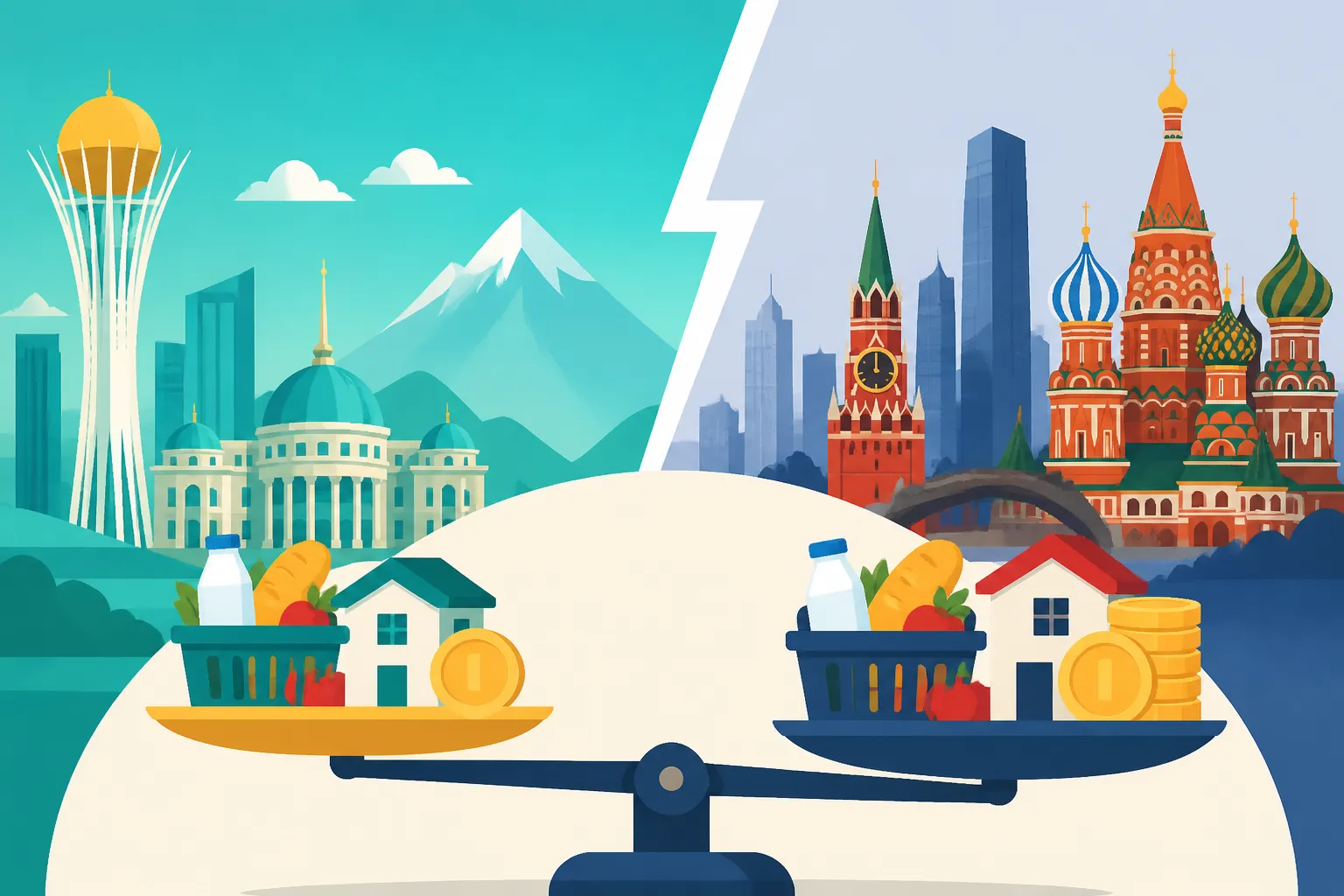
What Is the Cost of Living in Kazakhstan vs Russia?
Moving to a new country is exhilarating, but the financial unknowns can easily turn that excitement into a heap of stress. Trying to figure out where your hard-earned money will go further, especially when comparing two geographically close but distinct nations like Kazakhstan and Russia, can be a real headache. This guide is here to shed some light on the true cost of living in Kazakhstan versus Russia, offering a realistic breakdown to help you budget effectively and settle in comfortably.
Navigating the Cost of Living Maze in Central Asia
When you're an expat, every penny counts, and understanding the local economy is paramount to a smooth transition. Many people moving to this part of the world naturally find themselves comparing Kazakhstan and Russia, often due to their shared borders, historical ties, and sometimes, similar job market opportunities. But let me tell you, while they might seem similar on the surface, the nuances in living costs can be quite surprising. It's not just about the exchange rate; it's about the daily grind, the rent, the groceries, and even the price of a coffee.
Why the Comparison Matters: Kazakhstan vs. Russia
For many expats, the decision between Kazakhstan and Russia often comes down to a few critical factors: job opportunities (especially in sectors like oil and gas, mining, or IT), personal connections, or simply a desire to experience life in a post-Soviet state with its own unique flavour. While both countries offer a rich cultural experience and vast landscapes, their economies, infrastructure, and consumer markets have evolved differently. Russia, with its larger economy and more established international presence, often feels like the default choice for some, but Kazakhstan has quietly been building its own identity as a dynamic, welcoming hub. The practical differences in day-to-day expenses become a huge factor in deciding where to land. You might find a great job in Moscow, but if half your salary disappears on rent, is it truly better than a slightly lower salary in Almaty with far lower living costs? These are the real questions we grapple with.
The Big Picture: Overall Affordability Trends
Generally speaking, and this is a sentiment shared by many long-term expats, Kazakhstan tends to be more affordable across the board than Russia, especially when comparing major cities like Almaty or Astana to Moscow or St. Petersburg. The cost of living in Russia, particularly in its Western, European-influenced cities, has historically been higher, driven by factors like import duties, a more developed consumer market, and higher demand for services. Kazakhstan, while also experiencing economic growth, still retains a more budget-friendly approach to everyday life. You'll often find that your rent, groceries, and even entertainment budget will stretch further here. Of course, this is a generalization, and specific cities within each country will have their own variations, but it's a solid starting point for your financial planning. Don't let the allure of a higher nominal salary blind you to the actual purchasing power of that money.
A Deep Dive into Key Cost Categories
Let's get down to the nitty-gritty of where your money will actually go. This is where the rubber meets the road, and where you'll see the most significant differences between these two nations.
Housing: Renting and Buying in Both Nations
Housing is often the biggest chunk of any expat's budget, and here, Kazakhstan definitely pulls ahead in terms of affordability.
In Kazakhstan, particularly in its vibrant economic hub, Almaty, or the modern capital, Astana, you'll find rental prices significantly lower than in Moscow or St. Petersburg. For example, a comfortable one-bedroom apartment in a good expat-friendly area of Almaty might cost you anywhere from 200,000 to 450,000 KZT (approximately $450-$1,000 USD) per month, depending on location, size, and amenities. You can explore more about How Much Does It Cost to Rent an Apartment in Almaty in 2026? for a detailed breakdown. If you're looking for a similar setup in Astana, which tends to be slightly pricier for newer, more modern builds, you might still find options within a similar range, perhaps a bit higher for central locations. Check out How Much Is the Average Rent for a One-Bedroom in Astana in 2026? to compare. Utilities, while not always included, are also quite reasonable, especially compared to Western standards. The process of Renting an Apartment in Kazakhstan is generally straightforward, though an agent can be helpful for language barriers.
Now, let's look at Russia. Moscow and St. Petersburg are infamous for their high rental prices. A one-bedroom apartment in a decent central area of Moscow can easily run you 50,000 to 100,000 RUB (approximately $550-$1,100 USD) or more, even for older buildings. When you factor in the average salary differences, this proportion of income going to rent is much higher. Property purchase costs also follow a similar trend, with real estate in major Russian cities commanding much higher prices per square meter. The initial deposit for renting, often one or two months' rent, plus agency fees, can also be substantial in both countries, so always factor that in.
Groceries and Dining Out: Filling Your Fridge and Your Stomach
This category really highlights the general affordability of local life.
In Kazakhstan, local produce, dairy, and meat are incredibly budget-friendly. You can fill your trolley with fresh fruits, vegetables, and staples like bread and milk for a fraction of what you'd pay in many Western countries. Even imported goods, while pricier, are often still more accessible than in Russia. Eating out is also a treat that doesn't break the bank. A hearty traditional Kazakh meal at a local kafeshka (cafe) or stoilovaya (canteen) can cost as little as 2,000-4,000 KZT ($4-$9 USD). Even a nice dinner at a mid-range restaurant in Almaty might only set you back 8,000-15,000 KZT ($18-$35 USD) per person, including drinks. Your weekly grocery bill for one person could be around 15,000-30,000 KZT ($35-$70 USD) if you cook mostly at home.
Russia, while also having affordable local produce, especially outside the major cities, tends to have higher prices for groceries in Moscow and St. Petersburg. Imported goods can be particularly expensive due to various economic factors and trade restrictions. Dining out, too, generally costs more. A similar meal in Moscow at a local cafe might be 500-1,000 RUB ($5.50-$11 USD), and a mid-range restaurant dinner could easily be 2,000-4,000 RUB ($22-$44 USD) or more per person. If you're comparing the cost of a similar shopping list or restaurant experience, Kazakhstan usually comes out on top for value.
Transportation: Getting Around on a Budget
Getting around is another area where costs can vary significantly, impacting your daily budget.
Kazakhstan boasts highly affordable public transport. In Almaty, the metro is modern and efficient, and bus fares are incredibly cheap, typically around 80-150 KZT (less than $0.35 USD) per ride. Taxis, especially through ride-sharing apps like Yandex Go or InDrive, are also very economical, making them a popular choice for expats. A 15-20 minute ride within the city often costs no more than 1,000-2,000 KZT ($2-$4.50 USD). If you're considering owning a car, fuel prices are also considerably lower than in many parts of the world. Just remember the rules for Driving in Kazakhstan: Licences, Registration and Rules for Expats (2027) and The Expat Guide to Public Transport in Kazakhstan.
In Russia, public transport, particularly in Moscow, is also very efficient and relatively cheap, with the metro system being a marvel. However, compared to Kazakhstan, the costs are slightly higher. A single metro ride in Moscow is currently around 60 RUB ($0.65 USD). Taxis, while available through similar apps, are also generally more expensive than in Kazakhstan. Fuel prices in Russia are still quite reasonable by international standards but can be a bit more than what you'd pay in Kazakhstan. The overall consensus is that while both offer good transport infrastructure, Kazakhstan offers slightly better value for daily commutes and private transport.
Utilities and Communication: Staying Connected and Comfortable
Utilities and staying connected are non-negotiables in modern life, and these costs also show a noticeable difference.
In Kazakhstan, your monthly utility bills for a standard apartment (electricity, water, central heating, gas) are surprisingly low. For a one-bedroom apartment, you might be looking at 10,000-20,000 KZT ($22-$45 USD) in total, depending on the season and consumption. The winter heating costs are included, but are generally very reasonable due to district heating systems. Internet and mobile phone plans are also very competitive. You can get fast fibre optic internet for around 5,000-8,000 KZT ($11-$18 USD) per month, and mobile plans with ample data are similarly priced. When you’re first setting up, remember to consult guides like The Expat Guide to Setting Up Utilities (Electricity, Water, Heating) in Kazakhstan and How to Set Up Internet and Mobile Service in Kazakhstan. For short-term visits or flexible connectivity, an eSIM from providers like Airalo can be a lifesaver, ensuring you're always connected without the hassle of a local SIM initially.
Russia tends to have higher utility costs, especially for heating during the long winters, although prices can vary by region. For a similar apartment in Moscow, you could be looking at 4,000-7,000 RUB ($45-$75 USD) or more for basic utilities per month. Internet and mobile plans are also quite competitive in Russia, but again, often at a slightly higher price point than in Kazakhstan. For example, a good internet package might be 500-800 RUB ($5.50-$9 USD), and a mobile plan with plenty of data could be 300-500 RUB ($3-$5.50 USD), which, while still affordable, is marginally more than Kazakhstan.
Healthcare, Education, and Leisure: Quality of Life Expenses
Beyond the daily essentials, how much do those quality-of-life expenses set you back? These are crucial for expat families and individuals looking to maintain a certain standard of living.
Healthcare Costs: Public vs. Private
Healthcare is a critical consideration for any expat, and both countries have their own systems and costs.
In Kazakhstan, the healthcare system is a mix of public and private options. Expats working legally are typically enrolled in the Compulsory Social Health Insurance (OSMS) system, which covers a significant portion of medical services. However, many expats opt for private insurance or pay out-of-pocket for private clinics due to better facilities, shorter wait times, and English-speaking staff. While public healthcare under OSMS is largely state-funded, private care is much more accessible than you might think. A visit to a private GP might cost 5,000-10,000 KZT ($11-$22 USD), which is very reasonable. For a comprehensive overview, look at The Complete Guide to Healthcare in Kazakhstan for Expats (2027) or The Cost of Healthcare in Kazakhstan: A Complete Breakdown for Foreigners (2026). Dental care, for instance, is also quite affordable; you can find more about Understanding Dental Care Costs in Kazakhstan.
Russia also has a public healthcare system (OMS) that covers registered residents, but like Kazakhstan, many expats choose private clinics, especially in larger cities, for similar reasons. The costs for private consultations and treatments in Russia can be significantly higher than in Kazakhstan. A private GP visit in Moscow might cost 2,000-5,000 RUB ($22-$55 USD), making Kazakhstan a more budget-friendly option for routine private medical care.
Education for Expat Families
For expats with children, education costs are a huge factor.
Kazakhstan offers both public and private schooling options. While public schools are free, they typically teach in Kazakh or Russian, which might not be suitable for all expat children. International schools, which offer curricula like the British, American, or International Baccalaureate, are available in Almaty and Astana. These can be expensive, ranging from $10,000 to $25,000 USD per year, but are often still more affordable than comparable international schools in Western Europe or North America. You can find more specific details in Schools and Education in Kazakhstan: A Complete Guide for Expat Families.
In Russia, the situation is similar. Public schools are largely Russian-speaking, while international schools in Moscow and St. Petersburg are plentiful but come with a hefty price tag. Annual tuition fees can range from $15,000 to $40,000+ USD, often making them more expensive than their Kazakhstani counterparts. This difference in international schooling costs alone can be a major deciding factor for families.
Entertainment and Lifestyle: What You'll Pay to Have Fun
When it comes to enjoying your downtime, both countries offer a vibrant lifestyle, but the price points differ.
In Kazakhstan, entertainment and leisure activities are generally affordable. A cinema ticket might be 1,500-2,500 KZT ($3.50-$5.50 USD), a gym membership around 10,000-25,000 KZT ($22-$55 USD) per month, and a beer at a bar 800-1,500 KZT ($1.80-$3.50 USD). Exploring national parks, skiing in the mountains near Almaty, or enjoying cultural events won't break the bank.
Russia, especially in its major cities, tends to have higher prices for entertainment. Cinema tickets, gym memberships, and nights out at bars or clubs are often more expensive. A cinema ticket could be 400-800 RUB ($4.50-$9 USD), a gym membership 2,500-5,000 RUB ($28-$55 USD), and a beer 300-600 RUB ($3.50-$6.50 USD). While there's plenty to do, your leisure budget will likely stretch further in Kazakhstan.
Making Your Budget Stretch Further: Practical Tips
Now that we’ve broken down the costs, let’s talk about how to make your money work harder for you, regardless of whether you're in Kazakhstan or Russia.
Exchange Rates and Local Currency Wisdom
The local currency in Kazakhstan is the Tenge (KZT), and in Russia, it's the Ruble (RUB). Both currencies have experienced significant fluctuations over the years, which can impact your cost of living as an expat receiving foreign income. It's crucial to keep an eye on exchange rates and understand how they affect your purchasing power. Try to avoid exchanging large sums at airports or hotels, as their rates are often less favorable. Instead, use local bank ATMs for cash withdrawals, or use international transfer services that offer competitive rates. Opening a local bank account as soon as possible is also a smart move to manage your finances more efficiently. For more financial guidance, you could always refer to comprehensive guides like The Complete Guide to Cost of Living in Kazakhstan for Expats (2026).
Savvy Spending and Saving Strategies
Living like a local is often the best way to save money. This means prioritizing local markets for groceries over expensive imported supermarkets, using public transport or ride-sharing apps instead of private taxis, and exploring local cafes for dining out. In both countries, knowing a bit of the local language can also unlock better deals and prevent you from being overcharged. Don't be afraid to haggle a little in markets, especially in Kazakhstan – it's often expected!
For those big moves, utilizing services like Sirelo can simplify your relocation logistics, ensuring you get the best value for your shipping and moving needs, which indirectly saves you money and stress. Always compare prices for services, from hairdressers to electronics repairs, as there can be a wide range of options at different price points. Building a network of expat friends can also be invaluable for sharing tips on where to find the best deals or services. Every little bit of savvy spending adds up, making your expat life much more comfortable.
Here's a quick comparison table for some common expenses:
| Expense Category | Kazakhstan (Major City Average, KZT / USD) | Russia (Major City Average, RUB / USD) |
|---|---|---|
| 1-Bed Apartment Rent (Central) | 250,000 KZT / $560 | 65,000 RUB / $700 |
| Utilities (Basic, monthly) | 15,000 KZT / $34 | 5,500 RUB / $60 |
| Internet (monthly) | 7,000 KZT / $16 | 650 RUB / $7 |
| Local Meal (Inexpensive) | 2,500 KZT / $5.50 | 750 RUB / $8 |
| Cinema Ticket | 2,000 KZT / $4.50 | 550 RUB / $6 |
| Public Transport (Single Ride) | 100 KZT / $0.22 | 60 RUB / $0.65 |
| Gym Membership (monthly) | 18,000 KZT / $40 | 3,500 RUB / $38 |
Note: Prices are approximate and subject to change based on specific location, provider, and current exchange rates (as of late 2023/early 2024).
Disclaimer
The information provided in this guide is for general informational purposes only and does not constitute financial, legal, or professional advice. While we strive to keep the information up-to-date and accurate, costs, regulations, and market conditions can change rapidly. Always consult with relevant experts or official sources for the most current and specific advice tailored to your individual situation.