How Do I Set Up Streaming and TV in My Kazakhstan Home?
After you’ve navigated the chaos of getting your residency sorted and found a place to call home in Kazakhstan, one of the next things on your mind, perhaps after the initial excitement wears off, is often how to settle into a comfortable routine. And for many of us expats, that means figuring out how to watch our favorite shows, catch up on news from back home, or simply unwind with some familiar entertainment. This guide is here to walk you through the ins and outs of setting up streaming and TV in your Kazakhstani home, covering everything from local options to getting your international services up and running, and tackling those pesky geo-restrictions.
Understanding Your Options: Local vs. International Content
Moving to a new country like Kazakhstan means a whole new world of choices, and that includes what’s on the screen. For some, it’s a chance to fully immerse themselves in local culture; for others, it’s about maintaining a crucial link to home. Balancing these desires is key to a happy expat viewing experience.
Navigating Local TV Channels and Cable Providers
Kazakhstan has its own thriving local television scene, and for many expats, it's a fantastic way to immerse yourself in the culture and even pick up some Russian or Kazakh language skills. The main players in the local TV market usually include established cable providers like Alma TV or ID-Net, which is Kazakhtelecom's broadband service that often bundles television channels. When you first move into an apartment, especially if it’s been previously occupied by a local, there’s a good chance it might already have a basic cable connection set up, sometimes even included in the rental agreement.
Signing up for a local TV package typically involves contacting the provider directly. You'll definitely need your IIN (Individual Identification Number) and your rental contract or proof of address to get things moving. The packages usually offer a mix of local Kazakh and Russian-language channels, covering news, entertainment, sports, and movies. While some channels might occasionally have English audio options or subtitles, it’s definitely not the norm, so be prepared for a predominantly Russian or Kazakh language experience. Expect a slightly different content landscape than you're used to, but sometimes you stumble upon surprisingly good local dramas, documentaries, or even reality shows that offer a fascinating glimpse into life here.
The quality and variety of channels can vary depending on your provider and the specific package you choose. For instance, Alma TV is quite prevalent in cities like Almaty and Astana, offering various tiers from basic to premium, often including some international news channels. Prices are generally quite reasonable compared to Western cable prices, making it a cost-effective way to get a lot of channels, even if only a few appeal to you initially. It's always a good idea to check with your landlord or a local colleague about which providers are reliable and have good service in your specific building or district, as service quality can sometimes be localized. Remember, setting up these basic utilities is part of the broader process detailed in resources like The Expat Guide to Setting Up Utilities (Electricity, Water, Heating) in Kazakhstan.
Tapping into International Streaming Services
Now, for many of us, the real question isn't just local TV, but how to get our Netflix, Hulu, Disney+, or BBC iPlayer fix. The good news is that many major international streaming services are indeed available in Kazakhstan. Netflix, for instance, has a strong presence here, offering a localized library with many titles available in English, often with Russian or Kazakh subtitles, and sometimes even dubbing. YouTube is, of course, universally accessible and remains a fantastic source for international content, from vlogs to music to documentaries.
Other services like Amazon Prime Video are also generally accessible, though their content library might differ slightly from what you’d find in your home country due to regional licensing agreements. This is a common pain point for expats – you subscribe to a service you know and love, only to find half your watchlist missing! The biggest challenge you'll often face with international streaming isn't necessarily availability, but rather those pesky geo-restrictions, especially for services that are strictly region-locked like BBC iPlayer, some national sports streaming platforms, or specific HBO content. This is where VPNs (Virtual Private Networks) become your best friend, allowing you to route your internet traffic through servers in other countries, effectively tricking the service into thinking you're elsewhere.
Payment can sometimes be a minor hurdle. While most international services accept major credit cards, some Kazakhstani bank cards might face issues if they're not fully enabled for international online transactions, or if the service specifically requires a card tied to your home country's billing address. It's worth trying with your local card first, but if you have an international credit card from your home country, that usually works without a hitch. For general information on financial matters, our guide on Banking in Kazakhstan: A Complete Guide for Foreigners can be really helpful. Remember, a lot of what you need hinges on a stable internet connection, which we'll dive into next.
Getting Connected: Internet is Your Lifeline
Let's be real, in today's world, no streaming setup is complete without solid internet. It's the absolute foundation of your digital life here, and getting it right can save you a world of frustration.
Choosing an Internet Service Provider (ISP)
Kazakhstan has a surprisingly robust internet infrastructure, especially in the major cities like Almaty and Astana. You'll find fiber optic broadband widely available, offering speeds that are more than sufficient for high-definition and even 4K streaming. Your primary options for home internet will likely be providers like Kazakhtelecom, often operating under its ID-Net brand, which is the largest and most widespread. They offer a range of speeds, usually quite competitive in price, making it accessible even if you're keeping an eye on your How Much Is the Cost of Living in Kazakhstan for Expats? budget.
Beyond Kazakhtelecom, you might find other regional players depending on where you live. For example, in some newer residential complexes, you might have specific building-exclusive providers like Beeline or Tele2 offering home internet in addition to mobile services. When choosing an ISP, you'll want to consider several critical factors: advertised speed (measured in Mbps), actual reliability (ask neighbours if possible!), customer service (English-speaking support can be a lifesaver, though it’s not always guaranteed), and of course, the price. Most providers offer bundled packages that include internet, TV, and sometimes even landline phone services, which can be more cost-effective than separate subscriptions.
The process of getting internet set up generally involves applying with your IIN and proof of address. If you still need your IIN, our guide on How to Get an IIN (Individual Identification Number) in Kazakhstan can walk you through it. Installation usually takes a few days to a week, though it can sometimes be quicker or slower depending on demand and your building’s readiness. Don’t be surprised if the installation technicians speak little to no English; having a Kazakh or Russian-speaking friend or colleague to assist during the process can make things much smoother, trust me. Also, ensure you ask about Wi-Fi router options – some providers include them in the package, others require you to rent or purchase one separately. For a broader perspective on connectivity options, you might want to check out our guide on How to Choose a Mobile and Internet Provider in Kazakhstan.
Optimizing Your Home Network for Streaming
Just having fast internet isn't always enough; how you set up and maintain your home network can drastically impact your streaming experience. First off, if your router is old or basic, consider upgrading to a newer model, especially one that supports Wi-Fi 5 (802.11ac) or Wi-Fi 6 (802.11ax) for better speeds and coverage. You can find decent routers at major electronics stores like Technodom or Sulpak. Router placement is crucial: centrally located in your apartment, away from obstructions like thick walls and other electronics (like microwaves or cordless phones) that could cause interference.
For the best possible streaming quality, especially for buffer-free 4K content, a wired Ethernet connection from your router directly to your smart TV or streaming device is always superior to Wi-Fi. It eliminates interference and provides a more stable, consistent connection. If wiring isn't feasible, ensure your Wi-Fi signal is strong where your streaming devices are located. Mesh Wi-Fi systems can be a great solution for larger homes or those with dead zones, extending reliable coverage everywhere and making sure every corner of your expat abode is well-connected.
Also, remember that multiple devices streaming simultaneously will compete for bandwidth. If you have a family all trying to watch different things, or someone's on a video call while you're trying to stream a movie, it can definitely lead to buffering and frustrating pauses. Check your internet plan's advertised speed and consider upgrading if your household's demands are consistently too high. Sometimes, simply restarting your router and modem can magically fix temporary slowdowns, which, believe me, has saved me a few headaches over the years! For more general information on how to get all your digital services up and running, you can refer to How to Set Up Internet and Mobile Service in Kazakhstan.
The Nitty-Gritty: Setting Up Devices and Overcoming Hurdles
Once your internet is humming along, the next step is connecting your gear. This part can be straightforward, but often involves a few expat-specific quirks, especially when dealing with content from outside Kazakhstan.
Smart TVs, Streaming Sticks, and VPNs
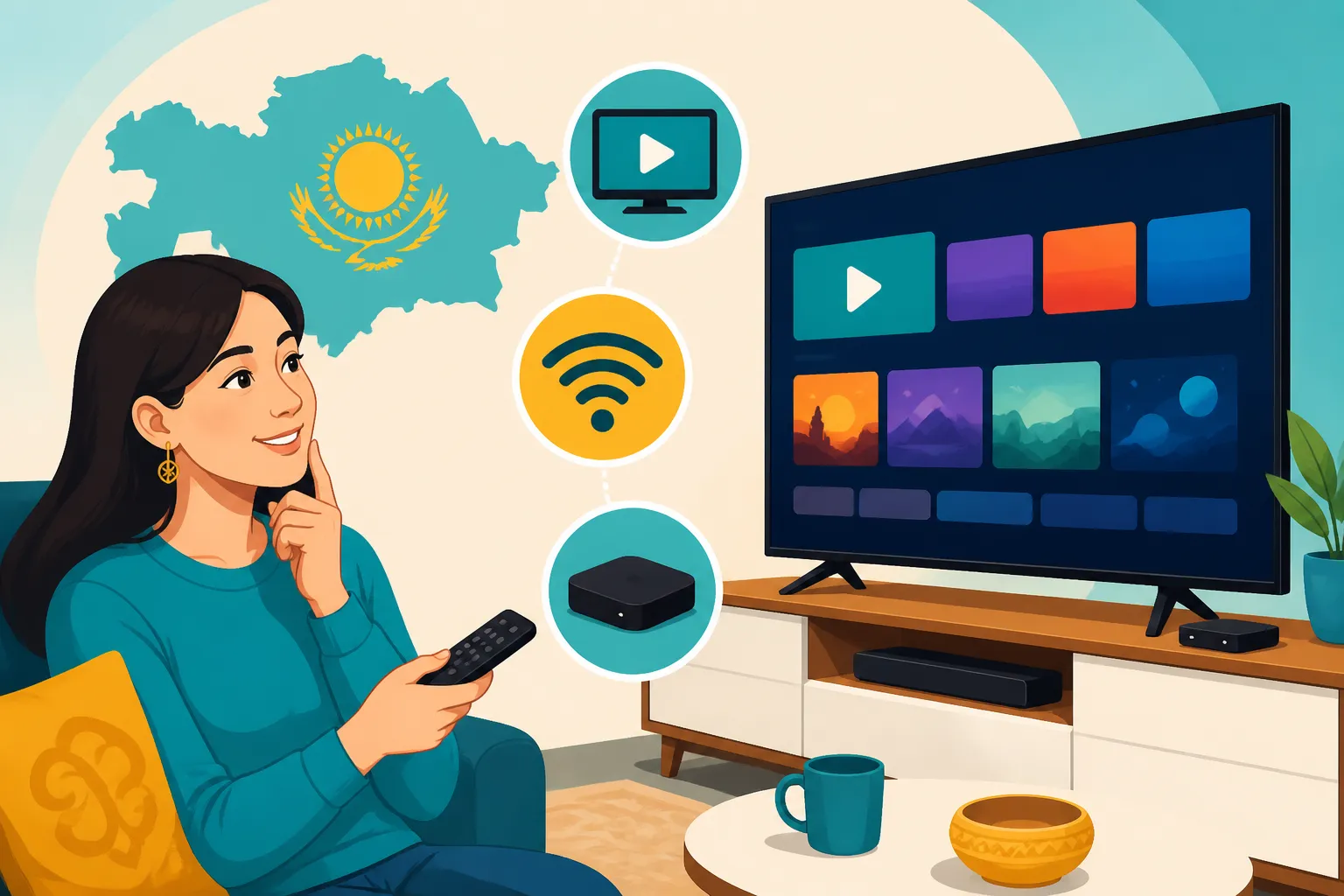
Modern smart TVs usually come with built-in apps for popular streaming services like Netflix and YouTube. If your TV isn't "smart," or if you prefer a more versatile solution, streaming sticks and boxes like Amazon Fire Stick, Google Chromecast, Apple TV, or Roku are readily available. You can find these devices in electronics stores in major Kazakhstani cities or online through local retailers. They simply plug into your TV’s HDMI port, connect to your Wi-Fi, and give you access to a vast array of apps. Getting these physical items is often one of the easier parts, alongside the general settling in covered in The Complete Guide to Moving to Kazakhstan: Your First 90 Days.
As mentioned earlier, VPNs (Virtual Private Networks) are indispensable for expats who want to access geo-restricted content from their home countries. Many reliable VPN services exist (e.g., ExpressVPN, NordVPN). You simply subscribe, download the app onto your phone, computer, or even directly onto some compatible routers, and select a server in the country whose content you wish to access. This cloaks your actual location, letting you bypass those frustrating regional blocks that are so common with international content licensing.
However, a word of caution: while VPNs are generally legal and widely used for privacy and security, some streaming services actively try to detect and block VPN usage. You might find that some VPN servers work better than others, and it can sometimes feel a bit like a cat-and-mouse game to find a connection that works consistently. Also, remember that running a VPN can slightly reduce your internet speed due to the encryption and routing, so ensure you have a decent baseline connection to begin with to avoid further buffering issues.
Dealing with Geo-Restrictions and Payment Challenges
Geo-restrictions are probably the most common and persistent frustration for expats trying to replicate their home entertainment setup. Beyond simply using a VPN, sometimes it's about the app itself. For example, some highly regional apps might not be available for download from the Kazakhstani app store on your smart TV, phone, or tablet. You might need to temporarily change your device's region settings or, more reliably, create an entirely separate app store account (e.g., an Apple ID or Google account) for your home country. This often requires a payment method tied to that specific country, which leads us to the next challenge.
Payment issues can also crop up. Even with a VPN making it appear you're in your home country, if a streaming service specifically requires a credit card with a billing address in that country, your Kazakhstani bank card might not work. In these cases, prepaid virtual cards or gift cards for that specific region can sometimes offer a workaround, though they can be a bit cumbersome to acquire consistently. Alternatively, if you're able to keep an active credit card from your home country, that usually makes international subscriptions much smoother. Our guide The Expat Guide to Opening a Bank Account in Kazakhstan might offer some relevant insights into card options.
It's also worth noting that while services like Netflix have a global presence, their content libraries vary wildly by region. Don't be surprised if that show you loved back home isn't available on Kazakhstani Netflix, even without a VPN. This is just part of the international content licensing maze we expats learn to navigate. Patience, a bit of troubleshooting, and a healthy dose of flexibility are key! Sometimes, embracing the local Netflix library or finding a new show is half the fun.
Beyond the Screen: Enhancing Your Home Entertainment Experience
Getting the basic streaming and TV setup operational is a victory in itself, but there's always more you can do to truly make your Kazakhstani home a comfortable entertainment hub.
Exploring Local Entertainment and Content
While we all crave a taste of home, don't overlook the rich tapestry of local entertainment available in Kazakhstan. Local cinemas often show Hollywood blockbusters in their original English audio with Russian or Kazakh subtitles, or dubbed in Russian. This can be a fun and affordable outing, and a great way to catch the latest films while getting a dose of local language exposure. You might also find local streaming platforms or online archives of Kazakhstani movies and TV shows, particularly on platforms like YouTube or Qazaqstan TV's online presence. Exploring these can deepen your understanding of the culture and provide unique entertainment you wouldn't find anywhere else.
Kazakhstan has a burgeoning music scene, and local artists are increasingly gaining regional and even international recognition. Platforms like YouTube and local music streaming services (some mobile providers offer their own, or you can find regional ones) are great for discovering new sounds. Even listening to local radio stations can be a surprisingly effective way to improve language skills and feel more connected to your immediate environment. Embrace the local offerings; you might just find your new favorite show or artist, or at least gain some fascinating cultural insights. It's all part of adapting, just like navigating The Expat Guide to Public Transport in Kazakhstan or understanding local customs.
Consider connecting with other expats in your community. Often, someone has already figured out the best local spots for electronics, the most reliable internet provider in your area, or the secret to getting a particular streaming service to work. Forums and social media groups for expats in Almaty or Astana are invaluable resources for these kinds of practical tips and tricks. They can also tell you where to buy a cheap HDMI cable or which electronics store has good English-speaking staff. It’s a wonderful community for sharing insights, whether about TV or even something like Driving in Kazakhstan: Licences, Registration and Rules for Expats.
Practical Tips for a Seamless Experience
First and foremost, invest in a good router and possibly a range extender or mesh system if you have a larger apartment or multiple users. A strong, stable Wi-Fi signal is the backbone of all modern home entertainment, and skimping on this will only lead to endless buffering headaches down the line. You can often buy these at large electronics stores like Technodom or Sulpak, which typically have a decent selection of brands.
Secondly, always have a backup plan for connectivity. For example, if your home internet goes down (which, let's be honest, can happen anywhere), having a robust mobile data plan can mean the difference between a relaxing evening and sheer frustration. Services like Airalo, offering e-SIMs for various countries, can be incredibly useful when you first arrive for immediate connectivity or for backup during outages, ensuring you stay connected and can troubleshoot if needed. This is especially true if you are relying on streaming services for your primary news source from back home.
Finally, remember that setting up a new home in a foreign country, even down to the seemingly simple act of watching TV, is a process. There will be quirks, unexpected challenges, and moments where you just want to throw your remote at the wall. Be patient, be resourceful, and don't be afraid to ask for help from locals or fellow expats. Over time, you’ll find your rhythm, and your Kazakhstani home entertainment setup will feel just as natural and comfortable as it did back home. When you first moved, perhaps with a moving company like Sirelo, you thought the hard part was over – but settling in truly means making a place your own, and that includes your digital creature comforts!
| Provider/Service | Type | Typical Speed/Content | Cost Range (KZT/month) | Notes for Expats |
|---|---|---|---|---|
| Kazakhtelecom (ID-Net) | ISP/Cable TV | Up to 500 Mbps fiber; local/Russian TV | 5,000 – 15,000 | Widest coverage, English support varies. Bundles available, good for core services. |
| Alma TV | Cable TV | Varies by package; local/Russian/some international channels | 3,000 – 8,000 | Popular in Almaty/Astana, often pre-installed in rentals. Good for local flavor. |
| Netflix | Streaming (Intl.) | Global library, localized content | 3,500 – 6,000 | Good English content, geo-restrictions apply to home library. VPN often needed for specific regional content. |
| Amazon Prime Video | Streaming (Intl.) | Varies by region, smaller library than Netflix | ~2,500 | Less localization, might require a US/UK-linked payment method for full access. |
| VPN Services (e.g., NordVPN, ExpressVPN) | Tool | Enables geo-unblocking, adds security | 2,000 – 5,000 (USD subscription, approx.) | Essential for accessing home country-specific content. Speeds can vary by server. |
Disclaimer
The information provided in this guide is intended for general informational purposes only and does not constitute professional advice. While we strive to keep the information up-to-date and accurate, services, regulations, and prices in Kazakhstan can change rapidly. Expats should always verify current details with official sources, service providers, or legal professionals before making any decisions. The author and publisher are not responsible for any actions taken based on the information contained herein.