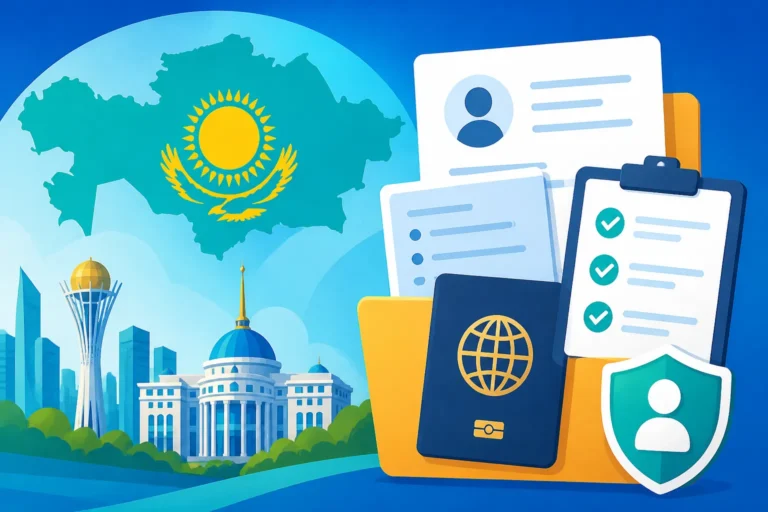
How Do I Renew My Temporary Residence Permit in Kazakhstan?
Oh, the joy of bureaucracy in a new country! Just when you think you’ve got one hurdle cleared, another appears on the horizon – the dreaded residence permit expiration. Believe me, I've been there, staring at that little plastic card, watching the dates tick down, feeling that familiar knot of anxiety. Renewing your Temporary Residence Permit (TRP) in Kazakhstan can feel like navigating a labyrinth, but it’s entirely doable with the right information and a hefty dose of patience. This guide is here to walk you through the process, sharing practical tips and setting realistic expectations, so you can keep calling this beautiful country home without unnecessary stress.
Understanding Your Temporary Residence Permit TRP in Kazakhstan
Let's face it, when you first arrived, getting that initial Temporary Residence Permit (TRP), or ruqsatnama as it's known in Kazakh, probably felt like winning a small lottery. It’s your official ticket to living here for an extended period, allowing you to work, study, or live with your family. Unlike a short-term visa, which is purely for entry and a brief stay, the TRP is what legitimizes your long-term presence and grants you certain rights and responsibilities.
Kazakhstan offers various types of TRPs, each tied to a specific purpose. You might have a TRP based on employment, known as a work permit, which is often tied to your employer. Others might have a student TRP, allowing them to pursue their education at one of Kazakhstan's universities. There are also TRPs for family reunification, for those joining a spouse or parents who are already residents, and permits for business purposes. Understanding which type of TRP you hold is crucial because the documentation and eligibility for renewal will largely depend on its category.
The clock starts ticking the moment your TRP is issued, and it’s absolutely vital to be aware of its expiration date. Letting your TRP expire without having a renewal or a new visa in place is a serious matter. We’re not talking about a slap on the wrist here; overstaying can lead to hefty fines, detention, and even deportation. Worse still, it can result in a ban from re-entering Kazakhstan for a significant period, which nobody wants, especially if you’ve built a life here. Planning ahead isn't just a good idea; it's a legal necessity. This entire process can feel overwhelming, but remember, many expats have gone through it successfully, and you can too. It’s all about being prepared and knowing what to expect.
The Renewal Process: A Step-by-Step Guide
Alright, let's get down to brass tacks. Renewing your TRP isn't just about handing over a form; it's a structured process that demands attention to detail and timing. Missing a step or a deadline can derail your plans, so let’s walk through it together.
When and Where to Apply
This is perhaps the most critical piece of advice: do not procrastinate. You should initiate your TRP renewal process at least 30 days, but ideally 45-60 days, before your current permit expires. The migration authorities need time to process your application, and you definitely don't want to be caught in limbo with an expired permit while waiting for a decision. Remember, unforeseen delays happen, documents can go missing, or you might need additional papers. Giving yourself ample time is your best defense against stress.
When it comes to where to apply, the primary point of contact for most residence permit matters in Kazakhstan is the local Migration Service (often referred to colloquially as the "migration police") within your district's Department of Internal Affairs, or OVD. You'll typically find their offices at the Tsentr Obsluzhivaniya Naseleniya (ЦОН), or Public Service Center (PSC). These ЦОНs are your one-stop shop for various government services, designed (in theory) to make life easier. However, be prepared for queues and potential language barriers – a local friend or a professional translator can be invaluable here.
While some initial applications or checks can be done through the eGov portal (egov.kz), the actual submission for a TRP renewal often requires an in-person visit. The specific procedures can vary slightly by region (Almaty vs. Astana, for example), so it’s always wise to check the most up-to-date requirements on the eGov website or by calling your local Migration Service directly. Don't be shy about asking questions – it's better to clarify now than face rejection later. If you’re unsure how to find or approach these services, you might want to review resources like the guide on The Complete Visa and Immigration Guide for Relocating to Kazakhstan (2027).
Gathering Your Documents
Now, for the part that often feels like a scavenger hunt: assembling your documents. This list can be extensive, and precision is key. Any missing paper or incorrect translation can send you back to square one. Here’s a general rundown of what you’ll likely need, but always confirm with the Migration Service for your specific TRP type:
- Your Passport: Original and a photocopy of all relevant pages, including your photo, personal data, and any previous Kazakhstani visas or stamps. Make sure your passport has at least six months of validity beyond your intended new TRP period.
- Existing Temporary Residence Permit (TRP): The original permit you are looking to renew, along with a photocopy.
- Individual Identification Number (IIN): Your Kazakhstani IIN is essential for almost all official transactions. If you don't have one, or can't locate it, that needs to be your first priority. Understanding the IIN and Why You Need One in Kazakhstan is critical for navigating local bureaucracy.
- Application Form: This will be provided by the Migration Service or available for download on eGov. Fill it out accurately and completely.
- Photographs: Usually two or four recent passport-sized photos (3.5×4.5 cm) with a white background. Ensure they meet current biometric standards – no selfies from your last hike!
- Proof of Purpose for Renewal: This is where your TRP category comes into play:
- For Work-Based TRPs: A letter from your employer confirming your continued employment, along with a copy of your current work permit (if separate from the TRP), and your employment contract. Your employer usually takes the lead in this process, as they are your sponsor. For more details on this, check out How to Apply for a Work Visa and Work Permit in Kazakhstan.
- For Study-Based TRPs: A confirmation letter from your educational institution stating your continued enrollment, academic progress, and the expected completion date of your studies. Resources like How to Apply for a Student Visa and Residence Permit in Kazakhstan can provide more context.
- For Family Reunification TRPs: Your marriage certificate (if applicable), birth certificates of children, and copies of your spouse's/parent's Kazakhstani passport or residence permit. You'll also need their written consent or application for your sponsorship. Detailed information can be found in How to Sponsor Your Spouse and Children for Residence in Kazakhstan.
- For Business/Investment TRPs: Relevant business registration documents, evidence of investment, or a letter from your company's director.
- Proof of Sufficient Funds: A bank statement (often from a Kazakhstani bank) showing you have enough money to support yourself for the duration of the renewed permit, or a sponsorship letter from your employer/family member.
- Medical Certificate: A certificate of health, often specifically confirming you do not have certain infectious diseases (like HIV, tuberculosis, etc.). You'll usually need to obtain this from a local polyclinic or approved medical center.
- Health Insurance Policy: Proof of valid health insurance for the period of your renewed TRP. While the Compulsory Social Health Insurance (OSMS) is mandatory for residents, many expats opt for additional private insurance. Companies like Cigna Global offer comprehensive international health insurance plans that can provide broader coverage and peace of mind during your stay, complementing local requirements. You can learn more about this in Health Insurance in Kazakhstan: OSMS, Private and International Options Explained.
- Receipt for State Fee Payment: There will be a state fee for the renewal, which you'll need to pay at a bank or through eGov, and present the receipt.
- Rental Agreement / Proof of Address Registration: A copy of your rental agreement and official address registration (propiska) with the Migration Service. You might also want to consult The Expat Guide to Setting Up Utilities (Electricity, Water, Heating) in Kazakhstan as proof of residency is often tied to utility connections.
Translations and Notarization: Any document not in Kazakh or Russian will need to be officially translated and notarized by a certified translator in Kazakhstan. Do not skip this step – unofficial translations will be rejected. This is a common requirement in Kazakhstan immigration processes, as highlighted in Understanding Document and Translation Requirements for Kazakhstan Immigration.
Here’s a quick summary table of common documents by TRP type:
| Document Type | Work TRP | Study TRP | Family Reunification TRP |
|---|---|---|---|
| Passport & Copy | Required | Required | Required |
| Existing TRP & Copy | Required | Required | Required |
| IIN | Required | Required | Required |
| Application Form | Required | Required | Required |
| Passport Photos | Required | Required | Required |
| Employer Letter / Contract | Required | Optional | Optional |
| University Enrollment Letter | Optional | Required | Optional |
| Marriage/Birth Certificates | Optional | Optional | Required |
| Proof of Funds / Sponsorship | Required | Required | Required |
| Medical Certificate | Required | Required | Required |
| Health Insurance Policy | Required | Required | Required |
| State Fee Payment Receipt | Required | Required | Required |
| Rental Agreement / Propiska | Required | Required | Required |
Submitting Your Application and Awaiting a Decision
Once you have your meticulously organized folder of documents, it’s time for submission. This typically involves an in-person visit to your local ЦОН, where a specialist will review your paperwork. They might ask clarifying questions, so be ready to explain your situation clearly. While direct online submission for the TRP renewal itself is less common than for some other services, the eGov portal is invaluable for paying state fees, checking status updates, and finding official information.
After submission, you enter the waiting game. Processing times can vary widely, from a couple of weeks to over a month. The stated processing time is generally around 15 working days, but always factor in potential delays, especially during peak periods or if any documents require further verification. It’s a good idea to keep the receipt or tracking number provided by the Migration Service.
During this period, avoid traveling outside Kazakhstan if your existing TRP is about to expire, unless you have explicit confirmation that your travel will not jeopardize your application. Leaving the country could complicate your renewal and potentially lead to issues upon re-entry. Once a decision is made, you’ll be notified (sometimes by SMS, sometimes by a call, or you might have to check online). If approved, you'll return to the Migration Service office to collect your shiny new TRP. If rejected, they should provide a reason, allowing you to rectify any issues and reapply, or to understand your options, such as departing the country if no other legal basis for stay exists. This is why giving yourself plenty of lead time is crucial. If you're looking into how to apply from inside the country, the guide How to Apply for a Residence Permit from Inside Kazakhstan might offer useful insights.
Common Challenges and How to Overcome Them
Living in Kazakhstan as an expat means learning to navigate a unique administrative landscape. It’s part of the adventure, but it can certainly test your patience. Renewing your TRP is no exception.
Bureaucratic Hurdles and Language Barriers
Let’s be honest, Kazakhstani bureaucracy can feel like a maze, even for locals. Forms might change without much public notice, requirements can be interpreted differently by various officials, and processes might not always follow a perfectly linear path. The key here is patience and persistence. Don’t get discouraged if you’re asked for an additional document or told to come back later. Just breathe, smile, and inquire politely about what exactly is needed.
The language barrier is another significant hurdle. While many younger officials and those in international services might speak English, it’s not guaranteed, especially in smaller offices or with older staff. This is where a local friend, colleague, or a professional translator becomes your secret weapon. Having someone who can fluently communicate in Kazakh or Russian can save you hours of confusion and frustration, ensuring your questions are understood and your documents are presented correctly. It also helps to prevent misinterpretations on either side. Even if you speak some Russian, officialese can be tricky, so having an expert ear is beneficial.
Navigating the eGov portal can also be a challenge if you’re not familiar with the Cyrillic alphabet or the specific terminology. Many expats initially struggle with these online services. Take your time, use online translation tools, and again, don't hesitate to ask a trusted local for help. They often know the shortcuts and common pitfalls. For broader information on the entire system, The Complete Guide to Kazakhstan Visas and Immigration for Expats (2027) offers a good overview of what to expect from the immigration services.
Changing Circumstances During Renewal
Life happens, and sometimes your circumstances change between when you got your initial TRP and when you need to renew it. What if you switch jobs, get married to a Kazakhstani citizen, or decide to pursue a different course of study? These changes can significantly impact your TRP renewal.
If your basis for residency changes – for example, you moved from a work-based TRP to a family reunification TRP because you married a local – you might not be simply "renewing" your old permit. Instead, you might need to apply for a new type of residence permit. This often means a slightly different set of documents and potentially a longer processing time. It’s crucial to inform the Migration Service of any significant changes in your status as soon as possible, rather than waiting until the last minute. Being transparent and proactive can help smooth the transition.
For example, if you change employers, your new employer will typically need to re-initiate the work permit process for you, and your TRP will then be linked to their sponsorship. If you marry a local, your pathway to residency might shift from employment to family-based. Each scenario has its own specific requirements, so it's best to consult with the Migration Service directly or seek legal advice from an immigration specialist to understand the exact steps. Remember, staying compliant is key to a hassle-free life here.
Avoiding Pitfalls and Legal Consequences
The biggest pitfall, as I mentioned earlier, is overstaying your permit. This is absolutely non-negotiable. If you find yourself in a situation where your TRP is expiring and you haven't received a decision, or if your application is rejected, you must take immediate action. This might mean applying for an exit visa (if allowed and needed), or preparing to leave the country before your current permit officially expires. Penalties for overstaying are severe, ranging from hefty fines that can run into hundreds of thousands of Tenge, to forced deportation, and even a multi-year ban from re-entering Kazakhstan. It's a risk simply not worth taking.
Another common pitfall is incomplete or incorrect documentation. Double-check every form, every photocopy, and every translation. It's a tedious process, but it’s far less tedious than having your application rejected and starting over, especially with a deadline looming. Always keep copies of everything you submit, and get receipts for all payments. This paper trail can be invaluable if there's any dispute or misunderstanding later on.
Finally, relying solely on hearsay or outdated information can be dangerous. Immigration laws and procedures can change. Always verify information with official sources – the eGov portal, the Migration Service directly, or a reputable immigration lawyer. What was true last year might not be true today. Staying informed and compliant will ensure your time in Kazakhstan remains enjoyable and worry-free. And when it eventually comes time to leave, managing your exit correctly is just as important; services like Sirelo can help with the logistical complexities of an international move, making sure you don't leave any loose ends with your official status.
Disclaimer
Please remember that this guide provides general information based on common expat experiences and publicly available information. Immigration laws and procedures in Kazakhstan can change, and individual circumstances vary greatly. It is always recommended to consult with the official Migration Service of Kazakhstan or a qualified immigration lawyer for the most accurate and up-to-date advice regarding your specific situation.