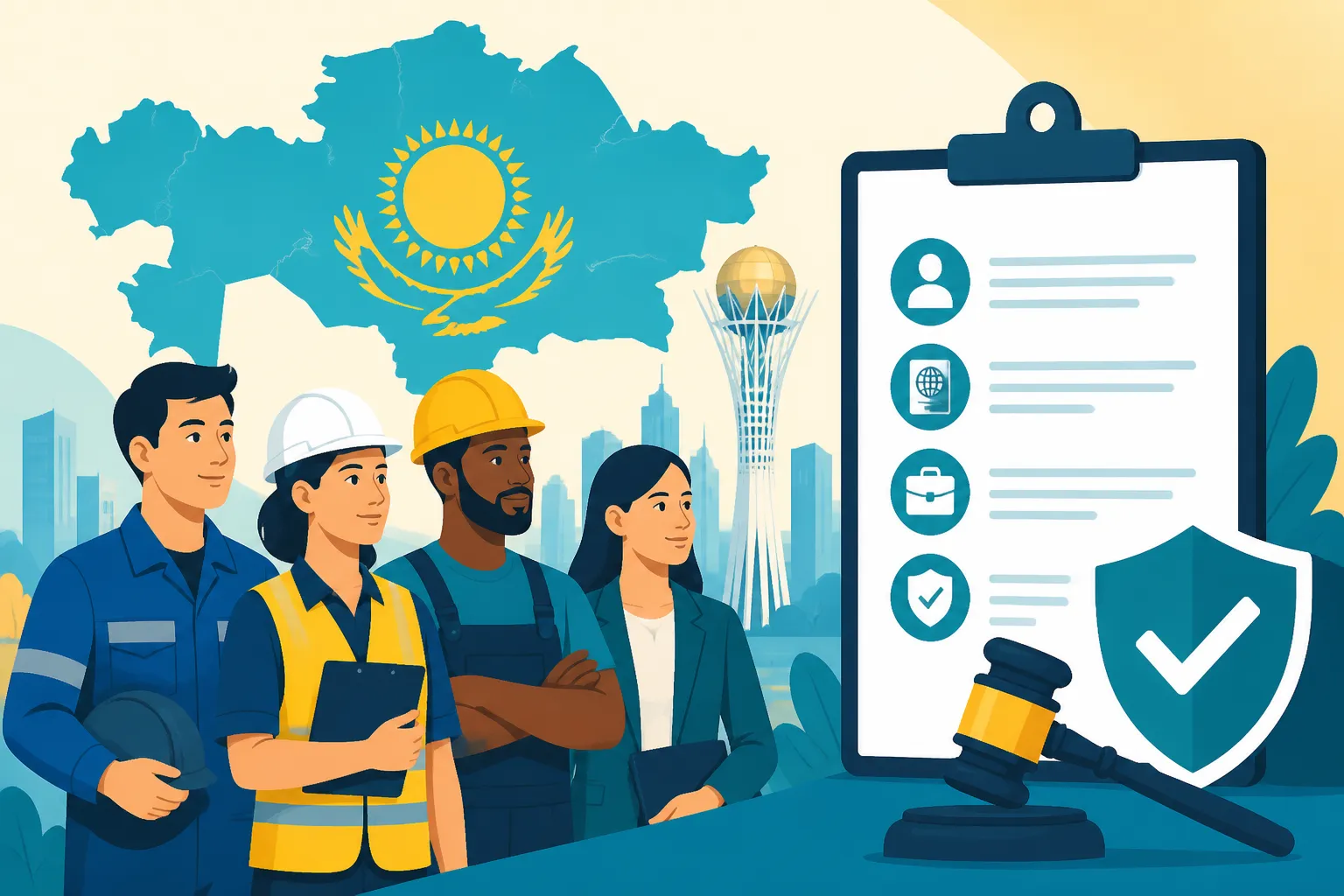
Understanding the Rules for Foreign Workers in Kazakhstan
Moving to Kazakhstan for work can feel like trying to solve a Rubik's Cube blindfolded. The bureaucratic hurdles, the constantly evolving rules, and the sheer volume of paperwork can be incredibly overwhelming for even the most seasoned expat. This guide is here to untangle the complexities of working in Kazakhstan as a foreign national, shedding light on the essential regulations, your rights, and how to navigate the system with a bit more confidence.
The Gateway to Working in Kazakhstan: Visas and Work Permits
One of the biggest initial sources of confusion for newcomers is understanding the distinct yet intertwined concepts of a work permit and a work visa. Many mistakenly think they're the same, but trust me, mixing them up can lead to significant delays and headaches. Getting these two pieces of the puzzle right is your absolute first step to legally working and residing in Kazakhstan.
Differentiating Between a Work Permit and a Work Visa
Let's clear this up right away: a work permit is essentially a document issued by the Ministry of Labour and Social Protection that grants a foreign individual the right to engage in specific employment activities in Kazakhstan. Think of it as your official authorization to work. It specifies your employer, your position, and its validity period. Without this permit, no employer can legally hire you, and you certainly can't perform any paid labour.
On the other hand, a work visa (typically the C3 category for employment) is a document issued by the Ministry of Foreign Affairs that allows you to enter and reside in Kazakhstan for the purpose of work. It’s what gets you through immigration and allows you to stay in the country for an extended period, linked to your employment. You usually cannot obtain a work visa without first having a work permit approved, or at least a confirmed quota or invitation from a sponsoring employer. It's a chicken-and-egg situation where the work permit usually comes first in some form. This process can be quite intricate, which is why it’s vital to understand How to Apply for a Work Visa and Work Permit in Kazakhstan.
The Employer Sponsorship Mandate: Your Golden Ticket
Here's the critical part: in most scenarios, especially for standard employment, your prospective employer in Kazakhstan is the one responsible for sponsoring your work permit. This isn't just a favour; it's a legal obligation for them. They initiate the process, apply for the necessary quotas (limits on foreign workers for specific positions), and handle a significant portion of the documentation with the local migration authorities. Without a sponsoring employer, securing a general work permit is almost impossible for most foreign nationals.
This employer-driven process means that finding a job often involves finding a company willing and able to go through this administrative journey. They need to prove that they couldn't find a suitable Kazakhstani citizen for the role, or that your skills are unique and essential. This is precisely why it's so important to understand How a Work Permit and Employer Sponsorship Work in Kazakhstan before you even start looking for jobs. If you're considering self-employment or freelancing, the rules become different and involve registering as an Individual Entrepreneur (IP), which has its own set of requirements.
Essential Documents for Your Work Permit Application
Ah, the paperwork! Get ready for it, because Kazakhstan loves its documents. While the exact list can vary slightly depending on your nationality, the employer's industry, and the specific role, there's a core set of documents you’ll almost certainly need for your work permit application. Be prepared for meticulous attention to detail – a single missing stamp or an expired translation can send you back to square one.
Typically, you'll need:
- Your valid passport: With sufficient validity remaining (usually at least six months beyond your intended stay).
- Education diplomas and professional qualifications: These often need to be legalized or apostilled in your home country and translated into Kazakh or Russian by a certified translator in Kazakhstan. Don't underestimate this step; the recognition of foreign qualifications is a big deal here. If you are wondering about the process, you can learn more about How to Get Your Foreign Qualification Recognised in Kazakhstan.
- Medical certificates: Including HIV/AIDS test results and other health clearances.
- Police clearance certificate: From your home country, showing no criminal record. Again, often requires apostille/legalization.
- Photos: Passport-sized, specific dimensions often required.
- A signed employment contract or draft contract: Provided by your employer.
- Employer’s documents: Copies of their registration, licenses, and other corporate papers.
Always double-check the most current requirements with your employer or a reputable legal consultant, as regulations can change. It's not uncommon for expats to spend weeks, if not months, gathering and processing these documents, often feeling like they're in a never-ending loop of notarizations and translations.
Understanding Your Labour Rights and Protections
Once you've successfully navigated the visa and work permit labyrinth, you might breathe a sigh of relief. But the journey isn't over. It's crucial to understand your rights and protections under Kazakhstani labour law to ensure a smooth and fair working experience. Trust me, knowing your entitlements can save you from a lot of potential exploitation or misunderstanding down the line.
Decoding Your Employment Contract: What to Look For
Your employment contract is the bedrock of your working relationship in Kazakhstan. It’s a legally binding document that outlines your rights and obligations, as well as those of your employer. Don't just skim it; read it thoroughly, ideally with someone who understands Kazakhstani labour law and can translate or explain any nuances. Many expats make the mistake of assuming contracts here are identical to those in their home country, but there can be significant differences.
Key elements to scrutinize include:
- Position and Job Description: Is it clear? Does it match what you were promised?
- Salary and Benefits: Gross vs. Net, payment schedule, allowances (housing, transport, medical). This is also where you'll find details about mandatory social contributions and health insurance.
- Term of Employment: Is it a fixed-term contract or indefinite? Many expat contracts are fixed-term, often tied to the duration of your work permit.
- Working Hours and Leave: This section should detail your standard workweek, overtime provisions, and annual leave entitlement.
- Probationary Period: A standard feature in Kazakhstani contracts, typically up to three months.
- Termination Clauses: What are the conditions for termination, notice periods, and severance pay?
- Confidentiality and Non-Compete Clauses: Understand any restrictions that might apply.
Remember, a good employer will have a clear, compliant contract. If anything feels vague or overly restrictive, it’s worth seeking clarification. The broader framework governing these details is laid out in Understanding Kazakhstani Labour Law and Worker Rights (2027).
Working Hours, Overtime, and Leave Entitlements
The standard workweek in Kazakhstan is 40 hours, typically spread over five days (Monday to Friday, 8 hours per day). However, specific industries or roles might have different schedules, such as shift work, which must be clearly defined in your contract. Overtime is generally regulated, and employers are usually required to compensate it at a higher rate, often 1.5 times your standard hourly wage, or by providing compensatory time off. However, getting your employer to actually pay overtime is another thing in some less scrupulous companies, so be vigilant and track your hours.
When it comes to leave, most employees are entitled to a minimum of 24 calendar days of annual paid leave. This can increase based on your contract or collective agreements. In addition to annual leave, Kazakhstan has a number of public holidays (often called "state holidays" or "national holidays") which are typically paid days off. These are significant, especially during national celebrations like Nauryz or Republic Day. Make sure you know Understanding Working Hours and the Workweek in Kazakhstan so you can plan your time off and understand your rights fully.
Navigating Probationary Periods and Termination Procedures
Almost all new hires in Kazakhstan, foreign or local, will face a probationary period. This is a time for both you and your employer to assess suitability. Legally, the probationary period cannot exceed three months, though for management roles or highly specialized positions, it might be extended slightly in specific, justified cases. During this period, the rules for termination are often a bit more flexible for the employer, but they still need to provide notice (usually three days) and state the reasons for termination.
Beyond the probation, termination of an employment contract in Kazakhstan is highly regulated. Employers cannot simply fire an employee without cause. There are specific grounds for termination outlined in the Labour Code, such as liquidation of the company, reduction of staff, disciplinary violations, or inability to perform the job due to insufficient qualifications. For most terminations, a notice period is required (often one month), and in some cases, severance pay might be applicable. Conversely, if you decide to resign, you are also generally required to provide a notice period, typically one month, as detailed in Understanding Notice Periods and Termination Under Kazakhstani Labour Law. It's essential to understand these provisions to protect yourself and ensure a fair process, should your employment situation change.
Essential Registrations and Financial Responsibilities
Even with a work permit and visa in hand, there's more to do than just show up at the office. Kazakhstan has a robust system of administrative and financial registrations that all residents, including foreign workers, must navigate. These aren't optional; they're vital for daily life, banking, and, of course, staying on the right side of the law.
Your Individual Identification Number IIN and Banking
The Individual Identification Number, or IIN (Индивидуальный идентификационный номер – ИИН), is arguably the most crucial piece of personal identification you'll need in Kazakhstan, second only to your passport. It's a unique 12-digit number that serves as your personal ID for virtually everything: opening a bank account, registering for taxes, getting a local SIM card, accessing medical services, and even buying property. Without an IIN, you’ll find yourself hitting brick walls at every turn.
Applying for an IIN is usually one of the first things you do after arriving and registering your temporary address. It can be done at a Public Service Center (ЦОН – TSON) or, if you're lucky and your company is super organized, sometimes through your employer. The process itself isn’t overly complex but can involve waiting times and ensuring all your documents (passport, visa, migration card) are in order. You can dive deeper into How to Get an IIN (Individual Identification Number) in Kazakhstan. Once you have your IIN, you can finally proceed to open a bank account, which is essential for receiving your salary and managing your finances. Local banks like Kaspi Bank and Halyk Bank are popular choices, offering convenient online banking and mobile apps. To ease your banking journey, consider reading How to Choose the Best Bank for Expats in Kazakhstan.
Navigating the Kazakhstani Tax System as a Foreign Worker
Ah, taxes. The one certainty in life, even when you're an expat! Kazakhstan boasts a relatively simple tax system, particularly for individuals, with a flat 10% individual income tax (IIT) rate. This applies to both residents and non-residents earning income within Kazakhstan. Generally, if you are employed by a Kazakhstani company, your employer will act as a tax agent, meaning they will withhold the IIT directly from your salary and remit it to the state. This simplifies things considerably for most foreign workers.
However, understanding your tax residency status is key. If you spend more than 183 calendar days in any consecutive 12-month period in Kazakhstan, you are generally considered a tax resident. This status can have implications for how your worldwide income is treated, although Kazakhstan has double taxation agreements with many countries to prevent you from being taxed twice on the same income. It’s always wise to consult with a tax specialist, especially if you have income from sources outside Kazakhstan. Services like Taxes for Expats can be incredibly helpful in understanding your specific situation and ensuring compliance, preventing any nasty surprises down the road. For a deeper understanding, explore Understanding Income Tax and the Flat 10% Rate in Kazakhstan (2026).
Compulsory Social and Pension Contributions
Beyond income tax, foreign workers in Kazakhstan are typically subject to mandatory social and pension contributions, though there are specific nuances depending on your citizenship and the duration of your stay.
- Mandatory Pension Contributions (MPC): These are usually 10% of your monthly income, withheld by your employer and paid into your individual pension account. The goal is to provide a retirement benefit. However, for foreign citizens, the ability to claim these funds upon leaving Kazakhstan or at retirement can vary based on international agreements and your country of origin. This is a point of frequent confusion and frustration for expats.
- Mandatory Social Health Insurance (OSMS): This is a compulsory social health insurance scheme. Contributions are also withheld by your employer from your salary (typically 2%, capped at a certain amount) and matched by employer contributions. This grants you access to a certain level of public healthcare services. Failing to contribute means you cannot access the OSMS system, potentially leaving you reliant solely on private healthcare, which can be expensive. More detailed information can be found in Understanding Mandatory Health Insurance Contributions in Kazakhstan.
- Social Contributions (SC): These are employer-paid contributions towards social benefits like temporary disability, maternity leave, and unemployment. While technically paid by your employer, they are part of the overall cost of your employment.
It’s crucial to understand what you're contributing to and what benefits you are entitled to. While the system aims to be comprehensive, the practicalities for foreigners, especially regarding pension fund withdrawals, require careful investigation.
Integrating into the Kazakhstani Professional Landscape
Beyond the legalities and finances, truly thriving as a foreign worker in Kazakhstan means understanding and adapting to the local professional environment. This isn't just about language; it's about cultural nuances, communication styles, and how business relationships are built.
Workplace Culture and Communication Styles
Kazakhstani workplace culture often blends Soviet-era formality with a rapidly modernizing, increasingly international outlook. Hierarchy is generally respected, and decisions often come from the top. Direct communication, while appreciated for clarity, can sometimes be softened with polite indirectness, especially when providing feedback or making requests to superiors. Don't be surprised if meetings start with extended greetings and pleasantries before diving into business – building rapport is highly valued.
Relationships, both personal and professional, play a significant role. Trust is built over time, often outside of formal work settings, and can be incredibly valuable in navigating projects and overcoming obstacles. Punctuality is expected, but flexibility can also be a characteristic, especially regarding deadlines when unexpected issues arise. Understanding these subtle cues can prevent misunderstandings and help you integrate more smoothly into your team. Remember, what might be considered "professional" in your home country might be interpreted differently here, so observe and adapt.
The Importance of Language Skills and Learning Resources
While many international companies operate in English, especially in cities like Almaty and Astana, learning at least some basic Russian or Kazakh will significantly enhance your experience, both professionally and personally. Russian is widely spoken in business and daily life, particularly in urban centres, while Kazakh is the state language and increasingly used in official contexts and among younger generations. Being able to communicate, even minimally, in the local languages shows respect and opens doors.
It also helps you connect with colleagues on a deeper level, understand nuances in discussions, and navigate daily tasks outside of work with much less stress. There are numerous resources available for language learning. Online platforms like iTalki offer flexible options for private tutoring in both Russian and Kazakh, allowing you to learn at your own pace from experienced native speakers. Many language schools also operate in major cities, offering in-person classes tailored for expats. Even a few common phrases can go a long way in breaking down barriers and fostering goodwill.
Building Professional Networks and Career Development
Building a professional network in Kazakhstan is not just about finding your next job; it's about gaining insights, finding support, and understanding the local market. Attend industry events, join expat business associations (like the American Chamber of Commerce or various European business councils), and leverage platforms like LinkedIn to connect with professionals in your field. Informal gatherings with colleagues after work can also be invaluable for networking and building relationships.
Career development opportunities exist, but they might look different than what you’re used to. Many expats come for specific roles, bringing specialized skills, and find themselves training local staff. This can be an incredibly rewarding experience, offering a chance to develop leadership and mentorship skills. For those looking for long-term career growth within Kazakhstan, proving your value, adapting to the local context, and being open to new challenges are key. Don’t be afraid to take initiative and propose new ideas, but always remember to present them in a way that aligns with the local communication style. If you are still looking for opportunities, consider checking out The Expat Guide to Finding a Job in Kazakhstan (2027).
Common Challenges and Practical Advice for Foreign Workers
Let’s be real for a moment. No matter how much you prepare, there will be bumps in the road. Kazakhstan, for all its charm and opportunities, can still present its unique set of challenges for foreign workers. Knowing what to expect and how to tackle these issues proactively can make all the difference.
Overcoming Bureaucratic Hurdles and Administrative Delays
This is probably the number one complaint from almost every expat in Kazakhstan, and it's completely valid. The bureaucratic system, while steadily improving with initiatives like eGov (the electronic government portal), can still be a maze of paperwork, multi-stage approvals, and seemingly inexplicable delays. What should be a straightforward process can sometimes become a multi-week saga involving multiple government offices.
Patience is not just a virtue here; it's a survival skill. Always factor in extra time for any administrative task, whether it's renewing your work permit, getting a document translated and notarized, or simply registering your address. Keep multiple copies of everything – original documents, translations, receipts, and even screenshots of online applications. When dealing with government offices, always be polite, clear, and persistent. If you're working for a larger company, lean on their HR or legal department; they usually have dedicated staff or external consultants who specialize in navigating these exact hurdles. Don’t be afraid to ask your employer for assistance with these administrative burdens, as it's often part of their commitment to you as a sponsored worker.
Seeking Support and Legal Assistance When Needed
While hopefully you won't need it, knowing where to turn for support and legal assistance is vital. If you encounter issues with your employer regarding your contract, salary, working conditions, or potential unfair termination, don't hesitate to seek advice. Your first point of contact should be your company's HR department, but if that's not yielding results or if you feel uncomfortable, external options are available.
There are law firms in major cities like Almaty and Astana that specialize in labour law and have experience assisting foreign nationals. Many offer initial consultations that can help you understand your rights and options. Expat communities and professional networks can also be a valuable resource for recommendations and shared experiences. Sometimes, simply knowing your rights as a foreign worker, as detailed in Understanding Kazakhstani Labour Law and Worker Rights (2027), can empower you to address issues directly and effectively.
Staying Updated on Evolving Regulations and Requirements
Kazakhstan is a dynamic country, and its laws and regulations, particularly those concerning foreign nationals, can and do change. What was true last year might be different this year. New decrees might be issued, or existing laws might be reinterpreted. Staying informed is crucial to ensure you remain compliant and avoid any unexpected issues with your visa, work permit, or residency status.
Your employer’s HR or legal department should be your primary source of up-to-date information, as they are legally obligated to ensure your compliance. However, it's also a good idea to keep an eye on official government websites (often available in English, Russian, and Kazakh) and reputable expat forums or news sources. Subscribing to newsletters from legal firms specializing in immigration can also keep you informed of significant changes. Regular check-ins with your HR about your permit and visa expiry dates are not just good practice but essential. Don't leave it to the last minute!
Navigating the rules for foreign workers in Kazakhstan might seem daunting at first, but with careful preparation, a good understanding of your rights, and a healthy dose of patience, you can build a successful and rewarding career here. It's a journey, not a sprint, and every step you take to inform yourself makes it smoother.
Key Documents for Foreign Workers in Kazakhstan
| Document Category | Specific Documents | Purpose | Who Obtains | Notes |
|---|---|---|---|---|
| Identification & Entry | Valid Passport | Entry, identification, basis for all other documents | Individual | Must have sufficient validity |
| Work Visa (C3) | Legal entry and stay for employment purposes | Individual (with employer's invitation) | Usually obtained after work permit approval | |
| Migration Card/Registration | Initial registration with migration service upon arrival | Individual | Issued at border control, needs to be kept safe | |
| Work Authorization | Work Permit | Legal right to perform specific work for specific employer | Employer (on behalf of individual) | Essential for legal employment |
| Labour Contract | Defines terms, conditions, rights, and obligations | Individual & Employer | Review thoroughly; ensure it complies with local law | |
| Personal Identification | Individual Identification Number (IIN) | Universal ID for all state services, banking, tax | Individual | Essential for almost all administrative tasks |
| Qualifications & Health | Education Diplomas & Certificates | Proof of qualifications for the role | Individual | Often requires apostille/legalization and certified translation |
| Police Clearance Certificate (from home country) | Proof of no criminal record | Individual | Usually requires apostille/legalization | |
| Medical Certificates (HIV/AIDS, general health check) | Health clearance for work permit application | Individual | Specific tests usually conducted in Kazakhstan | |
| Financial & Social | Bank Account Details | For salary receipt and financial transactions | Individual (after IIN obtained) | Necessary for daily finances and salary payment |
| OSMS Health Insurance Policy | Access to mandatory health services | Employer (administers contributions) | Your right to public healthcare is tied to this | |
| Pension Account Details | For mandatory pension contributions | Employer (administers contributions) | Understand withdrawal rules for foreigners |
Disclaimer
The information provided in this guide is intended for general informational purposes only and does not constitute legal, financial, or immigration advice. While we strive to keep the information up-to-date and accurate, laws and regulations in Kazakhstan can change frequently. You should always consult with a qualified legal professional, immigration expert, or tax advisor for advice tailored to your specific situation before making any decisions related to your employment or residency in Kazakhstan.