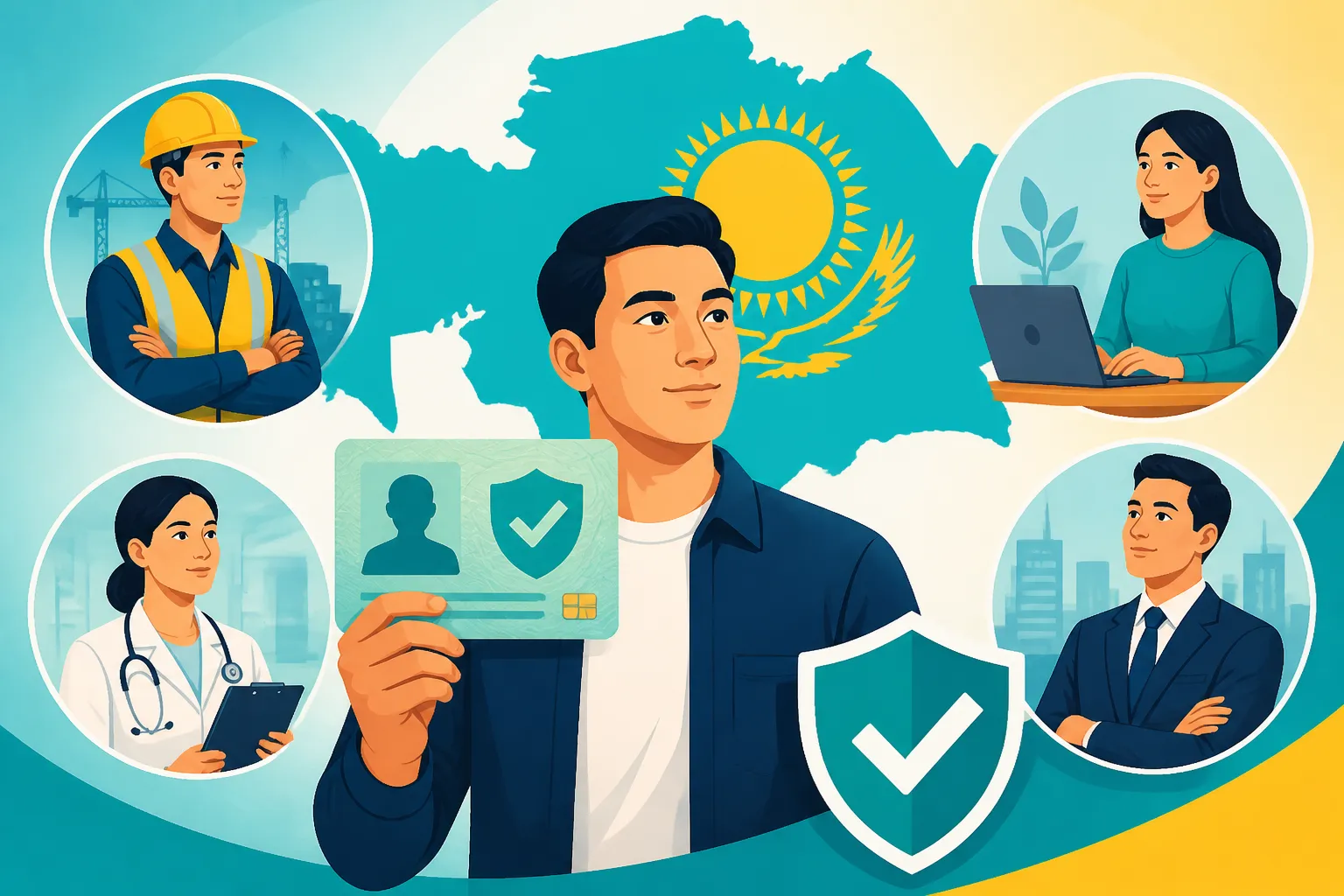
Understanding the Work Rights of Different Residence Permits in Kazakhstan
Moving to Kazakhstan is an incredible adventure, full of new experiences and opportunities. But let's be honest, navigating the administrative labyrinth, especially when it comes to understanding your ability to work, can feel like trying to solve a Rubik's Cube blindfolded. Many expats arrive with one type of visa or permit, only to find the work rights aren't what they expected, leading to confusion, stress, and sometimes, even legal trouble. This comprehensive guide is here to untangle the complexities of work rights across Kazakhstan's various residence permits, ensuring you understand exactly what you can and cannot do.
The Foundation: Understanding Residence Permits and General Work Principles in Kazakhstan
Before we dive into the specifics of each permit, it's crucial to grasp the fundamental principle: in Kazakhstan, a valid residence permit alone doesn't always grant you unrestricted work rights. Your ability to legally work is inextricably linked to the type of permit you hold and, in many cases, requires additional authorisations. This can be a source of significant frustration for newcomers, especially those from countries where a general residence permit allows for open employment. Kazakhstan's system is designed to regulate the foreign labor market, prioritising local employment where possible and ensuring that foreign workers fill specific, approved roles.
What Defines "Work" in Kazakhstan?
You might think "work" is self-explanatory, but in the context of Kazakhstani immigration law, it encompasses a broad range of activities. Simply put, any activity that results in remuneration, whether in monetary form or in kind, is generally considered work. This includes traditional employment under a contract, self-employment, freelancing for local clients, and even certain volunteer positions that offer benefits beyond a simple stipend. Many expats mistakenly believe that if they are paid by a foreign company while living in Kazakhstan, it doesn't count as "work" in the local sense. However, if you are physically present in Kazakhstan and engaging in economic activity, the Kazakhstani authorities may deem it as local work requiring the appropriate permits. Even remote work for an overseas company, if it forms the basis of your long-term stay and income generation while residing in Kazakhstan, falls under scrutiny. It's not just about a local payslip; it's about the economic activity happening within the country's borders.
The Importance of a Valid Permit for Any Employment
Problems and stress often arise from not taking this seriously. Trying to cut corners or misunderstanding the rules regarding work permits and residence permits is a surefire way to find yourself in a very uncomfortable situation with the Migration Service. Operating without the correct documentation isn't just a slap on the wrist; it can lead to hefty fines, deportation, and even a ban from re-entering Kazakhstan. Every single job, every freelance gig, every consultancy project you undertake while in Kazakhstan must be underpinned by the correct legal authorisations. Your employer, whether local or international, also bears a significant responsibility in ensuring you are legally employed. Companies that hire foreigners without proper permits face severe penalties, so they are generally very diligent in checking. This is why understanding The Complete Guide to Working in Kazakhstan as a Foreigner (2027) is so crucial from the very beginning.
Work Permits and Employment-Based Residence: The Direct Path to Working
For most expats coming to Kazakhstan specifically for employment, the work permit, coupled with a temporary residence permit (TRP) for employment purposes, is the most common and direct route. This path is straightforward but requires a clear understanding of the employer's role and your specific job's limitations.
Work Permits and Temporary Residence Permits for Employment
When an employer in Kazakhstan wants to hire a foreign specialist, they generally need to obtain a work permit for that individual. This is not something you, as the employee, apply for directly, but rather your sponsoring company. The work permit is essentially an authorization from the Kazakhstani government for a specific foreign national to perform a specific job function for a specific employer within Kazakhstan. Once the work permit is secured, you can then apply for a C3 work visa (if you're outside Kazakhstan) and, upon arrival, register for a temporary residence permit based on your employment.
This TRP is explicitly linked to your work permit. It’s what allows you to live in Kazakhstan for the duration of your employment. This system ensures that foreign labor is regulated and only brought in when there's a demonstrable need that cannot be met by local talent. It's not just a formality; it's a careful balance that the government maintains to protect its local workforce while attracting necessary foreign expertise. Many expats find the initial setup can be slow, but it’s a necessary process. For those contemplating a move, resources like How to Get a Work Visa and Residence Permit in Kazakhstan (2027) are invaluable for setting realistic expectations on timelines and requirements.
Employer Sponsorship and Specific Job Roles
The work permit system is heavily reliant on employer sponsorship. Your permit is tied to your specific employer, your specific job title, and often even a specific region in Kazakhstan. What does this mean in practice? It means if you get a work permit to be, say, a "Senior Engineer" for "KazTech Solutions" in Almaty, you cannot simply decide to become a "Marketing Manager" for "Astana Innovations" in the capital without going through a new work permit application process.
This is a critical point that many expats overlook. If you change jobs, even within the same company but with a significantly different role, or if you switch employers, your existing work permit becomes invalid, and your new employer will need to apply for a new one. This can feel restrictive, but it's designed to ensure that the foreign labor market remains controlled. The company applying for the permit usually has to demonstrate that they couldn't find a suitable Kazakhstani citizen for the role, and they also have to pay certain fees. This is why the process described in How a Work Permit and Employer Sponsorship Work in Kazakhstan often involves a lot of documentation from the employer's side.
Digital Nomad and Investment Visas: Modern Pathways and Their Nuances
Kazakhstan has been making strides to attract different types of foreign residents, introducing newer visa categories that offer different kinds of work flexibility. These are exciting developments, but it’s important not to confuse their work rights with traditional employment-based permits.
Neo Nomad Visa: Remote Work, Not Local Employment
The Neo Nomad visa is a fantastic initiative aimed at attracting digital nomads and remote workers to Kazakhstan. It allows individuals who earn income from outside Kazakhstan to live and work remotely from within the country for up to 12 months, with the possibility of extension. This is a game-changer for many, offering a legitimate pathway to enjoy Kazakhstan's lifestyle while maintaining international employment.
However, a crucial distinction must be made: the Neo Nomad visa is specifically for remote work for foreign entities. It does not grant you the right to seek or take up employment with a Kazakhstani company, nor does it allow you to freelance for local clients. Your income source must be external to Kazakhstan. This is a common misunderstanding. If you have a Neo Nomad visa and a local Kazakhstani startup offers you a paid position, you cannot legally accept it without first switching to an employment-based residence permit, which would involve the startup applying for a work permit on your behalf. It’s a great option for those whose work is truly location-independent, but it’s vital to understand its boundaries. For a full rundown, refer to The Expat Guide to the Neo Nomad (Digital Nomad) Visa in Kazakhstan (2027).
Investment Residence: Entrepreneurial Freedoms
For those with a more entrepreneurial spirit and significant capital, Kazakhstan offers a residence permit based on investment. This pathway is designed to stimulate the economy by attracting foreign investors who are willing to inject funds into Kazakhstani businesses or establish new enterprises. The specific investment thresholds and conditions can vary, but generally, this permit grants the investor (and often their immediate family) the right to reside in Kazakhstan.
The work rights associated with an investment residence permit are considerably broader than those for other non-employment-based permits. As an investor, you are typically granted the right to manage your investments, establish and run businesses, and generally engage in entrepreneurial activities within Kazakhstan. This essentially means you are authorised to "work" in the capacity of an owner, director, or key manager of the entity you've invested in. However, this is distinct from seeking employment as a regular employee in a company you don't own or have a significant stake in. While you can certainly run your business, you might not be able to just go and apply for a job as an accountant at Halyk Bank without further permits. It's about empowering you to grow your investment, not necessarily to join the general workforce. Understanding the specifics is vital for those considering this route, and more information can be found in resources like Understanding Kazakhstani Residence Permits: Work, Study and Investment (2027).
Student and Family Residence Permits: Conditional Work Rights
Not everyone comes to Kazakhstan for a job, but even those here for studies or family often wonder about their ability to earn some income. Kazakhstan's system provides some avenues, but they come with clear limitations.
Student Residence Permits: Limited Part-Time Work
Ah, student life! It's never cheap, is it? Thankfully, Kazakhstan does allow international students on a student residence permit to engage in some part-time work, but with strict conditions. This isn't a free pass to work full-time or to take on any job you fancy. The primary purpose of your stay is academic, and your work rights reflect that.
Typically, international students are permitted to work a limited number of hours per week during term time – usually around 20 hours – and may be able to work full-time during official university holidays. This work is generally intended to supplement your living costs, not to be your primary source of income. Crucially, the type of work can also be restricted. Often, it's casual or temporary employment, and for certain professions, you might still need specific permissions. Any work you undertake must not interfere with your studies, and the university often plays a role in verifying your eligibility and compliance. Trying to balance a full-time job with studies on a student permit is a recipe for trouble, so be realistic about your workload and your legal allowances. For a deeper dive into the student visa process and its associated rights, check out How to Get a Student Visa and Study in Kazakhstan: The Full Guide (2027).
Family Reunification Residence: Dependent Work Opportunities
Bringing your loved ones to Kazakhstan is wonderful, but the question of whether a spouse or child can work is often a big one for expat families. A residence permit obtained through family reunification – say, a spouse joining a principal expat worker – typically offers more flexible work rights than a student permit, but it's still not entirely unrestricted.
Spouses of principal permit holders (e.g., those on a work permit) often can seek employment in Kazakhstan, but they generally still need to obtain their own work permit for a specific role. The family reunification permit itself acts as the basis for their residence, but the right to work for a local company typically still requires the separate work permit issued by an employer. This means if your spouse wants to work, a Kazakhstani company must be willing to sponsor them for a work permit, just as they would for any other foreign national. This can be a hurdle, as many companies prefer to hire those who already have direct work authorization.
However, the benefit of having a family reunification residence permit is that it often simplifies the work permit application process compared to starting from scratch, as the individual is already a legal resident. It's a key distinction: the residence allows you to live here, but the work permit allows you to work for a Kazakhstani employer. Remote work for an overseas company might be a different story, similar to the Neo Nomad principles, depending on how it's structured and if it's considered income generated within Kazakhstan. For a thorough understanding of bringing your family over, including their potential work rights, I highly recommend reading Family and Dependent Residence in Kazakhstan: Bringing Your Loved Ones (2027).
Permanent Residence: The Most Comprehensive Work Rights
For those who envision a long-term future in Kazakhstan, permanent residence is the ultimate goal, and it comes with the most expansive work rights. It signifies a significant commitment to the country and, in return, offers nearly all the freedoms of a local citizen when it comes to employment.
Unrestricted Employment Rights
Obtaining permanent residence in Kazakhstan is a multi-step process, usually requiring several years of continuous legal residence on temporary permits beforehand. It's not a quick fix, but the rewards are substantial. Once you have a permanent residence permit (often referred to as a vid na zhitelstvo), your work rights become virtually unrestricted.
This means you can seek and take up any legal employment in Kazakhstan without the need for an employer to apply for a separate work permit for you. You are free to work for any Kazakhstani company, change jobs, or even establish your own business (within the legal framework for entrepreneurs, of course) just like a Kazakhstani citizen. The burden of employer sponsorship for a work permit is removed. This offers immense freedom and flexibility, allowing you to build a career and integrate fully into the Kazakhstani economy. It's a huge relief for many expats who have navigated years of employment-tied permits. It’s truly the golden ticket for long-term career prospects here. More on this comprehensive status can be found in The Complete Guide to Permanent Residence in Kazakhstan (2027).
Transitioning from Temporary to Permanent Status
The journey to permanent residence is a long one, typically involving several years of living in Kazakhstan on temporary permits (such as those tied to employment, marriage, or investment). It's not something you can just apply for after a few months. The criteria are stringent, often including demonstrating financial stability, a clean legal record, and sometimes proficiency in the Kazakh language or a significant contribution to the country's economy.
The transition from a temporary residence permit with specific work limitations to the comprehensive freedom of permanent residence is a major milestone for expats. It’s a deliberate process that requires careful planning and adherence to all immigration laws throughout your temporary stay. This long-term commitment is highly valued by the Kazakhstani authorities, and the reciprocal benefit is the freedom to fully participate in the labor market without the administrative hurdles associated with temporary foreign worker status. It's a testament to your integration and a pathway to a stable future here. For those considering this long-term path, understanding How to Move from Temporary to Permanent Residence in Kazakhstan is a fundamental step.
Navigating Changes and Avoiding Illegal Employment
Life happens, and sometimes your situation in Kazakhstan changes. Knowing how to navigate these changes legally and the severe repercussions of not doing so is paramount for any expat.
Upgrading or Changing Your Residence Status
It's not uncommon for expats to start in Kazakhstan on one type of permit and then, due to changing life circumstances, need to switch to another. Maybe you arrived on a work permit, married a local, and now want to apply for a family-based residence, or you came as a student and found a job after graduation. The good news is that these transitions are often possible, but they are never automatic and always require proactive action on your part.
You generally cannot simply "transfer" one permit into another. Instead, you'll need to apply for a new residence permit category based on your changed circumstances, often while your existing permit is still valid. For example, if you're on a student visa and receive a job offer, you would typically need to cease your studies (or complete them) and then have your employer apply for a work permit, which would then lead to a new employment-based TRP. This process usually involves submitting a new set of documents, fulfilling different criteria, and potentially even leaving the country and re-entering with a new visa type, although sometimes changes can be processed internally. It is absolutely critical to manage these transitions carefully to avoid any gaps in your legal status. Consulting with the Migration Service or a reputable legal expert in Kazakhstan is highly recommended for any status change. The article on How to Apply for a Residence Permit from Inside Kazakhstan provides some context for these internal changes.
The Severe Consequences of Unauthorised Work
Let's not sugarcoat it: working in Kazakhstan without the proper authorisations is a very serious offense, and the consequences can be dire. Expats can be caught in this situation, and it's never a pleasant experience. It's not just a minor infraction; it carries significant legal and personal ramifications.
If you are found working illegally, the immediate consequences can include substantial fines for both you and your employer. Beyond the financial penalty, you face immediate deportation from Kazakhstan. This isn't a gentle request to leave; it's a forced exit. Furthermore, being deported usually comes with a multi-year ban from re-entering Kazakhstan, which can be devastating if you've built a life, a career, or a family here. Imagine having to leave everything behind, unable to return for several years, all because you took a casual job that wasn't covered by your permit. The Migration Service in Kazakhstan is diligent in enforcing these rules, especially with foreign nationals. It's simply not worth the risk. Always ensure your work status is crystal clear and fully compliant with Kazakhstani law. Even something as basic as understanding The Cost and Timeline of the Kazakhstan Residence Process and planning ahead can prevent these issues.
To help visualise the different work rights, here's a comparative table:
| Residence Permit Type | Primary Purpose | Local Employment Rights | Remote Work (Foreign Co.) Rights | Employer Sponsorship Required? | Restrictions/Conditions |
|---|---|---|---|---|---|
| Temporary Residence Permit (Employment-Based) | Employment with a local employer | Yes, for the specific role/employer on the work permit. | No, unless explicitly allowed by employer & work permit. | Yes | Tied to specific employer, role, and often region. New work permit for changes. |
| Neo Nomad Visa | Remote work for foreign entities | No, explicitly forbidden. | Yes, primary purpose of the visa. | No | Income must be derived from outside Kazakhstan. Cannot freelance locally. |
| Temporary Residence Permit (Student) | Full-time study | Limited part-time (e.g., 20 hrs/week term-time), full-time during breaks. | Potentially, if within permitted hours and not conflicting with studies. | No, but often institution-approved | Work must not interfere with studies. Specific job types may be restricted. |
| Temporary Residence Permit (Family Reunification) | Joining a primary expat resident | Yes, but generally requires a separate work permit from employer. | Potentially, similar to Neo Nomad conditions, if external income. | Yes, for local employment | Work permit still typically needed for local jobs. |
| Temporary Residence Permit (Investment) | Significant investment in Kazakhstan | Yes, as owner/manager of the invested entity. | Yes, as owner/manager of the invested entity. | No | Rights tied to the investment activity and enterprise. |
| Permanent Residence Permit | Long-term residency, full integration | Yes, virtually unrestricted employment. | Yes, unrestricted. | No | General legal restrictions apply (e.g., age, qualifications for specific roles). |
Note: "Remote Work (Foreign Co.) Rights" implies working for a company outside Kazakhstan. If this work forms your primary income while residing in Kazakhstan, it needs to be properly declared for tax purposes regardless of permit type.
For those moving their lives and livelihoods across borders, planning is everything. It's not just about the permits; it’s about ensuring every aspect of your move is smooth. Companies like Sirelo can be incredibly helpful for moving your belongings, ensuring your physical transition is as seamless as your legal one. And once you're here and working, remember that while OSMS (Compulsory Social Health Insurance) covers many things, having international private health insurance, especially from providers like Cigna Global, can offer added peace of mind and access to a wider network of care, particularly for those on work permits who want to ensure comprehensive coverage beyond the basic public offerings.
Disclaimer
The information provided in this article is intended for general guidance only and does not constitute legal advice. Immigration laws and regulations in Kazakhstan are subject to change. It is highly recommended that you consult with the official Migration Service of Kazakhstan or a qualified immigration lawyer for advice specific to your individual circumstances before making any decisions related to your residence and work rights.