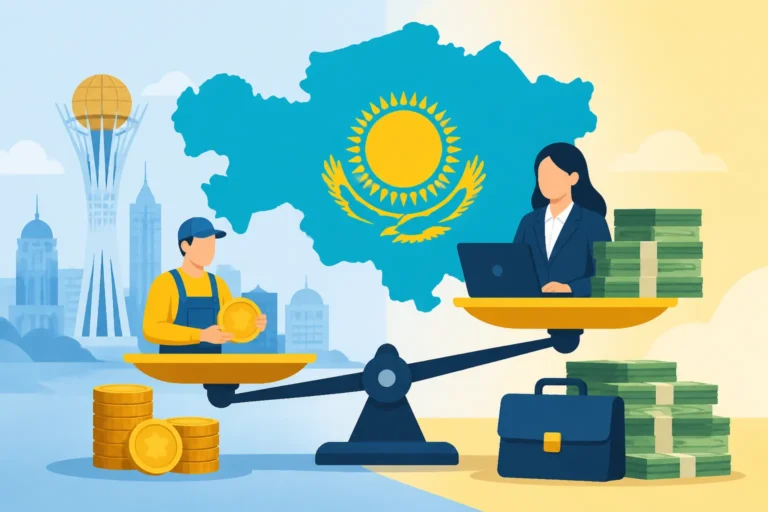
What Is the Minimum Wage in Kazakhstan in 2026?
Many of you arriving in Kazakhstan, whether for a new job or to explore freelance opportunities, probably have one burning question: "What's the absolute minimum I can expect to earn?" It's not always straightforward, especially when navigating a new country's labor laws and economic realities. This guide will meticulously break down the minimum wage in Kazakhstan for 2026, explain how it impacts various types of employment, and offer realistic insights into the cost of living versus salary expectations for foreigners.
Understanding the Official Minimum Wage in Kazakhstan for 2026
When you first land in a new country, deciphering its economic baseline can feel like cracking a secret code. Kazakhstan is no different, and the concept of "minimum wage" might not be what you expect, particularly as an expat. It's crucial to understand the official figures and how they apply in practice, especially for 2026.
The Monthly Minimum Wage (MMW)
In Kazakhstan, the primary figure you'll encounter is the Monthly Minimum Wage, or МЗП (Минимальная заработная плата – Minimalnaya Zarabotnaya Plata). This is the absolute lowest monthly remuneration an employer is legally allowed to pay an employee for full-time work. For 2026, based on current governmental projections and annual adjustments, the Monthly Minimum Wage is set to be 95,000 KZT. This figure is typically established by presidential decree at the beginning of each year, often during the annual address to the nation, and comes into effect from January 1st.
This MMW isn't just a number for direct salaries; it's a foundational metric that influences many other financial calculations within the country. For example, it's used as a base for calculating social payments, such as contributions to the mandatory social health insurance (OSMS) and pension funds. It also serves as a benchmark for certain fines and other administrative charges. So, while you might not expect to earn only the minimum wage as an expat, its value underpins a significant portion of the country's economic and social infrastructure. Keeping an eye on this figure, even if indirectly, helps you understand the broader financial landscape here.
The Minimum Living Wage (MLW) vs. Minimum Wage
Here’s where it can get a little confusing for newcomers. Besides the Monthly Minimum Wage (MMW), Kazakhstan also operates with a concept called the Minimum Living Wage (MLW), or ПМ (Прожиточный минимум – Prozhitochny Minimum). It's easy to conflate the two, but they serve very different purposes.
The Minimum Living Wage (MLW) is a statistical indicator. Think of it as a theoretical calculation of the minimum cost of a basket of essential goods and services required for a person's basic needs. It's determined by the Ministry of National Economy and is revised periodically, usually quarterly. For 2026, the projected MLW is around 55,000 KZT. Crucially, the MLW is not a legal minimum for salaries. It's primarily used by the government to assess living standards, to calculate the poverty line, and to determine the eligibility and size of certain social benefits and allowances. It’s a tool for social policy and economic analysis, not for setting actual paychecks.
Many expats, when looking up economic data, might stumble upon the MLW and mistakenly assume it’s the minimum an employer must pay. This isn't the case. The MMW (95,000 KZT for 2026) is the legal floor for salaries, while the MLW (around 55,000 KZT for 2026) is a sociological and economic benchmark. Understanding this distinction is vital to avoid misunderstanding the actual legal obligations employers have regarding remuneration in Kazakhstan.
How Minimum Wage Impacts Your Earnings as an Expat
For many expats, especially those relocating for professional opportunities, the minimum wage often feels like a distant, irrelevant concept. After all, if you're coming for a specialized role, your salary expectations are naturally much higher. However, understanding its role is still valuable, as it forms the legal bedrock of all employment in Kazakhstan and can indirectly influence your financial obligations and even negotiations.
Minimum Wage for Formally Employed Expats
If you're a formally employed expat in Kazakhstan, whether you’re teaching English, working in the oil and gas sector, or joining a multinational corporation in Almaty or Astana, your employer is legally bound to pay you at least the Monthly Minimum Wage (MMW) of 95,000 KZT per month for 2026. This is a non-negotiable legal requirement under Kazakhstani labor law.
However, let’s be brutally honest: for the vast majority of expats, your actual salary will be significantly higher than this minimum. Companies hire foreign specialists because they need specific skills, experience, or language capabilities that are not readily available in the local market. These positions typically command salaries ranging from 500,000 KZT to several million KZT per month, depending on the industry, role, and your experience. The MMW simply serves as the absolute legal floor. It’s there to protect workers from exploitation, ensuring no one is paid less than this amount, regardless of their position or nationality.
For you, this means your employment contract should clearly state your salary, which will undoubtedly be well above the MMW. It also means you are afforded the basic legal protections concerning wages, ensuring fair compensation. If you're navigating your employment terms, it's always good to be familiar with the broader legal landscape, including what's covered in Understanding Kazakhstani Labour Law and Worker Rights (2027), to ensure your rights are protected.
Minimum Wage for Self-Employed and Freelancers
This is where the direct impact of the minimum wage becomes a bit more nuanced for foreigners. If you've decided to carve your own path and register as an Individual Entrepreneur (IP) or work as a freelancer in Kazakhstan, your income isn't a "wage" in the traditional employee-employer sense. You're generating your own earnings, often from multiple clients, and the concept of an employer paying you an MMW doesn't apply.
However, the Monthly Minimum Wage still plays a significant, albeit indirect, role in your financial life here. As a registered IP or self-employed individual, you have certain tax obligations and mandatory contributions that are often calculated based on a multiple of the MMW. For instance, your mandatory social contributions for pension funds, and especially the compulsory social health insurance (OSMS), are often tied to the MMW. Even if your actual income is much higher, the base calculation for these contributions might refer back to the MMW. This means understanding the MMW is crucial for accurately calculating your outgoings and ensuring compliance with the local financial regulations.
Navigating these obligations can be complex, especially when you're just getting started. Many expats find professional help invaluable in setting up their finances. This is a situation where resources like Taxes for Expats can be incredibly useful, providing specialized advice to ensure you're compliant with Kazakhstani tax law. Understanding these calculations is essential for proper financial planning as a self-employed individual. You'll find more details on setting this up in guides like Self-Employment in Kazakhstan: Registering as an IP and Going Independent (2027) and Understanding Mandatory Health Insurance Contributions in Kazakhstan.
The Reality of Expat Salaries vs. Minimum Wage
Let's cut to the chase: the minimum wage in Kazakhstan is largely irrelevant as a benchmark for expat salaries. While it’s the legal minimum, the economic reality for most foreigners working here is vastly different. Expats typically command salaries that are many times higher than the MMW, reflecting their specialized skills, international experience, and often, the higher cost of living they face compared to locals.
For example, an English teacher in Almaty or Astana working at an international school or language center can expect to earn anywhere from 300,000 to 700,000 KZT per month, sometimes more with accommodation benefits. Professionals in the oil and gas industry, IT, finance, or executive management positions can easily earn upwards of 1,000,000 KZT to 3,000,000 KZT or even higher. These figures are well beyond the MMW and are more reflective of international market rates for skilled labor.
The reason for this disparity is simple: employers recruit internationally for roles that require specific expertise, often with an English language requirement, that isn't readily available within the domestic workforce or for which international experience is highly valued. Therefore, when you are negotiating your salary, it’s imperative to research average salaries for your specific role and industry in Kazakhstan, rather than using the official minimum wage as any kind of reference point. Websites like Glassdoor or LinkedIn can offer some insights, as can local expat forums and recruitment agencies specializing in foreign placements. Always remember that your value as an expat is usually tied to a specialized contribution, making the MMW a legal formality rather than a practical salary expectation. A deeper dive into salary expectations can be found in How Much Is the Average Salary in Kazakhstan in 2026?.
Minimum Wage and the Broader Cost of Living in Kazakhstan
Understanding the minimum wage in Kazakhstan is one thing, but truly grasping what it means in the context of daily life, especially for an expat, is quite another. The stark reality is that the official minimum wage for 2026, at 95,000 KZT per month, is simply not a livable wage for most foreigners, particularly in major cities. This highlights why expats almost always need to earn significantly more to maintain a comfortable standard of living.
Comparing Minimum Wage to Everyday Expenses
Let’s put the 95,000 KZT Monthly Minimum Wage into perspective against common expat expenses in cities like Almaty or Astana.
- Rent: A modest one-bedroom apartment in a decent neighborhood in Almaty can easily cost anywhere from 150,000 KZT to 300,000 KZT per month, sometimes even more. Clearly, the minimum wage alone wouldn't even cover basic housing. You can forget about an apartment near the Metro or a serviced apartment.
- Groceries: For a single person, a monthly grocery bill, including some imported goods often desired by expats, can range from 80,000 KZT to 150,000 KZT. Again, the minimum wage barely covers this, leaving nothing for other essentials.
- Utilities: Electricity, water, heating, and internet for a small apartment might run another 20,000 to 40,000 KZT.
- Transport: Even using public transport, which is quite affordable (around 100-200 KZT per ride), will add up. Taxis (Yandex Go is popular) are cheap by Western standards but still a luxury if you're on a tight budget.
- Dining Out/Social Life: Forget about enjoying the vibrant cafe culture or restaurants if you're earning the minimum wage.
The table below illustrates this stark reality:
| Expense Category | Estimated Monthly Cost (KZT) for an Expat (Almaty/Astana) | MMW Coverage (95,000 KZT) |
|---|---|---|
| Rent (1-bedroom apartment) | 150,000 – 300,000 | 0% – 63% |
| Groceries (single person) | 80,000 – 150,000 | 63% – 119% |
| Utilities (basic) | 20,000 – 40,000 | 24% – 42% |
| Local Transport | 10,000 – 20,000 | 11% – 21% |
| Total Minimum Survival | ~260,000 – 510,000 KZT | ~18% – 37% |
Note: These are rough estimates and can vary significantly based on lifestyle, location, and individual choices. The "MMW Coverage" is illustrative of how little of typical expat expenses the minimum wage would cover.
As you can see, living on the minimum wage is not feasible for an expat seeking a reasonable quality of life in Kazakhstan's major cities. Even for many locals, especially those with families, the minimum wage provides a very basic existence. This is why understanding The Complete Guide to Cost of Living in Kazakhstan for Expats (2026) is not just helpful, it's absolutely crucial for your financial planning.
Financial Planning and Realistic Expectations
Given the significant gap between the minimum wage and actual living costs, effective financial planning is paramount for any expat considering a move to Kazakhstan. Your salary expectations and subsequent budgeting should be based on real-world market salaries for your profession, not the government-mandated minimum.
When negotiating a job offer, always factor in the true cost of housing, groceries (especially if you prefer imported goods), transportation, and leisure activities. Consider whether your prospective salary allows for savings, travel, and any family support you might be providing. It's not uncommon for expat packages to include benefits like housing allowances, health insurance, or annual flight tickets, which significantly reduce your out-of-pocket expenses and should be part of your overall compensation negotiation. More insight into this can be found in How to Negotiate Salary and Benefits for a Job in Kazakhstan.
Furthermore, remember to account for your tax obligations. Even with a flat 10% individual income tax rate, your actual take-home pay will be less than your gross salary. Understanding the tax system is crucial, and you might find expert advice invaluable here. Again, services like Taxes for Expats can help you navigate the nuances of the Kazakhstani tax system, especially if you have international income or specific circumstances. Proper budgeting means factoring in all these elements to ensure your financial security and comfort in Kazakhstan. For a deeper dive, check out Understanding Income Tax and the Flat 10% Rate in Kazakhstan (2026).
Legal Framework and Employer Obligations
Beyond the purely financial aspects, understanding the minimum wage also sheds light on the legal obligations of employers in Kazakhstan. While it might not be your direct salary, it's a fundamental part of the legal environment within which you operate.
Legal Compliance for Employers
Every employer operating within the borders of Kazakhstan, regardless of whether they are a local company, a joint venture, or a multinational corporation, is legally bound to adhere to the country's labor laws. This includes the payment of the Monthly Minimum Wage (MMW) for all employees. For 2026, this means ensuring that no employee, whether local or foreign, receives a gross salary less than 95,000 KZT for a standard full-time work month.
Non-compliance with minimum wage laws can lead to significant penalties for employers, including administrative fines and potential legal action. The State Labour Inspectorate is the primary body responsible for overseeing and enforcing these regulations. For expats, this means that while your salary will almost certainly be much higher, you still benefit from the protective framework that mandates a minimum level of compensation. A well-drafted employment contract, compliant with Kazakhstani labor law, will clearly outline your salary, benefits, and working conditions. It's always a good idea to ensure your contract is in both Kazakh (or Russian) and English, and that you understand all its clauses before signing. For detailed information on the overarching employment framework, consider reviewing The Complete Guide to Working in Kazakhstan as a Foreigner (2027).
Addressing Wage Disputes
While it's highly improbable that an expat would find themselves being paid below the minimum wage, understanding the mechanisms for addressing wage disputes is still important, if only for peace of mind. Instances of contractual misunderstandings or disputes over delayed payments can, unfortunately, occur.
If you suspect any irregularities with your salary or believe your employer is not fulfilling their contractual obligations, your first step should always be to consult your employment contract. Most reputable companies will have a clear internal process for addressing such issues, usually through your HR department. If internal resolutions fail, or if you feel your rights are being violated, you have recourse through the State Labour Inspectorate. They can investigate complaints related to labor law violations, including wage disputes. Navigating this bureaucratic process as a foreigner can be challenging, often requiring fluent Kazakh or Russian language skills, or the assistance of a legal professional. Therefore, having a clear understanding of your contract and the legal framework from the outset, as detailed in Understanding Kazakhstani Labour Law and Worker Rights (2027), can prevent many issues down the line.
Language Skills and Earning Potential
While not directly tied to the minimum wage, your language skills can significantly influence your earning potential and overall career trajectory in Kazakhstan. For many expat roles, English proficiency is sufficient, especially within international companies, IT firms, or educational institutions. However, developing a working knowledge of Russian, and even some basic Kazakh, can open up a wider array of opportunities and potentially lead to higher-paying positions.
In many local Kazakhstani companies, or even international firms that deal extensively with local clients and partners, proficiency in Russian is often highly valued, if not required. It demonstrates a commitment to integrating and can make you a more versatile and valuable asset. Even basic conversational skills can make a huge difference in your daily life and even your career trajectory here. Tools like iTalki can be incredibly helpful for picking up some practical Russian or Kazakh phrases before you arrive or once you're settled, allowing you to not only connect better with locals but also access a broader job market. The ability to communicate effectively in the local languages can be a powerful negotiating tool when discussing salary and benefits, helping you secure a compensation package that reflects your enhanced value to a Kazakhstani employer. Ultimately, while the minimum wage sets a baseline, your unique skills, including language proficiency, truly dictate your earning ceiling.
Disclaimer
The information provided in this guide regarding Kazakhstan's minimum wage for 2026 is based on current available data, governmental announcements, and projections at the time of writing. Economic figures, government policies, and specific legal interpretations can change. While every effort has been made to ensure accuracy and comprehensiveness, this content should be used for informational purposes only and does not constitute legal or financial advice. We strongly recommend consulting with official government sources, legal professionals, or financial advisors in Kazakhstan for the most up-to-date and personalized guidance specific to your situation.