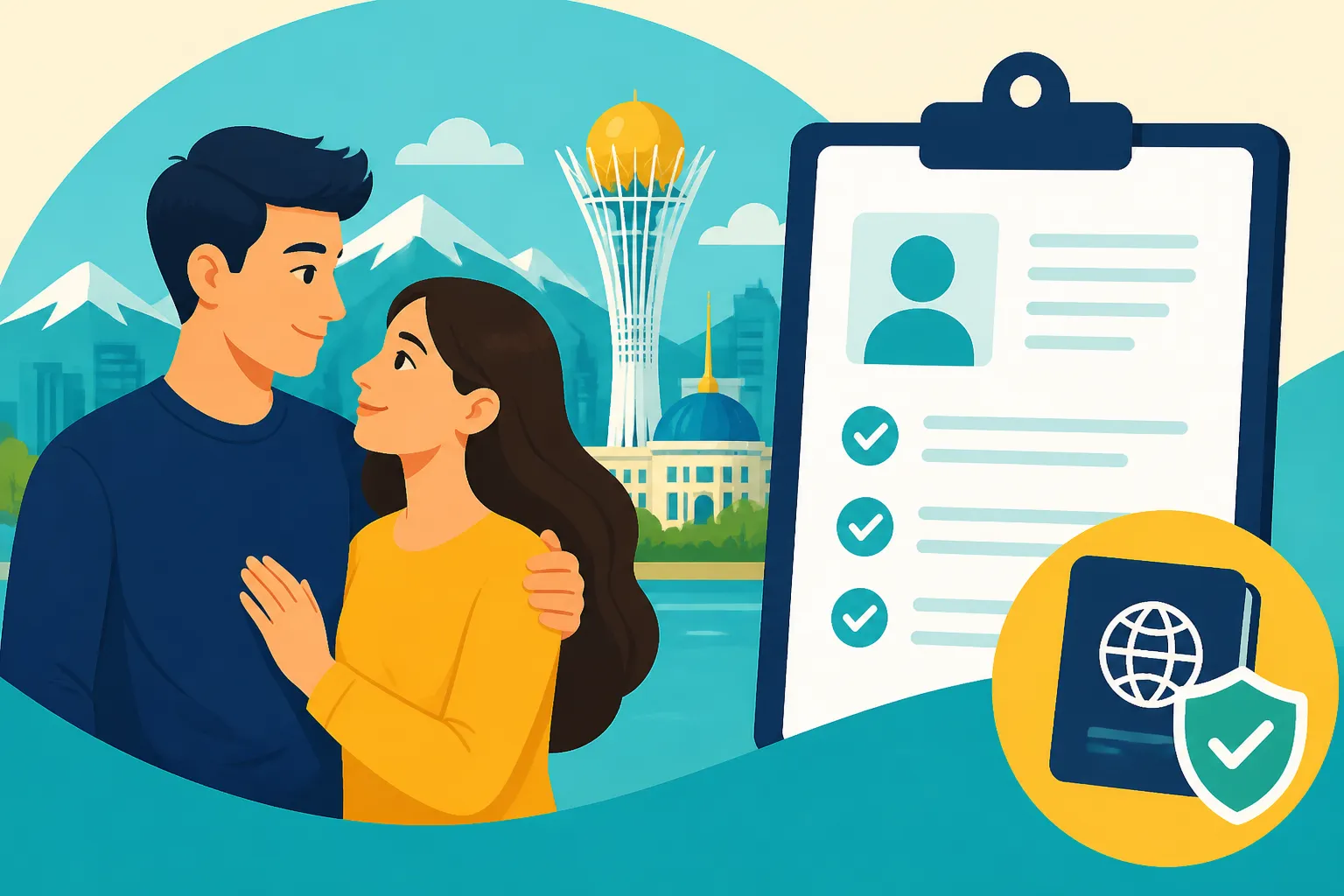
How Do I Apply for Residence to Join My Spouse in Kazakhstan?
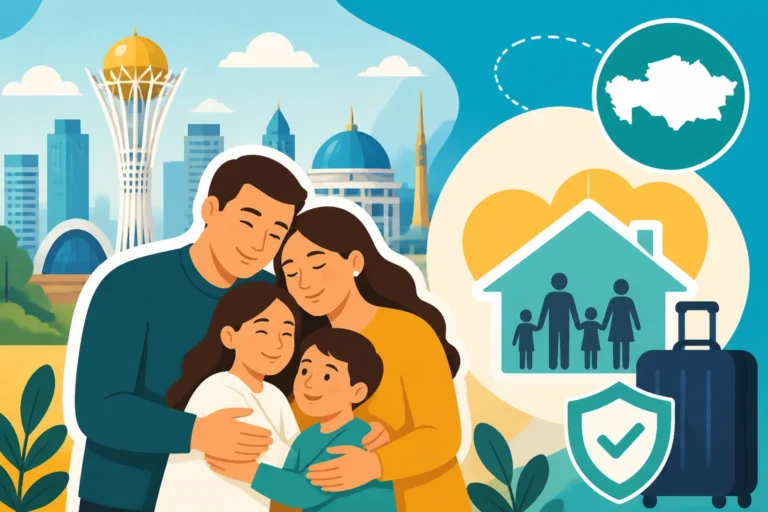
Moving to a new country is a huge step, but doing it to be with the person you love adds a whole new layer of emotional complexity – and administrative hurdles. You're not just moving; you're trying to weave two lives together across borders, and Kazakhstan, like many countries, has its own intricate dance of paperwork when it comes to family reunification. It can feel like you’re constantly hitting brick walls, wondering if you'll ever get all the stamps and signatures needed to simply live with your spouse. This guide is here to untangle that knot, walking you through exactly how to apply for a residence permit to join your spouse in Kazakhstan, smoothing out the often-frustrating path to family unity.
Understanding Family Reunification Residence in Kazakhstan
When you're looking to join your spouse in Kazakhstan, you're primarily aiming for what's known as a temporary residence permit (ВНЖ, or vid na zhitelstvo), often issued under the umbrella of "family reunification." This isn't just a visitor's visa; it's a permit that allows you to legally live, work (though often with additional steps), and generally integrate into life here with your loved one. It's the official recognition of your shared life in the eyes of the Kazakhstani migration service.
What is Family Reunification Residence?
At its heart, family reunification residence is a special category of temporary residence permit designed for foreign citizens whose direct family members (like spouses, minor children, or even dependent parents) are already legally residing in Kazakhstan. This means your spouse needs to have a valid basis for their own stay in Kazakhstan – whether they are a Kazakhstani citizen, hold a permanent residence permit, or are on a long-term temporary residence permit, such as a work permit or an investor permit. It’s about creating a legal framework for families to live together, ensuring that the foreign spouse has the same rights and responsibilities as other temporary residents. Without this, you’d be limited to tourist visa durations, which are far too short for building a life.
For expats, the most common scenario is where one spouse has secured a work permit or is a registered individual entrepreneur (IP), and the other spouse applies to join them. It’s a formal acknowledgment that your family unit is legitimate and that you intend to reside together long-term. This type of residence permit usually needs to be renewed annually, depending on the validity of the sponsoring spouse's permit.
Who Qualifies as a Sponsoring Spouse?
The person already in Kazakhstan, your spouse, plays a pivotal role. Their status dictates much of your application process.
Firstly, if your spouse is a citizen of Kazakhstan, the process is often more straightforward, as their citizenship provides a strong basis for your family reunification. They simply need to prove their Kazakhstani citizenship and their relationship to you. In this case, you will apply for a temporary residence permit based on marriage to a Kazakhstani citizen.
Secondly, and perhaps more common for our expat community, if your spouse is a foreign citizen already legally residing in Kazakhstan, they must hold a valid and substantial residence permit themselves. This usually means they have:
- A valid work permit and residence permit sponsored by their employer. You can learn more about this process in our guide on How to Get a Work Visa and Residence Permit in Kazakhstan (2027).
- A residence permit based on investment.
- A permanent residence permit.
- The recently introduced Neo Nomad (digital nomad) visa, which explicitly allows for family members to join. You can read up on The Expat Guide to the Neo Nomad Digital Nomad Visa in Kazakhstan (2026) for more details.
What generally doesn't qualify a spouse to sponsor is a short-term visa, like a tourist visa, or simply visa-free entry. The sponsoring spouse needs a long-term, stable legal status that indicates their own intent to reside in Kazakhstan for an extended period. The stability of their residence is essentially the foundation upon which your own application will be built.
Navigating Eligibility and Essential Documentation
Now, let's get into the nitty-gritty: what you need to prove and what documents you'll be wrestling with. This is where most expats feel the frustration kick in, but trust me, staying organised is your best friend here.
Core Eligibility Criteria for the Applying Spouse
Beyond your spouse's status, you, as the applicant, need to meet several key criteria. These are designed to ensure you are genuinely coming to reside as part of a family unit and won't become a burden or pose a risk to the state.
- Valid Marriage: This is non-negotiable. You must be legally married to your sponsoring spouse. A civil partnership or common-law marriage is typically not recognised for this purpose; it must be a formal, registered marriage.
- Clean Record: You'll generally need to provide a criminal record check (or police clearance certificate) from your home country, and possibly from any other countries you've resided in for a significant period. Kazakhstan wants to ensure you don't have a history of serious offenses.
- Good Health: A medical certificate confirming you are free of certain infectious diseases (like HIV, tuberculosis, etc.) is usually required. This check is typically done at designated clinics within Kazakhstan after your arrival, but sometimes an initial check from your home country might be accepted.
- Financial Self-Sufficiency (Indirectly): While you might not need to show a personal bank balance, your sponsoring spouse must demonstrate sufficient income or funds to support both of you, proving that you will not become a financial strain on the Kazakhstani state. This is often part of their initial residence application or a requirement for your dependent application.
- Valid Housing: You must have a registered address in Kazakhstan. This can be a rental agreement or proof of property ownership by your sponsoring spouse, confirming that you have a place to live. The address will be registered with the migration service upon your arrival.
- IIN (Individual Identification Number): Absolutely crucial. You cannot function in Kazakhstan without an IIN. This is your personal tax ID and is needed for almost everything, including opening a bank account, getting a local SIM card, and definitely for your residence permit application. You should prioritize getting this as soon as you arrive, if not before. Our guide on Understanding the IIN and Why You Need One in Kazakhstan explains this in detail.
Comprehensive Document Checklist
This list can feel overwhelming, but gather everything methodically. Remember, any documents not in Kazakh or Russian will need official translation and notarization. For some documents, especially those issued outside Kazakhstan, an apostille or consular legalization might also be necessary. Our post on Understanding Document and Translation Requirements for Kazakhstan Immigration offers valuable insights here.
Here’s a general checklist, but always confirm with the migration service or a legal expert, as requirements can shift:
- Your Valid Passport: With at least six months of validity beyond your intended stay and several blank pages.
- Marriage Certificate: The original, legalized/apostilled (if issued outside Kazakhstan), and notarized translation into Kazakh or Russian.
- Sponsoring Spouse's Passport/ID: Copy of their Kazakhstani ID or foreign passport with their valid residence permit stamps/card.
- Your IIN (Individual Identification Number): Copy of the certificate.
- Application Form: Completed and signed.
- Photos: Passport-sized, usually 3×4 cm, on a white background (check specific requirements for quantity and size).
- Notarized Consent from Sponsoring Spouse: A formal document stating their consent to your residence in Kazakhstan.
- Proof of Housing:
- If renting: A copy of the notarized rental agreement (contract of lease).
- If owning: Copy of the property ownership certificate (e.g., deed).
- Host's consent: If living with someone else, their notarized consent and proof of their ownership/rental agreement.
- Proof of Financial Means (from sponsoring spouse): Bank statements, employment contract, salary certificates, tax declarations. The amount required can vary, so check current guidelines.
- Medical Certificate: Confirming you are free of specified diseases. This is usually obtained from a Kazakhstani clinic.
- Criminal Record Certificate: From your country of origin and any countries you've lived in for over a year within the last five years, legalized/apostilled and translated.
- State Fee Payment Receipt: Proof you've paid the administrative fee for the residence permit.
- Migration Card (upon arrival): If you entered Kazakhstan with one, keep it safe as it's often needed.
For those considering the entire move, remember that relocating your belongings can be a logistical challenge. Services like Sirelo can help you find reliable moving companies that handle international shipments, ensuring your personal effects arrive safely while you deal with the paperwork. And speaking of safety, once you're settled, think about your health coverage. While Kazakhstan offers its OSMS system, many expats opt for private options. Companies like Cigna Global offer comprehensive international health insurance plans that provide peace of mind for you and your family here.
Here's a quick overview of the essential documents:
| Document Category | Specific Document | Key Requirement |
|---|---|---|
| Personal Identity | Applicant's Passport | Minimum 6 months validity, multiple blank pages. |
| Applicant's IIN (Individual Identification Number) | Essential for all official transactions in Kazakhstan. | |
| Passport-sized photos | 3×4 cm, white background (confirm quantity). | |
| Marital Status | Marriage Certificate | Original, apostilled/legalized, notarized translation. |
| Sponsoring Spouse's ID/Passport | Copy with valid Kazakhstani residence permit/citizenship proof. | |
| Notarized Consent from Sponsoring Spouse | Formal statement confirming consent to applicant's residence. | |
| Residence Proof | Proof of Registered Address | Notarized rental agreement or property ownership certificate. |
| Financial Proof | Sponsoring Spouse's Financial Documents | Bank statements, employment contract, salary certificates demonstrating support. |
| Health & Background | Medical Certificate | From designated Kazakhstani clinic, confirming freedom from infectious diseases. |
| Criminal Record Certificate | Apostilled/legalized, notarized translation from home country and recent residences. | |
| Administrative | Application Form | Fully completed and signed. |
| State Fee Payment Receipt | Proof of payment for residence permit application. | |
| Migration Card (if applicable) | Provided upon entry to Kazakhstan. |
The Step-by-Step Application Process
So, you’ve got your pile of documents, maybe a few grey hairs from the notarization process, and you’re ready to officially apply. This is where you physically interact with the system.
Before You Apply: Gathering and Translating Documents
Before you even think about stepping into the migration service office, dedicate serious time to document preparation. As mentioned, most foreign documents will need:
- Apostille or Consular Legalization: This process certifies that your document (like your marriage certificate or criminal record check) is authentic and legally recognised in Kazakhstan. If your home country is part of the Hague Apostille Convention, you’ll get an apostille. If not, you’ll need consular legalization through the Kazakhstani embassy in your country. Our guide on How to Get Your Documents Apostilled for Kazakhstan Immigration can help demystify this.
- Notarized Translation: Once legalized, every document not in Kazakh or Russian must be translated by a sworn translator and then notarized by a Kazakhstani notary public. Do not skip this step. A poor translation or lack of notarization will lead to immediate rejection.
- Photocopies: Always bring original documents and several sets of photocopies. They often need to keep copies, and having them ready speeds things up.
It's also a good idea to secure your IIN as one of your very first steps upon arrival, if you haven't already. You won't get far without it. Furthermore, you might need to arrange for a specific type of medical examination, which is usually carried out at approved medical centers in major cities like Almaty or Astana. Enquire at the migration service office or your sponsoring spouse's HR department for a list of approved clinics.
Submitting Your Application
This is the moment of truth. Applications are typically submitted to the Migration Service Department (part of the local Police Department or Politsiya) in the region where your sponsoring spouse is registered and where you intend to reside. In larger cities like Almaty or Astana, there might be dedicated centres for foreigners, often called Public Service Centers (Tson or ЦОН in Russian).
Here’s what to expect:
- In-Person Submission: You will almost certainly need to submit your application in person. Sometimes, your sponsoring spouse will also need to be present, especially when signing declarations or providing consent.
- Completing the Form: Ensure your application form is filled out accurately and completely. Any discrepancies between your form and supporting documents can cause delays.
- Interview (Possible): While not always mandatory for family reunification, be prepared for a brief interview. This is usually to confirm the authenticity of your relationship and your intentions to reside in Kazakhstan. They might ask questions about your marriage, your spouse's work, and your plans. Just be honest and clear.
- Biometrics: You may be required to provide fingerprints.
- Receipt: Make sure you get a receipt or acknowledgment of your application. This is vital proof that you’ve applied.
Remember that processes can vary slightly between cities and even within departments. Don’t be afraid to ask for clarification, even if it means trying a few phrases in Russian or Kazakh, or bringing a friend to translate. Patience is key here. The journey of How to Apply for a Residence Permit from Inside Kazakhstan is very detailed and can provide further context to the general process.
What Happens After Submission?
Once your documents are in, the waiting game begins. The processing time for a temporary residence permit for family reunification can vary.
- Processing Times: Officially, it can take anywhere from 15 to 45 calendar days, but it’s not uncommon for it to be longer. Always factor in potential delays, especially during peak periods or if there are public holidays. Our article on Understanding the Cost and Timeline of the Kazakhstan Residence Process can give you a general idea of what to expect for various permit types.
- Status Checks: You might be able to check the status of your application online via the eGov portal or by calling the migration service, but often, the most reliable method is to visit the office in person or have your sponsoring spouse do so.
- Additional Information Requests: Don't be surprised if they request additional documents or clarifications. This is quite common. Respond promptly and precisely to avoid further delays.
- Notification: Once approved, you will be notified, and you can then collect your residence permit card. This card is usually valid for one year and will reflect your registered address.
During this waiting period, if your current visa is expiring, you will need to ensure you maintain legal status. In some cases, applying for the residence permit might grant you an extension of stay while it's processing, but it's crucial to confirm this with the migration service to avoid overstaying your visa.
Life After Approval and Ongoing Requirements
Congratulations, you’ve got your residence permit! This is a huge milestone, but it’s not entirely "set it and forget it." There are ongoing responsibilities and things to keep in mind to maintain your legal status and settle comfortably into your new life.
Rights and Responsibilities as a Resident Spouse
Having a temporary residence permit allows you to legally live with your spouse and enjoy many of the benefits that come with legal residency.
- Right to Reside: You can legally live anywhere in Kazakhstan, provided you register your address with the migration service.
- Right to Work: This is an important distinction. While your family reunification residence permit allows you to reside, it often does not automatically grant you the right to work. In many cases, you will still need to obtain a separate work permit if you want to be formally employed. However, if your spouse is a Kazakhstani citizen, the rules might be more relaxed, or you might be exempt from needing a work permit. Always clarify this with the migration service or a legal expert. If you are interested in self-employment, our guide on How to Register as an Individual Entrepreneur (IP) in Kazakhstan might be a useful read.
- Access to Services: You’ll be able to access local services, including banking. Our guide to The Expat Guide to Opening a Bank Account in Kazakhstan is a must-read for this. You'll also be eligible for healthcare. While your initial permit might require a private health insurance policy from providers like Cigna Global, you'll eventually need to understand How Kazakhstan's Health System Works: OSMS and Private Care Explained (2027) and potentially register for the Compulsory Social Health Insurance (OSMS).
- Freedom of Movement: You can travel in and out of Kazakhstan freely, within the validity period of your permit.
- Responsibilities: You must abide by Kazakhstani laws, register your address, and carry your residence permit with you. You also have a responsibility to inform the migration service of any changes to your marital status or registered address.
Renewing Your Residence Permit
Your temporary residence permit is not indefinite. It will have an expiration date, usually tied to your sponsoring spouse's permit or a one-year validity.
- Timely Renewal: You must initiate the renewal process well in advance of your permit's expiration date. Typically, this means starting about one to two months before it expires. Waiting until the last minute can lead to complications, potential fines, or even the loss of your legal status. Our article on How to Renew Your Residence Permit in Kazakhstan covers this process comprehensively.
- Required Documents for Renewal: The documents for renewal are very similar to the initial application, but you'll also need your current residence permit card. You’ll need updated financial proofs, health checks, and a confirmed registered address.
- Maintain Eligibility: Throughout your stay, you and your sponsoring spouse must continue to meet the eligibility criteria. This includes maintaining your marriage, your spouse maintaining their legal status, and having adequate financial means and housing.
Living in Kazakhstan with your loved one is an incredibly rewarding experience, but navigating the bureaucratic side can be a challenge. By understanding the process for obtaining a residence permit to join your spouse, meticulously preparing your documents, and staying proactive with renewals, you can ensure a smooth transition and a stable life together in this beautiful country. It's a journey, not a sprint, and with the right information, you're well on your way.
Disclaimer
Please note that immigration laws and procedures in Kazakhstan can change. The information provided in this article is for general guidance only and is accurate to the best of our knowledge as of the publication date. It does not constitute legal advice. We strongly recommend consulting with the official Migration Service Department of Kazakhstan or a qualified immigration lawyer for the most up-to-date and personalized advice regarding your specific situation before making any decisions.