How Do I Pay for a Doctor Visit in Kazakhstan?
Stepping into a doctor's office in a new country can be daunting enough, but the question of "How do I pay for this?" often adds a layer of stress many expats in Kazakhstan quickly become familiar with. Navigating the local healthcare payment system, whether you're dealing with public polyclinics or private hospitals, can feel like trying to solve a Rubik's Cube blindfolded. This guide is here to shed light on exactly how to manage payments for your doctor visits, ensuring you're prepared for what to expect in Kazakhstan's unique healthcare landscape.
Understanding Kazakhstan's Healthcare System and Payment Options
Before we dive into the nitty-gritty of payment, it’s crucial to understand the two main pathways for healthcare in Kazakhstan: the state-mandated system and the burgeoning private sector. Each has its own payment mechanisms, and what applies to one might not apply to the other. Many expats find themselves using a hybrid approach, relying on the public system for routine care if their employer covers it, but turning to private clinics for convenience, English-speaking staff, or specific specialist access. It’s a good idea to familiarise yourself with the overall How Kazakhstan's Health System Works: OSMS and Private Care Explained (2027) to get a broader picture.
OSMS: The Mandatory Social Health Insurance
OSMS, or the Compulsory Social Health Insurance (Міндетті әлеуметтік медициналық сақтандыру), is Kazakhstan’s primary state-run healthcare funding mechanism. If you’re formally employed in Kazakhstan, whether by a local company or a foreign entity with a local presence, you will almost certainly be contributing to OSMS. These contributions are mandatory and are deducted directly from your salary, or paid by your employer on your behalf. For many expats, especially those on official work contracts, this means a significant portion of their basic medical needs are covered without direct payment at the point of service.
The idea behind OSMS is to provide a comprehensive package of medical services, including GP visits at your assigned polyklinika (local clinic), specialist consultations (with a referral), diagnostic tests, hospital care, and even some medications. If you're a registered OSMS member and have followed the steps to [How to Choose and Register with a Clinic (Poliklinika) in Kazakhstan), your doctor visits at this facility are generally not paid for out-of-pocket at the time of the appointment. Instead, the services are funded through your contributions. However, it's not entirely 'free'. There can be co-payments for certain services, especially if you seek care outside your assigned polyclinic without a proper referral, or for services not deemed medically necessary under the standard package. This is often where the confusion begins for foreigners, who might expect a European-style national health service but find subtle differences in what's covered entirely. Understanding Mandatory Health Insurance Contributions in Kazakhstan is key to making sense of it all.
Private Healthcare and Out-of-Pocket Payments
Now, let's talk about the private sector, which many expats gravitate towards for a variety of reasons. Perhaps the biggest draw is convenience: shorter wait times, easier appointment booking, and often more modern facilities. Crucially, many private clinics employ English-speaking doctors and staff, which can be an enormous relief when you're trying to explain symptoms in a foreign language. For those without OSMS coverage, or for services not included in the state package, private clinics operate on a direct payment model. This means you, the patient, are responsible for covering the cost of your visit, consultations, tests, and treatments either at the time of service or shortly thereafter.
The costs at private clinics vary wildly depending on the city, the clinic's reputation, and the specialty of the doctor. A basic GP consultation at a smaller, local private clinic in Almaty or Astana might be quite affordable, perhaps around 5,000-10,000 KZT (approximately $10-25 USD). However, a visit to a high-end international clinic with state-of-the-art equipment and internationally trained specialists could easily run you 20,000 KZT or more for a single consultation. This is why many expats opt for private health insurance, like what providers such as SafetyWing offer, to cover these potentially significant out-of-pocket expenses. They bridge the gap for those who prefer the private route or need coverage beyond the OSMS scope. For a deeper dive into the differences, check out Public vs Private Healthcare in Kazakhstan: What Expats Need to Know.
Navigating Payment for Public (OSMS) Doctor Visits
The public healthcare system, primarily funded by OSMS, can be a great resource if you understand how to use it correctly. It's designed to provide accessible care to all contributors, but it requires a bit of upfront effort, especially for newcomers to the country.
For Registered OSMS Members
If you are employed and have successfully registered for OSMS, and critically, if you have linked yourself to a specific polyklinika, your journey to a doctor's visit will typically not involve direct payment. When you go for a scheduled appointment with your general practitioner (GP) at your assigned clinic, or if you have been referred to a specialist within the OSMS network, the services are covered by your insurance contributions. You simply present your identification (usually your passport and IIN – Individual Identification Number) and your OSMS status will be verified.
This doesn't mean you will never pay anything. There are specific scenarios where you might still face minor co-payments or have to pay for services not fully covered by OSMS. For instance, some advanced diagnostic tests or certain types of physiotherapy might require a partial payment, even if you’re referred. Additionally, if you decide to go directly to a specialist without a referral from your GP (which is generally discouraged in the OSMS system, as the GP acts as a gatekeeper), you might be asked to pay the full private rate for that consultation, even within a public hospital setting. It’s essential to clarify your coverage with your polyklinika administrator or HR department if you're unsure. The administrators at your polyklinika are usually helpful, but language can be a barrier. Make sure you have all the necessary What Documents Do I Need to See a Doctor in Kazakhstan?.
For Those Not Yet Registered or With Lapsed Coverage
What happens if you're new to Kazakhstan and haven't sorted out your OSMS registration, or if there's a gap in your contributions? This is a common expat headache. If you haven't completed the How to Register for OSMS Health Insurance in Kazakhstan (2027), or if your employer hasn't processed your contributions correctly, you might find yourself in a tricky situation. In these cases, even at a public polyklinika or hospital, you will likely be treated as a private patient and be expected to pay for services out-of-pocket. This can be a shock for some, as they might assume 'public' means 'free at point of use', which isn't always the case without active OSMS coverage.
Payment in such scenarios would be similar to that at a private clinic: you pay directly at the cashier desk. It’s crucial to understand that even if you're sick, most public institutions won’t treat you for free if your OSMS isn't active, unless it’s a life-threatening emergency. Non-urgent care will almost certainly require payment. This underscores the importance of getting your OSMS sorted out as soon as possible after arrival or starting a new job. For those caught in this situation, you might want to consider What Happens If I Get Sick Before I Register for OSMS in Kazakhstan? for some guidance.
Paying for Private Clinic Consultations
Private healthcare offers a different payment experience, often more straightforward but potentially more expensive. This is where many expats spend a significant portion of their healthcare budget, particularly for routine checks or when they need quick access to a specialist.
Direct Payment at Private Clinics
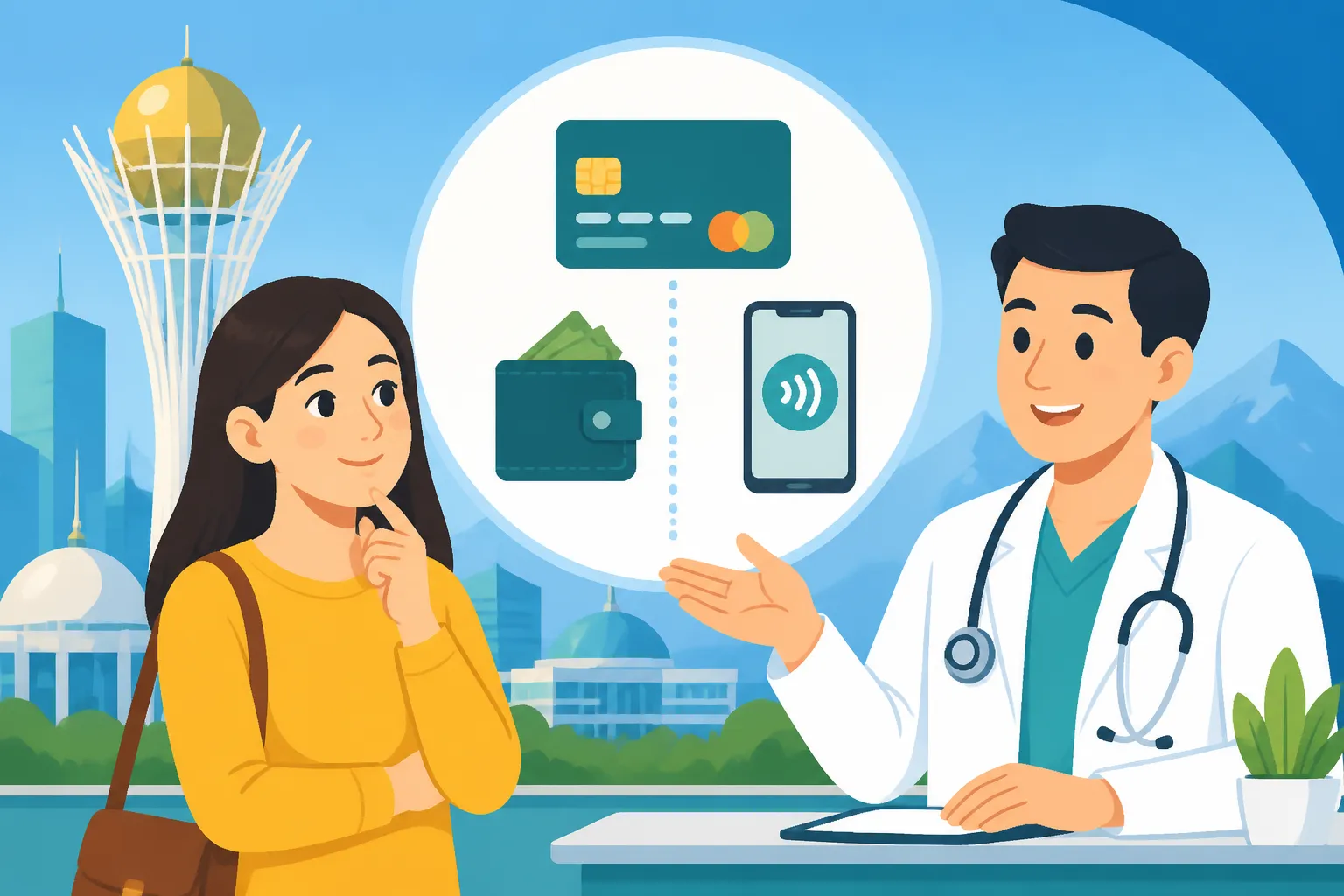
When you visit a private clinic in Kazakhstan, the most common payment method is direct settlement at the reception or cashier desk after your consultation. Most reputable private clinics in major cities like Almaty and Astana accept both cash (Kazakhstani Tenge, KZT) and major credit/debit cards (Visa, Mastercard). It’s always a good idea to confirm their accepted payment methods when you book your appointment, especially for smaller or less established clinics. Some might still prefer cash, or have issues with certain international cards.
You’ll typically receive a detailed invoice outlining the services provided (consultation fee, any tests, minor procedures) and the total cost. Keep these invoices! They are vital if you plan to claim reimbursement from private international health insurance. The transparency in billing at private clinics is generally quite good, with price lists often available at reception or even on their websites. Don't be shy about asking to see a price list before your visit, especially for specific tests or specialist consultations. For an idea of what to expect, you could look up How Much Does a Private Clinic Visit Cost in Astana? to get a benchmark.
Using Private International Health Insurance
Many expats, especially those not covered by a robust employer-provided plan or those who value flexibility, opt for private international health insurance. Providers like SafetyWing cater specifically to digital nomads and expats, offering flexible, comprehensive coverage that can be invaluable in a foreign country. When you have such a plan, there are usually two main ways to handle payment for your doctor visits:
-
Direct Billing: Some larger private clinics, particularly those with an international patient department or a strong expat clientele, might have direct billing agreements with certain international insurance providers. This means the clinic sends the bill directly to your insurance company, and you only pay any co-pay, deductible, or non-covered portion. This is the most convenient option, as it minimises your out-of-pocket expenditure. Always ask the clinic if they offer direct billing with your specific insurance provider when booking your appointment. This is becoming more common at clinics favored by expats, such as Interteach or SOS International. The question Can I Use International Health Insurance at Kazakhstani Hospitals? is often on expat minds, and direct billing makes it much easier.
-
Reimbursement: More often, especially for smaller clinics or less common providers, you will pay for your doctor visit upfront and then file a claim with your insurance company for reimbursement. This is where those detailed invoices and receipts become absolutely essential. You’ll typically need to submit these, along with a completed claim form, to your insurance provider. Reimbursement processes can take time, ranging from a few days to several weeks, so be prepared to float the cost in the interim. Always check your policy details for what’s covered, your deductible, and the claims procedure. For a detailed guide on this, refer to How to Claim Reimbursement from Private Insurance in Kazakhstan.
Anticipating Costs for Common Visits
Understanding what you might pay for common medical services can help you budget and avoid surprises. Here’s a general overview, though prices can fluctuate:
- General Practitioner (GP) Consultation: At a private clinic, expect to pay anywhere from 8,000 to 15,000 KZT ($18-$35 USD) for a standard visit.
- Specialist Consultation: Seeing a specialist (e.g., dermatologist, cardiologist, gynecologist) without a referral through OSMS will be more expensive. These can range from 15,000 to 30,000 KZT ($35-$70 USD) or more, depending on the doctor's experience and the clinic's prestige. For more specific costs, look at How Much Does a Specialist Consultation Cost in Kazakhstan?.
- Diagnostic Tests: Blood tests, urine analysis, and basic imaging (X-rays, ultrasounds) will add to your bill. A routine blood panel could be 5,000-10,000 KZT, while an ultrasound might be 10,000-20,000 KZT. These are often separate charges from the consultation fee.
- Emergency Room Visit (non-life-threatening): If you visit a private hospital's emergency department for something non-urgent, expect a facility fee plus charges for any tests or treatment. This can quickly add up, easily exceeding 50,000 KZT ($110 USD) or more. This is another area where international health insurance, like SafetyWing, offers crucial protection against unexpected bills.
These figures are estimates, of course, and can vary. It’s always best to inquire about specific costs beforehand.
Emergency Situations and Unforeseen Costs
Healthcare isn't always planned, and emergencies are where the payment system can become particularly critical. Knowing what to do and how to manage the financial aspect is paramount.
Emergency Care and Hospital Admissions
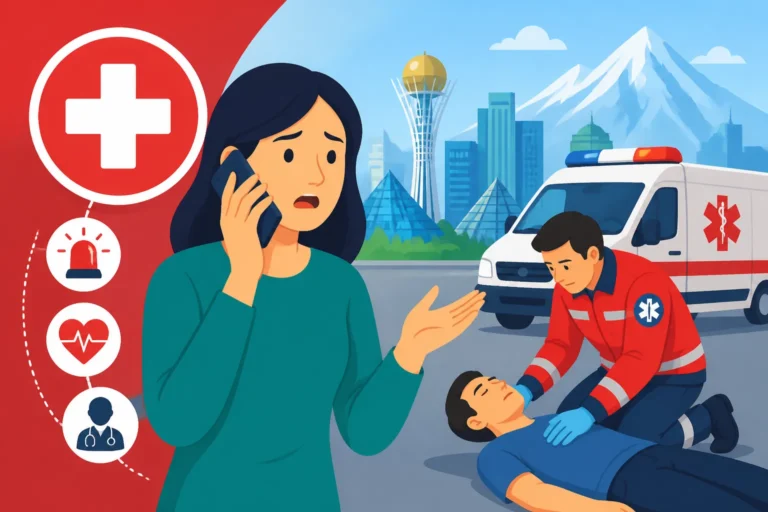
In a genuine medical emergency in Kazakhstan, regardless of your insurance status, life-saving care will generally not be withheld. If you call an ambulance (103 or 112) or arrive at a public hospital emergency room with a severe condition, the priority is to stabilise you. However, once the immediate danger has passed, the question of payment will arise.
If you are an OSMS member, your emergency treatment and subsequent hospital stay in a public facility should be covered by your contributions. You'll need to present your documents (passport, IIN) for verification. If you are not an OSMS member or your coverage is not active, you will be expected to pay for all services rendered. This could involve direct payment to the hospital cashier, and these costs can be substantial, especially for extended stays, surgeries, or intensive care. For this reason, having private international health insurance is absolutely vital for any expat in Kazakhstan, as it can cover the immense costs associated with serious medical emergencies and hospitalisation. Providers such as SafetyWing are designed to offer this peace of mind, covering everything from ambulance rides to extensive hospital stays. More information can be found in Emergency Medical Care in Kazakhstan: What Every Expat Needs to Know.
For private hospitals, the process is similar to private clinic visits but on a larger scale. For emergencies, you'll still receive immediate care, but payment arrangements will need to be made, often with a deposit or a guarantee of payment from your insurance company. Again, direct billing with international insurance is ideal here, but if not possible, prepare for significant out-of-pocket expenses followed by a reimbursement claim.
Pharmacy Costs and Prescription Medications
Once you’ve seen the doctor and have a prescription in hand, you’ll head to a pharmacy. Payment for medications is almost always an out-of-pocket expense in Kazakhstan. While OSMS covers some medications, particularly for chronic conditions or during hospital stays, most everyday prescription drugs and over-the-counter remedies require direct payment.
Kazakhstan has a robust network of pharmacies (apteka) in every city, easily identifiable by a green cross sign. Most accept cash and card payments. The cost of medications in Kazakhstan is generally considered affordable compared to many Western countries. Generic drugs are widely available and very reasonably priced. For instance, a course of common antibiotics might cost you a few thousand Tenge. For more specialised or imported drugs, the price will naturally be higher. Always check the expiry dates and packaging when purchasing medications. You can learn more about this in Understanding the Pharmacy System and Buying Medicines in Kazakhstan.
Practical Tips and Important Considerations
Navigating healthcare payments in a foreign country can be a learning curve. Here are a few practical tips to make the process smoother.
Always Clarify Costs Upfront
This might seem obvious, but it’s easy to overlook when you’re feeling unwell or are in an unfamiliar environment. Whether you're booking an appointment at a private clinic or are referred for a test at a public facility (and you're paying privately), always ask about the estimated cost beforehand. Don't be afraid to ask for a price list or a breakdown of anticipated fees for consultations, tests, and procedures. Clinics, especially private ones, are usually quite transparent, but taking the initiative to ask can prevent any unpleasant surprises when it's time to settle the bill. You might even find that some services are cheaper than you expected, while others are more costly, allowing you to plan accordingly.
If you’re using private insurance, specifically ask if the clinic has a direct billing agreement with your insurer. If not, confirm that they can provide a detailed, itemised invoice (in English if possible, or a certified translation) that meets your insurance company's reimbursement requirements. This proactive approach can save you a lot of hassle and potential disputes down the line.
Keeping Records and Receipts
This tip cannot be stressed enough. For every single doctor visit, test, prescription, or medical service you pay for, insist on getting a detailed receipt and invoice. These documents are absolutely critical for several reasons:
- Insurance Claims: If you have private international health insurance, you will need these receipts to file for reimbursement. Without them, your claim will likely be denied. Ensure the invoice clearly states the date, services rendered, cost, and the clinic's details.
- Tax Purposes: In some cases, medical expenses might be deductible or relevant for tax purposes, either in Kazakhstan or your home country. Accurate records are essential for this.
- Personal Finance Tracking: Keeping track of your healthcare expenditures helps you understand your budget and make informed decisions about your health coverage in the future.
- Medical History: Receipts and invoices, especially those detailing diagnoses and treatments, can serve as a valuable part of your personal medical history, particularly useful if you need to consult a new doctor or seek a second opinion.
Organise these documents carefully, perhaps in a dedicated folder, and consider taking photos or making digital copies for backup. Losing a vital receipt can mean losing out on a significant reimbursement from your insurance, so treat them as gold.
Disclaimer
Please remember that this guide provides general information based on current regulations and common expat experiences in Kazakhstan. Healthcare policies and costs can change. While we strive to keep information up-to-date, it is always best to verify specific details with official sources, your employer's HR department, your insurance provider, or the medical facility directly. This article is not a substitute for professional medical or legal advice.